Barrier Paperboard Substrate Selection and Wet End Disintegration Yield Testing
Aqueous dispersion barrier boards outperform extruded polyolefins by delivering over 95 percent wet end fiber yield and avoiding heavy EPR penalties.
Matrix
Bleached kraft virgin fibers, mechanical pulps, and recycled paperboard webs present fundamentally distinct internal network densities when evaluated under fluid penetration forces. Primary fiber webs composed of northern bleached softwood kraft deliver high tensile energy absorption and long inter-fiber bonding networks, providing structural resilience against moisture softening. Chemithermomechanical pulping fractions introduce bulky lignin-rich fibers that increase caliper per unit basis weight while reducing internal bond strength.
Recycled fibers undergo progressive hornification across repeated drying cycles, diminishing their swelling capacity and pore-structure mobility. When functional barrier chemistries apply to these bases, the substrate architecture dictates coating film formation, liquid holdout, and subsequent wet end disintegration characteristics.
Dispersion Coatings and Extruded Polyolefin Barriers
Aqueous polymer dispersions, composed primarily of styrene-butadiene, acrylic copolymers, or vegetable oil alkyds, form cohesive hydrophobic films through particle coalescence during dry-end drying cycles. Application rates between 4 g/m² and 10 g/m² yield surface holdout levels capable of resisting water absorption with Cobb sixty-second values below 5 g/m² under ISO 535 testing conditions. Extruded polyethylene and polypropylene films applied at 12 g/m² to 20 g/m² create absolute physical barriers against liquid phase transmission and water vapor movement.
Water vapor transmission rates for extruded polyolefins range between 1 g/m²/day and 5 g/m²/day at 23 °C and 85 percent relative humidity according to ISO 2528. Water-based polymer films achieve water vapor transmission rates between 15 g/m²/day and 60 g/m²/day under identical conditions, maintaining sufficient gas permeability to avoid internal condensation build-up inside fresh produce cartons.
Surface tension metrics govern the adhesion mechanism between the fiber mat and the functional layer. Virgin solid bleached board exhibits initial surface energy values near 38 mN/m, allowing uniform wetting of aqueous dispersion formulations without wetting agent additives. Corona treating extruded polymers elevates surface energy above 44 mN/m, preventing immediate film delamination during high-speed crease folding and converting.
Mechanical flexure during die-cutting introduces microscopic fracturing along score lines when coating elongation at break falls below 150 percent at 20 °C. Cross-linked acrylate formulations exhibit elevated stiffness, resulting in pinhole formation along carton corners when folded through 180-degree panels. Polyolefin films retain elastomeric ductility across sub-zero temperature ranges, preventing micro-cracking but presenting extreme physical resistance during pulp re-slushing cycles.
Furnish Architecture for Barrier Substrates
Fiber selection directly influences the mechanical force required to break inter-fiber bonds during mill repulping operations. Solid bleached sulfate substrates incorporate long coniferous softwood fibers alongside short deciduous hardwood fibers in a 30:70 blend ratio. Softwood fibers contribute structural tearing resistance, achieving cross-direction Elmendorf tear values exceeding 2800 mN for a 300 gsm sheet under ISO 1974 conditioning.
Unbleached softwood kraft boards, specified for heavy-duty secondary packaging, rely on un-hornified virgin fibers that maintain high wet strength properties under damp ambient conditions. Recycled multi-ply folding boxboards, incorporating white lined chipboard layers, contain variable proportions of mechanical pulp, ash filler, and de-inked fibers. High ash fractions exceeding 12 percent by mass reduce web strength while generating fine particulate suspensions during disintegration cycles.
Coating penetration into the surface pores of un-sized fiber webs forms an anchored mechanical interlock. Surface sizing with oxidized starch or polyvinyl alcohol reduces surface pore radii below 2.0 µm, restricting dispersion coating penetration to the uppermost fiber layers. Deep penetration of synthetic barrier resins binds individual fibers into rigid composite structures that resist water wetting during mechanical agitation.
Surface-sized board webs maintain discrete interface boundaries, allowing repulping liquor to penetrate beneath the polymer film during hydrapulping processes. Mill technical documentation often states that low-coat-weight dispersion formulations disintegrate smoothly without thermal pretreatment, yet chemical additives mixed into water-based barrier emulsions alter the physical disintegration behavior of recovered paperboard stocks.
Vat
Mechanical pulping action inside industrial repulping units subjects recovered board to fluid shear forces, hydraulic turbulence, and rotor friction. High-density hydrapulpers operate at solids consistencies between 12 percent and 18 percent oven-dry mass, relying on continuous fiber-to-fiber friction to break consolidated sheets. Low-density hydrapulpers function between 3 percent and 6 percent solids consistency, applying intense localized mechanical shear through high-speed rotor blades.
Processing temperature dictates the visco-elastic recovery rate of synthetic polymer coatings. Operating at 50 °C softens thermoplastic barrier films, causing polymer layers to stretch and shred into coarse flakes rather than breaking into fine dispersed particles. Alkaline chemical additives, including sodium hydroxide and liquid sodium silicate, raise slurry pH to 9.5, accelerating fiber swelling and breaking hydrogen bonds within the internal fiber network.
Hydrapulper Shear and Slurry Consistency Dynamics
Hydraulic drag forces within repulping units break paperboard substrates into progressively smaller fibrous fragments. High consistency repulping minimizes mechanical damage to individual fibers by generating uniform inter-fiber friction throughout the fluid suspension. Polyolefin barrier films remain intact as large continuous sheets during high-consistency pulping, allowing downstream extraction screens to remove plastic fragments before mechanical action breaks them down.
Low consistency processing subjects polymer films to direct rotor impact, cutting polyolefin films into micro-fragments that bypass mechanical screening media. Temperature controls within pulping vessels alter the glass transition point of synthetic dispersion coatings. Operating below the glass transition temperature renders the dispersion film brittle, encouraging clean fragmentation into non-sticky particulate matter during agitation.
Disintegration duration directly dictates the electrical energy consumed per dry metric tonne of processed board. Standard virgin paperboard without functional coatings disintegrates fully within 8 minutes of mechanical agitation at 45 °C. Barrier-coated folding boxboards require processing times ranging from 20 minutes to 45 minutes depending on coating polymer chemistry and fiber hornification levels. Extended pulping times increase energy consumption from 25 kWh/tonne to over 85 kWh/tonne, decreasing overall mill throughput capacity.
Slurry pH adjustments using sodium hydroxide swell cellulose fibers rapidly, increasing slurry viscosity and improving shear force transfer from rotor blades into undisintegrated flakes.
Chemical Aids in Alkaline Repulping
Swellable alkaline additives penetrate the hydrophilic fiber web, expanding the cellulose structure and forcing the hydrophobic barrier layer to detach from the sheet interface. Surfactants added at concentrations between 0.1 percent and 0.5 percent oven-dry fiber weight lower surface tension, accelerating liquor penetration through pinholes and raw cut edges. Non-ionic ethoxylated fatty alcohols reduce particle agglomeration, maintaining detached dispersion coating fragments in stable suspension.
Calcium chloride dosing during neutral-pH repulping neutralizes residual surface charges, preventing synthetic binders from forming sticky deposits on hydrapulper vat walls and downstream pumping hardware.
The operational sequence for wet-end repulping verification follows a disciplined mechanical protocol to evaluate fiber release performance across varying temperatures and chemical conditions:
- Charge the pulping vessel with deionized water pre-heated to 40 °C ± 2 °C and adjust slurry pH to 8.5 using 1.0 M sodium hydroxide solution.
- Add dry paperboard specimens cut into 25 mm by 25 mm square tiles to achieve an oven-dry fiber consistency of 30 grams per litre.
- Engage the disintegration rotor at 3000 revolutions per minute, recording elapsed time and cumulative electrical power input continuously.
- Extract 500 millilitre suspension samples at 5,000 revolution intervals up to a maximum total count of 30,000 revolutions.
- Douse extracted samples with cold water to quench further disintegration and transfer immediately to quantitative screening apparatus.
Operating hydrapulper vessels at elevated temperatures above polymer softening thresholds transforms flat synthetic coatings into tacky film deposits. These deposits adhere to internal vessel walls, foul extraction plates, and pass into clean fiber streams as micro-stickies that ruin paper machine wire clothing.
| Substrate Barrier Variant | Slurry Consistency (% dry mass) | Vat Fluid Temp (°C) | Slurry pH Level | Disintegration Time (min) | Energy Draw (kWh/tonne) |
|---|---|---|---|---|---|
| Solid Bleached Board with 15 gsm Extruded PE | 15.0 | 55 | 9.5 | 35 | 78.5 |
| Folding Boxboard with 6 gsm Aqueous Acrylic Dispersion | 4.5 | 40 | 7.5 | 15 | 32.0 |
| Unbleached Kraft Board with 12 gsm Polyfatty Acid Wax | 12.0 | 60 | 10.0 | 25 | 54.2 |
| Cupstock Board with 18 gsm Poly-Lactic Acid (PLA) | 5.0 | 30 | 8.0 | 40 | 88.0 |

Slurry
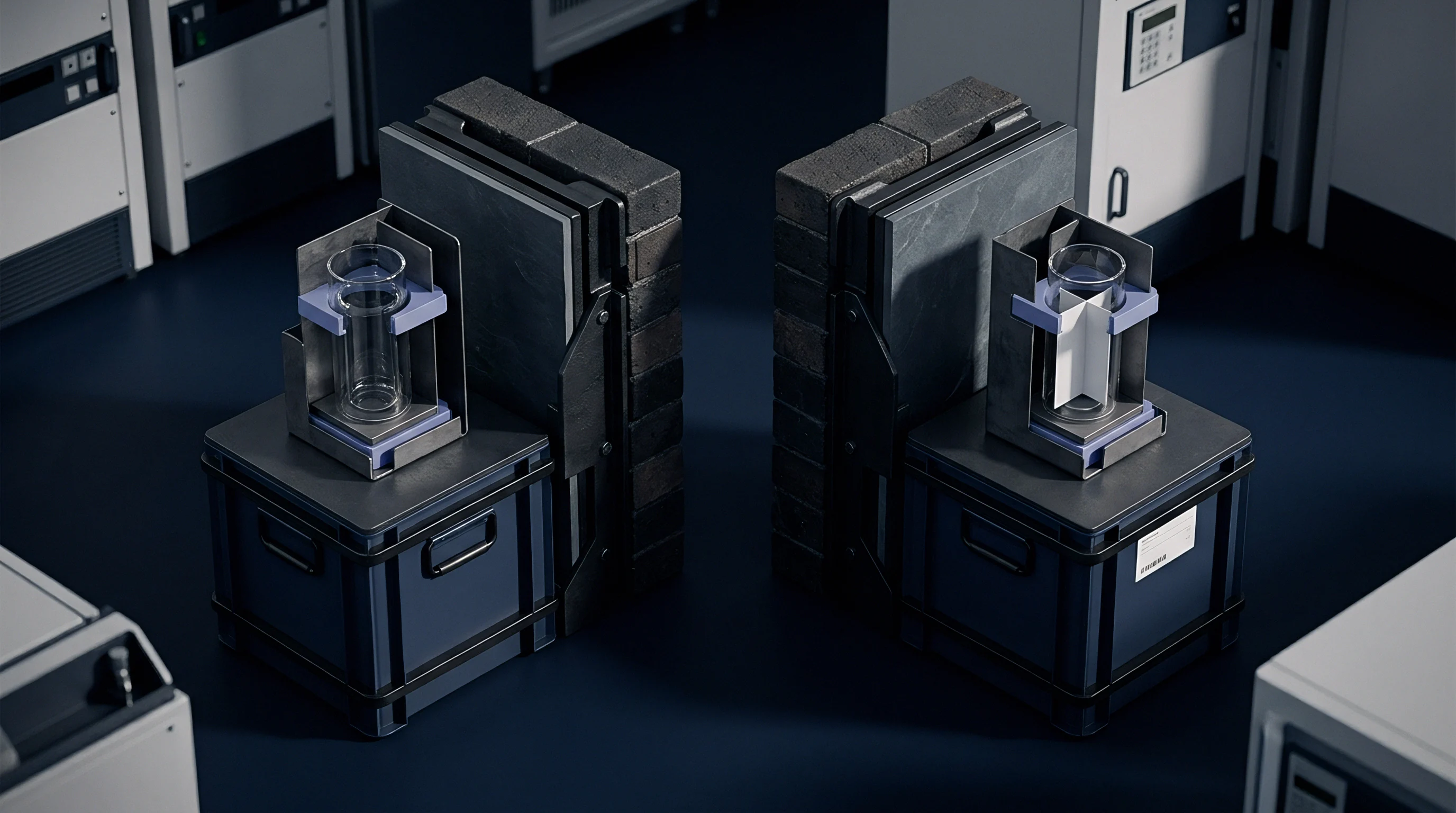
Standardized laboratory disintegration protocols provide predictable, repeatable mechanical shear conditions to measure repulpability across substrate variants. ISO 5263-1 and TAPPI T 205 define the standardized disintegration apparatus, featuring a cylindrical vessel fitted with interior spiral baffles and a high-speed three-bladed propeller. The propeller rotates at 2980 ± 50 revolutions per minute within a precisely controlled volume of fiber suspension.
PTS-RH 021/97 category II guidelines specify testing conditions for paperboard intended for recycling, establishing a standardized baseline dry fiber charge of 30 grams per litre evaluated over 30,000 disintegrator revolutions. Temperature control maintains the test suspension at 40 °C throughout the pulping cycle to standardize polymer film mechanical performance.
Standard Laboratory Disintegration Mechanics
Propeller rotation forces fluid outward against vessel side walls, where vertical helical baffles divert liquid flow into powerful downward axial currents. Hydraulic shear stresses break weak inter-fiber hydrogen bonds without fracturing individual cellulose fiber walls or shortening primary hardwood and softwood elements. Polymer dispersion barrier coatings split along microscopic stress lines created by fiber swelling.
Soft film chemistries curl into elastomeric spheres, whereas rigid acrylate films shatter into flat planar flakes. Quantifying the distribution of these released particles requires immediate transfer of the disintegrated suspension to standardized laboratory fractionators.
PTS-RH 021/97 category II evaluation mandates a total disintegrator revolution count of 30,000 at 30 grams per litre pulp consistency and 40 degrees Celsius.
Fibers detach progressively from the inner surface of the barrier film as water penetrates the substrate core. Edge wick testing reveals that water transport along cut board edges accelerates fiber detachment during the initial 5,000 revolutions. Substrates featuring low Cobb values on both top and reverse surfaces rely entirely on cut edge fluid penetration to initiate swelling.
Slower liquor entry extends total disintegration time, increasing the proportion of undisintegrated paperboard fragments retained on laboratory screen media.
How Does Disintegrator Shear Alter Fibrous Flake Fraction?
High rotational shear applied by the laboratory propeller breaks cohesive paperboard sheets into distinct material fractions. Flakes represent undisintegrated fiber aggregates retaining structural bonding, often held together by un-detached polymer film layers. Excessive shear breaks coarse polymer layers into microscopic fragments, compounding downstream cleaning difficulties.
Insufficient shear leaves large bundles of usable fibers bonded to barrier films, falsely reducing measured wet end yield values. Maintaining exact blade sharpness, shaft alignment, and propeller clearance relative to the vessel floor remains critical to obtaining reliable test data.
Standard disintegrator propellor geometry follows fixed mechanical constraints to deliver consistent kinetic energy input per litre of pulp suspension:
- Propeller Diameter Tolerance ~ Machined radius maintained precisely at 90.0 mm ± 0.5 mm across three symmetric, polished stainless steel blades.
- Baffle Clearance Gap ~ Internal vessel walls feature four vertical spiral baffles spaced at 90-degree intervals with 5.0 mm wall clearance.
- Shaft Immersion Depth ~ Propeller blade pitch line set exactly 25.0 mm above the container base along the vertical centerline.
- Drive Motor Wattage ~ Electric motor drive delivering continuous power output capable of maintaining 2980 rpm under 4.0 percent slurry drag.
Test protocols conducted strictly under EN 13430 annex B clauses stipulate that wet disintegration yield values falling below 80.0 percent total dry fiber recovery invalidate packaging recyclability declarations. This mandatory performance boundary halts commercial stock qualification until board re-formulation or coating weight reduction restores fiber release yield above acceptable contract thresholds.
Screen
Screening suspensions extracted from standard disintegrators separates usable individual fibers from undisintegrated board flakes and polymer residue. The Somerville fractionator, operating in accordance with TAPPI UM 242, serves as the global standard reference instrument for quantitative yield measurement. A flat brass screen plate featuring 124 calibrated slots measuring 0.15 mm in width and 45 mm in length forms the primary filtration boundary.
A motor-driven rubber diaphragm vibrating at 700 cycles per minute beneath the screen plate induces vertical fluid pulsation, preventing fiber mat formation over the screen slots. Water flows continuously across the screen plate at a rate of 8.6 litres per minute under a controlled head of 25 mm.
Somerville Fractionation and Flake Quantification
Pulp suspensions pass through the vibrating screen slots under gentle hydraulic pressure differentials. Individual hardwood and softwood fibers, alongside fine mineral fillers and tiny coating fragments below 150 µm, pass through screen openings into the accept stream. Undisintegrated board flakes, large coating fragments, plastic shreds, and tacky film aggregates remain on the screen surface.
Screening continues for exactly 20 minutes to ensure complete separation of freed fibers. Materials retained on the screen plate are washed quantitatively into pre-weighed laboratory filter papers, dried in a ventilated oven at 105 °C ± 2 °C, and weighed on an analytical balance to 0.1 milligram accuracy.
Contractual acceptance clauses referencing ISO 5263 stipulate that coarse reject mass exceeding five percent of total oven-dry charge forfeits recyclability compliance certification.
Mass balance determinations compare the oven-dry mass of raw substrate charged into the disintegrator against the oven-dry mass of materials retained on the fractionator screen. Wet disintegration yield percentage reflects the dry mass of accepted single fibers expressed relative to total dry board mass charged. High coating coat weights reduce theoretical maximum yield, as non-fibrous polymer solids contribute to initial mass but cannot pass into fibrous accept streams.

Mass Balance Calculations for Disintegration Accept Yield
Accurate yield determinations require precise accounting of specimen moisture, coat weight fractions, and mineral filler loads. Oven-dry moisture content testing according to ISO 287 determines initial specimen dry solids content prior to pulping. Subtracting known barrier coating mass per square metre yields the total theoretical mass of available fiber within the original sample stock.
Disintegration yield equations separate total material recovery into fibrous accept yield, coarse reject flake fraction, fine coating particle loss, and sticky residue mass.
Evaluation of physical failure modes observed on fractionator screen plates identifies specific substrate design defects during laboratory testing cycles:
- Interfacial Delamination Resistance ~ Polyolefin barrier layers remain tightly bound to fiber mats, forming dense polymer-fiber sandwiches that fail to detach during pulping.
- Cross-Linked Polymer Fragmentation ~ Highly cross-linked acrylic dispersion films shatter into needle-like shards that plug 0.15 mm screen slots, clogging the filtration surface.
- Micro-Sticky Agglomeration ~ Soft tacky wax resin emulsions coalesce under fluid motion, forming sticky globules that adhere to laboratory screen brass wires.
- Fiber Hornification Retention ~ High-yield unbleached kraft fibers resist moisture absorption, remaining as dense undisintegrated bundles that fail to pass through screen slots.
Gravimetric test results recorded across multiple laboratory trials illustrate how variation in coating chemistry alters pulp accept yield and reject distribution metrics:
| Barrier Substrate Variant | Initial Dry Charge (g) | Coarse Reject Mass (>150 µm) (g) | Fibrous Accept Yield (%) | Fine Coating Loss (<150 µm) (g) | Micro-Sticky Residue Mass (g) |
|---|---|---|---|---|---|
| SBS with 12 gsm LDPE Extrusion | 30.00 | 4.32 | 83.2 | 0.18 | 0.10 |
| FBB with 6 gsm Aqueous Acrylic Coating | 30.00 | 0.84 | 95.1 | 0.58 | 0.05 |
| CUK with 10 gsm Wax-Resin Emulsion | 30.00 | 2.15 | 88.4 | 0.81 | 0.52 |
| WLC with 8 gsm Styrene-Butadiene Barrier | 30.00 | 1.20 | 92.8 | 0.90 | 0.06 |
Do fine coating particles passing through 0.15 mm fractionator slots re-agglomerate inside mill white water circuits, forming colloidal pitch deposits that ruin paper machine press felt porosity?
Margin
Material yields measured in laboratory environments dictate the financial performance of packaging board grades within industrial recycling systems. European recycling directives and regional Extended Producer Responsibility frameworks assess financial fee surcharges based on certified recyclability classifications. Schemes using CEPI packaging guidelines rank substrates into fee categories based on usable fiber yield.
Substrates yielding above 95 percent accept fiber qualify for baseline EPR rates. Grades yielding between 85 percent and 95 percent incur moderate fee surcharges. Substrates yielding under 85 percent fiber recovery face severe financial penalties or total exclusion from standard paper recycling streams, driving up landed packaging costs for consumer goods brands.
Extended Producer Responsibility Fee Modulations
EPR fee structures penalize packaging selections that introduce non-paper mass or require complex mechanical sorting. A folding carton utilizing a 15 gsm PE film carries a structural material yield limit of roughly 95 percent based strictly on coat weight, assuming perfect fiber detachment. When incomplete disintegration leaves 5 percent of available fiber bound to plastic rejects, total fiber recovery drops to 90 percent.
This shift reclassifies the packaging from a low-fee Category A tier ($40/tonne fee) to a high-penalty Category B tier ($180/tonne fee). Across a brand portfolio utilizing 5,000 tonnes of barrier paperboard annually, this yield drop represents a $700,000 annual operating cost increase.
Yield losses measured at the laboratory screen amplify exponentially on the mill floor due to secondary white water purge cycles.
Disposal costs for mill reject streams compound financial losses associated with poor wet end yield. Plastic film rejects extracted from hydrapulpers retain significant water, containing up to 50 percent moisture by weight. Waste disposal firms charge landfill or incineration tipping fees ranging from $110 to $220 per wet tonne of solid process waste.
Board selections producing high reject volumes incur dual financial penalties through lost fiber value and elevated solid waste handling charges.
Worked Conversion Yield Financial Comparison
To evaluate the financial impact of substrate selection, consider a commercial packaging run producing 1,000,000 unit folding cartons using two competing barrier board options. Assume each carton requires a sheet size of 0.12 m² with a base paperboard grammage of 300 gsm, resulting in a net board weight of 36.0 grams per carton before functional coating application. Total dry fiber required for 1,000,000 cartons equals 36.0 metric tonnes.
Option A specifies a 300 gsm Solid Bleached Board laminated with 15 gsm Low-Density Polyethylene (LDPE) costing $1,450 per tonne. Disintegration testing establishes a usable fiber yield of 84.0 percent due to fiber retention on coarse LDPE film rejects. Option B specifies a 300 gsm Solid Bleached Board coated with 7 gsm water-based dispersion coating costing $1,680 per tonne, demonstrating a certified disintegration fiber yield of 95.5 percent.
Assessing the full landed cost model requires calculating raw substrate purchasing expenditure, EPR fee liabilities, and solid waste disposal charges for both options:
- Calculate total substrate tonnage purchased for Option A: 36.0 tonnes board + 1.8 tonnes LDPE film = 37.8 gross tonnes. Board purchase cost = 37.8 tonnes × $1,450 = $54,810.
- Calculate total substrate tonnage purchased for Option B: 36.0 tonnes board + 0.84 tonnes coating = 36.84 gross tonnes. Board purchase cost = 36.84 tonnes × $1,680 = $61,891.20.
- Determine fiber recovery tonnage for Option A: 36.0 tonnes fiber × 0.84 yield = 30.24 tonnes recovered fiber. Unrecovered fiber and plastic reject mass = 7.56 tonnes dry waste (15.12 wet tonnes at 50% moisture).
- Determine fiber recovery tonnage for Option B: 36.0 tonnes fiber × 0.955 yield = 34.38 tonnes recovered fiber. Unrecovered fiber and coating reject mass = 2.46 tonnes dry waste (4.92 wet tonnes at 50% moisture).
- Apply EPR fee tiers: Option A yields <85% (Category C penalty rate of $250/tonne on total pack mass) = 37.8 tonnes × $250 = $9,450. Option B yields >95% (Category A baseline rate of $40/tonne on total pack mass) = 36.84 tonnes × $40 = $1,473.60.
- Calculate waste disposal tipping fees at $140 per wet tonne: Option A waste cost = 15.12 wet tonnes × $140 = $2,116.80. Option B waste cost = 4.92 wet tonnes × $140 = $688.80.
- Sum total operational expenditure for Option A: $54,810 + $9,450 + $2,116.80 = $66,376.80 total landed packaging cost ($66.38 per thousand cartons).
- Sum total operational expenditure for Option B: $61,891.20 + $1,473.60 + $688.80 = $64,053.60 total landed packaging cost ($64.05 per thousand cartons).
The higher upfront purchase price per tonne for aqueous dispersion board is fully offset by superior wet end disintegration yields that eliminate EPR fee penalties and reduce solid waste disposal costs.
| Financial Metric Element | Option A: 15 gsm LDPE Extrusion | Option B: 7 gsm Dispersion | Cost Variance ($) |
|---|---|---|---|
| Gross Board Mass Purchased (tonnes) | 37.80 | 36.84 | -0.96 |
| Base Substrate Purchase Cost ($) | 54,810.00 | 61,891.20 | +7,081.20 |
| Certified Fiber Accept Yield (%) | 84.0 | 95.5 | +11.5 |
| Recovered Fiber Mass (tonnes) | 30.24 | 34.38 | +4.14 |
| EPR Regulatory Fee Liability ($) | 9,450.00 | 1,473.60 | -7,976.40 |
| Process Waste Disposal Charges ($) | 2,116.80 | 688.80 | -1,428.00 |
| Total Landed Packaging Cost ($) | 66,376.80 | 64,053.60 | -2,323.20 |
| Landed Cost per 1,000 Cartons ($) | 66.38 | 64.05 | -2.33 |
Thin dispersion barrier layers optimize financial returns by maximizing fiber recovery rates and avoiding severe regulatory fees imposed on plastic-laminated alternatives.
High laboratory yield metrics lower overall conversion expenditure when purchasing specifications align fully with mill equipment capabilities.
Dossier
Procurement specifications for barrier paperboard substrates must anchor material acceptance criteria to verifiable laboratory test protocols. Specifying basic metrics such as basis weight, caliper, and Cobb sizing values fails to protect buyers from stock lots that generate unacceptably high reject volumes during repulping. Purchase contracts must explicitly define wet end disintegration yield targets, maximum permissible screen reject percentages, and standardized test conditioning references.
Sampling schemes governed by ISO 186 require taking representative samples across reel cores, center cuts, and deckle edges to capture cross-web variance in barrier coat weight and fiber alignment.
Certificate Verification and Acceptance Sampling
Mill test certificates submitted with delivered paperboard pallets must detail specific disintegration parameters alongside traditional mechanical strength properties. Verification protocols require cross-checking mill-reported disintegration yields against independent laboratory audits conducted under ISO 5263-1 and PTS-RH 021/97 protocols. Discrepancies exceeding 2.5 yield percentage points between mill certificates and goods-in audit samples indicate batch moisture drift, polymer curing degradation, or unannounced furnish substitutions during mill production runs.
Virgin kraft fibers disintegrate fully within ten thousand revolutions whereas cross-linked acrylate dispersions require elevated thermal energy to break physical bonds.
Quality assurance departments should establish clear pass/fail thresholds for incoming substrate lots before releasing material to converting lines. Substrate lots demonstrating disintegration yields below 90.0 percent on Somerville 0.15 mm screens require immediate quarantine. Acceptance documentation should mandate that mill suppliers pay for third-party laboratory verification whenever delivered stock fails contractually stipulated recyclability yield thresholds.
Contractual Mill Specification Requirements
Formulating robust technical purchase orders requires integrating precise testing parameters into standard commercial terms. Substrate specifications must outline exact laboratory test conditions, including disintegration consistency, water temperature, pulping duration, and screen slot dimensions. Buyers should enforce clauses that obligate paper mills to declare any changes in barrier coating resin chemistry, cross-linking agents, or surface sizing formulations at least 60 days prior to order production.
A comprehensive barrier board procurement specification includes the following core technical requirements:
- Grammage and Caliper Tolerances ~ Basis weight held within ± 3.0 percent per ISO 536 and caliper controlled within ± 4.0 µm per ISO 534.
- Water Absorptiveness Limits ~ Top surface sixty-second Cobb water absorption restricted to max 5.0 g/m² under ISO 535 test conditions.
- Disintegration Fiber Yield Baseline ~ Minimum 92.0 percent dry fiber accept yield through 0.15 mm slotted screen per PTS-RH 021/97 category II.
- Coarse Reject Mass Ceiling ~ Maximum allowable Somerville screen reject fraction fixed at 4.0 percent oven-dry mass following 30,000 disintegrator revolutions.
- Micro-Sticky Deposit Limit ~ Macro and micro-sticky mass restricted to less than 0.10 grams per 100 grams dry sample weight.
Establishing binding quality contracts ensures that substrate manufacturers maintain strict control over barrier coating application uniformity and furnish fiber quality. Standard commercial supply agreements include specific remedy clauses detailing financial credits for converting line downtime caused by delamination or repulping non-compliance. Goods-in inspection teams verify each incoming batch against established baseline metrics prior to authorization for full-scale commercial converting.