Parent Sheet Web Trim Allocation and Machine Deckle Yield Optimization
Web trim allocation optimizes machine deckle fill through dynamic linear programming, reducing edge slitting broke to lower landed packaging substrate costs.

Deckle
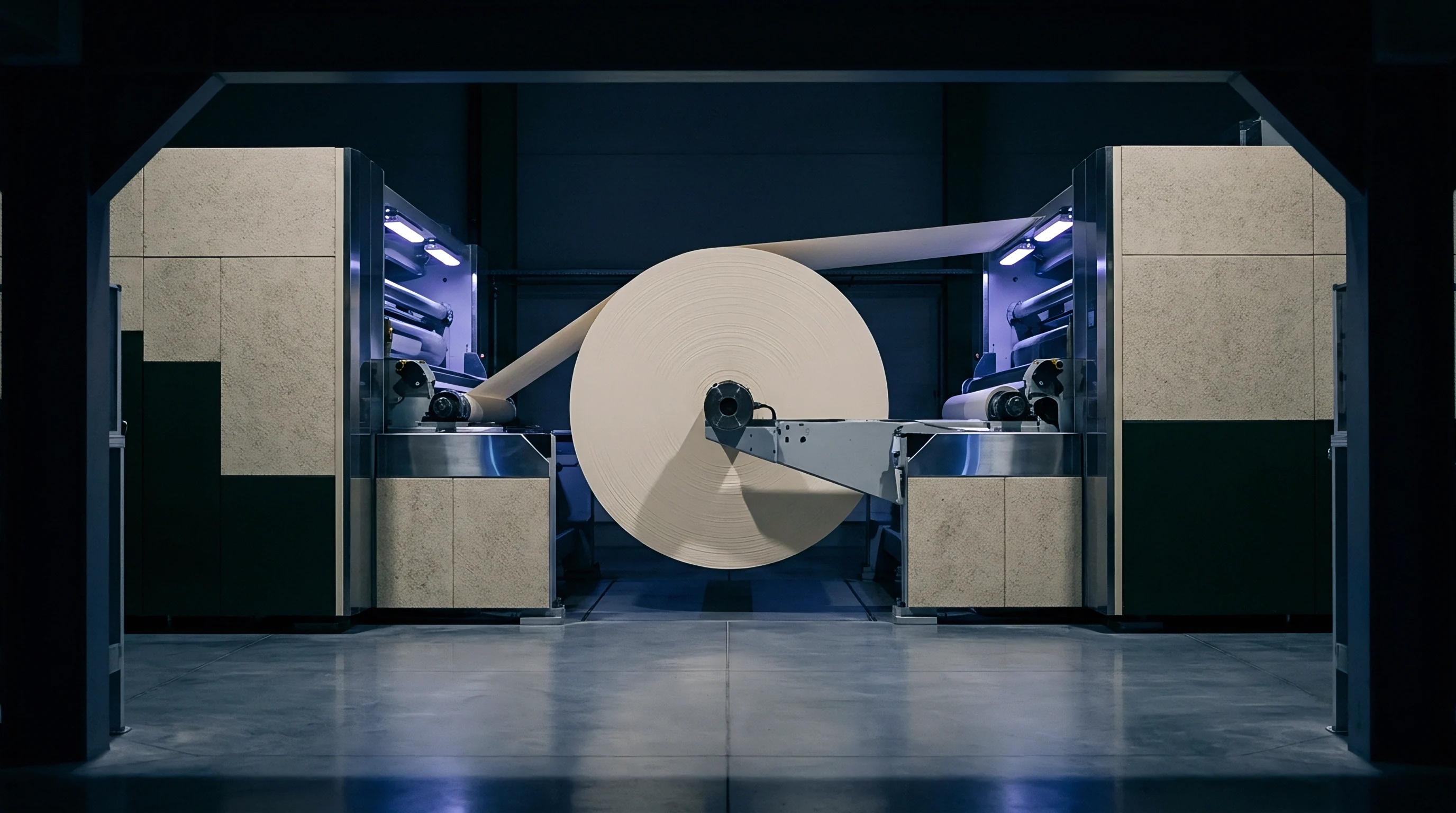
Paper machines produce continuous webs of paper or paperboard at fixed mechanical trim widths known as the machine deckle, which ranges from two metres to over nine metres on modern equipment. Converting lines rarely process full machine deckle widths directly. Sourcing practices cut full reels down into narrow child reels or parent sheets tailored for sheet-fed offset, flexographic, or gravure packaging presses.
Unused web width along the winder edges represents structural deckle loss that returns to the mill repulping process as broke. Trimming this loss directly improves fiber yield and unit production efficiency.
Every millimeter of wasted web width directly erodes operating margins.
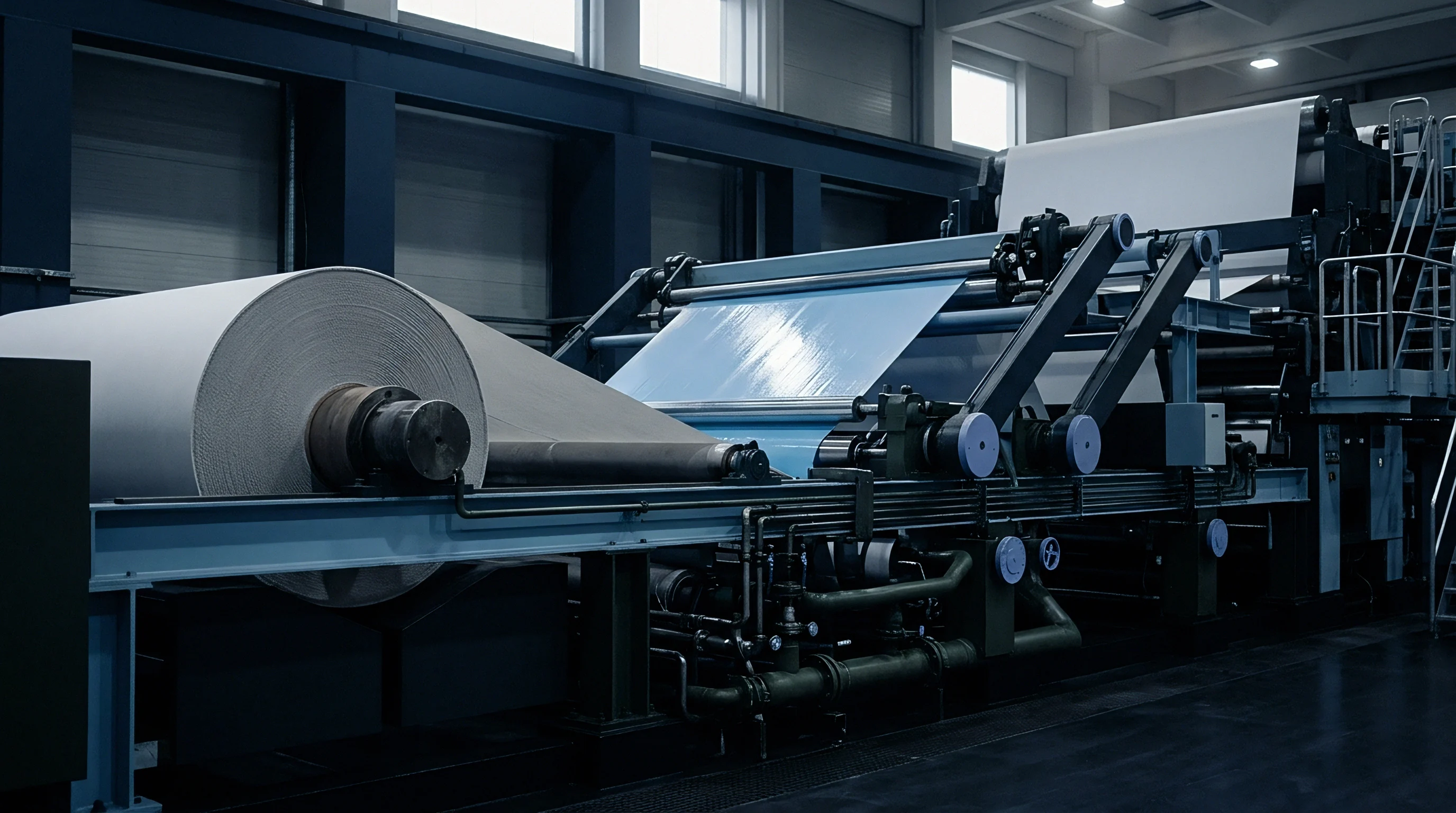
Edge slitter knives remove web margins on the paper machine winder to establish clean, straight roll shoulders. Wet-end water jets first establish raw edge limits on the forming wire, leaving thick, uncalendered edges that cannot enter finishing winders. Dry-end slitting knives on high-speed slitter-winders trim between fifteen and fifty millimetres from each edge of the parent web to eliminate low-density, frayed outer margins.
Under TAPPI T 410 and ISO 536 testing protocols for grammage determination, these edge trims consistently exhibit higher cross-direction basis-weight variance and non-uniform moisture absorption compared to the central deckle zone.
Edge trim slitting demands continuous web tension to prevent edge cracking on heavy boxboard.
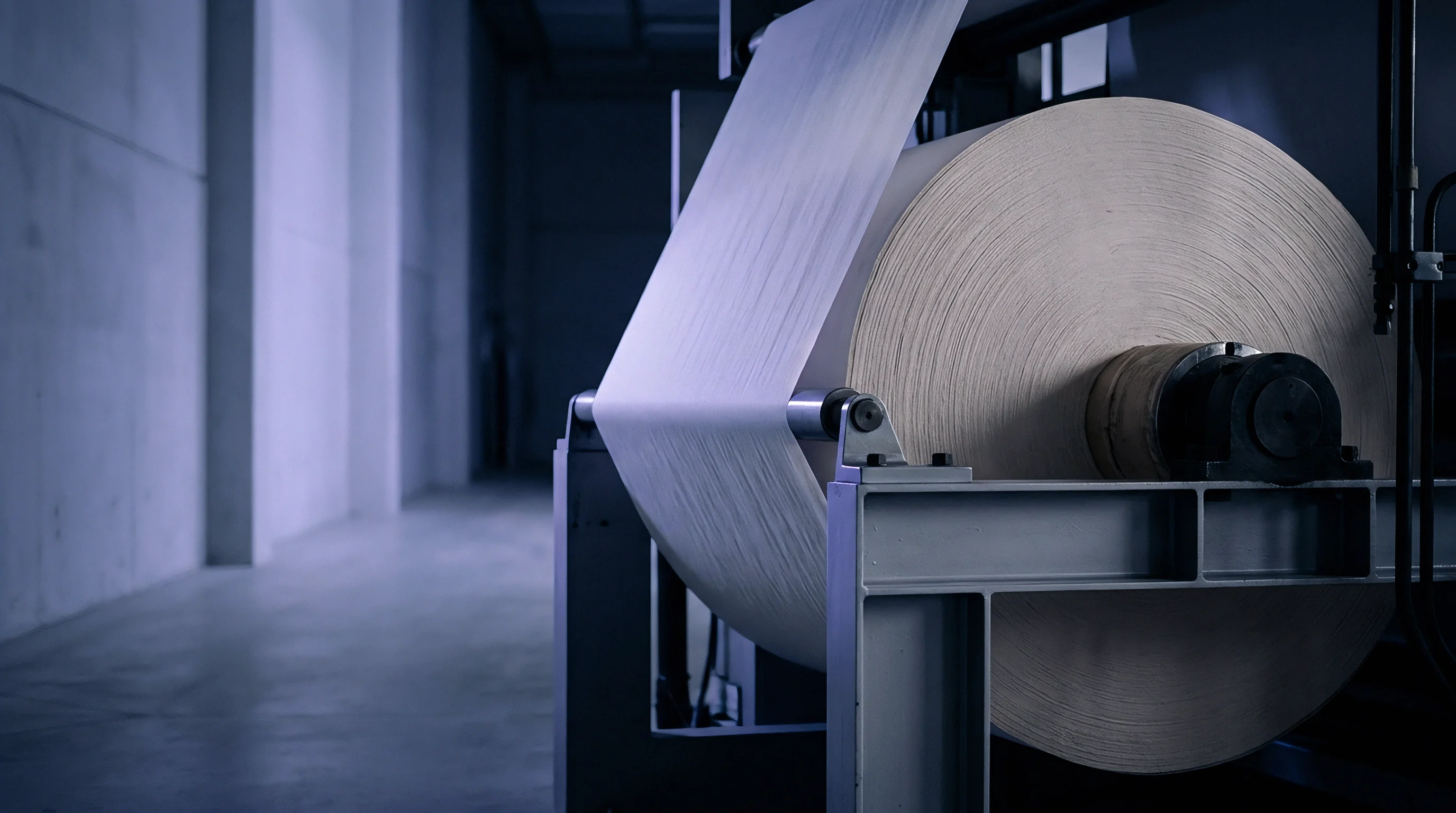
When slitting parent reels into continuous child coils or sheeter rolls, mechanical slitter knives exert shear forces on the sheet edge. Poor knife alignment creates localized dusting and micro-fractures along the sheet perimeter. Mill winders cut web roll edges under precise tension to prevent web instability during subsequent unwinding.
Edge Slitting Defects and Web Trim Degradation
Precision slitting requires balanced knife overlaps and slitting angles to maintain clean sheet edges across high-speed webs. Machine operators monitor four distinct edge failure modes during deckle slitting operations:
- Edge Bleed Flaking occurs when dull shear blades compress coated paperboard, shattering top-coating layers and leaving mineral dust along the reel shoulder.
- Slitter Dust Accumulation develops from incorrect knife shear angles, shedding loose cellulose fibers that adhere to sheet surfaces and cause print voids in offset lithography.
- Web Skew Drift happens when non-uniform slitter knife pressure deflects the continuous web, creating non-parallel child roll edges that jam rotary sheeter unwinds.
- Tambour Defect Skip arises when local moisture spikes near web edges cause slitter blades to rider-roll over paperboard, leaving uncut inter-ply fibers and jagged edges.
The orientation of individual fibers ultimately determines the board’s structural stiffness.
The total usable machine deckle fluctuates with web shrinkage during drying. Virgin kraft linerboard webs shrink between two and four percent across the dryer section, whereas recycled fluting grades shrink up to six percent depending on furnish refining levels. Mill schedulers adjust nominal deckle calculations according to real-time hygromechanical properties of the furnish to avoid shipping narrow parent sheets to converting plants.
A mill running boxboard at ninety-two percent deckle utilization pays for the unused eight percent through increased energy, water, and chemical inputs per merchantable tonne.
Allocation
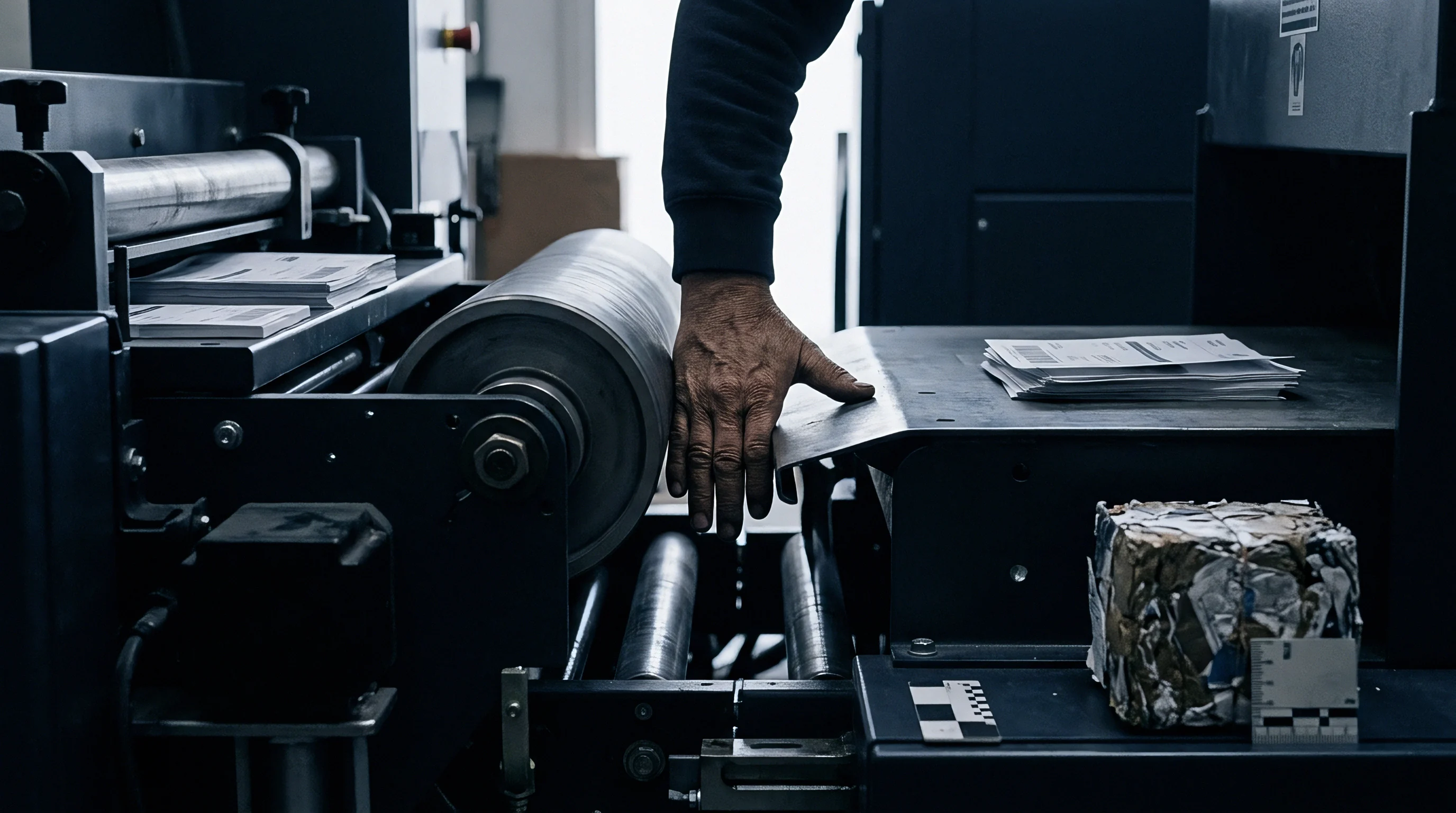
Parent sheet web trim allocation solves a classic cutting stock problem using mathematical linear programming. Sourcing engineers combine multiple child sheet sizes across the net available machine deckle width to maximize total web coverage. Advanced trim allocation algorithms minimize the total side trim waste generated across mill production schedules.
Higher trim fill rates reduce pulp consumption and lower carbon intensity figures per thousand square metres of converted folding carton stock.
Side trim stripped at the winder is routed directly back to the pulper.
The Gilmore-Gomory column generation algorithm provides the foundation for commercial deckle allocation software. The mathematical objective function minimizes total trim loss subject to customer order quantity constraints, maximum knife combinations on slitter-winders, and grain direction specifications. A primary reel width of 3,300 millimetres accommodating three customer orders requires dynamic pattern generation to keep trim loss under two percent.
- Calculate maximum usable net machine deckle by subtracting fixed winder edge knife allowances from nominal machine width.
- Compile pending customer order items by sheet width, sheet length, caliper, grammage, and required grain direction.
- Execute column generation algorithms to produce mathematical combination patterns that fill the deckle width.
- Filter combination patterns against mechanical winder constraints, including maximum slitter knife positions and minimum slit widths.
- Select the optimal combination pattern set that satisfies total order tonnage while minimizing side trim waste percentages.
Poor deckle fill quickly inflates unit production costs.
Grain direction requirements complicate parent sheet web allocation. Sheet-fed offset presses generally demand grain-long configurations for stiff packaging structures, where sheet length runs parallel to machine direction. Rotating a child sheet ninety degrees to improve deckle fill changes the grain orientation to grain-short, which severely reduces carton compression strength in corrugated and folding boxboard applications.
| Pattern Code | Child Sheet Layout (mm) | Total Used Deckle (mm) | Side Trim Waste (mm) | Deckle Utilization (%) |
|---|---|---|---|---|
| PAT-330-01 | 4 x 720 + 1 x 380 | 3,260 | 40 | 98.78 |
| PAT-330-02 | 3 x 1,020 + 1 x 200 | 3,260 | 40 | 98.78 |
| PAT-330-03 | 2 x 1,420 + 1 x 420 | 3,260 | 40 | 98.78 |
| PAT-330-04 | 5 x 630 | 3,150 | 150 | 95.45 |
| Calculated for 3,300 mm net deckle after 20 mm winder edge trim allowance per side under ISO 536 conditions. | ||||
Rotary sheeters located directly at the paper mill allow web allocation to combine reel slitting and sheet cutting in a single operational step. In-line sheeter allocation reduces intermediate winder re-handling and eliminates edge damage during reel storage. Converting plants purchasing parent sheets rather than reels rely on local sheet-fed trim planning to maximize square metre yields on press master sheets.
Inefficient allocation schedules generate excessive broke, raising raw material consumption across the paper mill floor.

Conversion
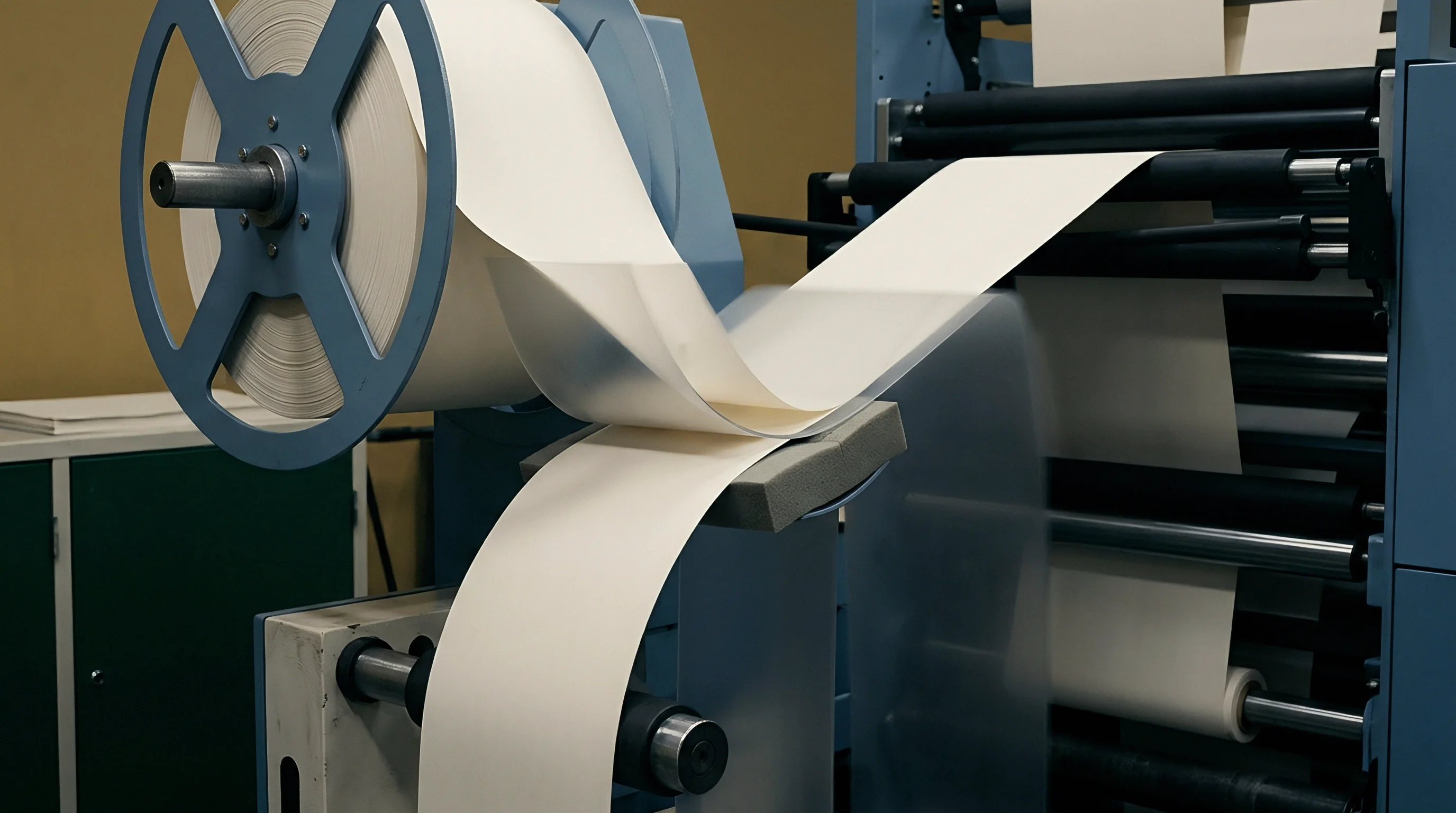
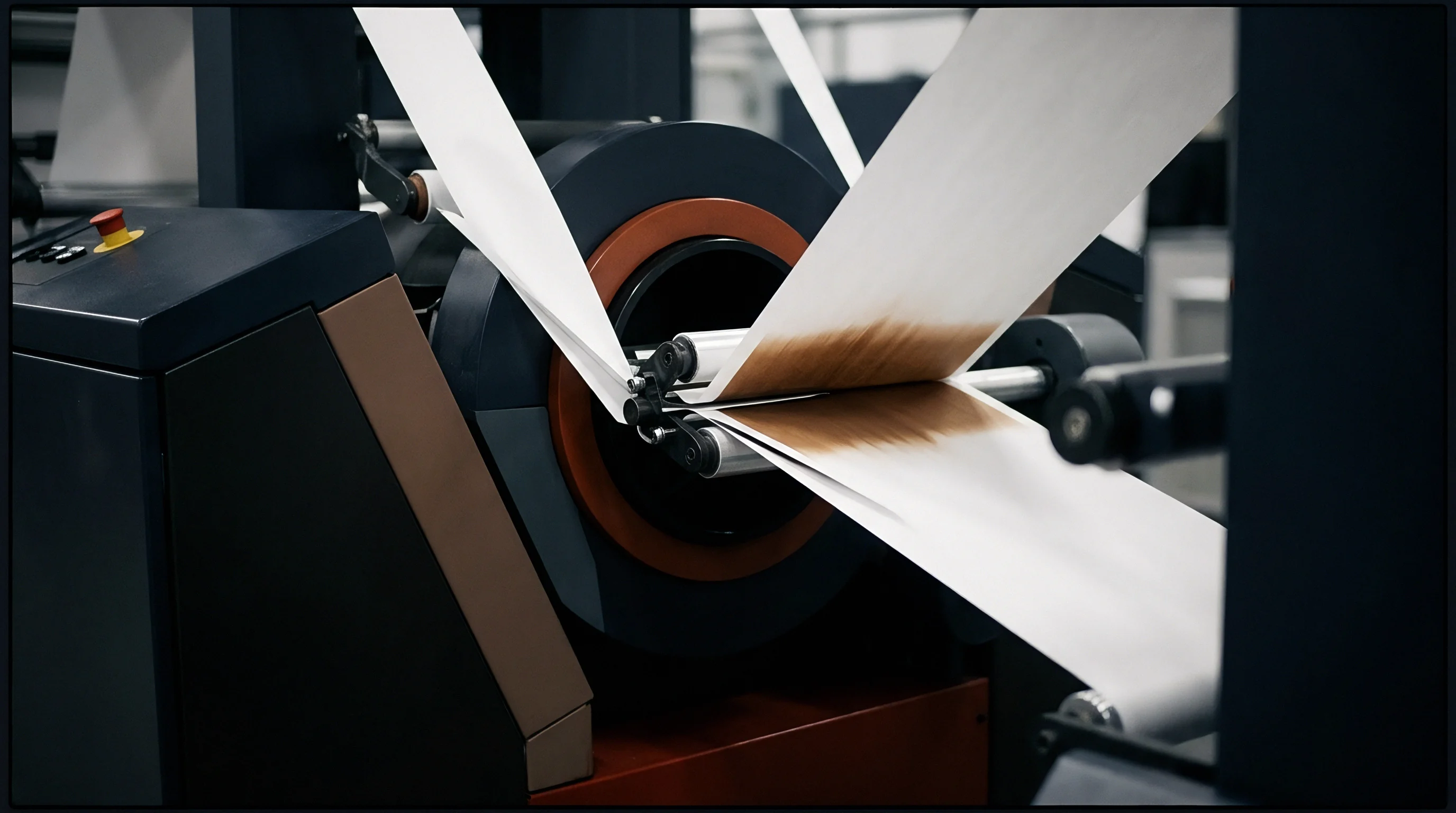
Converting parent rolls into precision press-ready sheets involves rotary sheeting or guillotine trimming operations. Rotary sheeters unspool parent reels through slitting knives before transverse fly-knives chop the continuous web into individual sheets. Sheeter yield performance depends on precise tension control, accurate draw roller metering, and sharp knife adjustments.
Edge squareness tolerances governed by ISO 216 and TAPPI T 409 mandate maximum diagonal deviations below 0.5 millimetres on high-speed sheet packaging lines.
Should Sheeter Knife Angles Change for Heavy Boxboard Grades?
Heavy SBS virgin cartonboard and thick coated recycled boards demand modified sheeter shear angles to prevent edge crushing. Increasing web thickness increases resistance against the rotary fly-knife during cut-off impact. Standard paper knife angles produce burst edges and coating flakes when shearing boxboard over 450 micrometres in caliper.
Adjusting the dead-knife angle and helical fly-knife shear pitch produces square, dust-free sheet profiles that feed smoothly into high-speed sheet-fed offset presses.
At 23 degrees Celsius and 50 percent relative humidity, a two-millimeter edge knife trim allowance prevents guillotine squeeze-out.
Guillotine re-trimming introduces an additional yield loss factor into paper conversion calculations. High-density paperboard stacks compress under hydraulic clamp pressure during guillotine cutting. This compression causes soft-top draw, where top sheets in the stack shift forward and cut slightly shorter than bottom sheets.
Converting engineers incorporate a three to five millimetre re-trim allowance per stack edge to ensure precise squareness and dimension consistency across all sheets in a lift.
Precise squareness on sheet edges prevents registration errors and press misfeeds.
- Trim Knife Clearance Audit verifies gap spacing between upper and lower slitter blades to prevent fibrous burrs along sheet sides.
- Draw Roller Slip Inspection evaluates surface friction on web feed rollers to prevent sheet length variation during acceleration cycles.
- Stack Clamp Pressure Alignment calibrates hydraulic clamp force against caliper metrics to eliminate paper lift skew during guillotine cutting.
- Static Elimination Bar Testing checks ionization voltage bars to clear electrostatic charge on freshly sheeted stock stacks.
Unconditioned paper readily absorbs ambient moisture and expands.
Rotary sheeters operating multi-reel unwinds improve throughput but exacerbate trim variation across individual web layers. When sheeting four parent reels simultaneously, web tension differences between top and bottom positions lead to sheet length variation within the same cut stack. Mills overcome multi-reel length variations by setting conservative tail-trim margins on downstream press layouts.
Edge dust complaints often stem from customer converting knives rather than mill deckle slitting operations.
Variance
Cross-direction physical property profiles across the machine deckle dictate child sheet functional performance. Moisture content, basis weight, caliper, and fiber orientation vary systematically from web center to web edges. Differential drying shrinkage causes web edges to lose moisture faster than the center zone on conventional dryer cylinders.
Edge zones exhibit higher density, lower caliper, and elevated air permeability compared to center deckle samples evaluated under TAPPI T 411 and ISO 534 standards.
Moisture levels inevitably shift across the deckle width during drying.
Uneven cross-direction fiber orientation creates localized sheet curl and lay-flat issues during offset printing and folding carton converting. Near web edges, hydrodynamic drag forces along headbox pond sides deflect fiber orientation away from pure machine direction. Child sheets slit from outer deckle positions possess higher cross-direction stiffness ratios and asymmetric hygroexpansivity profiles, leading to diagonal curl under ambient humidity fluctuations.
Under ISO 187 conditioning specifications, edge roll caliper variance exceeding three percent invalidates high-speed feeder performance guarantees.
Exposed web edges cool significantly faster than the central sheet.
Modern paper machines utilize automatic profile control systems to flatten cross-direction variations. Dilution headboxes adjust local fiber slurry concentrations across the wire, while segmented steam boxes and infrared drying arrays correct edge moisture profiles. Despite advanced control systems, the outer five percent of the machine deckle retains distinct physical characteristics due to unrestrained drying shrinkage along physical web borders.
| Deckle Position | Grammage Drift (g/m²) | Caliper Variation (µm) | MD/CD Tensile Ratio | Cobb 60 Water Absorption (g/m²) |
|---|---|---|---|---|
| Left Edge (0-200 mm) | 352.4 | 442 | 2.85 | 28.5 |
| Quarter Deckle (1,050 mm) | 350.1 | 451 | 2.45 | 26.2 |
| Center Web (2,100 mm) | 349.8 | 453 | 2.38 | 25.8 |
| Quarter Deckle (3,150 mm) | 350.2 | 450 | 2.48 | 26.1 |
| Right Edge (4,000-4,200 mm) | 353.1 | 441 | 2.89 | 28.8 |
Board thickness drops noticeably near the extreme edges of the web.
Sourcing engineers specifying packaging substrates for tight-tolerance automated packaging lines evaluate deckle origin records on mill test certificates. Sheets sourced exclusively from outer deckle positions can cause register drift on multi-color printing presses due to uneven moisture expansion. Tracking reel origin numbers allows converting plants to group sheets cut from similar deckle positions, stabilizing press settings across long production runs.
Does outer deckle edge shrinkage introduce permanent structural anisotropy that cannot be compensated by automated headbox dilution controls?

Economics
Deckle yield optimization directly establishes landed substrate unit costs for commercial print and packaging procurement. Mills quote base paper prices by metric tonne, but converting plants consume substrate by the square metre or thousand finished sheets. Unusable side trim waste, off-cut web scrap, and sheeter make-ready losses dilute the effective yield per purchased tonne.
A parent sheet allocation strategy that increases deckle utilization from ninety-three percent to ninety-eight percent reduces total raw material spend by five percent on large packaging orders.
The continuous reel width effectively dictates maximum mill throughput and tonnage.
Paper mills enforce commercial deckle policies to protect machine profitability. When custom order sizes leave an open gap on the machine deckle that cannot be filled with standard stock sheet sizes, mills apply off-deckle trim surcharges. These surcharges scale inverse to deckle fill efficiency, reaching ten to fifteen percent base price increases when deckle fill drops below ninety percent of machine capacity.
Buyers avoid surcharges by accepting standard parent sheet sizes or allowing mills to fill remaining deckle gaps with standard merchant inventory sizes.
Paper mills charge side trim penalties on custom reel widths that fall below ninety-four percent of the machine knife deckle.
A standard procurement scenario demonstrates the direct financial impact of deckle optimization. Consider a folding carton order requiring 400,000 sheets of 350 g/m² SBS cartonboard in custom dimensions of 710 mm by 1,020 mm with grain parallel to the 1,020 mm dimension. Purchasing non-optimized standard parent sheets of 720 mm by 1,040 mm generates 25 millimetres of combined guillotine trim waste per sheet, representing a net substrate yield loss of 3.4 percent.
On a fifty-tonne order priced at 1,450 USD per metric tonne, this trim delta represents 2,465 USD in direct waste costs before adding converting labor and waste handling overhead.
Mill minimum order quantities (MOQ) dictate whether custom deckle runs remain economically viable compared to standard stock parent sheet conversion. Custom reel slitting on mill winders typically demands minimum batch runs of twenty to fifty tonnes per caliper step. Smaller order volumes force buyers to select standard merchant stock parent sheets, shifting trim allocation from the mill machine winder to local converting plant sheeters and guillotines.
Contracts for custom paperboard deckle runs specify that trim loss under three percent stays non-chargeable to the mill, while trim loss exceeding five percent grants the buyer a credit equal to the scrap broke value delta.