Reverse Side Water Application for High Speed Web Moisture Balance
Reverse side water application restores moisture balance and eliminates curl by re-wetting dry wire-side fibers before converting stresses lock the sheet.
Curl
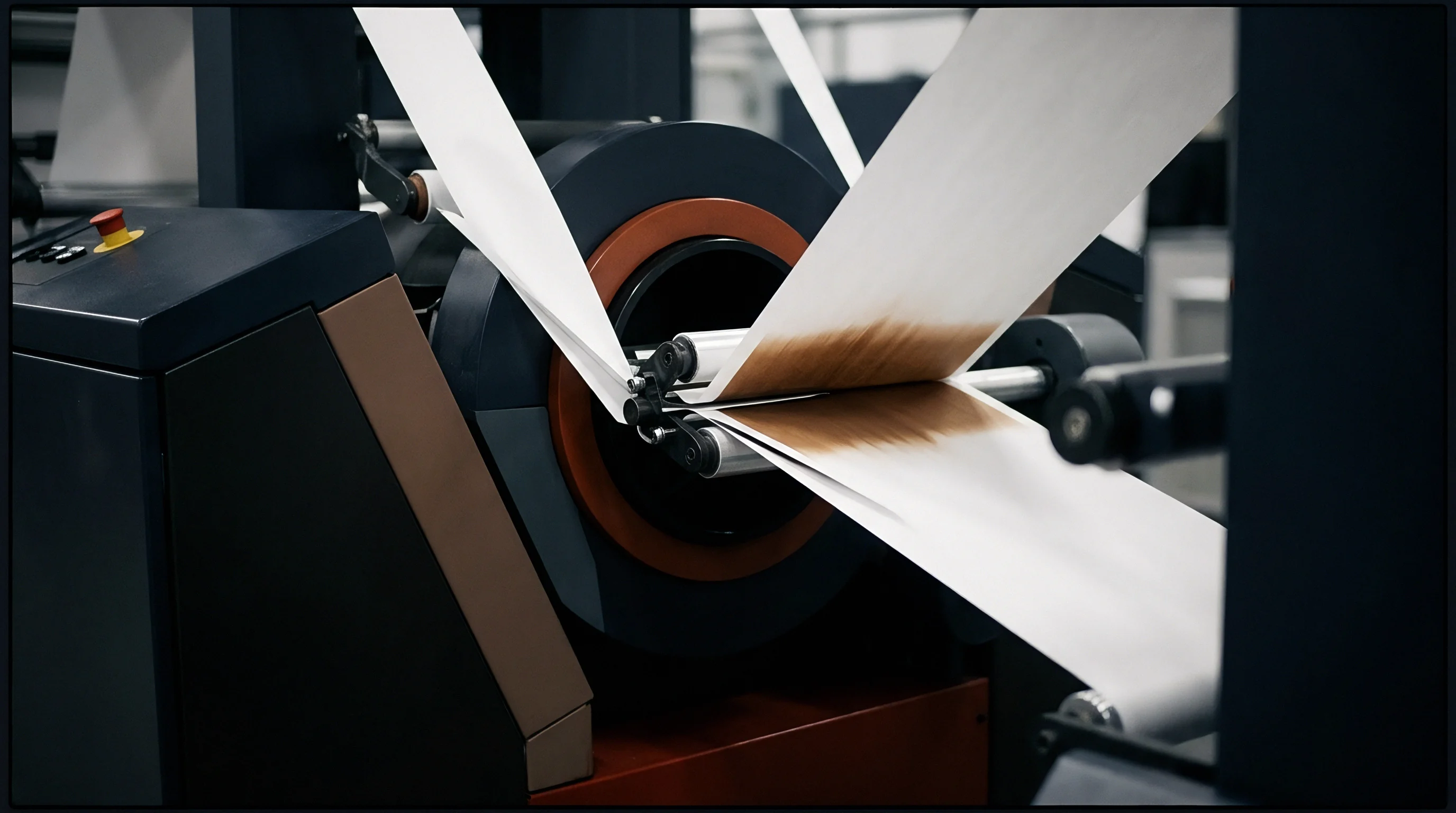
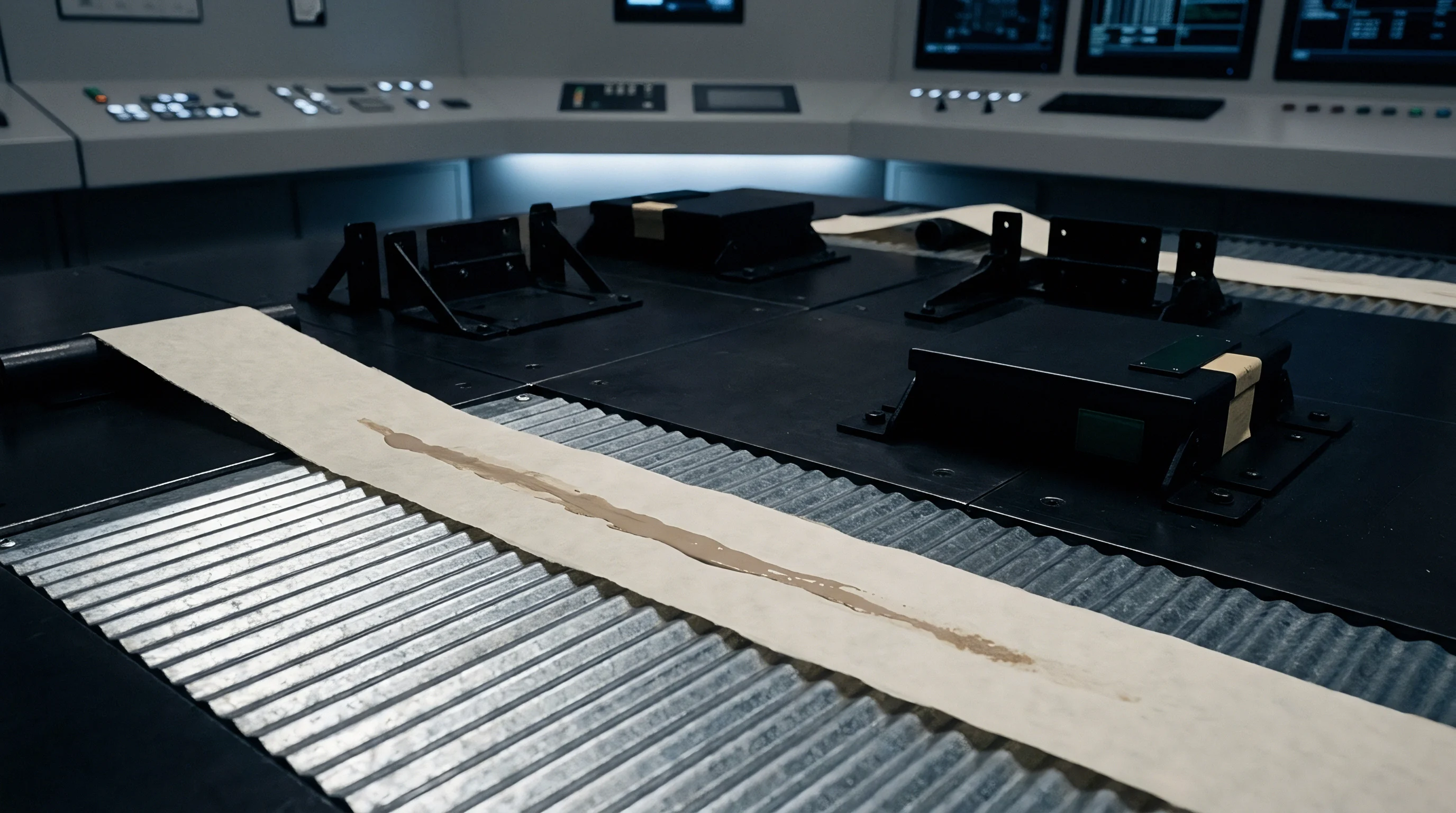
Coated paperboard leaving a drying hood carries an uneven moisture profile through its thickness. Heat applied to the printed or coated face drives free water out of top plies while bottom cellulose layers retain bound moisture, establishing severe internal stress. Sheet flatness deteriorates as a consequence of this hygroexpansive imbalance.
Cellulose fibers swell crosswise when wet and shrink during desiccation. When the top face contracts more than the wire side, the web forms an upward dish across the cross direction. Reverse side water application restores equilibrium by reintroducing controlled fluid volume to dry outer fibers, releasing mechanical tension before sheeting, die-cutting, or barrier lamination.
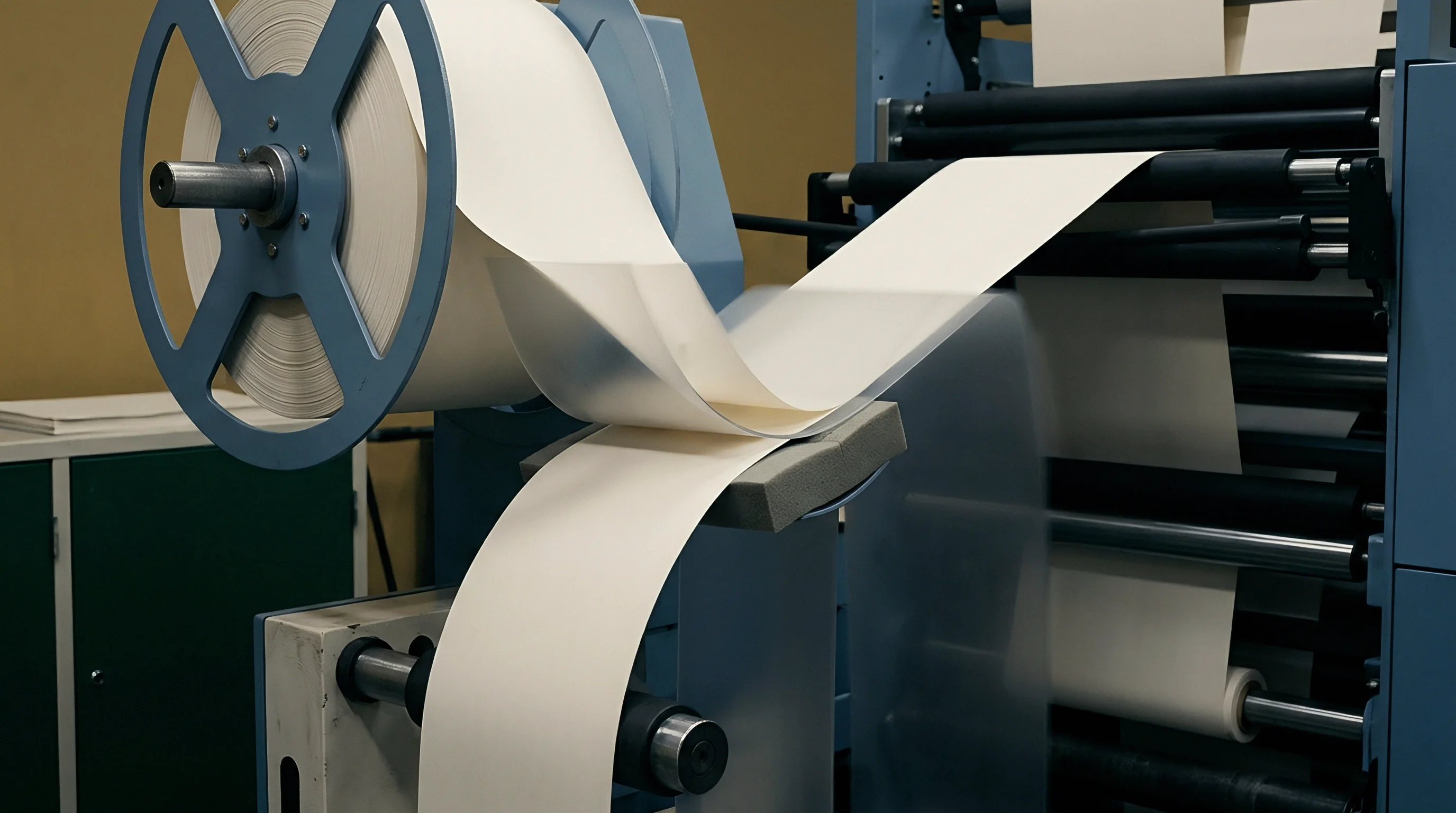
Converting equipment demands predictable web behavior at speeds surpassing eight hundred meters per minute. A web possessing cross-directional distortion skews across draw rollers, wrinkles inside calendar nips, and skids through rotogravure stations. Flat sheets feed faster.
Inserting a precise film of moisture across the uncoated wire side balances fiber contraction rates on opposing faces of the sheet. The applied fluid penetrates the surface structure, swelling collapsed cell walls in the base sheet and relaxing the dried network. Without this corrective liquid film, the finished substrate twists immediately upon exposure to ambient pressroom humidity.
Conditioning at 23 degrees Celsius and 50 percent relative humidity under ISO 187 reveals that cross-direction hygroexpansion climbs by 0.15 percent for every one percent increase in total web moisture content.
Modern high-speed converting runs encounter specific structural distortions when moisture profiles across the sheet caliper diverge:
- Cross Direction Axis Curl develops when shrinkage differentials between the wire side and the felt side pull the outer edges into an upward or downward roll perpendicular to web movement.
- Diagonal Twist Warp emerges whenever fiber orientation angles within multi-ply forming cylinders deviate from the machine direction, translating linear contraction imbalances into torsional corner lifting.
- Edge Fluting manifests along outer slit margins when radiant heat sources desiccate web boundaries faster than center lanes, creating undulating cockle troughs during rewinding.
Fibers expand unevenly across thickness. Water application systems counteract these phenomena by re-wetting dried fiber zones immediately prior to final calender passes or chill rolls. Imbalanced hygroexpansive forces that escape correction during coating or laminating passes propagate into conversion scrap, jamming transfer chutes in automatic folding-carton gluers and causing misregistration across multi-color sheetfed offset presses.

Mist
Fluid delivery onto rapidly advancing substrate faces relies on finely atomized droplets delivered across partitioned zones. Moving webs drag a boundary layer of turbulent air that deflects coarse sprays and creates dry patches. Modern fluid application assemblies use enclosed chambers containing spinning discs or high-frequency acoustic emitters to shatter aqueous streams into uniform micro-droplets.
These droplets possess sufficient kinetic energy to pierce the boundary layer and wet the passing cellulose matrix uniformly.
Rotor damping technology remains the dominant mechanical format for fluid delivery on web presses and extrusion coaters. Rotating discs throw a controlled curtain of atomized fluid through adjustable apertures positioned above the moving sheet. Calibrated shutters open and close over discrete zones across the machine width, allowing operators to deposit higher liquid volumes onto dry web edges while throttling center nozzles.
Web tensions spike instantly when fluid delivery surges erratically. Fluid supply tanks feed these rotors through positive displacement pumps, maintaining steady volumetric metering regardless of line speed fluctuations.
| Application System | Application Range (g/m2) | Droplet Diameter (microns) | Velocity Limit (m/min) |
|---|---|---|---|
| Rotor Damping Discs | 0.2 to 3.5 | 25 to 55 | 1200 |
| High-Pressure Hydraulic Nozzles | 1.5 to 8.0 | 60 to 140 | 650 |
| Ultrasonic Transducer Bars | 0.1 to 1.8 | 12 to 30 | 900 |
| Steam Condensation Hoods | 0.5 to 4.0 | Sub-micron phase | 1400 |
Setting up a fluid application station on a high-speed laminator follows a direct mechanical commissioning sequence:
- Verify that supply water electrical conductivity sits below fifty microsiemens per centimeter to prevent mineral buildup inside rotor distribution orifices.
- Activate the boundary layer exhaust blower to generate negative static pressure inside the application cabinet prior to web threading.
- Engage the rotor drive motors to reach an operational speed of four thousand revolutions per minute before opening fluid intake valves.
- Align pneumatic delivery shutters against the edge sensors to prevent overspray onto guide rollers and web turning bars.
- Couple the dosing pump rate directly to line speed encoders so that application volume scales linearly during line ramp-up.
Water breaks surface sizing. Coarse hydraulic sprays deposit large droplets that pool on high-density paperboard surfaces, generating mottled cockle patterns that show through subsequent gloss varnish layers. Steam showers raise web temperatures, accelerating evaporation rates before fibers absorb the condensed moisture.
Equipment builders defend uneven dampening results by asserting that incoming base reels exhibited excessive basis weight variability across the machine width.

Sorption
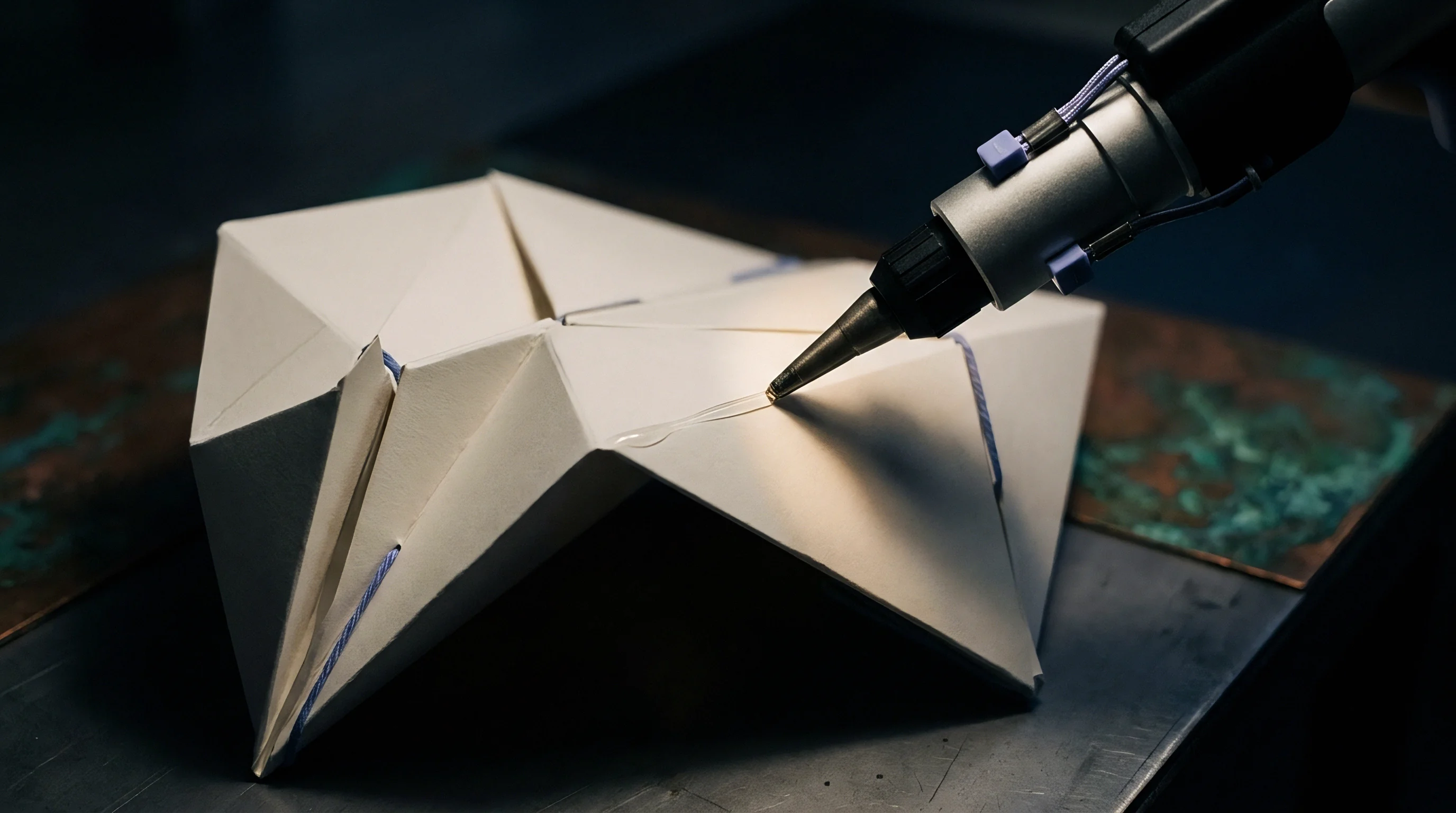
Capillary action draws applied water into the void spaces between cellulose fibers within milliseconds of surface impact. The rate of fluid ingress follows the Lucas-Washburn relation, where penetration depth correlates directly with pore radius, liquid surface tension, and contact angle, while running inversely to dynamic viscosity. Uncoated sides absorb liquid immediately.
High-speed webs moving at fifteen meters per second grant a contact dwell window of under twenty milliseconds between the dampening zone and subsequent turning rolls or drying cylinders. Fluid that lingers on the external surface smears over idlers, picking up debris and contaminating subsequent converting stages.
Where Does Penetration Depth Break Dimensional Stability?
Liquid volume applied to the reverse wire side must penetrate deep enough to reach structural fibers without saturating internal starch networks. When fluid remains trapped in the superficial surface plies, drying generates localized skin tension that intensifies outward curl. Conversely, excessive fluid volumes softening the central z-direction plies reduce internal bond strength, leading to delamination under tension.
Caliper drops under nip pressure when water softens internal plies excessively.
| Substrate Classification | Grammage (g/m2) | Cobb 60 Value (g/m2) | Target Moisture (%) | CD Hygroexpansion (% per % RH) |
|---|---|---|---|---|
| Folding Boxboard (FBB) | 250 | 28 to 35 | 7.5 to 8.5 | 0.085 |
| Solid Bleached Sulfate (SBS) | 300 | 22 to 28 | 6.2 to 7.0 | 0.065 |
| White Lined Chipboard (WLC) | 350 | 45 to 65 | 8.0 to 9.2 | 0.110 |
| Supercalendered Kraft (SCK) | 80 | 18 to 24 | 5.0 to 5.8 | 0.045 |
Surfactants added to dampening water modify dynamic surface tension, lowering contact angles against stubborn sizing agents without creating foaming problems inside circulation tanks. Non-ionic wetting agents accelerate liquid migration through hydrophobically sized outer layers, directing water molecules directly into fiber walls before the sheet enters heated lamination nips. Cold water slows fiber absorption.
Temperature control units maintain process water between thirty-five and forty degrees Celsius to optimize penetration velocity into dense multi-ply cartonboard.
Applying water directly to the wire side counteracts curl only when droplets penetrate past the surface sizing before heated drying cylinders lock the fiber network.
Drying cylinders positioned immediately after the dampening unit flash off surplus surface moisture while driving vapor into the internal paper structure. The precise division between liquid volume retained by cell walls and vapor expelled into exhaust ducts remains an active variable across variable-caliper packaging runs.

Drift
Moisture profiles fluctuate across long production runs as mill roll ambient temperatures and press hall humidity shift. A delivery setting established during morning make-ready produces distorted sheets by afternoon if ambient moisture drops ten percent. Online near-infrared scanning gauges measure total web moisture and cross-direction moisture profiles after the application unit.
These scanners transmit real-time telemetry to closed-loop controllers that adjust individual rotor shutter positions across the machine deckle.
Uneven moisture drives register wander. Printing units running web-fed flexographic or gravure packaging substrates depend on stable web dimensions to hold print-to-print and print-to-cut registration tolerances within fifty microns. When reverse side dampening units over-saturate one edge, that edge elongates under web tension, throwing diagonal register off and forcing servo compensators to their mechanical limits.
Water application systems operating without closed-loop infrared moisture measurement drift toward over-saturation within twenty minutes of line acceleration.
Operational defects multiply across downstream equipment when moisture dampening settings drift outside operational bands:
- Blistering During Extrusion Coating happens when excessive entrapped water rapidly turns to steam beneath molten polyethylene films, creating unbonded surface bubbles.
- Scuffing on Turn Bars develops because unabsorbed liquid softens surface fibers, leaving chalky paper rubbings across polished steel turning rollers.
- Corrugating Medium Delamination occurs when high moisture content weakens internal fiber bonds, causing structural collapse inside single-facer corrugating nips.
- Foil Stamp Flaking appears along damp web zones because residual surface water chills hot-stamping dies below adhesive activation thresholds.
Dry air shrinks wood fibers. Compensating for dry atmospheric conditions requires continuous monitoring of reel-to-reel moisture baselines before applying reverse fluid films. Stable converting performance demands matching the volume of applied fluid to the exact rate of moisture lost during thermal drying passes.
Penalty
Commercial contracts for high-speed cartonboard converting enforce strict tolerances on moisture levels and planarity. Converters face punitive scrap debits and processing deductions when delivered stock curls outside machine thresholds. High-speed folder-gluers reject curled carton blanks, causing downtime charges that reach hundreds of dollars per hour.
Quality inspection systems measure sheet flatness by setting cut blanks on leveled granite inspection stones, measuring corner lift with dial gauges under controlled atmospheric exposure.
| Parameter | Standard Tolerance Band | Rejection Threshold | Commercial Penalty Action |
|---|---|---|---|
| Absolute Moisture Content | 6.5% to 8.0% | Below 5.5% or Above 9.0% | Price deduction of 3% per 0.5% moisture variance |
| CD Moisture Profile Spread | Plus or minus 0.5% | Variance exceeding 1.2% | Full reel lot rejection and replacement freight charge |
| Sheet Edge Lift (Curl) | 0 to 4.0 mm | Exceeding 8.0 mm | Converter sorting fee of 45 dollars per gross metric ton |
| Internal Bond (Scott Bond) | 140 to 210 J/m2 | Below 110 J/m2 | Lamination failure claim covering lost production run value |
Converting margins drop quickly. Excess water application degrades internal ply strength, creating cartons that split during high-speed scoring. When folding boxboard exhibits severe cross-direction curl, high-speed automated packaging lines experience carton feeder misfeeds that shut down filling operations.
Brand owners document these line halts, charging back lost packaging hall productivity directly to the converter through contract deduction debits.
Standard contract annexes specifying DIN EN 12281 establish that delivered reams showing more than eight millimeters of sheet curl face immediate rejection at the intake dock.
Suppliers seek protection by incorporating standard merchant trade clauses that limit claims to material replacement while disclaiming consequential press downtime costs. When purchasing specifications explicitly link payment releases to ISO 187 conditioning compliance and verified flatness tolerances, buyers retain the commercial leverage required to enforce financial chargebacks for moisture-induced line stoppages.