Production Boundary
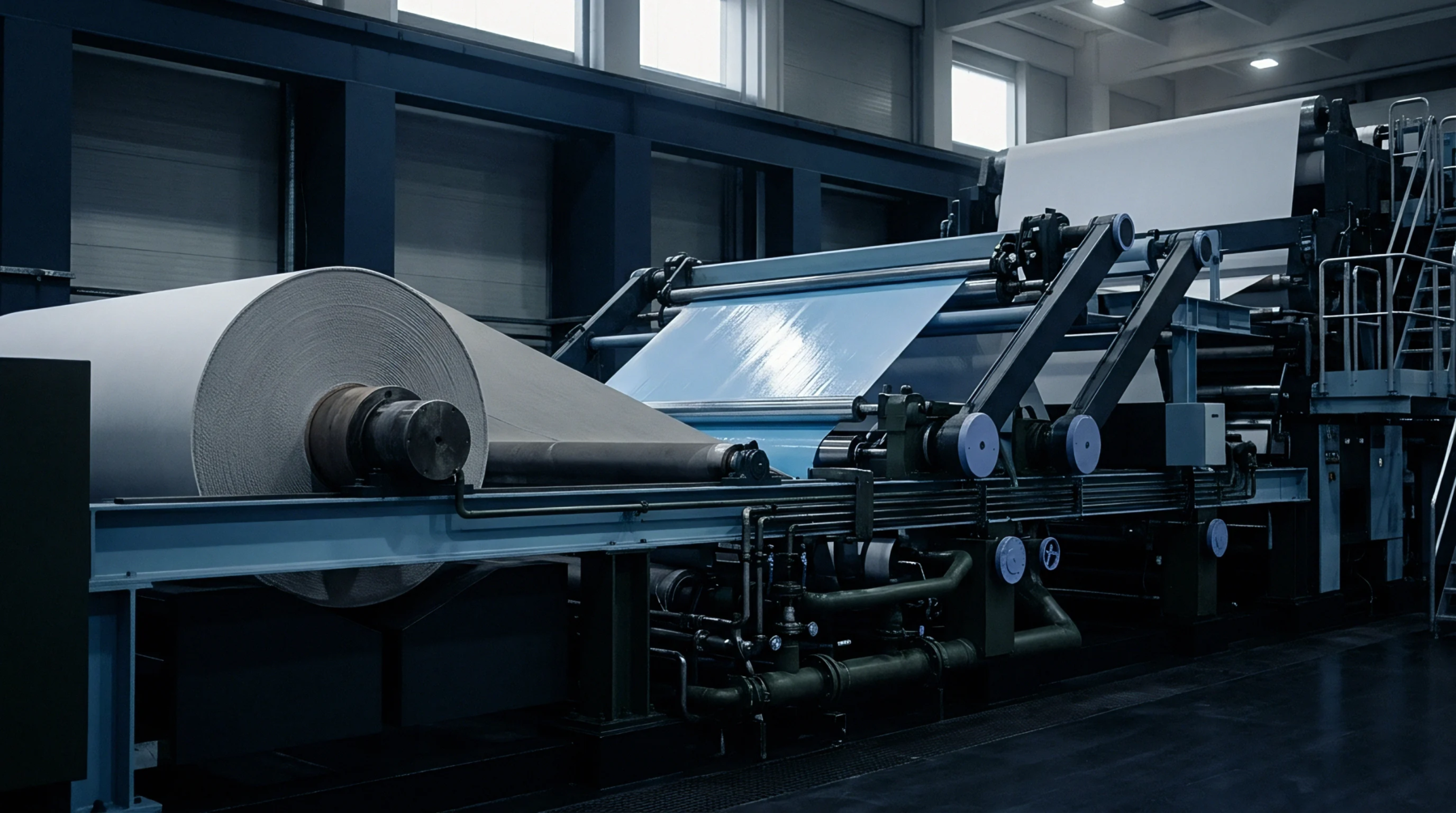
Paper width at the wet end defines the physical span of the sheet forming on the wire. The machine deckle limits the maximum lateral dimension of a web before trimming at the winder occurs. Any material produced beyond this physical threshold lacks structural integrity or uniform drainage across the forming fabric.
Constraints at the headbox dictate this distance because the flow velocity drops near the edges of the slice. Establishing this limit governs how a mill manages fibre distribution across the wire.
Conversion Capacity
Slitting operations depend on the total width remaining after edges are removed to ensure dimensional stability. Converters calculate final roll yield by subtracting the trimmed waste from the initial forming width. Maintaining consistent tension across the entire span prevents wrinkles or uneven caliper during the drying process.
Production schedules prioritize wider runs to minimize the ratio of trim waste to sellable goods. High speed machines require precise edge control to keep the web centered within these fixed physical boundaries.
Systemic Constraint
Total output volume relies on the difference between the forming width and the customer requirements for specific sheet dimensions. Printers demand precise margins so the production plan allocates space for mechanical guide lines and moisture control variations. Wider reels allow multiple narrow lanes to run simultaneously which reduces the number of passes required to fulfill a large order.
Optimization of the sheet layout within this available span minimizes energy loss and fiber usage. Efficient utilization of the available width determines the economic viability of a specific paper machine run.