Evaluating Machine Direction Anisotropy and Crease Ratios in SBS Board
Evaluating machine direction anisotropy and crease depth ratios in SBS board balances fold integrity against corner springback on high-speed cartoning lines.


Grain
Fibre orientation in Solid Bleached Sulfate packaging boards stems directly from headbox hydrodynamics and the speed differential at the wire. Suspended chemical pulp enters the wet end at a controlled consistency, where the jet-to-wire ratio sets the alignment of bleached hardwood and softwood fibres. When stock velocity matches wire speed, fibre distribution approaches a random, isotropic arrangement.
In practice, commercial board machines run faster to maintain throughput, creating drag that pulls fibres parallel to the machine direction and fundamentally altering mechanical performance across every principal axis of the finished board.
Under ISO 1924 tensile testing, the ratio between machine direction and cross direction elastic modulus reveals the exact orientation profile produced at the wet end. Solid Bleached Sulfate substrates typically present MD-to-CD stiffness ratios between 1.8:1 and 3.2:1. Softwood fibres in the internal plies provide tensile resistance along their longitudinal axis, whereas hardwood fibres in the outer plies supply surface smoothness and compression strength.
This orientation is not uniform through the thickness profile; outer plies experience greater shear stress during drainage on Fourdrinier formers, producing higher alignment than in the core and introducing mechanical coupling when the sheet flexes.
This anisotropy influences every downstream converting step, from sheet feeding to die-cutting impression depth. Board passing through rotary or flatbed die-cutters shows distinct failure modes depending on whether creasing rules run parallel or perpendicular to the primary fibre alignment. Creases aligned with the machine direction separate fibres laterally, whereas cross-direction creases force individual fibres to bend, compress, and shear transversely.
Because wire speed governs this orientation, score profiles and widths must match sheet thickness and directional grain to prevent clay coating fracture during high-speed folding.
Hydrodynamics at the Wet End
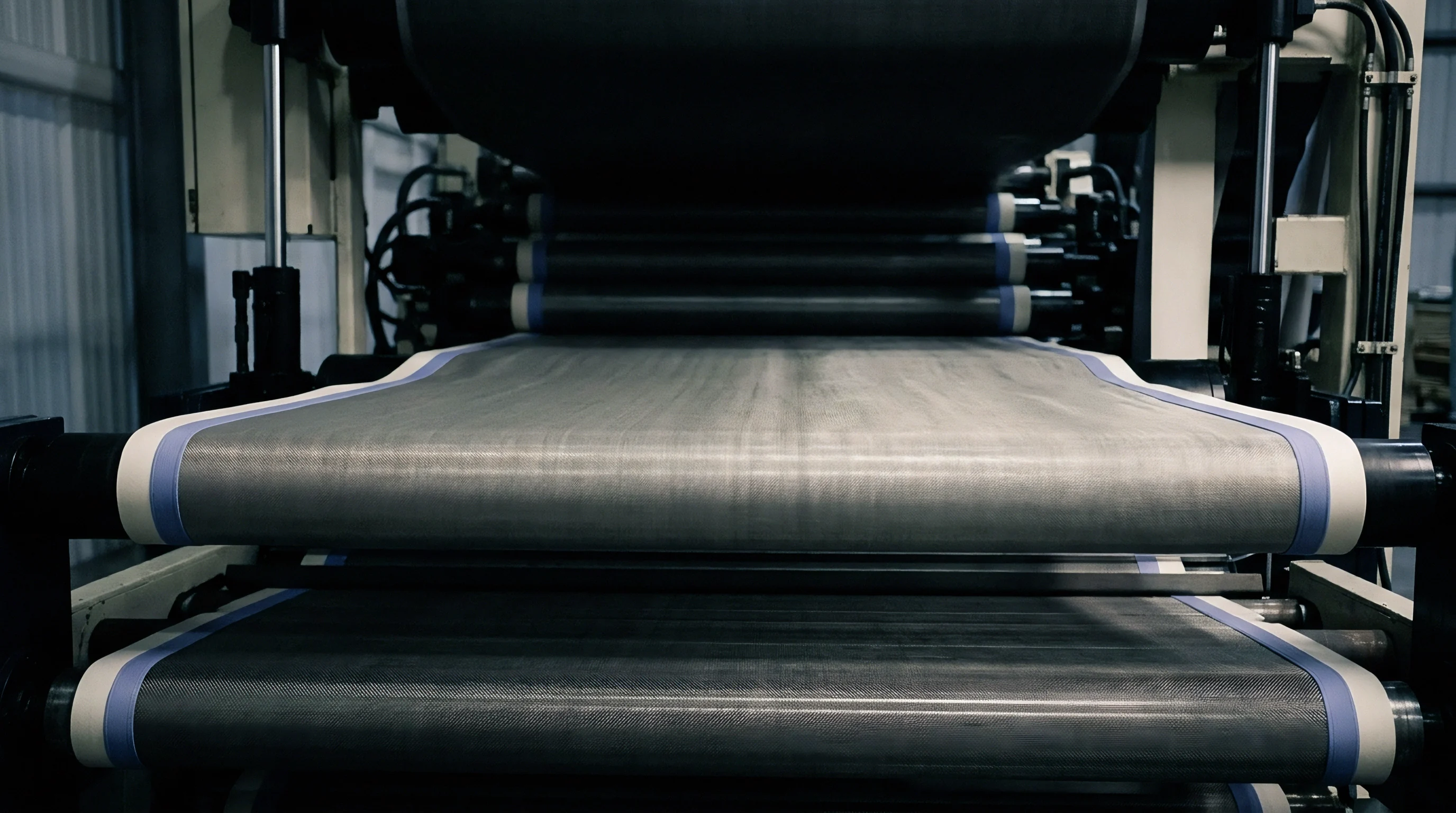
Bleached chemical pulp slurry discharges through the headbox nozzle onto the moving wire at velocities calibrated to control fibre alignment. The differential between stock slurry speed and wire velocity ~ rush or drag ~ governs the mechanical anisotropy of the wet web. Running with higher drag accelerates dewatering while aligning long softwood fibres parallel to the direction of travel.
Multi-ply SBS machines use separate headboxes or former units to deposit distinct pulp layers: the top ply uses short hardwood fibres like eucalyptus or birch for print smoothness, while the middle plies incorporate long softwood fibres like southern yellow pine to build flexural stiffness.
Stock dilution at the headbox determines the turbulence available to break up fibre flocs prior to drainage. Higher consistency restricts fibre mobility, locking aligned structures into place as dewatering elements draw water through the forming fabric. Suction boxes and top formers set the internal matrix before natural rotational diffusion can randomize fibre orientation.
As a result, high-speed multi-wire board machines produce higher mechanical anisotropy than slower single-Fourdrinier lines, requiring converting plants to adapt tooling geometry rather than expecting isotropic board from commercial mills.
Tensile Anisotropy and Structural Asymmetry
Mechanical testing under ISO 1924 highlights marked directional differences in elastic modulus and breaking force. The machine direction yields high tensile strength with minimal elongation, whereas the cross direction exhibits lower ultimate strength alongside significantly higher elongation before rupture. Tensile energy absorption, measured in joules per square metre, varies between axes according to how the hydrogen-bonded cellulose network uncoils and shears.
Under tension parallel to fibre alignment, stress loads the crystalline cellulose backbone directly; cross-direction tension loads the inter-fibre bonds, which yield at lower force thresholds.
Z-direction tensile strength, evaluated via TAPPI T541, measures internal bond strength between individual pulp plies. This perpendicular cohesion governs how cleanly the board delaminates during scoring impression. Highly oriented machine-direction sheets often exhibit reduced cross-direction bonding, leaving them prone to uncontrolled shear splitting along creases.
Managing the ratio of MD to CD tensile strength remains critical to preserving structural integrity when cartons face dynamic loads on automated packaging lines.
Conditioned at 23 degrees Celsius and 50 percent relative humidity under ISO 187, a 300 micrometre SBS board exhibiting an MD to CD tensile stiffness ratio above 2.4 to 1 generates elevated cracking failure rates along machine-direction scores during 180-degree high-speed folding.

Converting Defect Patterns from Directional Imbalance
High-speed packaging lines quickly reveal mechanical deficiencies when sheet grain does not match blank layout requirements. Scoring rule layout determines how structural loads distribute through carton erection, and excessive machine-direction anisotropy causes specific converting defects that compromise both package integrity and appearance.
- Clay coating cracking occurs along cross-direction scorelines when outer surface fibres fail to stretch sufficiently around the fold radius, fracturing the brittle mineral coat.
- Carton corner bowing arises when cross-direction stiffness fails to resist internal flap pressure, causing main carton panels to bulge outward.
- Uncontrolled liner splitting develops along machine-direction creases when low cross-direction tear strength allows delamination to migrate beyond the matrix channel boundaries.
- Flap springback variation causes inconsistent glue line adhesion timing on high-speed folder-gluers due to directional elastic memory differences.
- Die-cutter register drift appears during rotary converting when anisotropic thermal and moisture expansion alters blank dimensions non-uniformly across the web.
Cross-direction creasing splits are often attributed to ambient humidity swings in the converting plant rather than addressing an elevated jet-to-wire ratio at the headbox.


Bending
Resistance to flexural deformation governs how folding boxboard maintains carton geometry under top loads. In Solid Bleached Sulfate substrates, bending stiffness scales with caliper and elastic modulus in accordance with classic beam theory, where flexural rigidity increases with the cube of sheet thickness. The fibre alignment established at the wet end translates directly into directional stiffness measurements, creating distinct resistance profiles parallel and perpendicular to the machine direction that dictate load-bearing performance and panel stability.
Standard evaluations of flexural rigidity rely on two-point or three-point bending methods. The Taber stiffness test, conducted per TAPPI T489 or ISO 2493, measures the bending moment in millinewton-metres needed to deflect a 38-millimetre-wide sample through a 15-degree arc. Alternatively, Lorentzen & Wettre instruments determine bending force at a 5-degree deflection over a 10-millimetre span.
Machine-direction values reflect the continuous softwood fibre network, while cross-direction values capture the lower resistance of transverse inter-fibre bonds.
Mills operating multi-ply Fourdrinier formers trim jet-to-wire speed ratios to narrow the stiffness spread whenever converting specifications call for balanced corner strength. Maintaining an appropriate ratio between MD and CD bending stiffness prevents panel bulging in large-format cartons while preserving column crush resistance for palletized shippers. Ultimately, the interplay of caliper, grammage, and directional rigidity determines whether a board grade meets downstream structural demands without surplus material weight.
Flexural Stiffness Measurement Methods
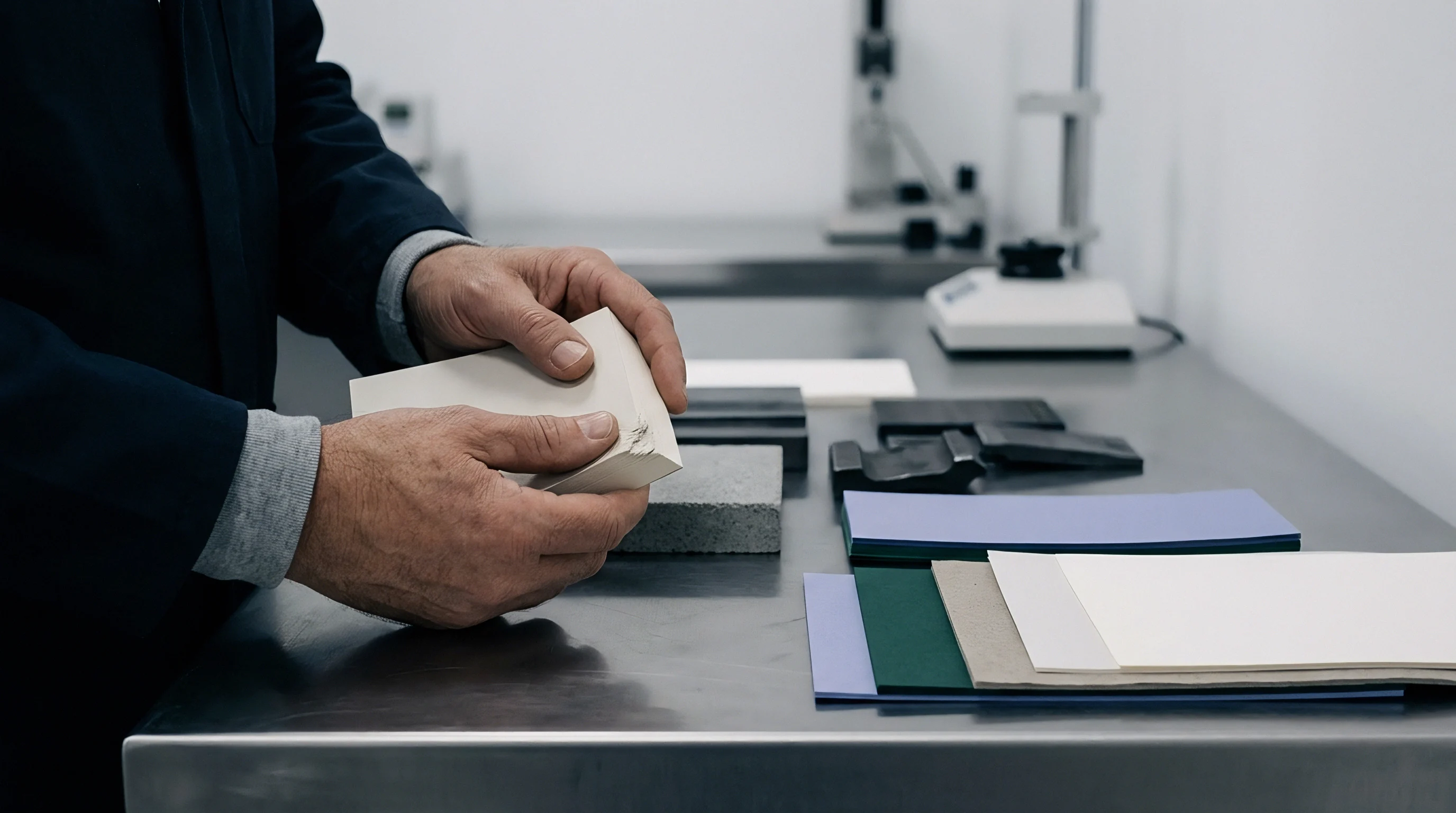
Laboratory evaluations typically rely on ISO 2493 two-point deflection methods or TAPPI T489 Taber instruments operating at a fifteen-degree deflection angle. Bending resistance testing requires strict atmospheric conditioning under ISO 187 at 23 degrees Celsius and 50 percent relative humidity, since absorbed moisture lowers the elastic modulus of cellulose fibres. The Taber value represents the bending moment in millinewton-metres, whereas resonance stiffness methods assess natural vibration frequency to determine flexural rigidity non-destructively.
Variations between test methods often trace back to sample clamping pressure and deflection rates. Clamping mechanisms can crush surface plies on high-bulk SBS grades, artificially depressing measured stiffness values. Resonance methods such as ISO 5629 measure dynamic elastic modulus across all sheet angles free of clamping artifacts, and comparing dynamic resonance against static two-point deflection highlights the viscoelastic relaxation intrinsic to chemical pulp networks.

Elastic Modulus and Caliper Relationships
Flexural rigidity scales with the cube of sheet thickness and varies linearly with elastic modulus. Solid Bleached Sulfate boards take advantage of this mechanics by placing dense, high-modulus bleached hardwood pulp in the outer plies and bulkier, lower-density furnish in the center layer. This structured profile acts like an I-beam, maximizing the area moment of inertia without adding unnecessary weight per unit area.
Mathematical modeling of board bending applies multi-ply beam theory, where bending stiffness per unit width, D, represents the integral of elastic modulus across the square of sheet thickness Z. Anisotropy modifies this modulus term independently along the machine and cross directions. As a consequence, a 10 percent reduction in caliper lowers bending stiffness by roughly 27 percent at equivalent modulus values, making caliper stability across production lots essential to maintaining specified top-load stacking strength.
| Basis Weight (g/m²) | Caliper (µm) | MD Stiffness (mN·m) | CD Stiffness (mN·m) | Stiffness Ratio (MD:CD) | MD Modulus (GPa) | CD Modulus (GPa) |
|---|---|---|---|---|---|---|
| 210 | 250 | 6.2 | 2.8 | 2.21:1 | 7.8 | 3.5 |
| 250 | 310 | 11.5 | 5.1 | 2.25:1 | 7.6 | 3.4 |
| 280 | 360 | 17.8 | 7.9 | 2.25:1 | 7.5 | 3.3 |
| 315 | 410 | 26.4 | 11.5 | 2.30:1 | 7.4 | 3.2 |
| 350 | 460 | 36.8 | 15.8 | 2.33:1 | 7.2 | 3.1 |
| 400 | 530 | 54.2 | 22.6 | 2.40:1 | 7.0 | 2.9 |
How the interaction between dynamic multi-pass impression stresses and localized moisture gradients alters cross-direction flexural recovery in thick-caliper SBS board remains an area where standard static deflection models fail to predict real-world carton bulging.
Rule
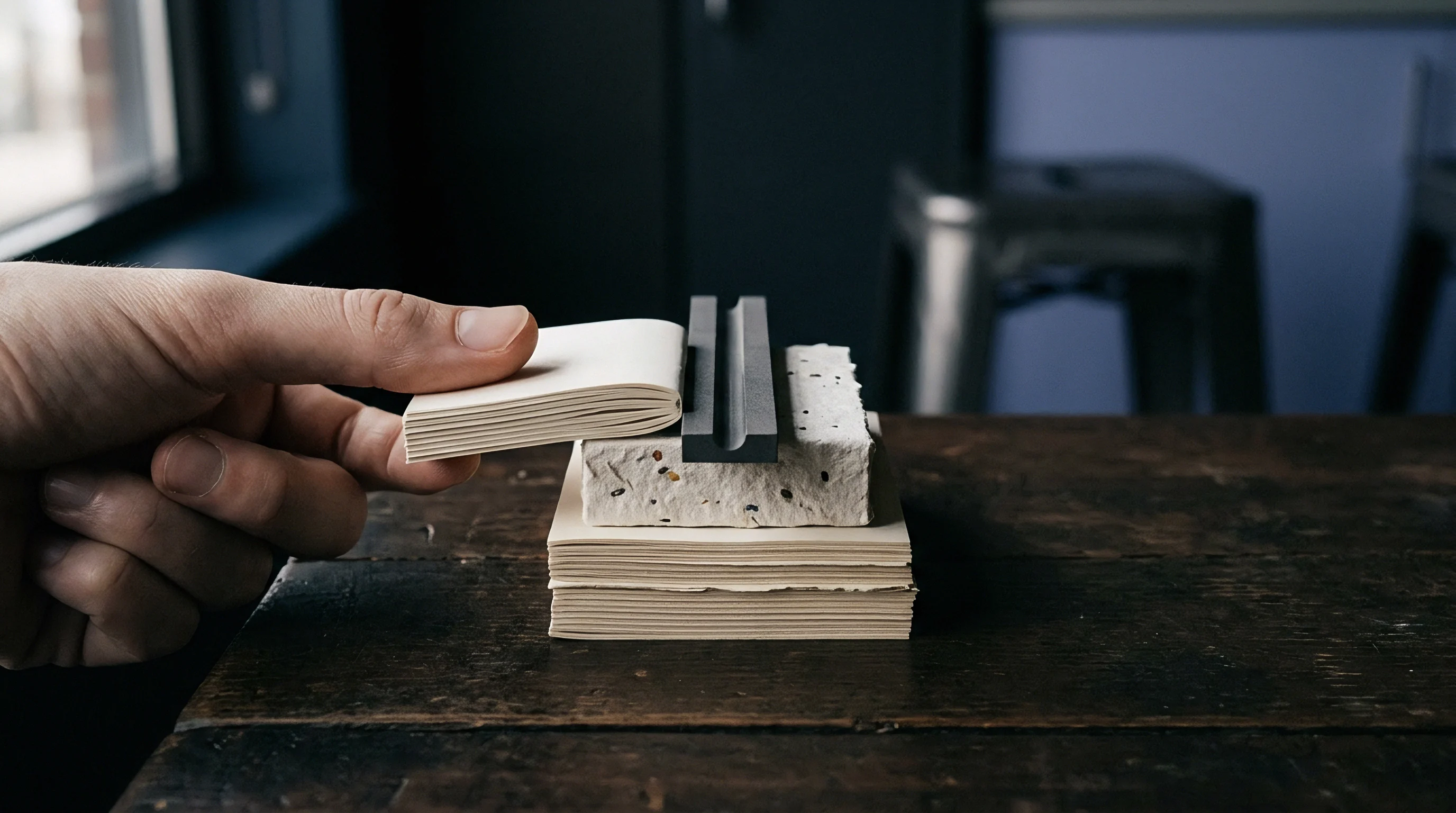
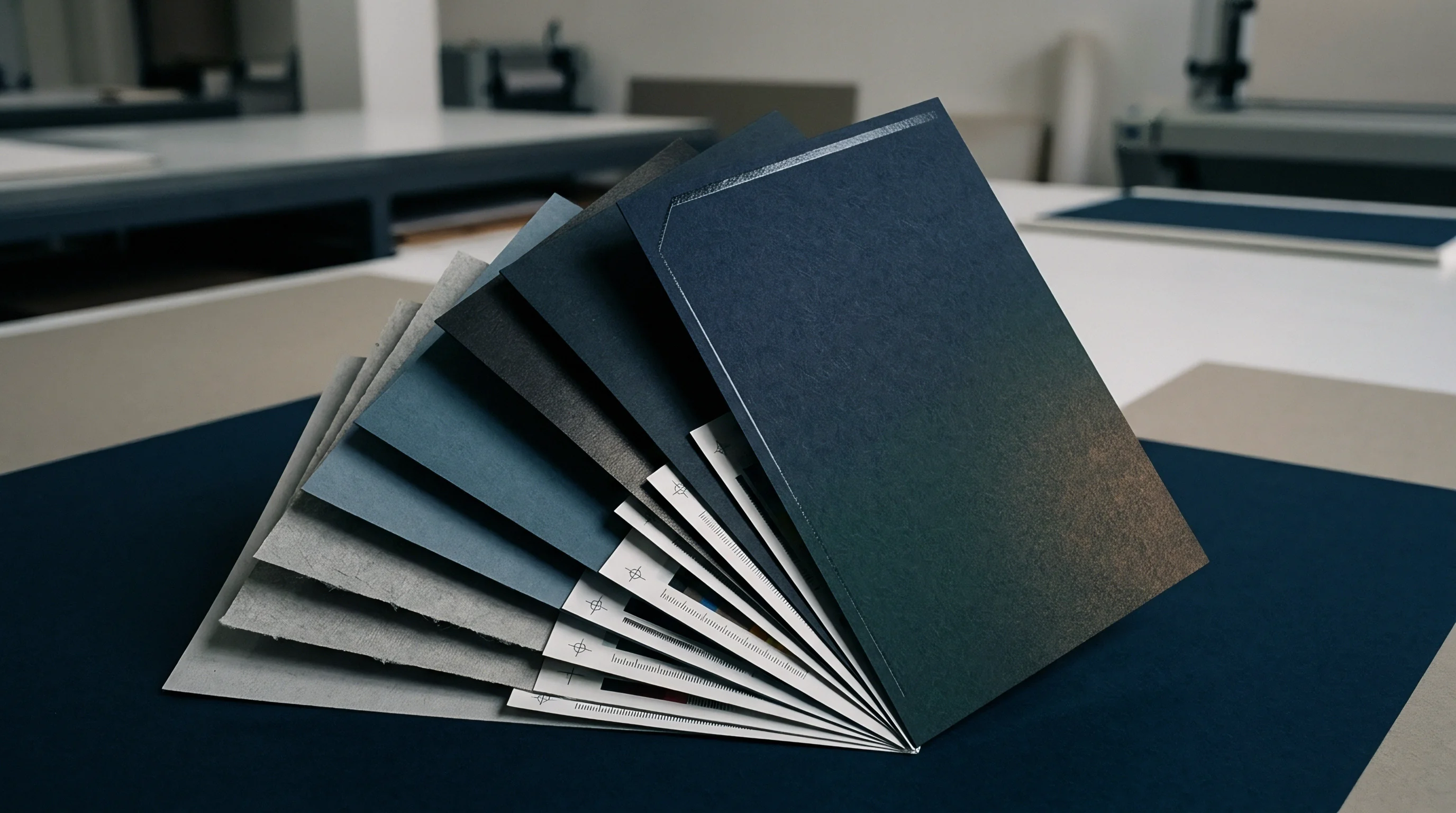
Steel scoring rules and matrix channels generate the localized shear failure necessary for sharp, uniform scorelines without cracking. Tool selection requires matching male rule width and female channel dimensions directly to board caliper and fibre orientation. During the die-cutting stroke, the male rule forces the SBS substrate into the female channel, initiating controlled transverse shear and z-direction delamination while counterplate alignment prevents liner rupture at the score boundaries.
Crease width and matrix depth are specified directly in procurement documentation to avoid line stoppages during high-speed folding operations. Scoring geometry differs between machine-direction and cross-direction creases because of fibre anisotropy: MD creases run parallel to primary fibres and require narrower matrix channels to induce clean internal delamination, whereas CD creases run across aligned fibres and need wider channels with greater clearance to avoid cutting outer fibres under impression load.
Incorrect creasing setups create immediate packaging defects. Inadequate channel depth prevents sufficient ply separation, resulting in excessive fold torque and springback on automated cartoning lines. Conversely, excessive rule width or over-impression crushes adjacent board areas, destroying panel stiffness.
Standard tooling matrices offer a useful starting point, but converting lines must trim channel widths to match real-time board anisotropy, moisture content, and coating elasticity.
Creasing Matrix and Channel Geometry Selection
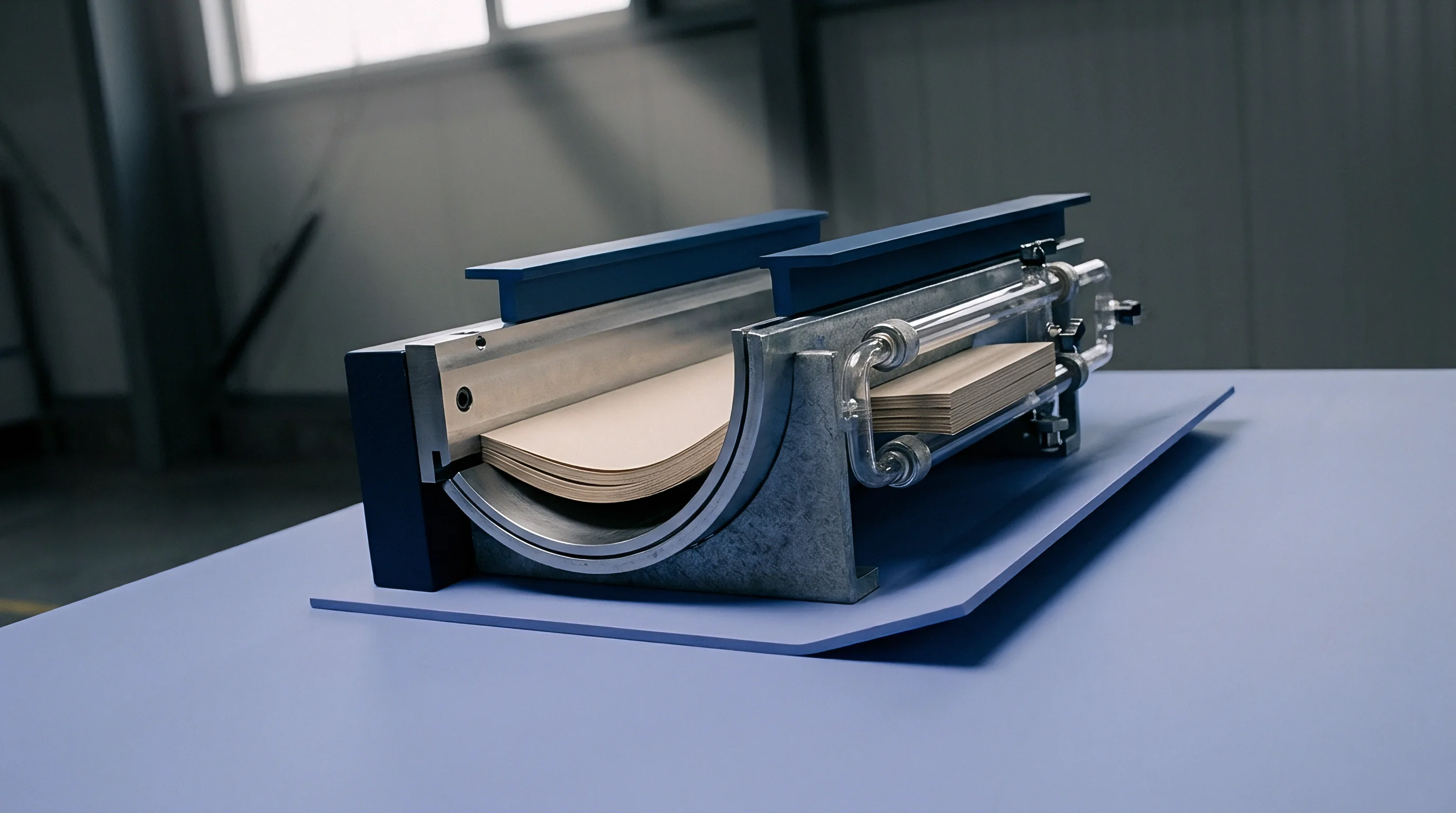
Female matrix channel width dictates how strain distributes across internal plies during die impression. Sizing calculations rely on empirical formulas based on substrate thickness t and male creasing rule width r. For machine-direction creases on SBS board, matrix width generally equals male rule width plus 1.4 times board thickness.
Cross-direction creases require widths equal to male rule width plus 1.7 to 1.9 times thickness to accommodate transverse fibre compression without rupturing the surface clay coating.
Matrix channel depth is selected based on target impression depth and board compressibility: typically equal to board caliper for lighter grammages, or 0.9 times caliper for boards above 400 micrometres. Modern counterplates use precision-milled steel or phenolic resin channels instead of adhesive rubber matrix strips to hold tolerances over million-impression runs. Clean channel edge radii are critical to prevent sharp bending shears from splitting the bottom liner during rule penetration.
Inclusion of a mandatory 5 percent maximum variance threshold for crease stiffness in supply contracts prevents line stoppages during automated carton erection.

Sequential Procedure for Die-Cutter Setup
Achieving uniform scorelines across the entire sheet layout demands systematic verification of counterplate alignment. Operators follow a strict calibration sequence before releasing a job for full production running.
- Clean the platen surface and verify counterplate registration pins seat fully into die chase bushings without mechanical play.
- Measure delivered SBS board caliper across five web points using an ISO 534 micrometer to establish baseline sheet thickness.
- Select male creasing rule width based on caliper, utilizing 0.71 millimetre rule for calipers below 350 micrometres and 1.05 millimetre rule for thicker boards.
- Install precision-milled phenolic counterplates matching calculated machine direction and cross direction channel dimensions.
- Adjust die-cutting platen impression pressure incrementally until male rules penetrate board thickness to sixty percent of nominal caliper.
- Perform a carbon impression test sheet to confirm uniform pressure distribution across all carton impression zones.
- Fold test blanks ninety degrees on a mechanical score strength tester to record crease resistance torque values across both directional axes.
| Board Caliper Range (µm) | Male Rule Thickness (mm) | MD Channel Width (mm) | CD Channel Width (mm) | Channel Depth (mm) | Target Crease Ratio (Width:Caliper) |
|---|---|---|---|---|---|
| 200 ~ 275 | 0.71 | 1.10 | 1.25 | 0.25 | 4.4 ~ 5.0 |
| 275 ~ 350 | 0.71 | 1.25 | 1.40 | 0.30 | 4.0 ~ 4.5 |
| 350 ~ 425 | 1.05 | 1.60 | 1.80 | 0.40 | 4.2 ~ 4.7 |
| 425 ~ 500 | 1.05 | 1.80 | 2.00 | 0.45 | 4.0 ~ 4.4 |
| 500 ~ 600 | 1.42 | 2.30 | 2.60 | 0.55 | 4.3 ~ 4.8 |
| Crease ratio defined as matrix channel width divided by board caliper. Measurements conditioned under ISO 187 at 23°C / 50% RH. Male rule penetration depth target fixed at 60% of sheet caliper. | |||||
Incorporating ISO 5628 dimensional tolerances and maximum allowable score torque variances into primary substrate procurement agreements holds the board mill financially liable for cartoning line stoppages caused by inconsistent crease depths.


Shear
Internal ply separation develops along the central plane of the board when the male creasing rule forces material into the female matrix channel. During this stroke, the board experiences top-surface tension, bottom-surface compression, and in-plane shear across the central core. Fibre networks within SBS board must yield cleanly in shear along the middle plies while maintaining tensile integrity in the liners; this delamination absorbs folding energy, whereas excessive impression force simply shears through the top liner.
The physics of creasing depend on controlled structural failure. As the rule pushes into the matrix, horizontal shear stress breaks hydrogen bonds between fibres along the neutral axis, turning a solid sheet into a multi-ply hinge. Upon folding, these split plies bend independently around smaller individual radii of curvature, sharply reducing tensile strain on the outer clay coating and preventing surface fracture.
Evaluating crease quality involves tracking the crease ratio and penetration depth. The crease ratio is female channel width divided by board caliper, and penetration depth is rule displacement expressed as a percentage of thickness. If internal shear delamination is incomplete, plies remain bonded and the board flexes as a single beam ~ placing high tensile strain on the clay coating, cracking print surfaces, and generating high springback torque that causes feeder jams on cartoning equipment.

How Does Machine Direction Anisotropy Limit Crease Depth?
Fibre alignment parallel to a scoreline changes the impression depth needed to induce plastic deformation without tearing the clay coat. In machine-direction creases, where fibres run parallel to the rule, inter-fibre bond density across the score axis is lower. The male rule penetrates easily, initiating central shear delamination at lower force.
However, over-penetrating MD scores quickly cuts through outer fibres, weakening the crease and causing hinges to tear during carton handling.
Cross-direction creases present perpendicular fibres that resist rule entry, requiring higher impression pressure to force middle-ply delamination. If penetration is pushed too deep to compensate, high tensile strain along the outer CD fibres fractures the clay coat before internal plies can separate cleanly. Machine-direction anisotropy therefore narrows the usable impression window, requiring precise platen depth calibration to protect crease integrity across both axes.
Proper internal shear failure within the middle pulp layers absorbs folding energy without disrupting the top clay coat or splitting the bottom liner.

Delamination Zone Mechanics and Crease Ratios
Evaluating internal rupture requires checking penetration depth against total substrate thickness under standard conditioning. The delamination zone must propagate across the full width of the female channel; high-speed video of cross-sectioned creases shows shear spreading symmetrically from the rule edges outward at roughly 45-degree angles toward the matrix shoulders.
Crease depth ratios ~ impression depth divided by sheet caliper ~ target 50 to 65 percent for premium SBS grades. Lower ratios leave middle plies intact and scores overly stiff, while higher ratios crush the core fibres and induce cracking along the score root. Achieving consistent delamination on anisotropic boards requires independent depth setup for machine-direction and cross-direction tooling layouts.
Incomplete internal delamination during scoring leaves intact middle plies that force the outer clay coat into severe tension upon folding, causing visible surface fracturing and ink flaking along finished package edges.


Draft
High-speed folder-gluers convert printed blanks into finished cartons at speeds exceeding three hundred metres per minute, where minor shifts in moisture content or substrate stiffness alter folding resistance and glue-flap torque. Converting efficiency depends on low, predictable creasing resistance and controlled elastic springback. As blanks travel through folder belts, scored flaps undergo rapid 90-degree and 180-degree pre-breaks to fatigue residual hinge stiffness prior to adhesive application.
Crease recovery torque is measured using standard two-second bend resistance protocols at 90 degrees to isolate elastic rebound from permanent fiber deformation. Crease stiffness, recorded in millinewton-metres, quantifies the force needed to hold a folded crease at a right angle. The crease ratio factor ~ folded crease stiffness divided by uncreased board stiffness ~ gauges scoring efficiency.
Unscored SBS retains substantial elastic memory, springing toward its flat state once released; proper creasing reduces crease stiffness to below 30 percent of uncreased board stiffness, keeping flaps flat under compression belts.
Anisotropic stiffness creates distinct handling issues on automated packaging machinery. If cross-direction creases retain high springback torque, carton flaps exert continuous outward force against freshly glued seams during transport, pulling setting adhesive apart and causing open cartons or jams. Matching creasing geometry to directional anisotropy produces consistent hinge resistance across all folds, stabilizing throughput and minimizing line scrap.
Folder-Gluer Resistance and Springback Forces
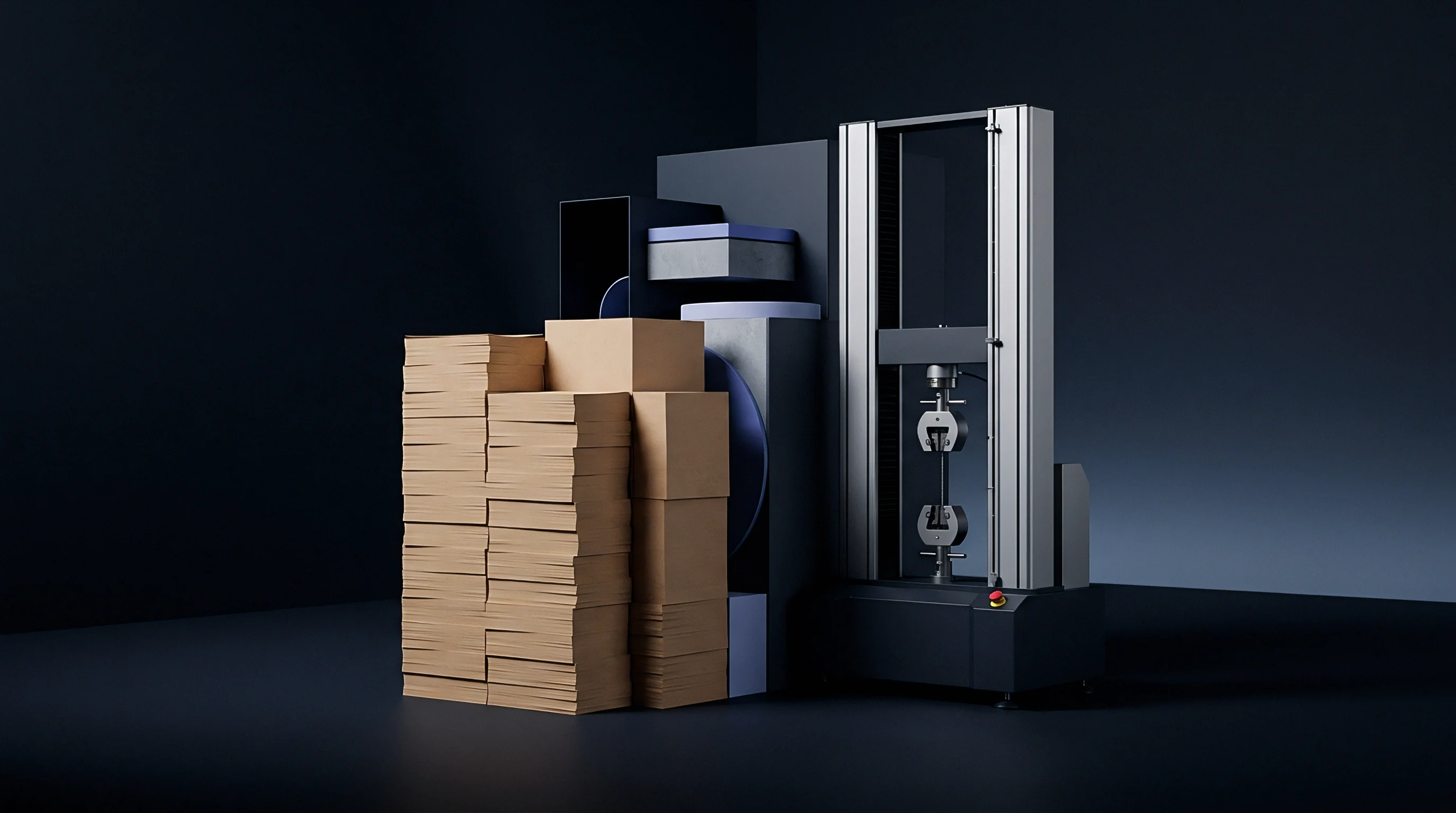
Automated packing lines jam when folded flaps exert excessive outward force against side guides. Springback torque correlates directly with elastic energy retained in unruptured fibres within the crease zone. Modern folder-gluers employ pre-breaking belts to fold major creases to 180 degrees before returning them to 90 degrees, extending the delamination zone, permanently setting the hinge, and lowering residual springback torque by up to 40 percent compared to single 90-degree folds.
Adhesive setting rate must match flap springback force. Hot melt adhesives require a defined open time as viscosity drops and compression holds flaps in register. If springback torque exceeds the green strength of the cooling adhesive, the seam fails the moment it clears the compression belt.
Adjusting rule impression depth and channel width relieves this springback torque, securing reliable bonds at full line speed without requiring heavier adhesive application.
Flap springback torque directly determines the minimum open time required for hot melt adhesive bonding on high-speed gluer lines.

Carton Squareness and Line Efficiency Checklist
Dimensional stability on cartoning machinery requires uniform folding resistance across all four main creases. Uneven resistance pulls blanks into rhomboid shapes instead of square rectangles, causing feed faults and filling line stoppages.
- Verify pre-break angle thresholds on folder-gluer belts to ensure primary scorelines undergo at least 135 degrees of displacement prior to gluing.
- Measure scoreline crease stiffness across machine direction and cross direction folds using an ISO 5628 bending tester to confirm stiffness reduction exceeds 70 percent.
- Inspect glue flap springback force to ensure total outward torque remains below 15 millinewton-metres per 100 millimetres of crease length.
- Check carton blank squareness post-gluing by measuring diagonal dimensions across flat collapsed sleeves, holding variances within 0.5 millimetres.
- Monitor ambient humidity levels around folder-gluer feed hoppers, maintaining relative humidity between 45 percent and 55 percent to prevent board moisture loss.
- Audit counterplate alignment every 50,000 sheets to detect female matrix channel wear that increases crease springback torque over extended production runs.
Matching creasing channel depth to board thickness yields consistent fold torque regardless of machine speed variations on automated packing lines.
Yield
Procurement choices balance furnish density, target caliper, and sheet dimensional stability against final unit cost. While paperboard is purchased by weight in metric tonnes, it is consumed by surface area in thousand square metres or discrete carton blanks. Yield optimization therefore hinges on selecting calipers and basis weights that satisfy structural stiffness requirements at minimum mass per unit area.
Because Solid Bleached Sulfate carries a cost premium over recycled or folding boxboards, caliper-to-weight optimization directly shapes packaging unit economics.
Machine-direction anisotropy directly affects yield calculations and nested sheet layouts. Packaging designers typically align main load-bearing panels with the machine direction to maximize vertical stacking strength, allowing the use of lower basis weights while meeting top-load requirements. Arranging blank profiles to maximize sheet width utilization further limits trim waste at the die-cutter, translating raw tonnage into shippable packaging with minimal skeleton loss.
Landed cost calculations must weigh yield against converting scrap, shipping freight, and EPR fees. Down-gauging SBS by 25 micrometres reduces shipment mass by 4 to 6 percent for the same surface area, lowering freight costs and tariffs. However, bending stiffness falls with the cube of caliper; if down-gauging drops cross-direction stiffness below threshold levels, panel bulging and line stoppages quickly erase any upfront savings.
Substrate selection must therefore balance yield equations against mechanical operating limits across the entire supply chain.
Caliper Optimization versus Basis Weight
Solid Bleached Sulfate provides high density and a smooth printing surface at target grammages. Chemical pulping removes lignin, yielding long, compliant cellulose fibres that densify during calendering. Modern mills use online soft-nip calenders to polish clay coatings while preserving bulk, and caliper uniformity across parent reels ensures converters can maintain tight impression tolerances without crushing center plies.
Trading basis weight for bulk depends on mill furnish capabilities. High-yield SBS grades incorporate chemithermomechanical pulp in the center plies to build thickness while retaining 100 percent bleached chemical pulp in the outer liners. This multi-ply structure increases caliper by 8 to 12 percent at equivalent basis weights, boosting flexural stiffness.
Sourcing teams must confirm whether high-yield grades match the surface smoothness and clean creasing of solid chemical sheets before adopting them for high-volume programs.
Commercial Specification and Tolerances
Mill specifications establish acceptable tolerance bands for basis weight, thickness, and directional stiffness. Typical mill certs allow ±4 percent on basis weight and ±5 percent on caliper. Because flexural rigidity scales with the cube of thickness, a 5 percent decrease in caliper causes a 14 percent loss in bending resistance.
Sourcing engineers should therefore incorporate explicit mechanical performance clauses into supply contracts rather than relying on nominal basis weight alone.
Evaluating commercial risk requires modeling yield changes alongside line converting performance. For example, a buyer specifying 350-micrometre SBS for a large cosmetic carton run evaluates unit yield and cost per thousand blanks across different anisotropy profiles and grammages.
| Option Specification | Basis Weight (g/m²) | Caliper (µm) | MD:CD Ratio | CD Stiffness (mN·m) | Yield (m²/tonne) | Cartons per Tonne | Landed Cost / 1k Cartons ($) |
|---|---|---|---|---|---|---|---|
| Standard SBS Grade A | 280 | 350 | 2.35:1 | 7.2 | 3,571 | 28,568 | 52.50 |
| High-Anisotropy Grade B | 270 | 350 | 2.80:1 | 5.8 | 3,703 | 29,624 | 50.60 |
| Balanced-Formulation Grade C | 285 | 350 | 1.85:1 | 8.9 | 3,508 | 28,064 | 53.45 |
| High-Yield Multi-Ply Grade D | 255 | 350 | 2.20:1 | 7.5 | 3,921 | 31,368 | 47.80 |
In Grade B, elevated machine direction anisotropy lowers basis weight while maintaining MD stiffness. However, cross direction stiffness drops to 5.8 mN·m, generating elevated carton panel bulging during high-speed automated cartoning operations. The 3.5 percent material weight saving of Grade B is offset by a 4.2 percent converting line spoilage rate caused by carton erection jams.
Grade D uses high-yield middle ply technology to deliver required caliper and balanced stiffness at 255 grams per square metre, maximizing sheet yield per tonne while lowering unit cost per thousand finished cartons by 8.9 percent compared to standard baseline board.
Engineers specifying solid bleached sulphate substrates calculate total yield from landed weight, sheet count, and web orientation before signing mill supply contracts. Caliper consistency across mill production lots dictates whether downstream converting proceeds at maximum rated machine velocity.