Caliper Compression
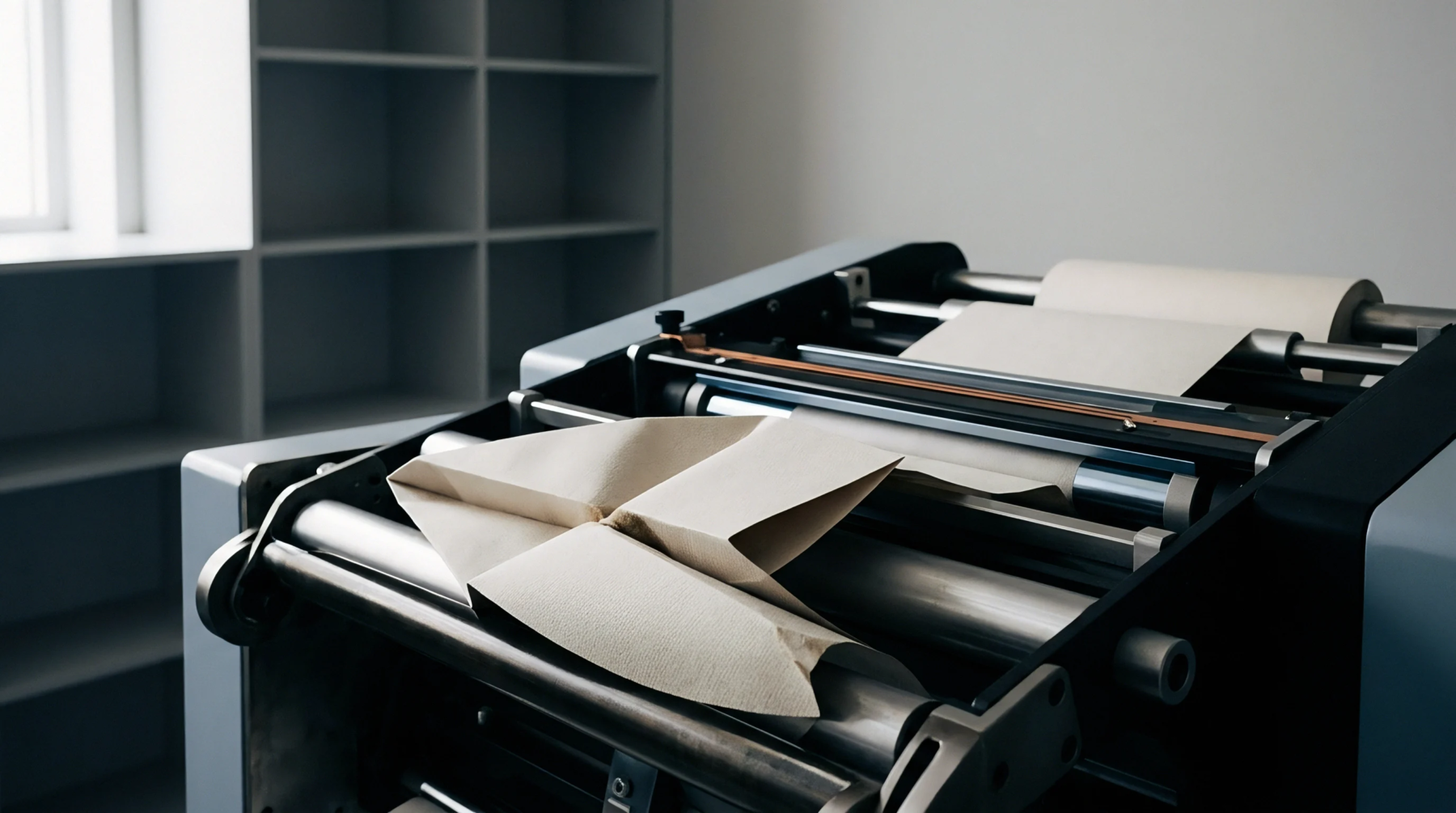
Mechanical deformation describes impression depth during the letterpress printing process where a relief plate compresses the cellulose matrix of paper substrates under applied force. Proper calibration prevents excessive fiber rupture while ensuring complete ink transfer across uneven surface contours. Hard packing cylinders reduce this localized compaction by distributing force over a wider area, whereas soft packing amplifies the downward stroke for textured cover stocks.
Exceeding the elastic limit of the stock weakens internal bonding strength and causes visible show-through on the reverse side of a printed sheet.
Defect Formation
Surface microfractures develop when impression depth forces rigid paper fibers beyond their recoverable elongation threshold during typographic stamping. Uncontrolled cylinder pressure crushes the internal void volume of newsprint and uncoated book papers, resulting in permanent caliper loss and localized embrittlement. Production anomalies occur frequently when moisture content drops below normal equilibrium levels, making the sheet brittle and prone to cracking under heavy steel dies.
Operators adjust micrometer settings on the impression cylinder to maintain minimum mechanical stress while achieving sharp character definition.
Caliper Recovery
Elastic resilience determines how effectively paper substrates regain original thickness after the mechanical compression forces of printing plates are removed. Residual thickness depends heavily upon the initial lignin content and hemicellulose bonding structure within the refined pulp furnish. Heavily calendered papers exhibit lower recovery rates because initial manufacturing pressure has already collapsed the porous network of the sheet.
Modern converter specifications rely on caliper retention measurements to evaluate whether a substrate retains adequate dimensional stability for subsequent folding and binding operations.