Reel Slitting Width Optimization across Multi-Machine Deckle Profiles under Dynamic Order Demands
Matching dynamic roll order combinations to multi-machine paper deckle profiles minimizes fiber edge waste and slitter setup downtime across paper mills.


Trim
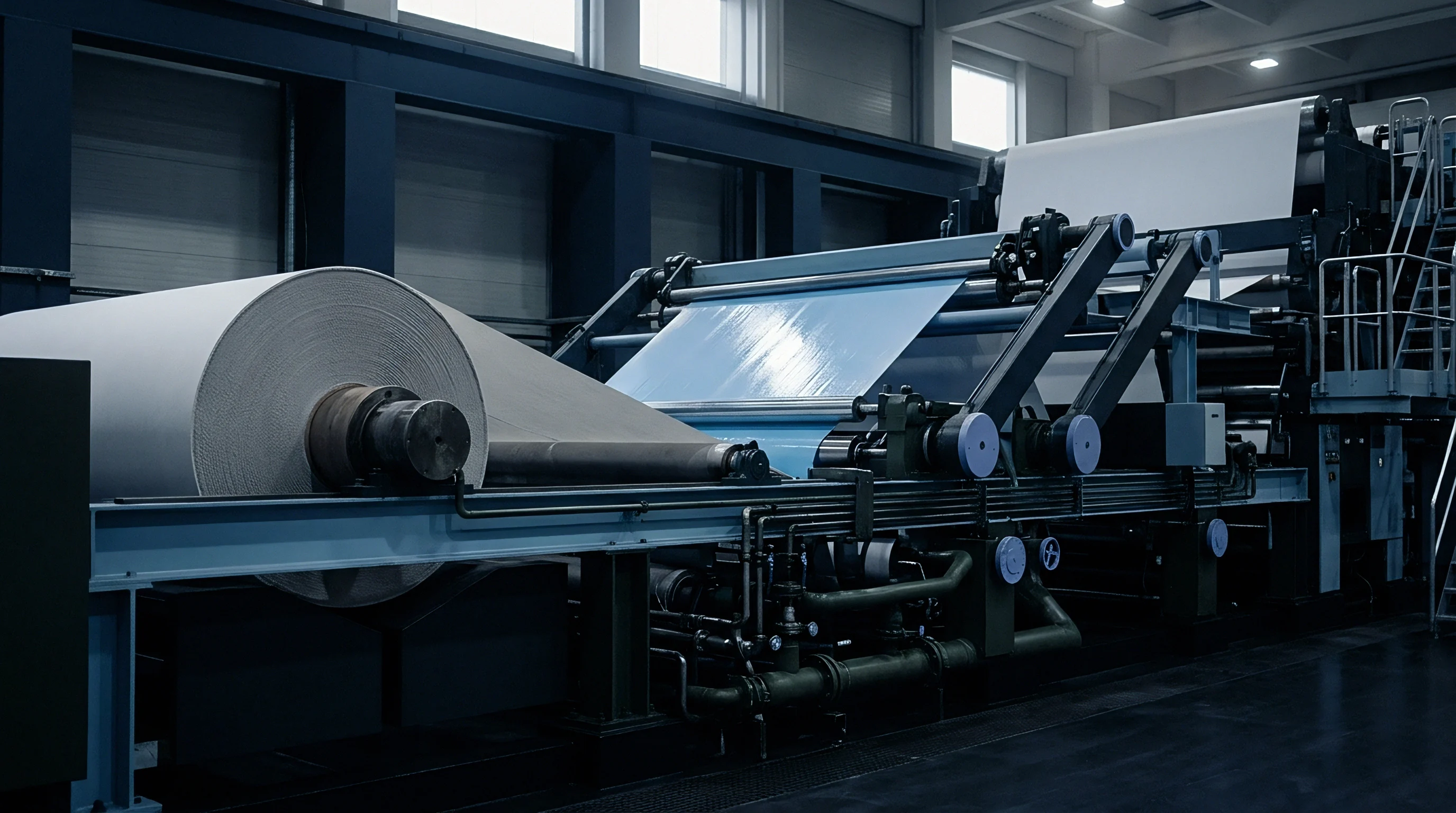
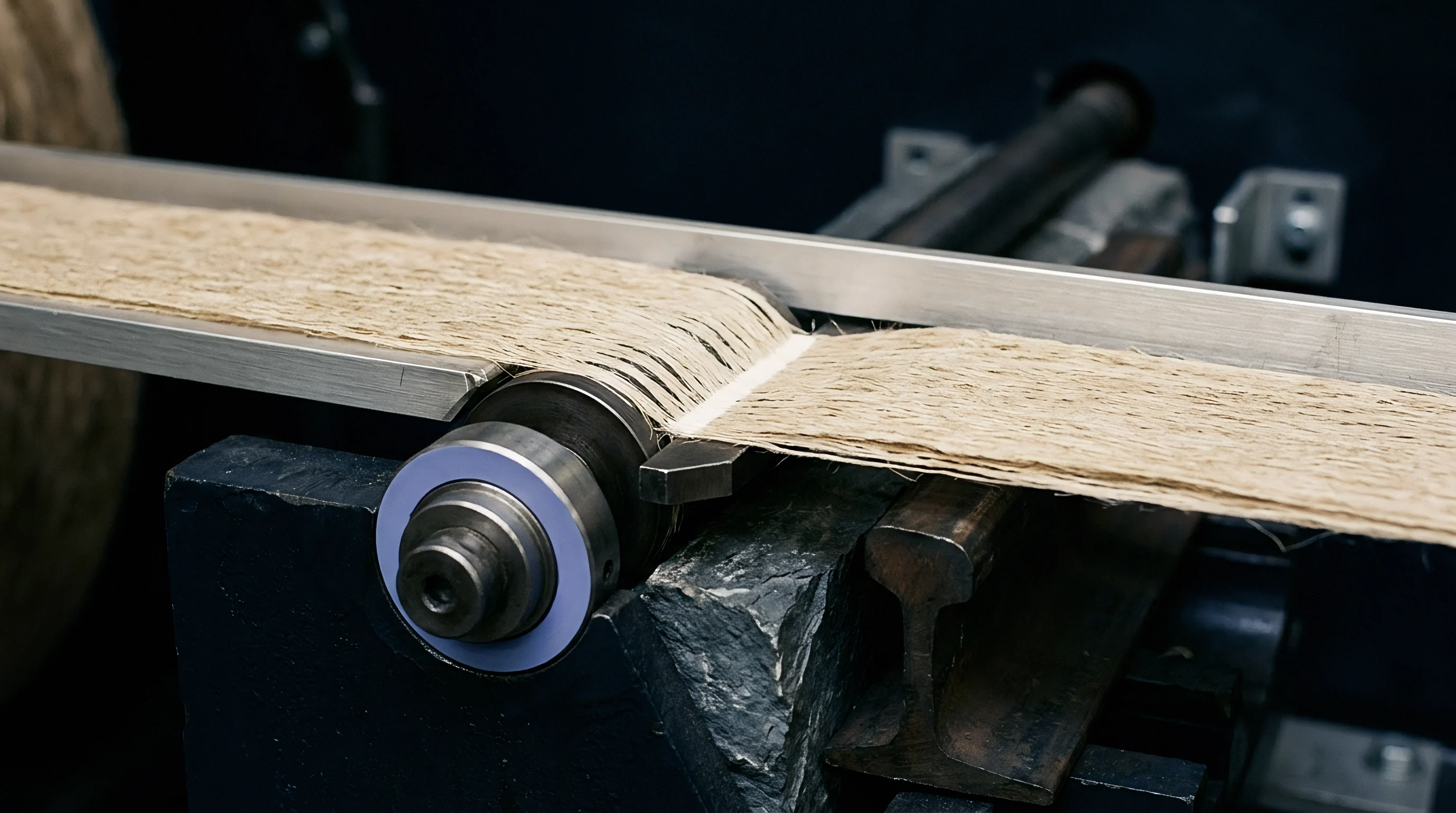
Parent roll width utilization determines the physical conversion yield of continuous papermaking assets. As a paper machine wire forms a web spanning five to ten meters, the raw edges develop caliper variations, fiber orientation distortions, and boundary defects along the deckle boards. Continuous winder operation requires immediate slitting and removal of these marginal edge strips before rewinding downstream.
When planning slitting patterns across usable deckle spans, the goal is to cut cross-direction web loss without compromising edge integrity.
At the winder, sheet width efficiency is defined as usable web width divided by maximum usable deckle ~ the total wet-end slice width minus fixed edge trim allowances. Edge slitters strip away at least 20 millimetres on each side to prevent edge bleed and micro-tears from spreading into the parent roll. A paper machine with a 5,400 millimetre usable deckle running a scheduled roll sum of 5,280 millimetres creates 120 millimetres of unscheduled trim loss, or 2.22 percent raw fiber waste.
This strip falls down chutes to the dry-end pulper, returning to stock prep as broke. Re-pulping it consumes hydrapulper drive power and slurry pumping energy while repeatedly shearing and shortening long softwood fibers.

Deckle Utilization and Edge Loss Mechanics
Basis weight profiles ~ cross-machine grammage variations ~ dictate where trim boundaries can safely lie. Under ISO 536, standard manufacturing specifications mandate basis weight control within plus or minus 2.5 percent across the sheet width. Modern hydraulic headboxes use dilution stock injection modules spaced across 30 to 50 millimetre zones to keep grammage uniform.
Still, air entrainment and slurry friction near the deckle rulers distort fiber alignment. The tensile anisotropy ratio (machine-direction strength over cross-direction strength per ISO 1924-2) often jumps from 2.1 at the sheet center to over 3.8 within 75 millimetres of the edge, leaving margins far more vulnerable to tearing during high-speed converting unwinds.
Edge tears lead to web breaks. When converting plants run virgin kraft linerboard or recycled testliner at unwinding speeds above 800 meters per minute, microscopic edge cracks or fringe fibers quickly cause full web snaps. Preventing these failures during printing and fluting requires slitter knives to make clean shear cuts well clear of the turbulent sheet margin.
A baseline 50 millimetre edge trim target often expands to 75 millimetres on high-bulk grades or lightweight fluting media with steep moisture gradients. Across annual production runs, that added waste directly degrades net margins.
Slitting edge trim allowances must exceed 20 millimetres per side on paper machines operating above 1,000 meters per minute to prevent edge-tear web breaks under ISO 187 standard conditioning.
Dynamic order books complicate how roll widths are fitted across available deckle space. Customer orders range from narrow 300 millimetre rolls for tape dispensers to wide 2,800 millimetre reels for corrugated boxboard. Skewing toward narrow rolls forces slitter banks to run many active knife heads across the winder.
Conversely, order sets dominated by wide reels reduce the mathematical combinations that fit a given deckle width, driving up trim loss.
- Calculating usable deckle width establishes the boundary baseline for positioning primary winder knives.
- Customer roll width orders are sorted into discrete width groups alongside delivery dates and grammage specifications.
- Combination algorithms construct candidate slitting patterns to maximize active width within slitter blade limits.
- Selecting slitting patterns balances broke generation against the downtime needed to reset knife stations.
- Reel inspection checks that outer slitter cuts lie outside high-variance basis weight zones mapped by online scanners.
Secondary rewind operations provide an alternative pathway for capturing marginal deckle capacity. When primary winder combinations leave unallocated web spans between 150 and 400 millimetres, mills roll off side reels or off-cut parent rolls. These secondary reels are transferred to narrow-width rewinder assets to be slit down into small-format commercial orders.
However, secondary rewinding adds substantial labor overhead, double material handling risks, roll transport damage, and additional edge trim loss from the secondary slitting pass. The secondary pass introduces an additional 15 to 25 millimetres of edge trim per side, consuming up to 10 percent of the original side reel mass in fresh broke waste. A mill balancing multi-machine production profiles must determine whether pulping unslit primary trim proves less costly than operating dedicated secondary rewind stations.
Deckle matching efficiency is also bounded by sheet shrinkage dynamics occurring across the dryer section. Unrestrained web shrinkage at sheet edges reaches 4 to 6 percent on unbleached kraft papers, whereas the central web zone experiences only 1.5 to 2 percent shrinkage due to mechanical draw tension across dryer cylinders. Consequently, paper slit from edge zones exhibits a lower cross-direction stretch capacity than sheet material slit from the central deckle.
Sourcing practice requires specifying tighter caliper tolerances for edge reels when delivering stock destined for high-speed multi-color flexographic printing operations, as cross-machine caliper variation within individual slit rolls generates uneven winding tension, telescoping, and edge dishing during unwind operations.
While maximum physical deckle width is a firm ceiling dictated by machine geometry, effective usable deckle shifts dynamically based on fiber furnish, machine speed, and web moisture states.

Combinatorics
Mathematical formulation of the cutting stock problem transforms discrete customer order rolls into bounded width combinations. The fundamental decision variables represent the integer count of rolls of a specific width to cut from a given parent reel width, known as the master deckle. Formulated originally by Gilmore and Gomory using linear programming column generation, modern deckle optimization models seek to minimize total master roll consumption and trim waste while satisfying dynamic customer demand arrays.
When order books vary on a daily or shift-by-shift basis, static cutting patterns fail, requiring real-time algorithmic solving across multi-machine profile configurations.
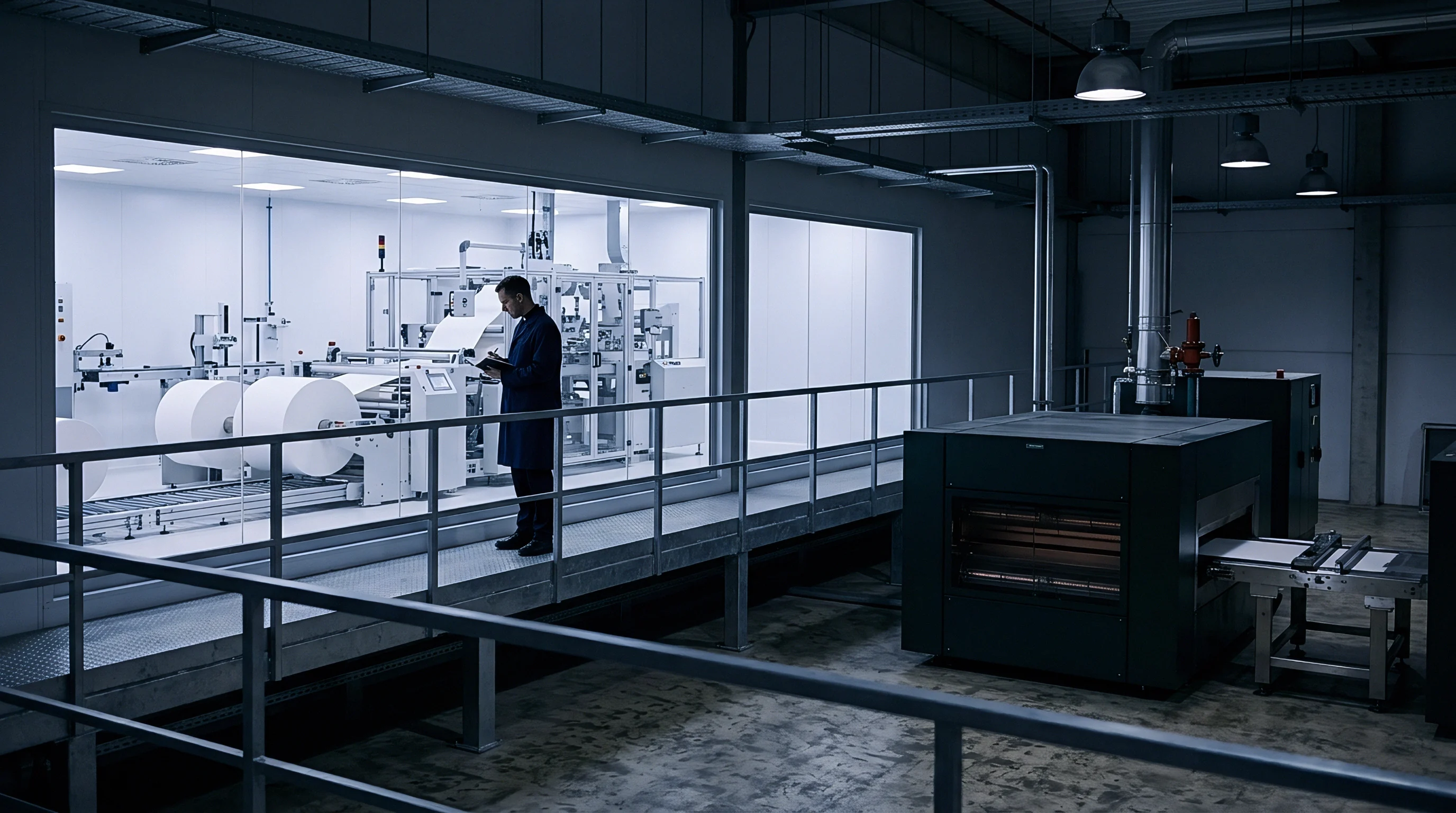
Multi-machine sites introduce variable deckle widths across parallel paper machines. A site operating Machine A with a 4,200 millimetre deckle, Machine B with a 5,100 millimetre deckle, and Machine C with a 6,800 millimetre deckle presents a multi-dimensional cutting stock challenge. Assigning orders solely to the machine with the largest deckle creates artificial bottlenecking at primary winders, while leaving smaller machines running inefficient slitting patterns with high trim fractions.
Optimization algorithms must evaluate joint multi-machine deckle profiles simultaneously, distributing specific order combinations to the exact machine geometry that yields the lowest systemic broke percentage.
Algorithmic Formulation for Multi-Deckle Assets
In dynamic order scheduling, planners run Gilmore-Gomory pattern generation algorithms constrained by maximum knife setups, bounding total deckle loss to under 1.4 percent across primary paper machines. The primary objective function minimizes total fiber consumption by mass, accounting for basis weight variations across active grades. Constraints include lower and upper bounds on order roll quantities, maximum knife counts per winder, roll diameter limits, and machine-specific production speed profiles.
Slitter head capacity acts as a strict physical constraint on mathematical optimization. A paper machine winder equipped with eight slitting stations can cut a maximum of seven rolls simultaneously. If an algorithmic solver generates a theoretically perfect trim combination requiring ten narrow rolls to fill a 6,800 millimetre deckle, the winder cannot execute the pattern in a single pass.
The optimization engine must incorporate slitter blade capacity constraints directly into the linear programming master problem, penalizing or discarding patterns that exceed available knife stations.
| Machine Designation | Max Usable Deckle (mm) | Max Slitter Knife Heads | Min Slit Width (mm) | Max Winder Speed (m/min) | Target Trim Loss (%) |
|---|---|---|---|---|---|
| PM1 (Lightweight Fluting) | 4,250 | 6 | 280 | 1,800 | < 1.20 |
| PM2 (Kraft Linerboard) | 5,150 | 8 | 350 | 1,500 | < 1.15 |
| PM3 (Recycled Testliner) | 6,750 | 12 | 220 | 2,200 | < 0.95 |
| PM4 (Specialty Packaging) | 3,300 | 5 | 150 | 1,200 | < 1.50 |
Dynamic order entry introduces continuous variance into the active order pool. Customer requests alter required roll counts, demand urgent delivery dates, or change width specifications mid-campaign. Linear programming models adapt to dynamic demand through sliding-window optimization algorithms.
Instead of locking in a full production campaign, the solver re-optimizes remaining unslit parent reels when high-priority orders join the queue. The re-optimization algorithm weighs the benefit of reduced trim waste against the operational setup penalty incurred by changing slitter blade positions frequently on the active winder line.
Physical repositioning of winder slitter heads requires automated or manual positioning cycles. Modern winders utilize robotic slitter positioning systems capable of relocating six knife stations in under 45 seconds. Older winders require manual blade unlocks, screw-drive positioning, and manual blade locking, consuming 10 to 15 minutes per pattern change.
When winder setup duration exceeds the parent roll build time on the paper machine, the winder becomes the plant bottleneck, forcing the paper machine to reduce operating speeds or dump parent reels onto floor storage. Optimization models must therefore include pattern setup time penalties directly inside the global objective cost equation.
Grade substitution offers a practical method to improve dynamic deckle matching metrics. When an order book for a 140 grams per square meter testliner grade leaves an irreducible 350 millimetre trim gap on a 5,150 millimetre deckle, the optimization system searches for higher-grade orders, such as 150 grams per square meter testliner or 140 grams per square meter virgin kraft, that share identical width demands. If contract rules permit, the mill upgrades the structural specification of the narrow edge roll at no extra charge to the client, converting what would have been re-pulped broke into saleable product mass.
The economic trade-off requires that the marginal fiber cost of the higher-grade sheet remain lower than the energy and processing cost of re-pulping the equivalent trim volume.
Pulping unslit trim consumes electrical energy while yielding zero customer invoice revenue.
Order splitting across multiple machines requires strict adherence to customer quality contracts. Splitting a single packaging converter’s order for 500 tonnes of corrugated medium across two separate paper machines introduces variations in sheet shade, Cobb water absorption values measured via ISO 535, and ring crush strength values measured per ISO 12192. Converting plants operating high-speed corrugators experience runnability spikes when splicing between rolls produced on different paper machines due to differing friction coefficients and moisture profiles.
Advanced deckle allocation algorithms group individual customer purchase orders onto single machine runs whenever possible, reserving split-machine patterns for non-structural packaging applications.
Dynamic order variability often disrupts predictable trim performance, with knife limits and customer width mismatches driving up broke rates.

Knife
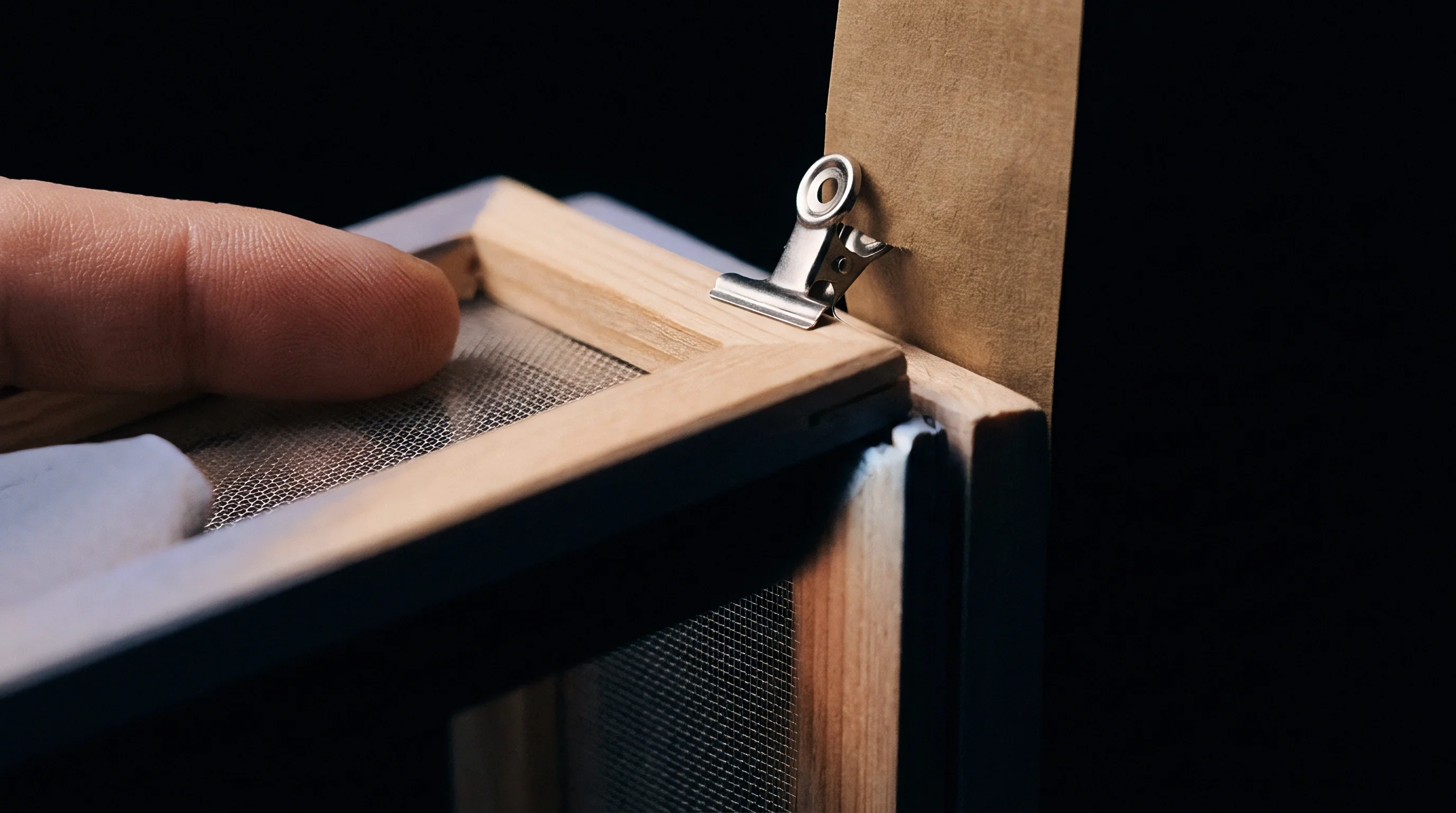
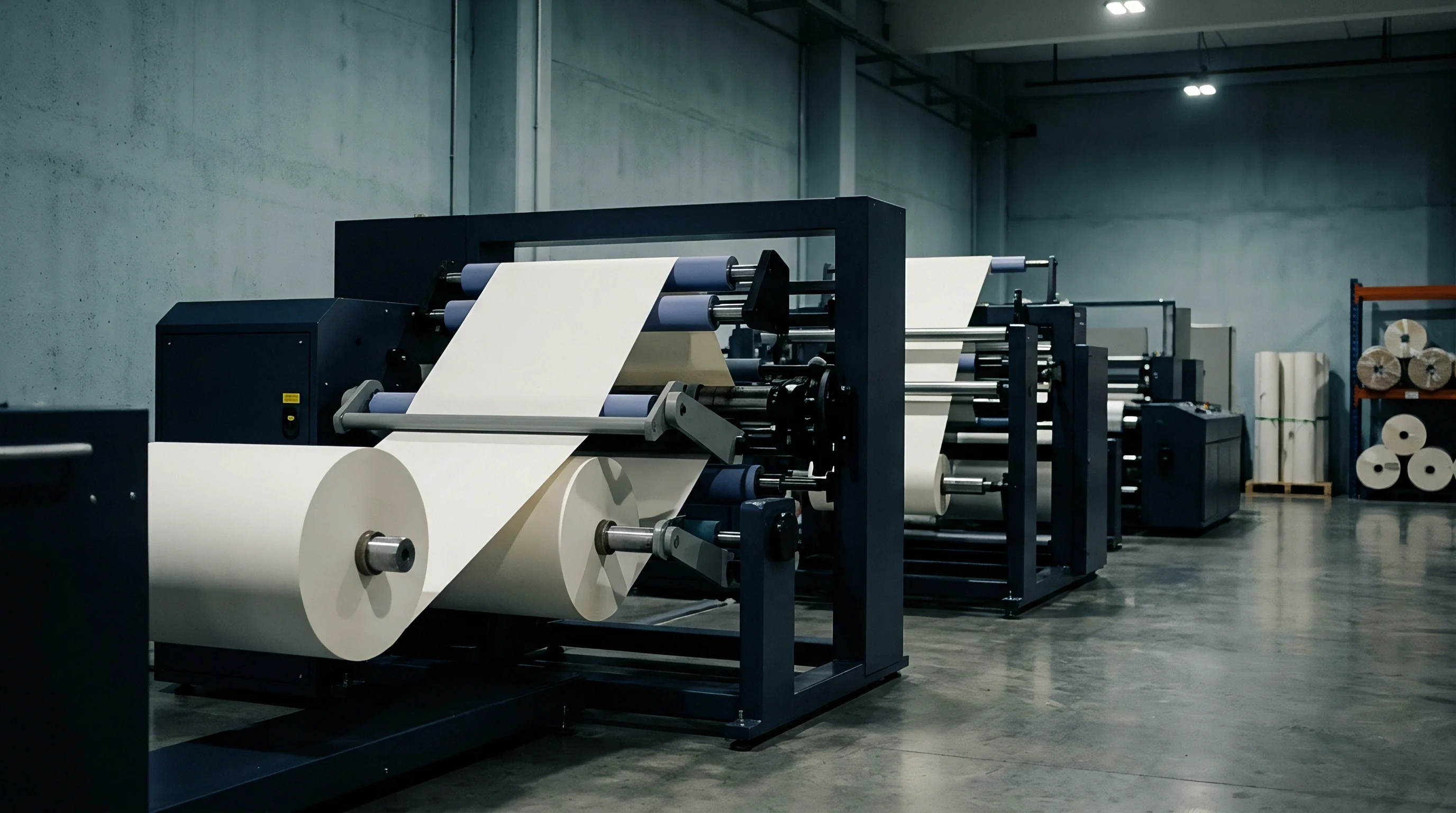
Mechanical slitting hardware determines the structural integrity of finished roll edge faces during high-speed winding operations. Primary winders utilize rotary shear slitting systems comprising a top circular blade, known as the slitter knife or male blade, and a bottom driven anvil roll or female band. The continuous cutting action relies on precise mechanical geometry including cut angle, shear angle, blade overlap depth, and side contact force.
Misalignment of these physical cutting parameters damages the sheet edge, generating paper dust, micro-fractures, and inter-roll weaving during high-tension rewinding pass cycles.
High-speed slitting operations on modern winders run at web speeds between 1,500 and 2,800 meters per minute. At these velocity levels, mechanical friction between top and bottom blades generates localized temperatures exceeding 180 degrees Celsius at the cutting point. Thermal expansion alters blade geometry, shifting the effective side loading force between top and bottom knives.
If side loading force drops below critical thresholds, the paper web rolls over the cutting edge rather than shearing cleanly, leaving a rough, fibrous edge profile known as a burr or stringer. Excess side force accelerates blade wear, causing micro-chipping along the tungsten carbide or high-speed steel cutting matrix.
Slitting Mechanics and Edge Failure Modes
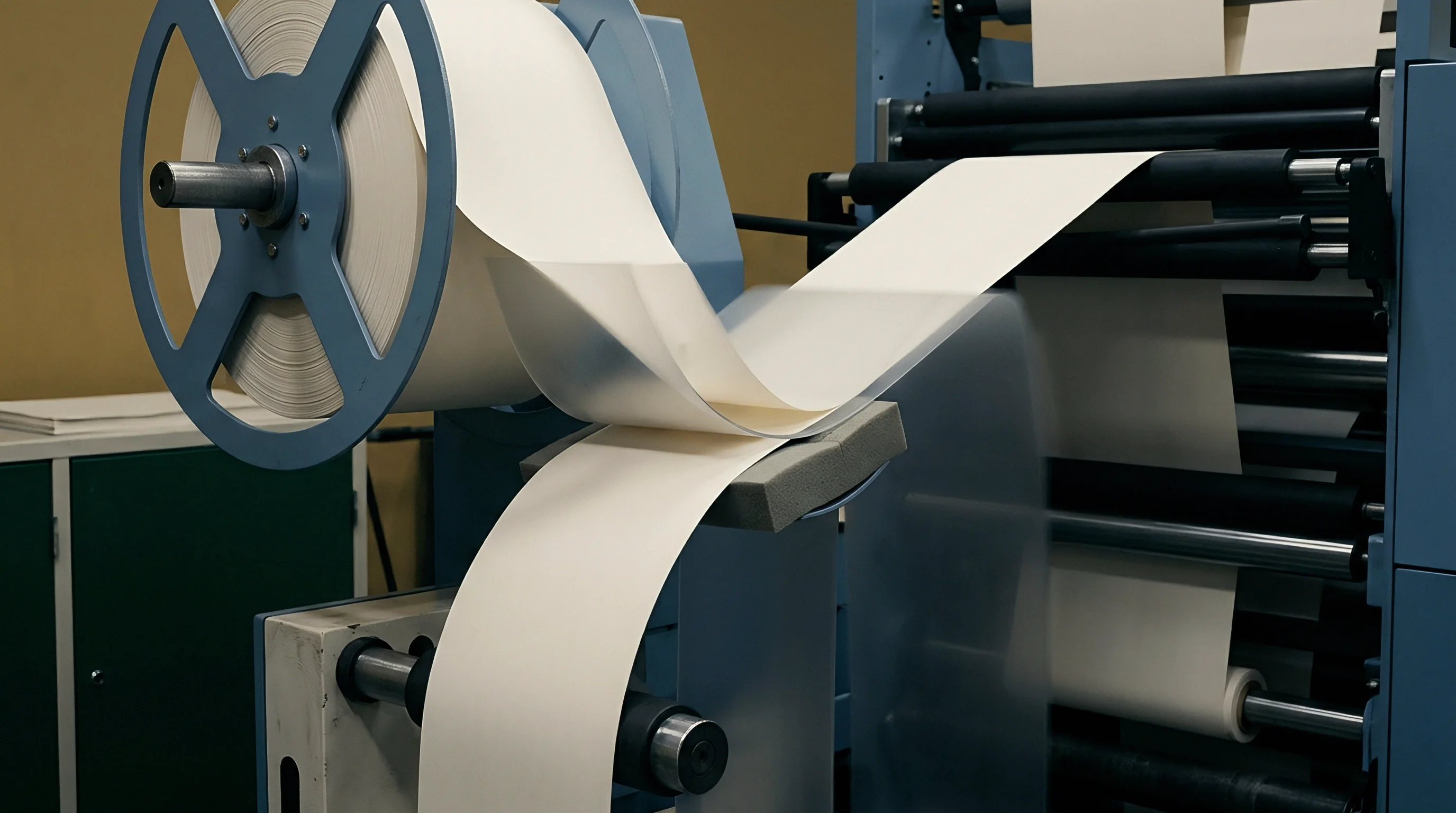
During reel slitting at high line speeds, shear slitter engagement depth directly impacts roll edge quality and dust generation rates. Top slitter penetration into the bottom anvil band must remain strictly between 0.8 and 1.5 millimetres. Insufficient penetration leads to incomplete fiber shearing, particularly in high-bulk recycled furnishes containing short hardwood fibers and inorganic mineral fillers such as calcium carbonate or kaolin clay.
Excessive penetration increases web bending angles over the knife tip, inducing delamination along the internal fiber network of multi-ply board grades.
Paper dust generated at the slitter heads represents a major quality defect for offset print stock and food packaging board. Fiber fragments, sizing starch flakes, and mineral particles detached during slitting adhere to roll edges via electrostatic charges. During subsequent high-speed printing operations, this loose dust transfers onto printing blankets, creating hickeys, ink voids, and requiring frequent press wash stops.
Testing roll edge dust levels under ISO 8791-2 Bendtsen air-leak methods or optical particle counting quantifies slitter edge degradation before reels leave the mill facility.
Shear slitter top blade cant angles must be maintained at 0.25 to 0.50 degrees relative to the bottom anvil face to prevent web shear friction and localized fiber fracture at winding speeds above 1,500 meters per minute.
- Edge slitter chatter creates periodic corrugated wave patterns along the finished roll profile, induced by worn arbor bearings or eccentric blade runout exceeding 0.02 millimetres.
- Slitter dust accumulation coats roll edge faces with unbonded fiber debris, causing ink adhesion failures and frequent washing cycles on flexographic print lines.
- Inter-roll offset dishing occurs when incorrect web spreader roll camber combined with uneven slitter knife side pressure allows adjacent slit strips to overlap during rewind passes.
- Micro-fractured slit edges propagate longitudinal edge tears during high-tension web transfers, forcing unscheduled press stops at downstream converting plants.
- Thermal blade warping shifts side contact force during long production runs, causing transition from clean shear cuts to edge pinch tearing.
Slitter head positioning mechanisms utilize pneumatic or motor-driven linear actuators to establish required roll widths. Absolute positioning accuracy must fall within plus or minus 0.2 millimetres across the full traverse length of the slitter table. When positioning calibration drifts, slitted roll widths diverge from specified customer tolerances.
ISO 216 standard roll width tolerances mandate precision within plus or minus 1.0 millimetre for standard converter roll sizes. A reel cut undersize by 2.0 millimetres risks edge exposure and clamp slippage inside converting machine feeders, whereas an oversized reel causes physical interference within automated roll loading cradles.
Dual-winder architectures separate adjacent slit webs onto upper and lower rewind arbors, eliminating roll interlocking issues common to single-drum winders. However, dual winders introduce differential web path lengths between top and bottom winding stations. The varying web path length alters dynamic sheet tension during acceleration and deceleration phases.
If top and bottom web tension levels diverge by more than 5 percent, slit edge quality deteriorates rapidly on the lower station, causing localized dishing and sheet edge stretching.
Dynamic slitter adjustment systems alter blade positioning automatically while the web is moving, enabling mill winders to change cut widths without stopping the paper machine lead sheet. Automated knife positioning systems push top and bottom slitter pairs along linear guide rails to new width coordinates within a 20-second gap window during parent roll set changes. If a single slitter head binds or misses its calibrated stop by 0.5 millimetres, the resulting edge profile develops an immediate stepped defect, rendering the edge portion of the reel unusable for high-speed folding carton converting.
Regular blade sharpening cycles form a critical maintenance requirement for paper mill finishing departments. High-speed steel slitters require re-grinding after 120 to 180 operating hours, whereas solid tungsten carbide slitters sustain operational precision up to 2,000 operating hours when processing non-abrasive unbleached kraft papers. However, highly filled printing papers or recycled board grades containing abrasive post-consumer contaminants degrade carbide knife edges in less than 600 hours.
Mills must track cumulative tonnage cut per knife set to schedule preventative re-grinding cycles before edge tear indices fall below specification floors.
Failure to maintain slitter geometry and knife sharpness results in complete rejection of delivered reel lots due to edge dust contamination and high web-break frequencies on converter unwind stands.

Profiles
Operating parameters across distinct papermaking lines introduce multi-variable constraints when balancing order books across a manufacturing site. A paper machine is characterized by its deckle width, maximum wire speed, drying capacity, basis weight range, and calendering capability. Assigning order slitting profiles across multiple machines requires matching the physical sheet properties produced by each asset against the structural and aesthetic demands of individual customer specifications.
Sourcing engineers must evaluate machine capabilities beyond simple geometry to prevent material performance failures on converting lines.
Cross-machine caliper and density profiles vary based on wet-end press nip design and dry-end calendering intensity. A soft-nip calender operating on Machine 1 produces a smooth, high-density sheet surface with controlled bulk, ideal for high-graphics barrier packaging. A machine equipped with a hard-nip calender produces equivalent grammage at higher bulk but with reduced surface smoothness measured per ISO 8791-4 Print-surf.
When deckle optimization routines shift an order from Machine 1 to Machine 2 to achieve a tighter slitting yield, the physical surface properties of the sheet shift simultaneously, affecting ink absorbency and glue-line setting speeds.
Cross-Machine Deckle Loss Mechanics

Where Do Multi-Machine Deckle Losses Accumulate during Unexpected Grade Switches?
Cross-machine deckle losses accumulate primarily at the boundary zones of the paper machine reel and during grade transition rolls. When shifting production from a 120 grams per square meter fluting to a 170 grams per square meter linerboard grade, the paper web undergoes significant moisture, caliper, and basis weight stabilization delays. During this transition window, the web cannot be cut into prime customer orders due to off-spec physical properties.
The slitter bank is moved to temporary wide-deckle positions to chop the off-spec web into manageable broke parent reels. These transition losses are compounded when individual machines in a multi-asset mill operate at varying deckle widths, forcing slitter operators to purge partially cut roll sets on secondary winders.
The table below details the operational trade-offs observed when balancing dynamic order books across two parallel paper machines producing recycled packaging grades.
| Order Batch Identifier | Total Batch Tonnage | Nominal Grammage (g/m²) | Allocated Paper Machine | Effective Deckle Loss (%) | Knife Setup Penalty (Min) |
|---|---|---|---|---|---|
| Batch Alpha (Corrugating Medium) | 1,200 | 110 | PM3 (6,750 mm) | 0.78 | 12 |
| Batch Beta (Heavy Linerboard) | 850 | 175 | PM2 (5,150 mm) | 1.12 | 25 |
| Batch Gamma (Narrow Tape Stock) | 320 | 90 | PM1 (4,250 mm) | 2.45 | 45 |
| Batch Delta (White Top Liner) | 600 | 140 | PM2 (5,150 mm) | 0.91 | 18 |
Machine-specific drying profiles constrain the maximum usable deckle on heavy grammage packaging papers. Paper machines operating near steam-supply limits experience moisture profile peaks at the sheet edges, known as moisture wings. If the winder slits rolls directly out of these wet edge zones, the localized moisture content may exceed the nominal 7.5 percent target specified under ISO 287, reaching up to 10.5 percent.
High moisture edge rolls develop soft centers, baggy lanes, and corrugated edges when stored in warehouse stacks under high humidity. To avoid delivering moisture-damaged stock, mill planners restrict active slitting deckles on moisture-limited machines, artificially expanding the side trim waste zone.
Moisture profiles skew tension across the rewinder table. When slitting multiple narrow rolls from a parent reel with a high cross-machine moisture gradient, individual slit reels expand at different rates inside the roll core matrix. The high-moisture reels experience greater radial moisture movement, leading to core collapse or roll burst defects during long-distance transit.
Optimizing slitting profiles across parallel machines requires cross-referencing online moisture sensor maps against candidate slitting patterns to keep narrow rolls out of localized high-moisture lanes.
Dynamic order demands require frequent adjustments to production schedules to accommodate fast-track customer requirements. When an urgent order for non-standard roll widths enters the production queue, planners must evaluate whether to disrupt an active optimized campaign or insert the order into an under-utilized machine deckle profile.
- Trim waste impact evaluation calculates the incremental fiber loss incurred by adding non-standard widths to current deckle combinations.
- Mechanical knife limit verification confirms that the target machine slitter bank contains sufficient knife heads for the combined pattern.
- Calender and press loading validation ensures that the target machine can meet required smoothness and density parameters without inducing edge impression marks.
- Customer delivery timeline alignment balances freight costs and machine scheduling availability against delivery lead-time penalties.
High-speed video analysis of winder slitter banks demonstrates that web instability increases exponentially when cutting multiple narrow bands across wide deckles. On a 6,750 millimetre wide winder running twelve narrow rolls, localized air boundary currents created by high-speed reel rotation induce lateral sheet flutter. Sheet flutter causes temporary knife misalignment, resulting in variable slit widths along the roll length.
Consequently, multi-machine allocation rules enforce maximum knife head density limits per meter of deckle, diverting high-knife-density patterns to narrower, slower-speed paper machines.
Under standard mill delivery contracts governed by CEPI or TAPPI conditions, a delivered reel width variation exceeding plus or minus 1.5 millimetres from invoice specifications gives the buyer the immediate legal right to reject the entire shipment lot.


Allocation
Distributing order backlogs across parallel paper machines with differing web widths determines total fiber waste across production campaigns. Supply chain scheduling engines formulate multi-machine order allocation as a multi-depot, broad-scale optimization problem. The core goal focuses on minimizing the total landed cost per delivered tonne, combining raw fiber broke costs, machine operating hourly rates, knife changeover downtime costs, and transport freight to regional converting hubs.
A mill that focuses purely on single-machine deckle efficiency often incurs excessive overall costs by failing to account for inter-machine transport and secondary processing costs.
Machine hourly operating costs vary dramatically based on asset age, drying efficiency, and energy source. Operating a modern 7.0-meter wide linerboard machine costs between 3,500 and 5,000 USD per hour, whereas an older 4.2-meter wide machine may operate at 2,100 to 2,800 USD per hour. A 2 percent deckle trim loss on the high-cost machine represents a far higher absolute monetary loss per hour than the same percentage loss on the smaller line.
Optimization models apply financial weighting factors to deckle loss equations, prioritizing tight deckle fitting on high-cost assets while allowing marginal trim expansion on lower-cost secondary machines.
Commercial Mechanics of Multi-Machine Sourcing
When balancing multi-mill capacity, schedulers route high-grammage linerboard orders to wider paper machines with dual-winder capability to minimize secondary slitting steps. Linear programming engines integrate variable order volumes with real-time freight metrics. Shipping slit reels from a centralized multi-machine mill to decentralized packaging plants involves volume-versus-weight freight limits.
Lightweight, wide-diameter reels hit container volume limits before reaching gross weight allowances, whereas dense, narrow-diameter reels exceed truck weight floors early. Multi-machine order allocation algorithms must optimize not only deckle cutting efficiency but also logistics load-density factors for delivered packaging reels.
Grouping orders by shared width dimensions across parallel production schedules reduces global setup frequencies. If Machine 1 and Machine 2 both produce 140 grams per square meter testliner, allocating all 1,000 millimetre and 1,200 millimetre width requirements to Machine 1 allows that machine to run fixed slitter configurations for extended campaigns. Machine 2 takes variable, small-quantity width orders, concentrating setup downtime onto a single asset equipped with high-speed automated slitter positioning hardware.
This operational specialization increases site-wide effective winder capacity by up to 8 percent.
Dynamic order books present frequent customer-driven order modifications, including quantity changes, width adjustments, and altered delivery sequences. To manage this instability, paper mills establish firm order freeze windows, typically set between 48 and 72 hours prior to wet-end stock introduction. Orders inside the freeze window cannot be altered without incurring direct financial penalties.
If a buyer modifies roll width requirements within the freeze window, the mill recalculates the deckle profile; any generated broke trim exceeding 1.5 percent of the order mass is billed directly to the customer as an off-deckle surcharge.
| Operational Factor | Direct Financial Unit Cost | Underlying Cost Driver | Impact on Net Tonne Landed Margin |
|---|---|---|---|
| Primary Deckle Broke Waste | $180 ~ $240 / Tonne | Hydrapulper re-pulping energy & fiber degradation | Direct loss of gross fiber margin |
| Winder Slitter Reset Downtime | $55 ~ $85 / Minute | Lost winder throughput & machine slowdown | Reduced site-wide volume output |
| Secondary Rewinder Pass | $35 ~ $50 / Tonne | Labor overhead, handling damage & edge loss | Erosion of converting contribution margin |
| Off-Spec Edge Reel Downgrade | $120 ~ $160 / Tonne | Resale to secondary market at discount | Realized revenue loss per pallet |
Technical specifications required in mill order allocation agreements protect both supplier and converter from disputes over edge quality and width compliance.
- Absolute width tolerance limits defined as allowable deviation in millimetres under ISO 216 standard measuring conditions.
- Maximum allowable dust level threshold expressed in milligrams of loose fiber particles per square meter of roll edge surface area.
- Roll edge face dish limits specifying maximum allowable axial displacement across the finished reel diameter.
- Maximum knife setup count per parent reel bounding the number of individual slit paths per master deckle set.
- Re-pulped broke allocation clauses defining financial liability thresholds for trim waste generated by customer-specific non-standard width combinations.
When order books contain asymmetrical width distributions, such as an excessive demand for 400 millimetre rolls alongside zero demand for matching 1,500 millimetre rolls, deckle matching breaks down. Mills respond by producing stock reels ~ standard width rolls stored in mill warehouses for future uncommitted orders. Stock reel strategy carries financial risk: stored reels tie up working capital, risk moisture absorption and mechanical edge damage during forklift handling, and may eventually require re-slitting or repulping if market demand shifts toward different dimensions.
Sourcing practice limits stock reel generation to a maximum of 3 percent of total campaign tonnage.
Web guide control systems utilize ultrasonic or optical edge sensors to track web centerlines prior to entering the slitter table. If a parent reel contains significant telescoping or loose winding lanes, the web sways laterally by plus or minus 15 millimetres. The web guide system compensates by shifting the entire slitter carriage laterally in real time.
However, if lateral web movement speed exceeds the actuator response rate, slitter knives cut diagonally across the sheet, generating tapering roll widths that cause immediate web tracking failures on packaging converting machines.
How far can multi-machine deckle optimization algorithms extend real-time dynamic re-routing before the operational instability of constant pattern changes outweighs the raw fiber savings achieved at the primary winder?
Settlement
Financial reconciliation for off-deckle production hinges on contractual waste thresholds established between paper mills and packaging converters. Standard purchasing frameworks establish a nominal trim allowance, typically set between 1.0 and 1.5 percent of total ordered tonnage. When a customer’s specific width request generates deckle utilization efficiency below agreed floors, contract terms dictate whether the mill absorbs the broke penalty or applies an off-deckle price surcharge per delivered tonne.
Sourcing engineers must calculate these commercial thresholds during initial contract negotiations to ensure true landed cost visibility.
Surcharge structures follow tiered pricing scales based on calculated deckle efficiency. An order achieving 98.5 percent deckle fit carries no surcharge. If deckle fit drops to between 96.0 and 97.4 percent, a surcharge of 25 USD per tonne applies across the full order volume.
If deckle fit falls below 95.0 percent, the order enters custom pricing, where the buyer either pays for the full raw unslit parent web width or agrees to allow the mill to split the order across secondary production runs over a wider delivery window.
Calculating the effective deckle cost per delivered sheet or reel requires integrating fiber yield, re-pulping energy penalties, and slitter downtime metrics into a unified financial model. When evaluating a contract offer for 2,000 tonnes of corrugated packaging stock, accounting for these factors reveals that a lower base price per tonne combined with an unoptimized 3.2 percent deckle trim loss yields a higher landed cost per converted reel than a higher base price offered by a mill running an optimized multi-machine deckle profile with 0.8 percent trim waste.
Mill minimum order quantities act as a secondary mechanism to control deckle inefficiency. Mills enforce minimum tonnage thresholds, typically 20 to 50 tonnes per specific roll width and grammage, to ensure that slitter patterns remain stable over long winder runs. When a converter requires only 5 tonnes of a non-standard width for a short packaging run, the order fails to meet minimum order limits.
The converter must choose between paying small-batch setup premiums, accepting grade substitution from active production runs, or purchasing wider stock reels and bearing the cost of secondary slitting at an independent converting center.
Secondary slitting costs at independent converting facilities add between 60 and 110 USD per tonne in processing fees, plus an additional 2 to 3 percent material loss from edge trim and setup reels. These secondary conversion costs frequently eliminate the price advantages gained by purchasing cheap parent reels from overseas mills operating un-optimized wide-deckle assets. Sourcing decisions must weigh primary mill deckle fit directly against the full supply chain cost of secondary conversion facilities.
Visualizing the complete material path from primary paper machine headbox, through primary winder slitting, to final converter unwind stand demonstrates that deckle optimization is not merely an algorithmic exercise in width fitting. Edge trim allowances, slitter blade mechanics, cross-machine moisture states, and contract surcharge structures form an interconnected system where physical sheet properties and commercial metrics dictate net operational yield.