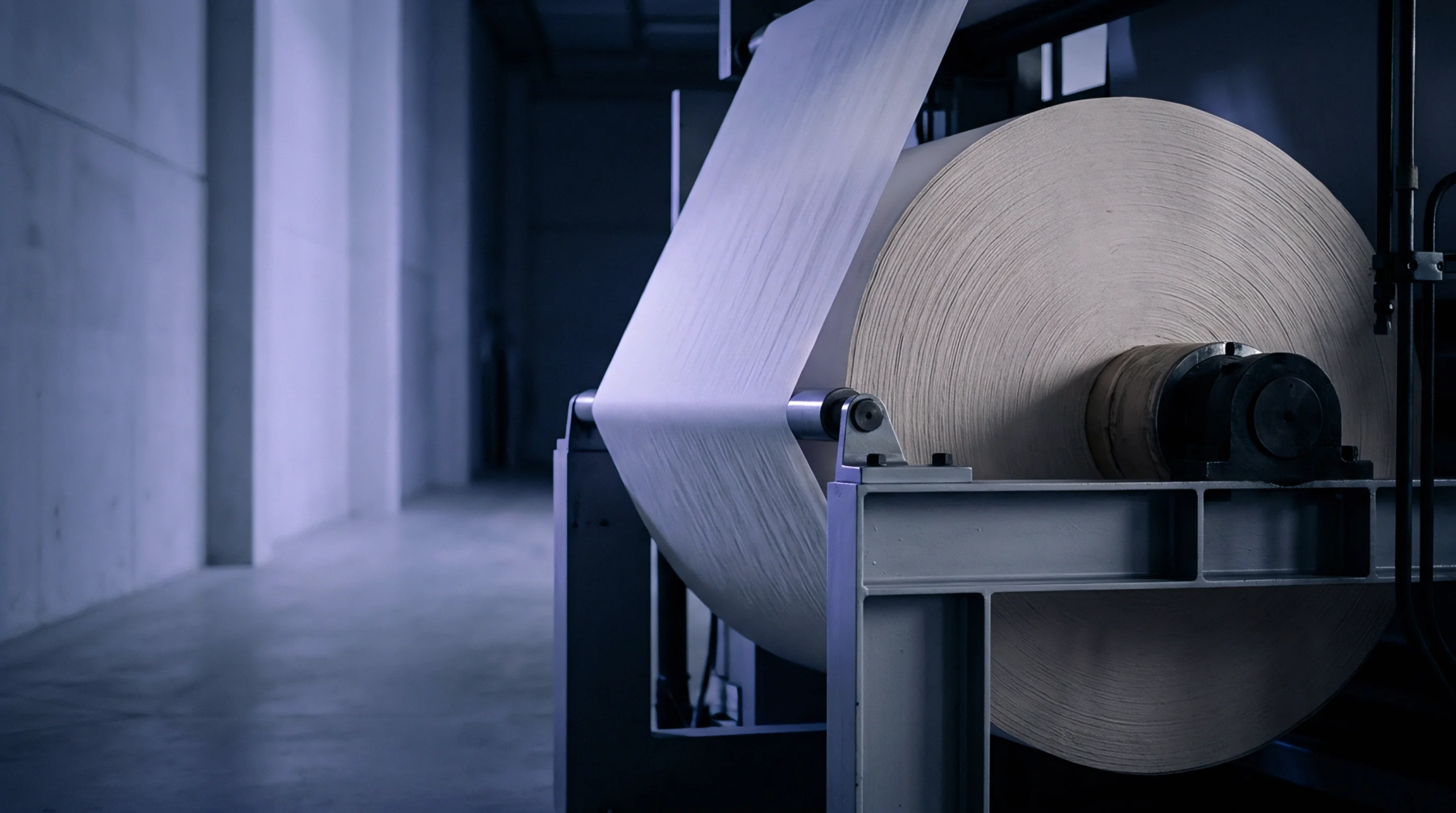
Core Rupture
Structural failure occurs when the internal compressive forces of a tightly wound paper roll exceed the radial load capacity of its central fibre cylinder. Mechanical deformation known as core collapse prevents unwind shafts from engaging during converting operations. This failure mode renders the parent roll unusable without rewinding.
Stress Mechanism
Radial pressure builds progressively as hundreds of paper layers contract around the rigid center under continuous web tension. Winding tension profiles that remain flat or rise toward the outer diameter drive extreme compressive loads straight to the core wall. Paper fibers relax under stored elastic strain, transmitting inward radial forces that crush paperboard cores or distort steel cores beyond operational tolerances.
High-density paper grades present greater resistance to radial compression, shifting the failure boundary to lower tension limits. Machine operators adjust torque program curves to taper winding tension dynamically from the core to the perimeter. Proper tension tapering reduces cumulative internal pressure while maintaining web stability across the entire roll diameter.
Prevention Boundary
Mill quality standards specify minimum core crush resistance values measured in kilonewtons per meter according to ISO standards. Exceeding specified radial pressure limits during winding causes irreversible core deformation that disrupts high-speed unwinding lines. Storage humidity shifts also weaken fiber cores, lowering the threshold where structural failure occurs under existing tension levels.
Core collapse remains a primary boundary for winding parameters on high-speed paper machinery.