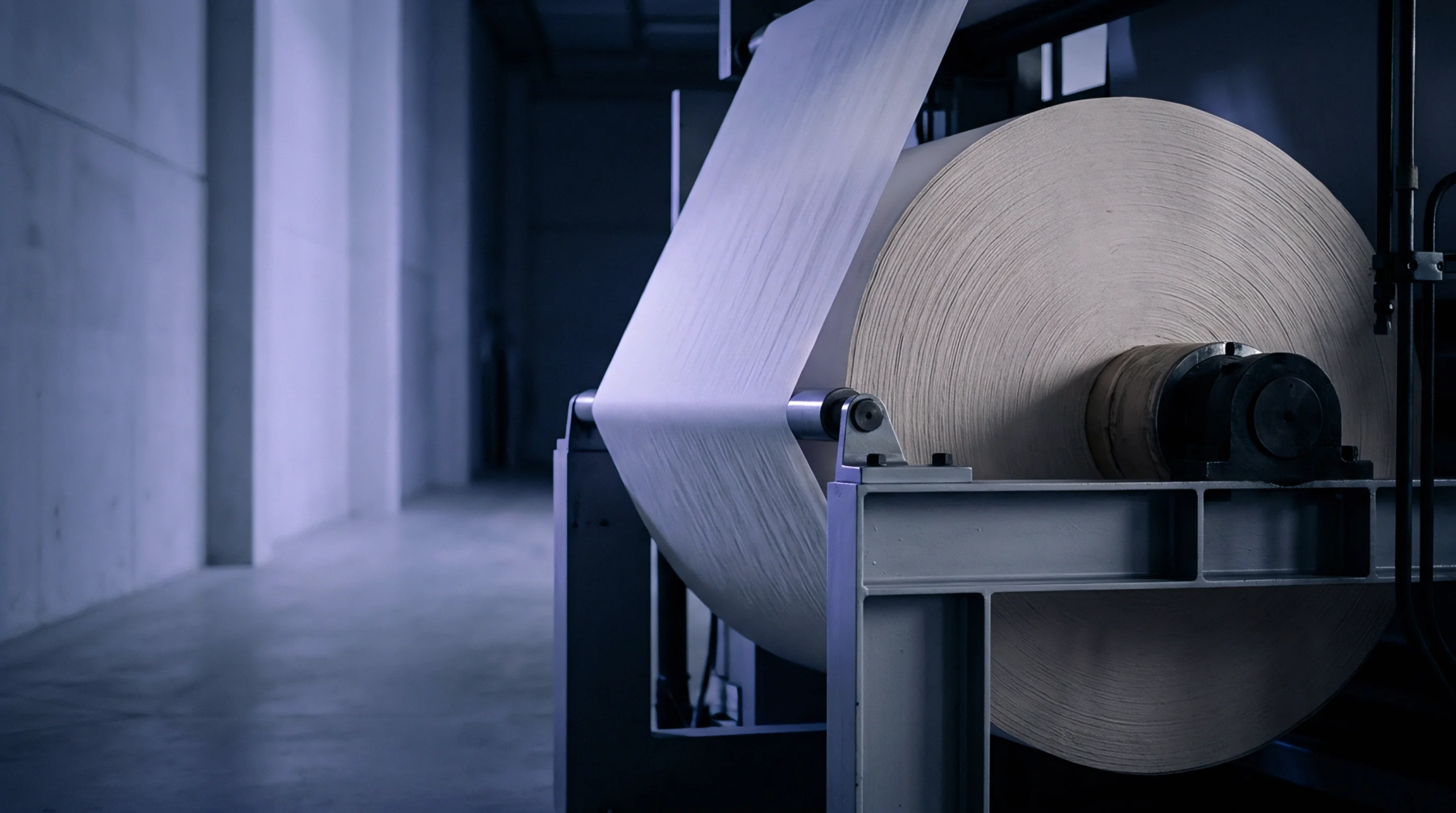
Machine Designation
Mechanical equipment operating at the exit of a paper machine converts the full width web into individual logs of specified length. A primary winder performs this initial slitting and reeling process to produce parent rolls for further conversion. High tension controls within the unit ensure that the paper density remains uniform across the entire diameter of the roll.
These machines utilize various slitting methods to achieve clean edges and precise widths required for subsequent processing stages. Precise calibration of the rider roll pressure dictates the final hardness of the substrate.
Production Integration
Operating downstream of the drying section, the device synchronizes its speed with the output of the machine calendar to maintain constant tension. Any deviation in speed between the incoming web and the rotating core results in uneven sheet stress or web breaks. Operators monitor the torque applied to the center shafts to manage the winding hardness as the roll diameter increases.
Constant surface pressure applied by the rider roll pushes air out from between the layers to prevent telescoping during transit. Efficient discharge of completed rolls onto a conveyor system minimizes downtime between cycles.
Operational Boundary
Tolerance ranges for core alignment and edge trim quality define the performance limits for these units. Maintenance of the slitting blades determines the occurrence of dust generation and jagged edges on the sheet surface. Improper tension settings frequently lead to interior roll deformation or surface wrinkling during the storage phase.
Consistent performance relies upon the alignment of the drum surface relative to the incoming sheet path. Effective management of the winding parameters dictates the downstream runnability of the paper during the printing or packaging phase.