Substrate Hygroexpansion and Thermal Film Shrinkage Mechanics in Single-Sided Board Lamination
Single-sided lamination curl stems from differential thermal shrinkage of polymer film opposing moisture-driven hygroexpansion across anisotropic board fibers.
Swell
Cellulose Fiber Sorption Mechanics
Paperboard dimensional instability originates in the hydrophilic nature of wood pulp fibers. When ambient relative humidity shifts, hydrogen bonds within the amorphous regions of cellulose and hemicellulose break and re-form around incoming water molecules. This sorption phenomenon induces strongly anisotropic volume changes: individual wood fibers expand up to twenty percent in diameter while expanding less than two percent along their longitudinal axis.
Because paper machine geometry aligns the majority of fibers along the machine direction, dimensional changes concentrate across the cross direction.
Solid bleached sulfate, folding boxboard, and coated recycled board react to moisture exchange at different rates depending on furnish composition and refining intensity. Mechanical pulps retained in the middle ply of folding boxboard contain lignin, which slows initial water vapor absorption while maintaining a bulkier structure. Heavily refined chemical pulps in solid bleached board offer immediate hydroxyl binding sites, accelerating dimensional movement during humidity shifts.
When an uncoated board face exchanges moisture with surrounding air while the opposite face carries an impermeable barrier, internal moisture gradients form through the thickness of the sheet.
Anisotropic Expansion Factors
Cross-direction hygroexpansion coefficients for commercial cartonboard grades range between 0.015 and 0.030 percent change in sheet width per one percent change in relative humidity. Machine-direction coefficients remain between 0.005 and 0.010 percent under identical conditioning. Moisture uptake causes the unlaminated reverse side of a single-sided board to widen across its grain.
Because the laminated top face is bonded to a plastic web that resists moisture vapor transport, the board back expands while the front remains fixed, forcing the panel to curve toward the film side.
Desorption creates the inverse mechanical response. When a high-moisture sheet enters a dry converting environment or passes through heated lamination rolls, water vapor driven out of the board face causes localized fiber contraction. Uncontrolled moisture loss from the exposed back ply during thermal lamination produces immediate contraction of that surface.
Subsequent atmospheric re-equilibration forces moisture back into the dried fibers, resulting in delayed reverse curl days after converting.
Board delivered within certified moisture specifications can still curl during single-sided lamination, as impermeable film barriers prevent symmetric vapor exchange.
Heat
Polymer Film Strain Release
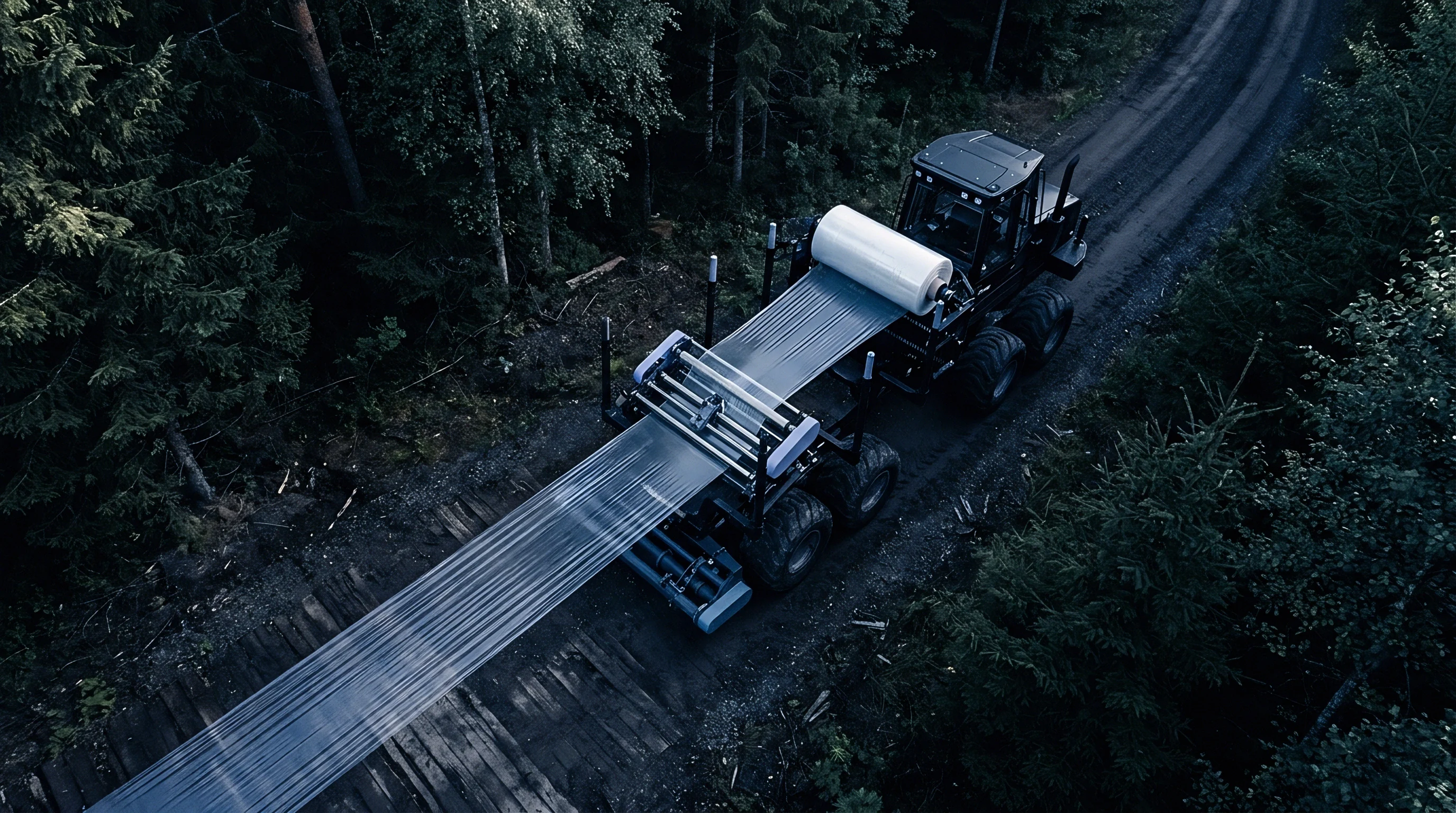
Thermal lamination processes utilize heat and pressure to melt an extruded adhesive layer, typically polyethylene or ethylene-vinyl acetate, onto the board surface. Biaxially oriented polypropylene, polyethylene terephthalate, and nylon films undergo significant tension during their manufacturing draw process. This orientation locks internal strains into the polymer chain network.
Reheating the film at the lamination nip to temperatures between 85°C and 120°C relaxes these frozen-in strains, initiating thermal shrinkage along both machine and cross directions.
Polypropylene films begin softening near 90°C, releasing tension while in direct contact with the hot chrome roller. As the cooling sheet exits the nip, the polymer attempts to contract to its unstretched thermodynamic state. Because the adhesive layer forms a rigid interface with the top fiber layer of the board, film shrinkage exerts continuous compressive stress on the upper surface of the sheet.
Higher nip temperatures lower melt viscosity and improve mechanical keying into board pores, but simultaneously increase film shrinkage strain.
Thermal shrinkage of unoriented polypropylene film reaches 1.8 percent along the machine direction when exposed to a lamination nip temperature of 115°C at a line speed of 25 meters per minute.
Cooling Stress Accumulation
Cooling dynamics convert thermal expansion differences into permanent mechanical curl. The thermal expansion coefficient of orientable polypropylene sits near 120 × 10⁻⁶ K⁻¹, whereas paperboard exhibits a thermal expansion coefficient around 10 × 10⁻⁶ K⁻¹. As the laminated composite drops from the nip application temperature back to ambient shop temperature, the polymer film contracts at more than ten times the rate of the paperboard substrate.
Simultaneously, heat from the chrome roller dries the upper plies of the paperboard, removing free moisture and temporarily contracting the upper fiber network. When the sheet leaves the chill roller, two competing contraction phenomena occur: immediate polymer thermal contraction and delayed paperboard moisture regain. The mismatch in elastic modulus between the cold plastic film and the hot substrate locks residual shear stress directly into the bond line.
Failure modes driven by thermal shrinkage and moisture loss present distinct visual patterns across converted sheets:
- Machine Direction Convex Curl occurs when high web tension combined with thermal film contraction pulls the head and tail of the sheet upward toward the laminated face.
- Cross Direction Flute Warp develops when cross-direction film shrinkage overrides board stiffness, rolling the side edges inward along the grain line.
- Diagonal Twist Deflection manifests when board grain alignment deviates from web axis direction, rotating panel corners out of plane under asymmetrical tension.
- Blistering Adhesion Delamination forms when residual fiber moisture turns to steam under high nip heat, separating the film before adhesive setting completes.
Exceeding web tension limits during thermal film unwinding stretches the film prior to nip entry, adding elastic recovery stress onto thermal shrinkage and rendering the finished panel permanently bowed.
Deflection
Composite Stress Bending Equations
Predicting the curvature of a single-sided laminated sheet requires applying Classical Laminated Plate Theory modified for hygrothermal strain. The composite total curvature results from the summation of mechanical bending moments, thermal strain differentials, and hygroexpansion strain differentials across the cross section. Panel radius of curvature is inversely proportional to the residual internal stress sum and directly proportional to the flexural rigidity of the combined layers.
The flexural rigidity of paperboard scales with the cube of its thickness. Doubling board caliper from 200 to 400 micrometers increases bending resistance eightfold, significantly reducing panel deflection under identical film shrinkage forces. Thinner folding boxboards lack the structural moment of inertia required to resist thermal film contraction, flexing into pronounced dish shapes under minor tension imbalances.
Equilibrium bending mechanics operate according to classical elastic plate equations. The bending curvature, kappa, expressed in reciprocal meters, is derived from the elastic properties and layer thicknesses:
kappa = 6 (E1 E2 t1 t2 (t1 + t2) (epsilon_thermal + epsilon_hygro)) / (E1^2 t1^4 + E2^2 t2^4 + 2 E1 E2 t1 t2 (2 t1^2 + 3 t1 t2 + 2 t2^2))
In this equation, E1 and E2 represent the elastic moduli of the paperboard and polymer film, t1 and t2 represent their respective layer thicknesses, epsilon_thermal represents the thermal shrinkage strain difference upon cooling, and epsilon_hygro represents the hygroexpansion strain difference driven by moisture changes. The elastic modulus of biaxially oriented polypropylene ranges from 2.0 to 3.5 GPa, while paperboard machine-direction elastic modulus ranges from 4.0 to 8.0 GPa depending on density and fiber refining.
| Film Polymer Type | Nominal Caliper (microns) | Tensile Modulus (GPa) | Thermal Shrinkage at 105°C CD (%) | Thermal Shrinkage at 105°C MD (%) |
|---|---|---|---|---|
| Biaxially Oriented Polypropylene | 12 to 24 | 2.2 to 3.1 | 0.8 to 1.4 | 1.5 to 2.8 |
| Polyethylene Terephthalate | 10 to 15 | 4.0 to 5.2 | 0.2 to 0.5 | 0.4 to 0.8 |
| Oriented Polyamide (Nylon) | 12 to 20 | 2.8 to 3.8 | 1.2 to 2.0 | 1.0 to 1.8 |
| Polylactic Acid (Bio-based) | 15 to 30 | 1.8 to 2.6 | 2.0 to 3.5 | 2.5 to 4.2 |
| Test methods: Tensile modulus measured per ASTM D882; free thermal shrinkage measured in air bath at 105°C for 120 seconds per ASTM D1204. | ||||
Can Thermal Single-Sided Lamination Prevent Seasonal Panel Curl?
Eliminating curl entirely across variable environmental conditions requires matching the mechanical expansion potential of the film layer with the physical moisture response of the paperboard. Seasonal ambient changes between 20 percent relative humidity in winter heating conditions and 70 percent in summer humid environments alter board moisture content by up to six percentage points. Film dimensions remain unaffected by atmospheric humidity, creating an unavoidable dimensional drift relative to the expanding and contracting board.
Selecting film grades with low shrinkage characteristics combined with high-caliper, high-density board limits maximum deflection. Adjusting anti-curl breaker bars on the laminating machine introduces counter-deformation into the paperboard plies prior to web bonding, offsetting predicted thermal film contraction.
Operating lamination machinery with minimal web tension and the lowest achievable nip temperature that still delivers complete adhesive wetting suppresses thermal strain release at the source.
Compliance with ISO 187 conditioning mandates sheet stabilization at 23°C and 50 percent relative humidity before dimensional deflection testing, invalidating substrate moisture measurements taken immediately off the stack.
Thicker substrate plies resist film shrinkage strain through sheer flexural inertia.
Control
Machine Mechanical Adjustments
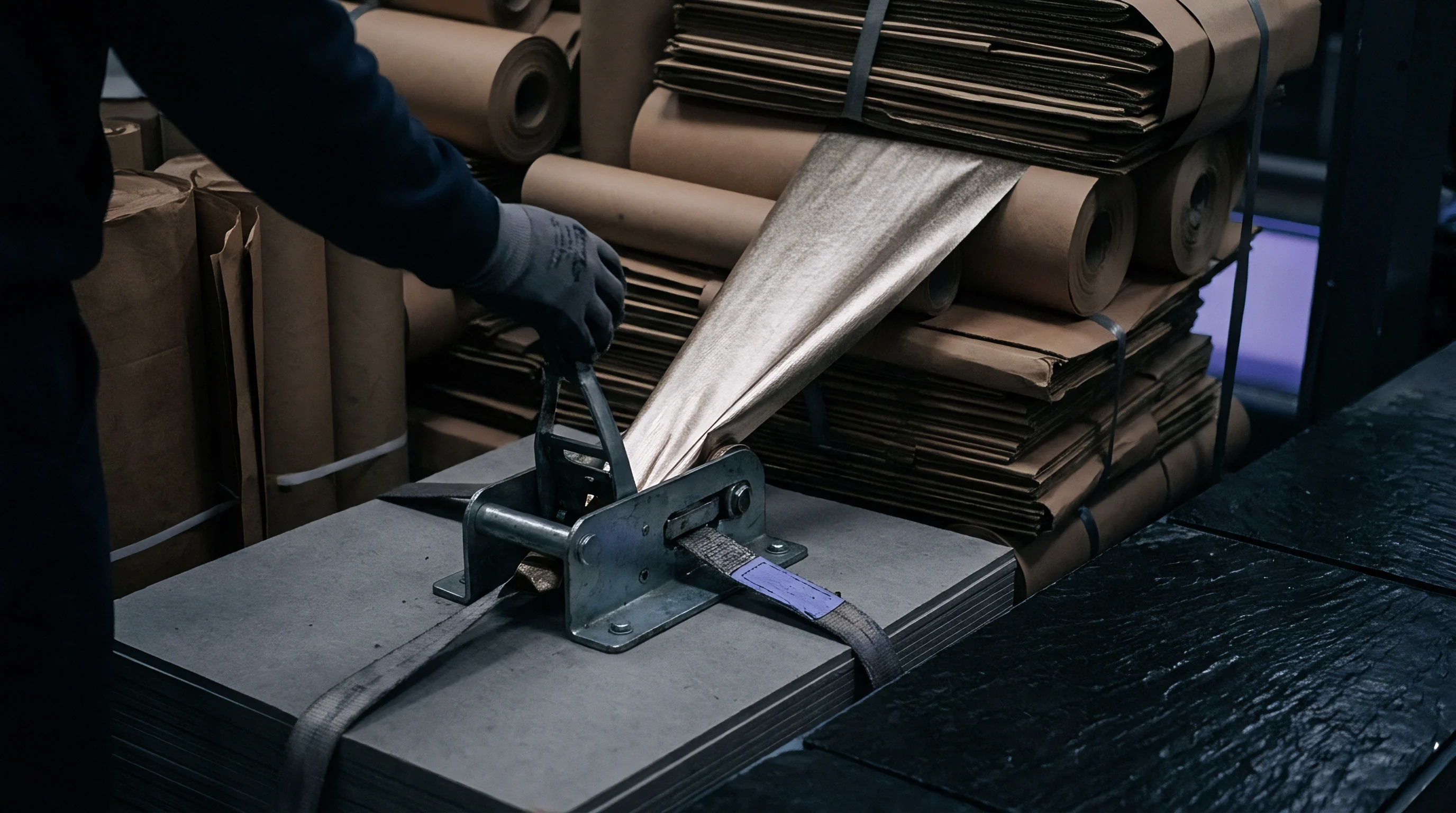
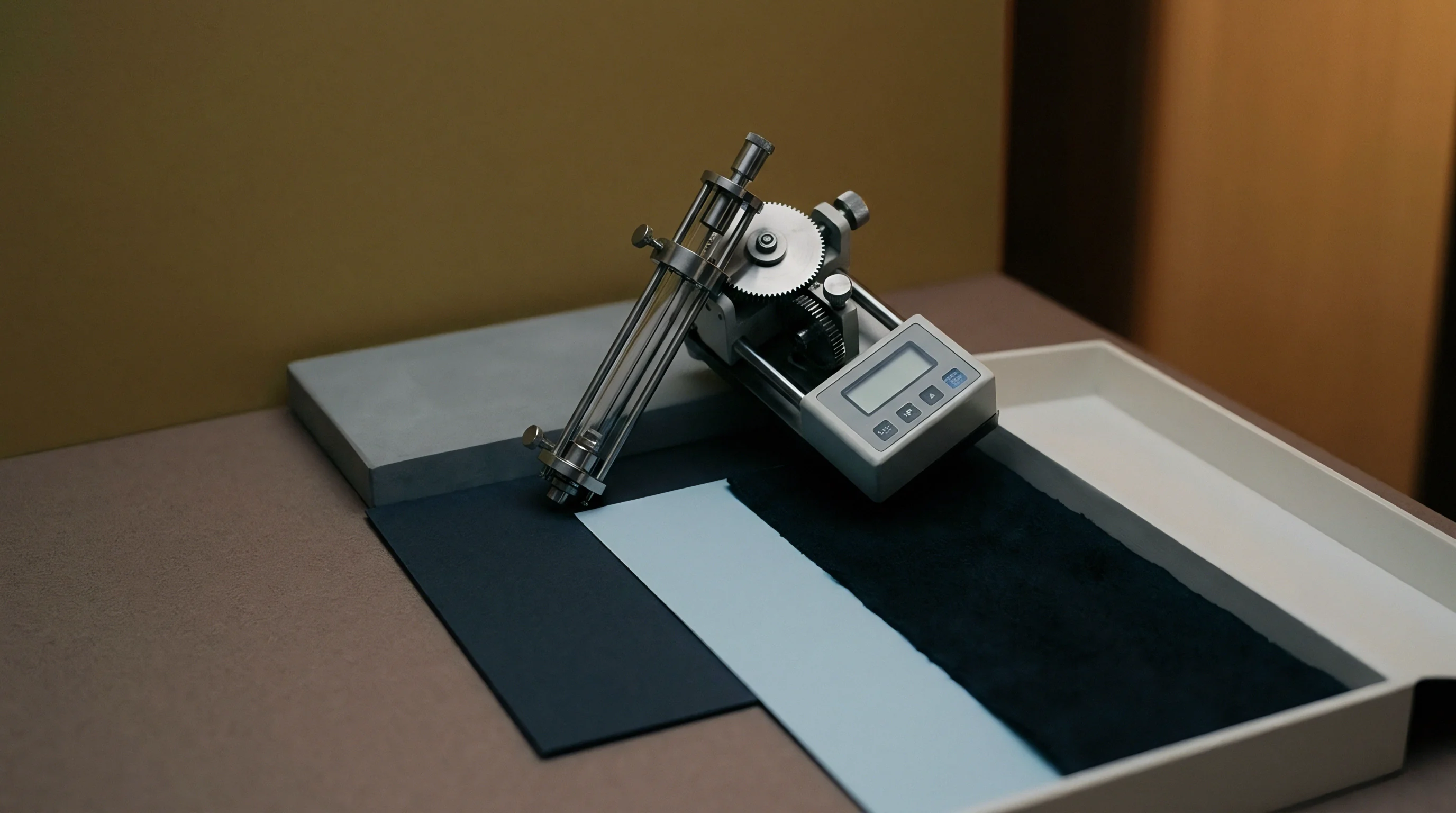
Managing sheet flatness on high-speed single-sided thermal laminators relies on real-time manipulation of web geometry, nip pressure, roll temperature, and anti-curl de-curling systems. The primary mechanical tool for counteracting film shrinkage is the adjustable anti-curl breaker bar assembly. Positioned after the laminating nip and before sheet discharge, this system forces the newly bonded composite over a small-radius steel roller or sharp breaker blade, bending the board back against the film side.
This mechanical bending stretches the unlaminated bottom fiber network beyond its yield point, inducing micro-compression failure along the lower plies. By artificially lengthening the bottom surface of the paperboard, the operator balances the physical contraction force exerted by the shrinking polymer film on the top surface. Setting the depth of the breaker bar requires balancing curl correction against board structural damage.
Calibrating a thermal laminator for zero-curl performance across a production run follows a controlled setup sequence:
- Establish baseline board moisture content using a non-destructive microwave or dielectric capacitance meter across the feeder stack.
- Set chrome roll heating zone controls to the lowest temperature that achieves complete optical clarity and adhesive fiber tear during a pull test.
- Reduce film unwinding brake tension until web tracking remains stable without introducing lateral film necking or web flutter.
- Engage the web chill roller to rapidly drop composite temperature below the adhesive glass transition point before tension release.
- Increase anti-curl breaker bar immersion depth in increments of 0.5 millimeters until first-off delivery sheets lie flat on the delivery table.
- Inspect sheet corners five minutes post-discharge to account for initial thermal strain relaxation before authorizing production speed acceleration.
| Substrate Grade Name | Grammage (g/m²) | CD Hygroexpansion (% per % RH) | MD Hygroexpansion (% per % RH) | Anisotropy Ratio (CD/MD) |
|---|---|---|---|---|
| Solid Bleached Sulfate (SBS) | 280 | 0.022 | 0.007 | 3.14 |
| Folding Boxboard (FBB) | 250 | 0.026 | 0.008 | 3.25 |
| Coated Recycled Board (CRB) | 320 | 0.019 | 0.006 | 3.17 |
| Unbleached Kraft Board (CUK) | 300 | 0.024 | 0.007 | 3.43 |
Pre-Conditioning Protocol Options
Substrate moisture management prior to web entry dictates post-lamination stability. Passing paperboard through an inline humidification chamber or infrared pre-heating station alters core moisture equilibrium before adhesive application. Pre-heating the paperboard back side expands substrate fibers thermally while removing excess surface water, synchronizing substrate thermal contraction with film cooling shrinkage.
Controlling converting room ambient conditions remains critical. Pallets of board removed from cold warehouse storage and unsealed immediately in a warm printing or laminating hall condense surface moisture, raising top-ply water content. Board plies laminated in this state experience severe post-converting curl as stored moisture migrates outward through the unlaminated reverse face.
Increasing anti-curl breaker bar penetration counteracts thermal film tension but accelerates grain-line micro-cracking across the unprinted back side of low-ductility board grades.
Standard commercial finishing specifications dictate that maximum allowable sheet curl deflection must not exceed five millimeters measured at any corner when the panel rests face-up on a certified flat stone surface following twenty-four hours of ISO 187 conditioning.
Balance
Recyclability Grading Impacts
Adding plastic films to single-sided paperboard packaging alters material recyclability scores under European Extended Producer Responsibility schemes. Testing protocols under CEPI 4.0 and PTS-RH 021/97 evaluate repulpability by measuring disintegrability, fiber yield, and sticky generation during laboratory hydrapulping. Single-sided laminates release large plastic fragments that screen out easily compared to double-sided film structures, but adhesive residue can clog fine slotted screens.
Modulated eco-contributions penalize film-laminated board packaging when plastic content exceeds specific mass thresholds. Polypropylene and PET films laminated onto board surfaces count as non-paper components, reducing overall fiber yield percentages. Switching from conventional thermal polyolefins to water-soluble adhesives or ultra-thin water-based barrier coatings preserves repulpability grades while eliminating film shrinkage stresses entirely.
| Scheme Evaluation Standard | Lamination Material Type | Maximum Film Mass (%) | Repulpability Classification | EPR Fee Surcharge Level |
|---|---|---|---|---|
| CEPI Recyclability Guidelines 4.0 | BOPP Thermal Film | 5.0 | Recyclable with standard mill processing | Standard baseline fee |
| CEPI Recyclability Guidelines 4.0 | PET Thermal Film | 5.0 | Recyclable with minor fiber yield loss | Low fee surcharge (+15%) |
| PTS-RH 021/97 Category II | Polyolefin Film with EVA | 8.0 | Limited recyclability due to stickies | Medium fee surcharge (+35%) |
| EN 13430 Material Recycling | Polylactic Acid (PLA) Film | 5.0 | Non-recyclable in paper stream | High fee surcharge (+100%) |
Yield and Unit Cost Economics
Evaluating single-sided lamination costs requires accounting for raw material expenses, web make-ready waste, machine operating speeds, and EPR fee surcharges. Standard 15-micron BOPP thermal film adds approximately 0.04 to 0.07 Euros per square meter in material costs. High-modulus PET film costs 0.08 to 0.12 Euros per square meter but allows thinner film usage, reducing overall mass surcharges.
Assessing a production run of 50,000 sheet units (700 mm × 1000 mm, 250 g/m² FBB) demonstrates the cost distribution across laminating choices. Standard thermal BOPP lamination running at 40 meters per minute incurs 1.5 percent make-ready waste and yields a flat unit finishing cost of 0.042 Euros per sheet. Substituting a specialized low-shrinkage cellulose film increases film material expenditure to 0.11 Euros per square meter but eliminates anti-curl mechanical micro-cracking, preserving back-side printability and reducing EPR waste penalties under stringent municipal collection frameworks.
Polyethylene terephthalate film maintains higher mechanical modulus under heat than polypropylene, transferring shrinkage forces directly into substrate panel dish warp.
Selecting the optimal lamination setup demands balancing initial film purchasing costs against long-term operational waste and post-consumer disposal surcharges. Lowering film applied thickness reduces thermal shrinkage forces, protects board flatness, minimizes plastic mass percentages, and avoids high regulatory disposal penalties across international distribution channels.