Single Sided Plastic Lamination Scrappage versus EU EPR Modulated Recyclability Packaging Tariffs
Converting scrappage from single sided lamination negates small material savings once EU EPR tariffs penalize film coated board above five percent weight.
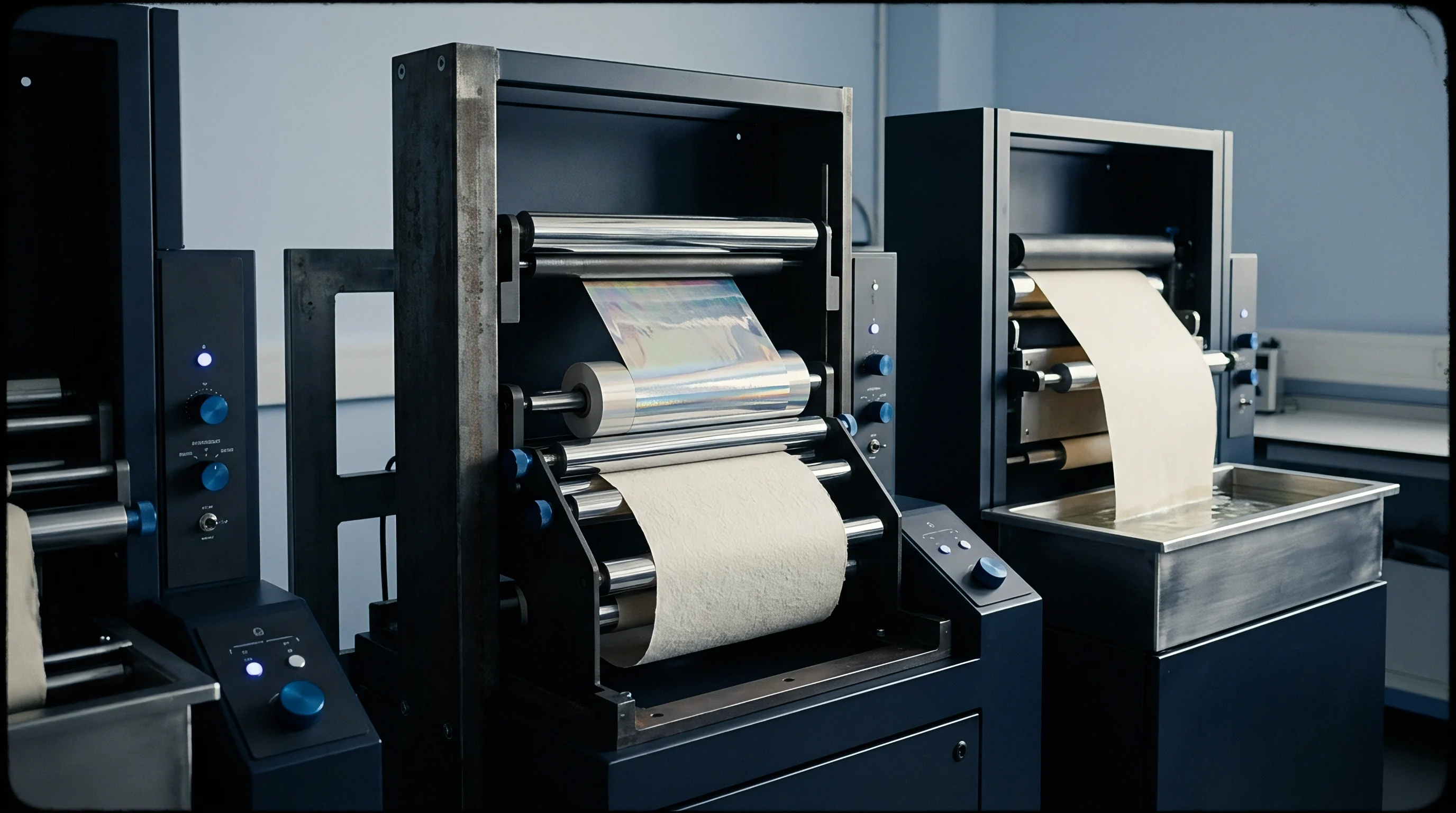
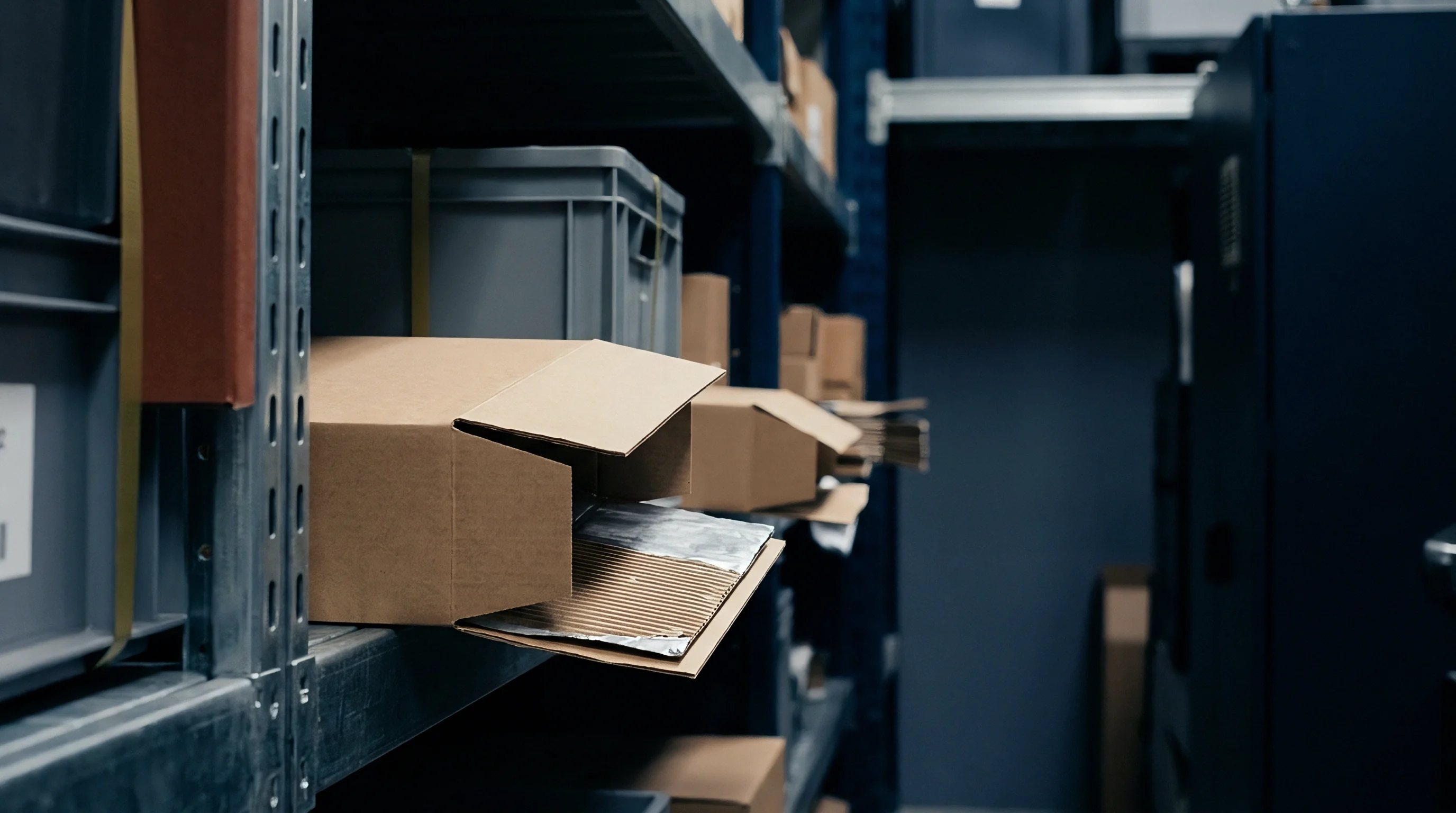
Curl
Single-sided plastic lamination applies a thin polymeric film, typically oriented polypropylene or polyethylene terephthalate, to one face of a paperboard sheet using heat and pressure. The lamination pass introduces asymmetric mechanical stress and a severe moisture gradient across the board caliper. Thermal stress from laminating rollers heated to 100°C to 120°C drives moisture out of the top ply while the film layer acts as a vapor barrier on the laminated face.
As the sheet cools and re-equilibrates with ambient air under standard conditions specified in ISO 187 at 23°C and 50% relative humidity, the uncoated paperboard side absorbs atmospheric moisture and expands while the plastic film maintains a constant dimension. The dimensional differential between the expanding paperboard ply and the non-expanding polymer film pulls the sheet into a pronounced concave or convex warp.
This dimensional instability generates substantial operational waste on downstream converting equipment. High-speed automatic boxmakers, die-cutters, and folder-gluers rely on flat sheet feeding. Warped blanks cause misfeeds, double-sheet stops, and registration errors at the die-cutting station.
Adjusting nip pressure and suction grippers to compensate for board curl consumes press setup time and increases make-ready scrappage. On automated folding box lines running at 30,000 sheets per hour, even mild sheet distortion forces line speed reductions of 15% to 30% to prevent jam-ups.
Scrappage rates on single-sided film laminated folding boxboard frequently reach 4% to 8% of total run volume, compared to 1.5% to 2% for unlaminated or double-side coated boards. Beyond feeder stoppages, severe board curl creates set-off in stacked finished blanks and causes cracking along the score lines when folded against the grain direction.
A sheet laminated on one side curls because paper fibers expand with ambient humidity while synthetic film maintains fixed dimensions.
Moisture Gradient and Hydro-Expansion Mechanics
Paperboard is a hygroscopic, anisotropic network of cellulose fibers that expands or contracts in response to ambient relative humidity. Cross-direction expansion is four to eight times higher than machine-direction expansion due to fiber alignment during sheet formation on the paper machine. When wet or thermal film lamination seals one surface, it blocks moisture exchange on that side while leaving the reverse side exposed to humidity fluctuations.
The severity of sheet distortion depends on board grammage, fiber orientation, adhesive layer thickness, and film tensile modulus. Thinner boards between 200 gsm and 280 gsm experience greater angular deflection than rigid board grades above 350 gsm. Applying high web tension to the laminating film during application locks elastic strain into the polymer layer.
Upon cooling, the film contracts, compounding the curl towards the laminated face.
| Surface Treatment | Caliper Addition (µm) | Moisture Transfer Rate (g/m²/day) | Sheet Curl Radius (mm) | Average Line Scrappage Rate (%) |
|---|---|---|---|---|
| Oriented Polypropylene Film (12µm) | 12.0 | 4.5 | 180 | 5.8 |
| Polyethylene Terephthalate Film (12µm) | 12.0 | 18.0 | 140 | 6.4 |
| Extrusion Coated Polyethylene (15µm) | 15.0 | 8.0 | 220 | 4.2 |
| Aqueous Dispersion Coating (6 gsm) | 5.5 | 22.0 | 650 | 2.1 |
Sheet Warp Effects on Automatic Packaging Feeders
Downstream converting machines transfer paperboard sheets through vacuum belts, mechanical pushers, and high-speed nip rollers. When board curl exceeds an architectural tolerance of 15 mm deflection across a 1000 mm sheet span, automated feeder suction cups fail to achieve vacuum seals. The machine sensor registers a missed feed and stops the press.
Press operators frequently attempt to counteract curl by running reverse-bending rollers or adjusting humidification units in the press hall. These manual adjustments increase make-ready times and yield inconsistent results across multi-pallet runs. High scrappage rates during die-cutting and folding-gluing directly elevate the landed cost of finished cartons long before the packaging reaches an end-of-life assessment.
- Feed hopper jams occur when upward concave curvature prevents vacuum suckers from lifting individual sheets cleanly from the pile stack.
- Registration misalignment develops as distorted blanks twist inside die-cutting guides, causing creasing rules to strike off center relative to print markers.
- Score line cracking appears when rigid plastic film prevents uniform stress distribution across the score bead during high-speed folding operations.
- Gluing flange failure arises when curl pulls pressure flaps away from adhesive tracks before cold-melt or hot-melt glues cure completely.
Post-converting sheet curvature is often attributed entirely to improper atmospheric conditioning inside the press room.
Pulp
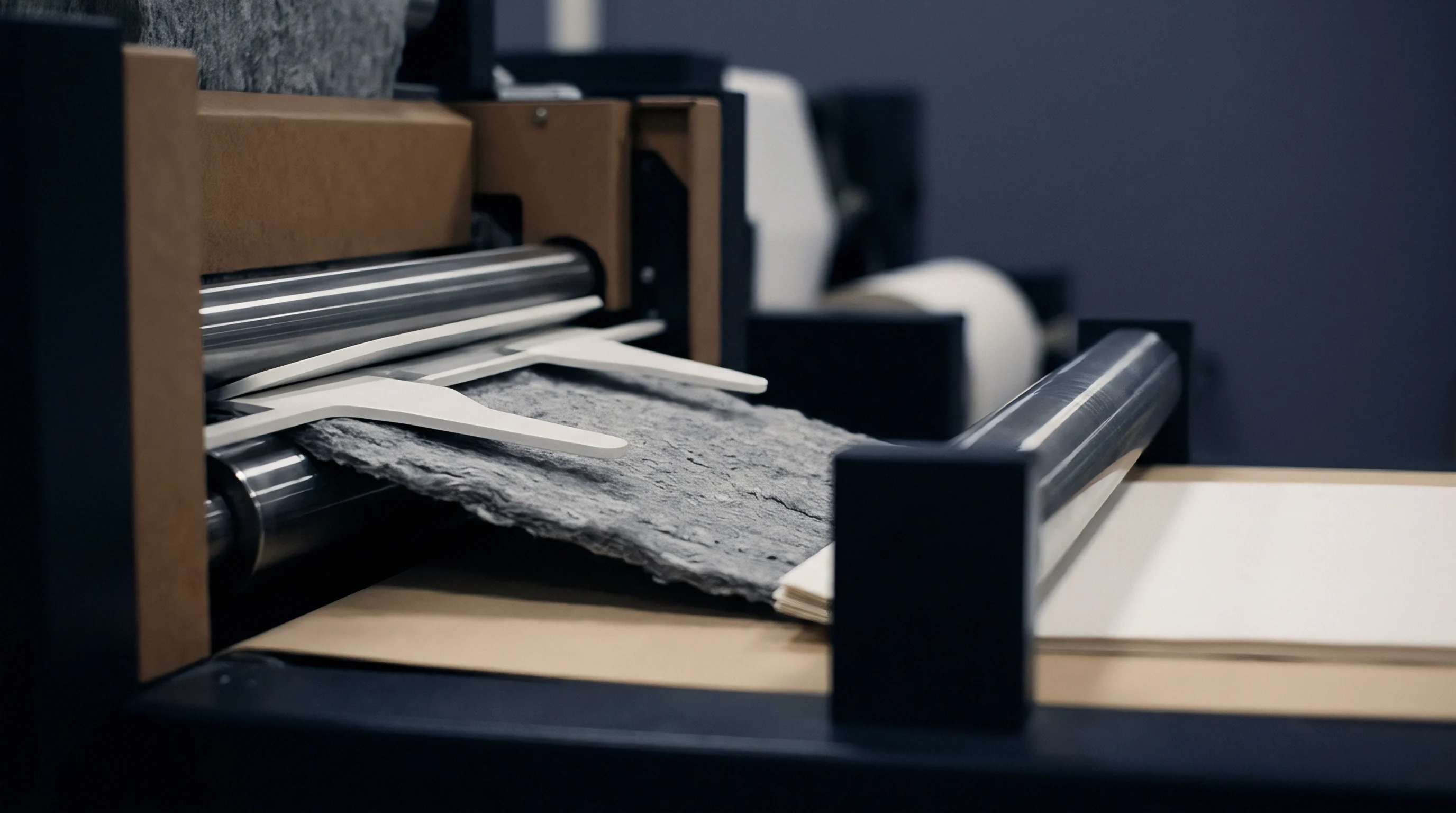
When plastic laminated paperboard enters the paper recycling stream, hydrapulpers attempt to separate cellulose fibers from the synthetic polymer layer. Standard European recycling mills operate mechanical pulping cycles at ambient temperatures ranging between 40°C and 50°C for 10 to 20 minutes. Mechanical shear breaks down the paper substrate into individual suspension fibers while keeping the plastic film intact as large fragments.
Single-sided film lamination introduces distinct processing challenges compared to double-sided extruded coatings. The single plastic film layer detaches as a continuous or coarse film sheet. However, adhesive layers applied during lamination, particularly solventless polyurethane or water-based acrylic adhesives, break down into small, sticky particles known as stickies.
These tacky particles pass through slot screens, contaminate white water loops, and adhere to paper machine drying cylinders, causing sheet breaks and surface spots on recycled paper rolls.
Fiber recovery yield measures the percentage of usable wood pulp recovered from the initial packaging weight. Single-sided plastic laminated board yields lower net fiber recovery than mono-material board due to pulp trapped along film edges or rejected during coarse screening steps. Plastic film fragments carrying attached unpulped fiber bundles are rejected to landfill or waste-to-energy incineration, generating direct process losses for paper mills.
The European repulpability standard mandates that a minimum of ninety-five percent of dry board mass must pass through a 150 micron screen without generating sticky deposits.
Fiber Separation Kinetics in Standard Hydrapulpers
Rotor geometry and consistency dictate the rate of fiber detachment from plastic films. Industrial pulpers operate at stock consistencies of 4% to 6% solids. As rotors agitate the slurry, hydraulic shear forces peel the plastic film away from the paperboard interface.
Polypropylene film resists hydromechanical tearing, maintaining structural integrity that facilitates mechanical removal at coarse screens.
Brittle films or aging laminates break into micro-fragments under prolonged shear. Micro-fragments under 1 mm diameter pass through primary pressure screens equipped with 0.15 mm slots. These particles contaminate the fine pulp fraction, reducing the mechanical strength and print quality of recycled linerboard.
CEPI Laboratory Screening Sequence for Plastic Contaminants
Evaluation of repulpability follows standard laboratory procedures established by the Confederation of European Paper Industries in the CEPI Recyclability Test Method Version 2. This laboratory method simulates industrial stock preparation sequences to quantify fiber yield, coarse reject percentages, and sticky formation potential.
- Soak the laminated paperboard sample in tap water at 40°C for 10 minutes to reach equilibrium moisture content.
- Disintegrate the sample in a laboratory pulper at 3000 revolutions using a 6% dry stock consistency.
- Screen the disintegrated pulp slurry through a Haindl or Somerville fractionator fitted with a 150 micron slotted plate.
- Collect the coarse reject fraction remaining on the screen plate, dry at 105°C, and calculate dry mass percentage relative to initial sample weight.
- Determine fine fiber yield by subtracting coarse rejects and macro-stickies from total initial fiber mass.
Commercial paper mill acceptance contracts specify that delivered packaging scrap batch lots yielding more than 5% total coarse rejects incur mandatory price downgrades or outright shipment rejection at the weighbridge gate.
Levy
Extended Producer Responsibility policy across EU member states mandates eco-modulated packaging tariffs to incentivize design for recycling. Under the regulatory principles reinforced by the EU Packaging and Packaging Waste Regulation, financial contributions paid by packaging producers reflect end-of-life processing costs. Mono-material paperboard packaging benefits from base tariff rates, whereas plastic laminated paperboard faces financial penalties known as malus surcharges.
EPR schemes evaluate packaging compositions based on plastic-to-paper mass ratios. Packaging containing non-paper components below a 5% total mass threshold generally retains classification within the paper packaging recycling stream. Single-sided plastic lamination frequently pushes non-paper content to 4% to 8% of total pack weight, depending on board grammage and film thickness.
When film content exceeds the 5% threshold, national compliance schemes reclassify the item as a multi-material composite package.
Composite classification triggers severe economic consequences. Producers pay double to quadruple the base paper tariff rate per tonne of packaging placed on the market. In addition, composite packages failing standardized repulpability benchmarks are excluded from green dot recyclability claims, incurring additional administrative penalties in jurisdictions like France, Germany, and Italy.
Packaging carrying plastic content above five percent by weight incurs European eco-modulation surcharges that often surpass the initial material purchase cost of the lamination film.

Eco-Modulation Tiers in European EPR Schemes
National compliance organizations administer distinct fee scales based on recyclability grading. In France, Citeo applies a penalty system where non-recyclable multi-material packaging or paperboard laminated with non-separable plastic films receives a malus fee addition up to 100% of the base fee. In Germany, the Central Agency Packaging Register enforces strict material classifications under the Verpackungsgesetz, placing plastic-coated board with low repulpability into composite fee bands.
Italy under the CONAI system splits paper and board packaging into distinct fee categories based on repulpability scores measured via the Aticelca 501 test protocol. High-performing mono-material board falls into Band A, whereas plastic laminated paperboard with low repulpability falls into Band C or Band D, resulting in fees per tonne that are up to five times higher than base paper rates.
| Jurisdiction | EPR Compliance Scheme | Monomaterial Paper Rate (€/t) | Plastic Laminated Board Rate ( | Composite Malus Rate (>5% plastic) (€/t) |
|---|---|---|---|---|
| France | Citeo | 180.00 | 240.00 | 520.00 |
| Germany | Duales System / ZSVR | 110.00 | 195.00 | 440.00 |
| Italy | CONAI (Aticelca System) | 35.00 | 120.00 | 380.00 |
| Netherlands | Verpakkingafval | 140.00 | 210.00 | 490.00 |
Are Aqueous Dispersion Coatings Exempt from Modulated Tariff Penalties?
Water-based dispersion coatings applied online during printing or flexo coating offer barrier functionality against moisture, oil, and grease without forming a continuous film layer that survives pulp disintegration. These dispersion layers disperse during standard repulping cycles into microscopic particles that pass cleanly through screening systems without forming macro-stickies.
European EPR schemes assess dispersion-coated paperboard under mono-material paper classifications provided total organic polymer content remains below 5% of dry weight and the board passes CEPI repulpability tests. Replacing thermal OPP or PET film lamination with aqueous dispersion coatings eliminates the composite malus surcharge, shifting the packaging item back into lowest-tier EPR tariff structures.
- Grade A classification applies to paperboard products achieving over 95% fiber yield with zero macro-sticky formation during standard disintegration.
- Grade B classification applies to materials achieving 85% to 95% fiber yield, incurring minor EPR surcharges without triggering full malus penalties.
- Grade C classification designates composite materials yielding 70% to 85% fiber, attracting moderate financial penalties across all European markets.
- Grade D or non-recyclable status applies to materials yielding under 70% usable fiber or leaving continuous film residues in pulpers, subject to maximum EPR tariff surcharges.
Specifying a plastic film lamination layer without measuring total dry mass ratios exposes brand owners to retroactive tariff reclassifications and substantial compliance fines during annual packaging audits.
Screening
Qualifying paperboard packaging for compliance with recyclability criteria demands systematic laboratory testing and line validation trials. Standardized test methods establish whether a surface treatment permits clean fiber recovery or causes process failures in papermaking loops. Packaging buyers must verify repulpability certificates issued by accredited third-party laboratories before approving lamination specifications for commercial production.
Laboratory evaluations analyze two main performance criteria: mechanical fiber separation and adhesive contaminant behavior. Test protocols such as PTS-RH 021/97 in Germany, Aticelca 501/19 in Italy, and the harmonized CEPI Recyclability Test Method subject material samples to standardized pulping, screening, and sheet-forming operations.
Transitioning from traditional plastic lamination to functional barrier coatings demands extensive converting qualification. Alternative aqueous coatings behave differently under pressure, heat, and creasing stress. Converting lines must evaluate glue adhesion, rub resistance, and water vapor transmission rates to confirm that functional performance matches legacy plastic film standards.
Standardized repulpability testing requires verifying both macroscopic fiber yield and microscopic adhesive particle contamination under identical pulping conditions.
Standardized Recyclability Testing Protocols
The PTS-RH 021/97 test protocol evaluates repulpability for paper and board intended for recycling. The method measures the disintegrability of board samples under controlled mechanical shear, determining the percentage of non-pulped fractions remaining after screening. Samples passing the PTS protocol earn certification as recyclable paperboard across Central European mills.
The Aticelca 501/19 protocol classifies repulpability into four levels based on fiber yield, coarse residue, fine residue, and macro-sticky formation. Level A represents optimal repulpability with minimal mill residue, while Level C represents the minimum threshold for industrial acceptance. Materials failing Level C are designated non-recyclable and cannot enter the paper waste stream.
Converting Qualification for Barrier Coating Alternatives
Replacing plastic film lamination with aqueous dispersion coatings requires verifying performance on existing converting equipment. Dispersion coatings lack the tensile strength of plastic films, making them sensitive to score line cracking during high-speed folding operations.
Technical qualification follows a structured sequence on the packaging line to ensure converting productivity and barrier performance meet commercial specifications.
- Cobb water absorption testing evaluates surface water resistance over 60-second and 1800-second contact intervals per ISO 535 standards.
- Kit grease resistance testing measures surface repellency against hydrocarbon solvents and organic oils using standard castor oil mixtures.
- Water vapor transmission rate measurements assess humidity barrier capabilities at 23°C and 85% relative humidity over 24-hour test periods.
- Score bend stiffness evaluation measures force required to fold creased board samples to 90 degrees without surface coating fracture.
Whether alternative aqueous dispersion coatings can maintain equivalent grease and moisture barrier performance over twelve-month supply chain shelf-life cycles remains an unresolved engineering question for high-moisture food packaging applications.
Parity
Evaluating the true commercial economics of single-sided plastic film lamination demands a comprehensive financial balance sheet. Converting cost calculations must combine raw film material expenses, lamination pass machine charges, scrap losses from sheet curl, and downstream EPR packaging tariffs. Small apparent savings achieved on raw material purchases often disappear when evaluated against total converted unit costs.
Single-sided film lamination requires a dedicated converting pass on an offline laminating machine. This secondary operation adds labor costs, adhesive expense, energy consumption, and transportation handling between printing and die-cutting stations. Make-ready scrap generated during laminator bring-up, combined with sheet feeding waste caused by board curl, increases gross board consumption per job run.
Aqueous dispersion coatings, by contrast, apply directly inside the printing press using a flexo coater unit during the primary print run. Eliminating the secondary lamination pass reduces throughput lead times and eliminates lamination make-ready waste. When elevated EPR eco-modulation tariffs are factored into the total cost model, aqueous dispersion coatings regularly deliver lower landed unit costs for folding packaging runs destined for European retail markets.
Worked Run Ledger for 100000 Folding Cartons
To demonstrate commercial parity mechanics, consider a manufacturing run of 100,000 standard folding boxes produced from 350 gsm folding boxboard with a sheet size of 720 mm x 1020 mm. The calculation compares traditional 12 micron thermal oriented polypropylene film lamination against a 6 gsm online aqueous dispersion coating applied via flexo coater unit.
Assume an initial board cost of €1,200 per tonne and a run weight of 10.5 tonnes of paperboard. Thermal OPP lamination costs €0.08 per square meter for material and adhesive, plus €0.05 per square meter for machine pass operation. Aqueous dispersion coating material costs €0.12 per square meter with zero additional pass labor charge due to online application.
Assume lamination scrappage of 6% versus dispersion coating scrappage of 2%.
| Cost Element | 12µm OPP Thermal Laminate | 6 gsm Aqueous Dispersion | Delta per 1000 Units (€) |
|---|---|---|---|
| Base Paperboard Material Stock | €12,600.00 | €12,600.00 | €0.00 |
| Lamination / Coating Material Expense | €5,880.00 | €8,820.00 | +€29.40 |
| Secondary Machine Pass Processing Charge | €3,675.00 | €0.00 | -€36.75 |
| Make-Ready and Board Scrappage Loss | €1,098.00 | €348.00 | -€7.50 |
| Standard Base EPR Fee (Paper Stream) | €1,155.00 | €1,155.00 | €0.00 |
| EPR Eco-Modulation Malus Tariff Surcharge | €2,520.00 | €0.00 | -€25.20 |
| Total Converted Run Cost | €26,928.00 | €22,923.00 | -€40.05 |
Break-Even Thresholds for Barrier Substitution
The financial ledger shows that while raw dispersion coating liquids carry higher unit volume prices than generic oriented polypropylene films, applying the coating online eliminates secondary pass labor and make-ready scrappage. On a 100,000-unit folding box run, eliminating the offline lamination pass saves €3,675 in machine conversion time and €750 in wasted board stock.
Factoring in the European EPR eco-modulation malus tariff adds €2,520 in direct regulatory penalties for the plastic laminated job specification. The net ledger yields a total cost savings of €4,005 per 100,000 units in favor of aqueous dispersion technology, representing a cost reduction of €40.05 per thousand finished cartons.
For high-volume production runs placed on European retail shelves, the combined financial burden of offline lamination scrappage and eco-modulated EPR tariffs makes traditional single-sided plastic film lamination uncompetitive against certified repulpable aqueous barrier alternatives.
Offline film lamination remains economically viable only when job run volumes fall below minimum flexo coater setup thresholds or when specialized high-gloss optical properties override end-of-life packaging fees.