Virgin Solid Bleached Sulfate versus Recycled Board Sourcing
Virgin solid bleached sulfate delivers superior score integrity and brightness, while recycled board reduces raw material expenditure when stiffness targets allow.
Furnish
Bleached chemical hardwood and softwood kraft pulps form single-ply or multi-ply webs on high-speed Fourdrinier machines. In solid bleached sulfate substrates, northern softwood kraft fibers provide long-chain cellulose networks that maximize tensile strength and tear resistance, while hardwood kraft fibers fill internal voids to establish uniform density and surface smoothness. Coated recycled board relies on secondary fibers recovered from post-consumer folding cartons, old corrugated containers, and sorted office waste.
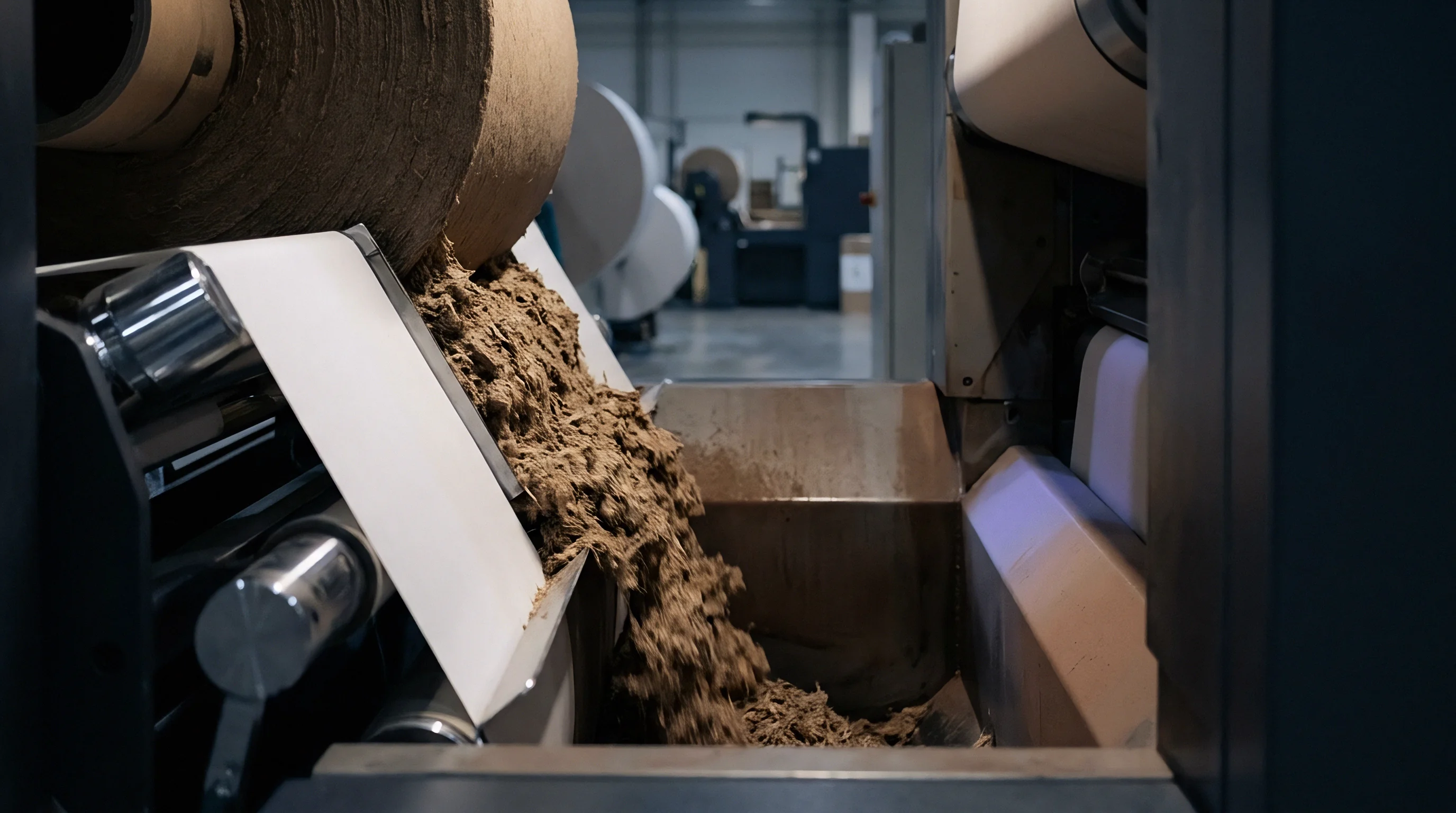
Repulping secondary fibers degrades structural performance because mechanical refining shortens individual fiber length, strips away outer fibril walls, and increases fine content.

Mechanical Property Disparity across Fiber Foundations
Structural performance in solid bleached sulfate relies on virgin wood fibers that retain intact cell wall structures and original lumen geometry. When loaded under flexural tension, virgin cellulose microfibrils transfer stress uniformly across the sheet profile. Recycled board contains degraded fibers that have undergone multiple drying cycles.
Hornification collapses internal fiber pores, permanently hardening the cell structure and reducing swelling capacity. Lower swelling capacity inhibits hydrogen bonding between adjacent fibers during sheet formation, leaving recycled furnishes with reduced tensile index and lower burst factors at equivalent grammages.
Compensating for low fiber strength in recycled furnish demands higher filler loads and added starch binders. Ground calcium carbonate and kaolin clay fill gaps between short secondary fibers, elevating sheet smoothness for offset printing, but filler additions diminish inter-fiber bond area. High filler content reduces internal tear strength and lowers cross-direction flexural stiffness under ISO 2493 TABER testing conditions at 15 degrees bending angle.
Solid bleached sulfate achieves target stiffness at lower caliper due to intact softwood fiber matrices. Recycled substrates require higher caliper and elevated basis weight to match the flexural resistance of virgin stock.
Solid bleached sulfate maintains internal structural integrity under high-speed scoring where multi-ply recycled fiber plies shear along weak bond lines.

Internal Ply Structure and Delamination Resistance
Z-direction tensile testing under TAPPI T 541 measures the internal cohesive strength required to prevent premature sheet splitting during high-speed folding. Solid bleached sulfate typically demonstrates Scott Bond energy levels between 180 and 260 Joules per square meter, conditioned under ISO 187 at 23 degrees Celsius and 50 percent relative humidity. Coated recycled board records Scott Bond values ranging from 80 to 140 Joules per square meter.
Multi-ply recycled boards feature distinct furnish layers, including a bleached virgin top liner, grey or brown secondary filler plies, and a back liner. Interface boundaries between recycled plies represent weak planes vulnerable to shear failure during high-speed scoring and die-cutting.
- Z-direction shear failure develops during rapid creasing when internal recycled furnish lacks long softwood fibers.
- Top-coat flaking occurs along female die edges when clay binder fails under high strain.
- Dust accumulation on feeder belts increases as short recycled fines detach from unslit board edges.
Inter-ply adhesion depends heavily on wet-end starch addition and vacuum dewatering profile across multi-wire board machines. When starch concentration drifts below five kilograms per metric ton during recycled board production, internal ply separation accelerates on rotary converting lines. Virgin board avoids multi-ply interface weaknesses by utilizing consistent chemical pulp throughout the full cross-section or by applying engineered multi-channel headboxes that fuse identical furnish streams prior to initial pressing.
Selecting higher basis weights in recycled stock offsets stiffness deficits without matching the structural cohesion of virgin chemical pulp.

Score
Converting rigid paperboard into foldable carton blanks requires precise deformation along defined creasing channels. Penetrating scoring rules compress the internal sheet structure, forcing controlled internal delamination along predefined horizontal planes. Controlled delamination allows the paperboard to bend ninety or one hundred thirty-five degrees without cracking the outer top coating or splitting the back liner.
Solid bleached sulfate exhibits high elastic memory and uniform fiber density, permitting broad operating windows for creasing depth and rule width. Recycled board features variable fiber lengths and elevated ash content, narrowing the functional window between insufficient crease formation and total surface rupture.

Crease Depth and Die Geometry Alignment
Rule thickness and impression depth dictate how effectively the board yields without fracturing outer clay layers. Male rule dimensions for a 450-micron solid bleached sulfate sheet typically utilize a 0.71-millimeter rule width paired with a female channel width of 1.40 millimeters. Coated recycled board of identical 450-micron caliper demands a female channel width of 1.60 millimeters to accommodate bulkier, less compressible secondary fibers.
Inadequate channel clearance forces secondary fibers outward, causing severe surface shearing along the outer score line.
Clay-coated surfaces require precise female matrix sizing to prevent visual cracking along outer carton edges. Solid bleached sulfate tolerates creasing penetration up to sixty percent of total sheet thickness without fiber rupture. Coated recycled board exhibits surface micro-cracking when crease penetration exceeds forty-five percent of caliper.
Converting operators adjust penetration depth based on seasonal moisture movements in unconditioned plant spaces.
| Substrate Grade | Caliper (µm) | Rule Width (mm) | Channel Width (mm) | Penetration Limit (%) |
|---|---|---|---|---|
| Solid Bleached Sulfate | 350 | 0.71 | 1.10 | 60 |
| Solid Bleached Sulfate | 450 | 0.71 | 1.40 | 60 |
| Solid Bleached Sulfate | 550 | 1.05 | 1.80 | 55 |
| Coated Recycled Board | 350 | 0.71 | 1.30 | 48 |
| Coated Recycled Board | 450 | 0.71 | 1.60 | 45 |
| Coated Recycled Board | 550 | 1.05 | 2.10 | 40 |

Female Channel Width Selection Parameters
Counter-die grooving must provide adequate clearance for crushed fibrous material during mechanical depression. Wider channel geometries reduce bending resistance but yield rounded, poorly defined carton corners. Narrow channel geometry forces dense recycled plies to crush laterally, splitting the back liner along the internal fold apex.
Automated filling machines demand tight corner radiuses to prevent carton jams during high-speed insertion of inner products. Miscalculated female channel widths on recycled board lines produce cracked score spines that reject full packing runs at automated cartoning stations.

Coating
Surface smoothness and ink absorption dictate graphic fidelity across high-speed offset lithographic and flexographic presses. Solid bleached sulfate features double or triple mineral coatings containing ultrafine kaolin clay, calcium carbonate, and synthetic latex binders. Blade-coating methods produce an ultra-smooth topography with Parker Print-Surf roughness values below 1.0 micron measured at 1000 kPa pressure under ISO 8791-4 standards.
Coated recycled board utilizes double-coated top liners over grey or brown secondary fibers, yielding Parker Print-Surf roughness values between 1.4 and 2.2 microns. Rougher surfaces require higher ink film thickness to achieve solid coverage, increasing ink consumption and drying times.
Why Do Coated Recycled Boards Show Delamination Risk?
Recycled furnish layers contain shorter secondary fibers and fine particulate filler that offer lower bond strength under ink tack forces. High-viscosity lithographic inks exert immense Z-direction tension on the board surface during impression cylinder separation. When ink tack forces exceed the internal bond strength of secondary fiber layers, surface picking or complete top-ply delamination occurs.
Solid bleached sulfate uses long virgin fibers with elevated hydrogen bonding, easily resisting high ink tack forces during six-color process printing with inline ultraviolet curing.
Brightness stability differs substantially across virgin and secondary fiber sheets. Solid bleached sulfate achieves ISO 2470 brightness levels of 88 to 92 percent through full chemical bleaching without optical brighteners. Coated recycled board top liners reach ISO brightness of 78 to 84 percent, relying heavily on optical brightening agents to mask underlying grey recycled fibers.
Optical brighteners decay under ambient ultraviolet light, causing noticeable yellowing on retail shelves within ninety days.
At 23 degrees Celsius and 50 percent relative humidity, a sixty-second Cobb water absorption test yields fifteen grams per square meter on triple-coated virgin board compared to twenty-eight grams on standard recycled board.
Surface Receptivity and Ink Holding Mechanics
Pigment formulations combining kaolin clay and calcium carbonate control liquid absorption rates across the top web. Porosity measurements dictate fountain solution absorption rates during offset printing. Excessive aqueous absorption weakens the top clay structure, predisposing the sheet to tinting and toning on press.
Triple-coated virgin board limits water penetration, maintaining surface strength throughout multi-pass offset runs. Print mottle on recycled grades often stems from batch variations in waste paper collection streams beyond mechanical control.

Moisture
Equilibrium water content directly governs physical dimensions and mechanical stiffness of cellulose fibre structures. Standard testing under ISO 187 requires paperboard conditioning at 23 degrees Celsius and 50 percent relative humidity, establishing an equilibrium moisture content between 6.0 and 7.5 percent for virgin sheets. Recycled board contains residual hemicellulose variations and fine particles that alter water sorption kinetics, yielding moisture contents between 7.5 and 9.0 percent under identical room atmospheres.
Elevated moisture content softens hydrogen bonds, lowering sheet stiffness and causing register drift during multi-pass converting.

Relative Humidity Equilibrium and Dimensional Drift
Exposing paperboard to changing ambient atmospheres causes differential expansion between machine direction and cross direction axes. Cross-direction hygroexpansivity in recycled board runs up to forty percent higher than in solid bleached sulfate due to non-uniform fiber alignment on multi-cylinder board machines. Dimensional drift distorts register alignment during multi-color printing and misaligns die-cutting tools across large parent sheets.
| Grade Specification | Equilibrium Moisture (%) | Cobb 60s Absorption (g/m²) | PPS Roughness (µm) | MOSH/MOAH Migration Risk |
|---|---|---|---|---|
| Solid Bleached Sulfate | 6.5 – 7.2 | 15 – 18 | 0.8 – 1.1 | Negligible |
| Folding Boxboard (Virgin) | 7.0 – 7.8 | 18 – 22 | 1.1 – 1.4 | Negligible |
| Coated Recycled Board | 7.8 – 8.8 | 25 – 32 | 1.5 – 2.2 | High (Uncoated Back) |
| Barrier Coated Recycled | 7.5 – 8.5 | 8 – 12 | 1.5 – 2.0 | Low (Mitigated) |

Barrier Performance and Contaminant Isolation
Preventing volatile mineral oil saturated hydrocarbons from migrating into dry food products demands continuous barrier layers. Recycled paperboard derived from newsprint and commercial print waste contains residual offset printing inks containing mineral oil hydrocarbons (MOSH and MOAH). Regulation EC 1935/2004 and German BfR Recommendation XXXVI specify strict safety thresholds for food-contact materials.
Direct food packaging made from standard recycled board requires a functional barrier coating, such as water-based dispersion polymers or vapor-deposited aluminum, to block hydrocarbon migration.
- Migration risk profiling evaluates volatile mineral oil concentrations using gas chromatography with flame ionization detection.
- Ethylene vinyl alcohol coatings provide gas impermeability but reduce repulpability during end-of-life processing.
- Water-based dispersion barriers offer repulpable mineral oil isolation while preserving recycling stream compatibility.
- Activated carbon additives embedded within middle recycled plies adsorb volatile hydrocarbons before reaching inner food contact surfaces.
Compliance with Regulation EC 1935/2004 demands functional barrier coatings on recycled board packaging whenever direct food contact occurs without an inner pouch.
Whether functional barrier coatings can reliably match virgin board barrier performance over a two-year shelf life under tropical humidity remains subject to ongoing ambient testing.

Arithmetic
Commercial specification balances raw material purchasing tonnage against net sheet yield at the printing press. Paperboard is bought by weight and consumed by area. Evaluating a forty-metric-ton purchasing commitment illustrates the yield divergence between solid bleached sulfate and coated recycled board.
Assume an identical packaging geometry requires a flexural stiffness equivalent to a 450-micron solid bleached sulfate sheet. Solid bleached sulfate achieves this stiffness at 310 grams per square meter with a bulk density of 1.45 cubic centimeters per gram. Coated recycled board requires a 500-micron caliper at 400 grams per square meter to reach matching flexural rigidity due to lower internal fiber modulus.
Tonnage to Sheet Yield Conversion Calculations
Comparing equal-stiffness substrates reveals substantial variation in total surface area produced per metric ton. Parent sheet dimensions measure 700 millimeters by 1000 millimeters, covering an area of 0.70 square meters per sheet. One metric ton (1,000,000 grams) of 310 gsm solid bleached sulfate yields 3,225 square meters, producing 4,607 parent sheets per ton.
One metric ton of 400 gsm coated recycled board yields 2,500 square meters, producing 3,571 parent sheets per ton. A forty-ton order of solid bleached sulfate generates 184,280 parent sheets. The same forty-ton order of recycled board generates 142,840 parent sheets.
Accounting for waste factors across converting operations widens the net yield disparity. Converting solid bleached sulfate incurs an estimated 2.5 percent make-ready and die-cutting waste allowance due to predictable score formation and uniform flatness. Converting coated recycled board requires a 5.0 percent waste allowance to cover edge dusting, surface picking, and score cracking rejects.
Net yield of usable parent sheets from forty tons of solid bleached sulfate totals 179,673 sheets. Net yield from forty tons of recycled board totals 135,698 sheets.
| Metric Parameter | Solid Bleached Sulfate | Coated Recycled Board |
|---|---|---|
| Target Caliper (µm) | 450 | 500 |
| Basis Weight (g/m²) | 310 | 400 |
| Gross Yield per Ton (m²) | 3,225 | 2,500 |
| Parent Sheets per Ton (700×1000 mm) | 4,607 | 3,571 |
| Total Gross Parent Sheets (40 Tons) | 184,280 | 142,840 |
| Converting Waste Allowance (%) | 2.5 | 5.0 |
| Net Usable Parent Sheets | 179,673 | 135,698 |
| Assumed Landed Cost per Ton ($) | $1,450 | $1,100 |
| Total Landed Order Expenditure ($) | $58,000 | $44,000 |
| Landed Cost per 1,000 Usable Sheets ($) | $322.81 | $324.25 |
Waste Factor Dynamics in High-Speed Converting
Make-ready setup cycles and web break frequencies establish the actual volume of finished packaging delivered to goods-in. Evaluating raw price per metric ton without calculating yield leads to incorrect material selection. Solid bleached sulfate priced at $1,450 per metric ton delivers a unit cost of $322.81 per thousand net usable sheets.
Coated recycled board priced at $1,100 per metric ton delivers a unit cost of $324.25 per thousand net usable sheets. Lower raw material ton price for recycled stock fails to yield a cost advantage when basis weight increases outweigh price discounts.
- Determine required TABER stiffness rating based on carton dimensions and stacking height limits.
- Calculate necessary caliper and grammage for both SBS and CRB options to satisfy that stiffness target.
- Multiply order tonnage by square meter yield per tonne to establish raw sheet production volume.
- Deduct anticipated make-ready and converting waste percentages specific to each substrate run.
- Divide total landed tonnage expenditure by net yield to isolate exact unit cost per thousand cartons.
Freight volume constraints further modify the financial balance between virgin and secondary fiber options. Heavy recycled board pallets increase freight charges per carton unit when shipping finished goods long distances. Including a pulp-index pass-through clause linked to PIX US Bleached Softwood Kraft indices shifts raw material price volatility directly from the converter to the brand owner.
Compliance
Regulatory frameworks and brand sustainability commitments dictate substrate selection alongside mechanical engineering criteria. Legislative bodies enforce strict extended producer responsibility eco-modulation fees based on post-consumer recycled content and end-of-life stream recyclability. Packaging materials entering European markets face modulated fees under national EPR schemes.
Substrates containing high percentages of verified post-consumer recycled fiber qualify for reduced fee tiers, improving the commercial baseline for secondary fiber cartons.
Extended Producer Responsibility and Fee Structures
Eco-modulation pricing mechanisms in municipal waste legislation penalize unrecyclable composite barrier layers. Adding fluorinated chemicals for grease resistance or non-repulpable polyolefins strips packaging of its recyclable status, shifting it into higher municipal disposal fee bands. Single-ply solid bleached sulfate with water-based dispersion coatings achieves high repulpability yields in standard paper recycling mills under CEPI recyclability testing guidelines.
Multi-ply recycled boards containing unbleached secondary fibers require non-sticky adhesive formulations to prevent screen clogging during industrial pulping operations.
FSC and PEFC chain of custody certifications establish legal origin traceability for virgin wood fibers. Sourcing solid bleached sulfate demands verified forest management certificates to prove absence of illegal timber harvest. Recycled content declarations obey ISO 14021 rules, requiring clear distinction between pre-consumer industrial waste and post-consumer recovered materials.
Municipal recycling fee discounts applied to post-consumer content stock directly alter the landed cost comparison between virgin and recycled cartonboard.
End-of-Life Stream Compatibility and Certification
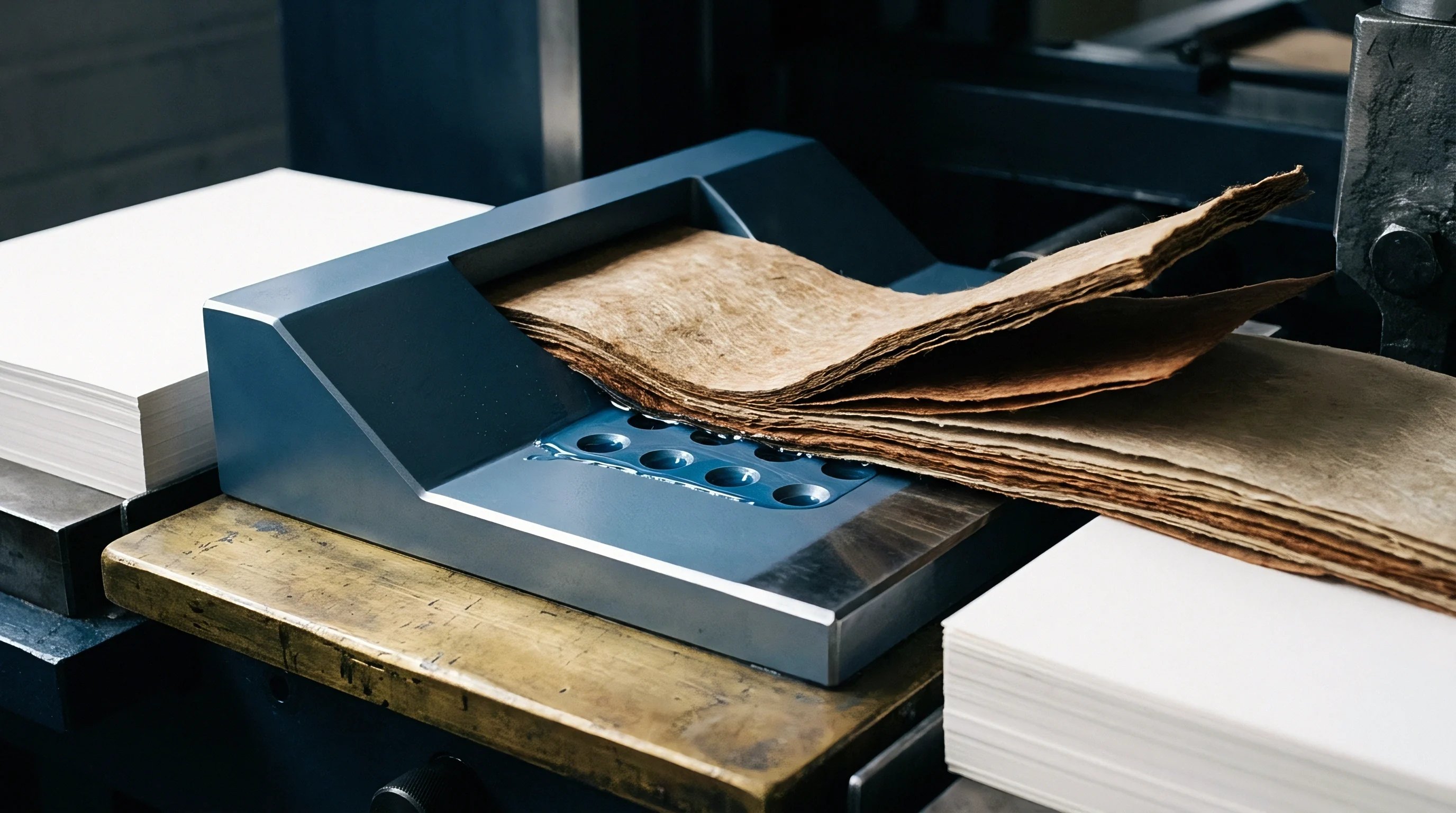
Verifying substrate repulpability under standardized laboratory disintegrator trials ensures seamless integration into pulp recovery systems. High wet-strength resin additions interfere with re-pulping cycles, leaving un-fiberized flakes that reduce net recycling yield. Heavier clay coating layers increase inorganic sludge volumes at municipal recycling facilities, attracting landfill tipping surcharges.
Calculating total end-of-life fee exposures alongside converting yield figures provides the final cost matrix for primary board procurement.