Process Integration
Paper mill water management strategies maximize internal recycling to reduce fresh water intake and effluent discharge volumes. Implementation of white water closure routes filtrate collected beneath forming wires back through pulp dilution, shower systems, and chemical preparation circuits. Mill operators balance water system closure to meet environmental regulatory targets while maintaining wet-end chemistry and paper machine efficiency.
Circuit Recirculation
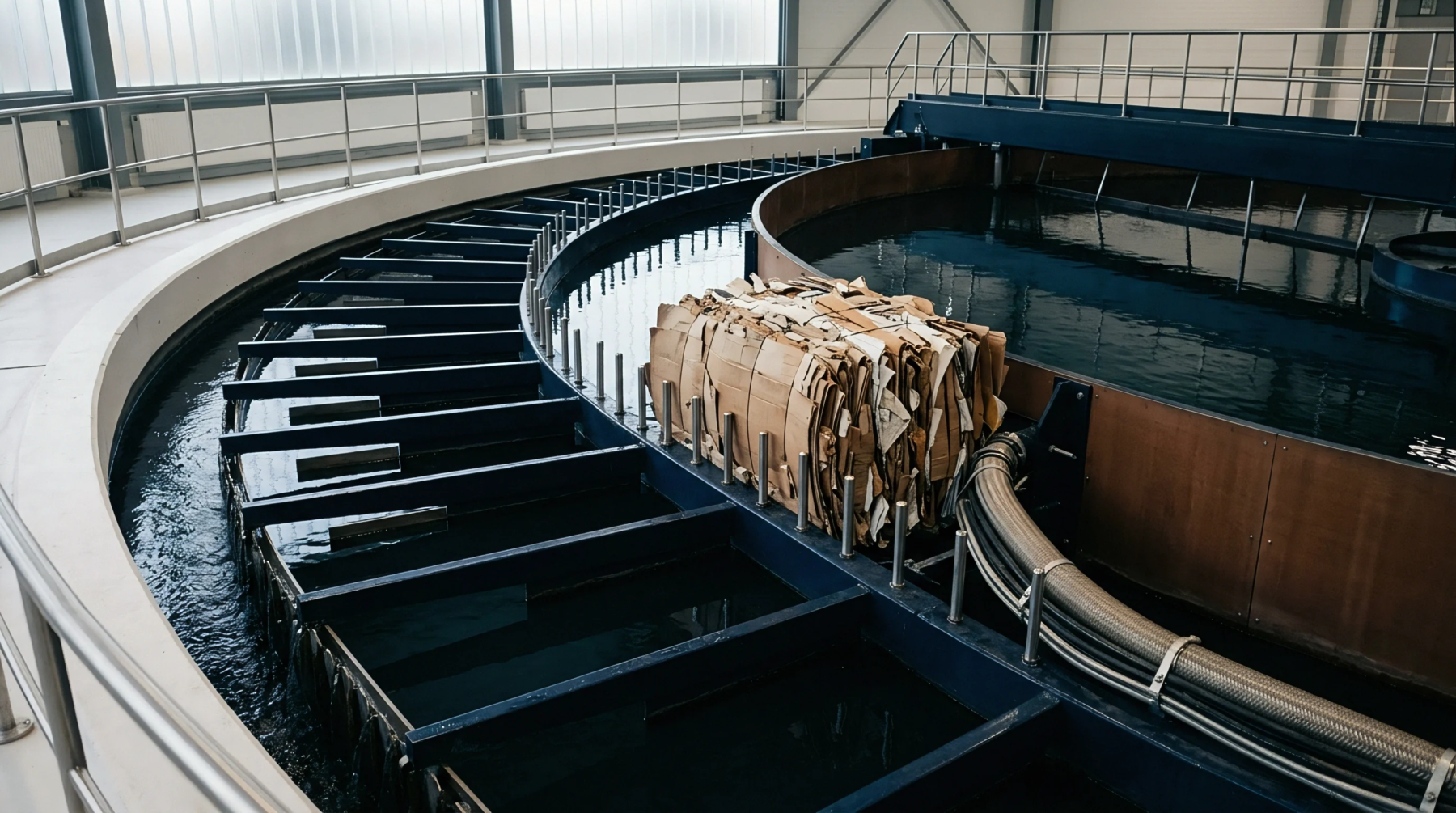
Closing process water loops concentrates dissolved organic compounds, inorganic salts, suspended fines, and residual thermal energy within the papermaking system. Increasing white water closure requires installing saveall disc filters, biological water treatment loops, and corrosion-resistant stainless steel piping to manage elevated contaminant loads. System benefits include reduced fresh water heating costs, lower effluent treatment charges, and improved retention of fine solids.
Closing water circuits elevates dissolved solids levels, which promotes biological slime growth, accelerates equipment corrosion, reduces sizing efficiency, and increases pitch deposition on machine felts. Papermakers manage closed circuits by applying biocides, scale inhibitors, and advanced retention programs to stabilize process chemistry.
Operational Boundary
Total water closure becomes unsustainable when dissolved salt and organic contaminant concentrations exceed chemical operational limits. Uncontrolled accumulation of dissolved solids causes severe foam formation, paper sheet spots, and web breaks during high-speed machine operation.