Dynamic Crease Relaxation Kinetics in Water-Coated Solid Bleached Sulfate Board
Water-coated SBS board requires wider female creasing channels to offset aqueous polymer springback and prevent high-speed folder-gluer carton failures.
Hinges
Solid bleached sulfate substrates undergo localized mechanical damage along score lines to form low-stiffness folding axes. In virgin chemical pulp sheets, this damage creates controlled delamination across internal fiber plies while preserving the tensile strength of the outer linerboard surfaces. When an aqueous functional dispersion coating covers the print surface, the physical response of the creased zone changes.
Water-borne dispersion coatings, applied to deliver oil, grease, or moisture vapor resistance, alter the moisture equilibrium and viscoelastic memory of the underlying fibers. The score line functions as a dynamic mechanical spring rather than a dead fold, exerting continuous resistance against carton seals during automated erection.

Viscoelastic Response of Coated Fibers
Crease behavior in paperboard relies on the internal rupture of hydrogen bonds between softwood and hardwood fibers. Chemical bleached pulps exhibit high elastic recovery when strained below their yield threshold. Standard solid bleached sulfate boards utilize a dense, highly bonded fiber network with apparent density values ranging from 0.70 to 0.85 grams per cubic centimeter.
The application of a water-coated barrier coating introduces acrylic, styrene-butadiene, or starch-polyester dispersion layers directly above the clay coating. During the creasing operation, the male rule forces the board into a female matrix channel, inducing severe z-direction shear, delamination, and top-ply compression.
Aqueous barrier films possess distinct viscoelastic relaxation spectrums compared to raw cellulose. Polymer films store elastic strain energy during high-speed folding operations. When the folding force releases, the polymer layer exerts a continuous restoring moment.
Fiber swelling induced by residual water in water-borne formulations reshapes the cell wall density within the score zone. Swollen fibers demonstrate lower compressive yield points during die impact, changing the ratio of shear failure to tensile failure inside the board core.
Coated board matrices store mechanical strain during rapid bending and release force back against sealed packaging flaps over extended timeframes.
Static crease stiffness measurements fail to predict line performance on high-speed packaging machinery. Conventional bench instruments measure crease resistance at fixed dwell times, often five to fifteen seconds after initial folding. Packaging lines execute panel folding, cold-glue application, and compression within twenty to two hundred milliseconds.
Over this brief duration, the dynamic springback force of a water-coated score line reaches peak levels. If the board retains high springback force, the glued joints experience tensile peel forces before the adhesive develops sufficient green strength, causing open-corner failures and line stoppages.
Friction variations across the coated surface exacerbate score springback. Water-borne dispersion coatings alter the static and kinetic coefficient of friction between the folding shoes and the carton panels. A higher coefficient of friction delays panel transit through the folding section, allowing stored elastic energy in the score line to deflect the carton geometry out of squareness.
Incorrect crease relaxation assumptions lead directly to pop-open packaging failures, adhesive burn-through from excessive compression dwell times, and unrecoverable downtime across high-speed cartoning lines.
Soak
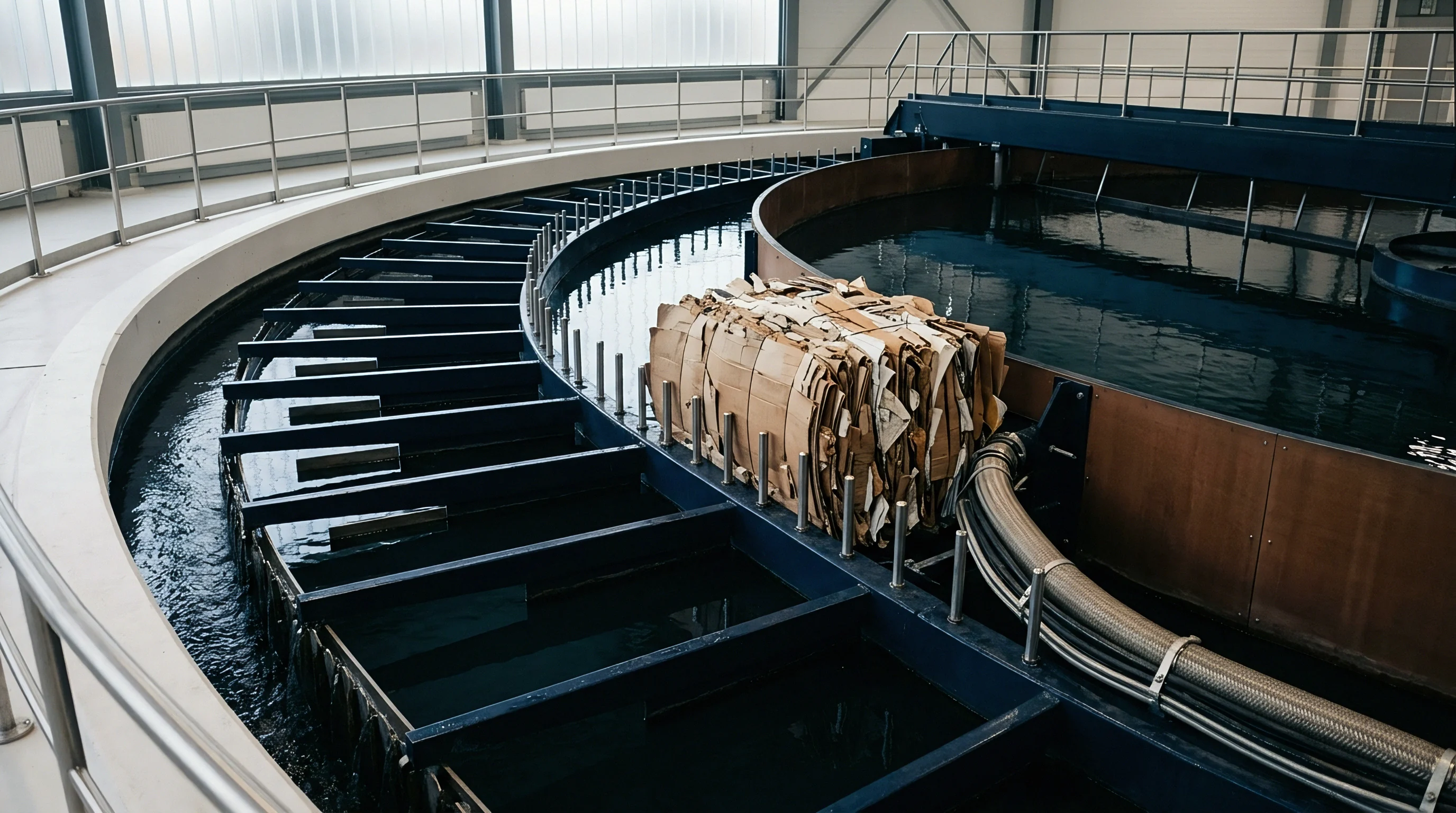
Functional aqueous dispersion coatings introduce free moisture and hydrophilic polymer matrices onto the top surface of virgin chemical pulp boards. During the curtain coating, blade coating, or air-knife coating process, water penetrates past the pigment topcoat into the raw fiber structure. The moisture content of standard paperboard rises from nominal room equilibrium levels of 5.5 percent to localized peaks exceeding 8.0 percent prior to the drying hood.
Even after hot-air drying, bound water molecules reside inside the amorphous regions of the cellulose fibers and within the coating layer itself.
Moisture Gradients and Fiber Swelling
Cellulose fibers expand transversely upon absorbing water, increasing fiber diameter by up to fifteen percent while length changes less than one percent. In solid bleached sulfate boards, this anisotropic swelling alters the z-direction density profile. Water-coated dispersion formulations create a sharp moisture gradient between the top liner and the back liner.
The top surface absorbs water, plasticizing the upper fiber layers and reducing their compressive modulus during creasing.
Moisture distribution across the sheet thickness dictates how the fiber plies shear under mechanical load. When the top liner holds higher moisture than the back liner, the neutral axis of bending shifts toward the drier side. The score line then experiences asymmetric ply separation.
Deep matrix penetration by the water phase softens the hydrogen bond network, lowering the force needed to initiate internal delamination while increasing the total energy required to permanently deform the score structure.
ISO 187 specifies sheet conditioning at 23 degrees Celsius and 50 percent relative humidity, yet moisture absorption from water-borne barrier coatings creates localized micro-climates inside stored reams that destabilize crease recovery.
Crease lines act as localized pathways for vapor transit. Mechanical scoring breaks the continuous acrylic or dispersion polymer film on the surface, creating micro-fissures along the outer fold radius. Moisture from the ambient environment enters these fissures, re-hydrating the strained cellulose fibers and triggering stress relaxation mechanisms that alter carton dimensions over storage periods.
Uncontrolled moisture absorption during aqueous coating steps causes key converting failure modes across folding carton plants:
- Micro-Crazing Of Polymer Surface occurs when high-strain creasing stretches the water-coated dispersion layer beyond its elongation limit, exposing raw fibers to grease penetration.
- Asymmetric Crease Recovery develops when uneven moisture distribution across the sheet thickness forces the score line to fold off-center relative to the female matrix channel.
- Delamination Flaking happens when excessive moisture absorption weakens internal ply bond strength below 150 Joules per square meter, causing deep structural tears along the score axis.
- Glue Line Re-Hydration manifests when residual water migrating from the board matrix softens cold-set water-based adhesives applied during side-seam sealing operations.
Suppliers frequently maintain that post-coating moisture equilibrium normalizes sheet response across variable storage environments. Field inspection of delivered pallets demonstrates that water-coated reels stored in unconditioned convertor warehouses retain internal moisture gradients for several months, yielding variable crease recovery forces on press.
Decay
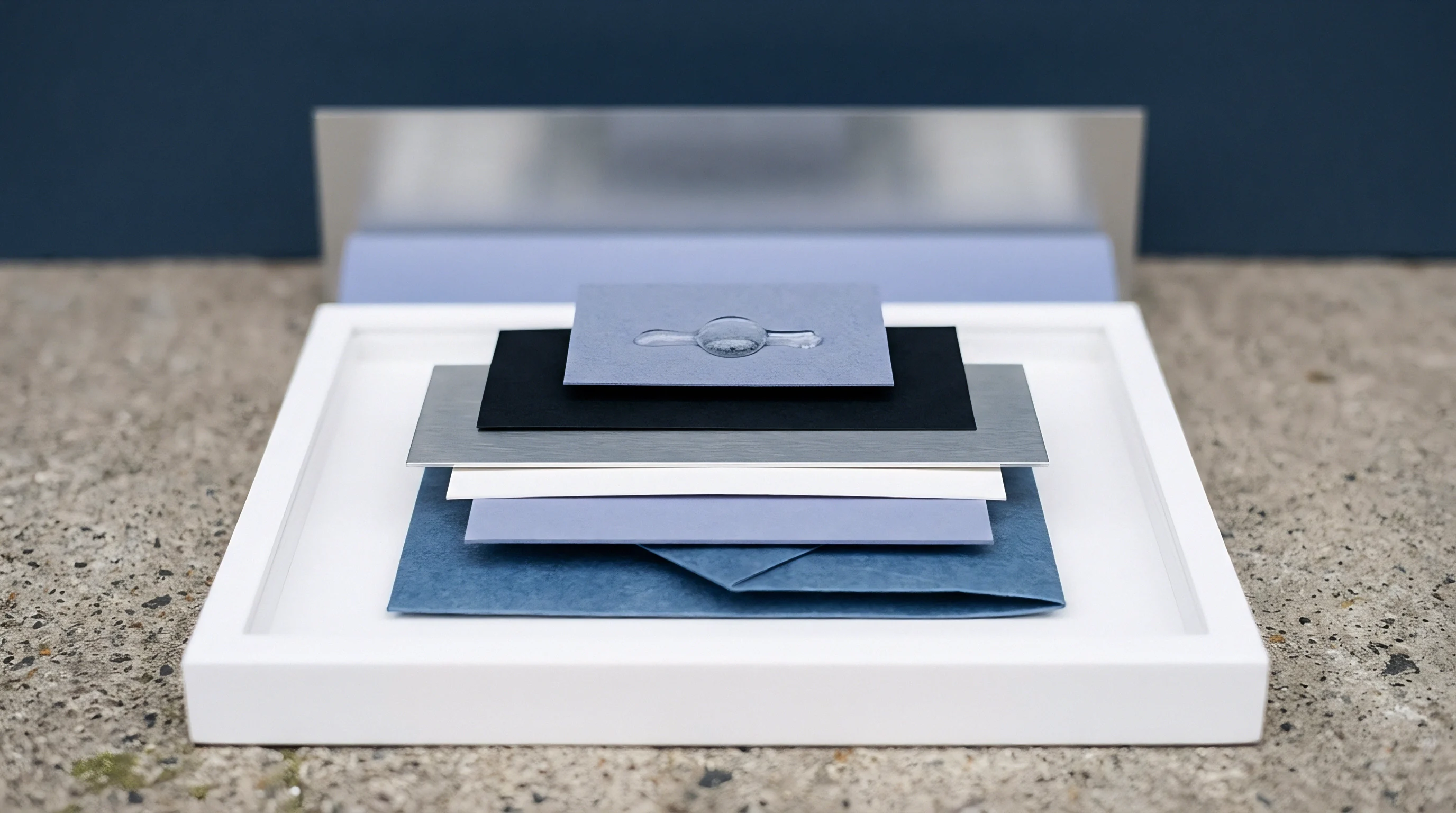
Time-dependent stress relaxation in creased paperboard follows non-linear viscoelastic behavior governed by cellulose molecular chain sliding and hydrogen bond reorganization. When a packaging panel folds through ninety degrees, the strain energy within the score line reaches its maximum instantly. The force required to maintain that ninety-degree angle decays rapidly over the first hundred milliseconds, followed by a slower asymptotic decay over several days.
Water-coated solid bleached sulfate boards exhibit altered decay kinetics due to the dual relaxation response of plasticized cellulose fibers and synthetic polymer dispersion films.
Viscoelastic Modeling of Crease Moments
The decay of the restoring moment in a paperboard crease can be modeled using a generalized Maxwell-Wiechert viscoelastic representation. The dynamic bending moment M(t) at time t following a step-deformation fold is expressed by the summation of exponential decay terms:
M(t) = Minfty + sumi=1n Mi · expleft(-fractτiright)
In this equation, Minfty represents the long-term equilibrium moment, Mi represents the stiffness coefficient of the i-th relaxation mode, and τi represents the characteristic relaxation time constant of that mode. For water-coated solid bleached sulfate board, a two-term spectrum adequately captures the physical behavior: a fast relaxation time constant τ1 operating between 5 and 50 milliseconds (dominated by cellulose hydrogen bond slipping), and a slow relaxation time constant τ2 operating between 200 and 2000 milliseconds (dominated by synthetic coating polymer chain rearrangement and moisture redistribution).
High-speed cartoning machines operate within the timescale of τ1. If the short-term relaxation magnitude M1 remains high, the carton panel exerts excessive resistance against the folding guides and compression belts. Standard solvent-coated or UV-varnished boards show rapid initial moment drops due to higher surface rigidity and brittle fiber fracturing.
Water-coated boards retain a higher elastic fraction within the dispersion film, leading to larger residual moments during machine handling.
The table below summarizes measured dynamic crease relaxation parameters for 18 pt (450 micrometer) solid bleached sulfate board under varying surface coating treatments, conditioned under TAPPI T 402 standards (23 degrees Celsius, 50 percent relative humidity):
| Substrate Surface Treatment | Grammage (g/m²) | Initial Crease Moment M₀ (mN·m) | Residual Moment M at 15 ms (mN·m) | Residual Moment M at 100 ms (mN·m) | Equilibrium Moment M∞ (mN·m) | Fast Time Constant τ₁ (ms) |
|---|---|---|---|---|---|---|
| Uncoated SBS Board | 340 | 14.2 | 8.5 | 5.1 | 2.3 | 12.4 |
| Clay-Coated SBS (Standard Offset) | 365 | 16.8 | 10.2 | 6.4 | 2.8 | 14.1 |
| Aqueous Dispersion Acrylic Coated SBS | 375 | 21.5 | 14.8 | 9.8 | 4.2 | 22.6 |
| Biopolymer Starch-Latex Coated SBS | 370 | 19.1 | 12.6 | 7.9 | 3.5 | 18.3 |
| Testing conducted on Lorentzen & Wettre Crease Stiffness Tester Code 282, 90-degree fold angle, score parallel to cross-machine direction. | ||||||
At a dwell time of 15 milliseconds, an acrylic water-coated SBS board exerts 14.8 millinewton-meters of springback moment compared to 10.2 millinewton-meters for a standard offset clay-coated board of identical caliper.

Qualifying Dynamic Crease Relaxation Kinetics
Evaluating board suitability for high-speed folding requires precise measurement of initial moment, relaxation time constants, and final springback force. The following sequential testing procedure isolates the mechanical contribution of water-borne coatings during rapid converting:
- Cut test specimens to 38 millimeter by 38 millimeter dimensions using a precision double-knife punch, ensuring score lines align strictly parallel to the cross-machine direction.
- Condition specimens at 23.0 degrees Celsius and 50.0 percent relative humidity for 24 hours in accordance with ISO 187.
- Mount the specimen in a high-speed dynamic crease tester equipped with a load cell capable of sampling at a minimum rate of 2.0 kilohertz.
- Actuate the folding blade to deflect the specimen through a 90-degree bend angle within a duration of 10 milliseconds.
- Record the peak moment force M₀ at the exact termination of the folding stroke.
- Maintain the 90-degree deflection angle continuously for 5.0 seconds while continuously recording the force decay curve.
- Extract the force values at 15 milliseconds, 100 milliseconds, and 2000 milliseconds to calculate the fast and slow relaxation constants τ₁ and τ₂.
- Calculate the percentage moment decay as the ratio of initial moment minus residual moment to initial moment.
Fibers swell instantly. Water weakens cross-links. Score lines store energy.
Viscoelastic recovery dictates force. Delamination splits internal plies. Moisture reshapes elastic modulus.
Tension forces open creases. Density governs crease recovery. Polymer coats block steam.
How the water-borne polymer film modifies the activation energy of hydrogen bond re-association during post-crease storage remains an open area of inquiry in paper chemistry laboratories.
Die
Tooling configurations for creasing board balance top-ply shear against internal delamination to create stable crease scores. Solid bleached sulfate board exhibits high tear resistance and long fibers, demanding exact channel clearances to prevent double-scoring or top-ply cracking. When water-coated barrier layers are present, the surface slip and elastic recovery characteristics alter the required tooling parameters.
Standard die-cutting rules designed for clay-coated folding boxboard produce unacceptable crease memory when applied directly to water-coated dispersion grades.
Which Rule Depth Preserves Board Integrity?
Male creasing rule width and female channel dimensions must match the nominal board caliper, sheet compressibility, and coat weight. Rule thickness selection uses point sizes where one point equals 0.353 millimeters (0.0138 inches). For 18 pt board, a 2-point rule (0.71 millimeter) represents standard practice.
Water-coated dispersion boards require wider female channels to accommodate the extra coating mass and elevated kinetic friction during rule penetration.
Female matrix channels are specified by width and depth. The theoretical channel width W is calculated using the established mechanical relationship:
W = trule + 1.5 · tboard
Where trule is the male rule thickness and tboard is the nominal board caliper. For water-coated substrates, the multiplier increases from 1.5 to 1.7 or 1.8. This expansion provides room for the water-coated top film to displace without shearing through the surface layer.
Insufficient channel width crushes the board shoulders, creating excessive surface tension that breaks the continuous water-barrier coating.
| Board Caliper (pt) | Board Thickness (mm) | Male Rule Width (pt / mm) | Standard Channel Width (mm) | Water-Coated Channel Width (mm) | Channel Depth (mm) |
|---|---|---|---|---|---|
| 12 pt | 0.305 | 2 pt / 0.71 mm | 1.17 | 1.26 | 0.40 |
| 14 pt | 0.356 | 2 pt / 0.71 mm | 1.24 | 1.35 | 0.45 |
| 16 pt | 0.406 | 2 pt / 0.71 mm | 1.32 | 1.44 | 0.50 |
| 18 pt | 0.457 | 2 pt / 0.71 mm | 1.40 | 1.53 | 0.55 |
| 20 pt | 0.508 | 3 pt / 1.05 mm | 1.81 | 1.96 | 0.60 |
| 24 pt | 0.610 | 3 pt / 1.05 mm | 1.97 | 2.15 | 0.75 |
Counter-die technology plays a pivotal role in setting crease precision. Pressboard channels, phenolic counters, and milled steel plates offer varying levels of dimensional stability. Milled steel counters ensure uniform channel geometry across large die sheets, preventing localized crease stiffness variations that cause carton jamming during automatic high-speed feeding.
Optimizing die setups for water-coated packaging board requires adherence to specific tooling rules:
- Male Rule Profile Radius must utilize a full round profile with a minimum head radius of 0.35 millimeters to prevent micro-cutting of the continuous water-borne dispersion coating film.
- Female Matrix Channel Material requires high-density chamfered phenolic vulcanized fiber to resist edge wear caused by abrasive barrier coating minerals.
- Crease Penetration Depth must target 65 percent to 72 percent of total sheet caliper to establish clean delamination plies without rupturing the back linerboard.
- Rubber Ejection Profile Hardness requires 45 to 55 Shore A durometer rubber adjacent to creasing rules to prevent sheet distortion during rapid tool retraction.
Standard supply contracts incorporate ISO 12647-2 tolerance limits for die dimensional accuracy, asserting that score geometry variations under 0.05 millimeters exert negligible effects on carton folding performance. Contracting parties modifying tool parameters should record that DIN 55437 explicitly links score width variations as small as 0.02 millimeters to measurable springback force spikes on water-barrier boards.

Margin
Waste generated from misaligned side-seam gluing and popped flap closures directly compromises converter productivity. Solid bleached sulfate board commands high market prices per tonne compared to recycled folding boxboard grades. Scrap rates on high-speed gluer lines converting water-coated packaging must remain below 1.5 percent to maintain target profitability.
Crease relaxation kinetics directly govern the operating window of the folder-gluer, setting the maximum line speed achievable before springback forces overcome adhesive setting speeds.
Runnability and Gluer Line Economics
Automatic folder-gluers run at belt speeds between 200 and 500 meters per minute. When folding panels along pre-scored lines, the board must yield smoothly without twisting or bowing. Water-coated dispersion boards present a narrow operating window.
High springback moments force the folded flaps to lift as they exit the folding belts. Cold-melt starch or PVA adhesives require specific open times and compression times. If the crease moment exceeds adhesive green strength at the end of the compression section, the carton seam pops open instantly inside the packing box.
Thicker coatings retard diffusion. Channel depth sets clearance. Springback jams folder-gluers.
Rule sharpness accelerates cracking. Crease ratio determines clearance.
Adding extra compression section length or slowing down the folder-gluer solves open-flap failures but imposes severe economic penalties. Slowing a line from 400 meters per minute to 250 meters per minute increases conversion cost per thousand cartons by 37.5 percent. Alternatively, switching to fast-setting hot-melt polyolefin adhesives increases material consumable costs across the run.
Converter margins depend on balancing substrate coat weight, tooling design, and machine throughput.
Excessive crease springback force forces converters to trade machine speed for sealing security, eroding the cost efficiency of water-coated sustainable packaging formats.
Validating mill certificates before loading pallets onto the die-cutter reduces converting spoilage. Buyers must insist that mill inspection reports detail the following substrate quality parameters:
- Cross-Direction Bending Stiffness certified under ISO 2493-1 using a 15-degree deflection angle to establish baseline fiber elastic modulus.
- Z-Direction Tensile Strength reported according to ISO 15754 to verify internal ply bond integrity prior to scoring.
- Surface Water Absorptiveness documented via 60-second Cobb testing under ISO 535 to ensure coating barrier continuity.
- Moisture Content Deviation measured across the web profile according to ISO 287 to prevent asymmetric crease recovery.
- Coat Weight Uniformity certified via gravimetric burn-off or X-ray fluorescence analysis to confirm polymer thickness tolerances.
A reliable operational rule dictates that matching female channel width to board caliper expansion preserves structural integrity and secures clean carton folding on high-speed lines.