Managing Paperboard Hygroexpansion and Moisture Balance in Converting Operations
Targeting 5.5 to 6.5 percent board moisture and maintaining 50 percent relative humidity prevents hygroexpansion fan-out, registration drift, and score cracking.
Equilibrium
Cellulose fibers in virgin and recycled paperboard act as hygroscopic capillary systems, adsorbing or desorbing ambient water vapor until reaching thermodynamic balance with pressroom air. Free hydroxyl groups on cellulose and hemicellulose polymer chains form hydrogen bonds with atmospheric moisture. Moisture content shifts alter sheet dimensions during processing.
As ambient relative humidity rises, board absorbs water and forces cellulose cell walls to expand; when relative humidity drops, moisture desorbs and fibers shrink. This sorption behavior follows a hysteresis loop: a sheet desorbing moisture to reach a given relative humidity retains higher equilibrium moisture content than a dry sheet adsorbing moisture to reach that same environment.
Pressrooms and converting plants operating under ISO 187 test conditions maintain an atmosphere of 50 percent relative humidity at 23 degrees Celsius. Raw board manufactured to target moisture levels between 5.5 percent and 7.5 percent remains structurally stable within this standardized envelope. Divergence between pallet moisture content and room equilibrium generates rapid moisture migration across exposed sheet edges.
Wavy edges develop when cold or dry pallets absorb moisture from a humid room, expanding sheet borders while the dense pallet core remains unchanged. Tight edges and dish curl manifest when warm board desorbs moisture into a dry plant, shrinking outer edges while the center retains its original dimensions.
Thermodynamic Sorption Dynamics in Fibrous Substrates
Water molecules bind directly to available hydroxyl groups within amorphous cellulose and hemicellulose regions via hydrogen linkages. Initial monomolecular water adsorption occurs at low relative humidity, creating tightly bound water layers that alter electrical resistivity and inter-fiber bonding distance. Subsequent polymolecular adsorption fills internal fiber pores through capillary condensation as relative humidity approaches 65 percent.
Mechanical pulping increases total surface area and amorphous accessibility, raising water absorption capacity. By contrast, recycled fibers undergo hornification from repeated wetting and drying cycles, which reduces internal pore volume and lowers overall equilibrium moisture content compared to virgin chemical pulps exposed to identical relative humidity.
Moisture Content Variations across Raw Board Grades
Virgin bleached chemical pulps exhibit different water retention values than mechanical or recycled fibers due to structural variations in cell wall thickness and residual lignin. Solid Bleached Board manufactured from 100 percent bleached chemical pulp contains high initial hydroxyl accessibility, rendering it sensitive to atmospheric shifts. Folding Boxboard, utilizing mechanical pulp cores sandwiched between chemical pulp outer plies, demonstrates distinct moisture absorption rates across its structural layers ~ the hydrophobic lignin in mechanical pulp slows initial moisture uptake while preserving bulk caliper stiffness under changing ambient humidity.
A 1.0 percent increase in paperboard moisture content under ISO 187 standard conditioning increases cross-direction sheet dimensions by approximately 0.25 percent to 0.40 percent across solid bleached board grades.
Coated Recycled Board and White Lined Chipboard combine short, highly beaten recycled fibers with starches, fillers, and mineral coatings. Ash content reduces hygroscopic fiber mass per unit volume, yet structural porosity accelerates liquid water uptake during aqueous coating passes. Surface sizing agents and Cobb 60 water absorption values govern the rate at which liquid water penetrates surface layers during offset printing dampening.
Standard Cobb 60 values for high-performance converting board range between 25 and 35 grams per square meter on the print surface. Elevated Cobb values permit excess fountain solution penetration, causing surface fibers to swell before inks set.
- Edge Wave Distortion occurs when unsealed sheet stacks absorb ambient moisture along outer borders while dense inner cores retain lower mill-exit moisture levels.
- Tight Edge Cupping develops when warm board pallets desorb internal moisture into dry plant environments, shrinking exposed edges around a stable center core.
- Blistering and Delamination manifest during high-temperature thermal film lamination when rapidly vaporized board moisture builds internal steam pressure between fiber plies.
- Coating Pick and Mottle arise when uneven initial moisture balance alters binder migration rates during wet offset ink transfer passes.
Purchasing contracts incorporating ISO 187 delivery terms establish that official moisture verification testing occurs within thirty minutes of unsealing pallet wraps inside a controlled atmosphere, shifting financial liability for dimensional non-conformance back to the board manufacturer when unsealed readings fall outside contract limits.

Swell
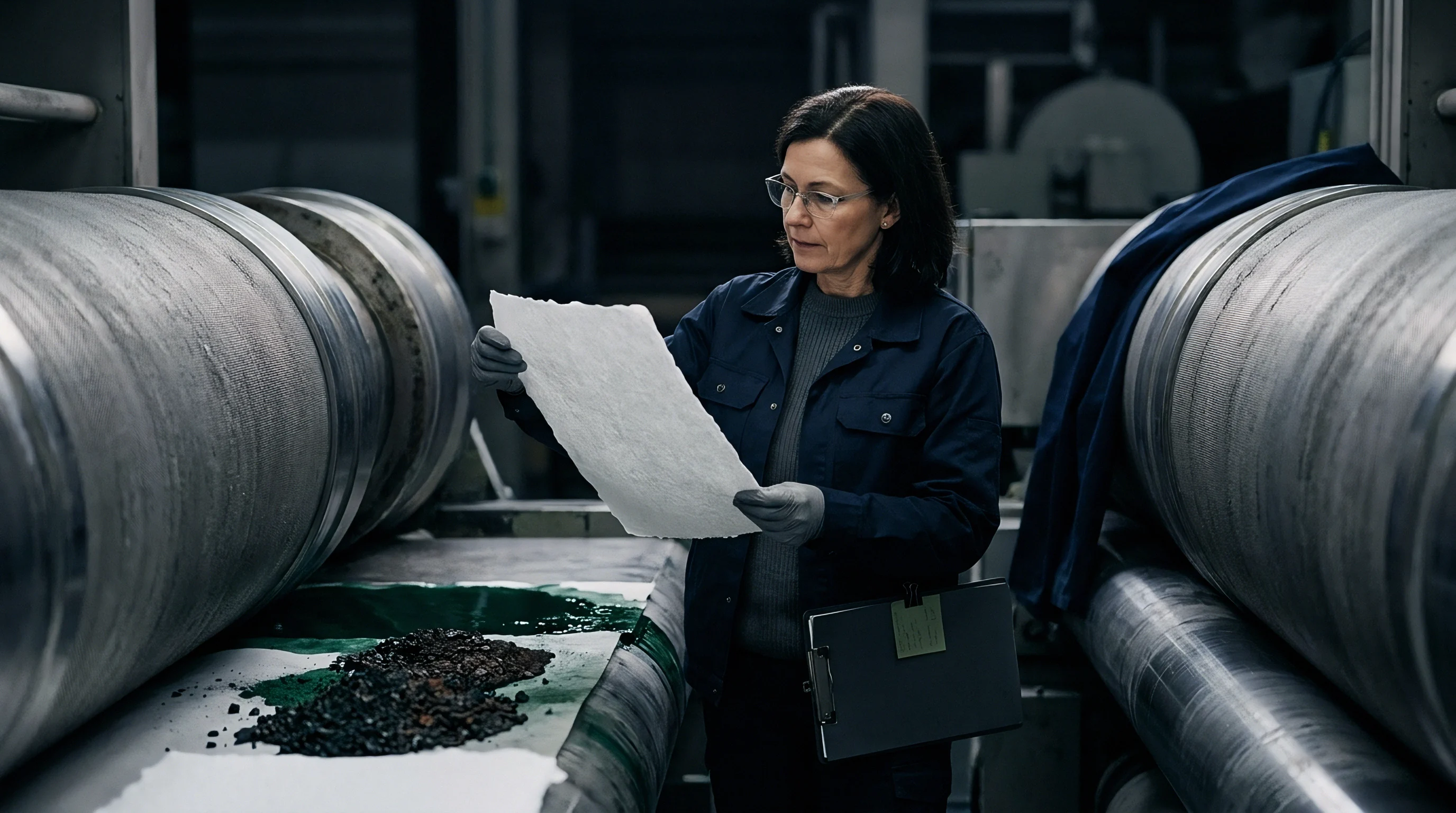
As internal fiber networks take on moisture, dimensional expansion occurs unevenly across structural axes. Wood fibers expand far more in diameter than in length when absorbing water molecules: individual softwood fibers show longitudinal swell of roughly 1.0 percent to 2.0 percent, whereas cross-sectional diameter swell ranges between 15.0 percent and 20.0 percent upon complete saturation. Fiber orientation established at the paper machine wet end determines the macro-directional hygroexpansion properties of the finished board web, with machine-direction fibers aligned predominantly parallel to web travel and cross-direction fibers lying perpendicular.
Cross-direction hygroexpansion coefficients run three to five times higher than machine-direction coefficients across commercial board grades. A 1020 millimeter by 720 millimeter sheet subjected to elevated relative humidity experiences structural growth along its 720 millimeter cross-direction axis while showing minimal movement along its 1020 millimeter machine-direction length. Accounting for anisotropic expansion ratios allows packaging engineers to orient carton blanks correctly relative to grain direction, preventing post-converting door-latch binding and panel bowing in retail packaging environments.
Anisotropic Structural Variations in Multi-Ply Formations
Paper machine wet-end hydrodynamics align most wood fibers parallel to web travel, with jet-to-wire speed ratios, headbox dilution settings, and shake mechanisms dictating the exact degree of fiber anisotropy. Multi-ply board machines construct layered structures with distinct fiber orientation profiles across top, middle, and back plies. Stratified plies expanding at different rates generate internal shear forces between layers.
Differential ply hygroexpansion manifests as diagonal twisting or reverse curl when finished sheets undergo moisture exchange during multi-pass press runs.
| Board Grade Type | Fiber Composition | CD Hygroexpansion Coefficient (% per % RH) | MD Hygroexpansion Coefficient (% per % RH) | Anisotropic Expansion Ratio (CD to MD) |
|---|---|---|---|---|
| Solid Bleached Board (SBB) | 100% Chemical Kraft Pulp | 0.028 – 0.038 | 0.007 – 0.010 | 3.8 : 1 |
| Folding Boxboard (FBB) | Chemical Plies / Mechanical Core | 0.025 – 0.035 | 0.006 – 0.009 | 4.1 : 1 |
| Coated Recycled Board (CRB) | 100% Recycled Waste Fiber | 0.020 – 0.030 | 0.005 – 0.008 | 4.0 : 1 |
| White Lined Chipboard (WLC) | Recycled Core / Bleached Top Ply | 0.022 – 0.032 | 0.006 – 0.009 | 3.6 : 1 |
Solid Bleached Board exhibits high absolute hygroexpansion coefficients due to flexible, highly refined chemical kraft fibers. The cross-direction hygroexpansion coefficient of 0.025 percent to 0.035 percent per 1 percent relative humidity change for Folding Boxboard rests on TAPPI T 522 and ISO 8226 test methods executed between 50 percent and 80 percent relative humidity at 23 degrees Celsius. Refining intensity and internal sizing levels move this value significantly: intense refining increases inter-fiber hydrogen bonding sites, raising total dimensional movement per unit moisture gain, whereas sizing agents like alkenyl succinic anhydride reduce liquid water penetration rate without affecting ultimate vapor phase moisture equilibrium.
Machine direction alignment along the main crease line preserves structural rigidity during high-speed carton erecting.
Density variations across the mill web create localized hygroexpansion pockets, causing soft spots in raw rolls to translate into uneven sheet length once sheets equilibrate on converting plant floors. Mechanical stress release occurs simultaneously with moisture adsorption during lamination passes. As dimensional swell occurs, board thickness increases by 1.5 percent to 3.0 percent when moisture rises from 6.0 percent to 9.0 percent.
Higher caliper alters scoring matrix clearance settings, requiring make-ready adjustments on long converting runs.
Running cross-direction grain parallel to the primary crease line minimizes score cracking while accepting greater dimensional movement across the width of the carton.

Register
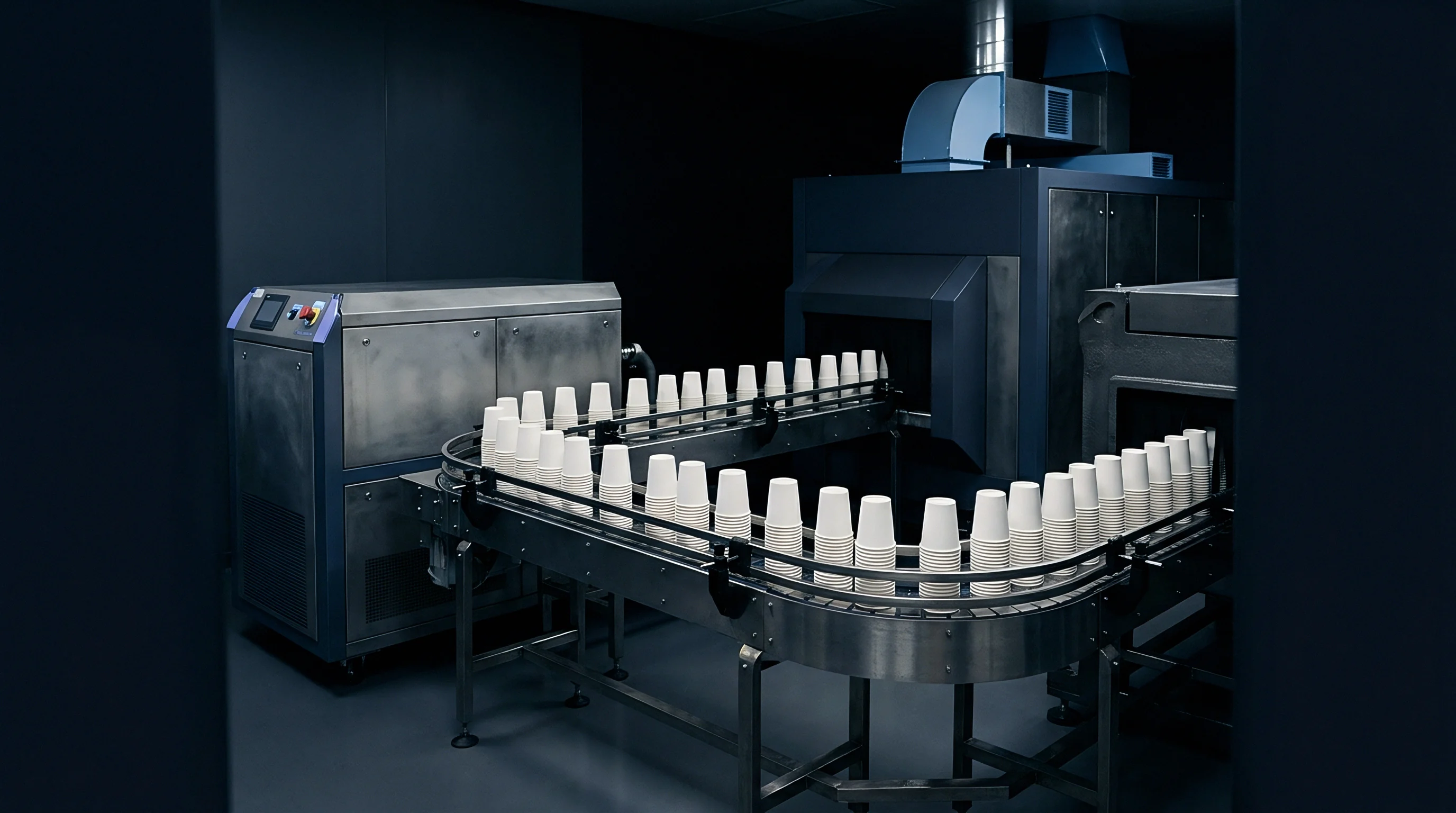
Sheet dimensions shift continuously as material passes through sequential printing units and thermal converting stations. Multicolor sheet-fed offset printing introduces fountain solution water directly to the top coating ply across four, six, or eight impression nips. Fountain solution delivery adds 0.2 percent to 0.5 percent liquid water by weight to the sheet surface during a full print run.
Water absorption causes sheet tails to expand sideways, creating a characteristic fan-out registration error where early colors align precisely at the gripper margin while late colors misalign along the trailing edge.
Thermal drying systems aggravate dimensional drift by stripping moisture unevenly across sheet surfaces. High-velocity hot air knives and infrared lamps vaporize surface moisture to dry aqueous coatings and offset inks, forcing upper fiber layers to desorb water rapidly while inner core plies retain moisture, creating severe transient moisture gradients through the caliper profile. The fundamental moisture mechanics governing cellulose fiber relaxation mirror the hygroexpansion dynamics observed in historic structural timber framing, where unseasoned oak beams twist as ambient humidity shifts across seasons.
In converting operations, this physical law manifests across seconds inside a heated drying tunnel rather than across decades in architecture.
Thermal and Moisture Gradients in Multi-Pass Finishing
Infrared drying lamps and warm forced-air recirculators vaporize free water from upper coating layers during offset ink setting. Evaporative cooling drops surface temperature temporarily, followed by rapid thermal elevation inside the board core, which accelerates water vapor diffusion outward. Dried sheets exit the press delivery stack at elevated temperatures around 35 to 45 degrees Celsius with depleted surface moisture levels.
Stack cooling occurs slowly over 24 to 48 hours. Internal moisture redistributes toward dried surfaces while stack edges absorb surrounding ambient moisture, altering sheet dimensions before the second finishing pass.
Specifications written under ISO 287 mandate moisture measurement immediately upon pallet unsealing to establish valid mill claim baselines.
Multi-pass finishing sequences combining printing, thermal film lamination, hot foil stamping, and die-cutting demand strict moisture control protocols across each step. Solventless dry bond lamination applies thermal heat rollers at 105 to 120 degrees Celsius under high nip pressure, stripping 1.0 percent to 1.5 percent total moisture weight from 350 grams per square meter board running at 40 meters per minute. Gravimetric press trials utilizing 350 gsm SBB board show multi-pass heat lamination moisture loss of 1.2 percent by weight during thermal film bonding, though press speed, cylinder nip temperature, board caliper, and incoming moisture content alter this value directly.
Film lamination seals the top surface, creating a single-sided vapor barrier that forces future moisture exchange to occur exclusively through the uncoated back ply, triggering permanent sheet curl.
- Measure sheet core temperature and moisture content upon exit from the primary printing press delivery stack using non-destructive inductive probe equipment.
- Stage printed pallets in environmental holding bays maintained at 50 percent relative humidity and 23 degrees Celsius for 24 hours to achieve internal moisture redistribution.
- Adjust web tension settings and heated impression cylinder nip pressures on lamination lines to compensate for measured moisture depletion prior to film application.
- Verify sheet fan-out and side-guide registration marks on first-off pull sheets using optical desktop inspection systems before committing full production lots.
- Log post-lamination board moisture content and isolate stacks in vapor barrier foil wraps if subsequent hot foil stamping passes face delays exceeding twelve hours.
Calculating expected sheet expansion prevents expensive tooling misalignments: a 1020 millimeter cross-direction sheet edge experiencing a 1.5 percent moisture gain across two printing passes expands by 0.45 millimeters along its cross-grain edge when applying a standard CD hygroexpansion coefficient of 0.030 percent per 1 percent moisture change. Because die-cutting tools are milled to fixed steel dimensions, they cannot adjust for expanded sheet geometry, turning registration drift into die waste. Crease lines placed on expanded sheets misalign with print graphics once converted cartons dry and shrink inside finished goods warehouses.
Ignoring pass-to-pass thermal moisture loss generates permanent sheet distortion, forcing press operators to stop high-speed converting runs and re-tool embossing dies at substantial expense.
Crease
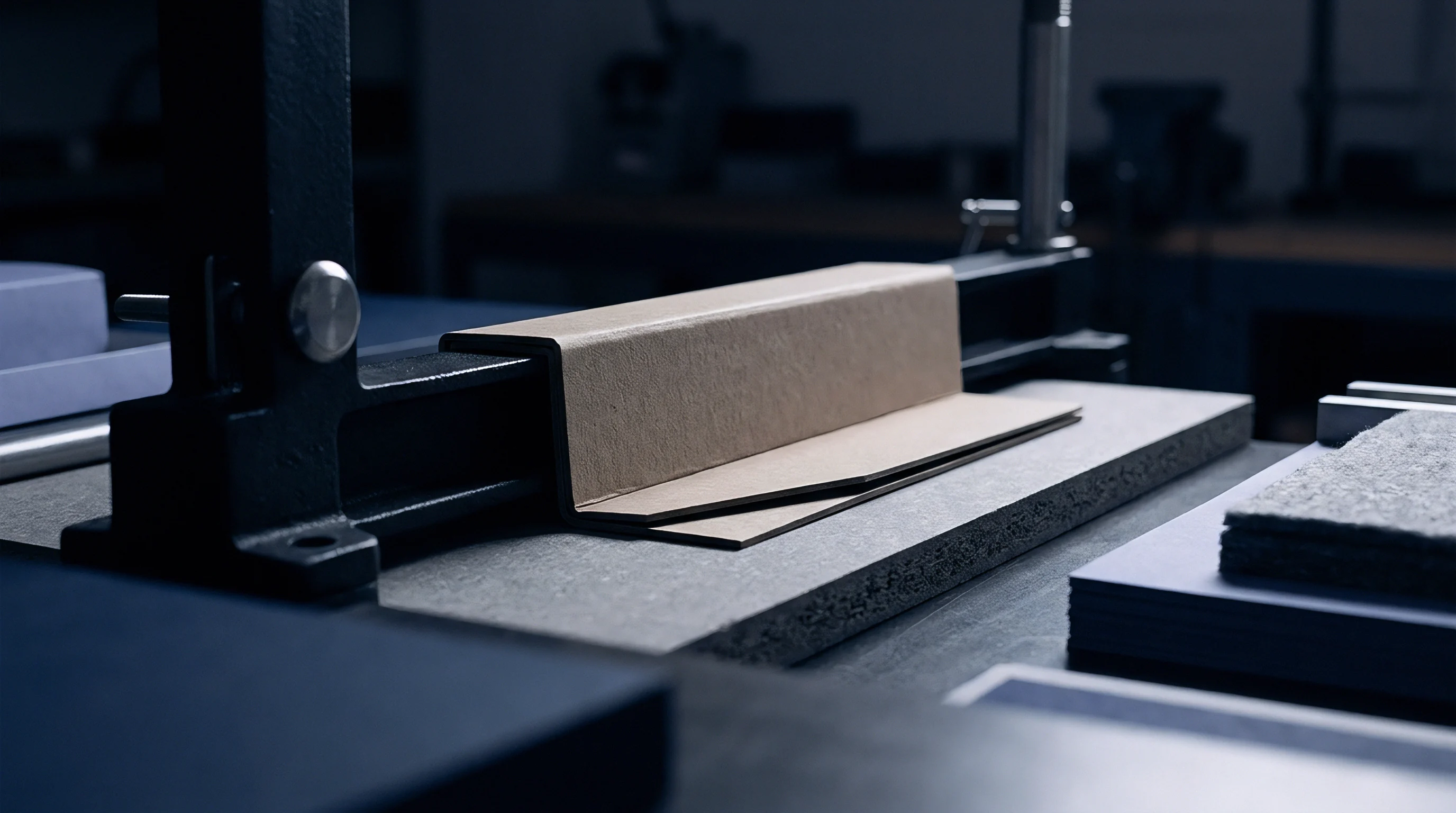
Scoring tools deform the internal plies of cartonboard to construct a precise hinge line for high-speed folding. By forcing paperboard into an underlying female matrix channel, scoring rules create controlled internal delamination across central ply boundaries. Internal ply separation permits the board structure to fold toward the male rule impression without fracturing outer liner plies.
Board moisture content governs the shear modulus and strain-to-break behavior of cellulose fibers during this deformation process.
Low moisture levels below 5.0 percent render cellulose fibers brittle and unyielding under localized scoring strain, causing dry outer liners to split open along score channels and expose raw internal fibers. Elevated moisture levels above 8.0 percent soften hydrogen bonds within the fiber matrix, reducing bending stiffness and structural score definition. Overly moist board crushes under die impression, generating soft, rounded score lines that bulge inward during high-speed carton erection, causing automated filling lines to jam.

Mechanical Deformations at Low and Elevated Moisture Content
When moisture drops below critical thresholds, cellulose cell walls lose their elastic yield capability. Tensile stress concentration along the outer radius of the score fold exceeds the ultimate elongation limit of dry fibers. Coated liners crack visibly through printed ink films and barrier varnish layers.
Film-laminated board subjected to low moisture scoring experiences sub-surface coating delamination, where plastic film pulls away from the fractured paperboard surface. High moisture environments reduce internal shear resistance, allowing plies to slide excessively without forming the distinct structural hinge needed for clean 90-degree corner formation.
| Board Caliper (mm / pt) | Target Moisture Range (%) | Male Rule Thickness (Point / mm) | Matrix Channel Width (mm) | Crease Depth Clearance Factor |
|---|---|---|---|---|
| 0.35 mm / 14 pt | 5.5 – 6.5 % | 2 Pt (0.71 mm) | 1.2 – 1.4 mm | 1.0 x Caliper |
| 0.45 mm / 18 pt | 6.0 – 7.0 % | 2 Pt (0.71 mm) | 1.5 – 1.7 mm | 1.1 x Caliper |
| 0.55 mm / 22 pt | 6.0 – 7.0 % | 3 Pt (1.07 mm) | 1.9 – 2.1 mm | 1.1 x Caliper |
| 0.65 mm / 26 pt | 6.5 – 7.5 % | 3 Pt (1.07 mm) | 2.3 – 2.5 mm | 1.2 x Caliper |
Because matrix width dictates bend radius, dry board requires wider matrix channel clearance to prevent shear splitting along outer ply borders, whereas excessive pressure crushes soft board. Polyethylene terephthalate film lamination adds tensile reinforcement across the outer surface, masking micro-cracks inside underlying fiber structures. Orienting primary carton score lines parallel to the machine grain direction reduces scoring resistance, though machine-direction scores crack more readily than cross-direction scores when moisture content falls below 5.2 percent.
Dry cellulose fibers split under scoring stress while moist fibers compress into the creasing matrix without fracturing.
Relative humidity shifts inside converting plants alter creasing performance across shift changes. Plant air dropping from 55 percent relative humidity down to 30 percent during winter heating cycles strips surface moisture from staged pallets within hours. Unprotected board edges dry rapidly, shifting crease quality from acceptable yield to severe outer liner cracking without any physical change having been made to die-cutting tooling settings.
Outer liner score fractures are frequently attributed to aggressive scoring rule selection rather than low board moisture content.

Acclimatization
Pallets arriving from mill warehouses carry atmospheric history from manufacturing and transit environments. Shipping board across seasonal climate zones creates severe thermal and moisture differentials between delivered stacks and pressroom air. Cold pallets brought directly into warm, humid converting halls condense surrounding air moisture onto outer protective packaging film.
Condensation forms dew point liquid on cold wrap surfaces. Unwrapping cold pallets prematurely allows ambient moisture to flash onto cold sheet edges, causing rapid localized hygroexpansion and irreversible edge wave distortion.
Equilibration timelines scale non-linearly with total pallet volume and temperature delta values. A single 1000-kilogram solid paperboard stack carrying an internal core temperature of 5 degrees Celsius brought into a 23 degree Celsius pressroom requires at least 48 hours of sealed equilibration time to achieve thermal balance before film removal. Skipping equilibration cycles guarantees edge wave defects, registration misalignments, and double-feed tripping at press feeder heads.

Pallet Thermal Equilibration and Moisture Migration Schedules
Dense stacks of paperboard absorb or release ambient heat far more slowly than individual unstacked sheets, with heat transfer occurring conductively inward from outer boundaries. Moisture migration follows thermal gradients, moving inward toward cooler zones or outward toward warmer dry air. Barrier packaging materials including asphalt-laminated craft, polyethylene-coated wraps, and heavy stretch film isolate the load from surrounding air during storage.
Maintaining wrapper integrity until thermal equilibrium is established prevents edge moisture exchange.
- Thermal Probe Logs recording core stack temperature and ambient pressroom temperature at four-hour intervals prior to unsealing pallet packaging film.
- Relative Humidity Surface Readings taken under outer protective wrapping using specialized sword hygrometers inserted between upper board sheets.
- Mill Moisture Certificates confirming exit moisture values measured per ISO 287 protocols at the time of initial reel slitting and pallet loading.
- Chain of Custody Documentation tracking transport truck refrigeration and humidity conditions during cold-weather or high-humidity ocean shipping transit.
When Can Moisture Balance Divergence Void Board Warranty Claims?
Mill technical datasheets specify target moisture percentages measured at the reel cutter under standard conditions, but converting plants accepting delivered board assume legal responsibility for maintaining substrate integrity through proper acclimatization protocols. Material claims are routinely rejected when plant records fail to prove sealed pallet storage for mandatory warm-up periods. Sword hygrometer readings taken inside unopened pallet wraps must show equilibrium relative humidity values within 5 percent of surrounding pressroom air to substantiate claims that non-conforming moisture content originated at the paper mill rather than during plant storage.
Whether real-time internal pallet moisture sensors can provide legally binding evidence during cross-border supplier claims remains an open operational question across international converting plants.
Yield
Dimensional instability directly degrades converted carton throughput across high-speed packaging lines. Uncontrolled hygroexpansion generates waste across printing, laminating, stamping, die-cutting, and gluing passes. Registration drift forces press operators to run at reduced line speeds or discard out-of-spec sheets during make-ready.
Score line splitting under low moisture conditions forces complete batch rejections during final quality audits, forfeiting added-value finishing investments including expensive spot varnishes and cold foil passes.
The industry average assumption that dimensional register waste accounts for exactly 1.8 percent of total job spoilage during six-color offset plus double-pass finishing rests on fragmented plant reporting across variable conversion formats. A careful buyer establishes job-specific waste allowances by executing a 5000-sheet pre-production moisture stability audit on the target lot rather than relying on standard mill spoilage charts. Unplanned dimensional waste destroys converting profit margins across tight contract packaging orders.
Financial Quantifications of Hygroexpansion Scrap
Unplanned sheet fan-out and score line splitting convert expensive raw paperboard into low-value recycled waste. Every failed sheet discarded at the die-cutter carries the cumulative monetary cost of preceding print passes, film laminations, and foil applications. Waste arithmetic scales exponentially on multi-pass packaging contracts, where scrap generated at the final station wastes all previously applied surface treatments.
| Production Pass Stage | Base Pass Cost per Sheet ($) | Baseline Waste Rate (%) | Moisture Defect Spoilage Rate (%) | Total Financial Scrap Value ($) |
|---|---|---|---|---|
| Raw Substrate Input | $0.45 | 1.5 % | 0.5 % | $450.00 |
| 6-Color Offset Printing | $0.75 | 2.0 % | 1.8 % | $1,425.00 |
| Thermal Film Lamination | $1.10 | 1.0 % | 2.5 % | $1,925.00 |
| Die-Cutting & Creasing | $1.35 | 1.5 % | 4.2 % | $3,847.50 |
| Cumulative Financial Impact of Hygroexpansion Waste across Full Converting Run | $7,647.50 | |||
Unwrapped pallets gain edge moisture as cold sheets condense surrounding vapor, while thermal dryers strip surface water and cause sheet curl through dimensional expansion. Film lamination exerts permanent tension across the board, matrix width dictates bend radius, and registration drift produces die waste ~ making daily calibration of moisture meters essential.
Lamination choices fix secondary pass behavior, lead times, and end-of-life recyclability grading. Polyethylene terephthalate lamination films provide superior moisture barrier properties, sealing internal board moisture effectively. However, non-biodegradable synthetic film lamination penalizes finished cartons under modern Extended Producer Responsibility fee structures.
De-lamination processes required to separate plastic film from paperboard fibers during recycling lower total scrap recovery value, raising net unit costs per thousand converted cartons.
Tracking dimensional scrap alongside moisture logging provides baseline data needed to tighten raw board purchasing specifications for future production runs.