Transient Moisture Transport Mechanics in Recycled Corrugated Containerboard
Recycled containerboard exhibits accelerated transient moisture diffusion and mechano-sorptive creep, causing rapid box collapse under cyclic humidity.

Ingress
A sorption balance registered 0.082 milligrams per second square root of time across a 170 grams per square meter recycled fluting sample exposed to an abrupt humidity step from fifty to eighty-five percent relative humidity at twenty-three degrees Celsius. The mass gain curve departed from linear Fickian behavior within twelve minutes of chamber stabilization. Containerboard produced from recovered paper stock responds to environmental humidity shifts through coupled transport mechanisms governed by sheet density, surface energy, and internal pore structure.
Packaging converters converting recovered furnish face distinct physical challenges during intermodal distribution across climatic zones.
Uncalendered testliner absorbs moisture rapidly. Water vapor moves through porous fibrous structures by gas-phase diffusion through open voids alongside bound-water diffusion within the swollen lignocellulosic cell walls. Capillary condensation occurs within micro-scale interstices at relative humidity levels exceeding seventy-five percent, creating localized liquid water paths that bypass conventional gaseous resistance.
Recycled pulp contains shorter fibres. Repeated mechanical processing and re-slushing reduce mean fibre length while increasing the fines fraction, producing a tighter apparent sheet density that alters the balance between inter-fibre pore diffusion and intra-fibre transport.
Vapor Penetration across Fibrous Structures
Moisture moves through cellulosic sheets via two distinct pathways, vapor transport within air voids and bound water migration along solid cell walls. In virgin kraftliner, long unbleached softwood fibres maintain wide lumina and high internal pore connectivity, allowing rapid vapor diffusion while maintaining dimensional stability. Recycled testliner presents a denser, more tortuous air path because fragmented fibres and parenchymal fines pack closely during sheet forming on the Fourdrinier wire.
Bound water transport dominates the transient regime in recycled sheets. Water molecules adsorb onto available hydroxyl groups of cellulose and hemicellulose, disrupting internal hydrogen bonds and inducing localized swelling that continuously alters the local diffusion coefficient throughout the sorption transient.
Diffusion coefficients measured under steady-state conditions fail to predict transient behavior during rapid climate transitions. When a corrugated container moves from an air-conditioned packing facility into an unventilated marine container, the relative humidity gradient drives a steep moisture front through the outer linerboard. The effective diffusion coefficient of a standard 150 grams per square meter recycled testliner rises from 1.8 multiplied by ten to the power of negative eleven square meters per second at fifty percent relative humidity to 4.2 multiplied by ten to the power of negative eleven square meters per second at eighty-five percent relative humidity.
Surface sizing delays initial sorption. Starch applied at the size press temporarily retards surface wetting, yet moisture penetrates the un-sized core once the boundary layer reaches vapor equilibrium.
Corrugated board conditioned at ninety percent relative humidity and twenty-three degrees Celsius exhibits an equilibrium moisture content four percentage points higher than virgin kraftliner under identical exposure.
Sorption Dynamics under Step Humidity Shifts
Gravimetric uptake curves record rapid mass gain during the initial sixty minutes of climate chamber exposure. The sorption transient exhibits pronounced non-Fickian characteristics, frequently classified as anomalous or relaxation-controlled transport. Cellulosic fibres do not adjust their conformation instantaneously to swelling stresses induced by water ingress.
Molecular relaxation of the amorphous cellulose and hemicellulose matrix introduces a time lag between local moisture concentration and structural volume expansion. The rate of vapor ingress depends on mechanical relaxation rates rather than concentration gradients alone.
Moisture gradients induce internal shear. As the external boundary of the containerboard absorbs water and expands, the dry interior core resists deformation, creating sharp through-thickness hygrostrains. These internal mechanical stresses accelerate moisture uptake, a phenomenon described by coupled stress-diffusion mechanics.
In multi-ply recycled containerboard, differential swelling between individual plies induces out-of-plane curling and surface cockling. Recycled fibres show higher hysteresis. Desorption isotherms do not mirror adsorption curves, leaving residual moisture within recycled containerboard even after atmospheric conditions return to baseline levels.
| Linerboard Grade | Recycled Fibre Share (%) | Initial Moisture Content (%) | Diffusion Coefficient (10^-11 m2/s) | Equilibrium Moisture at 85% RH (%) |
|---|---|---|---|---|
| Virgin Kraftliner | 0 | 6.8 | 1.9 | 11.2 |
| Testliner 2 | 60 | 7.2 | 2.4 | 12.8 |
| Testliner 3 | 100 | 7.5 | 3.1 | 14.6 |
| Recycled Fluting Medium | 100 | 7.9 | 3.6 | 15.4 |
The diffusion coefficient of 2.4 multiplied by ten to the power of negative eleven square meters per second for sixty percent recycled testliner rests on transient cup tests performed under ISO 2528 protocols using twenty replicates conditioned across fifty to eighty-five percent relative humidity steps. Variations in wet-end refining and cationic starch retention alter this value by up to twenty-five percent across different paper mills. The transport coefficient climbs steeply when sheet porosity exceeds sixty percent, accelerating moisture ingress across the containerboard cross-section.

Pore
Fibre recycling alters the morphological architecture of wood pulp through repeated wetting, pressing, and thermal drying. Chemical pulp fibres undergo irreversible structural degradation known as hornification during the initial drying cycle on the paper machine. Hydrogen bonds form between adjacent microfibrils within the secondary cell wall, collapsing internal voids and permanently reducing the water retention value of the pulp.
Subsequent repulping operations cannot reopen these closed intra-wall micro-voids, forcing recycled containerboard to rely on inter-fibre void volume for structural cohesion and fluid transport.
Pore volume decreases with recycling. While individual fibre walls become stiffer, less flexible, and less capable of internal swelling, the bulk sheet density of recycled testliner often increases due to the presence of fines and mineral fillers. The pore size distribution shifts toward smaller macropores between five and twenty micrometers, while the micro-void volume below five nanometers shrinks substantially.
Capillary pressure increases as pore radii diminish, accelerating the capillary suction of liquid moisture when condensation collects on containerboard surfaces during maritime transport.
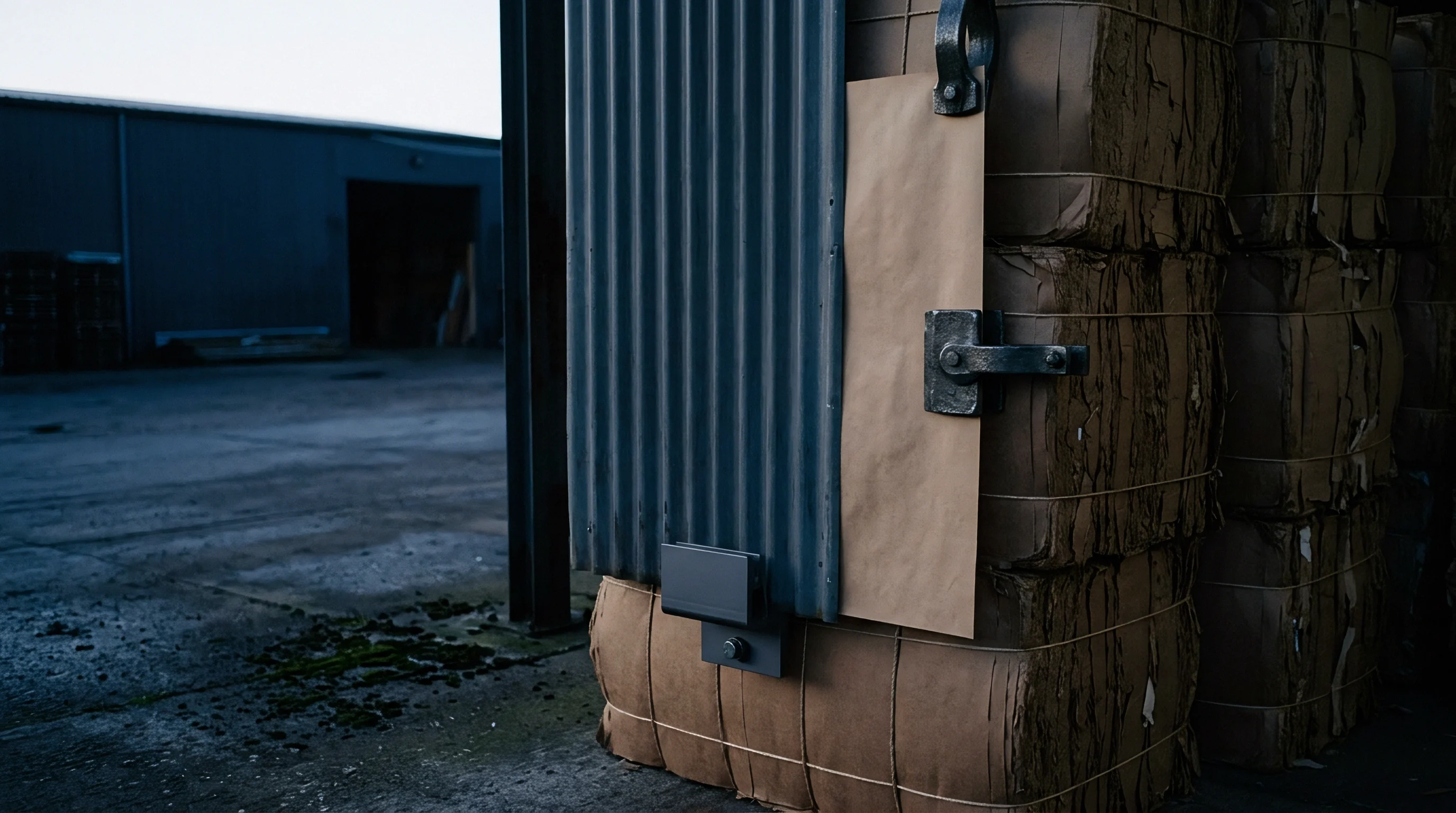
Cell Wall Collapse from Repeated Repulping
Hornification permanently closes internal micro-cavities within secondary cell layers of chemical pulp fibres. Lignin content alters absorption rates. High-yield recycled stocks containing unbleached packaging waste carry substantial lignin fractions that hinder swelling while providing hydrophobic resistance against rapid vapor wetting.
Low-lignin recycled furnish swells heterogeneously, generating micro-cracks along the fibre-to-fibre bond interfaces under transient moisture exposure. These interfacial micro-cracks create preferential diffusion channels that accelerate bulk moisture penetration through the sheet thickness.
The mechanical performance of containerboard depends on hydrogen bonding between adjacent fibres across the sheet structure. Water vapor molecules entering the sheet disrupt these bonds by replacing fibre-to-fibre hydrogen bridges with water-to-cellulose associations. Because hornified recycled fibres possess lower specific surface area available for bonding, each lost bond represents a larger percentage of total sheet strength.
Edgewise compression resistance drops precipitously when moisture content rises above nine percent in recycled grades, whereas virgin kraftliner preserves structural integrity up to twelve percent moisture content.
- Lumen collapse restricts longitudinal vapor conduction through hollow fibre centers, redirecting transport into the tortuous inter-fibre voids.
- Microfibril coalescence reduces hydroxyl group accessibility within the secondary wall, limiting intra-fibre swelling potential.
- Hemicellulose loss lowers the intrinsic moisture capacity of the pulp, shifting sorption isotherms toward lower equilibrium values.
- Fines accumulation packs the inter-fibre void structure, creating dense boundary layers that slow initial penetration while intensifying capillary suction.
Repeated repulping cycles collapse intra-fibre lumen volume and restrict capillary liquid transport through the sheet.
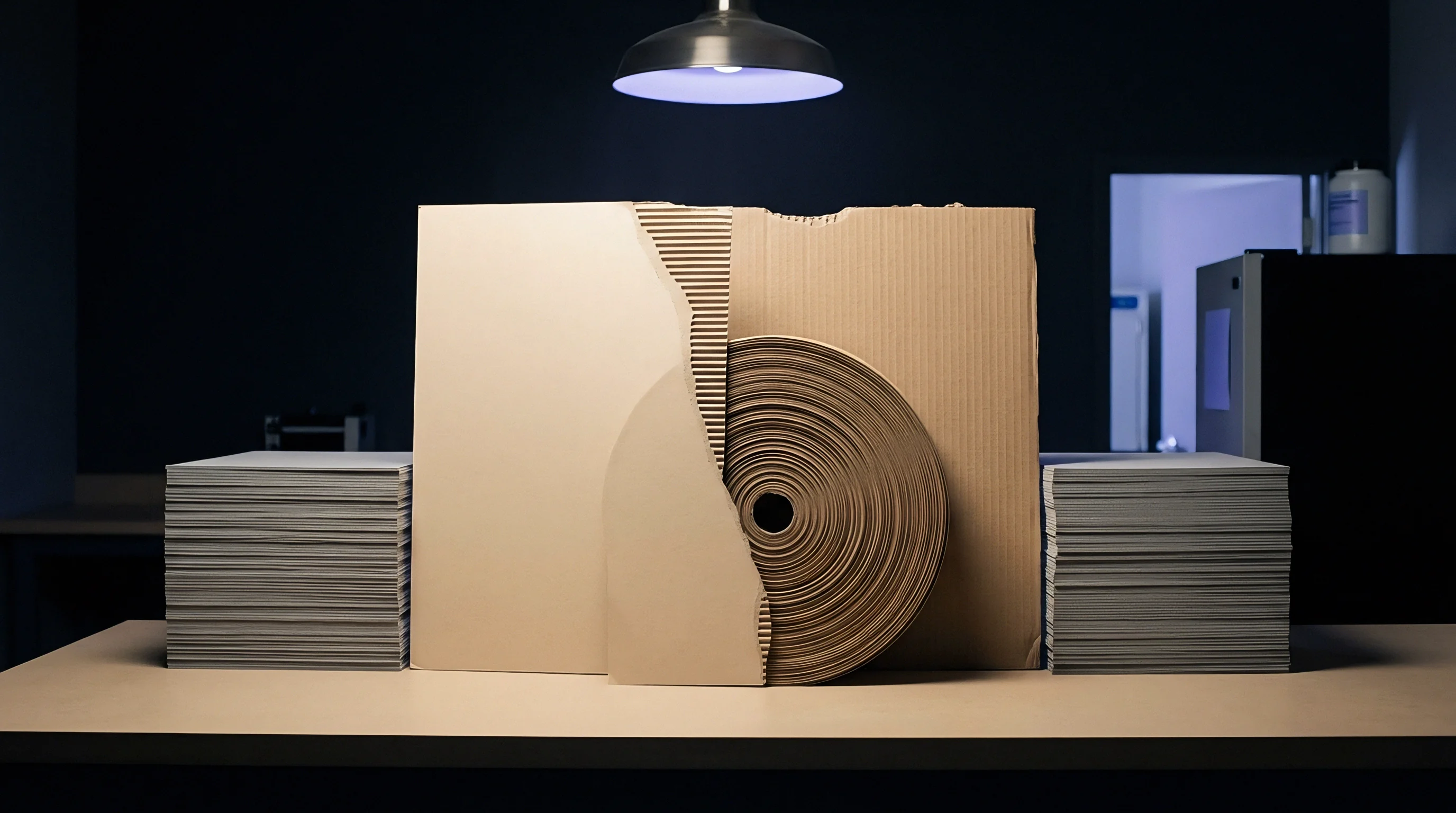
Morphological Differences in Secondary Furnish
Virgin kraft stocks retain flexible lumens that expand upon contact with ambient water vapor. Chemical additives and sizing agents interact differently with secondary furnish compared to virgin fibres. Internal sizing agents such as alkyl ketene dimer or alkenyl succinic anhydride distribute unevenly across recycled stock due to preferential adsorption onto high-surface-area fines.
Sizing agents leave large reclaimed fibres under-protected, creating localized patches of low water resistance where moisture penetrates rapidly.
Water absorption measured by the Cobb60 test per ISO 535 reveals substantial batch variation in recycled grades. While virgin kraftliner routinely maintains Cobb60 water absorption values below twenty-eight grams per square meter, recycled testliner often swings between thirty-five and fifty-five grams per square meter within a single delivery roll. These localized variations in liquid and vapor resistance generate non-uniform moisture fronts during transit, inducing differential expansion across the box panels.
In packaging design, porous recycled substrates always exchange moisture faster than dense virgin boards under unsealed atmospheric conditions.
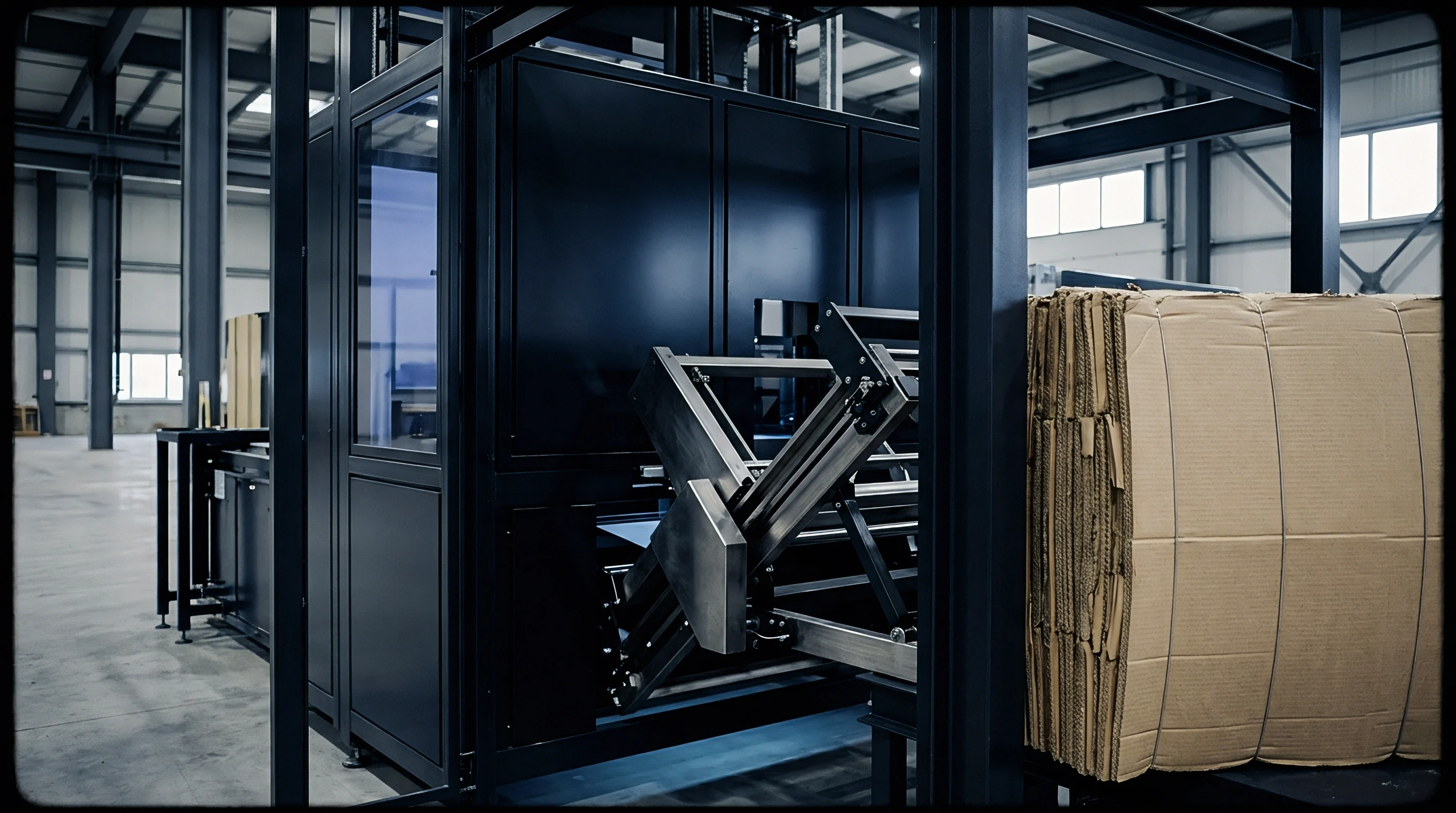
Flute
Corrugated board converters combine medium and liner sheets using aqueous starch adhesive at elevated roll temperatures. The corrugating medium undergoes intense plasticization and mechanical folding as it passes between corrugating rolls, forming the undulating fluted profile that establishes box panel bending stiffness. When recycled fluting medium absorbs ambient water vapor during transit, the flute tips experience severe localized shear stresses.
Transient moisture gradients between the external liner and the internal fluting create differential dimensional strains that concentrate stress at the adhesive bondline.
Adhesive lines soften under vapor. Native corn starch formulations gelatinize under heat to create brittle, glass-like adhesive bridges between the linerboard and the corrugating medium tips. High relative humidity plasticizes this starch matrix, lowering its glass transition temperature below ambient warehouse levels.
When relative humidity surpasses eighty percent, the storage modulus of standard starch adhesive drops by more than sixty percent, allowing the fluting arches to slide and distort under top-to-bottom pallet loads.
Bondline Softening under Water Vapor Gradients
Starch adhesives rely on retrograde amylose networks that plasticize when local relative humidity surpasses seventy percent. In a corrugated container panel, moisture ingress occurs primarily from the exterior face inward. The outer linerboard swells first, expanding in the cross-machine direction while the dry corrugated medium resists lateral expansion.
This mismatch generates peeling stresses at the glue line, initiating micro-delamination along the flute tips before moisture equilibrates throughout the full board thickness.
Flat crush resistance drops rapidly as ambient moisture penetrates the corrugated medium arches. Standard corrugated board panels subjected to cyclic relative humidity lose flat crush resistance faster than solid containerboard sheets of equivalent basis weight. Air pockets within the flute cavities facilitate rapid vapor convection, distributing humidity along the flute channels.
In intermodal shipping containers, ambient temperature swings cause condensation to form on cold container ceilings, dripping directly onto top pallets where flute cavities channel water into the interior box structure.
Moisture penetrates corrugating medium faster along the fluting direction than through the solid linerboard faces.
Transverse Shear and Interface Buckling
Containerboard panels buckle under compression. When the fluting medium loses stiffness, the outer linerboards lose lateral support, halving the critical buckling load of the panel. Recycled semi-chemical fluting exhibits rapid stiffness decay compared to virgin birch or eucalyptus mediums due to residual lignin and short fibre lengths that weaken under moisture sorption.
Transverse shear stiffness governs the overall resistance of corrugated boxes against bulging under internal load.
Thermal insulation jackets on marine freight shipments demonstrate similar physical behavior, losing insulation capacity when boundary layers saturate with moisture vapor. When containerboard flute voids fill with moist air, localized convective transport accelerates through-thickness vapor migration, saturating the inner liner within hours. Converting plants often attempt to stabilize flute performance through chemical crosslinkers such as glyoxal or polyamine resins in the corrugating adhesive.
Converters assert that modified starch adhesives completely eliminate moisture-induced delamination across sea crossings, yet field measurements indicate mechanical degradation persists whenever recycled medium fibre walls absorb atmospheric water.
- Adhesive carrier ratio determines the penetration depth of starch into porous recycled linerboards during corrugation.
- Flute profile geometry establishes the contact surface area and stress distribution along individual adhesive lines.
- Secondary sizing bath seals the exposed medium tips against rapid capillary suction during open warehouse storage.
- Gelatinization temperature settings ensure complete starch granules burst without burning the short recycled fibres.
Creep
Compressive failure in stacked corrugated cartons during intermodal ocean transit stems from structural fatigue rather than static overloading alone. While static safety factors of three or four are common in package design specifications, corrugated boxes fabricated from recycled containerboard experience catastrophic wall buckling at loads well below their initial laboratory box compression test values. This failure mode originates from mechano-sorptive creep, a physical phenomenon in which transient moisture sorption accelerates strain accumulation under sustained mechanical load.
Humidity cycles accelerate structural fatigue. When relative humidity cycles between fifty and ninety percent, corrugated board deforms several times faster than it does under a constant ninety percent relative humidity environment. Each sorption cycle breaks and reforms hydrogen bonds within the stressed cellulosic matrix, allowing cellulose microfibrils to slip irreversibly along shear planes.
In recycled fibres, where internal bonding is already weakened by hornification, mechano-sorptive creep produces rapid panel bulging and vertical crease deformation.
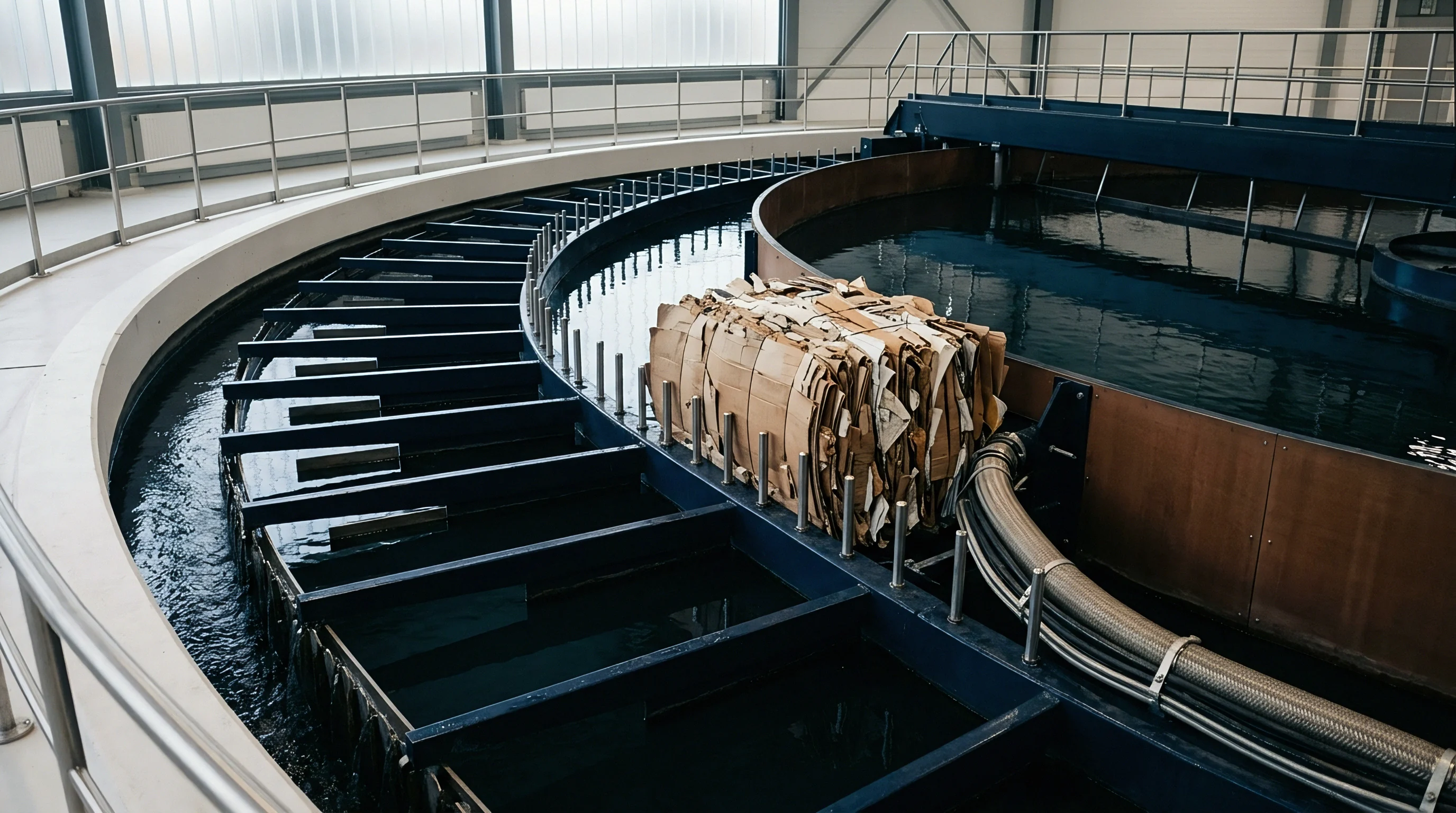
Mechano-Sorptive Acceleration under Cyclic Relative Humidity
Fluctuating atmospheric water content induces accelerated strain rates far exceeding deformations observed under constant equilibrium moisture. During the adsorption phase, incoming water molecules plasticize the amorphous regions of cellulose, lowering the yield stress and permitting instantaneous strain increments. During the desorption phase, structural shrinkage concentrates stresses on the remaining load-bearing bonds, inducing further creep deformation rather than recovering strain.
The cumulative effect is a ratcheting mechanism that drives the containerboard panel toward premature compressive buckling.
Dead-load compressive tests conducted under TAPPI T 839 protocols reveal a creep acceleration factor of 3.8 for recycled double-wall board under twelve-hour cyclic humidity conditions compared to constant climate storage. This 3.8 factor rests on laboratory measurements of 200 boxes compressed under a forty percent static dead load between fifty and ninety percent relative humidity at twenty-three degrees Celsius. Flute height, paper grammage, and the degree of fibre refining influence this rate, with taller A-flute profiles failing sooner than compact B-flute constructions due to higher out-of-plane shear stresses.
Stack loads cause sudden collapse. The desk cannot fully defend the sixty-five percent recycled content threshold frequently cited by box suppliers as the boundary where catastrophic creep failure begins. Mill furnish variability, regional recycling contamination, and refining intensity cause recycled board performance to overlap with low-grade virgin containerboards.
Careful packaging specifiers evaluate dynamic creep compliance directly across representative humidity cycles rather than relying on furnish percentage declarations.
| Containerboard Construction | Recycled Content (%) | Edgewise Compression Loss (%) | Creep Acceleration Factor | Time to Buckling Failure (Hours) |
|---|---|---|---|---|
| Virgin Kraft Double-Wall | 0 | 28 | 2.1 | 168 |
| Blended Testliner Double-Wall | 50 | 44 | 3.2 | 84 |
| Recycled Testliner Double-Wall | 100 | 58 | 3.8 | 38 |
| Recycled Single-Wall | 100 | 64 | 4.4 | 19 |
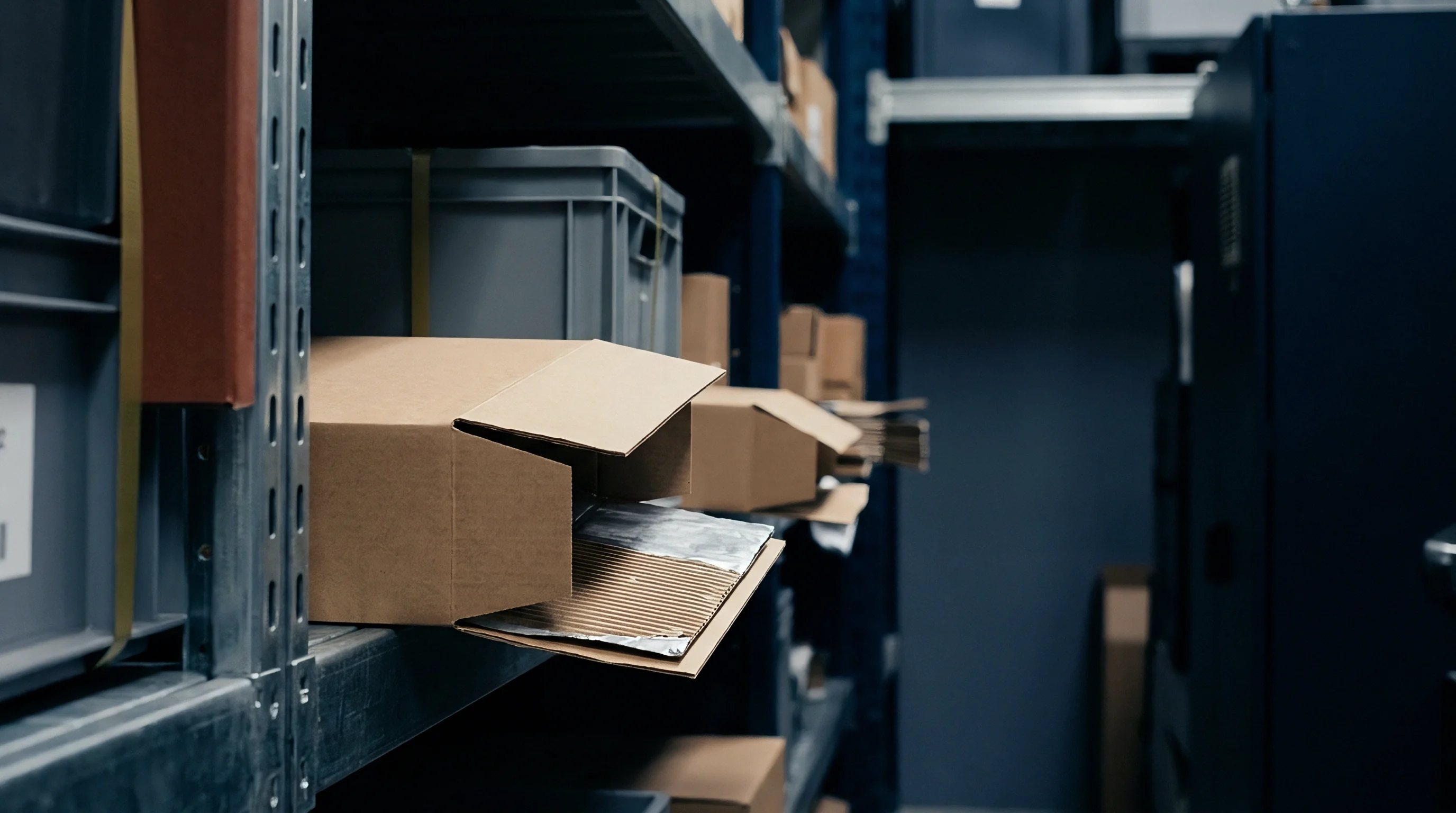
McKee Formula Errors in Humid Transit
Classical predictive equations for container top-to-bottom compressive capacity assume steady-state lab conditioning at fifty percent relative humidity. The standard McKee formula calculates box compression strength using edgewise crush resistance, panel caliper, and box perimeter. Under transient moisture transport, this formula fails completely because edgewise crush resistance degrades non-linearly with moisture content, and the box corners shed load to the center panels as moist liners creep and buckle.
Take an export lot calculation for 1000 corrugated cartons fabricated from 100 percent recycled testliner with initial laboratory box compression strength of 4200 Newtons. Assume a static pallet stacking load of 1400 Newtons per bottom box, representing a nominal safety factor of 3.0 under standard conditions of twenty-three degrees Celsius and fifty percent relative humidity. Exposure to cyclic maritime transit conditions across seventy to ninety percent relative humidity reduces the effective edgewise crush strength by fifty-eight percent within forty-eight hours.
The mechano-sorptive creep acceleration factor reduces the critical buckling limit to 1300 Newtons, falling below the static stack load and triggering panel collapse before vessel discharge.
- Condition sample cartons in a climate chamber at twenty-three degrees Celsius and fifty percent relative humidity for twenty-four hours to establish dry tare weight.
- Apply a sustained vertical compressive dead load equal to forty percent of the baseline box compression test rating using calibrated dead weights.
- Cycle chamber relative humidity between fifty and ninety percent across twelve-hour intervals while logging vertical displacement transducers continuously.
- Record the exact hour of panel buckling failure and measure residual moisture content at the failure crease via infrared moisture balance.
Failure to account for transient sorption mechanics results in collapsed warehouse pallets, crushed interior goods, and complete loss of stacking integrity during ocean transit.

Stipulation
Commercial supply agreements for corrugated shipping packaging frequently omit environmental boundary conditions for transit validation. Purchase orders that reference generic burst strength or dry edgewise crush values leave buyers unprotected when boxes collapse under fluctuating relative humidity. Legal claims regarding transit damage hinge on whether delivered packaging met technical specifications at the point of failure or whether ambient moisture extremes exceeded design parameters.
Cold chain shipments suffer condensation. Under global shipping terms, liability for packaging failure transfers depending on whether failure originated from deficient containerboard quality or improper environmental control within the freight container. When containerboard specifications omit transient moisture tolerance metrics, cargo insurers default to attributing box collapse to external perils of the sea, leaving shippers with unrecoverable cargo losses.
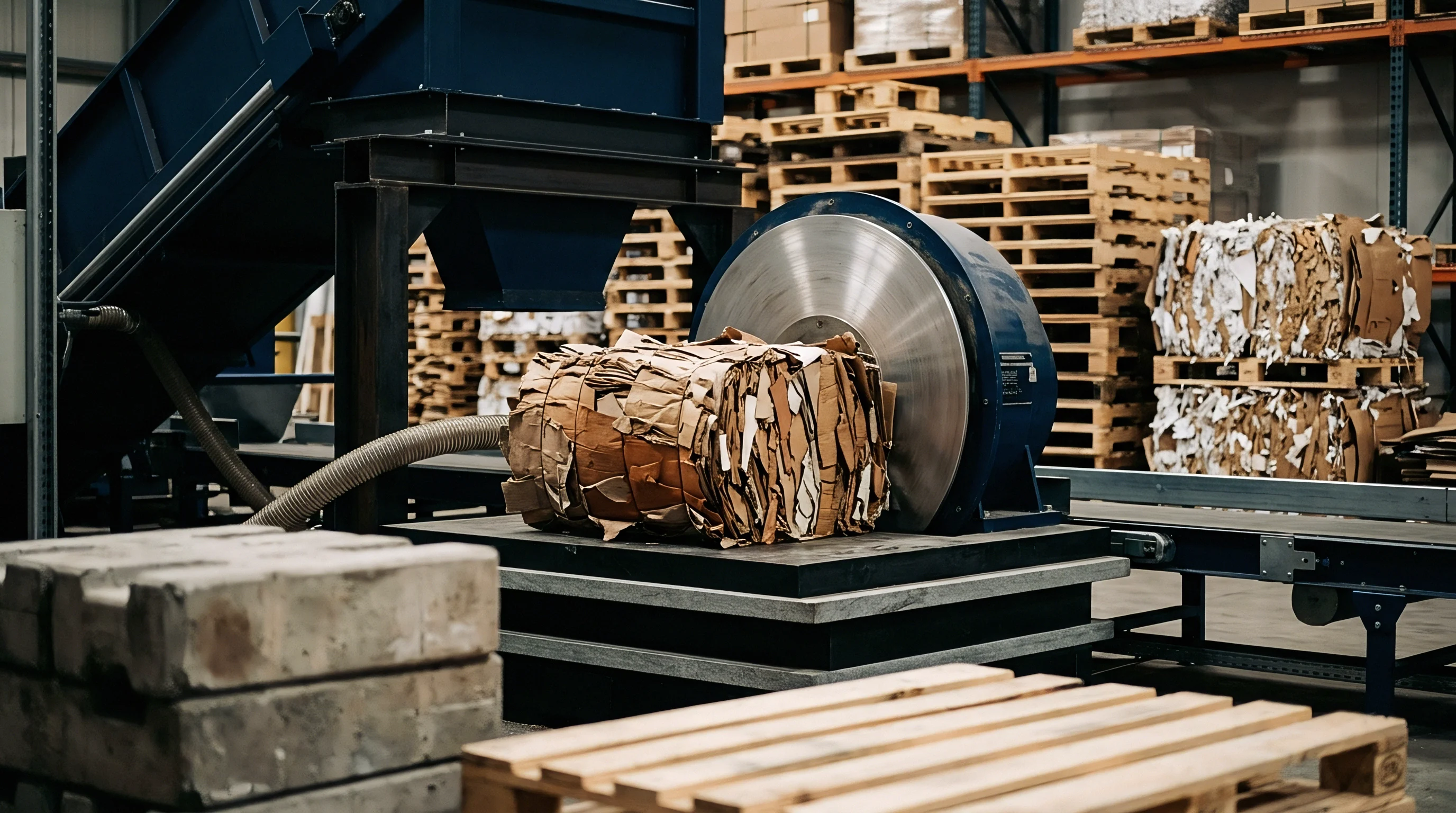
Technical Evidence for Freight Damage Allocation
Cargo insurers routinely reject collapse claims when shipment data loggers record sustained condensation events inside freight containers. To preserve commercial recourse, buyers establish rigorous inspection protocols that compare delivered board properties against certified mill specifications. Testing focuses on water absorption rates, Cobb60 values, and edgewise compression strength retention across humidity steps.
Chain-of-custody documentation under FSC or PEFC standards verifies the origin of recycled fibre furnish, yet environmental certificates offer no guarantee of physical transport performance. A packaging specification referencing FSC Recycled credit lines guarantees reclaimed fibre content while providing zero protection against moisture-induced mechano-sorptive creep. Sourcing teams integrate physical performance criteria directly into quality agreements alongside environmental certificates.
ISO 2233 delivery conditioning clauses invalidate transit damage claims when relative humidity logs prove ambient swings exceeded the agreed tolerance band.
Regulatory Recyclability Audits and Moisture Barriers
European packaging waste rules impose severe tax penalties on composite materials containing non-repulpable polymer coatings. Packaging engineers frequently add polyethylene or wax coatings to recycled corrugated containers to block transient moisture ingress during cold chain transport. These coatings compromise repulpability under EN 13430 standards, exposing importers to packaging waste fees and regulatory non-compliance fines.
Converters must utilize water-based dispersion barriers that maintain recyclability while retarding vapor absorption.
Transit shocks trigger flute crush. Under European packaging directives and Extended Producer Responsibility schemes, packaging designs balance moisture barrier performance against mechanical recyclability thresholds. Hydrophobic chemical treatments must dissolve during standard hydrapulper cycles without generating sticky contaminants or lowering recycled pulp yield.
Sourcing agreements require suppliers to submit accredited repulpability test reports alongside moisture resistance data sheets before approving alternative coating formulations.
Standard purchase contracts incorporating ISO 2233 conditioning schedules require packaging to withstand forty-eight hours at ninety percent relative humidity without exceeding six millimeters of total creep deflection under maximum rated stack loads.