Stack Compression
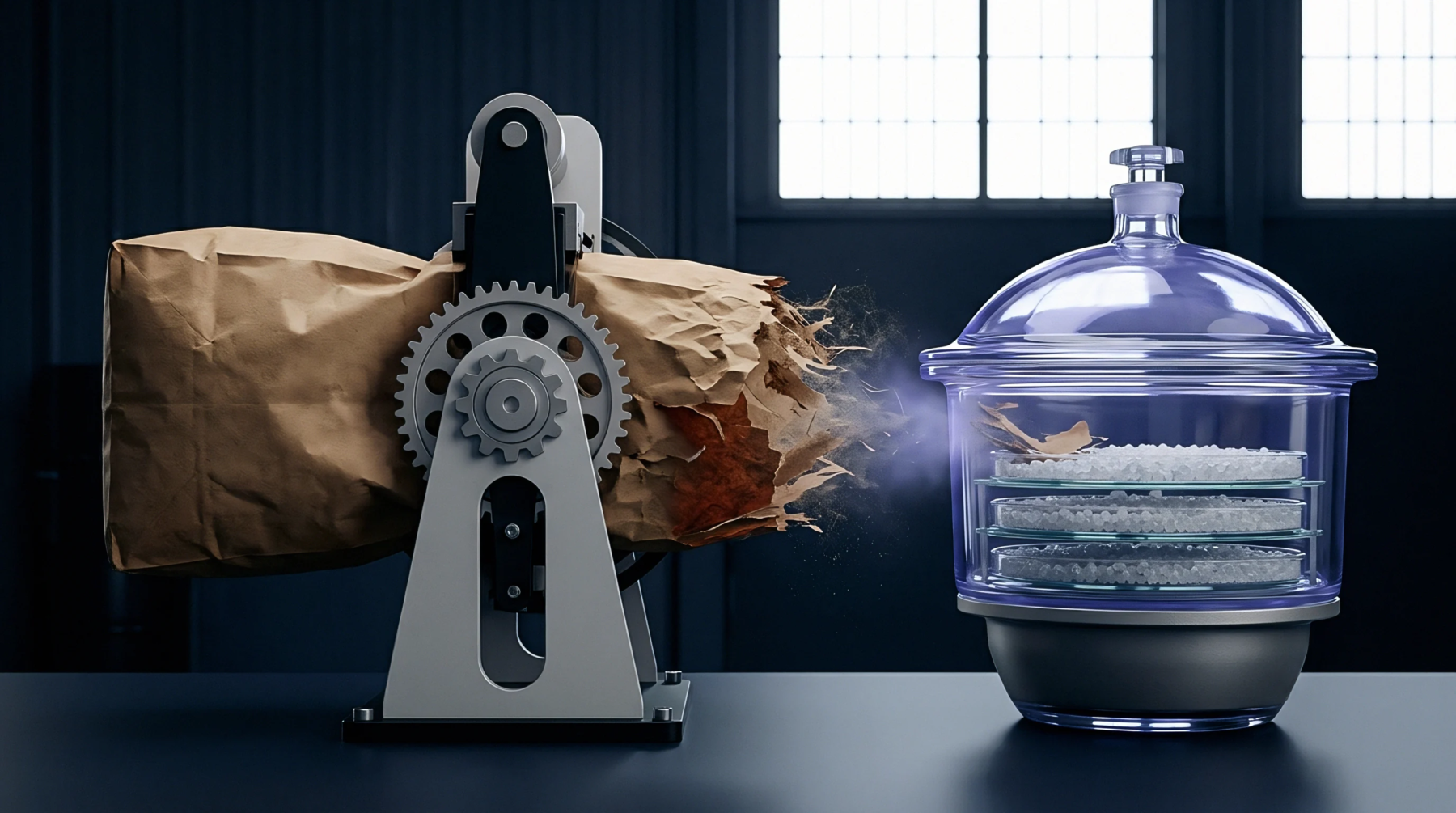
Vertical load resistance protocol defines ISO 2233 for corrugated transit packaging during automated warehouse storage and intercontinental freight transit. Automated high bay warehouses subject stacked fibreboard boxes to sustained static weight loads for prolonged periods before distribution centers process the palletized stock. Converters apply this methodology to measure package deformation under controlled humidity chambers, reproducing the crushing forces exerted by upper tiers of heavy master cartons.
Testing machines subject full corrugated containers to dead loads simulating maximum warehouse stacking heights, recording top-to-bottom deflection until structural yield occurs. Regulatory compliance depends on maintaining box compression strength above safety thresholds derived from gravitational factors and dynamic transport multipliers.
Dynamic Creep
Ambient relative humidity fluctuations accelerate corrugated board degradation during prolonged warehousing under heavy vertical loads. Cellulose fibres absorb atmospheric moisture, reducing stiffness and lowering the buckling resistance of fluted medium components within containerboard walls. Engineers calculate creep factors by measuring progressive box height loss over fixed intervals under constant compressive stress inside climatic chambers.
Cyclic moisture variations inside unconditioned freight containers compound structural degradation, causing premature box collapse long before nominal static load limits are reached. Mill operators control initial Cobb sizing and basis weight targets to limit water vapor absorption rates during long duration warehouse storage.
Margin Deficit
Structural safety margins compensate for material fatigue during prolonged warehouse storage by applying reduction coefficients to baseline laboratory crush tests. Ambient temperature swings and vibration during maritime transport degrade corrugated box compressive strength, requiring engineers to specify higher initial edgewise crush values for sensitive print substrates. Automated packaging lines calculate allowable payload limits by dividing total box compression strength by safety factors that account for pallet overhang and warehouse humidity gradients.
Containerboard converters must certify that box compression performance remains adequate throughout distribution cycles without relying on secondary structural inserts.