Reconciling Landed Paperboard Moisture Discrepancies through ISO 287 Gravimetric Laboratory Testing
ISO 287 gravimetric oven drying resolves paperboard moisture disputes by establishing true dry fibre mass to settle weight discrepancies and prevent pressroom curl.

Contention
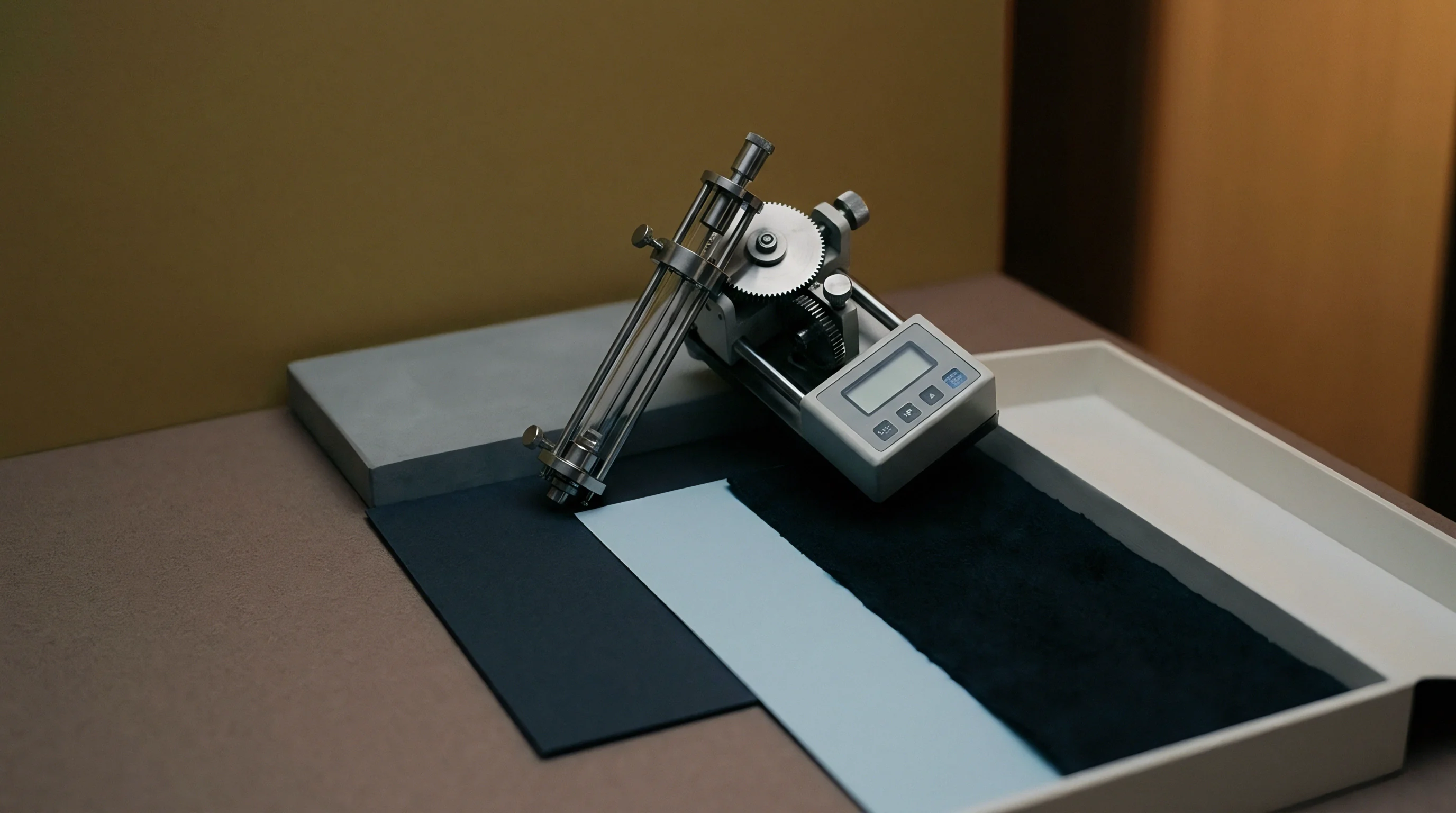
Delivered reels of folding boxboard and solid bleached sulphate frequently arrive at converting facilities with moisture readings that disagree with the mill certificate. Plant receiving teams slide handheld capacitance probes beneath the outer polyethylene wrap, find readings of 9.2 percent on stock certified at 7.0 percent, and immediately quarantine the shipment. Dielectric meters measure electrical impedance across the surface plies rather than absolute water mass.
High-density outer coatings containing calcium carbonate or clay alter dielectric permittivity, skewing surface sensor calibrations by up to two full percentage points. Mills balance water addition against calender load to hit target stiffness, leaving moisture stratified across the z-direction of multi-ply virgin cartonboard. Surface readings reflect warehouse ambient humidity rather than core equilibrium.
Paperboard holds water. The physical distribution of that water governs converting stability, die-cutting yield, and creasing stiffness. When carton stock enters a pressroom at an unverified moisture state, sheets warp toward the wire side or blister under drying lamps.
The commercial stakes require an immediate, legally defensible arbiter between the buyer and the paper mill. Handheld instruments fail to satisfy standard commercial sales conditions for pulp and paper transactions. Rapid meters serve sorting functions, yet dispute resolution rests entirely on oven dehydration under standardized thermal cycles.
A handheld impedance meter calibrated for uncoated kraft linerboard overstates the moisture content of double-coated folding boxboard by 1.8 percent at 23 degrees Celsius.
Mill certificates report moisture determined at the reel drum immediately prior to slitting and wrapping. That number reflects a hot, moving web sampled across milliseconds by online beta-gauge or infrared attenuation sensors. Goods-in inspection at the destination plant occurs days or weeks later, following transit across variable climatic zones.
Marine containers and road trailers experience diurnal temperature swings that drive moisture migration from the outer wraps toward the skids. Plant managers confronting curled board frequently misdiagnose transit humidity uptake as mill manufacturing variance. Physical lab verification isolates the true dry matter purchased from absorbed transit humidity.
| Measurement Technology | Penetration Depth | Calibration Dependence | Observed Error Spread | Arbitration Status |
|---|---|---|---|---|
| Handheld Radio-Frequency Impedance | 0.5 to 3.0 millimetres | Board density, coating formulation, salt content | Plus or minus 1.6 percent | Rejected in commercial claims |
| Contact Pin Electrical Resistance | 1.0 to 4.0 millimetres | Furnish recipe, conductivity, temperature | Plus or minus 1.2 percent | Rejected in commercial claims |
| Near-Infrared Spectrometry | 0.05 to 0.15 millimetres | Surface roughness, pigment load, top-ply dye | Plus or minus 0.8 percent | Advisory verification only |
| ISO 287 Oven Gravimetric Method | Full caliper thickness | Balance calibration and tare integrity | Plus or minus 0.1 percent | Normative contract baseline |
Reconciling these conflicting figures requires isolating mechanical measurement errors from real material deviations. Surface-measuring probes respond to local surface conditions, whereas billing contracts define paper mass across the total web weight delivered to the factory floor. The laboratory must determine the true mass ratio of water to dry vegetable fibre.
Commercial terms settle payment on net dry fibre mass adjusted for agreed standard moisture content. Sourcing professionals facing dimensional rejections on high-speed folder-gluers turn away from rapid shop-floor gauges and execute gravimetric verification.
Mills often dismiss receiving dock variances by asserting that transit packaging suffered micro-punctures during container shunting.

Oven
Thermal drying under ISO 287 establishes the absolute water content of paper and board through mass loss at controlled dehydration temperatures. The standard applies to all production lots of paper and paperboard, irrespective of furnish composition, virgin pulp content, or chemical coatings. The procedure demands strict containment of samples from the moment of reel extraction through final weighing.
Technicians strip away the outer three to five protective wraps of a reel or discard the top ten sheets of a pallet before harvesting test specimens. Failure to strip these sacrificial boundary layers biases the gravimetric calculation toward ambient dock conditions.
The scale registers mass. Samples extracted from the reel core or pallet centre must weigh at least 50 grams across combined pieces to satisfy standard repeatability thresholds. Technicians place these specimens into airtight containers immediately upon cutting, sealing the lids before leaving the unloading bay.
Exposure to ambient air during transport to the balance transfers moisture within seconds. Cellulose fibres exchange water vapour rapidly when exposed to non-conditioned atmospheres, distorting original dispatch values. Fast-action shears produce clean specimen strips without frayed edges that artificially accelerate vapour exchange.
Specimens inside sealed containers are weighed on an analytical balance reading to 0.001 grams to record initial gross mass. Technicians determine container tare weights prior to specimen collection, holding containers in a desiccator between cycles. The drying chamber operates continuously at 105 degrees Celsius, maintaining ambient air circulation across perforated shelves.
Chemical additives such as volatile sizing agents or plasticised coatings can decompose at elevated temperatures. ISO 287 standardises 105 degrees Celsius because cellulose fibre retains its structural carbon skeleton while releasing chemically unbound and capillary-held water molecules.
- Airtight weighing vessels prevent specimen exposure to ambient humidity during transfer between the drying chamber and the analytical balance. Glass weighing bottles with ground joints or metal cans with tight friction lids prevent moisture reabsorption.
- Calibrated analytical balances provide resolution to 0.001 grams, ensuring that tiny mass changes across dry specimens register accurately. Balance calibration certificates require annual re-certification against national reference mass standards.
- Thermostatically regulated ovens hold the drying chamber interior between 103 and 107 degrees Celsius through forced convection. Uniform heating prevents localised thermal degradation of coating binders.
- Desiccator storage chambers cool dried vessels down to room temperature without introducing atmospheric humidity. Activated silica gel or anhydrous calcium chloride within the base maintains an internal relative humidity below two percent.
Oven temperature stays at 105 C. The initial drying cycle runs for a minimum of three hours for paperboard grammages exceeding 200 grams per square metre. Multi-ply cartonboards containing mechanical groundwood pulp plies sandwiched between chemical pulp liners release water at slower rates than lightweight papers. Once the initial cycle concludes, technicians seal the hot container, transfer it to the desiccator, and let it cool for 45 minutes.
Rapid weighing follows cooling, recording dry vessel mass to 0.001 grams. The vessel returns to the oven for an additional hour to verify mass constancy.
ISO 287 clause 8.2 defines constant mass as agreement within 0.1 percent of the initial specimen weight between successive drying and weighing intervals.
Calculations derive moisture content as a percentage of mass at the time of sampling. The formula subtracts the dried specimen mass from the initial moist specimen mass, divides the difference by the initial moist specimen mass, and multiplies the quotient by one hundred. Reporting requirements include the sampling location across the reel width, web direction, number of replicates, and the exact time elapsed between arrival and container sealing.
An audited gravimetric report provides undeniable evidence in commercial dispute tribunals.
| Process Stage | Duration | Temperature Setting | Recorded Mass | Compliance Status |
|---|---|---|---|---|
| Clean Tare Vessel | Baseline | 23 degrees Celsius | 142.318 grams | Tare recorded |
| Vessel With Fresh Specimen | Immediate | 23 degrees Celsius | 194.520 grams | Initial moist mass recorded |
| First Oven Drying Cycle | 180 minutes | 105 degrees Celsius | 190.710 grams | Intermediate dry mass |
| Second Oven Drying Cycle | 60 minutes | 105 degrees Celsius | 190.672 grams | Mass change exceeds limit |
| Third Oven Drying Cycle | 60 minutes | 105 degrees Celsius | 190.668 grams | Constant mass established |
ISO 287 clause 9 requires buyers to present initial moist mass and final constant dry mass figures alongside instrument serial numbers when filing discrepancy notices.

Sorption
Paperboard behaves as a porous, hygroscopic network of cellulose, hemicellulose, and lignin. Wood fibres expand and contract in response to relative humidity changes in the surrounding environment. Water molecules bind to accessible hydroxyl groups within amorphous regions of the cellulose polymer chain.
As moisture enters the sheet, hydrogen bonds between adjacent fibres break and reform at wider separations, driving dimensional expansion. The magnitude of hygroexpansion runs roughly three to five times higher in the cross direction than in the machine direction, reflecting preferential fibre alignment on the paper machine wire.
Fiber walls collapse under heat. During industrial drying at the mill, rapid moisture removal locks internal stresses into the board matrix. When paperboard is subsequently exposed to elevated humidity, these frozen strains relax, producing curl, edge wave, and twist.
Multi-ply folding boxboards exhibit complex sorption behaviour because the furnish differs across plies. Chemical pulp outer plies exhibit different sorption isotherms than bulky mechanical groundwood inner plies. The resulting moisture gradient across the caliper creates an internal shear couple that forces sheets into curl toward the drier surface.

Where Does Bound Water Reside inside Plies?
Moisture inside paperboard distributes between three distinct states: constitutional water within the crystalline cellulose lattice, bound water held by hydrogen bonding within cell walls, and capillary water sitting inside pore spaces between fibres. Crystalline cellulose holds minimal water, whereas hemicellulose acts as a sponge, absorbing up to thirty percent of its dry mass in water vapour. A typical solid bleached sulphate board manufactured from virgin chemical pulp contains roughly 80 percent cellulose, 18 percent hemicellulose, and minor residual lignin.
Variations in the refining energy applied to chemical pulp increase internal fibrillation, exposing more hydroxyl sites and raising the board equilibrium moisture content for any given relative humidity.
Dry air prevents water absorption. The path of moisture uptake displays hysteresis: paperboard conditioned from a dry state to 50 percent relative humidity achieves a lower equilibrium moisture content than identical board conditioned down from a saturated state. At 23 degrees Celsius and 50 percent relative humidity, paperboard sorption hysteresis creates an equilibrium spread of roughly 0.8 to 1.4 percent moisture content between adsorption and desorption limbs.
In maritime architecture, timber framework exhibits identical sorption hysteresis curves, swelling unpredictably when sea fog penetrates structural bulkheads before returning to baseline dry density. Carton stock locked inside unheated storage facilities experiences seasonal sorption cycling that permanently alters board stiffness.
Paperboard equilibrium moisture content follows a sigmoidal sorption isotherm where cross-directional hygroexpansion accelerates sharply above sixty percent relative humidity.
Coated cartonboards respond slowly to ambient humidity variations due to mineral pigment barriers. A double-coated top surface comprising styrene-butadiene latex and calcium carbonate limits vapour transmission into the underlying ply. Water vapour enters through exposed sheet edges or uncoated reverse sides instead.
Edge absorption creates wavy edges on stacked pallets, as the perimeter plies swell while the core of the pallet remains dry and dimensionally stable. When converted on offset presses, wavy-edged board wrinkles through printing nips and misregisters critical color stations.
- Reel core edge swelling occurs when slit reels stand on warehouse concrete without vapor-proof wrapping. Exposed edges take on ambient moisture within 48 hours, creating ridges that prevent flat unwind tension.
- Pallet stack edge waving results from moisture uptake along sheet edges while pallet centres remain at dispatch moisture. Sheets enter press grippers with uneven lead edges, causing sheet jams and registration drift.
- Score-line fracturing develops when paperboard drops below 5.5 percent moisture content prior to creasing. Dry outer plies lack the plastic elongation required to fold cleanly without cracking along the score.
Moisture shifts dimensional register. Printers observing misregistration often blame cylinder pressure or ink tack rather than sheet dimensional change. A moisture increase of 1.5 percent expands cross-direction sheet dimensions on large-format presses by more than one millimetre across a 1400-millimetre web width.
That shift exceeds standard packaging registration tolerances for pharma cartons. Laboratory testing under ISO 287 establishes whether the delivered substrate arrived out of specification or picked up excess water inside the converter facility.
The boundary between reversible moisture absorption and permanent fibre deformation remains a subject of ongoing study among board manufacturers.

Deduction
Commercial transactions for paper and paperboard quantify financial value through delivered tonnage. Invoiced weights reflect gross dispatch scale records, combining dry fibre mass with water mass. Standard mill contracts specify a nominal commercial moisture content, typically 7.0 or 8.0 percent, with an allowable tolerance band of plus or minus 1.0 percent.
When laboratory tests reveal an actual landed moisture content of 10.0 percent on an agreed 7.0 percent baseline, the buyer pays for two percent excess water delivered in place of usable vegetable fibre. On large-volume purchasing contracts, this discrepancy represents substantial unearned capital transfer to the mill.
Mills invoice gross dispatch weight. Consider an actual transaction involving a 50-tonne shipment of 350 g/m² folding boxboard invoiced at 1,200 dollars per tonne. The mill certificate declares a moisture content of 7.2 percent, sitting safely within the contract tolerance band of 6.5 to 8.5 percent.
Goods-in ISO 287 gravimetric testing across ten representative reels reveals a true mean landed moisture content of 9.8 percent. The dry fibre mass delivered equals 45.10 tonnes, calculated by multiplying 50 tonnes by 90.2 percent dry matter. Had this fibre arrived at the agreed target moisture of 7.0 percent, the correct billable mass would equal 48.49 tonnes, calculated by dividing 45.10 tonnes of dry fibre by 93.0 percent target dry matter.
Water evaporates during transit. The difference between the invoiced mass of 50.00 tonnes and the adjusted contractual mass of 48.49 tonnes equals 1.51 tonnes of invoiced water mass. At 1,200 dollars per tonne, the direct cash deduction on material equals 1,812 dollars.
Secondary costs compound this direct material penalty. Board delivered at 9.8 percent moisture reduces converting speeds on die-cutting platens, increases make-ready waste by an estimated three percent, and risks mould formation inside pallet stacks during downstream sea freight. Contract claims incorporate both the direct fibre adjustment and documented converting yield losses.
| Commercial Parameter | Contract Specification | Landed Laboratory Audit | Variance Unit | Economic Impact |
|---|---|---|---|---|
| Gross Lot Weight | 50.00 tonnes | 50.00 tonnes | 0.00 tonnes | Baseline billable weight |
| Specimen Moisture Ratio | 7.00 percent baseline | 9.80 percent ISO 287 | Plus 2.80 percent | Excess water mass |
| Absolute Bone-Dry Fibre | 46.50 tonnes target | 45.10 tonnes actual | Minus 1.40 tonnes | Fibre shortfall |
| Reconciled Billable Mass | 50.00 tonnes | 48.49 tonnes | Minus 1.51 tonnes | Contract adjustment |
| Landed Value at 1,200 USD | 60,000 USD | 58,188 USD | Minus 1,812 USD | Direct material credit note |
Tare weights change with humidity. Discrepancies also arise from wood pallet moisture absorption. Timber pallets stored in open yards absorb up to five kilograms of water each, distorting gross weighbridge readings at receiving docks.
Independent gravimetric testing on substrate samples decouples packaging tare variations from the substrate itself. Standard sales terms across the European paper trade explicitly define ISO 287 as the sole legal basis for adjusting invoice weight claims. When formal arbitration occurs, tribunal surveyors discard moisture readings taken with electrical probes and demand certified laboratory oven drying logs.
The contract fixes baseline tolerances. Packaging buyers protect material budgets by embedding gravimetric moisture audit rights into long-term master supply agreements. These clauses specify sample collection windows within 72 hours of arrival, define reference test laboratories, and establish automatic debit note mechanisms when landed moisture exceeds the upper contractual control limit.
Rigorous testing replaces commercial friction with incontrovertible mass balances, ensuring that converters receive the physical fibre they purchased.
Moisture testing protects converting runnability before paperboard ever meets a printing cylinder.