Paperboard Chemical Migration Testing Standards and Simulant Selections
Paperboard chemical migration testing requires matching food simulants to substrate porosity, using Tenax for dry media and certified barrier qualification.


Extract
Testing liquid contact on cellulosic packaging requires distinguishing cold water immersion from hot water leaching. Because paperboard has a porous, hydrophilic fiber network, it responds to extraction liquids quite differently than dense polymeric films do. When evaluating virgin or recycled pulp for food contact, laboratories separate water-soluble compounds from lipophilic species using standardized aqueous extractions.
Standards EN 645 and EN 647 frame the procedures for cold and hot water extracts of paper and board, forming the baseline for measuring water-borne migrants.
Cold water extraction under EN 645 conditions five grams of dry board in one hundred milliliters of deionized water at lab temperatures (twenty to twenty-five degrees Celsius) over twenty-four hours. This isolates highly soluble inorganic salts, trace wet-end monomers, residual formaldehyde, and free low-molecular-weight organic acids. Hot water extraction under EN 647 speeds mass transfer by heating the substrate in deionized water at eighty degrees Celsius for two hours.
This hot leach simulates thermal exposures like microwave reheating, baking trays, and hot-fill beverage cartons ~ solubilizing starch binder fractions, breaking down temporary wet-strength additives, and releasing volatile organic acids that remain bound during cold immersion.

Aqueous Leaching Methods for Uncoated Cellulosic Structures
Evaluating raw paperboard for water-soluble compounds involves immersing samples in deionized water at fixed temperatures. Analyzing the resulting extract by spectrophotometry and chromatography highlights soluble heavy metals, pentachlorophenol, glyoxal, and fluorinated surfactants. Weighing the dried extract residue yields total aqueous extractable matter in milligrams per square decimeter of board surface.
National guidelines set caps on cold water extractable organic carbon to prevent taste or odor off-notes in neutral liquids.
Direct solvent extractions using organic solvents like dichloromethane, acetone, or hexane serve a different purpose than aqueous leaching. Total extraction dissolves binder materials, synthetic sizing, and internal coatings to provide a complete chemical inventory of the sheet’s volatile and semi-volatile compounds. While this identifies potential migrants, it overstates actual transfer during storage because solvents swell cellulose fibers, opening pores and dissolving non-polar substances that would otherwise remain trapped within the board matrix.
Extraction under aggressive organic solvents measures the internal chemical inventory of the fiber matrix rather than the mass transfer that occurs into food during commercial storage.
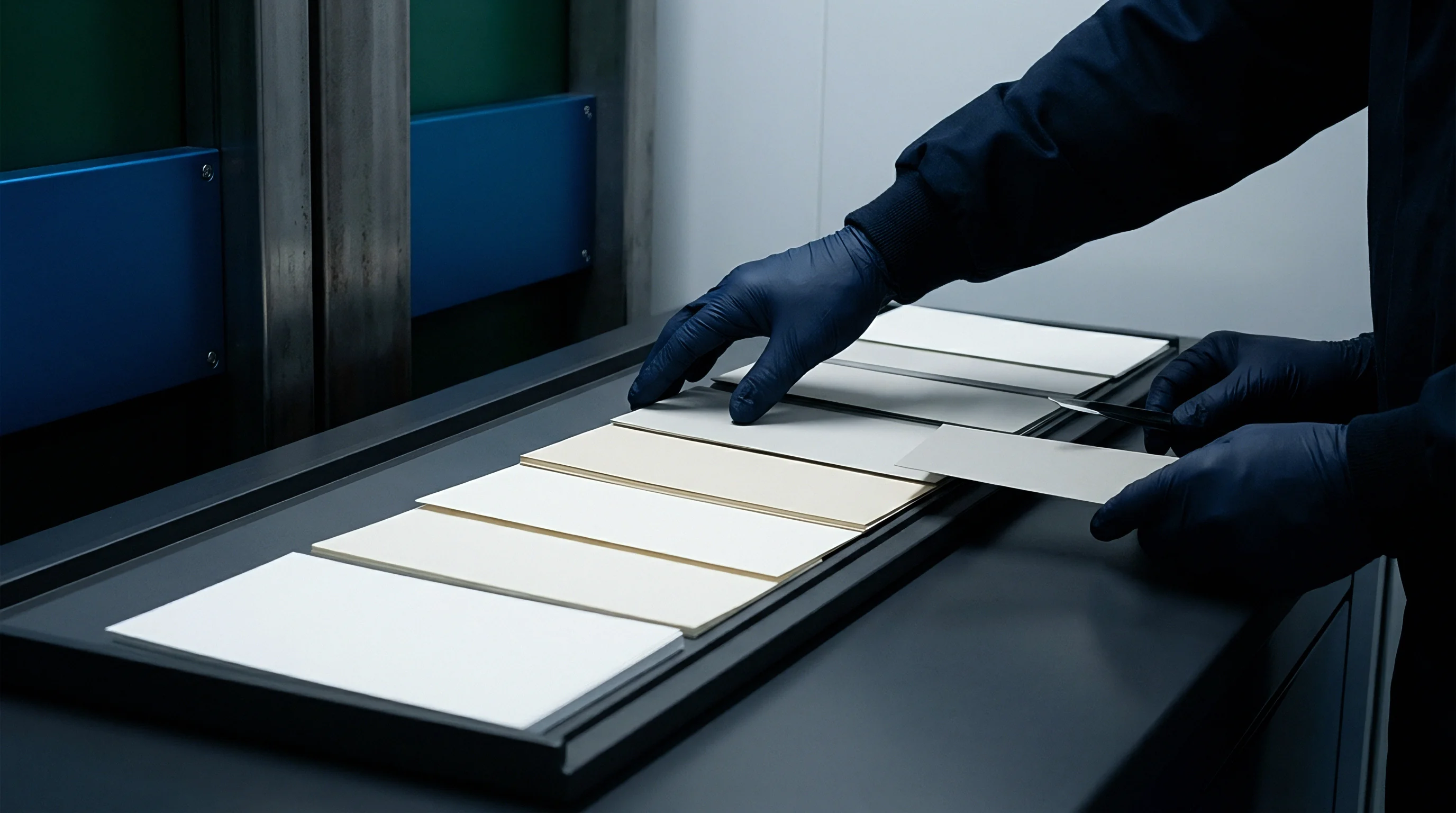
Overall Migration Thresholds versus Mass Transfer Limits
Regulatory compliance for food contact materials relies on quantitative caps on the total mass of non-volatile substances released. European packaging rules set an Overall Migration Limit of sixty milligrams per kilogram of foodstuff, or ten milligrams per square decimeter of packaging surface area. Applying this limit to cellulosic materials requires care in the lab: paper fibers shed micro-fragments during liquid immersion, causing artificial weight gains in residue dishes that mask true chemical migration.
To avoid gravimetric errors from fiber shedding, testing labs use modified extractions that filter out particulate fiber or replace liquid simulants with solid synthetic adsorbents. Specific Migration Limits restrict individual substances based on tolerable daily intake values set by safety authorities. In paperboard, SML targets include heavy metals, primary aromatic amines, photoinitiator residues, phthalates, and specific mineral oil hydrocarbon fractions.
Checking compliance against an SML requires selective chromatographic separation with tandem mass spectrometry capable of measuring down to microgram-per-kilogram levels.
A sample can easily fail on paper while testing proves otherwise, yet the regulatory limit remains absolute.
Failing to distinguish intrinsic raw material solubility from actual mass transfer leads labs to reject compliant virgin boards while inadvertently passing coated structures that release volatiles into dry food.

Substrate
Paperboard properties vary widely with the fiber source, pulping chemistry, and converting processes used. Solid Bleached Sulfate board made from virgin chemical pulp offers a clean, uniform web with very low background contamination. Folding Boxboard, which sandwiches mechanical pulp between chemical pulp liners, retains natural wood resins, fatty acids, and resin acids like abietic acid.
Meanwhile, White Lined Chipboard made from post-consumer recycled paper carries a complex chemical mix from old newspapers, magazines, inserts, and packaging adhesives.
Recycled furnishes introduce distinct migration risks in food contact uses. Deinking removes visible pigments but leaves behind ink oils, photoinitiators, plasticizers, and processing aids embedded in the recycled fibers. Mineral Oil Hydrocarbon fractions are the main compliance headache for recycled White Lined Chipboard.
These divide into Mineral Oil Saturated Hydrocarbons, consisting of linear, branched, and cyclic alkanes, and Mineral Oil Aromatic Hydrocarbons, which contain highly alkylated aromatic rings.
Recycled Fiber Contaminants and Mineral Oil Hydrocarbon Fractions
Recovered paper carries residual ink, adhesive, and processing chemistries from earlier conversion cycles. MOSH fractions accumulate in human body fat and organs, whereas certain MOAH fractions with three to seven aromatic rings are potential carcinogens and mutagens. Routine testing targets MOSH and MOAH across carbon chain lengths from C10 to C50.
The lighter fractions between C10 and C24 are particularly volatile, migrating through the vapor phase across air gaps and thin plastic liners into dry goods like cereal, rice, and bakery items.
Photoinitiators from UV-cured offset and flexo inks form another key group of migrants in recycled board. Benzophenone, 4-methylbenzophenone, 2-isopropylthioxanthone, and ethyl 4-dimethylaminobenzoate migrate easily thanks to their moderate molecular weight and lipophilic nature. Plasticizers like diisobutyl phthalate and dibutyl phthalate, long used in adhesives and inks, persist in recycled pulp.
Bisphenol A and Bisphenol S also enter the recycling stream when thermal receipt paper gets mixed into post-consumer waste collection.
Migration variance across production lots from the same mill line reaches 1.4 milligrams per square decimeter.
| Paperboard Grade | Fiber Origin | Recycled Content % | Primary Contaminant Profile | Dominant Migration Route |
|---|---|---|---|---|
| Solid Bleached Sulfate (SBS) | Virgin Chemical Pulp | 0% | Trace wood resins, fatty acids, AKD/ASA sizing residues | Direct liquid contact extraction |
| Folding Boxboard (FBB) | Virgin Chemical & Mechanical | 0% | Natural resin acids, aldehyde degradation products | Direct liquid and gas-phase contact |
| White Lined Chipboard (WLC) | Post-Consumer Recycled Stock | 85% – 100% | MOSH/MOAH, photoinitiators, DIPN, phthalates, bisphenols | Vapor phase migration and direct transfer |
| Unbleached Kraft Board (CUK) | Virgin Unbleached Kraft | 0% – 15% | Lignin breakdown products, alkyl ketene dimers | Direct liquid immersion leaching |
Functional Additives and Barrier Coating Interfaces
Wet-end sizing reagents modify the surface energy of paperboard to resist liquid penetration. Alkyl Ketene Dimer and Alkenyl Succinic Anhydride react with hydroxyl groups on cellulose fibers to create hydrophobic surfaces. Synthetic wet-strength resins, mainly polyamidoamine-epichlorohydrin polymers, crosslink the fiber network so the board holds together when wet.
However, these wet-strength agents can release trace 1,3-dichloro-2-propanol and 3-monochloropropane-1,2-diol into aqueous food simulants, requiring monitoring under European guidelines.
Fluorinated surfactants, specifically per- and polyfluoroalkyl substances, were historically applied to paperboard for grease and water resistance in fast-food containers and microwave popcorn bags. Regulations now ban long-chain and short-chain PFAS owing to persistence, bioaccumulation, and toxicity concerns. Compliance screening for greaseproof board involves measuring Total Organic Fluorine alongside targeted liquid chromatography mass spectrometry for perfluorooctanoic acid and perfluorooctane sulfonate.
- MOSH Gas Phase Breakthrough Aliphatic hydrocarbons between C10 and C24 vaporize at room temperature, moving through paper pores and air gaps to contaminate dry foods.
- Photoinitiator Off-Odor Transfer Unreacted UV ink curing agents migrate through board layers, causing distinct off-odors and exceeding specific migration limits in fatty foods.
- PFAS Surfactant Leaching Fluorinated grease-proofing chemicals dissolve into hot lipophilic food simulants during high-temperature processing.
- PAAE Hydrolysis Release Epichlorohydrin-based wet-strength resins slowly hydrolyze in water, releasing chloropropanols into aqueous extracts above European limits.
- DIPN Solvent Carryover Diisopropylnaphthalenes from carbonless copy paper in recycled pulp can migrate through plastic barriers into dry goods.
Using recycled board always brings inherent migration risks.
Trace mineral oil hydrocarbons found in finished cartons may stem from background warehouse air during storage rather than the recovered pulp itself.
Solvent
Testing porous paperboard requires simulants that match the polar and non-polar properties of actual food. Regulation EU 10/2011 Annex III, adapted for paperboard under Council of Europe guidelines and BfR Recommendation XXXVI, assigns specific liquids to food categories: Simulant A (10% ethanol v/v) and Simulant B (3% acetic acid w/v) for aqueous foods; Simulant C (20% ethanol) and Simulant D1 (50% ethanol) for alcoholic and dairy products; and Simulant D2 (vegetable or olive oil) or solid sorbents for fatty foods.
Direct liquid contact testing on uncoated paperboard with olive oil creates major analytical headaches. Vegetable oil quickly wicks into the porous matrix, swelling the fibers and adding mass that completely masks substance migration. Gravimetric measurement of overall migration becomes impossible because the absorbed oil cannot be fully extracted back out.
To work around this, standards specify substitute simulants for testing lipophilic migration in cellulosic packaging.
Modified Polyphenylene Oxide for Dry Food Applications
Solid porous sorbents trap volatile and semi-volatile migrants from paperboard without altering the physical fiber structure. Poly(2,6-diphenyl-p-phenylene oxide), known commercially as Tenax or MPPO, is the official simulant (Simulant E) for dry food contact under EN 14338. Tenax offers thermal stability up to three hundred fifty degrees Celsius and a high affinity for lipophilic organic molecules.
The powder is applied directly to the food-contact face of the board at four grams per square decimeter.
Migration testing with Tenax uses specific time and temperature regimes to mimic storage conditions: ten days at forty degrees Celsius for extended room-temperature shelf life, three days at sixty degrees Celsius for accelerated testing, and two hours at one hundred seventy-five degrees Celsius for oven baking. After exposure, the Tenax is removed from the board surface and extracted with diethyl ether or n-hexane. Gas chromatography-mass spectrometry then analyzes the extract to quantify MOSH, MOAH, photoinitiators, and plasticizers.
Applying solid synthetic adsorbents to paperboard packaging surfaces isolates gas-phase chemical transport without introducing liquid absorption artifacts into the test result.

Alternative Volatile Liquids for Fatty Contact Evaluation
Because standard vegetable oils penetrate untreated cellulose and distort gravimetric weights, substitute fatty food simulants use volatile organic liquids: ninety-five percent ethanol (v/v) and pure isooctane (2,2,4-trimethylpentane). Isooctane models non-polar lipophilic contact, while ninety-five percent ethanol models polar fatty food contact. Exposure times and temperatures for these substitute liquids are shorter and lower than for olive oil to avoid degrading or dissolving polymer coatings on the board.
Exposing samples to isooctane for two days at twenty degrees Celsius models ten days of real-world contact with fatty foods at forty degrees Celsius. Exposure to ninety-five percent ethanol for ten days at forty degrees Celsius accelerates extraction for high-fat dairy and bakery products. Labs use single-sided cells that clamp the specimen between metal plates so only the food-contact surface touches the simulant, preventing liquid from soaking in through cut edges or the back of the board.
For dry foods, Tenax remains the required simulant.
| Food Category | Designated Standard Simulant | Substitute Test Media | Standard Exposure Profile | Primary Target Analytical Species |
|---|---|---|---|---|
| Dry Granular Foods (Cereal, Rice) | Simulant E (Tenax / MPPO) | None (Solid sorbent mandatory) | 10 days at 40°C / 3 days at 60°C | MOSH, MOAH, photoinitiators, DIPN |
| Aqueous High-Acid Foods (Juices) | Simulant B (3% Acetic Acid) | None | 10 days at 40°C / 2 hours at 70°C | Heavy metals (Pb, Cd), PAAE products |
| Alcoholic Beverages & Milk | Simulant C / D1 (20% / 50% Ethanol) | None | 10 days at 40°C | Formaldehyde, glyoxal, soluble monomers |
| Fatty & Moist Baked Goods | Simulant D2 (Rectified Olive Oil) | 95% Ethanol & Isooctane | 2 days at 20°C (Isooctane substitute) | Phthalates, bisphenols, ink migrants |
- Cut paperboard samples into circular discs measuring precisely 1.13 decimeters in diameter to fit the single-sided cells.
- Condition the cut specimens in a climate chamber at twenty-three degrees Celsius and fifty percent relative humidity for forty-eight hours.
- Mount the conditioned sample in the stainless steel migration cell with its food-contact surface facing inward.
- Distribute four grams of pre-extracted, high-purity Tenax powder evenly across the exposed board surface area.
- Seal the cell assembly with an inert fluoropolymer gasket and place it in an incubator set to sixty degrees Celsius for seventy-two hours.
- Remove the cell, pour the exposed Tenax powder into a glass extraction thimble, and elute bound organics using fifty milliliters of diethyl ether.
- Concentrate the solvent extract under a gentle stream of nitrogen gas down to one milliliter for GC-MS analysis.
When evaluating dry food contact on uncoated paperboard, choosing solid sorbents over liquid media prevents matrix swelling and gives reproducible migration figures.
Screen
Determining chemical migrants relies on high-resolution gas and liquid chromatography coupled with mass spectrometry. Standard EN 1186 covers general rules for overall migration testing, while EN 14338 governs the preparation of paperboard exposed to solid synthetic sorbents. German BfR Recommendation XXXVI sets strict limits for specific substances extracted from paper and board meant for food contact.
Qualifying packaging requires sequential screening to systematically isolate, identify, and quantify semi-volatiles, heavy metals, and non-target volatile residues.
Gas Chromatography with Flame Ionization Detection (GC-FID) is the main workhorse for quantifying MOSH and MOAH in paperboard extracts. Online coupled LC-GC-FID achieves precise pre-separation of saturated hydrocarbons from aromatic ones: the LC stage uses a silver-nitrate-impregnated silica column to retain aromatic compounds while aliphatic MOSH fractions pass through to the GC. Once MOSH elutes, the LC column switches valves to flush the MOAH fraction into a second GC channel.
Gas Chromatography Methods for Hydrocarbon Fractions
Separating saturated mineral oil structures from aromatic rings requires online LC pre-separation before flame ionization detection. Interference from natural plant waxes, native n-alkanes (C21 to C35), and synthetic polyolefin oligomeric saturated hydrocarbons (POSH) can complicate MOSH integration. Analysts use enzymatic or chemical cleanup steps ~ such as epoxidation with m-chloroperbenzoic acid ~ to remove natural alkenes like squalene before finalizing the MOAH profile.
Integrating the characteristic “hump” of unresolved complex mixtures gives total MOSH and MOAH values in milligrams per kilogram of board.
Targeted screening for volatile organic compounds and ink photoinitiators uses GC-MS/MS in Selective Ion Monitoring mode, detecting trace benzophenone, ITX, and 4-methylbenzophenone down to 0.01 milligrams per kilogram. Electron ionization yields characteristic fragment patterns that are matched against reference spectral libraries. Internal standards, like deuterated benzophenone-d10, account for extraction losses and volume variations during sample prep.
Instrumental quantification of mineral oil fractions requires online liquid chromatography pre-separation to prevent natural plant waxes from distorting MOAH integration results.

Why Do Non Intentionally Added Substances Fail Standard Screenings?
Thermal degradation during converting produces unpredictable reaction products from residual sizing agents and adhesives. Non-Intentionally Added Substances (NIAS) include breakdown products of antioxidants, reaction products between ink solvents and paper additives, oligomers from binders, and impurities in recycled raw materials. Identifying NIAS is difficult because many of these compounds lack commercial records or certified reference standards.
High-Resolution Accurate Mass Spectrometry, using LC-QTOF-MS or Orbitrap systems, provides the non-target screening needed to identify unknown NIAS structures. Electrospray ionization in positive and negative modes generates intact molecular ions with mass accuracy under one part per million. Software then calculates elemental formulas from exact masses and isotopic fine structures, while spectral matching against databases and fragmentation trees helps analysts assign structural confidence to non-target migrants.
Without proper reference standards, labs are often forced to invalidate screening reports.
- Substrate Composition Disclosure Documentation detailing raw pulp sources, recycled fiber percentages, and chemical additives used during papermaking.
- Simulant Test Protocol Detailed records specifying the food simulants used, exposure times and temperatures, surface-to-volume ratio, and cell design.
- Chromatographic Screening Records Raw LC-GC-FID and GC-MS data output including retention times, mass spectra, calibration curves, and internal standard recoveries.
- Quantified SML and OML Values Numerical results for overall and specific migration limits compared directly against regulatory thresholds.
- Limit of Detection Proof Instrument sensitivity data proving reporting capabilities down to 0.01 milligrams per kilogram for targeted substances.
- Laboratory Accreditation Certificate Proof of ISO/IEC 17025 accreditation covering the specific migration standards used during testing.
The industry continues to debate whether ultra-short chain MOSH fractions below C16 warrant an independent SML, given how rapidly they volatilize into dry foods during warehouse storage.

Foil
Adding pinhole-free metal layers or dense polymer films to paperboard creates a functional barrier that blocks chemical migration. Article 13 of Regulation EU 10/2011 defines a functional barrier as any layer between the food contact face and underlying non-cleared packaging materials that reduces migration to non-detectable levels. Under European guidance, a non-cleared component behind a qualified barrier can be present provided specific migration stays below 0.01 milligrams per kilogram (10 parts per billion) and the compounds are non-carcinogenic, non-mutagenic, and non-reprotoxic.
Aluminum foil laminates remain the benchmark absolute barrier in paperboard packaging. Foil thicker than nine micrometers contains zero continuous pinholes, preventing any transport of gases, water vapor, volatile organics, and low-molecular-weight mineral oils. Thinner foils (six to seven micrometers) show low pinhole densities caused by stretching during rolling.
Because microscopic pinholes allow localized mass transfer, barrier efficiency must be tested on the finished laminated structure.
Aluminum Laminates and Metallized Barrier Layers
Continuous metal structures offer total resistance to gas permeation and low-molecular-weight chemicals. Metallized Polyethylene Terephthalate (MPET) films, made by vapor-depositing aluminum onto thin PET substrate, provide high barrier performance at a lighter weight. These vapor-deposited aluminum layers measure thirty to fifty nanometers thick.
While metallized films cut MOSH and MOAH migration by over ninety-nine percent, surface micro-defects and flex cracking keep them from acting as absolute barriers over multi-year storage.
Extruded polymer coatings ~ including ethylene vinyl alcohol (EVOH), polyamorphous polyvinyl alcohol, and specialized polyamides ~ serve as high-performance organic barriers. EVOH shows very low permeability to oxygen and non-polar hydrocarbons thanks to strong inter-chain hydrogen bonding. However, EVOH barrier efficiency drops sharply at high relative humidity, as absorbed water plasticizes the polymer matrix and increases free volume between chains.
Designers counter this by sandwiching EVOH between hydrophobic polyolefin layers like polyethylene or polypropylene.
Once barrier integrity fails, pinhole density dictates how fast breakthrough occurs.
| Barrier Layer Construction | Thickness / Weight | Pinhole Density (Voids/m²) | MOSH/MOAH Attenuation % | Barrier Qualification Standard |
|---|---|---|---|---|
| Aluminum Foil Laminate | > 9.0 µm | 0 | 100.0% (Absolute Barrier) | EN 13130 / DIN 53122 |
| Thin Aluminum Foil Laminate | 6.3 µm | 5 – 15 | 99.5% – 99.9% | EN 13130 / ASTM F1249 |
| Metallized PET (MPET) Film | 12 µm film / 40 nm Al | < 50 (Micro-defects) | 98.5% – 99.5% | DIN 53380 / ISO 15105 |
| Co-extruded PE/EVOH/PE Coating | 15 µm total (3 µm EVOH) | 0 (Polymeric matrix) | 99.0% (at < 50% RH) | EN 13130 / ASTM F1927 |
| Aqueous Dispersion Coating | 8 – 12 g/m² dry weight | Variable (Coating pinholes) | 85.0% – 95.0% | EN 14338 / Tenax Test |
Polymeric Coatings and Dispersion Barrier Qualification
Aqueous polymer suspensions applied by blade or curtain coating form protective films over raw paperboard fibers. These dispersion coatings use acrylic copolymers, styrene-butadiene latexes, or bio-polyesters like polylactic acid (PLA) and polyhydroxyalkanoates (PHA). Qualifying them as functional barriers against mineral oils requires migration testing over extended storage periods using Tenax cells under EN 14338 conditions.
Converting operations like die-cutting, scoring, creasing, and folding apply heavy mechanical stress along box edges. Bending folding boxboard ninety degrees stretches outer coating layers, causing micro-fissures and pinholes. Migrants then bypass the damaged barrier through edge-wicking and cracks.
This is why barrier efficiency testing must be performed on folded, creased finished packages rather than flat, unformed sheets.
- Pinhole Frequency Threshold Setting clear void limits per square meter to keep overall migration below the 0.01 milligram per kilogram functional barrier threshold.
- Relative Humidity Sensitivity Assessing barrier degradation across humidity levels, particularly for polar polymers like EVOH and starch coatings.
- Crease Flex Crack Resistance Evaluating the mechanical durability of thin metallic and polymeric coatings along score lines after high-speed folding.
- Solvent Solubility Parameter Matching Verifying that the chosen polymer matrix resists swelling when contacting lipophilic food oils.
- Thermal Resistance Capabilities Confirming coating integrity during heat sealing, microwave heating, and hot-fill packing operations.
Metallic foils eliminate volatile hydrocarbon migration through paperboard as long as the layer is thick enough to prevent continuous pinholes.
A contract clause mandating compliance with Article 13 of EU Regulation 10/2011 shifts legal responsibility for non-listed migrant breakthrough to the laminate supplier if pinhole density exceeds five voids per square meter.

Clearance
Compliance dossiers trace every layer, coating, and processing aid back to accredited lab reports before shipments arrive at port. Cross-border procurement of printed paperboard packaging requires clear evidence verifying food contact safety under regional laws. In the European Union, Framework Regulation EC 1935/2004 requires that materials do not transfer constituents to food in amounts that endanger human health, alter food composition unacceptable, or cause organoleptic deterioration.
Declarations of Compliance (DoCs) serve as the primary legal proof across supply chain handoffs.
A legally defensible Declaration of Compliance contains concrete technical detail rather than vague promises of quality. The document must state the chemical composition of the board, declare any Dual-Use Additives restricted in food, confirm compliance with specific migration limits, and outline operational limits. These usage constraints specify permitted food types (aqueous, acidic, alcoholic, fatty, dry), allowed temperature ranges, contact durations, and surface-to-volume ratios validated during testing.
Declaration of Compliance Architecture for Cellulosic Materials
Formal documentation accompanying food-contact paper packages sets out the exact operating parameters, food types, and thermal ranges validated during testing. German BfR Recommendation XXXVI is the widely recognized benchmark across Europe for paper and board, listing approved pulps, sizing agents, wet-strength resins, and retention aids. In Switzerland, the Swiss Ordinance on Materials and Articles (SR 817.023.21) sets strict positive lists for printing inks on non-contact faces, establishing specific migration limits for photoinitiators and aromatic solvents.
The EU Packaging and Packaging Waste Regulation (PPWR) introduces tight restrictions on hazardous substances in packaging. PPWR sets strict limits on PFAS in food contact materials: a maximum of 25 parts per billion for any single targeted PFAS compound and 250 parts per billion for total PFAS. Heavy metal concentrations (lead, cadmium, mercury, and hexavalent chromium) in finished packaging cannot exceed 100 milligrams per kilogram cumulatively, verified by atomic absorption or ICP-MS under standard EN 13428.
Border Surveillance and Supply Chain Risk Transfer
Customs authorities routinely audit paperwork and sample incoming packaging consignments. Market surveillance agencies across European Member States use automated alert systems to flag non-compliant packaging entering distribution networks. A missing Declaration of Compliance, incomplete test report, or unverified barrier claim triggers immediate customs holds, mandatory warehouse re-testing, product recalls, or shipment destruction at the importer’s expense.
If a certificate scope has expired, customs will reject the docket ~ making the declaration worthless and the financial risk immediate.
Auditing chemical test scopes before issuing purchase orders prevents customs holds. Legal liability for non-compliant chemical migration rests squarely on the importer of record bringing goods into the market. Importers reduce exposure by writing explicit technical specifications and compliance warranties into converter agreements.
These contracts shift liability by requiring mills to maintain valid ISO/IEC 17025 test reports, update Declarations of Compliance biennially, and assume full financial indemnification for customs fines or delisting costs caused by migration failures.