Reconciling EUDR Geolocation Mandates with Multi-Tier Recycled Pulp Supply Chains
Reconciling EUDR mandates with recycled pulp requires proof of pure post-consumer waste or plot coordinates for all virgin fibers in the furnish.

Exemption
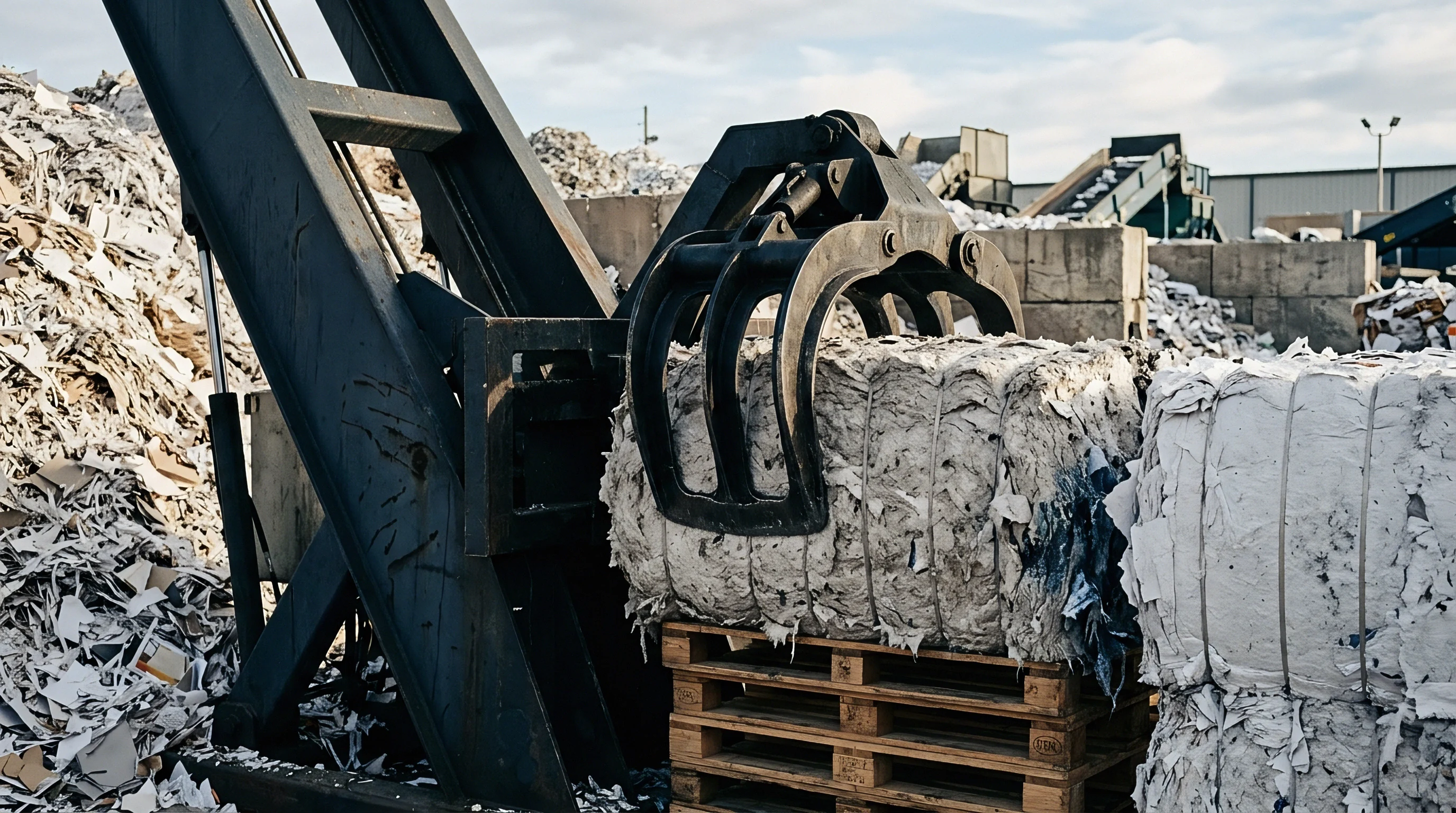
Regulation (EU) 2023/1115 establishes strict deforestation-free obligations across designated wood and paper commodities entering the European single market. Articles 1 and 2 define the material scope, isolating goods derived from forest raw materials from those originating in recovered streams. Paper products manufactured entirely from waste inputs that completed their user lifecycle escape the due diligence statement filings mandated on the TRACES NT platform.
The customs ledger holds.
Importers clearing packaging substrates under Combined Nomenclature heading 4805 or 4808 frequently misapply this statutory relief. When a board manufacturer blends twenty percent virgin unbleached kraft pulp with eighty percent deinked secondary fiber, the statutory relief for waste ceases across the virgin fraction. Competent authorities across European Union member states evaluate every imported lot against the physical composition of its raw constituent fibers.
That mixed furnish obligates the importing operator to upload precise geolocation coordinates down to six decimal places for every forest plot feeding the virgin fraction.
Under Article 3 of Regulation (EU) 2023/1115, packaging containing untraced virgin softwood fibers faces automatic border detention and administrative confiscation regardless of secondary fiber volume.
The regulatory language creates a sharp administrative boundary between pure post-consumer streams and hybrid papermaking furnish. Importers documenting entries under Chapter 48 must prove the total absence of virgin fiber to substantiate an unconditioned exclusion from geolocation filings. A failure to furnish this proof reclassifies the entire consignment as a regulated wood derivative, subjecting the shipment to document audits and plot verification checks at the frontier.
Statutory Boundaries under Article One
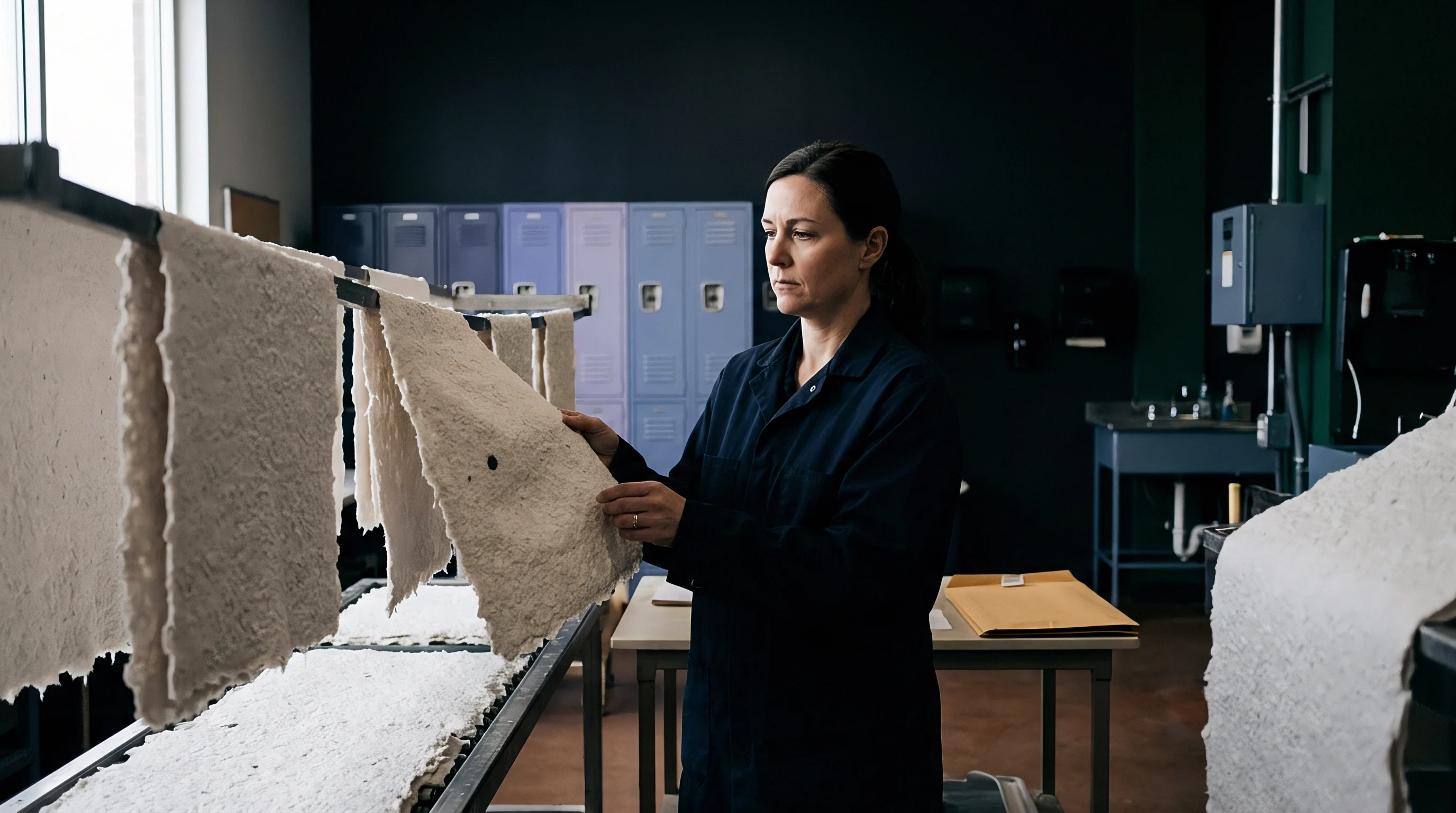
Legal exclusions under the regulation apply strictly to commodities produced from material that completed its lifecycle and would otherwise face disposal as waste pursuant to Directive 2008/98/EC. Secondary fibers recovered from household municipal collections, commercial carton collections, and industrial retail unpacking meet this threshold. The operator files a customs declaration asserting full exemption under the designated national customs procedure codes.
The border inspection proceeds.
Difficulties arise when suppliers classify mill trimmings and converting plant scrap under the same commercial umbrella as municipal recovered paper. Competent authorities draw a firm distinction based on whether the fiber ever reached an end-user. Process scrap generated inside an integrated paper mill remains part of the initial manufacturing cycle.
If that scrap derived from virgin logs or purchased virgin market pulp, the resulting repulped stock carries full geolocation traceability obligations into any subsequent board production.

Due Diligence Thresholds for Hybrid Furnish
Paperboard grades rarely utilize single-origin pulp streams. Corrugated case materials, folding boxboards, and solid bleached boards frequently combine chemical virgin pulps with mechanical pulps and recycled recovered fibers to balance bending stiffness, burst strength, and surface smoothness. The presence of a single kilogram of virgin pine pulp inside a forty-tonne shipment of double-lined containerboard pulls the consignment into mandatory compliance scrutiny.
A buyer cannot average geolocation data across fiber fractions. The regulation rejects mass balance allocation credits as a tool for writing off virgin components. When a converter combines certified recovered fiber with unmapped virgin kraft fiber, the entire lot inherits the compliance burden of the unmapped portion.
The importer submits geographic polygon coordinates for the tracts of land where the timber was harvested, cross-referenced with satellite records verifying zero deforestation after December 31, 2020.
Delivery contracts for commercial linerboard must state: Seller guarantees that all goods supplied under this agreement consist exclusively of post-consumer recovered paper fulfilling Directive 2008/98/EC, and any inclusion of virgin chemical or mechanical pulp obligates Seller to furnish complete parcel polygon coordinates and felling permits thirty calendar days prior to port arrival.


Broke
Pulp and paper mills generate significant volumes of internal production waste during normal web winding, slitting, and grade changeovers. Dry web trimmings collected at the rewinder fall straight into the broke pit beneath the machine calendar. This fiber returns to the blend chest without leaving the facility boundary.
Repulping maintains high plant yield.
Mills routinely register this recovered stock as recycled content under voluntary commercial programs. Voluntary chain of custody programs permit the classification of post-industrial scrap as pre-consumer recovered material. European Union deforestation regulators dismiss this voluntary accounting approach.
If the virgin wood chips entered the digester without registered plot polygons, passing that same chemical pulp through the dry broke repulper does not wash away its regulatory origin. The pulper dissolves everything.
Virgin chemical pulp recirculated through an internal mill broke system retains its regulated status under Regulation (EU) 2023/1115 regardless of voluntary pre-consumer recycled designations.
Process waste classifications demand strict physical segregation between internal machine broke and true post-consumer collection streams. When converting plants die-cut printed folding cartons, the perimeter skeleton waste falls into trim collection balers. The regulatory status of these offcuts hinges on the raw material history of the sheet passing through the die.

Converting Offcuts versus Internal Process Broke
Trimmings from converting facilities occupy a precarious regulatory status under Union trade guidelines. If a printer cuts virgin SBS board into pharmaceutical cartons, the edge trim consists of unprinted virgin fiber that never completed its lifecycle in the hands of a consumer. Selling those clean carton clippings to a recycled testliner mill introduces virgin fiber into the secondary furnish stream.
The invoice cannot protect.
The resulting pulp carries regulatory liabilities into the receiving mill. Unless the converting trim dealer documents the origin of the base board back to compliant forest plots, incorporating pre-consumer virgin converting offcuts into recycled containerboard compromises the entire vat. Mill managers attempting to lower raw material furnish costs by sourcing white virgin carton offcuts inadvertently invalidate their post-consumer regulatory status.
| Fiber Source Classification | Physical Waste Origin | Lifecycle State | Geolocation Duty | Required Audit Evidence |
|---|---|---|---|---|
| Internal Wet Broke | Paper machine wet end couch pit | Manufacturing loop | Mandatory for virgin run | Digester wood intake plot coordinates |
| Internal Dry Broke | Winder trim and reel spool reject | Manufacturing loop | Mandatory for virgin run | Forest plot polygon coordinates and felling license |
| External Converting Scrap | Corrugator box plant edge trim | Pre-consumer processing | Mandatory if base board is virgin | Base board supplier due diligence reference number |
| Post-Consumer Scrap | Municipal recovered paper bale | End-of-life waste completed | Exempt from geolocation | EN 643 delivery slips and weighbridge waste tickets |
| Deinked Pulp Slurry | Commercial newspaper collection | End-of-life waste completed | Exempt from geolocation | Waste treatment plant processing log and EN 643 invoices |

The Post Consumer Classification Standard
European Standard EN 643 sets the commercial definitions for paper and board for recycling across trade channels. Group 1 comprises standard grades including mixed paper and old corrugated containers collected from retail and domestic sites. Group 2 encompasses medium grades such as continuous stationery and office waste.
Group 4 encompasses high grades like unprinted shavings and white woodfree notebook cuttings. Testing separates the claims.
Customs officials examining import documentation look beyond grade titles to determine whether fiber qualifies for the post-consumer exemption. An importer submitting Group 4 shavings faces scrutiny because unprinted shavings originate on printer press trimmers before distribution. Group 1 old corrugated containers reflect post-retail disposal, satisfying Article 1 exemptions without land plot coordinates.
Sourcing high-brightness secondary furnish demands precise scrap origin validation.
Purchasing recycled pulp blends containing undocumented pre-consumer industrial offcuts triggers customs holds, complete consignment rejections, and administrative fines scaling to four percent of annual corporate turnover in the member state of import.

Furnish
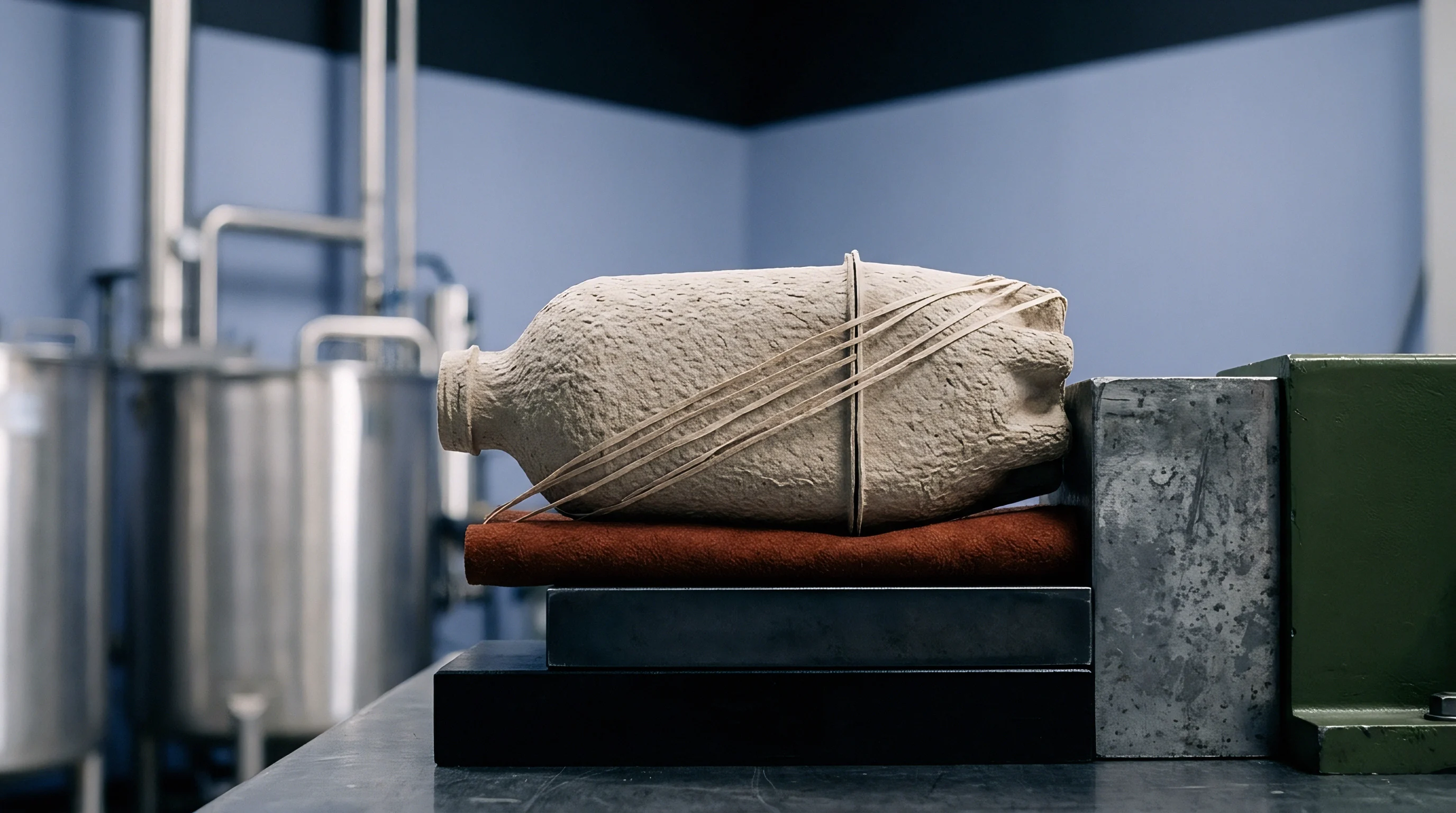
Laboratories verify raw paper composition through standardized physical and chemical analytical pathways. Fiber furnish analysis determines whether a board lot matches its commercial declaration of pure secondary fiber. Analysts employ polarized light microscopy and chemical staining solutions to differentiate virgin fibers from recycled elements.
The paper machine runs.
Standard testing methods ISO 9184-1 through 9184-4 govern the microscopic determination of fiber furnish in paper, board, and pulp. Technicians disperse sample fibers in demineralized water before mounting them on microscopic slides. Herzberg stain, formulated from zinc chloride, iodine, and potassium iodide, reacts with the cellulose and lignin matrices of the cell walls.
Bleached chemical softwood fibers turn red-violet, while unbleached chemical pulps exhibit blue colors, and mechanical wood fibers stain yellow.

Microscopic Fiber Identification and Staining Procedures
Secondary fibers display characteristic mechanical alterations visible under high magnification. Repeated refining, slushing, pressing, and drying cycles induce physical transformations across the cell wall. Fibrillated fiber ends, crushed lumen walls, and distinct mechanical kinks increase in frequency as fiber undergoes multiple repulping passes.
Fiber wall thickness declines.
Virgin chemical softwood pulps display long, straight fibers with intact tracheid ends and undisturbed pits along the cell walls. When Herzberg staining reveals a substantial proportion of intact, unkinked, highly uniform virgin tracheids in a board lot declared as purely recovered material, border authorities reject the exemption filing. Mechanical pulp contains intact lignin.
The absence of repeated mechanical deformation marks alerts analysts to the deliberate incorporation of virgin fiber.
Pulp analysts review specific microscopic markers to establish secondary fiber identity:
- Damaged Tracheid Ends display blunt fractures and uneven axial peeling resulting from industrial hydrapulper shear forces.
- Collapsed Fiber Lumens show permanent mechanical flattening produced during high-pressure machine wet pressing and calender nip passes.
- Residual Flexographic Pigments adhere directly to the external cell walls despite industrial flotation deinking procedures.
- Secondary Fibrillation Fines form web-like cellulosic micro-aggregates along the outer edges of beaten secondary fibers.

Analytical Detection of Mineral Oil Residues
Chemical markers provide supporting evidence regarding fiber origins. Recovered papers containing post-consumer newsprint, commercial circulars, and magazines carry residual printing ink chemistries. Saturated hydrocarbons from mineral oils (MOSH) and aromatic hydrocarbons (MOAH) migrate into the pulp matrix during repulping.
Virgin chemical pulps possess zero mineral oil hydrocarbons prior to conversion.
Gas chromatography with flame ionization detection (GC-FID) coupled to high-performance liquid chromatography (HPLC) quantifies mineral oil fractions under DIN EN 16995. A board sample declared as 100% post-consumer recovered testliner will demonstrate measurable concentrations of MOSH in the carbon number range C16 to C35, derived from historic offset inks. When chromatography reveals an absolute absence of MOSH and MOAH, alongside high burst resistance, inspectors investigate whether the stock represents misdeclared virgin kraftliner.
A worked testing scenario demonstrates furnish evaluation metrics across three competitive packaging substrates tested under standard conditioning at 23 degrees Celsius and 50 percent relative humidity:
Consider a 50-tonne board order declared as 100% recycled testliner with an average grammage of 140 grams per square meter. The mill bill of materials specifies 100% EN 643 Grade 1.05 old corrugated containers. The laboratory extracts two hundred randomized fiber samples for ISO 9184 optical examination.
Analysis reveals 88% deformed softwood and hardwood fibers displaying collapsed lumens and hornification. The remaining 12% consist of unrefined, pristine bleached kraft softwood fibers with intact cross-field pitting, accompanied by a low MOSH concentration of 2.1 milligrams per kilogram. The presence of twelve percent unworked virgin fiber eliminates the statutory exemption, mandating geographic coordinates for the original forest harvest.
A supplier explains the discrepancy by asserting that their fiber merchant assured them the baled kraft shavings were genuine recycling house sweepings containing zero primary virgin material.


Segregation
Supply chain traceability under European environmental regulations challenges established forest product management systems. Established certification programs rely on mass balance credit ledgers, transfer systems, and percentage claims to track sustainability characteristics across complex manufacturing operations. These voluntary mechanisms fall short of European Union regulatory demands.
Physical verification remains binding.
The EUDR mandates strict physical segregation for any regulated commodity. Mass balance accounting allows a pulp mill to blend thirty percent certified sustainable timber with seventy percent uncertified timber in a single continuous digester, selling thirty percent of the output with certified sustainability claims. The regulation completely outlaws this administrative allocation mechanism.
Every single fiber bundle shipped into the single market must link to a specific geolocated forest parcel verified free from forest degradation.
Mass balance credit claims under voluntary certification schemes provide zero administrative shelter against the statutory plot-of-land geolocation mandates of Regulation (EU) 2023/1115.
Pulp mills operating continuous digesters cannot blend compliant and non-compliant timber within the same chip bin. The entire continuous process line must run exclusively on timber harvested from geolocated, non-degraded land plots. For recycled mills utilizing hybrid furnish, storage chests and stock preparation lines must physically isolate virgin pulp inputs from secondary deinked slurries.
Voluntary Scheme Credits versus Physical Custody
Chain of custody schemes like FSC and PEFC offer multiple administrative options for product labeling. The FSC Transfer System maintains direct traceability through separate handling, whereas the FSC Credit System and FSC Percentage System utilize inventory balance equations. Importers relying on FSC Mix or PEFC Certified claims on their bills of lading frequently misunderstand the legal scope of those declarations.
The vat tells truth.
Under an FSC Credit claim, a paper mill generates credits by purchasing certified pulp and assigns those credits to an equivalent tonnage of board made from non-certified virgin timber. This process satisfies private retailer procurement guidelines, yet it violates European trade law. If the virgin wood used in that production run lacks plot-of-land coordinate mapping, the consignment cannot lawfully clear European Union borders.
| Chain of Custody System | Administrative Mechanism | Fiber Segregation Level | EUDR Compliance Acceptance |
|---|---|---|---|
| FSC Transfer System | Single claim passed along chain | Complete physical batch isolation | Compliant if plots are verified |
| FSC Percentage System | Proportionate claim on output | Physical mixing allowed | Rejected under EUDR Article 9 |
| FSC Credit System | Volume credit ledger allocation | Physical mixing allowed | Rejected under EUDR Article 9 |
| PEFC Physical Separation | Stock kept physically distinct | Complete physical batch isolation | Compliant if plots are verified |
| PEFC Percentage Method | Rolling average percentage claim | Physical mixing allowed | Rejected under EUDR Article 9 |

Information Transfers across Commercial Tiers
Documenting supply chains spanning multiple tiers requires uninterrupted data handoffs between independent economic actors. A tier-four forestry cooperative sells roundwood to a sawlog facility, which routes residual wood chips to a tier-three chemical pulp mill. The pulp mill sells dry market pulp sheets to an overseas tier-two board mill, which exports finished cartonboard to a tier-one folding box converter supplying consumer goods packaging.
Paper fibers shorten during repulping.
Breaks in digital data continuity expose the importer of record to regulatory non-compliance. Downstream operators must build auditable documentation portfolios capable of withstanding scrutiny by European market surveillance authorities. Compliance teams track and maintain key data elements through commercial tiers:
- Polygon Coordinate Packages containing latitude and longitude coordinates for all forest plots exceeding four hectares, formatted per WGS84 standards.
- Harvest Timeline Certificates proving that timber extraction occurred strictly in accordance with local legislation after the December 2020 cutoff date.
- Deforestation Free Satellite Confirmations corroborating that canopy cover loss was zero across the target parcels using radar imagery.
- TRACES Due Diligence Statements bearing active reference numbers issued by the European Union digital submission system.
Whether multi-tier recycled paper mills can realistically maintain segregated pulp chests for secondary fiber alongside geolocated virgin batches without facing unsustainable capital expenditure on duplicated stock piping remains unsettled across the industry.


Liability
Financial and commercial risks concentrate heavily on the European Union operator submitting import documentation. Article 2 defines the operator as any natural or legal person placing relevant products on the single market. The entity listed on the Single Administrative Document carries strict civil and administrative responsibility for documentation accuracy.
Customs clearance halts immediately.
Customs officials use automated risk management systems to flag shipments arriving under Chapters 47 and 48 of the Combined Nomenclature. If an audit reveals that an imported board lot declared as recycled furnish contains unmapped virgin pulp, the authorities impound the cargo at the dock. Demurrage, port storage fees, and laboratory testing charges accumulate directly against the importer of record.
Importers bear direct financial liability.

Customs Enforcement and Financial Penalties
Penalties mandated under Article 25 are designed to be commercially prohibitive. Member states impose fines calibrated to strip the economic benefit gained from the non-compliant transaction, scaling up to four percent of the operator’s total annual turnover within the Union. Competent authorities possess legal authority to confiscate the imported commodities, confiscate commercial revenues gained from downstream sale, and exclude the company from public procurement contracts for twelve months.
Commercial exposure extends beyond direct administrative sanctions. Brand owners packaging food, cosmetics, and pharmaceuticals face consumer boycotts, mandatory product recalls, and severe brand equity erosion if packaging materials trigger customs alerts for deforestation non-compliance. Secondary converters supplying major European retail groups risk contractual disqualification if their packaging materials lack valid due diligence reference numbers.

Commercial Contract Indemnities
Packaging supply agreements must balance regulatory liabilities across cross-border suppliers. Standard purchase terms lacking explicit regulatory warranties leave commercial buyers vulnerable. Mill suppliers operating outside the European Union frequently disclaim liability for regulatory detentions once goods pass the ship rail under standard Incoterms like FOB or CFR.
Procurement teams must incorporate indemnification language specifically targeting deforestation compliance failures. Contracts should state that failure by the seller to provide valid, verifiable TRACES NT due diligence statement references, or the discovery of undocumented virgin fiber within goods sold as recycled stock, constitutes a material breach triggering immediate contract cancellation, full refund of purchase price, and complete indemnification for all associated customs fines and logistics costs.
A simple commercial premise governs regulatory exposure across multi-tier paper packaging networks: document verification costs always pale beside the compounding expenses of impounded freight.