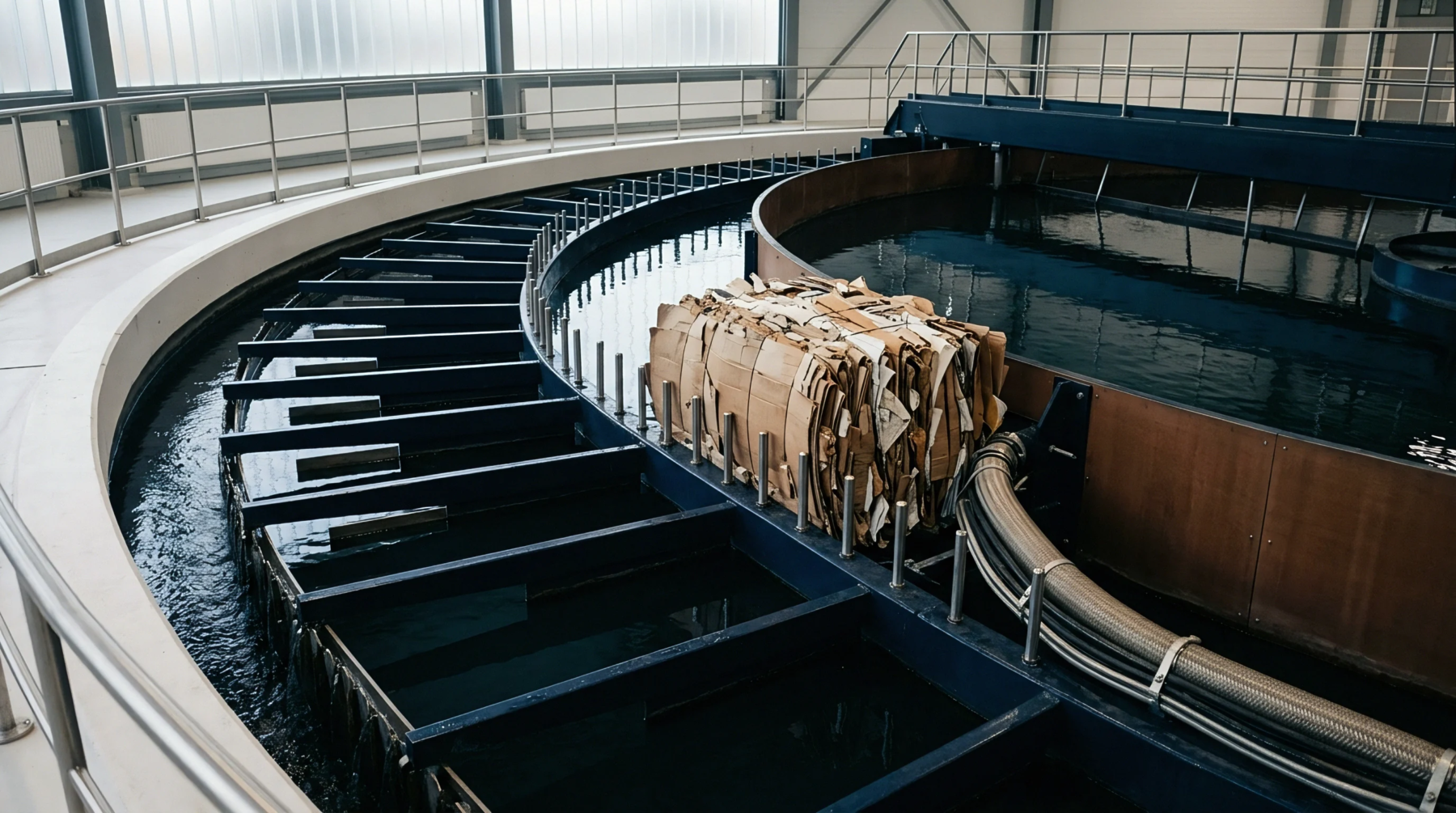
Fibre derivation
Aqueous suspension of cellulosic materials extracted from paper waste forms the basis of this input stream. Recycled pulp requires mechanical cleaning and chemical deinking to achieve the brightness and structural integrity necessary for secondary production. Mills grade this feedstock by the length of the constituent fibres and the degree of contamination present in the bales.
Production utility
Processing machinery converts this slurry into new paper products by refining the stock to specific freeness levels that dictate drainage speeds on the wire. Recycled pulp influences the opacity and surface smoothness of the finished sheet differently than virgin materials because the bonding sites on the fibres suffer degradation during repeated cycles of drying. Converters adjust pressure in the press section to compensate for these physical changes during the fabrication of corrugated board or newsprint.
Strength metrics
Technical benchmarks for these sheets rely on burst and tear resistance tests conducted under controlled humidity. Recycled pulp maintains lower tensile strength than primary fibre when the mixture contains short residues from previous manufacturing runs. High levels of post-consumer content force manufacturers to add sizing agents or starches to restore the physical bonds required for reliable printing or packaging performance.