Inter-Ply Bond Measurement Standards in Recycled Paperboard Production
Inter-ply bond standards mandate TAPPI T 541 or ISO 16260 testing under strict ISO 187 conditioning to prevent converting delamination on recycled paperboard.


Cohesion
Internal structural integrity in multi-ply recycled board comes down to the bond formed between adjacent fiber layers as the wet web consolidates. For grades produced from recovered furnish ~ coated recycled board, uncoated recycled board, and white lined chipboard ~ inter-ply separation under stress remains a leading cause of package failure. Repeated drying cycles hornify recycled fibers, stripping away their swelling capacity and shrinking the specific surface area available for hydrogen bonding where separate wet webs meet on the machine.
An individual ply is often mechanically stronger than the interface joining it to the next layer. When recycled board flexes, scores, or encounters surface traction in converting equipment, shear stresses settle along those interfacial lines. If cohesion there drops below the tensile strength of the weaker adjacent ply, delamination follows rapidly.
Capturing that boundary strength requires test methods that isolate pure z-directional force from machine- or cross-direction tensile properties.
Fibre Bonding Mechanisms across Plies
Interfacial bond strength in multi-layer board hinges on three wet-end factors: mechanical entanglement of fibers across the sheet boundary, hydrogen bonding as water leaves the web, and interfacial retention of fines and polymer additives. Multi-cylinder and multi-fourdrinier machines form individual plies at 0.2 percent to 0.5 percent consistency before bringing them together at the couching nip. When webs meet at 8 percent to 14 percent solids, nip hydraulic pressure pushes unattached fibers and fines across the interface plane.
Every repulping cycle shortens fiber length. Secondary furnishes carry heavy fractions of degraded hardwood and softwood fibers alongside significant ash volumes. Once repulped, these stiffened cell walls resist the flattening and conformity needed during wet pressing to build intimate fiber-to-fiber contact.
The resulting micro-voids at the inter-ply boundary restrict hydrogen bond area, which is why recycled board routinely yields lower internal bond strength per unit of basis weight than virgin kraft board of the same caliper.
| Standard Method | Primary Stress Vector | Measured Property | Unit of Measure | Typical Recycled Range |
|---|---|---|---|---|
| TAPPI T 541 | Pure Z-Directional Tension | Peak Tensile Load | kPa | 250 – 550 |
| TAPPI T 569 / ISO 16260 | Dynamic Shear and Tension | Impact Energy Absorption | J/m² | 110 – 240 |
| TAPPI T 833 (BRDA) | 90-Degree Angular Peeling | Delamination Resistance | N/m | 120 – 310 |
| ISO 534 / ISO 1924-2 | In-Plane Tensile Shear | Interfacial Tensile Energy | J/g | 0.45 – 1.15 |
Moisture levels at the couching nip largely govern whether fibers migrate across the joining plies. If webs run too dry before meeting, fibers stay anchored in their own sheets and cannot entangle across the boundary. If they enter the nip too wet, hydraulic disruption crushes the sheet and destabilizes density.
Because shifting moisture alters the viscoelastic behavior of the hydrogen-bonded network, reproducible bond testing demands strict sample conditioning.

Grammage and Moisture Dependency
Grammage distribution across individual plies sets up the internal stress gradient of the board. Conventional multi-ply recycled sheets sandwich bulky middle plies of mixed waste and old corrugated containers between lighter outer liners of bleached virgin pulp or sorted high-grade fiber. Keeping middle-ply bulk high preserves panel bending stiffness, but the lower density leaves fewer fiber-to-fiber contact points ~ turning the core plies and their adjoining interfaces into the primary plane of failure.
Conditioning recycled board at 23 C and 50 percent relative humidity under ISO 187 yields Z-directional tensile strength reductions up to 14 percent when moisture content shifts from 6.5 to 8.2 percent.
Paperboard behaves as a hygroscopic polymer network with equilibrium moisture governed by ambient humidity. Standard protocols specify 23 degrees Celsius and 50 percent relative humidity under ISO 187 or TAPPI T 402. When water penetrates amorphous cellulose zones, it breaks down inter-fiber hydrogen bonds.
In high-ash recycled furnishes, this uptake weakens the interface quickly, cutting dynamic energy absorption and static tensile resistance.
Specifying an internal bond threshold without defining relative humidity invites converting failures during humid summer runs. A board tested at 40 percent relative humidity may clear the floor limit, only to delaminate when converted at 65 percent relative humidity. Usable specifications tie minimum bond figures to the exact conditioning atmosphere used in the lab.
Neglecting conditioning controls during quality checks risks full carton delamination on high-speed packaging lines, triggering line shutdowns and rejected lots.


Delamination
Converting subjects board to multi-axial stresses that challenge ply adhesion directly. Rotary die-cutting, high-speed creasing, folder-gluers, and heat sealing impose severe local strains. Creasing stretches outer plies while compressing inner layers, forcing a controlled internal rupture along preselected planes.
When delamination escapes that creasing zone, panels bulge, scores crack, and structural joints yield.
High-speed folder-gluers apply substantial hydrodynamic drag through cold-set and hot-melt adhesive systems. With glued blanks moving through compression belts at speeds over 400 meters per minute, shear pulls hard on the surface layer. If inter-ply bond strength falls short of adhesive tack, the top ply strips clean off the filler plies and ruins the joint.
Converting Floor Shear and Crease Stress
Tooling setup determines how stress distributes through the sheet during creasing. Creasing rules force the multi-ply board into female matrix channels, inducing internal shear that deliberately fractures selected inter-ply bonds while leaving outer liners intact to act as a hinge. Recycled sheets with weak internal bonding fail to contain this delamination within the channel boundary; the crack runs into the flat panel, producing rolled scores and distorted cartons during erection.
Heat sealing in blister packaging combines thermal and mechanical loads. Forcing heat through coated board to activate blister flanges turns residual moisture into steam and expands air trapped inside the core. This vapor pressure drives outward.
If the inter-ply bond cannot withstand the expansion, the board blisters internally along the weakest recycled interface.
- Crease Score Cracking occurs when insufficient inter-ply delamination forces outer liner plies to absorb excessive tensile strain during folding, fracturing the surface coating.
- Panel Bulging develops when weak core plies delaminate laterally away from the crease line, reducing the structural bending stiffness of the flat carton walls.
- Flange Peeling manifests during high-speed gluer operation when adhesive tack pulls the top recycled ply away from the underlying filler plies.
- Blister Interface Separation happens when internal moisture expansion during thermal sealing forces apart weakly bonded middle plies behind the sealing track.
Wet End Hydrodynamics and Ply Adhesion
Formation conditions on the machine establish baseline resistance to delamination. Speed differentials between adjacent formers or cylinder vats misalign fiber orientation at the ply boundary. When a secondary former lays stock onto a base ply running at a different speed, surface drag pulls fibers into the machine direction, curtailing cross-interface entanglement and leaving shear-sensitive planes in the finished sheet.
Fines accumulation worsens the problem. Secondary fiber pulps concentrate micro-fines, degraded starch fragments, and colloidal white pitch. As water drains, these small fractions wash toward the wire side of each ply.
Couching then brings these non-bonding or weakly bonding particles together at the interface, blocking direct contact between structural fibers.
Converted box delamination often traces either to creasing matrices sized incorrectly for the delivered caliper or to unaddressed wet-end chemistry variations.
Apparatus
Measuring internal bond strength accurately calls for standardized hardware that minimizes operator influence and mounting errors. Two methods dominate commercial trade: the Z-directional tensile test (TAPPI T 541) and the pendulum impact test (TAPPI T 569, known as Scott Internal Bond and formalized in ISO 16260). Because they measure distinct mechanical behaviors, their results cannot be converted through a constant factor.
The choice between them depends on the failure mode of interest. ZDT testing pulls the sheet apart slowly and perpendicular to the surface to evaluate static tensile strength. The Scott Bond pendulum imparts rapid shear and peeling forces that better represent high-speed converting impacts and drop dynamics.
A board lot can pass static ZDT minimums and still fail a Scott Bond specification because the starch network responds differently under dynamic strain rates.

Z-Directional Tensile and Impact Energy Comparison
TAPPI T 541 specifies securing paperboard between two rigid metal platens using high-tack double-sided adhesive tape. The fixture sits in a universal tensile frame that pulls the platens apart at a set displacement rate, recording the peak force at failure divided by test area in kilopascals. The result provides a clean engineering unit, though readings remain sensitive to adhesive flow into the board and platen alignment.
TAPPI T 569 uses a swinging pendulum to strike an aluminum angle bonded to the top face of a specimen anchored on an anvil. The pendulum’s loss of potential energy through the rupture measures total absorbed energy in Joules per square meter. Because the blow exerts both shear and peel, Scott Bond values reflect network toughness rather than pure tensile resistance.

Does Dynamic Impact Energy Correlate with Tensile Peak?
Direct mathematical translation between Scott Internal Bond (J/m²) and Z-directional Tensile (kPa) is unreliable because deformation rates and stress distributions differ fundamentally. Board samples sharing an identical ZDT value of 400 kPa can produce Scott Bond values ranging from 130 J/m² to 210 J/m². The Scott impact measures energy absorbed across the entire damaged volume, while ZDT tracks the peak stress required to initiate fracture at the single weakest flaw.
The bond between tape adhesive and board surface must exceed the internal strength of the sheet. If the tape stretches or shears during the pull, the test records tape properties instead of board cohesion. Standardized double-sided acrylic or rubber formulations like 3M 410B or 3M 400 are necessary to prevent interfacial slippage.
Double-Sided Tape Selection and Calibration Routines
Tape properties dictate test consistency. Porous board surfaces allow fluid adhesives or low-viscosity tape mass to sink into outer fibers, artificially reinforcing the ply boundary and lifting results. Conversely, tapes with inadequate tack peel away prematurely, yielding falsely depressed numbers.
Test procedures require strict mounting pressure to ensure complete contact without crushing core bulk.
- Cut paperboard specimens to exactly 25.4 mm by 25.4 mm dimensions using a precision dual-blade strip cutter to ensure clean edge profiles without fiber burrs.
- Condition specimens for 24 hours at 23 degrees Celsius and 50 percent relative humidity under ISO 187 atmospheric controls prior to tape application.
- Apply standardized 3M 410B double-sided adhesive tape to both platen surfaces, avoiding hand contact with the exposed adhesive film.
- Mount the specimen between the upper and lower metal platens inside the mechanical press fixture.
- Apply a uniform compression load of 0.70 MPa across the platen assembly for a dwell time of exactly 3.0 seconds to standardize adhesive wetting.
- Transfer the platen assembly into the tensile testing frame and execute the axial load sequence at a constant displacement velocity of 2.5 mm per minute.
- Record the peak load at failure and inspect the exposed failure surface to confirm that delamination occurred entirely within the paperboard plies rather than at the tape interface.
Invoking TAPPI T 541 within supply contracts without specifying double-sided tape rubber density permits mills to pass delaminated stock that fails on high-speed folder-gluers.
Press fixtures and load cells require scheduled recalibration. Inconsistent dwell pressure during specimen mounting can introduce up to 18 percent scatter into peak load readings. Standard service contracts call for annual checks on load cell linearity, platen parallelism, and pendulum friction to maintain ISO compliance.
Purchasing contracts specifying TAPPI T 541 need explicit parameters covering tape grade, mounting dwell pressure, and acceptable failure modes, ensuring that any run displaying tape-face separation is discarded immediately.

Chemistry
Chemical programs provide targeted cohesion across multi-layer recycled boards. Hornified secondary fibers have limited bonding potential, so mills use wet-end starches, synthetic polymers, and cross-linking agents to meet structural targets. Where these chemistries end up determines whether bond gains distribute through the sheet or concentrate along ply interfaces.
Cationic starches derived from corn or potato are introduced to the wet end before sheet forming. Their positive charge binds electrostatically to anionic fibers and fines. In the dryer section, the starch granules cook, gelatinize, and bridge adjacent fiber contact zones.
Heavy anionic trash loads in recycled white-water systems can neutralize this cationic charge, however, depressing starch retention and leaving the web under-bonded.

Cationic Starch and Polymer Retention Systems
Wet-end cationic starch additions generally run between 5 and 15 kilograms per metric ton of dry fiber. Exceeding this range saturates fiber charges and impedes wire drainage without yielding higher ply adhesion. To improve efficiency beyond this limit, mills run dual-polymer programs pairing cationic starch with high-molecular-weight anionic polyacrylamides or colloidal silica.
| Chemical / Furnish Variable | Addition Point | Dosage Range | Impact on ZDT (kPa) | Impact on Scott Bond (J/m²) |
|---|---|---|---|---|
| Cationic Potato Starch | Thick Stock / Fan Pump | 8 – 14 kg/t | +40 to +85 | +25 to +50 |
| Inter-Ply Native Starch Spray | Couch Nip / Join Point | 2 – 5 g/m² | +60 to +120 | +35 to +75 |
| Polyacrylamide (PAM) Retention | Thin Stock Stream | 0.2 – 0.5 kg/t | +15 to +30 | +10 to +20 |
| Ground Calcium Carbonate (GCC) | Middle Ply Furnish | 5 – 15% Ash | -50 to -110 | -30 to -65 |
| Deinking Fatty Acid Residues | Recycled Stream | Trace – 0.8% | -35 to -80 | -20 to -45 |
Inorganic fillers such as ground calcium carbonate and talc improve sheet opacity, brightness, and finish, but they offer no hydrogen bonding capacity. Instead, filler particles coat fiber surfaces and prevent cellulose contact. When ash levels in middle plies pass 10 percent by weight, internal bond strength drops significantly, requiring higher starch additions to keep the sheet intact.
Inter-Ply Starch Showers and Mineral Filler Loading
Spraying starch directly between plys gives precise control over delamination resistance. Inter-ply showers deposit a fine suspension of native starch granules onto the wet web immediately upstream of the couching nip. As the board moves through the drying cylinders, heat climbs past the gelatinization point (typically 65 to 70 degrees Celsius), bursting the granules right at the boundary to form a concentrated adhesive layer.
Fines retention at the wet end controls ply bond stability far more than bulk starch additions at the size press.
Recycled starch degradation destabilizes wet-end chemistry. Recovered packaging furnishes continually reintroduce converted starches into the pulper. In warm, closed-loop mill systems, bacterial growth generates amylase enzymes that cleave dissolved starch into short sugars.
These fragmented chains cannot form fiber bonds; they merely drive up biological oxygen demand, disrupt cationic retention aids, and weaken interfacial cohesion.
Increasing starch additions without monitoring system charge produces diminishing returns, foaming, and poor drainage on the wire.

Press
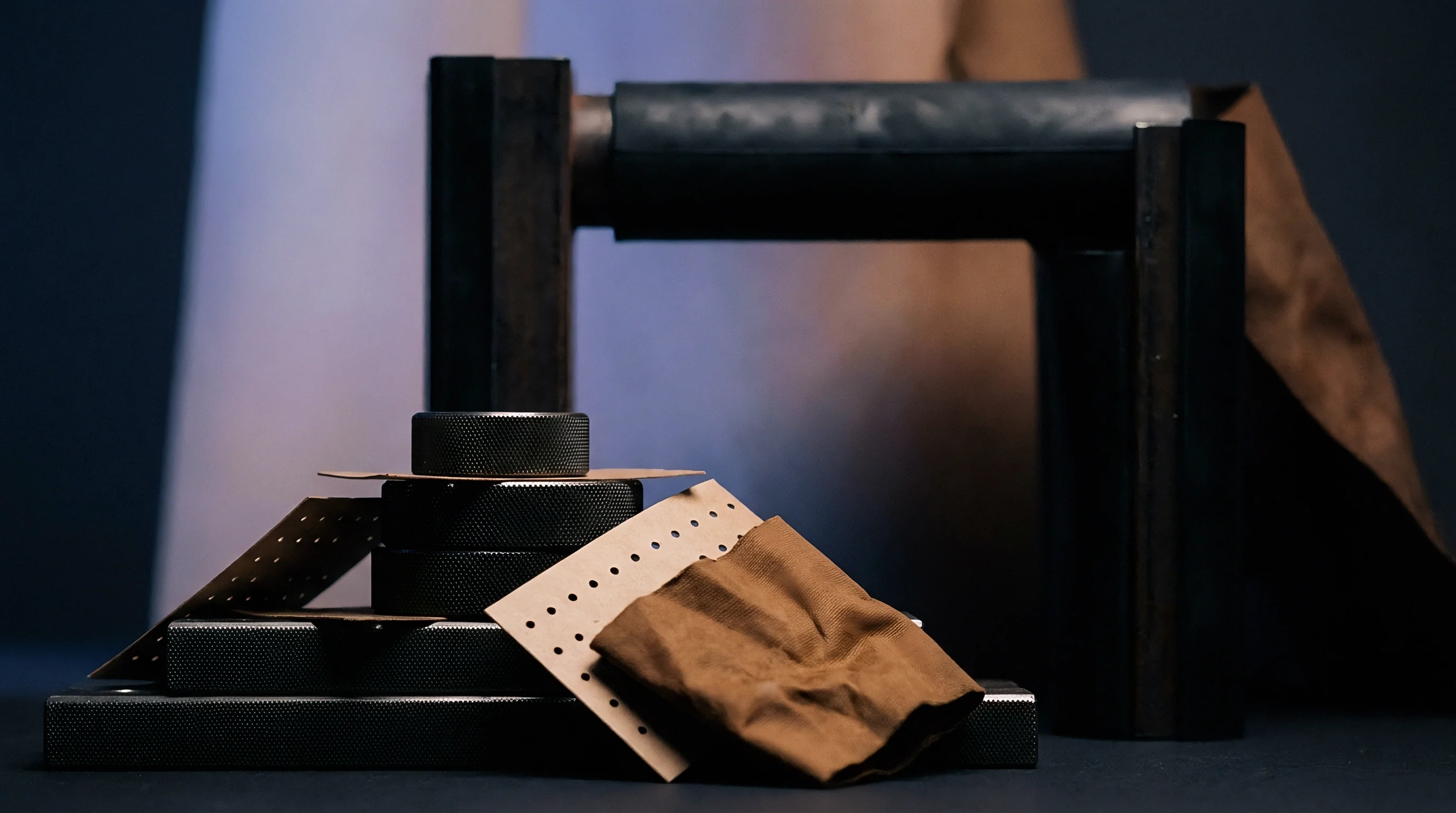
Converting performance depends on how stably recycled board tolerates scoring and folding at production speeds. In flatbed and rotary die-cutters, creasing rules force the sheet into female counter channels, creating internal shear and localized delamination along defined planes. This deliberate separation lowers the bending resistance of the score, allowing 90-degree and 180-degree folds without cracking the exterior liner.
When internal bonding is uniform and matched to board thickness, delamination remains confined within the score line width. If inter-ply bonding is excessively tough, the board resists internal shearing, shifting tensile strain onto outer plies and cracking coatings or print. If the bond is too weak, delamination travels outward across panels, compromising box compression.
Matrix Geometry and Female Channel Selection
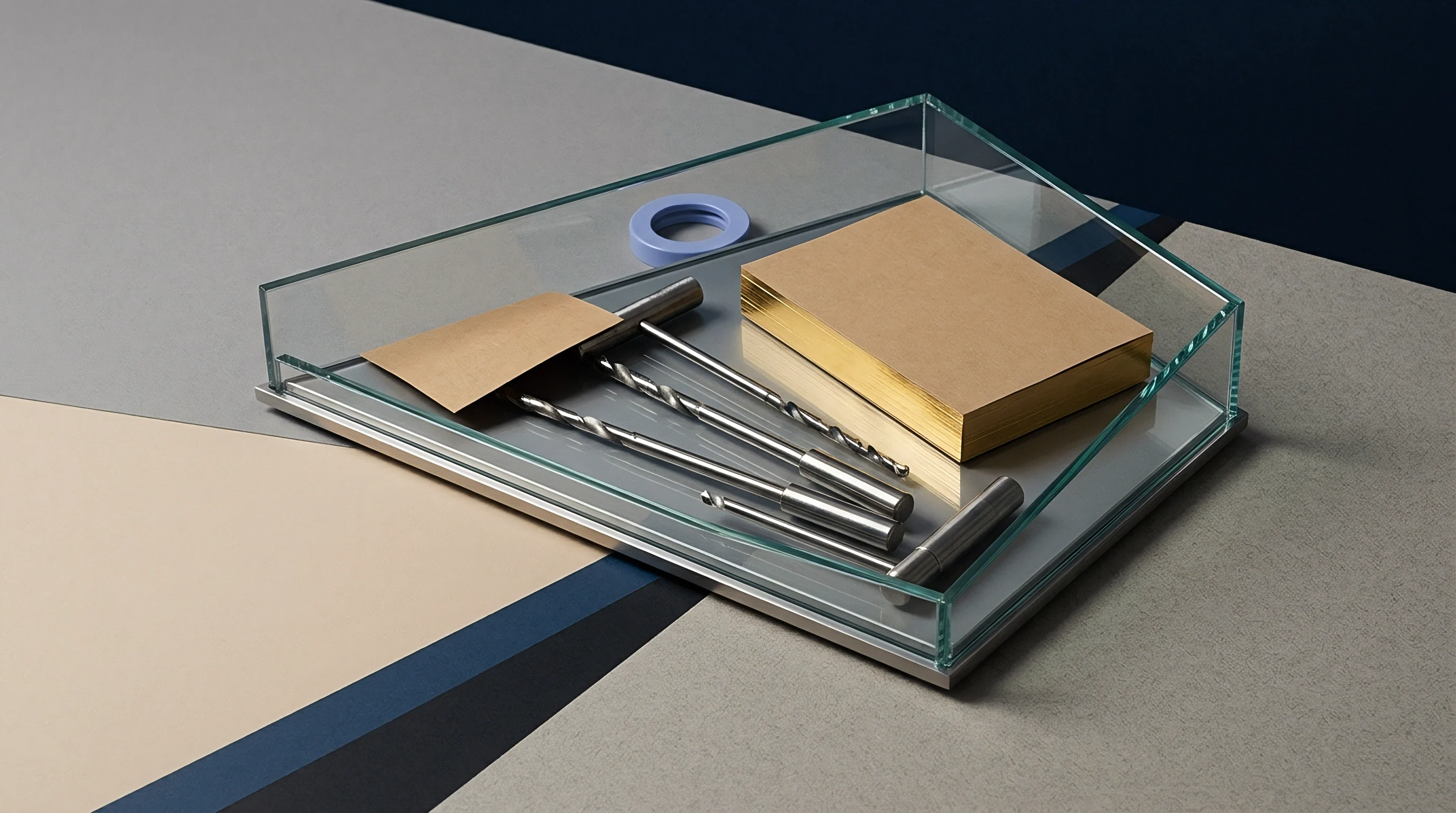
Tooling setups balance female channel width, creasing rule thickness, and board caliper. Standard matrix sizing follows the baseline calculation: Channel Width = (1.5 x Board Caliper) + Rule Thickness. Because recycled boards exhibit more caliper variation and lower z-directional compressibility than virgin grades, channel tolerances must accommodate thickness drift to prevent uncontrolled delamination.
Channel depth requires equal care. If the channel is too shallow, the rule bottoms out against the counter, crushing the sheet core and destroying hinge stiffness. If the channel is cut too wide, the sheet draws in without building enough shear stress, leaving a soft crease that resists folding on the packing line.
- Rule Thickness Matching selects male creasing rules based on sheet caliper to deliver uniform structural displacement without cutting surface fibers.
- Channel Width Adjustment expands female matrix openings when processing recycled stocks to absorb basis-weight and caliper drift across the reel.
- Matrix Depth Calibration prevents anvil bottoming, protecting internal middle-ply bulk while forcing controlled delamination along the crease axis.
- Crease Stiffness Profiling measures the force required to fold a creased score line to 90 degrees, confirming that internal ply separation occurred properly.

High-Speed Folder-Gluer Shear Dynamics
Running folder-gluers at speeds over 400 meters per minute strains creased blanks mechanically. Belts snap panels closed in milliseconds, using the scored line as an axle. If inter-ply failure was initiated unevenly during die-cutting, panels twist out of square, causing fishtailing defects where glue tabs miss their mating edges.
Cutting-rule sharpness directly affects internal cohesion at carton edges. Dull knives crush the board before parting it, creating micro-delamination along the perimeter. When those damaged edges strike high-speed folder-gluer guides, friction and moisture catch the outer ply and peel it back, jamming the line.
Can real-time optical inspection of crease profiles on high-speed gluers predict long-term carton stacking performance without destructive ZDT laboratory testing?

Claim
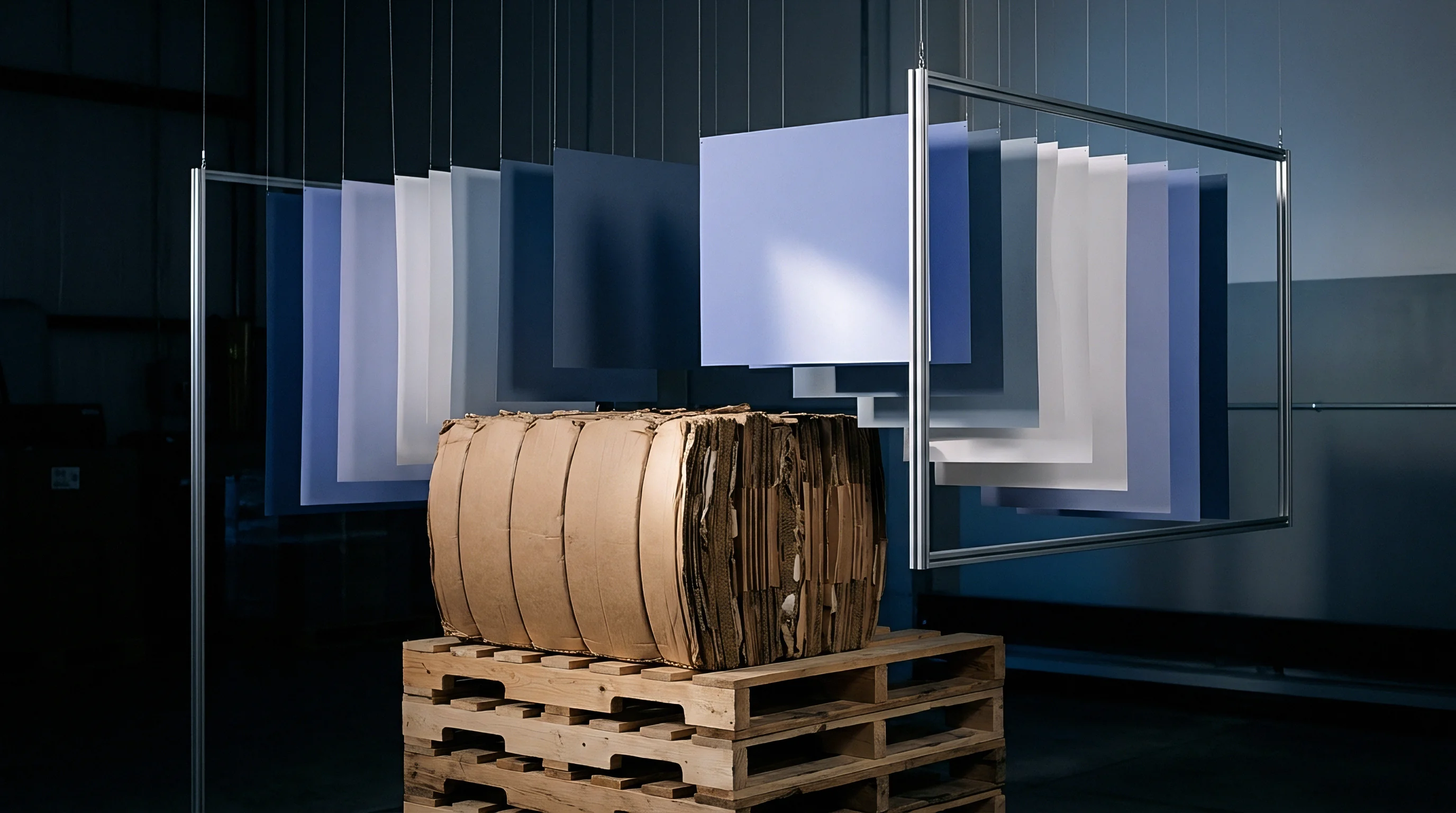
Commercial board contracts require enforceable bond specifications to safeguard buyers against failures during converting and packing. Board delivered below bond thresholds causes press slowdowns, excessive waste, and field failures. Resolving commercial claims requires defined audit protocols, third-party lab testing, and calculations based on actual landed costs.
Purchase contracts establish tolerance ranges for basis weight, caliper, moisture, and inter-ply bond strength, typically specifying both individual specimen limits and batch averages. For instance, a contract for 350 g/m² Coated Recycled Board might require an average Scott Internal Bond of at least 160 J/m², with no single test falling below 135 J/m² under ISO 16260 conditions.

Contractual Tolerance Bands and Certificate Audits
Mill test certificates record quality data logged at manufacture, but routine plant checks often rely on rapid, unconditioned tests taken directly from the reel. These numbers flatter real performance because the paperboard has not reached moisture equilibrium. Receiving protocols should involve independent sampling and verification after 24 hours of conditioning under ISO 187 standards.
Audits require disciplined sampling. Under ISO 186 or TAPPI T 400, test pieces must be pulled randomly across the delivery lot. For palletized sheets, samples should come from at least 15 sheets beneath the wrapping to avoid environmental moisture pickup.
If audit data reveals that more than 5 percent of samples fall below the minimum bond limit, the buyer has contractual standing to reject the lot.
| Cost Center Variable | Baseline Run (Compliant Stock) | Failed Run (Delaminated Stock) | Financial Variance per 100k Cartons |
|---|---|---|---|
| Substrate Landed Cost ($/t) | $950 | $950 | $0 |
| Folder-Gluer Line Speed (m/min) | 380 | 180 | +$1,420 (Downtime Labor) |
| Converting Make-Ready Spoilage (%) | 1.5% | 6.8% | +$1,780 (Substrate Scrap) |
| Downstream Packing Line Jams (hrs) | 0.0 | 4.5 | +$3,375 (Customer Penalty Fee) |
| Total Cost per 1k Delivered Cartons | $48.50 | $114.25 | +$65.75 Net Cost Increase |
Landed Cost Arithmetic and Waste Calculations
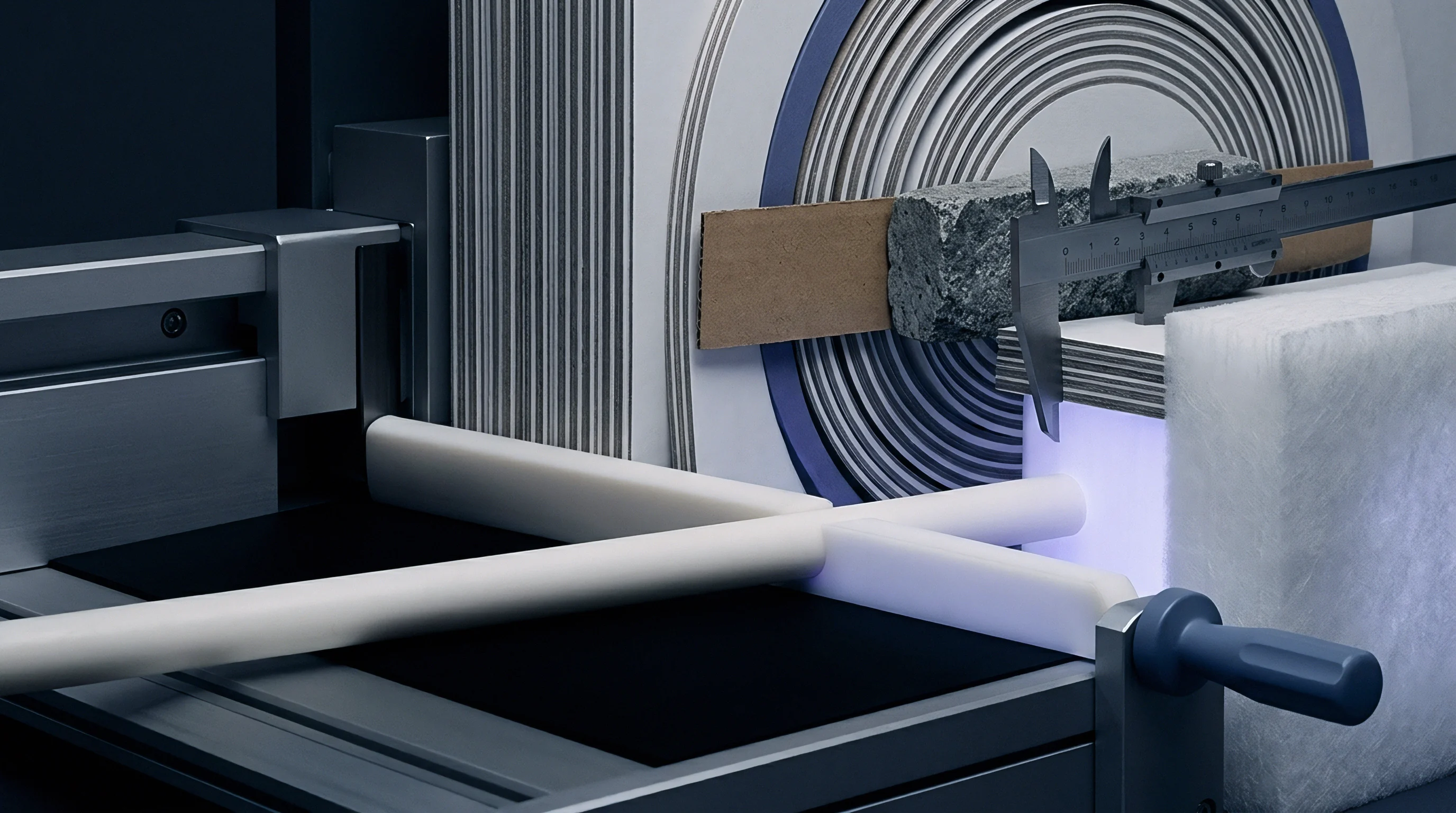
When low bond strength forces an operator to drop folder-gluer speed from 400 meters per minute to 180 meters per minute to prevent delamination, hourly costs climb quickly. Operating rates for modern folder-gluers run from $350 to $500 per hour. Halving line speed doubles the labor and machine overhead absorbed per thousand finished cartons, wiping out any furnish-related price discount.
Assessing total claim value means combining raw substrate loss, converting downtime, and packer penalties. If a 20-ton order of coated recycled board with weak bonding runs a 12 percent scrap rate through cutting and folding, direct material waste accounts for 2.4 metric tons. At a landed cost of $950 per metric ton, scrap equals $2,280.
Factoring in 6 hours of machine downtime at $400 per hour ($2,400) and $1,200 in sorting labor brings the claim total to $5,880 on a $19,000 order.
Closing a delamination claim requires isolating the exact plane of failure via cross-sectional microscopy and certified lab tensile testing. If separation tracks cleanly along the middle-ply starch boundary under TAPPI T 541 testing, liability rests with the mill, warranting credit replacement for the tonnage alongside reimbursement for documented converting scrap.