Chemi-Thermomechanical Pulp Core Optimization for Low Grammage Boxboard Manufacturing
Optimizing CTMP core sulfonation and bulk yields lower grammage boxboard that maintains flexural rigidity while reducing landed carton cost.
Sulfonation
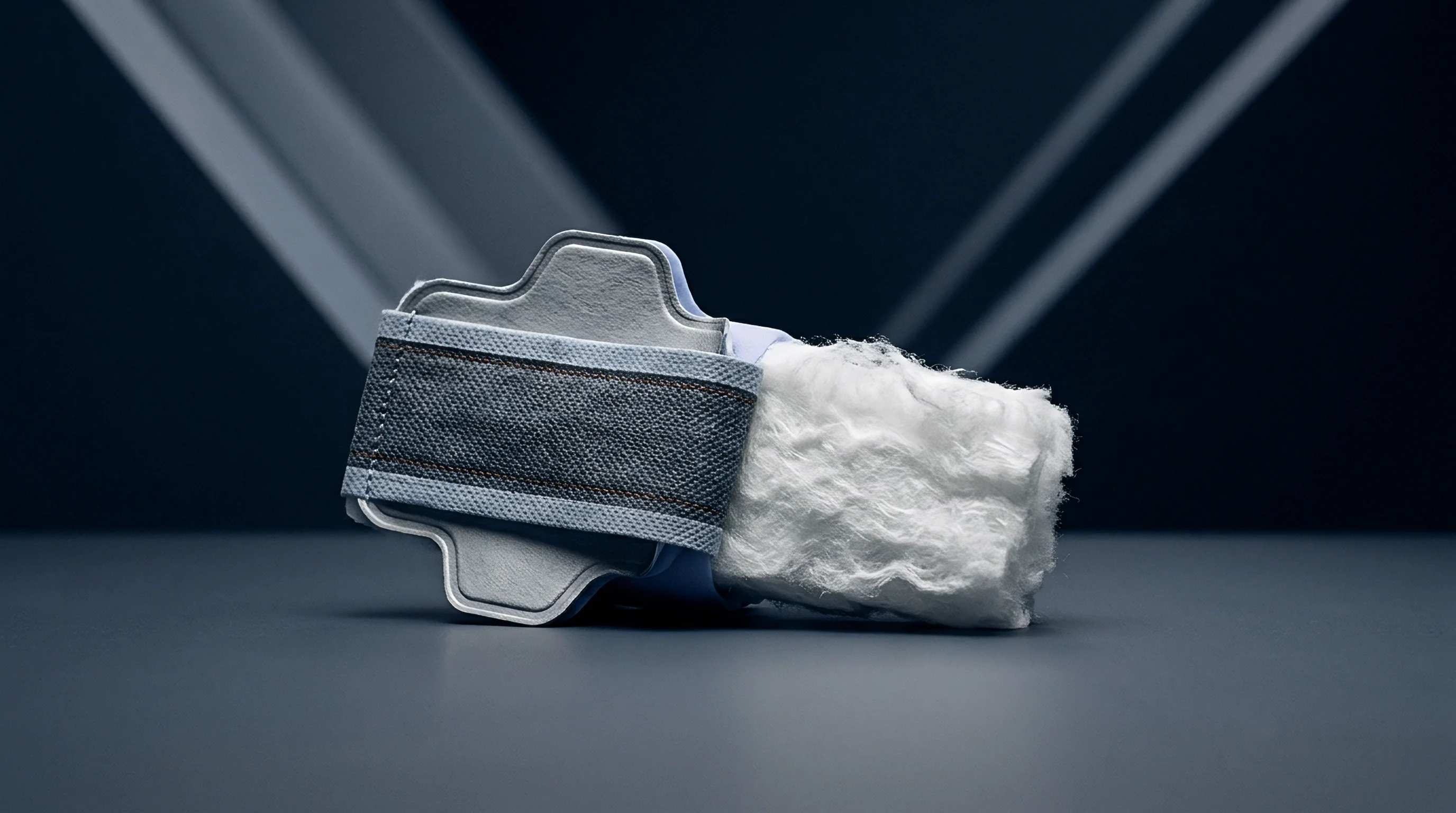
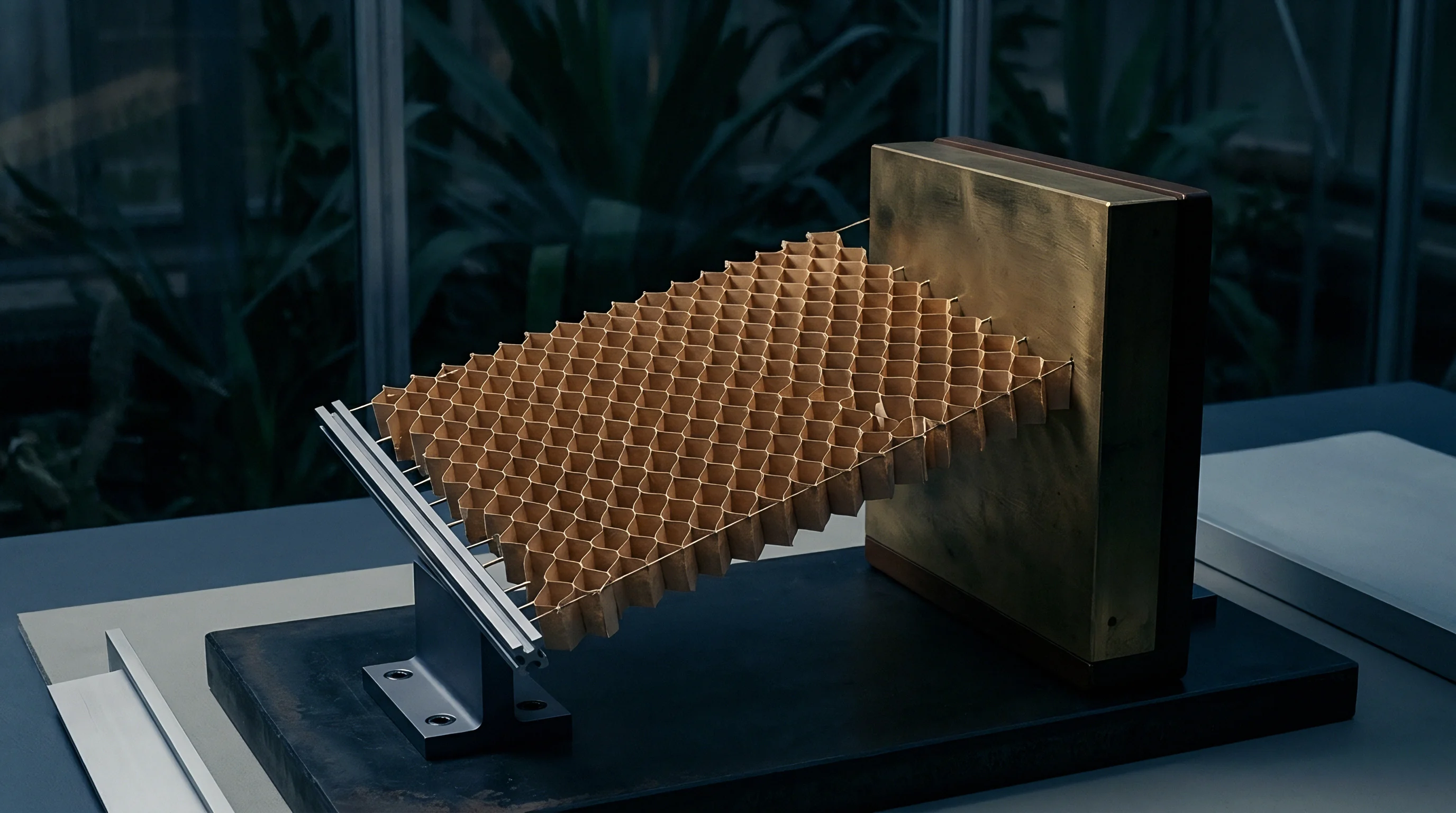
Chemical pre-treatment of wood chips sets the fundamental trade-off between yield and fiber flexibility in chemi-thermomechanical pulping. Impregnating chips with sodium sulfite at elevated temperatures introduces hydrophilic sulfonate groups into the middle lamella lignin. Applying liquor concentrations of 15 to 45 grams per liter at 120 to 150 degrees Celsius lowers lignin’s softening point below the thermal refining threshold, transitioning it from a glassy state to a rubbery one.
Refining un-sulfonated chips shears directly through cell walls, producing short fragments and fines that compromise bulk. Sulfonation shifts that mechanical fracture line to the middle lamella, preserving fiber length and lumen geometry.
Liquor penetration into the chip core depends on pre-steaming and mechanical compression. Plug-screw feeders compress chips at volumetric ratios between 3:1 and 4:1 to expel air and residual moisture from the vascular network. As chips exit the screw into the chemical vessel, capillary action draws sodium sulfite liquor into the expanding pores.
Incomplete de-aeration leaves dry centers in thick chips, creating raw, un-sulfonated zones that turn into stiff shives during primary refining. These shives undermine internal bond strength and generate surface defects in multi-ply boxboard. Impregnation vessel dwell times of 12 minutes achieve uniform cross-sectional saturation in chips under 5 millimeters thick.
Refining energy drops as sulfonation intensity increases, but at the cost of fiber yield. Converting raw spruce through pure TMP yields up to 97 percent dry mass and demands 2,200 to 2,600 kilowatt-hours per dry tonne to hit a Canadian Standard Freeness of 400 milliliters. Raising sodium sulfite dosage to 40 kilograms per dry tonne cuts combined primary and secondary refining power to 1,300 kilowatt-hours per dry tonne, but carbohydrate dissolution and lignin degradation pull total yield down to 91 percent.
In middle-ply boxboard, that lower yield produces flexible fibers that collapse during consolidation, sacrificing the caliper needed for flexural rigidity.
| Pre-Treatment Level | Sodium Sulfite Dosage (kg/t) | Pulp Yield (%) | Refining Energy (kWh/t) | Sulfonate Content (% SO3) | Sheet Bulk (cm³/g) |
|---|---|---|---|---|---|
| Low Sulfonation | 12.0 to 18.0 | 95.5 to 96.8 | 1,850 to 2,100 | 0.35 to 0.48 | 2.45 to 2.60 |
| Medium Sulfonation | 22.0 to 30.0 | 93.2 to 94.8 | 1,500 to 1,750 | 0.55 to 0.72 | 2.15 to 2.35 |
| High Sulfonation | 35.0 to 48.0 | 90.5 to 92.4 | 1,150 to 1,400 | 0.85 to 1.10 | 1.80 to 2.00 |
| Data measured on Picea abies furnish conditioned per ISO 187 at 23°C and 50% relative humidity. Bulk tested per ISO 534. Energy recorded at primary and secondary disc refiners. | |||||

Chemical Impregnation Dwell Time and Pressure Sequences
Maintaining positive pressure in the impregnator pushes sodium sulfite past outer cell walls into the chip core. Operating at 0.15 to 0.25 megapascals of steam pressure accelerates diffusion across the middle lamella. Stable operating temperatures prevent sulfurous compounds from dropping out of solution while keeping liquor pH between 8.5 and 9.5.
This alkaline window protects hemicelluloses, which promote internal bonding during web drying. Allowing pH to fall below 7.0 accelerates carbohydrate hydrolysis, shortening fibers and reducing yield without improving flexibility.
Primary disc refining breaks softened chips into discrete fibers under pressure. Atmospheric refining allows rapid cooling, which hardens middle lamella lignin before separation finishes and fractures cell walls. Pressurized refiners operating at 0.3 to 0.5 megapascals keep the lignin above its glass transition point through the grinding zone.
Plate clearance settings between 0.35 and 0.50 millimeters rely on inter-fiber friction to roll fibers apart along intercellular boundaries instead of cutting them transversely.
- Pre-Steaming Vessel Entry where raw wood chips encounter low-pressure atmospheric steam to strip entrapped air and raise chip temperature to 90 degrees Celsius.
- Volumetric Plug-Screw Compression where mechanical forces compress the softened chips to force out residual pore moisture before chemical contact.
- Submerged Impregnation Liquor Exposure where compressed chips expand rapidly inside a high-concentration sodium sulfite bath maintained at 130 degrees Celsius.
- Pressurized Reaction Retention where impregnated chips dwell for ten to fifteen minutes under a steam headspace to complete chemical sulfonation.
- High-Consistency Primary Refining where softened chips pass through disc refiners at 35 percent consistency to separate fibers cleanly along the middle lamella.
Rule of thumb: targeted sodium sulfite addition rates keep pulping yield above ninety-four percent to maintain the cellular wall stiffness required for high middle-ply sheet bulk.
Secondary refining removes residual shives and establishes target freeness for wet-end drainage. Running secondary refiners at 4 to 6 percent consistency increases mechanical impacts per fiber, whereas high-consistency refining at 25 to 30 percent preserves fiber curl and bulk. Low-consistency refining flattens fibers and sacrifices caliper.
Boxboard mills seeking high bending stiffness at low basis weights run high-consistency secondary refining alongside screening systems to eliminate shives without collapsing tubular fiber walls.
Chemical addition levels provide direct control over drainage and sheet bulk. Higher sodium sulfite charges soften wood beyond the target threshold for middle plies, producing dense, conformable fibers similar to chemical pulp. These fibers form tightly packed sheets with low void volumes, thinning the core ply.
While raising sulfonation levels smooths sheet surface profile, it compromises structural rigidity: middle-ply thickness losses reduce flexural stiffness cubically relative to caliper reductions.
Timber
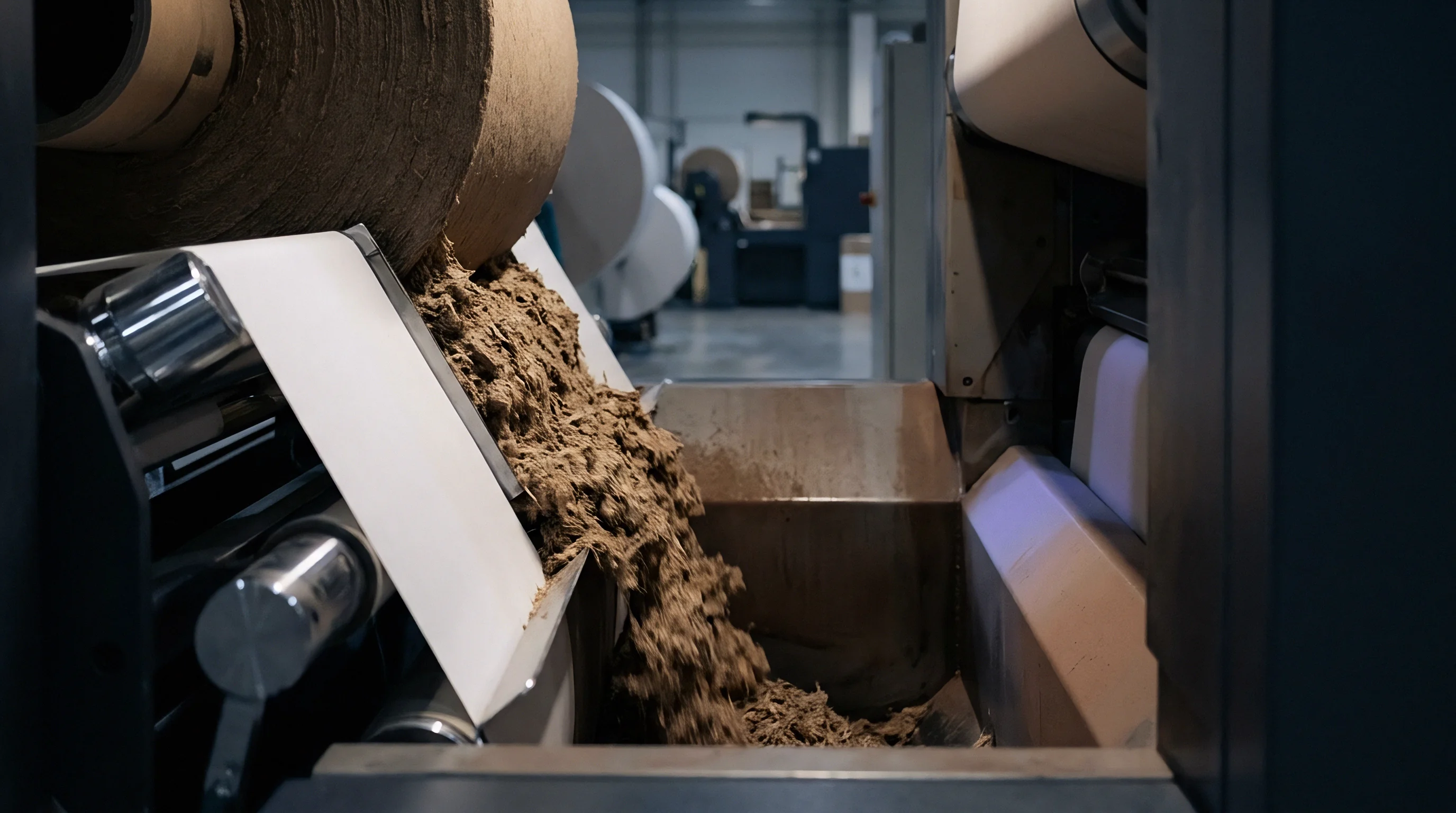
Wood species sets the baseline for bulk and compression resistance in chemi-thermomechanical core pulps. Softwoods such as Norway Spruce (Picea abies) and Loblolly Pine (Pinus taeda) provide long tracheids measuring 2.5 to 3.8 millimeters, creating an interlocking network that resists bending shear. Hardwoods like Trembling Aspen (Populus tremula) and Eucalyptus (Eucalyptus grandis) yield thinner-walled, shorter fibers between 0.8 and 1.2 millimeters.
Softwood CTMP maintains higher bulk at matched freeness because its un-collapsed tracheid walls resist compaction.
Lumen morphology determines how well fibers resist flattening during pressing and calendering. Thin-walled earlywood tracheids collapse under wet-end nips into flat ribbons, densifying the sheet. Thick-walled latewood tracheids withstand mechanical compression, preserving void volume in the core layer.
Softwood furnish from slow-growing northern forests contains higher latewood proportions, yielding better crush resistance. Aspen fibers have broad central lumens and thin walls that collapse during dewatering, making pure aspen CTMP less suited for low-grammage boxboard cores where thickness per unit weight is critical.
Hardwood vessel elements present distinct converting and printing problems. These wide, barrel-shaped cells cannot entangle effectively with surrounding core fibers. If un-refined vessel elements sit near the ply boundary between the CTMP core and outer chemical layers, they can pull loose under ink-tack forces during offset printing.
Refining breaks vessels into smaller fragments, though it adds fines and slows drainage on the forming wire. Adding 30 percent softwood CTMP to hardwood furnishes strengthens the matrix, anchoring vessel elements and improving ply bond.
- Summerwood Lumen Collapse where thin-walled earlywood fibers flatten into dense ribbons under wet-press pressure, reducing spatial volume in the board middle layer.
- Shive Network Discontinuity where un-defibrated wood fiber bundles interrupt chemical ply bonding, creating localized micro-cracks along score lines during package converting.
- Fines Matrix Over-Consolidation where excess ray cell fragments accumulate within fiber interstices, accelerating capillary water retention and reducing mechanical sheet bulk.
- Vessel Element Surface Delamination where wide, un-bonded hardwood cells detach at the ply boundary under Z-direction tensile stress during high-tack ink transfer.
Fiber Morphology and Cross-Sectional Geometry
Fiber coarseness reflects mass per unit length, measured in milligrams per hundred meters. Coarse fibers feature thicker cell walls that resist transverse loading. Northern softwood CTMP shows coarseness values between 18 and 28 milligrams per hundred meters, while hardwoods measure 8 to 14 milligrams.
High-coarseness pulps produce porous sheets with large internal voids, providing the middle-ply caliper needed to prevent carton bulge under stacking loads at lower basis weights.
Specific surface area climbs as mechanical refining peels micro-fibrils from fiber walls. While fibrillation improves inter-fiber hydrogen bonding, it sharply increases drainage resistance on the wire. Freeness drops from 500 down to 200 milliliters CSF as refining energy mounts.
For middle-ply furnishes, refining stops once shive content falls below 0.05 percent on a 0.15-millimeter Somerville screen. Excess refining collapses lumens, turning bulky mechanical pulp into a slow-draining furnish that chokes machine speed.
Laboratory testing confirms that spruce CTMP conditioned to ISO 187 standards achieves a bulk value of 2.55 cubic centimeters per gram at a freeness of 420 milliliters Canadian Standard Freeness.
Pulp cleanliness affects converting reliability and creasing behavior in low-basis-weight board. Un-defibrated fragments, bark specks, and coarse shives create localized weak spots along crease lines. Multi-stage forward cleaners and pressure screens with 0.12-millimeter slots separate heavy debris and send coarse shives back to the reject refiner.
Thorough shive removal maintains internal shear strength across the core, preventing delamination during high-speed carton folding.
Furnish blends introduce complex structural interactions. Mixing high-yield aspen CTMP with long-fiber spruce CTMP balances surface smoothness against core bulk, though the exact interactions between hardwood fines and softwood networks under fast forming rates remain difficult to model. Mills adjust blend ratios empirically based on runnability and scoring performance, as z-direction stress distribution through hybrid cores remains an active area of board development.
Bulk
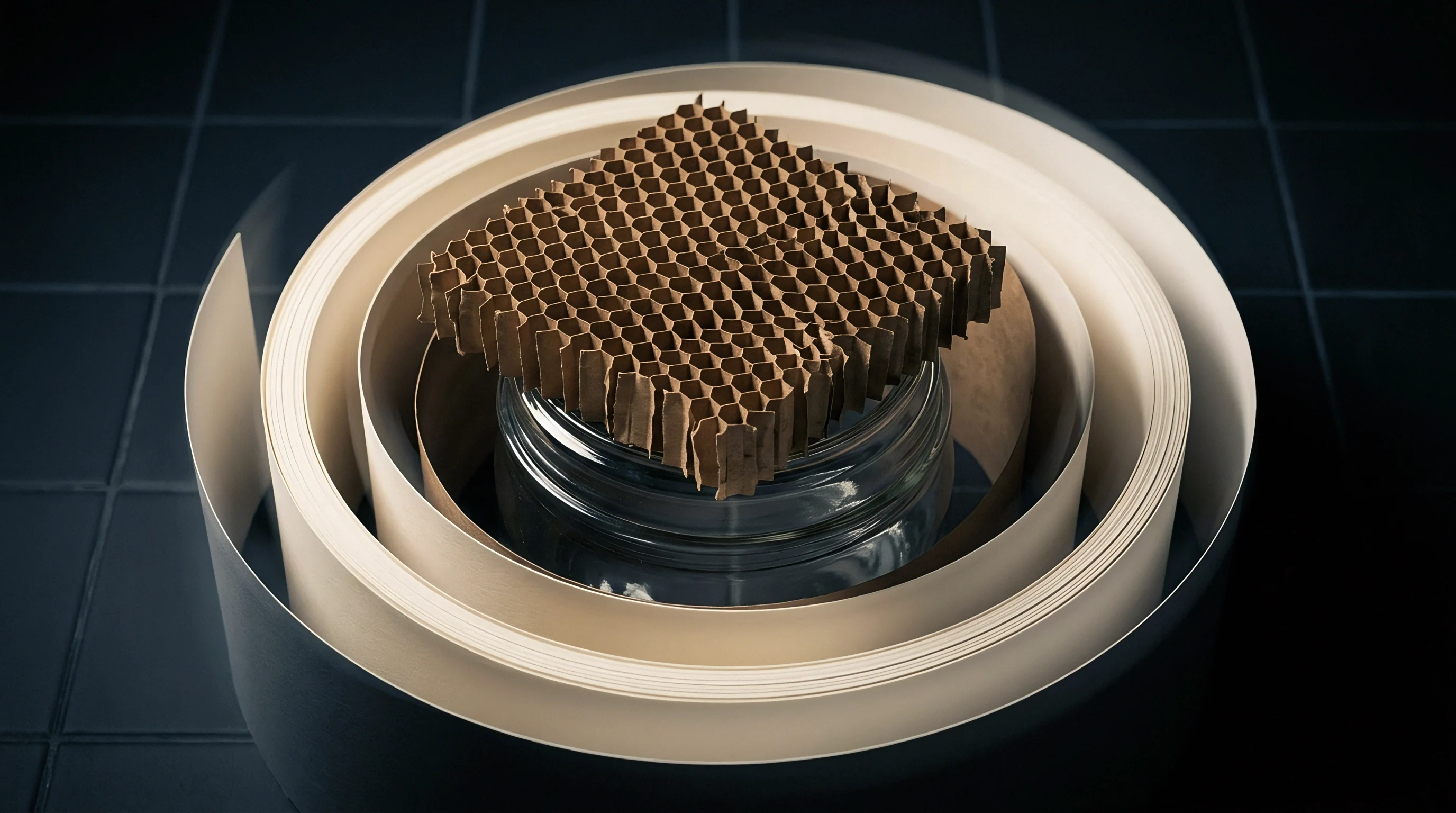
Multi-ply folding boxboard functions like a structural I-beam: outer chemical pulp layers handle tensile and compressive stresses while the CTMP core separates them. Flexural rigidity scales with the elastic modulus of the surface plies and the cube of overall sheet thickness. The middle CTMP layer acts as the beam web, providing spatial separation with minimal weight.
Maximizing core bulk lets mills lower total grammage while meeting the stiffness specifications required for packaging lines and warehouse stacking.
Wet pressing determines how much void volume reaches the dryers. Shoe presses distribute compressive load over a wider nip than traditional roll presses. Peak hydraulic pressure in the nip drops significantly even as total pressing impulse remains high.
This lower peak pressure prevents CTMP lumens from collapsing, allowing the sheet to reach 45 to 50 percent solids while preserving z-direction bulk. Double-felted roll presses apply sharp pressure spikes that crush wet fiber lumens permanently, reducing final caliper by up to 12 percent at equivalent water removal rates.
| Calender Configuration | Lineal Load (kN/m) | Roll Temperature (°C) | Sheet Thickness (µm) | Core Density (g/cm³) | Taber Stiffness 15° (mN·m) |
|---|---|---|---|---|---|
| Un-calendered Web | 0.0 | 20 | 385 | 0.545 | 18.2 |
| Hard-Nip Calender | 45.0 | 20 | 310 | 0.677 | 10.8 |
| Single Soft-Nip Calender | 30.0 | 110 | 335 | 0.626 | 13.1 |
| Extended Soft-Nip Calender | 20.0 | 160 | 355 | 0.591 | 15.4 |
| Moisture-Gradient Calender | 18.0 | 180 | 365 | 0.575 | 16.8 |
| Tested per ISO 534 for thickness and density; ISO 2493-1 for Taber bending resistance at 15 degrees angle on Machine Direction samples. Core layer comprises 65% total grammage using spruce CTMP. | |||||

Dryer Section Thermal Profiles and Densification Controls
Drying cylinder temperature profiles affect middle-ply density through lignin softening. High sheet moisture combined with high surface temperatures in early dryer sections plasticizes wet CTMP fibers. Softened fibers collapse under web tension, densifying the core before it consolidates.
Stepped drying profiles use cooler cylinders in the first section, ramping up temperature only after web solids pass 65 percent, where cell walls better resist thermal flattening.
Calendering finishes surface plies for printing, but nip pressure can crush the core. Hard-nip steel calenders compress high and low basis weight areas uniformly, flattening bulky CTMP fibers. Soft-nip calenders use compliant polymer roll covers that deform around thickness variations, spreading load and preserving caliper.
Running soft-nip rolls at temperatures up to 180 degrees Celsius softens the outer chemical layers to build smoothness while leaving the dry CTMP core uncompressed.
Standard delivery contracts for low-grammage boxboard specify a minimum bending resistance threshold, voiding compliance if core calendering lowers total caliper below the contractually agreed micrometer limit.
Why Does High Calender Moisture Collapse Middle Ply Stiffness?
Water plasticizes amorphous cellulose and hemicellulose in wood fibers. If sheet moisture entering the calender exceeds 8.5 percent, the matrix glass transition temperature drops below operating conditions. Nip pressure then deforms softened core fibers permanently, flattening lumens and destroying the caliper required for bending stiffness.
Keeping incoming sheet moisture between 6.5 and 7.5 percent maintains core fiber rigidity while allowing surface plies to replicate heated roll finishes.
Moisture-gradient calendering applies water mist or steam directly to outer chemical pulp plies just ahead of the soft nip. Surface wetting plasticizes only the top 15 to 20 micrometers of the sheet. The central CTMP layer stays dry and rigid, resisting compression through the nip.
This localized softening delivers print-grade smoothness while preserving up to 95 percent of un-calendered core thickness, maximizing stiffness per unit basis weight.
Uneven calender nip profiles create localized core crushing across the machine width. Variations in web moisture or basis weight generate uneven nip load lanes, permanently densifying strips of the reel. Converting reels with crushed lanes causes carton bulging and fold misalignment on folder-gluers.
A 15-micrometer caliper loss across misaligned crown-compensating calender rolls is enough to cause intermittent carton failure during high-speed converting.
Score
Scoreline performance depends on controlled internal shear delamination within the CTMP core during folding. When a creasing rule pushes into boxboard, outer chemical pulp plies bear tension and compression while the core delaminates horizontally. This controlled shear relieves stress, allowing clean bends without cracking the coated top surface.
If internal ply bond strength is too high, the core cannot separate along shear planes, forcing the outer liner to absorb extreme tensile strain until it ruptures.
The Scott Bond test (ISO 16260) measures the energy required to delaminate board in the z-direction under dynamic impact. CTMP middle plies require an internal bond window between 110 and 160 Joules per square meter. Below 110 Joules per square meter, plies risk separating under ink-tack forces during offset printing.
Above 160 Joules per square meter, the core resists shear during creasing, leading to top-liner cracks along folded edges.
Wet-end starch sprays reinforce inter-ply bonding between adjacent layers. Applying cationic potato or corn starch between surface plies and the CTMP core creates an adhesive boundary. Starch application rates of 1.5 to 3.5 grams per square meter per interface improve adhesion without soaking into the core.
Excessive application penetrates deep into the CTMP, raising density and stiffening the core beyond the threshold needed for clean creasing delamination.
Creasing matrix geometry must match board caliper to ensure proper hinge formation. Matrix width typically equals 1.5 times the board thickness plus the rule width, with matrix depth matching sheet caliper. Undersized matrix tooling forces the CTMP core into vertical compression instead of initiating horizontal shear.
Crushed core fibers fracture irregularly, creating soft, unstable creases that bulge when cartons are folded.

Step-by-Step Scott Bond Internal Bond Testing Procedure
- Cut representative boxboard samples to 25.4 millimeter width and 200 millimeter length under standard ISO 187 atmospheric conditioning.
- Apply high-tack double-sided adhesive tape cleanly to both surfaces of the test specimen without trapping air bubbles.
- Mount the taped specimen between the rigid anvil block and the aluminum angle test specimen holder.
- Apply standardized pressure using the mechanical specimen preparation press for exactly three seconds to establish uniform adhesive contact.
- Position the mounted specimen assembly securely into the magnetic pendulum impact test apparatus.
- Release the weighted pendulum from its primed 90-degree angle position to strike the aluminum angle holder.
- Record the peak energy absorbed during z-direction sheet failure directly from the calibrated digital pendulum sensor in Joules per square meter.
Flat observation: clean scorelines require the middle CTMP ply to fail along horizontal shear planes before surface tensile forces exceed outer kraft fiber stretch limits.
Shifts in core moisture prior to die-cutting cause distinct creasing defects. Boxboard stored in unconditioned facilities gains or loses moisture through pallet edges. Moisture levels below 5.0 percent make CTMP fibers brittle, causing core shattering rather than shear delamination during scoring.
Moisture above 9.0 percent weakens internal hydrogen bonding, dropping Scott Bond strength below safe operating thresholds and causing uncontrolled edge delamination during folder-gluer runs.
Board purchase contracts specify strict internal bond tolerances across delivered reels. Standard agreements stipulate: Delamination resistance across inter-ply boundary layers shall meet ISO 16260 standards within 120 to 150 J/m²; material exhibiting scoreline rupture due to internal bond deviation shall be subject to complete lot rejection and full converter downtime reimbursement. These clauses protect converters from erratic core bonding that halts high-speed packaging lines.
Tariff
Material economics in boxboard balance pulp market prices against yield gains achieved through downgauging. Bleached Chemi-Thermomechanical Pulp trades at a discount to Bleached Softwood Kraft (NBSK) and Bleached Hardwood Kraft (BHKP). Incorporating up to 70 percent CTMP in the middle ply reduces furnish cost per tonne while increasing sheet bulk.
This higher bulk lets converters specify lighter board while matching the bending stiffness of heavier solid chemical grades.
Downgauging reduces carton weight without compromising structural strength. Replacing a 230 gram per square meter solid bleached board (SBB) made entirely of chemical pulp with a 190 gram per square meter folding boxboard (FBB) containing an optimized CTMP core maintains a 15 mN·m Taber bending resistance. That 17.4 percent mass reduction lowers material spend per carton and cuts transport emissions across distribution networks.
| Board Grade Specification | Basis Weight (g/m²) | Sheet Thickness (µm) | Taber Stiffness 15° (mN·m) | Tonnage per 100k Units (t) | Landed Material Cost (€) |
|---|---|---|---|---|---|
| Solid Bleached Board (SBB) | 240 | 310 | 15.2 | 12.00 | 16,800 |
| Standard FBB (50% CTMP) | 210 | 340 | 15.0 | 10.50 | 13,650 |
| Optimized FBB (70% CTMP) | 190 | 355 | 15.3 | 9.50 | 11,875 |
| High-Bulk FBB (80% CTMP) | 175 | 360 | 15.1 | 8.75 | 10,938 |
| Calculations based on standard blank dimensions of 0.50 m x 1.00 m per unit. Pricing assumptions: SBB at €1,400/t; Standard FBB at €1,300/t; Optimized FBB at €1,250/t; High-Bulk FBB at €1,250/t. Freight distance calculated at 500 km baseline. | |||||
Freight Volume Thresholds and Transport Payload Economics
Freight density determines whether road trailers max out on weight or cubic volume. Bulky, low-grammage boxboard reels take up more volume per tonne. A trailer hauling dense chemical board hits its 24-tonne gross weight limit before filling cargo space, whereas high-bulk CTMP reels cube out trailers at 19 to 21 tonnes total load.
Although freight cost per tonne rises for high-bulk grades, the lower material weight per carton offsets that penalty on a delivered-unit basis.
Extended Producer Responsibility (EPR) programs levy packaging fees based on total weight placed on the market. Lighter CTMP cores reduce the tonnage subject to these municipal recycling assessments. Cutting carton weight by 20 grams per square meter saves brand owners thousands of Euros annually per product line in EPR fees without sacrificing carton durability.
Multi-ply CTMP boxboard repulps cleanly in standard recovery systems. High-yield mechanical core fibers break down quickly during hydrapulping without aggressive chemical additions or long pulping cycles. Fibers re-wet rapidly and separate cleanly from outer chemical pulp layers, producing high-grade secondary furnish that meets recyclability certification standards and circular packaging requirements.
Rule of thumb: specifying boxboard by caliper and flexural stiffness rather than basis weight ensures maximum downgauging savings without risking carton structural failure in automated packing lines.