Virgin Hardwood Pulp Sizing Chemistry and Fibre Hydrogen Bonding Properties
Virgin hardwood sizing requires balancing high surface hydroxyl density against AKD and ASA steric interference to maintain internal bond and Cobb holdout.
Cellulose
Bleached virgin hardwood pulps provide the primary fiber matrix for high-smoothness graphic and packaging papers. Wood species selection dictates individual fiber dimensions, which shifts the total surface hydroxyl groups available for inter-fiber bonding. Eucalyptus pulps, specifically Eucalyptus grandis and Eucalyptus globulus, yield up to twenty million fibers per gram, whereas Scandinavian birch (Betula pendula) contains roughly twelve million fibers per gram.
This structural difference alters how the wet web consolidates on the paper machine wire: higher fiber counts create more contact points across a given sheet volume, establishing the physical foundation for mechanical sheet strength.
Hemicellulose fractions also vary significantly between hardwood species. Birch pulps contain twenty to twenty-five percent xylan by dry weight, while eucalyptus ranges from twelve to eighteen percent. During stock preparation, flexible glucuronic acid side chains on the xylan project into the aqueous phase, exposing primary and secondary hydroxyl groups at the C-2, C-3, and C-6 positions of the anhydroglucose ring.
These hydroxyl groups act as electron donors and acceptors, forming non-covalent electrostatic bonds once drying brings adjacent fiber surfaces within 0.3 nanometers of one another.
Hardwood Species Morphology and Density
Botanical classification dictates the physical dimensions of short hardwood fibers used in furnish blends. Eucalyptus fibers average 0.75 to 0.85 millimeters in length with cell walls 3.0 to 4.5 micrometers thick. Birch fibers run longer, between 0.90 and 1.15 millimeters, with thinner cell walls that collapse more readily under surface tension during press-section dewatering.
This wall collapse expands the sheet’s relative bonded area ~ the fraction of total fiber surface actively participating in mutual hydrogen bonding. Evaluating Eucalyptus grandis against Birch pulp shipments shows how wood species variations alter surface hydroxyl availability and shift the balance between sheet bulk and tensile energy absorption.
Refining alters external fiber morphology by stripping away the primary cell wall. The mechanical shear applied in refiners causes external fibrillation, exposing internal microfibrils rich in hydroxyl groups. Unrefined hardwood pulps display low Schopper-Riegler values around 14 to 16 °SR.
Refining to 28 ~ 32 °SR increases total swelling capacity and frees reactive hydroxyl sites, though over-refining short hardwood fibers generates excess fines that increase drainage resistance on the Fourdrinier wire without adding strength.
- Sample five unrefined wet-lap pulp bales from distinct mill lots following ISO 7213 sampling procedures.
- Disintegrate thirty dry grams of pulp in an ISO 5263 standardized disintegrator at 30,000 revolutions in deionized water at 20 degrees Celsius.
- Measure initial Schopper-Riegler freeness according to ISO 5267-1 to establish baseline drainage parameters before mechanical treatment.
- Subject pulp slurries to laboratory refining at zero, 1000, 2000, and 4000 revolutions under a constant load of 3.37 Newtons per millimeter bar length.
- Form handsheets at sixty grams per square meter basis weight using an ISO 5269-1 sheet former, couching and pressing twice at 400 kilopascals.
- Condition dry sheets for forty-eight hours at 23 degrees Celsius and 50 percent relative humidity under ISO 187 atmospheric controls before physical testing.
Step six completes the laboratory preparation workflow.
Sheet density directly tracks inter-fiber bond formation. Pressed under standard lab conditions, virgin eucalyptus sheets reach dry densities of 0.60 to 0.72 grams per cubic centimeter.
Birch processed under identical schedules reaches 0.70 to 0.82 grams per cubic centimeter due to its more conformable fibers. Higher density reflects tighter spatial proximity between adjacent cellulose fibrils, maximizing hydrogen bond concentration per unit volume.
| Pulp Species | Mean Fiber Length (mm) | Fiber Coarseness (mg/100m) | Xylan Content (% dry weight) | Hydroxyl Surface Density (µmol/g) | Scott Bond Range (J/m²) |
|---|---|---|---|---|---|
| Eucalyptus globulus | 0.80 | 6.8 | 14.5 | 420 | 140 – 180 |
| Eucalyptus grandis | 0.85 | 7.5 | 12.8 | 390 | 125 – 165 |
| Betula pendula (Birch) | 1.05 | 8.2 | 22.4 | 580 | 190 – 240 |
| Acacia mangium | 0.72 | 5.9 | 15.1 | 440 | 130 – 170 |
| Populus tremula (Aspen) | 0.92 | 7.1 | 18.6 | 510 | 160 – 200 |
Dry web consolidation relies on Campbell forces generated during final dewatering. As free water leaves interstitial pores, surface tension pulls adjacent cell walls together. The meniscus radius of the remaining liquid shrinks, creating localized capillary pressures above 10 megapascals.
This pressure drives flexible fiber surfaces into contact so hydroxyl groups can form hydrogen bond bridges. Refining virgin hardwood pulps to optimal freeness maximizes this capillary effect.
Refining hardwood pulp to higher hydration levels increases inter-fiber contact area while lowering web porosity, establishing peak tensile strength before any chemical additives are introduced.
Swell
Water entering a dry paper matrix forces adjacent carbohydrate chains apart, breaking non-covalent bond networks. Liquid moves through the structure via capillary action driven by surface wetting forces. Fluid transport through porous fiber networks follows the Lucas-Washburn relation, where pore radius, viscosity, and contact angle determine penetration speed.
Pure virgin hardwood sheets without chemical sizing absorb water rapidly, expanding individual fiber walls and destroying structural rigidity within milliseconds of contact.
Sorption kinetics depend heavily on the ratio of crystalline to amorphous cellulose inside the cell wall. Crystalline zones resist water intrusion because their carbohydrate chains are tightly packed in parallel alignments. Amorphous regions and hemicellulose matrices absorb moisture readily and swell.
Virgin hardwood fibers contain 35 to 45 percent amorphous domain area. Unbound hydroxyl groups in these amorphous zones draw in water dipoles, forming hydration shells that push adjacent cellulose chains apart and degrade overall sheet stiffness.
Water Sorption and Hydroxyl Accessibility
Amorphous regions within plant cell walls serve as primary sorption sites for liquid entering the web. Ambient humidity shifts the equilibrium moisture content of virgin hardwood sheets along a predictable hysteresis curve. At 50 percent relative humidity, virgin eucalyptus paper holds roughly 6.5 percent water by weight; at 85 percent relative humidity, moisture content rises to 12.0 percent.
This absorbed water plasticizes the fiber matrix, dropping the glass transition temperature of hemicellulose polymers from 180 degrees Celsius down to ambient room levels.
Pulp selection governs final sheet density, but absorbed moisture inevitably weakens hydrogen bonding. Micro-structural swelling expands sheet caliper in the Z-direction by 15 to 20 percent upon full saturation, even while lateral dimensions stay constrained by the inter-locked network. This expansion degrades internal integrity, causing severe strength loss in unsized packaging grades exposed to humid environments.
Softwood blends conditioned under ISO 187 at 23 degrees Celsius and 50 percent relative humidity show a 14 percent lower Cobb sixty water absorption value than pure Eucalyptus furnish.
Contact Angle Decay Dynamics
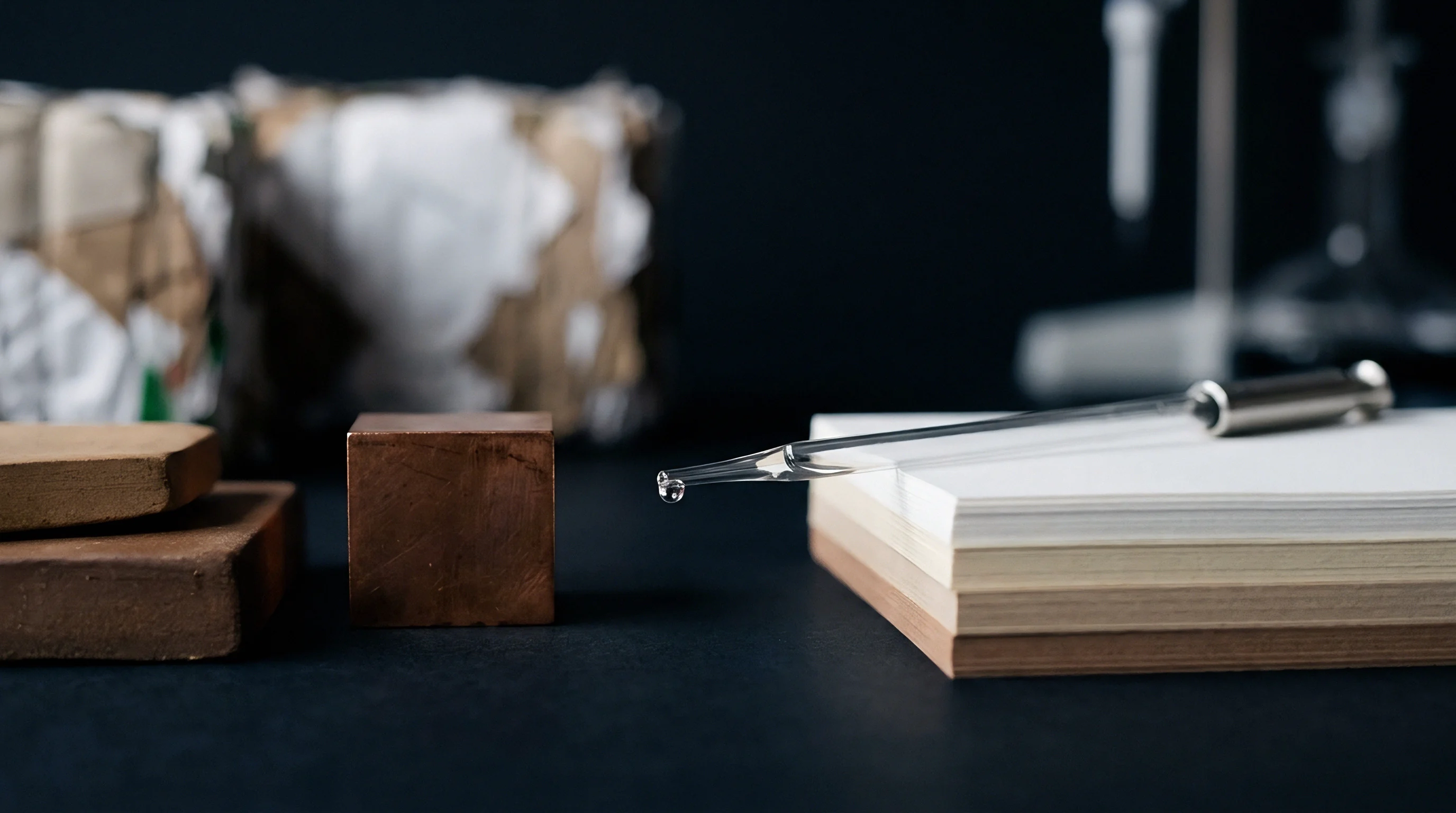
Sessile droplet goniometry tracks how fast liquid boundaries collapse across virgin fiber networks. On an unsized virgin hardwood sheet, an initial water droplet forms a contact angle between 40 and 60 degrees. Wetting forces quickly pull the liquid into interstitial micropores, collapsing the contact angle to zero in under three seconds.
This dynamic surface tension reduction drives rapid absorption, making unsized sheets unusable for offset lithography or aqueous barrier coatings without chemical sizing.
Internal sizing halts this contact angle decay by orienting hydrophobic hydrocarbon tails across fiber surfaces. Effective sizing holds water contact angles above 90 degrees over extended periods. Once the angle exceeds 90 degrees, its cosine turns negative, reversing the direction of capillary pressure inside the sheet’s pores.
This hydrophobic barrier prevents water from reaching reactive surface hydroxyls, preserving internal hydrogen bonds.
Cobb testing under ISO 535 measures total liquid uptake over set time frames. Standard unsized virgin eucalyptus sheets absorb over 120 grams of water per square meter during a sixty-second test. Applying internal sizing brings sixty-second Cobb values below 25 grams per square meter, preserving structural stiffness and dimensional stability during high-moisture converting operations.
Wet-end calcium carbonate additions alter surface pore diameters beyond normal chemical sizing limits, causing rapid edge-wicking on un-coated boards.


Reagent
Hydrophobic wet-end additives convert hydrophilic pulp fibers into liquid-resistant paper substrates. Internal sizing agents must distribute uniformly throughout dilute stock suspensions running at 0.5 to 1.2 percent solids. Chemically, these reagents feature a reactive or polar head group paired with a long hydrophobic hydrocarbon tail.
Chemical reaction or physical adsorption attaches the head group to the fiber surface, orienting the hydrophobic tail outward into sheet voids to form a low-energy barrier across the internal pore network.
Alkyl Ketene Dimer (AKD) and Alkenyl Succinic Anhydride (ASA) are the main synthetic internal sizing reagents used in virgin hardwood graphic and packaging papers. AKD reagents use saturated C16 to C18 chains derived from palmitic and stearic fatty acids, whereas ASA uses unsaturated, branched C16 to C20 alkenyl chains. Choosing between AKD and ASA affects running speeds, wet-end pH parameters, and curing rates downstream.
Alkyl Ketene Dimer Curing Kinetics
Synthetic diketene molecules react under dryer-section heat to form covalent ester bonds with carbohydrate hydroxyl groups. AKD requires web temperatures above 90 degrees Celsius in the final dryer section to open the four-membered oxetan-2-one ring and bond directly to the C-6 primary hydroxyl group of cellulose. This covalent linkage permanently anchors the sizing molecule to the fiber wall.
Curing continues after the reel is wound, taking 24 to 72 hours at warehouse temperatures to reach ultimate Cobb values.
Sizing reversion occurs when unreacted AKD hydrolyzes in process water to form 16-heptadecanone, a ketone that lacks the reactive ring needed to bind with cellulose. These ketones migrate across fiber surfaces as mobile wax molecules, providing temporary water resistance but no stable, long-term sizing. High wet-end temperatures and elevated alkalinity accelerate AKD hydrolysis before the sheet ever reaches the dryers.
Why Will Hydrolysis Neutralize Hydrophobic Retention Belts?
Side reactions between process water and active sizing compounds destroy the functional anhydrides required for cellulose attachment. ASA reagents contain an anhydride ring that reacts rapidly with cellulose hydroxyls at pH 7.5 to 8.2, but ASA has a hydrolysis half-life of only 20 to 30 minutes in 50-degree-Celsius water. Hydrolyzed ASA turns into alkenyl succinic dicarboxylic acid, which cannot bond covalently to pulp fibers.
Scandinavian mill runs demonstrate ASA hydrolysis kinetics under alkaline conditions.
Dicarboxylic acid byproducts react with dissolved calcium ions from calcium carbonate fillers, forming insoluble calcium soaps that coalesce into sticky deposits. These hydrophobic deposits build up on machine wires, press felts, and dry cans, leading to web breaks and translucent spots in finished paper reels. Preventing ASA hydrolysis requires on-site emulsification with cationic starch immediately before wet-end injection to maintain emulsion droplet diameters between 1.0 and 2.0 micrometers.
Compliance with ISO 535 Cobb water absorption testing requires immediate weighing within four seconds of couch roll action to prevent wet-end moisture calculation distortion.
- Sizing Hydrolysis Reversion ~ Active ASA or AKD molecules react with free process water before reaching dryer sections, forming non-reactive ketones or dicarboxylic acids that fail to bond with cellulose hydroxyl groups.
- Calcium Soap Slime Formation ~ Hydrolyzed ASA combines with dissolved calcium ions in alkaline wet ends, creating insoluble sticky deposits that clog machine wires and form translucent spots in the sheet.
- Charge Over-Cationization ~ Excess cationic starch added for sizing retention neutralizes anionic trash, shifting wet-end zeta potential above positive ten millivolts and suppressing overall chemical retention.
- Desorption Under Heat Shear ~ Inadequate thermal curing leaves unbonded wax molecules that migrate inward under calender roll heat, exposing hydrophilic hydroxyl sites back to liquid penetration.
Neutral rosin sizing offers an alternative approach when paired with polyaluminum chloride (PAC) at pH 6.2 to 6.8. Rosin acids react with cationic aluminum complexes to form insoluble aluminum resinate precipitates that bind electrostatically to anionic fiber surfaces. While rosin-PAC systems avoid rapid hydrolysis, their sizing performance lags behind AKD and ASA on dense, heavily filled virgin eucalyptus sheets.
| Sizing Compound | Wet-End pH Range | Curing Temp (°C) | Reaction Half-Life | Target Cobb 60 (g/m²) | Scott Bond Impact (J/m²) |
|---|---|---|---|---|---|
| AKD (Stearic/Palmitic) | 7.5 – 8.5 | 90 – 110 | 24 – 48 Hours | 18 – 22 | -12 to -18 % |
| ASA (Alkenyl Succinic) | 7.2 – 8.2 | 70 – 90 | 25 Minutes | 16 – 20 | -8 to -14 % |
| Acid Rosin / Alum | 4.2 – 4.8 | 60 – 80 | Instantaneous | 25 – 30 | -5 to -10 % |
| Neutral Rosin / PAC | 6.2 – 6.8 | 70 – 85 | Instantaneous | 22 – 26 | -6 to -11 % |
| ISO 535 testing conditioned under ISO 187 at 23 degrees Celsius and 50 percent relative humidity. | |||||
Retention aids are critical for anchoring sizing emulsions to virgin hardwood fibers. Cationic polyacrylamides (CPAM) and micro-polymer systems bridge small size droplets to anionic pulp surfaces, which carry high negative charges from minus 15 to minus 30 millivolts zeta potential. Proper dosing sequences introduce cationic starch first to neutralize dissolved anionic trash, followed by the sizing emulsion, and finally CPAM to lock the droplets onto fiber cell walls prior to sheet formation.
Standard supply agreement clause 14.2 specifies that delivered paper reels exhibiting a Cobb sixty value greater than thirty-five grams per square meter upon arrival at the converter permit full batch rejection and shift return freight expenses to the paper mill.

Cohesion
Z-direction structural integrity in paper depends on the density of hydrogen bonds formed between inter-tangled fibers. Internal bond strength measures the energy required to delaminate a sheet along its central plane. The Scott Bond method (ISO 16260 and TAPPI T 569) uses a high-velocity pendulum to strike a double-coated adhesive tape assembly fixed to the paper surface.
Higher energy absorption numbers indicate stronger internal hydrogen bonding across the fiber matrix.
Internal sizing agents deposit hydrophobic molecules directly into the micro-zones where hydrogen bonds would otherwise form. Hydrocarbon tails on AKD and ASA molecules cover hydroxyl sites on microfibrils, creating localized steric hindrance that prevents adjacent cellulose chains from bonding. Raising internal size dosing from 1.0 to 3.5 kilograms per tonne of dry pulp lowers Scott Bond values.
Internal bond strength drops 28 percent when cationic starch loading exceeds twelve kilograms per tonne in an over-sized virgin eucalyptus furnish.

Internal Bond Strength and Fiber Network Stress
Standard pendulum impact devices measure the energy absorbed when splitting paper specimens along their thickness axis. Virgin hardwood pulps show distinct internal bond responses depending on fiber morphology. Short eucalyptus fibers produce many inter-fiber joints per unit volume, but individual joint areas are small.
Birch pulps form larger joint contact areas because the fibers conform better. As a result, birch sheets maintain higher baseline Scott Bond values (190 to 240 Joules per square meter) than eucalyptus sheets (130 to 180 Joules per square meter).
Tensile energy absorption (TEA) under ISO 1924-3 measures total work per unit area needed to fracture a paper strip. High internal sizing levels reduce TEA values by preventing micro-yielding within the fiber network under strain. Static tension fractures individual bond sites; when internal hydrogen bonds are replaced by weak hydrophobic contacts, tensile failure propagates rapidly through pore spaces, causing web breaks on high-speed presses.
Excessive cationic starch additions weaken fiber bonding networks by saturating anionic anchoring sites across hardwood surfaces.
Refining Energy and Bond Site Density
Mechanical shear in conical disc refiners fibrillates the outer cell wall to expose active hydroxyl groups. Refining virgin hardwood pulps increases sheet density and internal bond strength together. Net refining energy between 40 and 70 kilowatt-hours per tonne raises Scott Bond values by expanding the relative bonded area.
However, refining also reduces freeness and slows wet-end drainage, forcing mill engineers to balance refiner power against chemical binder additions to preserve machine speed while maintaining ply cohesion.
Cationic wet-end starch acts as a chemical binder to recover strength lost to synthetic sizing agents. Amylomaize or tapioca starches modified with quaternary ammonium groups carry positive charges that adsorb onto anionic cellulose microfibrils. These gelatinized starch networks span fiber contact points, restoring internal cohesion.
Adding 8.0 to 12.0 kilograms of cationic starch per tonne of pulp recovers up to 25 percent of the Scott Bond energy lost to internal sizing interference.
- Hydrophobic Retention Verification ~ Confirm that active size retention across the wire exceeds eighty-five percent using gas chromatography extractions from couch roll web samples.
- Internal Bond Preservation ~ Verify that Scott Bond energy values remain above one hundred and eighty Joules per square meter following internal sizing addition.
- Alkaline Wet-End Charge Balance ~ Monitor wet-end streaming current to maintain system zeta potential between minus five and zero millivolts during chemical dosing.
- Thermal Curing Profile Audit ~ Inspect dryer section heat curves to verify web surface temperatures reach ninety-five degrees Celsius prior to the final calender stack.
Precipitated calcium carbonate (PCC) fillers further complicate Z-direction strength. Mills add PCC at 15 to 25 percent by weight to boost opacity and brightness, but filler particles sit between virgin hardwood fibers and physically block hydrogen bonding. Each one percent increase in PCC content reduces Scott Bond strength by roughly 3.0 Joules per square meter.
Wet-end chemists use co-flocculated filler-starch complexes to aggregate PCC away from primary fiber contact zones.
An un-notified mill reduction in cationic starch dosing caused score-line delamination across ten thousand printed packaging units, resulting in forty-two thousand dollars in landed carton spoilage.

Presswork
Printing operations put internal sizing chemistry to its ultimate test. Offset lithography applies aqueous fountain solutions directly to the printing plate, transferring dampening fluid to the paper sheet via the rubber blanket. Surfactants, acids, and alcohol substitutes in fountain solutions drop surface tension from 72.8 down to 35.0 millinewtons per meter.
These low-surface-tension fluids penetrate hydrophobic sizing barriers far faster than pure water, threatening internal sheet cohesion during multi-color print runs.
Sheet surface strength must withstand strong ink tack forces on offset presses. As ink rollers pull away from the sheet, film splitting generates high normal shear stresses. If surface sizing is weak or internal bonding is poor, surface fibers pluck away from the web.
This fiber picking transfers hardwood fragments onto printing blankets, causing print defects known as hickeys and forcing press wash-ups.
Offset Lithographic Liquid Holdout Properties
Dampening fluids containing alcohol substitutes exert surface tension forces that challenge hydrophobic wax coatings on paper substrates. High press running speeds, exceeding 15,000 sheets per hour, compress the liquid contact time down to fraction-of-a-second intervals. Under these high-dynamic pressures, fountain solution enters microscopic surface voids.
Pure virgin hardwood sheets rely on a combination of internal AKD sizing and surface starch application to resist liquid absorption during successive printing units.
Dynamic penetration instruments test fluid holdout under simulated press pressures. Unsized virgin eucalyptus paper absorbs fountain solution within 50 milliseconds, causing structural softening and web expansion. Over-sized sheets reject fountain solution entirely, inhibiting ink emulsification and delaying ink drying in the delivery pile.
Balanced sizing provides controlled holdout, taking up minimal fountain fluid while allowing vehicle oils to set cleanly.
Offset lithographic fountain solutions break down alkyl ketene dimer hydrophobic barriers when press alcohol substitutes lower surface tension below 35 millinewtons per meter.

Surface Size Starch Network Deposition
Metering size presses apply uniform carbohydrate films to seal structural micro-voids across the dry web. Surface sizing uses oxidized, ethylated, or cationic starches at 8.0 to 14.0 percent solids concentrations, depositing dry coat weights of 1.0 to 2.5 grams per square meter per side. This starch forms a continuous hydrogen-bonded film over short hardwood fibers, anchoring loose surface material and raising surface pick resistance above Dennison Wax 14.
Synthetic sizing additives blended into size-press starches improve holdout against low-surface-tension liquids. Styrene Acrylic Acid (SAA) copolymers and Styrene Maleic Anhydride (SMA) salts co-crystallize with starch molecules in the main dryer section. Adding 1.5 to 3.0 kilograms of SAA emulsion per tonne of paper drops sixty-second Cobb values against fountain solutions by an extra 30 percent while improving gloss and ink holdout on coated graphic grades.
| Surface Size Formulation | Starch Pickup (g/m²/side) | Surface Tension Tolerance (mN/m) | Offset Linting Resistance | Ink Gloss (60° %) | Water Cobb 60 (g/m²) |
|---|---|---|---|---|---|
| Oxidized Corn Starch | 1.2 | > 45.0 | Moderate | 55 | 24 – 28 |
| Ethylated Tapioca Starch | 1.5 | > 42.0 | High | 62 | 20 – 24 |
| Cationic Starch + SAA Copolymer | 1.8 | > 32.0 | Very High | 74 | 14 – 18 |
| Polyvinyl Alcohol (PVA) Blend | 1.0 | > 36.0 | High | 68 | 16 – 20 |
Aqueous barrier coating holdout depends heavily on surface sizing uniformity. Converters run water-based acrylic coatings inline over printed packaging sheets for rub resistance and gloss. If internal sizing is spotty or the surface starch layer contains pinholes, aqueous coating vehicles sink into the hardwood substrate.
Thin surface layers drop gloss levels from 75 down to 45 percent while causing severe sheet curl as water plasticizes the underlying fibers.
Whether high-speed digital inkjet inks with ultra-low surface tension surfactants can achieve sharp dot fidelity on pure virgin hardwood sheets without requiring expensive synthetic surface primers remains an active operational debate among mill chemists.
Margin
Paper mill profitability depends on balancing chemical addition costs against sheet yield and pressroom runnability. Internal size, wet-end starch, and retention polymers add directly to raw material costs per tonne of finished paper. Alkyl ketene dimer emulsions run $2.50 to $4.00 per active kilogram, while alkenyl succinic anhydride reagents cost $2.20 to $3.50 per kilogram.
Sizing high-surface-area eucalyptus pulps requires higher chemical dosages, pushing up substrate manufacturing costs.
However, virgin hardwood pulps offer bulk advantages that can offset higher wet-end chemical spending. Virgin eucalyptus yields specific bulk values of 1.35 to 1.55 cubic centimeters per gram, compared to 1.15 to 1.25 for softwood pulps. This extra bulk allows paper buyers to lower basis weight while maintaining caliper and bending stiffness on packaging lines.
Replacing a 250 gram per square meter softwood board with a 230 gram per square meter virgin eucalyptus folding boxboard cuts sheet weight by 8.0 percent for the same order count.
Internal Size Dosing and Tonnage Economics
Chemical addition costs per tonne must be balanced against total converting yield. Eucalyptus fibers present surface area metrics between 15 and 22 square meters per gram due to their small fiber diameter and high population density. Pine fibers present lower surface areas between 8 and 12 square meters per gram.
Sizing pure eucalyptus furnish requires up to 40 percent more internal sizing agent per tonne to achieve identical Cobb water resistance compared to softwood-dominant furnishes.
Optimizing wet-end additions balances active reagent costs against downtime risks. Under-sizing causes pressroom spoilage when fountain solution softens the web, leading to misregistration or sheet tears. Over-sizing wastes expensive chemicals, reduces Scott Bond strength, and risks sizing reversion in storage.
In the end, total yield drives the balance sheet.
Yield Optimization and Downgauging Headroom
Selecting pulps with superior bulk characteristics permits grammage reductions without sacrificing structural packaging stiffness. Taber stiffness scales with the third power of sheet caliper under standard beam bending equations. Virgin hardwood pulps refined at low specific edge loads preserve fiber wall bulk, maximizing sheet thickness per unit grammage.
Achieving target caliper at lower basis weights reduces total landed tonnage purchases, lowering freight expenditures and extended producer responsibility fees across packaging distribution networks.
Worked yield calculations quantify commercial trade-offs between chemical inputs and landed sheet pricing. Consider a large-scale commercial printing job requiring one million B1 format sheets at 150 grams per square meter basis weight. Sourcing pure virgin birch furnish at $950 per tonne involves higher base pulp costs but lower refining energy requirements and lower internal sizing chemical dosing.
Sourcing eucalyptus furnish at $820 per tonne drops base pulp cost but increases AKD sizing dosing by 1.2 kilograms per tonne and increases cationic starch consumption by 3.0 kilograms per tonne to preserve Scott Bond strength.
Calculating landed substrate economics requires combining chemical dosing costs, mill refining power penalties, freight mass charges, and converting line spoilage rates into one final dollar value per thousand delivered cartons. When eucalyptus furnish allows a twenty-gram reduction in basis weight while maintaining caliper through superior fiber bulk, the net tonnage savings offset higher internal sizing chemical consumption across large volume packaging orders.