Unresolved Disintegration Protocol Discrepancies between European Mill Pulping Standard and Converting Floor Residues
Standard pulping tests understate converting waste micro-residues because low lab shear leaves coatings intact while mill hydrapulpers shatter them.


Slurry
Standardized wet disintegration of paperboard packaging depends on predictable hydrodynamics inside a cylindrical lab vessel. Disintegrators under ISO 5263 run a single propeller at three thousand revolutions per minute in a three-liter container. Suspended solids remain fixed at thirty grams per liter ~ a three percent consistency.
By isolating fiber separation from plant-level variables, this bench setup measures how effectively cellulose bundles decouple under uniform hydraulic forces to establish baseline repulpability metrics.
Commercial stock preparation operates under entirely different physical dynamics. Secondary fiber pulpers running converting floor waste operate at six to eighteen percent consistency. At high consistency, pulping relies on fiber-to-fiber friction rather than high-velocity impeller shear to break mechanical bonds.
Mechanical energy per dry tonne differs by an order of magnitude between bench disintegrators and continuous industrial units: a laboratory disintegrator imparts low energy density over ten minutes, whereas commercial units deliver concentrated shear combined with severe hydraulic turbulence.
A standard laboratory disintegrator operating at 3,000 revolutions per minute for 10 minutes generates 30,000 total revolutions while imparting only 0.8 kilowatt-hours of mechanical energy per dry tonne of pulp.
Comparing fiber recovery rates across European recycling mills reveals physical discrepancies between laboratory repulpability scores and actual mill yields. Converting floor residues combine complex materials ~ edge trim, skeletal waste, and off-spec folding cartons carrying UV cured lacquers, hot-melt adhesives, cold-seal adhesives, extrusion coatings, and synthetic barrier dispersions. Standard laboratory disintegration uses water at twenty degrees Celsius and neutral pH, leaving synthetic coatings mostly intact.
Industrial hydrapulpers run at slurry temperatures up to fifty-five degrees Celsius with variable pH and intense agitation, altering how the slurry behaves.

Hydrodynamic Energy Discrepancies
Standardized testing uses an impeller spinning at three thousand revolutions per minute in a fixed three-liter volume. Vessel geometry sets up toroidal flow patterns with predictable velocity gradients, pushing tip speeds to roughly eleven meters per second at the propeller perimeter. Energy transfers mainly through fluid shear stress within the boundary layer near the blade surface ~ far too low to shatter flexible polymer coatings or brittle UV cured lacquers.
The mechanical work breaks hydrogen bonds between wood fibers while leaving synthetic film layers largely unfragmented.
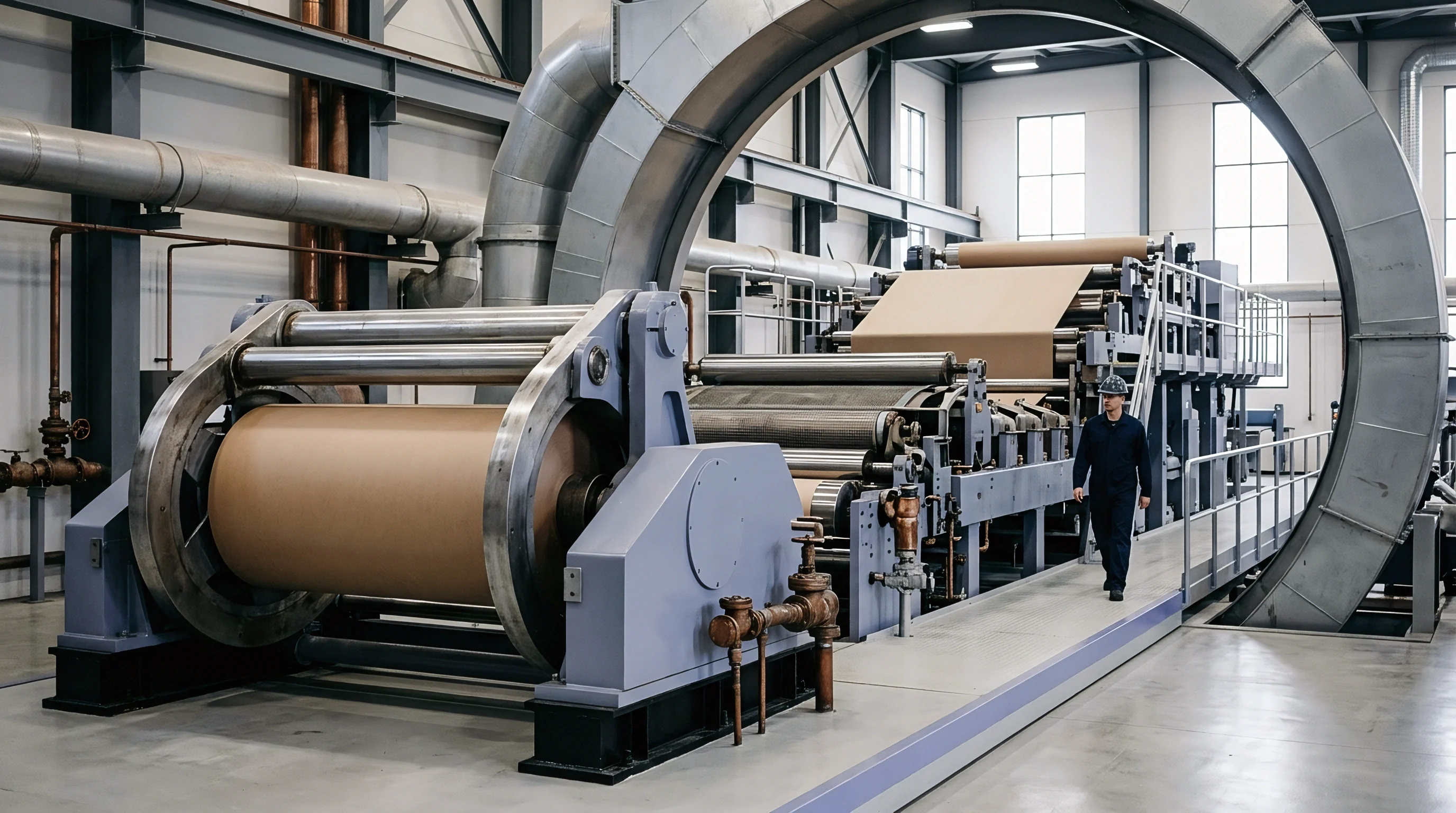
Commercial pulping gear handles secondary packaging waste through fundamentally different fluid dynamics. Industrial batch pulpers fit large-diameter rotors with helical flights or contoured vanes in vats holding up to sixty cubic meters of suspension. High-consistency pulping forces fiber aggregates against one another, generating intense inter-particle friction that spreads shear throughout the dense matrix instead of focusing it at the rotor tip.
These combined compression and shear forces shatter brittle coatings into small geometric particles, while flexible barrier films stretch multiaxially and peel off paperboard substrates as irregular ribbons.

Rheological Behavior of Suspended Fibers
At three percent solids concentration, the slurry acts as an aqueous dispersion where individual filaments move freely. Water surrounds each cellulose fiber, damping impacts and insulating non-paper additives from compressive stress. Synthetic coatings attached to the matrix experience only mild hydraulic washing, detaching in large, continuous flakes that retain structural integrity.
Because analytical screening media easily capture these large fragments, the test produces clear filtrate and artificially high repulpability scores.
Suspensions at twelve percent consistency exhibit non-Newtonian plastic flow. The crowded fiber matrix resists shear deformation, building up localized pressure zones inside the pulper tub. Adhesives and barrier resins embedded in converting trim face direct mechanical attrition from adjacent fiber bundles.
Under elevated slurry temperatures, low-softening-point hot-melt adhesives deform into sticky micro-droplets, while UV lacquers shatter into thousands of micron-scale particles. Industrial pulpers crush brittle film layers where laboratory disintegrators merely supply mild shear ~ shifting particle size distributions toward sub-millimeter scales and altering residue behavior during downstream screening.
The operational failures seen when converting floor residues enter commercial repulping streams stem directly from hydrodynamic mismatches during initial pulping.
- Coating Shattering occurs when high-shear industrial rotors reduce rigid barrier films into micro-particles smaller than standard laboratory screening apertures.
- Adhesive Emulsification happens when elevated pulping temperatures soften hot-melt adhesives, causing them to disperse as sticky micro-droplets under continuous agitation.
- Fiber Entrapment arises when cross-linked wet-strength resins resist fiber separation in laboratory disintegrators, causing yield underestimation relative to industrial high-consistency pulping.
- Screening Bypass develops when flexible polycoat films twist into narrow ribbons under industrial fluid shear, passing end-on through slotted screening media.
Material suppliers frequently maintain that standard disintegrator yields validate material suitability regardless of downstream industrial hydrapulper configuration.
Standard
European testing standards establish laboratory frameworks to evaluate material recovery across paper packaging grades. The Cepi Harmonised European Laboratory Test Method for Recyclability of Paper and Board Packaging sets rules for sample preparation, pulping, and screen residue classification. Similarly, the PTS-RH 021/97 protocol developed by Papiertechnische Stiftung defines pass-fail thresholds based on coarse mass rejects and fine sticky particle formation.
Both methods seek reproducible data across independent labs by locking down operational boundaries across batch runs.
European standard EN 13430 establishes basic requirements for packaging recoverable through material recycling. Annex A specifies that non-paper components must not exceed defined mass fractions after wet disintegration and screening. Standard laboratory fractionators use slotted plates to separate usable cellulose fiber from non-repulpable residue.
Across European evaluation schemes, standard aperture size is fixed at one hundred and fifty micrometers ~ corresponding to 0.15 millimeter slot widths on Somerville fractionators or Haindl screening units. Non-paper components retained on the screen form the coarse reject fraction, while material passing through enters the accepted fiber stream.
EN 13430 Annex A mandates that non-paper constituents exceeding 1.5 percent retained mass on a 150 micrometer slotted screen disqualify the packaging substrate from standard material recycling claims.
Evaluating converting floor residues under standard laboratory procedures exposes fundamental protocol limits. Converting waste contains material combinations that standard test schemes were never designed to handle. Off-cuts from barrier-coated packaging, foil-laminated cartons, and heavy UV-varnished boards generate residues that pass through laboratory protocols without triggering high reject warnings.
Standard screens catch macro-residues and intact sheets, but let fine synthetic contaminants pass straight into accepted fiber fractions. The resulting pulp looks clean during visual bench inspection, hiding downstream contamination risks for paper machines.

Analytical Frameworks across European Schemes
Laboratory assessment methods specify parameters for consistency, duration, and water temperature during initial disintegration. The Cepi 2022 test protocol requires disintegrating fifty dry grams of sample at thirty grams per liter consistency for thirty thousand revolutions, with water temperature held at forty degrees Celsius without chemical additions. The pulp suspension then passes to a screening unit equipped with a 0.15 millimeter slotted plate, running for twenty minutes under fixed hydraulic pressure.
Mass fractions of coarse rejects, macro-stickies, and accepted fibers are weighed after oven drying at one hundred and five degrees Celsius.
The PTS-RH 021/97 testing scheme splits repulpability into two operational categories. Category 1 evaluates general repulpability based on coarse reject mass, capping the threshold at two percent dry weight. Category 2 assesses sheet formation disturbances and sticky contamination from adhesives and coatings.
While PTS-RH 021/97 evaluates visual sheet spots, its primary quantitative pass-fail metric relies on coarse screen residue. Converting floor residues with brittle lacquers pass Category 1 tests with ease because the lacquer shatters into particles fine enough to drop through 0.15 millimeter screen slots straight into accepted stock.
Screening Slot Geometry and Reject Classification
Laboratory fractionators use stationary screens with parallel slots spaced one hundred and fifty micrometers apart. Fluid motion across the screen surface is driven by low-amplitude mechanical pulsation or constant gravity head flow, carrying fibers and fine particles through the openings perpendicular to the plate. Rigid coating flakes aligned parallel to the slots slip through provided their cross-sectional thickness stays under 0.15 millimeters.
Slot dimensions select strictly for particle width rather than surface area or volumetric mass.
Commercial stock preparation uses multi-stage screening lines built for continuous throughput. Primary industrial screening relies on pressure screens with rotor blades spinning inside cylindrical baskets. Slot widths range from 0.12 to 0.25 millimeters, operating under positive pressure differentials above fifty kilopascals while continuous hydrodynamic pulse waves clear the basket to prevent mat build-up.
Under high pressure differentials, flexible polymer films deform dynamically and squeeze through narrow slots. Industrial screening mechanics regularly let deformable contaminants pass through screens that would catch rigid particles of identical dimensions in static laboratory tests.
| Standard Protocol | Consistency (%) | Disintegration Energy | Screen Aperture (mm) | Pass Threshold (% Reject) | Micro-Residue Detection |
|---|---|---|---|---|---|
| Cepi Recyclability (2022) | 3.0 | 30,000 revolutions | 0.15 slot | Less than 1.5% mass | Visual gravimetric count |
| PTS-RH 021/97 Cat 1 | 2.5 | 25,000 revolutions | 0.15 slot | Less than 2.0% mass | Visual spot area index |
| INGEDETEC Method 12 | 3.0 | 30,000 revolutions | 0.15 slot | Less than 2.5% mass | Macro-sticky image analysis |
| EN 13430 Annex A | 3.0 | 30,000 revolutions | 0.15 slot | Less than 1.5% mass | No micro-sticky quantification |
| All metrics apply to laboratory test conditions at 20°C to 40°C using mains water without chemical additives. | |||||
Standard purchasing contracts referencing CEPI 2022 test compliance grant rejection rights to the buyer whenever coarse slot screening yields exceed two percent dry mass.

Shear
Mechanical force during stock preparation determines particle size distribution for non-cellulosic components. The shear rate applied to pulping slurry controls whether barrier coatings remain intact sheets or shatter into micro-fragments. In standard laboratory disintegrators, shear stress stays low and evenly distributed.
Propeller blades create localized fluid shear rates up to eight hundred reciprocal seconds ~ enough to separate cellulose fibers along natural middle lamella boundaries without shattering synthetic coatings attached to board surfaces.
Industrial continuous pulpers transfer mechanical energy at far higher intensities. Shear rates in high-consistency industrial rotors exceed four thousand reciprocal seconds within the narrow gap between rotor vanes and bedplates, with volumetric energy dissipation reaching fifty kilowatts per cubic meter. Under these conditions, composite packaging materials undergo high-frequency stress cycles.
Brittle barrier resins fail through rapid crack propagation, producing flat, sharp particles from ten to two hundred micrometers across. Mechanical action fundamentally alters residue size.
Increasing pulp slurry consistency inside industrial hydrapulpers increases inter-fiber friction, breaking flexible polymer laminates into smaller fragments than high-speed laboratory impellers do.
Analytical evaluations of coating fragmentation kinetics show clear physical boundaries where laboratory repulpability metrics diverge from industrial stock preparation performance. Mechanical energy input during pulping dictates particle size reduction according to power-law fragmentation dynamics. Standard laboratory disintegrators supply roughly 0.8 kilowatt-hours per dry tonne.
Industrial low-consistency pulpers deliver fifteen to twenty-five kilowatt-hours per dry tonne, and high-consistency pulpers supply up to forty-five kilowatt-hours per dry tonne. This added energy reduces non-paper residues to sizes that easily escape primary screening equipment.
Energy Dissipation in Industrial Hydrapulpers
Commercial repulping equipment inputs between fifteen and forty-five kilowatt-hours per dry tonne of recovered paper mass, with rotor designs concentrating energy delivery into localized hydrodynamic zones. Fluid velocity gradients near the rotor periphery generate rapid pressure fluctuations that cause localized cavitation. Cavitation micro-bubbles collapse against suspended packaging fragments, eroding surface coatings and stripping printed lacquers from paperboard layers.
While fiber bundles separate rapidly under cavitation forces, synthetic coatings undergo simultaneous size reduction.
Energy transfer within high-consistency pulpers relies on friction within dense fiber networks. At twelve percent solids concentration, water acts as a lubricant between packed cellulose strands, translating mechanical energy directly into normal and shear forces across particle surfaces. Polymeric coatings endure continuous abrasion from surrounding fibers, breaking dispersion coatings, hot-melt adhesives, and cross-linked varnishes into particles small enough to pass unhindered through 0.15 millimeter screens.
Below one hundred micrometers, these particles evade gravimetric measurement in standard tests, entering the accepted pulp stream unnoticed.
Fragmentation Dynamics of Polymeric Coatings
Extrusion-coated polyethylene films behave differently from cross-linked acrylate dispersions under mechanical force. Low-density polyethylene laminates possess high elongation at break, resisting fracture under moderate fluid shear. In laboratory disintegrators, polyethylene coatings detach as large, continuous sheets that curl into loose tubes.
These film structures are caught on 0.15 millimeter Somerville screens, recording high reject percentages and issuing clear contamination warnings. The material receives a low repulpability score, correctly signaling its contamination potential.
Cross-linked UV cured lacquers and water-based dispersion barrier coatings exhibit low fracture toughness and minimal plastic deformation. Under industrial pulper agitation, stress concentration at surface defects causes instantaneous crack propagation across coating layers, shattering the coating into high-aspect-ratio micro-flakes. Slurry turbulence disperses these micro-flakes throughout the liquid phase, allowing fine particles to bypass primary slot screening and flow directly into fine stock chests.
Fibers stick to tacky polymer fragments. Mills processing this stock suffer from wire blinding, press roll picking, and visual sheet defects, despite handling materials backed by valid repulpability certificates.
| Substrate Specification | Coating / Adhesive Type | Lab Reject Rate (%) | Mill Contamination Rate (%) | Dominant Residue Morphology |
|---|---|---|---|---|
| Solid Bleached Board (300 gsm) | 15 gsm LDPE Extrusion | 4.8% | 0.8% | Large macro-sheets (2-10 mm) |
| Folding Boxboard (350 gsm) | 8 gsm Aqueous Dispersion | 0.3% | 3.5% | Micro-flakes (20-120 µm) |
| Coated Recycled Board (400 gsm) | 5 gsm UV Cured Overprint Lacquer | 0.1% | 4.2% | Brittle spec-particles (10-80 µm) |
| Kraft Backed Board (280 gsm) | 12 gsm EVA Hot-Melt Adhesive | 0.8% | 5.1% | Deformable micro-stickies (30-150 µm) |
Calculating mechanical work performed on suspended solids illustrates the structural divergence between bench testing and mill processing. Standard laboratory disintegrator work equals power input multiplied by disintegration time:
W_lab = (P_disintegrator t_lab) / m_sample
For a standard laboratory setup, power input P averages 120 watts over a 10-minute duration (600 seconds) processing 30 dry grams (0.03 kg) of fiber. Delivered work calculates as follows:
W_lab = (120 W 600 s) / 0.03 kg = 72,000 J / 0.03 kg = 2,400,000 J/kg = 0.67 kWh/kg = 670 kWh/tonne
While this nominal energy figure appears high due to the small dry sample mass, true hydrodynamic energy dissipated into fluid shear within the liquid volume accounts for less than twelve percent of total power draw; the rest is lost to motor efficiency and primary fluid circulation. Effective hydro-shear energy transferred to fiber bundles equals approximately 0.8 kWh per dry tonne.
By contrast, industrial high-consistency pulpers apply lower total nominal energy per mass unit, concentrating mechanical work through direct solid-to-solid contact under high normal forces. Industrial energy dissipation per unit volume derives from rotor torque and apparent slurry viscosity:
epsilon_industrial = (Tau_rotor Omega_rotor) / V_tub
Where rotor torque Tau reaches 45,000 Newton-meters at an angular velocity Omega of 31.4 radians per second inside a 15 cubic meter pulper tub operating at 14 percent consistency. This yields a volumetric energy dissipation rate of:
epsilon_industrial = (45,000 31.4) / 15 = 1,413,000 / 15 = 94,200 W/m^3 = 94.2 kW/m^3
This localized energy dissipation rate exceeds laboratory disintegrator energy density by more than forty times. High volumetric energy density shatters brittle coatings, breaking synthetic films into micro-residues that slip through slotted test screens.
Higher impeller energy input shifts coating waste from macro-rejects caught on primary screens to micro-stickies contaminating finished paper sheets.

Flake
Converting trim waste introduces distinct structural challenges during commercial repulping. Edge trim from high-speed die-cutting, matrix waste from window-patching, and skeleton scrap from folding carton production carry localized concentrations of adhesives and synthetic films. Exposed raw fiber edges sit alongside fully cured functional coatings.
During wet disintegration, water penetrates rapidly along cut edges, swelling inner cellulose layers while outer barrier coatings remain impervious.
On edge trim from high-speed converting lines, structural delamination precedes coating breakdown. Swelling cellulose fibers exert internal hydraulic pressure against surface lacquers and extruded polymer skins. In laboratory disintegrators, gentle washing lifts large coating strips away from paperboard cores, leaving them floating freely while retaining large dimensions.
In industrial stock preparation, violent mechanical impact strips coatings while shearing them into smaller pieces.
Converting floor trim containing cross-linked UV coatings releases rigid micro-flakes that pass through laboratory test screens but deposit on commercial paper machine wires.

Why Do Laboratory Slotted Screens Miss Converting Residues?
Low hydrostatic pressure differentials across stationary fractionation plates keep flexible polycoats from folding during wet separation. In laboratory Somerville screens, fluid pulses gently across a single horizontal plate, where coating flakes larger than one hundred and fifty micrometers align parallel to the surface under laminar boundary flow. This flat orientation prevents rigid flakes from passing through narrow slots, retaining them on top of the plate to register as coarse mass rejects and generate high contamination scores in laboratory reports.
Industrial pressure screens force pulp slurry through cylindrical screen baskets under high velocity and positive pressure differentials. Rapid rotor sweeps create intense pressure fluctuations, generating forward flow pulses followed immediately by reverse pressure suction. Under forward pressure, flexible coating flakes deform, elongating and twisting into fluid streamlines.
Narrow flakes align vertically within high-velocity shear vectors and pass end-on through 0.15 millimeter slots. Once past the screen basket, these fragments re-expand in low-shear chests, where they act as macro-contaminants in the stock system.

Morphological Alterations in Converting Residues
The morphology of non-paper residues determines how they move through stock preparation equipment. Flat micro-flakes from cured UV coatings possess high specific surface area relative to their mass, producing slow settling velocities that resist removal in centrifugal cleaners. High aspect ratios allow them to pass through coarse hole screens while remaining invisible during standard visual inspection.
Standard laboratory metrics miss these fine particles entirely. Their thin profile lets them slide between wire strands on paper machines, building up inside press felts and drying fabrics.
Adhesive residues from converting floor scrap undergo major morphological shifts during continuous pulping. Pressure-sensitive adhesives, hot-melt ethylene-vinyl acetate resins, and polyurethane cold-seals deform plastically under mechanical stress. In low-shear laboratory equipment, adhesives stay attached to fiber fragments as large composite agglomerates that screens catch efficiently.
In high-shear industrial pulpers, adhesives detach from cellulose fibers and coalesce into spherical micro-stickies between twenty and one hundred micrometers in diameter. These micro-stickies pass straight through slotted screens, downstream cleaners, and fine stock loops, depositing directly onto paper machine drying cylinders.
- Sample collection requires sampling ten kilograms of converting trim across a continuous two-hour production run to account for adhesive application variations.
- Initial disintegration must use fifty grams of representative scrap dry mass suspended in two liters of deionized water at forty degrees Celsius.
- Mechanical disintegration must run for thirty thousand revolutions in an ISO 5263 standard laboratory disintegrator without chemical additives.
- Primary screening requires transferring the slurry onto a 0.15 millimeter Somerville slotted screen operating under constant water flow for twenty minutes.
- Accepted filtrate must pass through a secondary forty-five micrometer wire mesh to capture fine micro-flakes missed by primary slot screening.
- Retained fractions on both screens undergo drying at one hundred and five degrees Celsius followed by gravimetric mass determination.
- Micro-sticky content requires testing accepted filtrate using thermogravimetric analysis combined with solvent extraction to quantify uncaught synthetic resins.
The precise energy threshold at which flexible barrier films shift from macro-flakes to micro-fragments remains an open analytical question across commercial stock preparation lines.
Fraction
Compliance under European directives requires empirical proof of material recovery across packaging waste streams. The revised European Packaging and Packaging Waste Regulation mandates strict recyclability thresholds for all packaging formats placed on the European market. Packaging designs must demonstrate recyclability at scale, supported by standardized laboratory test documentation.
Article 6 of the regulation establishes Recyclability Performance Grades from Grade A to Grade C. Any packaging yielding less than eighty percent usable fiber by mass loses its recyclable classification entirely, facing market access bans across European member states.
Establishing compliance under EN 13430 and the Packaging and Packaging Waste Regulation requires certified laboratory test reports. Reports issued by EN 17025 accredited facilities document coarse reject percentages, fiber yields, and overall material recovery metrics. A substrate achieving a Grade A rating under standard Cepi 2022 laboratory tests carries documentation declaring ninety-five percent material recovery potential.
Yet when converting floor scrap carrying Grade A certification enters commercial secondary fiber mills, true stock yield often drops significantly due to fine micro-residue accumulation.
In practice, published CEPI test scores diverge significantly from secondary fiber mill acceptance criteria. Mill operators evaluate incoming waste lots using operational metrics rather than bench procedures, monitoring paper machine downtime, wire blinding frequency, sheet spot counts, and wet-end chemical consumption. Converting residues certified as fully recyclable under laboratory protocols frequently cause operational disruptions in commercial mills.
This mismatch creates real legal liability for packaging converters and material buyers who rely on laboratory certificates to validate environmental compliance claims.
Scorecard Metrics under European Regulations
The Cepi Recyclability Scorecard converts laboratory test data into a numerical score ranging from minus one hundred to plus one hundred points. Scores above zero indicate acceptable recyclability, while negative scores signal failure. Deductions apply for high coarse reject mass, visual sheet defects, sticky deposits, and unseparated fiber bundles.
Standard scorecard calculations rely on screen residue retained on a 0.15 millimeter slotted plate. Consequently, converting floor trim coated with brittle UV varnishes achieves high Cepi scores simply because shattered varnish particles pass through the screen plate without contributing to coarse reject deductions.
Commercial reality in secondary fiber mills requires alternative evaluation metrics. When micro-varnish flakes pass through primary screening, they enter stock chests and circulate through white water systems. These fine particles accumulate in closed mill water loops until they agglomerate, binding polymer micro-flakes to fine cellulose fibers and creating visible spots on finished containerboard sheets.
Mill operators downgrade paper reels with spot counts exceeding industry standards, imposing price penalties on paperboard suppliers. Standard laboratory scorecards fail to predict white water loop contamination driven by fine residue accumulation.
| Evaluation Parameter | Laboratory Scorecard Metric | Commercial Mill Metric | PPWR Performance Impact |
|---|---|---|---|
| Coarse Reject Mass | Retained on 0.15 mm slot | Coarse screen purge volume | Determines Grade A vs Grade B |
| Fine Particle Formation | Not quantified in Cepi test | White water loop build-up | Unaccounted in lab grade |
| Sticky Contamination | Visual macro-sticky count | Paper machine wire deposits | Causes grade downgrading |
| Effective Fiber Yield | Mass balance across screen | Landed stock yield at reel | Overestimates true fiber yield |
Material Verification and Compliance File Boundaries
Assembling a defensible compliance file for packaging recyclability requires examining standard test limitations. Relying solely on a third-party laboratory test report covering base paperboard provides insufficient protection when converting operations alter material properties. Adding hot-melt seams, full-bleed UV coatings, or barrier laminates fundamentally changes repulpability.
The final converted packaging format ~ including converting trim scrap ~ requires verification testing to ensure the complete material structure meets repulpability standards.
Verifying converting floor scrap suitability requires comprehensive testing protocols that extend beyond standard 0.15 millimeter slot screening. Compliance documentation must incorporate micro-sticky quantification, fine particle size analysis, and white water recirculation tests. Without detailed testing, material declarations printed on packaging remain vulnerable to regulatory scrutiny and enforcement challenges under European national packaging laws.
Compiling verification files for converted waste packaging requires gathering specific technical records to substantiate recyclability claims.
- Base Substrate Certificate confirming repulpability testing of unprinted paperboard according to Cepi 2022 guidelines.
- Chemical Additive Declarations listing all converting lacquers, inks, coatings, and adhesives applied to the substrate during manufacture.
- Converted Waste Test Report detailing disintegration testing performed on fully converted edge trim containing applied functional layers.
- Micro-Residue Quantification Data reporting fine particle counts below one hundred and fifty micrometers collected during secondary filtrate analysis.
- White Water Recirculation Assessment measuring particle accumulation and sticky agglomeration potential within closed liquid loops.
- Chain of Custody Documentation linking specific converting scrap batches to certified raw material delivery lots.
Misclassifying packaging waste under laboratory disintegrator standards results in immediate delisting of recycled stock lots and financial surcharges from secondary fiber processors.
Contract
Commercial agreements between material converters and secondary fiber mills require unambiguous technical specifications for packaging waste repulpability. Standard supply contracts often rely on generic references to European testing standards like EN 13430 or Cepi guidelines. Such broad references leave significant financial exposure unmanaged, allowing buyers and sellers to dispute material rejections when converting trim passes laboratory testing but causes operational issues during continuous pulping in commercial mills.
Definitive supply agreements establish explicit repulpability criteria tailored to converting waste realities. Contracts must define acceptable residue levels based on commercial stock preparation performance rather than bench fractionator yields. Incorporating specific clauses covering micro-sticky concentrations, maximum permissible varnish particle counts, and true dry fiber yield protects both parties against unexpected financial losses, bridging the gap between laboratory tests and commercial mill operations.
Secondary stock purchase contracts specify clear threshold limits for non-dispersible residues. Supply agreements should outline precise protocols for resolving technical disputes when delivered secondary fiber fails mill processing standards. Specifying joint sampling procedures, accredited re-testing laboratories, and explicit cost-allocation mechanisms prevents drawn-out commercial disputes, translating technical parameters into enforceable commercial boundaries.
Risk Allocation in Waste Supply Agreements
Purchasing terms allocate financial responsibility when converted waste fails mill repulpability thresholds. Converting operations generating edge trim and skeletal scrap seek to maximize revenue by selling scrap as high-grade secondary fiber, while mills purchase that scrap expecting predictable pulping performance and high fiber yields. If delivered waste contains cross-linked coatings or hot-melt adhesives that break down into micro-stickies, mill processing costs rise through increased chemical additive consumption, wire cleaning downtime, and reduced sheet quality.
Effective waste supply contracts assign risk based on material traceability and technical verification. Material converters must warrant that sold scrap matches tested sample specifications, including applied ink, varnish, and adhesive coverage rates. If a converter modifies coating formulations without notifying the purchasing mill, they bear full financial liability for any resulting operational disruptions.
Rejection clauses must specify maximum allowable micro-contaminant levels, setting clear thresholds for lot rejections and price adjustments.

Technical Clauses for Converting Residue Acceptability
Definitive supply agreements establish binding limits on residual micro-contaminant concentrations within delivered secondary fiber lots. Standard laboratory certification remains a prerequisite, but contracts should include secondary mill-level verification testing, mandating that converted trim undergo continuous pulping simulation tests to evaluate fine particle generation before material acceptance.
Contractual repulpability clauses must specify exact analytical methods for measuring non-cellulosic residues. Rejection criteria should reference both coarse retained mass on 0.15 millimeter screens and fine particle counts retained on secondary forty-five micrometer analytical filters. Setting numerical thresholds for both particle size ranges ensures contracts address macro-rejects and micro-contaminants with equal clarity.
Procurement teams negotiating waste supply agreements and converting scrap purchase contracts should evaluate technical risk factors prior to contract execution.
- Specification Alignment verifying that purchasing contracts reference specific converting trim specifications rather than raw base board grades.
- Secondary Screening Thresholds establishing maximum allowable mass fractions for micro-particles passing through standard 0.15 millimeter laboratory screen slots.
- Chemical Change Notification mandating thirty days advance notice before converters alter inks, varnishes, adhesives, or barrier coatings on production lines.
- Sampling and Testing Rights granting buyers authority to take representative samples from delivered waste bales for micro-residue verification testing.
- Financial Indemnification Clauses defining specific financial remedies for paper machine downtime caused by unnotified coating formulation changes.
- Dispute Resolution Framework naming accredited testing facilities and defining binding analytical procedures for resolving yield disputes.
Contractual provisions defining repulpability must account for differences between laboratory disintegration and industrial stock preparation. Setting clear limits for coarse rejects and fine micro-residues protects commercial relationships while ensuring secondary fiber quality across supply chains. A detailed allocation of testing costs and stock rejection thresholds protects both parties against unexpected fiber contamination charges.