Standard Laboratory Methods for Paperboard Flexural Rigidity
Paperboard flexural rigidity depends on the cube of caliper, requiring exact ISO 2493 or TAPPI T 489 instrument alignment and strict 23°C/50% RH conditioning.
Anvil
Structural bending resistance defines how paperboard maintains its flat profile under load during high-speed converting. Force applied to a clamped strip generates tension on the outer convex surface and compression on the inner concave surface. Because paperboard is an anisotropic composite, the distribution of elastic modulus through its thickness governs total flexural rigidity.
Mill laboratories measure this property to predict top-load compression strength in folding cartons, panel bulge in liquid packaging, and runnability through erecting machinery.
Fundamental Physics of Bending Resistance
Linear elastic beam theory models a sheet as a homogeneous slab under pure moment loading, where flexural rigidity is the product of elastic modulus and the area moment of inertia per unit width. The governing relationship is:
D = (E · I) / b = (E · t3) / 12
Here, D represents flexural rigidity in Newton-metres, E equals the elastic modulus in Pascals, I represents the area moment of inertia, b denotes sample width, and t represents board caliper in metres. Because caliper enters the equation as a cubic function, small changes in sheet thickness exert a far greater influence on flexural rigidity than proportional variations in elastic modulus.
Because density governs internal shear, paperboard sheets exhibit distinct z-direction profiles: surface plies experience maximum strain during flexure, whereas the central neutral axis experiences zero axial strain. Fiber alignment during web formation creates a pronounced ratio between machine direction and cross direction rigidity, typically ranging from 1.5:1 to 3.5:1 depending on headbox rush-drag ratios and mechanical refining.
Stiffness in boxboard scales with the third power of sheet thickness.

Elastic Modulus and Caliper Relationships
Flexural stiffness scales with the cube of sheet thickness through the area moment of inertia. Papermakers exploit this by constructing multi-ply boards with dense, high-modulus outer plies of refined bleached chemical pulp around a bulky, low-density core of mechanical pulp or recycled fiber. This sandwich arrangement maximizes the area moment of inertia at lower overall grammage, giving high stiffness at minimal material mass.
| Substrate Grade | Grammage (g/m²) | Caliper (µm) | Bulk (cm³/g) | MD Modulus (GPa) | MD Stiffness (mN·m) |
|---|---|---|---|---|---|
| Solid Bleached Sulfate (SBS) | 300 | 380 | 1.27 | 6.2 | 28.3 |
| Folding Boxboard (FBB) | 275 | 425 | 1.55 | 4.1 | 26.2 |
| Coated Recycled Board (CRB) | 350 | 450 | 1.29 | 3.8 | 28.9 |
| Uncoated Kraft Back (CUK) | 310 | 410 | 1.32 | 5.8 | 33.2 |
Because fiber orientation creates a directional bias, tensile modulus in the machine direction exceeds cross-direction values as wood fibers align parallel to the moving wire during wet web formation. Laboratory testing isolates these anisotropic traits by cutting test strips precisely parallel or perpendicular to the machine direction.
Standard procurement terms under ISO test clauses specify that mill certificates declare both machine-direction and cross-direction flexural values along with the test angle applied.

Jig
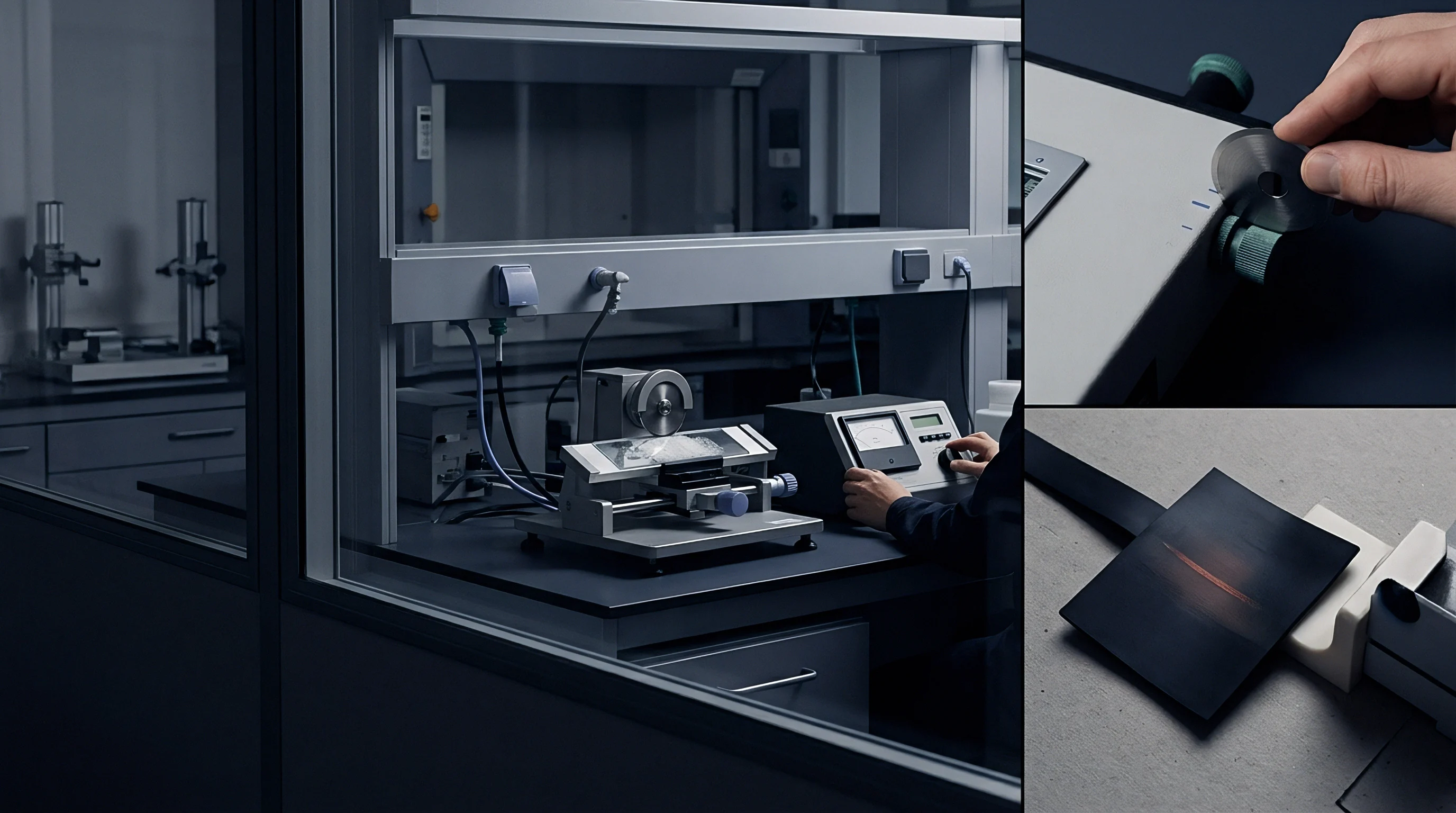
Standardized laboratory instruments quantify paperboard flexural rigidity using specified deflection angles, sample widths, and span dimensions. Commercial testing relies mainly on two-point bending methods, resonance instruments, and four-point bending rigs. Results vary significantly between method types because each setup imposes a different mix of bending, shear, and compressive stresses on the sheet.

Comparing Two Point and Resonance Instruments
Fixed bending lengths of 10 millimetres or 50 millimetres isolate pure moment flexure from gravitational sagging during laboratory evaluations. Two-point instruments clamp the specimen at one end while a motorized load nose depresses the free end through a specified deflection angle. Resonance apparatuses vibrate a clamped specimen across a range of frequencies, identifying the natural resonant frequency to calculate flexural rigidity without mechanical contact at the free end.
Because testing speed alters apparent modulus, two-point bending instruments apply loads at controlled angular velocities, typically between 0.5 degrees per second and 5.0 degrees per second. Resonance methods evaluate dynamic modulus at 10 Hz to 100 Hz, yielding rigidity values 10 to 20 percent higher than static two-point tests due to viscoelastic relaxation within the cell wall matrix.
Standard laboratory measurement of 15 degree deflection on 350 micrometre board requires force application within 1.0 second under TAPPI T 556.
Instrument Geometry and Angle Specifications
Deflection limits set by international standards balance linear material behavior against large-deformation non-linearities. TAPPI T 489 specifies a 15-degree deflection angle over a 50-millimetre test length using a Taber-type instrument, measuring resistance in Taber Stiffness Units or millinewton-metres. ISO 2493-1 defines two-point bending using a 15-degree or 7.5-degree angle over a 10-millimetre or 50-millimetre bending length, preferred for medium and heavy paperboard grades.
- Verify that the instrument load cell achieves zero force balance before inserting the test strip into the pneumatic clamp.
- Insert a 38-millimetre wide specimen into the clamping jaw, ensuring the edge aligns flush against the mechanical alignment stops.
- Set the test parameters to a 15-degree bending angle and a 50-millimetre span on the instrument control panel.
- Initiate the motorized bending cycle and record the peak bending force displayed in millinewtons at maximum angular deflection.
- Return the load arm to the home position, release the clamp pressure, and clear specimen debris from the contact jaw surfaces.
Uncertainty Sources in Clamping and Clearance
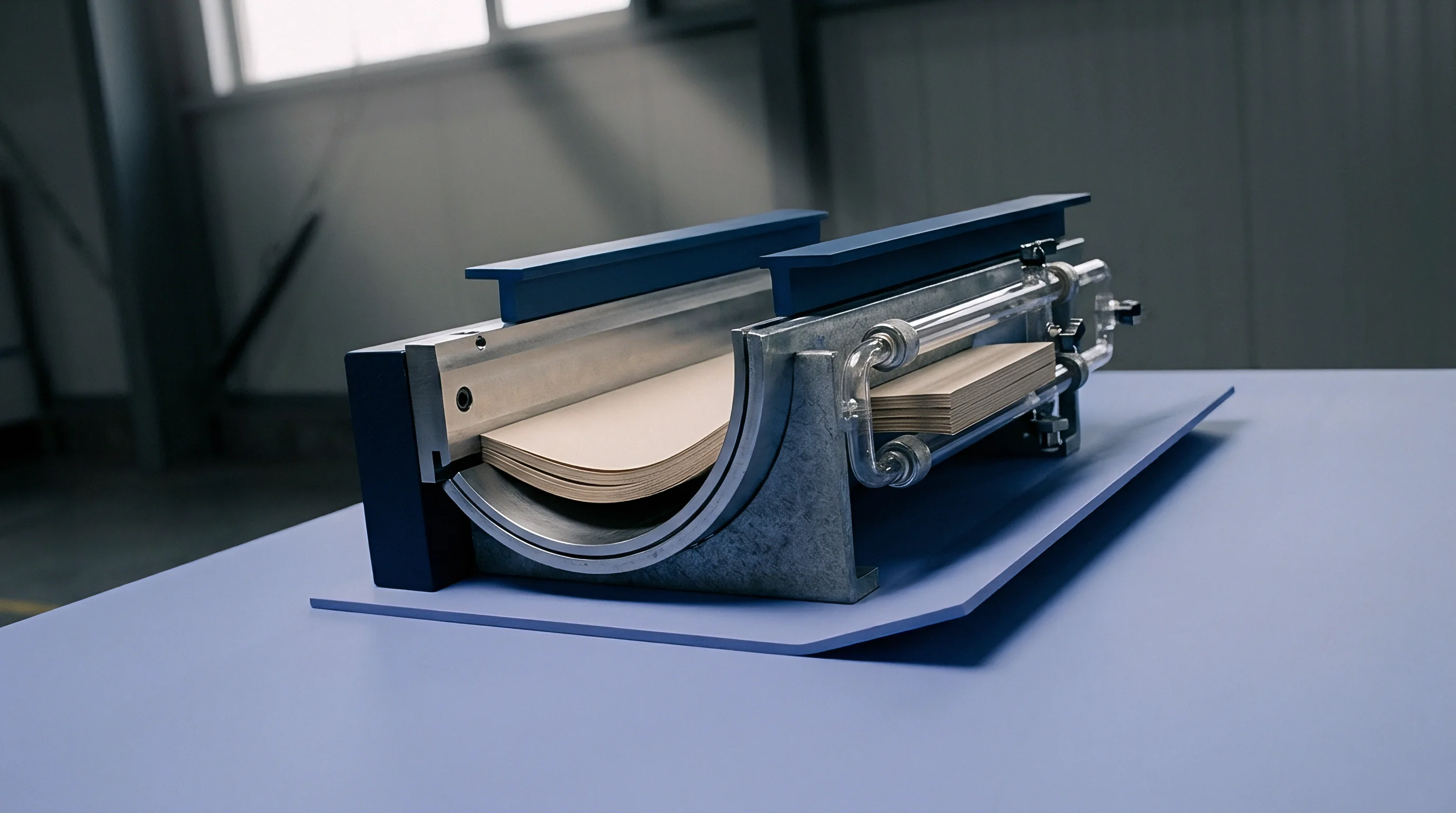
Pressure from pneumatic jaws introduces local shear stresses that alter load cell readings. High clamping force crushes bulky mechanical middle plies, thinning the sheet at the hinge line and artificially understating flexural rigidity. Low clamping force allows the sample to slip during rotation, extending the effective span and under-reporting peak resistance.
| Standard Method | Test Principle | Deflection Angle | Bending Length | Specimen Width | Primary Unit |
|---|---|---|---|---|---|
| ISO 2493-1 | Two-Point Motorized | 15.0° or 7.5° | 10 mm or 50 mm | 38 mm | mN |
| TAPPI T 489 | Taber V-5 Rotational | 15.0° | 50 mm | 38.1 mm | Taber Units / mN·m |
| TAPPI T 556 | Two-Point Resistance | 15.0° or 7.5° | 10 mm or 50 mm | 38 mm | mN |
| ISO 5629 | Resonance Frequency | Dynamic Vibro-Acoustic | Variable Span | 15 mm to 25 mm | N·m |
| ISO 5628 | Four-Point Bending | Pure Moment Linear | 100 mm to 200 mm | 50 mm | mN·m |
Because clearance alters force vectors, load rollers must maintain continuous, low-friction contact along the sample during deflection. Minor variations in load nose geometry can create discrepancies between instruments running the same nominal test standard.
Stiffness drops frequently stem from raw pulp freeness swings that alter sheet density without affecting nominal grammage.

Deflection
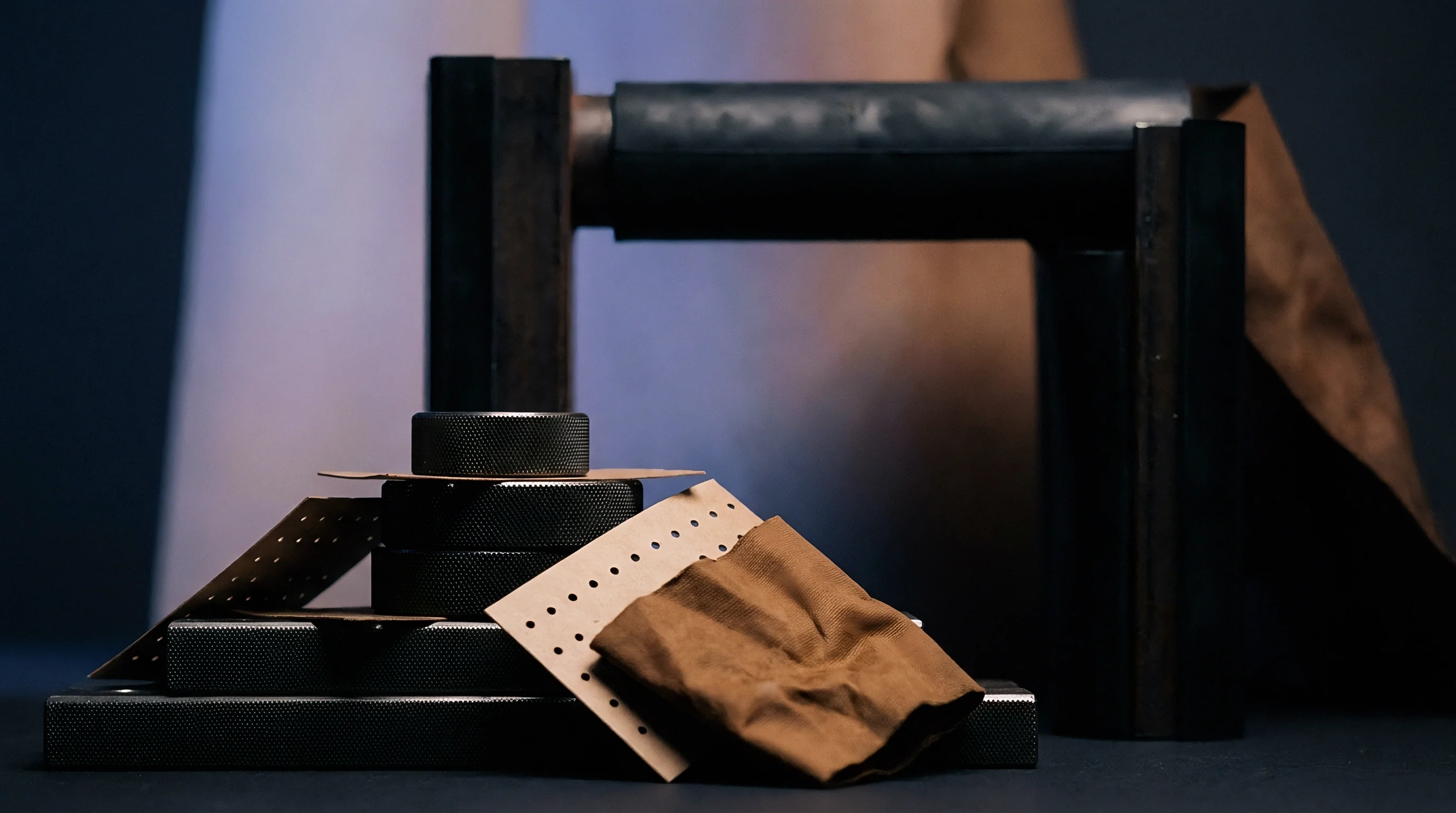
When paperboard undergoes large angles of rotation, non-linear material behaviors break classical beam bending assumptions. Standard linear formulas assume infinitesimal deformation where stress remains proportional to strain. In laboratory tests exceeding small deflection limits, inner ply compressive failure and interlaminar shear yield cause progressive stiffness loss across the specimen cross section.
Where Does Two Point Bending Theory Fail Paperboard?
Interlaminar shear stresses develop along the neutral axis when thick substrates experience steep curvature. Paperboard exhibits low z-direction shear strength compared to in-plane tensile capacity. Under severe bending forces, internal fiber bonds rupture, causing micro-delamination between distinct furnish plies.
This structural breakdown shifts the neutral axis outward, drastically reducing the effective area moment of inertia before peak deflection occurs.
When evaluating board thicker than 600 micrometres on short-span two-point rigs, clamping stress and shear deformation account for up to 30 percent of total tip displacement. Elastic beam calculations fail to isolate true flexural modulus under these hybrid bending-shear conditions unless corrected with four-point pure moment setups.
Clause 6.2 of ISO 2493-1 mandates specimen rejection when clamp pressure causes visible thickness loss at the contact line.
Creasing Matrix Impact on Residual Rigidity
Scored lines across a carton blank reduce local flexural strength intentionally to form crisp ninety-degree folds. Evaluating residual bending resistance across pre-creased zones determines the folding moment required to erect cartons on packaging machinery. Excessive creasing depth destroys internal plies completely, leading to weak corners and poor box squareness under stacking loads.
- Low Caliper Graphic Boards require short 10-millimetre span configurations to generate measurable load cell torque without excessive gravity sag.
- High Density SBS Grades demand precise 15-degree deflection angles to capture linear elastic modulus before yield phenomena initiate.
- Multi-Ply Recycled Substrates need lower pneumatic clamping forces to avoid crushing bulky center plies during test sequence setup.
- Heavy Containerboard Liners mandate four-point bending rigs to isolate pure moment forces from severe interlaminar shear deformation.
Because score lines concentrate deformation, high-speed cartoning machines rely on predictable ratios between uncreased panel stiffness and creased scoreline bending moment. Ratios below 3.0 cause carton feeding errors, while ratios over 5.5 lead to panel bowing during automatic side-seam gluing.
Thicker sheet caliper compensates for lower fibre tensile strength when structural stacking resistance governs carton survival.
Hysteresis
Environmental test rooms control temperature and humidity to stabilize sheet moisture content before mechanical testing. Paperboard equilibrates rapidly with ambient air, absorbing or desorbing moisture until its internal state matches the room. Water acts as a plasticizer in amorphous cellulose, swelling fiber walls and weakening the hydrogen bonds that give the sheet its structural rigidity.

Equilibrium Moisture and Viscoelastic Breakdown
Cellulose fibers absorb ambient water vapor until internal chemical potential equals surrounding atmospheric humidity. Standard testing conditions established under ISO 187 specify 23 degrees Celsius and 50 percent relative humidity. Paperboard equilibrated at 75 percent relative humidity exhibits up to 40 percent lower bending stiffness compared to identical samples tested at standard equilibrium states.
As moisture softens cell walls, desorption paths retain more internal moisture than absorption paths at the same relative humidity ~ a phenomenon known as moisture hysteresis. A test strip reaching 50 percent relative humidity from a wet state retains more water and shows lower flexural rigidity than one brought up to 50 percent from a completely dry state.
Wet end internal sizing limits liquid absorption without arresting vapor equilibrium changes in sheet modulus.

Thermal and Relative Humidity Excursions
Unconditioned storage facilities subject stacked pallets to ambient humidity fluctuations that alter bending resistance across seasonal shifts. As relative humidity increases, the elastic modulus drops linearly across both machine and cross directions. Cross direction rigidity suffers disproportionate loss because fiber swelling forces structural realignment along the transverse sheet plane.
| Board Grade | Caliper (µm) | MD Stiffness at 30% RH (mN·m) | MD Stiffness at 50% RH (mN·m) | MD Stiffness at 80% RH (mN·m) | Total Stiffness Loss (%) |
|---|---|---|---|---|---|
| Solid Bleached Sulfate | 400 | 34.5 | 30.1 | 19.2 | 44.3 |
| Folding Boxboard | 450 | 32.8 | 28.5 | 17.1 | 47.8 |
| Coated Recycled Board | 480 | 35.2 | 29.8 | 16.5 | 53.1 |
| Uncoated Kraft Back | 420 | 39.1 | 34.2 | 22.0 | 43.7 |
Because water disrupts hydrogen bonding, high relative humidity accelerates viscoelastic creep under load. A carton panel that carries a static load under dry conditions may bulge under humid transit conditions, causing stack collapse in unconditioned storage.
- Carton Stacking Collapse under humid warehouse conditions follows when board moisture content exceeds eleven percent by weight.
- High Speed Line Jams occur when unconditioned carton blanks lose structural stiffness and buckle during folder-gluer feed cycles.
- Panel Bulge Defects emerge in dry food cartons when inner liners absorb moisture from enclosed food products during storage cycles.
- Inaccurate Quality Audits result when test specimens sit unconditioned on laboratory benches for twenty minutes prior to stiffness testing.
Uncontrolled relative humidity in test laboratories yields false stiffness measurements, causing carton jams on packaging lines and voiding raw material credit returns.

Tonnage
Commercial specification balances required package top-load strength against substrate unit costs to optimize container economics. Buying paperboard by the metric tonne while consuming it by the individual blank means that yield directly governs landed carton cost. Packaging engineers lower unit cost by selecting bulky grades that deliver equal bending stiffness at lower basis weights.

Yield Optimization through Structural Bulking
Stratified furnish designs place high-density bleached kraft on outer surfaces while low-density mechanical pulp fills middle layers. Folding Boxboard leverages high-yield chemi-thermomechanical pulp in its center layers, achieving higher bulk than Solid Bleached Sulfate grades. A buyer replacing a 350 g/m² SBS board with a 290 g/m² FBB grade maintains target panel flexural rigidity while reducing total tonnage consumed by 17 percent.
Because yield dictates landed cost and lighter sheets lower freight expense, reducing grammage lowers transport emissions, cuts extended producer responsibility fees, and yields more die-cut blanks per metric tonne of paperboard purchased.

Worked Commercial Calculation for Grade Substitution
Evaluating a shift from solid bleached sulfate board to folding boxboard reveals material cost differentials across identical structural performance targets. Consider a packaging buyer purchasing stock for a five-million-carton annual production run, requiring a minimum cross direction bending stiffness of 12.0 mN·m to prevent panel bulge during automatic filling.
Option A utilizes a 350 g/m² Solid Bleached Sulfate sheet with a caliper of 430 micrometres, priced at 1,450 EUR per metric tonne delivered. The required sheet area per carton equals 0.12 square metres. The annual mass required totals 210 metric tonnes, yielding a total raw material cost of 304,500 EUR.
Option B utilizes a 290 g/m² Folding Boxboard sheet with a caliper of 460 micrometres, meeting the identical 12.0 mN·m cross direction stiffness target due to its 1.58 cm³/g bulk. The grade carries a price premium at 1,580 EUR per metric tonne delivered. The required mass drops to 174 metric tonnes, resulting in a landed substrate cost of 274,920 EUR.
Because caliper drives structural stiffness, switching to the bulkier Folding Boxboard grade reduces material costs by 29,580 EUR per year while maintaining required panel rigidity. The net savings of 36 metric tonnes per year lowers freight handling expenses and cuts warehouse space demands.
Process engineers still debate whether downgauging pulp grammage past specific thresholds destroys crease recovery force faster than bulk enhancement can restore panel rigidity.