Correlating ISO 15901 Pore Distributions with Press Liquid Absorption
Static ISO 15901 intrusion maps structural pore volume, but press liquid uptake depends on dynamic permeability and capillary draw under microsecond nips.

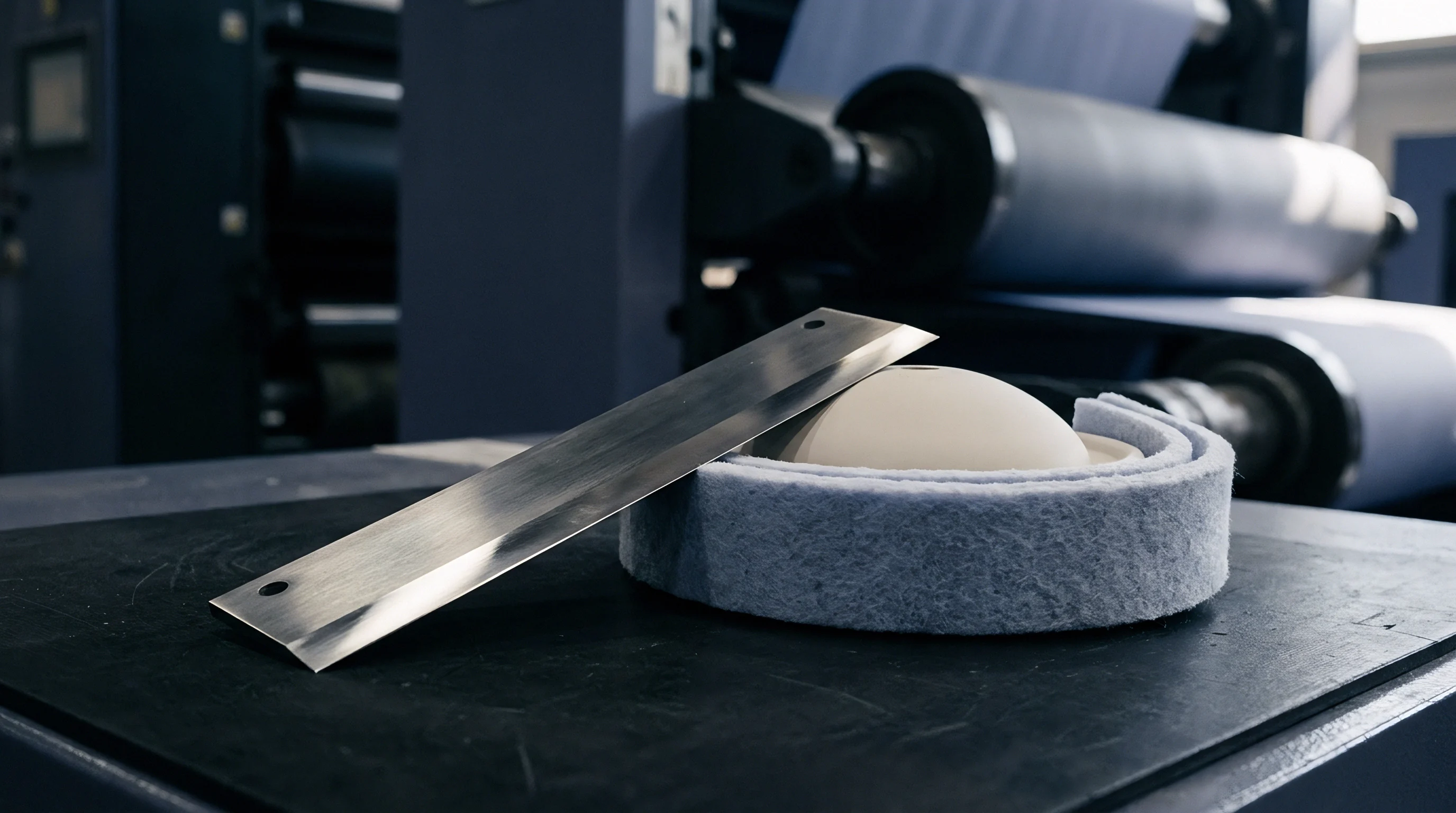
Mercury
Delivered coated paperboard often passes dry laboratory porosimetry while failing completely on the press line. The standard mill certification cites total void fraction from mercury intrusion porosimetry under ISO 15901-1, yet offset inks either mottle from delayed ink setting or chalk from rapid vehicle depletion. ISO 15901-1 calculates pore diameter from the Washburn equation by forcing liquid mercury into an evacuated dry paper specimen across pressures ranging from 0.01 MPa to 414 MPa.
The instrument measures an intrusion volume against pressure, assuming cylindrical pores and a fixed contact angle between 130 and 140 degrees. The paper web on an offset or flexographic press meets liquid under dynamic physical conditions that depart from this static vacuum scenario. The press fluid contains volatile solvents, mineral oils, vegetable esters, and polymeric resins with dynamic surface tensions between 28 mN/m and 35 mN/m.
The liquid encounters the substrate for 2 to 15 milliseconds under a nip pressure of 1 MPa to 4 MPa.
Static intrusion under ISO 15901-1 records void volumes across equivalent cylindrical diameters from 3.5 nanometres to 400 micrometres. The method characterizes the geometry of skeletal networks within pigment coatings and fibrous bases. The measurement compresses the specimen elastically at hydrostatic pressures above 20 MPa.
This compressive strain collapses large inter-fibre voids and distorts the apparent distribution of coating micropores. Laboratory staff frequently interpret the recorded peak at 0.08 to 0.15 micrometres as the dominant conduit for fluid transport. That interpretation overlooks the ink vehicle dynamics.
The vehicle separates into mobile oil components and high-molecular-weight resin matrices during the first 10 milliseconds of contact. ISO 15901-1 documents only the dry boundaries of the system. The static intrusion profile provides no data regarding fluid viscosity shifts during solvent separation.
A dry mercury contact angle of 140 degrees reveals structural pore diameter without reflecting how mineral oils wet oxidized latex films at high web speeds.
The gap between static intrusion graphs and press performance stems from network topology. Mercury must traverse narrow entry channels to fill wider internal cavities. The instrument assigns the intrusion volume of an entire internal cavern to the entrance diameter of the narrow neck.
This ink bottle pore artifact distorts the volume distribution toward artificially fine pore diameters. When assessing a double-coated folding boxboard with a calcium carbonate coating, ISO 15901-1 attributes 60 percent of the void volume to pores below 50 nanometres. Dynamic fluid penetration during impression responds to hydraulic permeability and surface roughness rather than neck resistance alone.
Press operators observe ink refusal on boards with high internal void volumes whenever the surface pores present entry diameters below the molecular dimensions of the vehicle resins.
Sales representatives frequently claim that identical total porosity curves guarantee identical ink absorption rates across disparate coating formulations.


Throat
Pore throat dimensions dictate the pressure required to initiate fluid ingress, while the internal pore body dictates total retention capacity. ISO 15901-1 measures the throat because mercury cannot enter a cavity until the applied hydrostatic pressure overcomes the capillary resistance of the narrowest restriction. ISO 15901-2 applies gas adsorption using nitrogen at 77 K to assess pore dimensions between 0.35 nanometres and 100 nanometres via the Barrett-Joyner-Halenda calculation model.
The gas condensation mechanism evaluates micro-cavity dimensions independently of the high-pressure mechanical collapse that affects mercury analysis. Liquid absorption on the printing press involves both domains sequentially. Spontaneous capillary sorption operates according to the Lucas-Washburn relationship, where absorption velocity scales directly with pore radius and fluid surface tension, and inversely with fluid viscosity.
Capillary pressure scales inversely with the pore radius. Sub-micron pores generate intense capillary suction that strips low-viscosity aliphatic diluents away from the ink film. Macro-voids between 1 and 5 micrometres lack the capillary tension needed to draw viscous fluid quickly, functioning instead as storage reservoirs under external mechanical force.
Coating layers formulated with broad pore size distributions produce unequal liquid segregation. The fine pores drain the ink solvent rapidly, leaving pigment particles and binders stranded on the surface without adequate carrier fluid to level smoothly.
Pore Dimension Regimes in Coated Board Structures
Coated substrates possess distinct structural levels that interact with ink vehicles along different timescales. The following regimes govern liquid partitioning across the impression cycle:
- Intra-particle pigment nanopores occupy the zone between 2 and 20 nanometres, created by internal fractures and fine crystal facets within precipitated calcium carbonate. They pull low-molecular-weight solvents via intense capillary pressure.
- Inter-particle coating capillaries span from 20 to 120 nanometres between consolidated mineral plates and latex binders. These networks govern the selective absorption of mineral and vegetable oils during offset setting.
- Inter-pigment cluster voids range from 0.12 to 0.8 micrometres and receive ink vehicle under the primary hydraulic pressure of the press nip. The volume within this band dictates initial vehicle uptake.
- Fibrous base sheet macropores measure from 1 to 30 micrometres across cellulose fibres. They accept fluid only during structural coating breakdown or through pinholes under prolonged contact.
The spatial continuity of these regimes controls vehicle migration into the bulk sheet. Discontinuous capillary networks trap ink oils near the surface, causing slow drying, ink smearing, and downstream set-off in the delivery stack. Well-connected paths carry solvents deep into the pre-coat and base paper, leaving the surface layer dry to the touch within 30 seconds of impression.
Measuring the throat-to-body ratio requires comparing mercury intrusion curves with mercury extrusion curves to quantify structural hysteresis. When the hysteresis loop area exceeds 45 percent of the total intrusion energy, ink trapping predictability declines sharply.
| Pore Regime | Diameter Range | Analytical Method | Press Interaction Phase | Primary Liquid Component |
|---|---|---|---|---|
| Mesopores | 2 nm to 50 nm | ISO 15901-2 Gas Adsorption | Post-nip setting (0.5 s to 60 s) | Low-viscosity aliphatic distillates |
| Small Capillaries | 50 nm to 150 nm | ISO 15901-1 Mercury Porosimetry | Nip exit and early setting (10 ms to 500 ms) | Mineral oils and fatty acid esters |
| Structural Voids | 0.15 µm to 1.0 µm | ISO 15901-1 Mercury Porosimetry | Nip impression (1 ms to 10 ms) | Bulk ink vehicle and varnishes |
| Base Sheet Pores | 1.0 µm to 25 µm | ISO 15901-1 Low Pressure Stage | Prolonged dwell or penetration | Fountain solution and wash water |
The physical structure of these throats controls how chemical additives migrate through the consolidating coating during blade application at the mill. Latex particles with glass transition temperatures below 20 degrees Celsius deform under thermal drying. The polymer spreads across mineral intersections, narrowing the throats without eliminating internal void volume.
Standard mercury porosimetry records this shift as a general migration toward smaller diameters. The press experiences this transformation as a marked reduction in initial ink receptivity.
The rate at which dynamic pore swelling alters effective throat dimensions during multi-unit printing remains difficult to isolate on commercial presses.

Impression
Press liquid transfer takes place in two distinct hydro-mechanical phases: forced hydraulic penetration under the print nip and spontaneous capillary sorption across the free web run. Mechanical impression forces ink into large structural voids regardless of surface energy. The press nip generates hydraulic pressures between 1.5 MPa and 3.5 MPa for a duration of 3 to 12 milliseconds at modern press speeds of 12 to 18 m/s.
Capillary forces are negligible during this brief pressure pulse. Hydraulic permeability governs fluid movement at this stage. Darcy law describes this behavior, stating that flow volume depends directly on substrate permeability, applied pressure, and contact duration, divided by dynamic fluid viscosity.
A six-millisecond nip pulse forces ink oils into structural cavities that capillary suction cannot penetrate within that timeframe.
Porosity values obtained under ISO 15901-1 cannot be substituted directly into Darcy flow equations. The ISO method yields void fractions rather than direction-specific permeability coefficients. A substrate exhibiting 30 percent total void volume can display low fluid permeability if the pores follow tortuous paths through platelike kaolin clay crystals.
Platelike pigments force the fluid to traverse serpentine paths parallel to the web surface, increasing hydrodynamic flow resistance. Prismatic calcium carbonate particles pack with open, isotropic orientations that offer high fluid permeability at identical void fractions.
What Governs Ink Oil Depletion under Pressure?
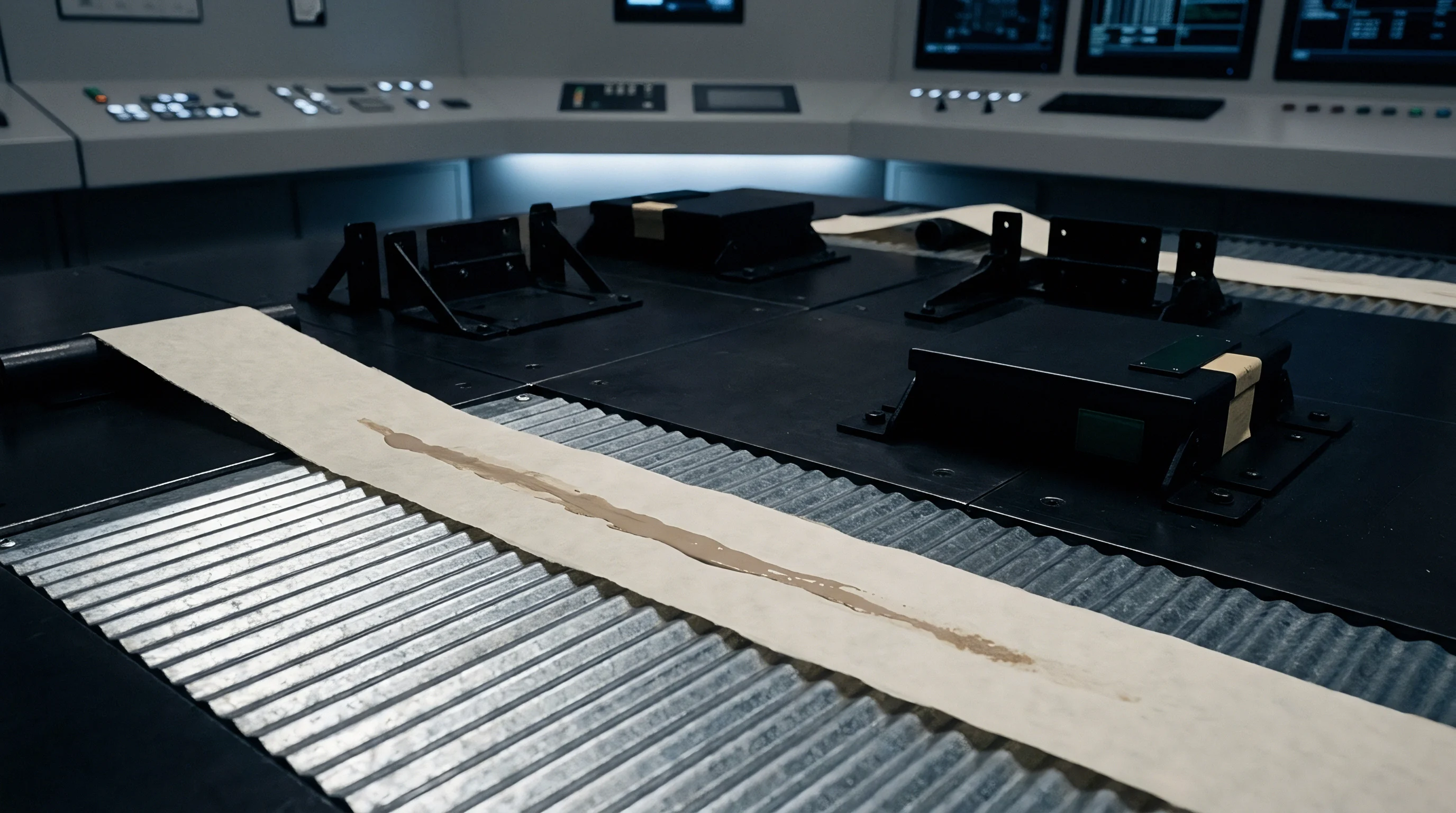
Liquid phase separation begins immediately as mechanical pressure mounts in the nip. The pigment cake of the printing ink acts as a secondary porous bed positioned on top of the coated substrate. The press nip compresses both the ink film and the paper coating simultaneously.
Solvents escape through the path of lowest hydraulic resistance. When the substrate coating contains open voids larger than 0.2 micrometres, vehicle fluids flow downward into the sheet under hydraulic force. If the surface contains only fine pores below 40 nanometres, hydraulic resistance prevents downward flow during the nip dwell.
The vehicle remains in the ink split layer, producing higher transfer efficiency alongside prolonged wet-film tack.
Worked Comparison of Hydraulic Ingress and Capillary Uptake
Consider a standard commercial web offset run on a 90 g/m² coated woodfree sheet with a caliper of 72 micrometres and a coating weight of 12 g/m² per side. Assume an ink viscosity of 8 Pa·s at 25 degrees Celsius, dropping to 1.2 Pa·s under high shear in the nip. The printing unit operates at 15 m/s web speed with a nip width of 18 millimetres, delivering a dwell time of 1.2 milliseconds under an average peak pressure of 2.2 MPa.
Calculations evaluate two substrates possessing an identical total void volume of 0.28 cm³/g measured by ISO 15901-1, but manufactured with different mineral pigments:
- Substrate A employs ultrafine ground calcium carbonate, presenting a median pore throat diameter of 65 nanometres and a tortuosity factor of 1.8.
- Substrate B employs delaminated kaolin clay, presenting a median pore throat diameter of 42 nanometres and a tortuosity factor of 4.2.
- The effective permeability coefficient of Substrate A reaches 4.8 × 10⁻¹⁷ m², while Substrate B reaches 0.9 × 10⁻¹⁷ m² due to tortuous flow paths.
- Hydraulic penetration depth calculated via Darcy formulation reaches 0.38 micrometres in Substrate A during the 1.2 millisecond dwell, compared to 0.07 micrometres in Substrate B.
- Following nip exit, spontaneous capillary sorption across a three-second inter-unit transit pulls low-viscosity oils an additional 1.1 micrometres into Substrate A, while capillary draw reaches 1.6 micrometres in Substrate B due to higher capillary pressure in its narrower 42-nanometre channels.
Substrate A suffers from ink setting failure and picking on the second printing station because its vehicle distribution remains shallow and incomplete during nip exit. Substrate B sets the ink film rapidly after nip release, but risks coating chalking because the intense capillary pull of fine pores strips solvent before the binder cures. The operational consequence appears instantly: an incorrect balance between hydraulic acceptance and capillary drainage generates picking defects, piling on blankets, and excessive wash cycles that destroy net press yield.


Pigment
Mineral pigment morphology establishes the baseline pore distribution that ISO 15901 characterizes. Ground calcium carbonate produces open, rhombohedral packing with median pore diameters between 80 and 140 nanometres. Precipitated calcium carbonate introduces scalenohedral and aragonite crystal habits, yielding narrower pore distributions centered between 30 and 70 nanometres with secondary intra-aggregate voids.
Kaolin clay structures orient along horizontal planes during blade metering, flattening pores into narrow slits between 15 and 35 nanometres across. The choice of pigment blend governs the spatial distribution of these void channels.
Binder selection alters this mineral network. Styrene-butadiene and styrene-acrylate latexes soften during the drying process, flowing into narrow throats between pigment particles. When binder content rises from 9 parts to 13 parts per hundred parts pigment, the 80-nanometre void peak detected by ISO 15901-1 shifts downward to 45 nanometres, accompanied by a 35 percent decline in cumulative intrusion volume.
Binders do not distribute uniformly through the coating thickness. Thermal drying cycles drive water and dissolved additives toward the sheet exterior. This binder migration creates a dense, polymer-rich skin that chokes the surface pores, leaving open voids beneath.

Is Static Mercury Intrusion Valid for Dynamic Absorption?
Static intrusion characterization assumes that the internal matrix remains rigid and chemically inert during fluid ingress. Paper substrates do not exhibit inert mechanical behavior during printing. Water in offset fountain solutions and flexographic inks plasticizes the cellulose fibres and swells synthetic thickeners within seconds.
Mercury intrusion cannot capture dynamic fiber swelling or latex relaxation.
| Substrate Grade | Coating System | ISO 15901 Median Pore | Total Void Volume | Dynamic Absorption Rate | Offset Setting Time |
|---|---|---|---|---|---|
| Solid Bleached Board (SBB) | Double Coated GCC/Clay | 72 nm | 0.24 cm³/g | 14 ml/m²·s^0.5 | 45 s |
| Folding Boxboard (FBB) | Double Coated 100% GCC | 115 nm | 0.31 cm³/g | 28 ml/m²·s^0.5 | 18 s |
| Coated Recycled Board (WLC) | Triple Coated Clay Dominant | 38 nm | 0.19 cm³/g | 8 ml/m²·s^0.5 | 82 s |
| Coated Woodfree (CWF) | Double Coated PCC/GCC | 58 nm | 0.27 cm³/g | 19 ml/m²·s^0.5 | 32 s |
| Notes: Dynamic absorption measured with Bristow wheel using technical mineral oil at 23 °C and 50% RH. Setting time measured via ink set-off against standard art paper. | |||||
Dynamic test methods measure absorption rates under conditions that match press timing. The Bristow wheel apparatus evaluates liquid uptake across contact times from 5 to 250 milliseconds. A measured volume of fluid dispenses through a calibrated aperture onto a rotating substrate strip.
The instrument reveals two key parameters: the roughness delay time, representing fluid consumed to fill surface topography, and the dynamic absorption coefficient. The dynamic absorption coefficient shows direct correlation with the volume of pores between 0.08 and 0.25 micrometres measured by ISO 15901-1. The coefficient exhibits no meaningful correlation with the volume of pores below 0.04 micrometres.
Pore volume alone cannot compensate for poor surface wetting characteristics. Fine pores create high capillary pressure only when the fluid exhibits a low advancing contact angle on the pore walls. Oxidized coatings and contaminated base sheets generate contact angles above 70 degrees, suppressing capillary draw regardless of the pore size measured by mercury intrusion.
Fine pores draw vehicle fluid rapidly while open structures accept ink without separating its binders.
Dossier
Technical sourcing specifications that stipulate bulk porosity alone fail to prevent commercial printing disputes. Procurement contracts must tie pore metrics to dynamic absorption criteria and converting performance. When a converter buys 500 tonnes of coated folding boxboard for high-speed pharmaceutical packaging, ink drying delays cause blocking in the rewound roll and induce severe ink tracking across downstream folder-gluers.
The mill certificate often satisfies the contract by citing a standard air permeance figure such as Gurley or Bendtsen, or a generic total void volume under ISO 15901-1. Air permeance methods evaluate only through-thickness channels that penetrate the entire board structure. They provide zero resolution regarding the top-coating capillary network that interacts with printing ink.
A contract referencing Bendtsen air porosity allows mills to deliver non-absorbent coatings over open base paper without breaching delivery terms.
Effective procurement dossiers define pore volume bounds within narrow diameter ranges rather than accepting unconstrained total porosity values. Technical buyers establish incoming inspection limits that isolate the functional pore window. This window sits between 0.05 and 0.15 micrometres for mineral-oil sheetfed offset inks, and between 0.08 and 0.30 micrometres for water-based flexographic formulations.
Substrates falling below these limits trap ink vehicles on the surface, causing slow oxidative drying and scuffing. Substrates exceeding these bounds extract vehicle oil prematurely, producing ink chalking, loss of gloss, and poor rub resistance.
A rigorous material purchase contract includes specific diagnostic criteria:
- Functional pore volume fraction specifies that at least 45 percent of total intrusion volume measured under ISO 15901-1 must fall within the range of 0.05 to 0.20 micrometres.
- Maximum throat constriction ratio limits the mercury extrusion hysteresis area to less than 40 percent of intrusion energy, ensuring structural connectivity.
- Dynamic Bristow roughness index caps surface topography liquid volume below 6.0 ml/m² under a 10-millisecond contact duration to prevent ink over-flooding.
- High-shear dynamic absorption coefficient sets fluid absorption between 12 and 22 ml/m²·s^0.5 using standard reference ink oil at 23 degrees Celsius and 50 percent relative humidity.
A paper mill qualification protocol links laboratory porosimetry directly to delivered pallet testing. Samples extracted from reel ends across the machine trim must undergo dynamic testing alongside mercury porosimetry during initial grade trials. Basis weight profiles drift across cross-machine sections, shifting coating thickness by 1.5 to 3.0 g/m² between center and edge positions.
This coating weight variation directly alters the median pore diameter of the upper consolidated layer. When incoming goods-in verification identifies a median pore throat shift greater than 20 nanometres from the approved trial baseline, the converter faces immediate runnability adjustments, including changes to fountain solution conductivity, wash frequencies, and ink tack sequences.
Under Section 8.3 of commercial supply framework contracts governing technical printing grades, deviation exceeding 15 percent from the agreed median pore diameter triggers an automatic re-testing protocol using dynamic fluid uptake before pallet lots release to the press room floor.