Capillary Motion Definition
Fluid mechanics governs the movement of liquids into porous structures through this mathematical description. The washburn equation defines the rate at which a wetting liquid penetrates a capillary or a porous matrix by balancing the driving force of surface tension against the opposing resistance of viscosity. Mathematical expressions relating the distance of penetration to the square root of time characterize this progression.
It holds validity under the assumption that the pore structure remains rigid and the liquid maintains a constant contact angle throughout the process.
Substrate Permeability Analysis
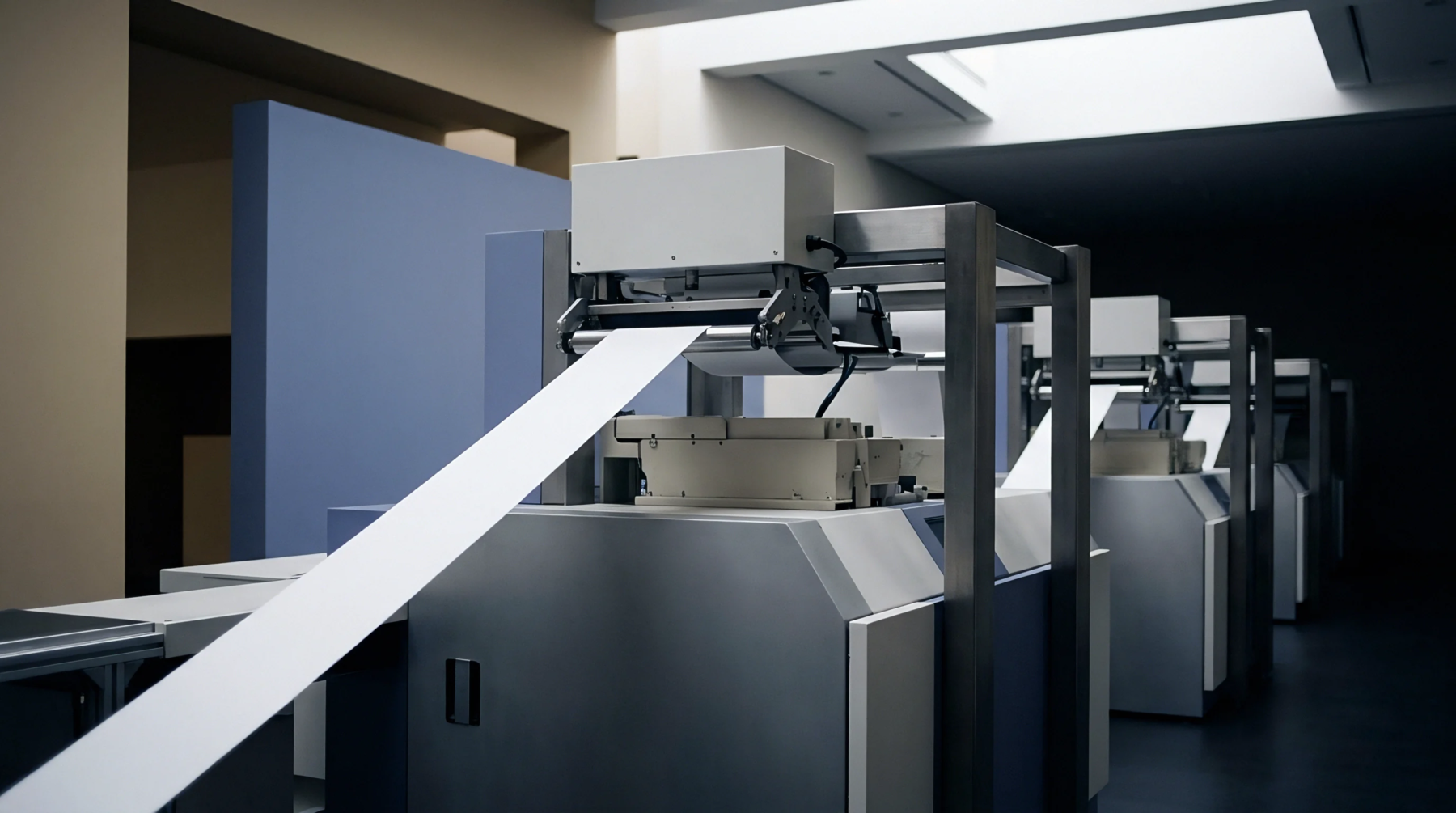
Paper manufacturers utilize this calculation to predict the speed at which a liquid coating enters the fibre network during the application phase of production. The relationship accounts for the pore radius and the surface tension of the solvent because these variables dictate how quickly a binder solution moves into the sheet. Printers monitor this reaction to avoid mottle or uneven finish when they apply water based inks or high speed varnish to an uncoated substrate.
A high rate of movement often results in excessive penetration that leaves insufficient solids on the surface for proper gloss development. Deviations occur when the fibre swell changes the pore geometry during the transit of the fluid.
Filling Pressure Constraint
Precision measurement requires clear differentiation between the hydraulic resistance of the material and the influence of gravity on the column of fluid. Production lines maintain stable outcomes by controlling the viscosity of the ink because the velocity of penetration depends directly on the balance between friction and capillary force. Machines calculate the required dwell time for coating heads by applying the proportionality constant derived from this physical law.
Consistency in the porous structure ensures that the liquid distribution stays within the tolerance required for uniform ink transfer.