Hygral Stress Dynamics and Edge Waving Mechanics in Recycled Paperboard Skids
Hygral edge waving in recycled paperboard skids results from perimeter moisture absorption driving compressive buckling against a dry, rigid core.
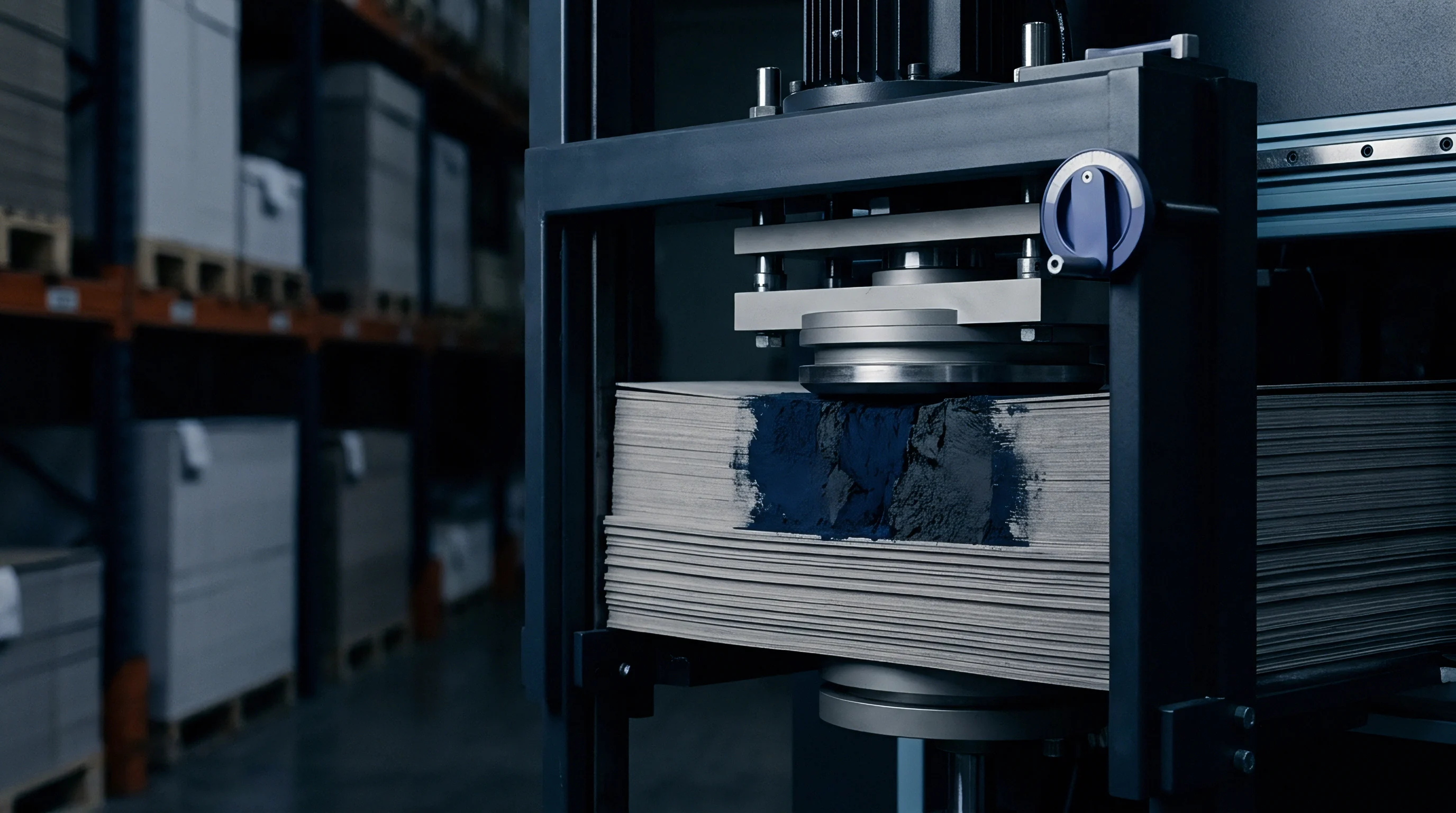
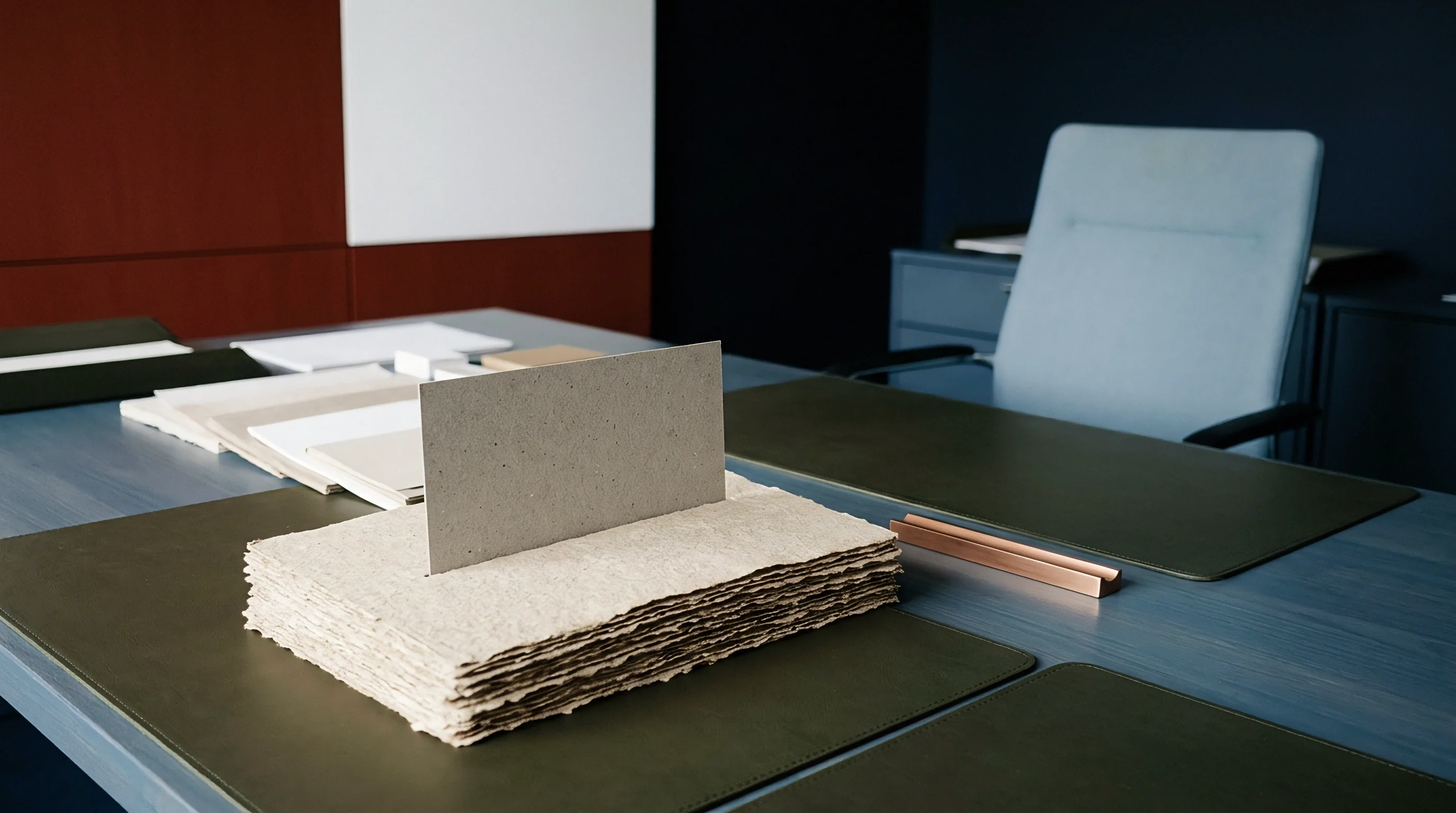
Sorption
Cellulose fibres expand transversely as moisture enters the amorphous regions of the cell wall. In recycled paperboard grades, comprising White Lined Chipboard (WLC) and Coated Recycled Board (CRB), secondary fibres exhibit altered sorption isotherms relative to virgin kraft pulps. Hornification from repeated drying cycles reduces the internal swelling capacity of individual fibres, yet the bulk sheet exhibits high hygroexpansive strain under ambient humidity shifts.
Residual starches, secondary fines, and surface sizing agents accelerate perimeter moisture uptake when relative humidity rises above factory equilibrium levels.
Fibre orientation during web formation creates a pronounced structural anisotropy. The hygroexpansion coefficient in the cross direction (CD) typically exceeds the machine direction (MD) value by a factor of three to five. Under standard conditioning per ISO 187 (23 degrees Celsius, 50 percent relative humidity), a standard 350 g/m² recycled cartonboard holds an equilibrium moisture content between 6.5 percent and 7.5 percent.
Exposure to an unconditioned converting hall at 75 percent relative humidity elevates the equilibrium moisture content of the outer sheet boundary beyond 9.5 percent.
Under ISO 535 testing with a 60-second exposure, recycled linerboards exhibit Cobb values between 28 and 42 g/m² depending on surface sizing.
Moisture diffusion through paperboard follows Fickian transport mechanics within the sheet plane. The diffusion coefficient along the sheet edges depends on sheet density, internal porosity, and the presence of mineral coatings. Clay-coated top plies act as local vapour retarders across the Z-axis, forcing moisture migration to proceed laterally through the porous grey back plies and exposed pallet perimeters.
This directional disparity concentrates swelling along sheet edges while the inner zone remains dimensionally stable.
| Substrate Grade | Caliper (µm) | Grammage (g/m²) | MD Hygroexpansion (%/Δ%RH) | CD Hygroexpansion (%/Δ%RH) | CD Bending Stiffness (mN·m) |
|---|---|---|---|---|---|
| Coated Recycled Board (CRB) | 450 | 320 | 0.006 | 0.024 | 8.5 |
| White Lined Chipboard (WLC) | 500 | 350 | 0.007 | 0.028 | 10.2 |
| Folding Boxboard (FBB – GC2) | 450 | 280 | 0.005 | 0.018 | 14.1 |
| Solid Bleached Board (SBB – GZ) | 420 | 300 | 0.004 | 0.015 | 16.8 |
The resulting hygral strain creates internal stress fields throughout the sheet. Linear expansion along the outer 50 to 100 millimetres of the sheet profile generates localized compressive stresses when bonded or constrained by the dry core. Recycled furnishes possess lower elastic moduli than virgin mechanical or chemical pulps, reducing their resistance to hygrally induced in-plane compressive deformation.
Commercial purchase contracts referencing DIN EN 12281 specify moisture tolerance windows of plus or minus 0.5 percent on delivered pallet lots, altering supplier liability when ambient transit conditions breach specified atmospheric envelopes.

Skid
Palletized stacks of cut cartonboard present an extreme aspect ratio to the surrounding air. A standard pallet holding 12,000 sheets of 700 mm by 1,000 mm board constitutes a dense, compacted block where interior sheets are shielded from direct convective air currents. Ambient water vapour contacts only the four vertical perimeter walls formed by the trimmed sheet edges.
Moisture ingress progresses slowly from the perimeter toward the stack core. Stacking pressure increases with stack depth, creating a vertical gradient of interlayer friction. Top sheets experience negligible confining load, while bottom tiers support loads exceeding 800 kilograms per square metre.
The increased friction between lower sheets resists planar slippage, locking hygrally expanded sheet edges into constrained states.
Edge exposure generates non-uniform moisture distributions across each individual sheet. The central zone retains its baseline manufacturing moisture content, while the outer margin swells in response to ambient humidity. This steep moisture gradient establishes an internal displacement mismatch across the sheet geometry.
- Perimeter Absorption drives lateral swelling across the unsealed cut fibers of the board edge.
- Core Inertia resists dimensional movement through dry mass stability and friction.
- Interlayer Shear develops between adjacent sheets as expansion rates vary along the pallet height.
- Transient Equilibration creates non-linear moisture gradients extending 20 to 120 millimetres inward.
Differences in moisture absorption rates along machine and cross directions produce asymmetrical perimeter stresses. Cross-direction edges absorb moisture across cut fiber lumens, swelling at rates distinct from machine-direction edges. Uneven moisture fronts warp the planar geometry of the pallet perimeter.
Uncontrolled warehousing environments accelerate these perimeter moisture fronts within hours of protective film removal, leading directly to feeding failures, feeder trips, and feeder double-sheet sensor shutoffs on high-speed printing presses.
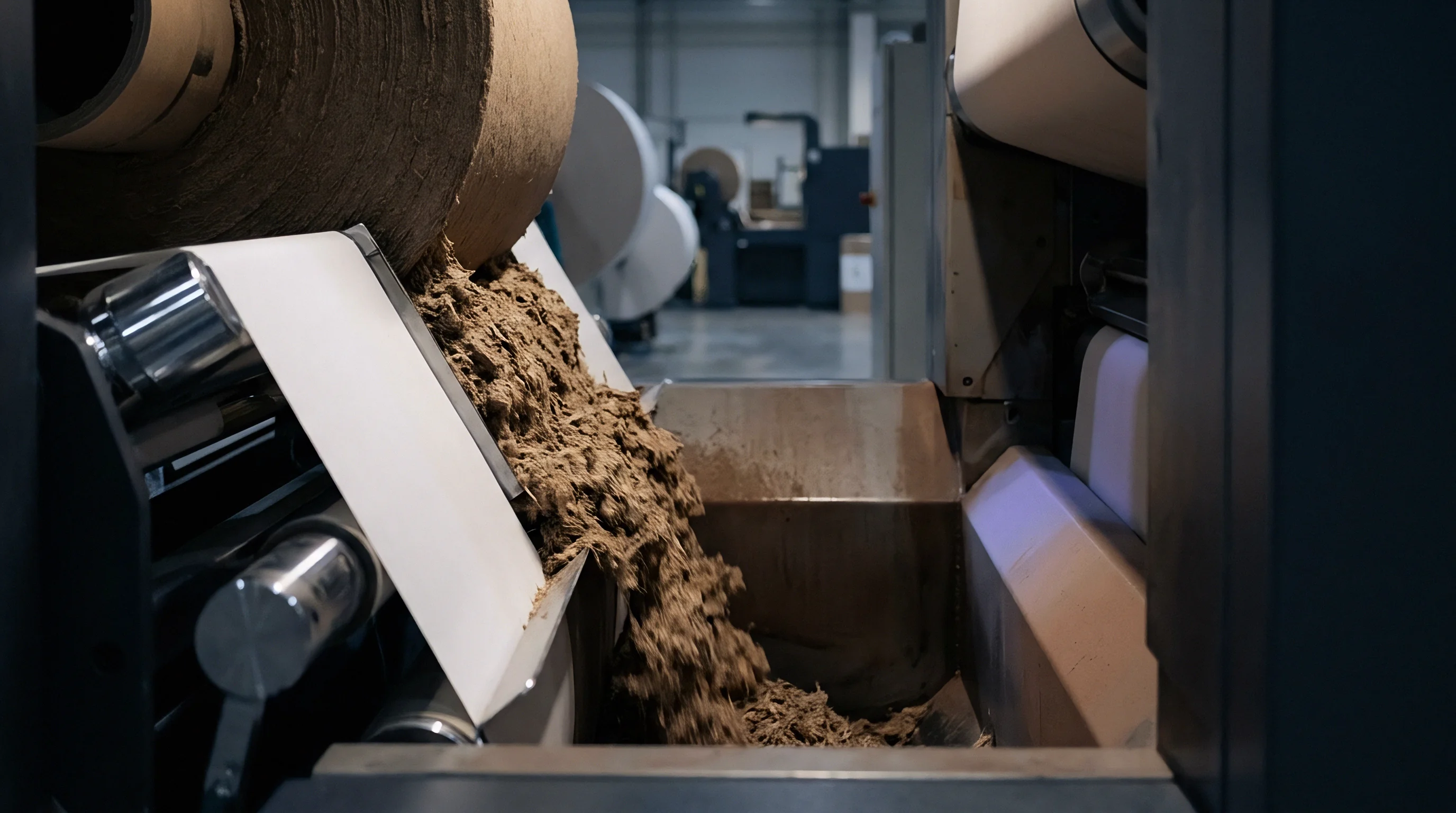
Buckling
Planar compressive stresses generated by restrained hygroexpansion trigger out-of-plane structural instability. When the peripheral moisture content rises, the expanded edge material attempts to elongate. The dry, dimensionally stable central core prevents this elongation, subjecting the sheet perimeter to longitudinal compression along the edge boundary.
Elastic plate buckling theory describes this mechanical response. Thin paperboard sheets possess low out-of-plane flexural rigidity, calculated per ISO 5628 using bending stiffness and thickness parameters. Once the induced compressive hygral stress exceeds the critical buckling limit, the sheet boundary relieves strain energy by deflecting vertically, forming periodic waves.
Wavy edges appear when peripheral relative humidity exceeds stack internal equilibrium humidity by more than eight percentage points.
The wavelength and amplitude of edge waves depend on sheet caliper, cross-direction bending stiffness, and edge boundary constraints. Thinner recycled boards with lower stiffness buckle into short-wavelength, high-frequency waves. Heavier calipers generate broader, long-wavelength undulations that propagate deeper into the sheet interior.
| Board Type | Caliper (µm) | Critical Stress (MPa) | Observed Wavelength (mm) | Wave Amplitude (mm) |
|---|---|---|---|---|
| CRB Chipboard | 350 | 1.12 | 45 to 60 | 3.5 to 6.0 |
| CRB Chipboard | 500 | 2.45 | 80 to 110 | 2.0 to 4.5 |
| WLC White Top | 400 | 1.68 | 60 to 80 | 3.0 to 5.2 |
| WLC White Top | 600 | 3.80 | 120 to 150 | 1.5 to 3.0 |
Elevated moisture reduces both the elastic modulus and shear modulus of paperboard. Softening of recycled fiber bonds lowers the critical buckling threshold, accelerating wave formation under moderate hygral gradients. The wave pattern stabilizes once strain energy balances out-of-plane bending deformation.
Whether localized fibre micro-yielding along the wave crests creates permanent plastic deformation that prevents full planar recovery remains an open technical question in high-recycled-content furnish mechanics.
Packaging
Protective wrap application governs the moisture stability of paperboard skids during logistics and storage. Standard low-density polyethylene (LDPE) stretch film provides minimal water vapour barrier performance when applied with insufficient layer overlap. High ambient relative humidity penetrates micro-voids, unsealed top caps, and pallet base gaps.
Transit conditions expose paperboard pallets to severe psychrometric fluctuations. Winter shipments moving from cold transport containers into heated warehouse docks encounter rapid surface condensation if vapour barriers fail. Condensation on exterior wrap layers transmits liquid water directly into sheet edges via capillary wicking through cut pores.
Pallet wrap with water vapour transmission rates above 15 grams per square meter per day fails to prevent perimeter hygral distortion over ten-day transit cycles.
Barrier packaging specifications dictate the survival of converted stock. Multi-layer co-extruded films with specific water vapour transmission rates (WVTR) below 5 g/m²/24h protect sheet perimeters. Polyethylene-coated kraft top sheets and sealed bottom barrier trays isolate the skid from ambient humidity transfers.
- Atmospheric Verification records ambient temperature and relative humidity inside the transport container prior to unloading.
- Barrier Inspection evaluates the physical integrity of the outer stretch hood or wrap for punctures, seam splits, and moisture ingress.
- Pallet Moisture Profiling measures sheet edge moisture using calibrated sword hygrometers inserted at top, middle, and bottom tiers.
- Quarantine Allocation isolates out-of-spec pallets in climate-controlled staging bays to prevent rapid atmospheric shock.
Suppliers frequently assert that edge distortion originates from improper converter ambient control rather than inadequate transit packaging or non-equilibrated mill sheeting.
Correction
Remediation of distorted sheet skids demands controlled moisture equilibrium protocols. Exposing a wavy-edged pallet to elevated temperature or dry air without moisture regulation aggravates distortion by inducing edge contraction, creating tight-edge curl. Climate equilibration bays maintaining 21 to 23 degrees Celsius and 50 to 55 percent relative humidity permit gradual moisture redistribution.
Equilibration time scales depend on stack volume, caliper, and initial moisture disparity. Lateral diffusion through dense paperboard stacks proceeds at rates below five millimetres per day. Complete stabilization of a 1,000-kilogram pallet often requires five to ten days in conditioned quarantine.
Accelerated dehumidification systems with high air circulation reduce gradient steepness across perimeter sheet zones.
Converting floor operations incur substantial losses when processing distorted stock. Offset lithographic presses operating at 15,000 sheets per hour require absolute planar flatness. Edge waves cause misregistration across colour units, edge creasing in the printing nip, blanket smearing, and catastrophic feeder jams.
Economic losses mount across high-volume converting runs. A press stoppage on a large-format sheetfed offset press costs between 350 and 600 dollars per hour in idle machine time and labor overhead. Make-ready waste climbs from a standard 1.5 percent to over 6 percent on distorted recycled lots, eroding converter operating margins.
Paperboard skids maintained within target factory equilibrium moisture envelopes run flat and feed smoothly across high-speed converting machinery.