Calculating Web Trim and Spoilage Losses across Multi-Pass Press Runs
Calculating multi-pass web trim and spoilage requires compounding side-lay allowances, make-ready setup sheets, and hygroexpansive web expansion per pass.
Edge
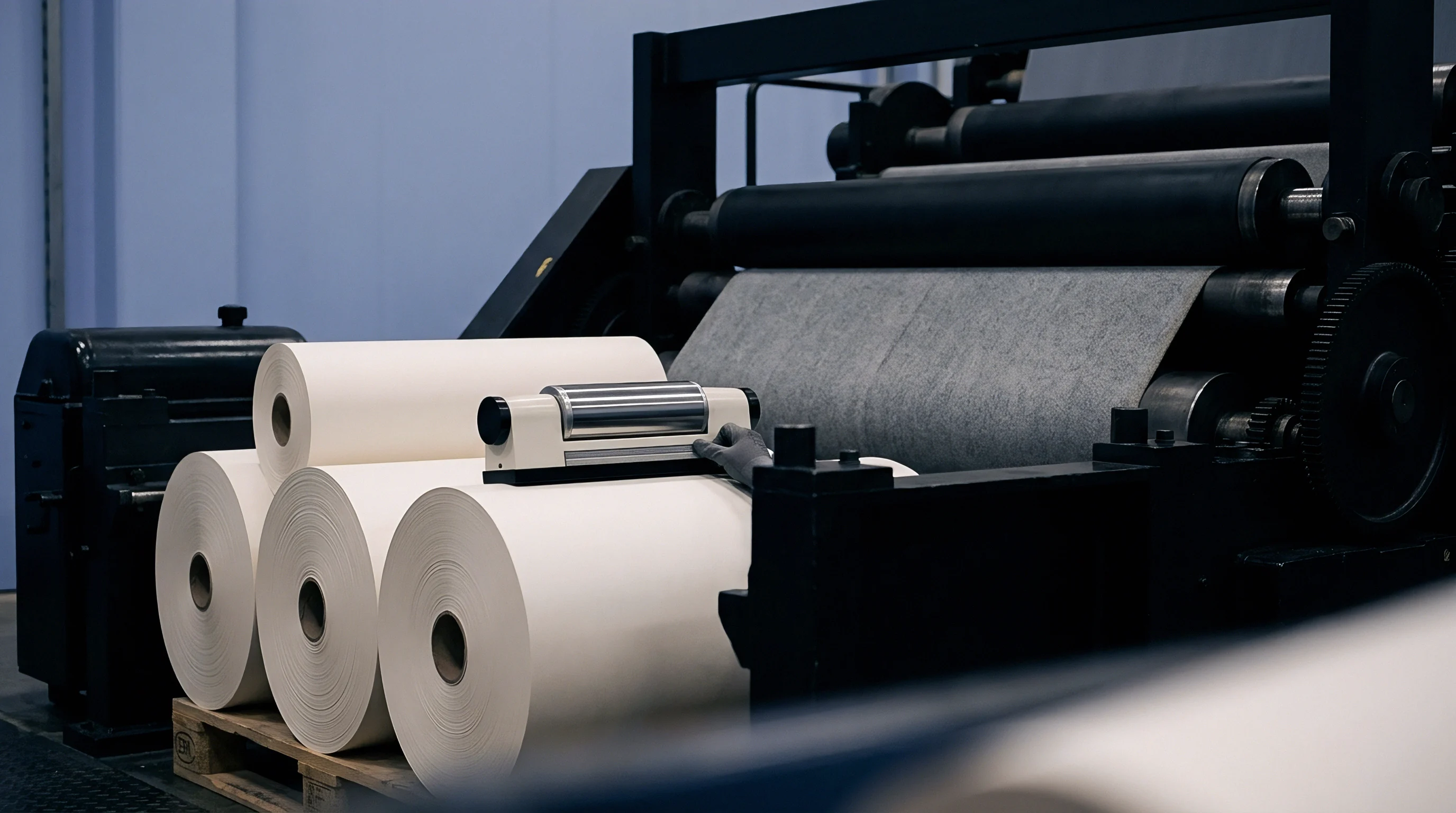
Substrate rolls arrive at the converting plant cut to predetermined reel widths. Operating web presses at maximum efficiency requires balancing the physical width of the paper roll against the combined dimensions of the printed imposition, side-trim margins, and slitting knife allowances. Every millimeter of unprinted paper trimmed off the reel edge represents raw material paid for by weight but discarded before finished assembly.

Mill Slitting Allowances and Deckle Efficiency
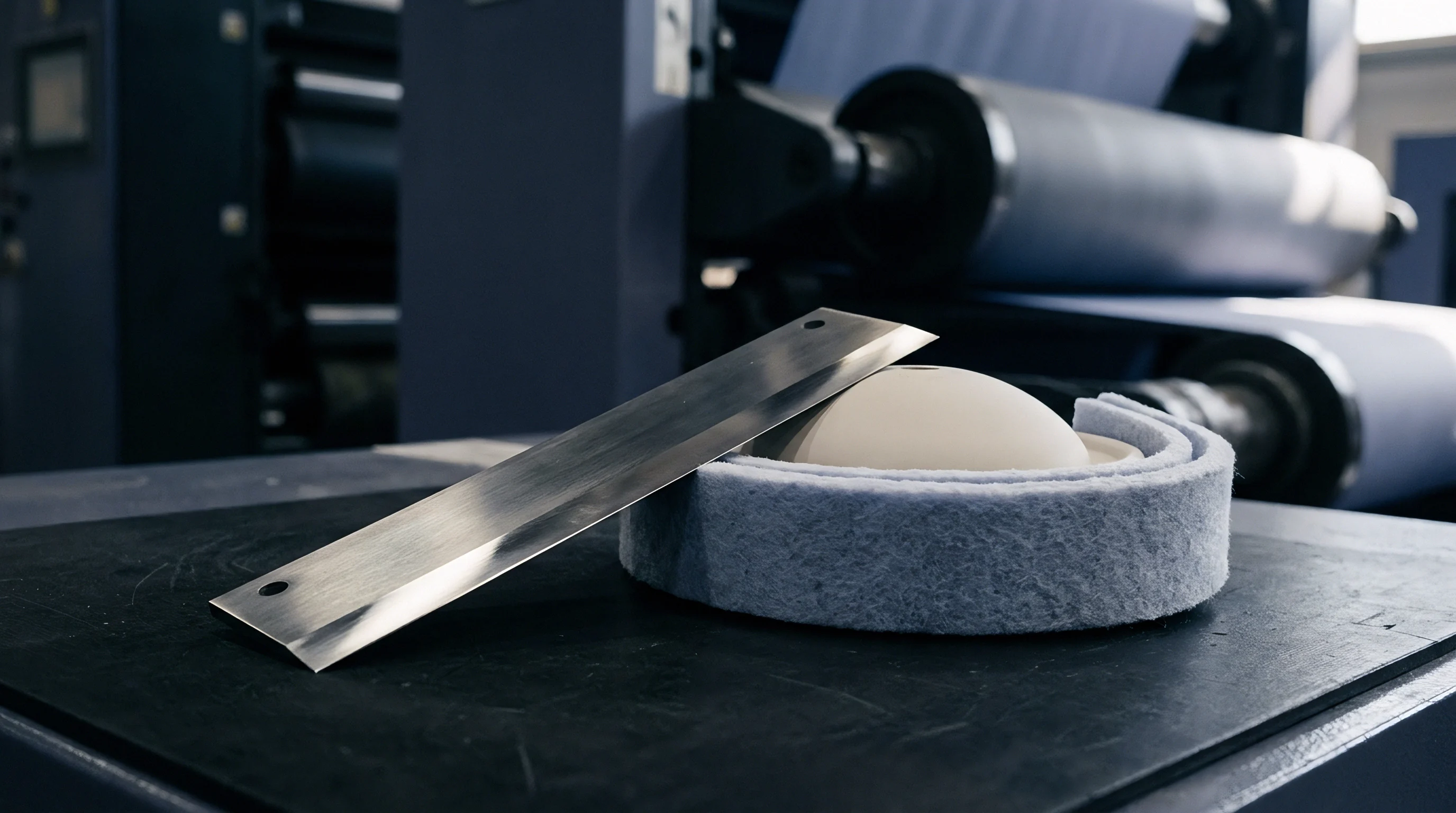
Machine master logs produced on primary paper machines rarely match the exact width required for downstream package converting. Paper mills cut large master logs into narrow slit rolls using circular shear knives on rewinder stations. The precision of this slitting operation dictates the baseline geometric variance delivered to the press floor.
Standard mill slitting tolerances operate within a band of plus or minus one millimeter per roll edge under TAPPI T410 testing protocols.
Reel widths drift. Reel edge straightness, known as weave or telescope, alters the lateral position of the moving substrate as it unwinds. When a mill supplies reels with edge wander exceeding one point five millimeters, press operators must increase side-trim knife margins on the press slitter to prevent unprinted board from entering the die-cutter.
This physical expansion of side-trim margins directly increases fixed substrate waste.
| Press Platform | Nominal Web Width (mm) | Side Trim Allocation (mm) | Slitting Knife Allowance (mm) | Baseline Geometric Waste (%) |
|---|---|---|---|---|
| Narrow-Web Flexo | 330 to 450 | 3.0 to 5.0 | 1.5 | 1.8 to 2.9 |
| Mid-Web Inline Offset | 650 to 850 | 6.0 to 8.0 | 2.0 | 1.8 to 2.4 |
| Wide-Web Gravure | 1000 to 1400 | 10.0 to 15.0 | 3.0 | 1.9 to 2.6 |
| Multi-Pass Roll-to-Roll Foil Stamping | 520 to 720 | 8.0 to 12.0 | 2.5 | 3.0 to 4.0 |
Deckle utilization at the paper mill level determines whether the buyer pays a trim penalty charge. When an order width does not fill the usable wire width of the paper machine, the mill charges for the unused deckle margin or combines orders across multiple buyers. Unplanned mill slitting errors create web width variations that cascade through multi-pass press runs, forcing converting line adjustments on every subsequent pass.
Side Trim Requirements for Gripper and Pin Register
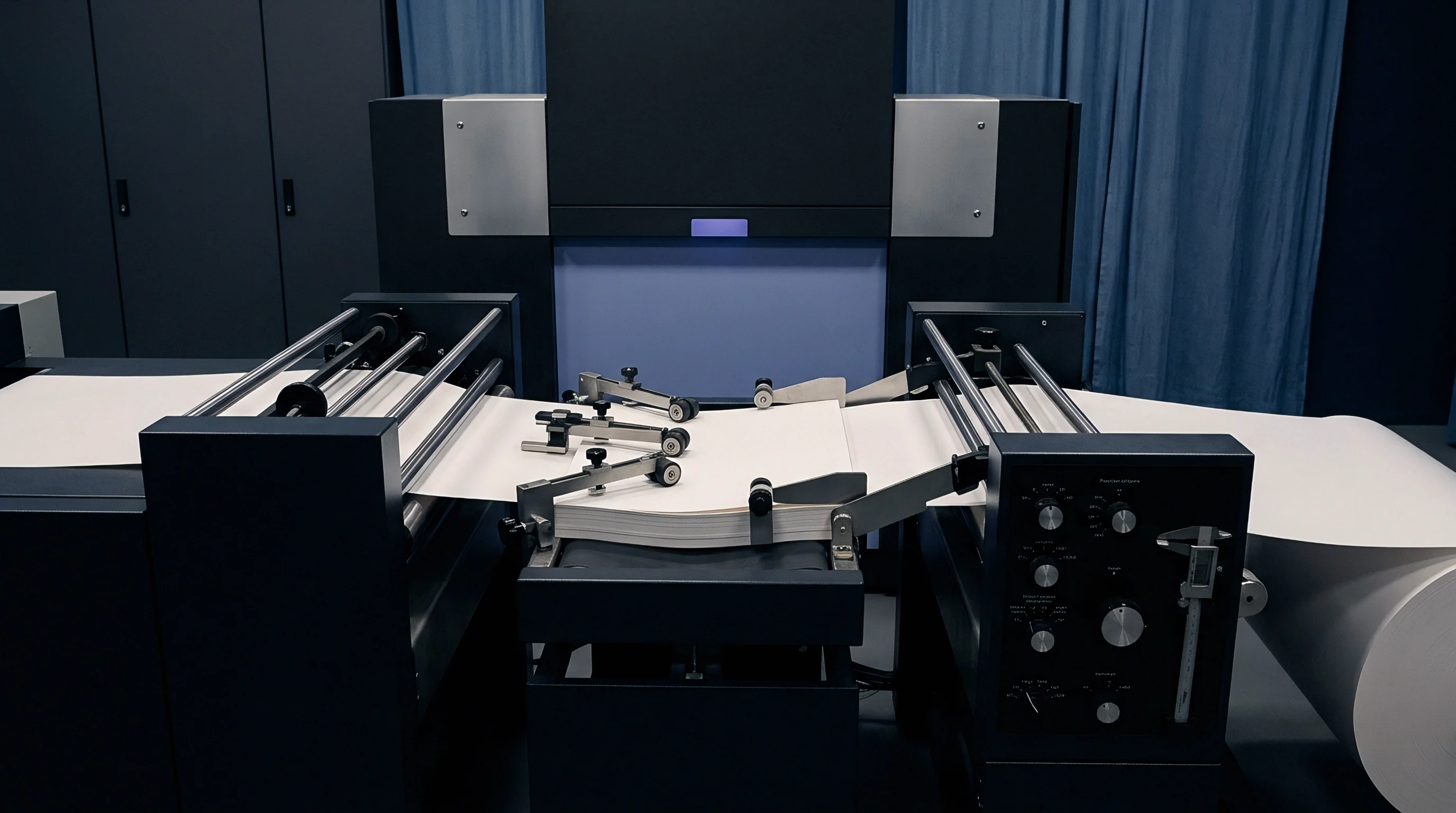
Converting presses need clean lateral margins so mechanical side-lay mechanisms can position the moving paper ribbon accurately. Web guiding systems rely on ultrasonic or infrared sensors that track the physical web edge to maintain lateral alignment. Edge trim accumulates.
If the web edge exhibits micro-tears or dust from poor mill slitting, optical web guide sensors generate false error signals, leading to erratic side-to-side hunting movements of the reel stand.
Conditioned at 23 degrees Celsius and 50 percent relative humidity under ISO 187 standards, virgin folding boxboard demonstrates a lateral reel edge straightness tolerance within plus or minus 0.5 millimeters per 100 meters of continuous unwinding.
Continuous register systems require specific web margin allocations based on press mechanical design. Gripperless web presses use pneumatic clamping edges or vacuum draw belts that occupy three to six millimeters of substrate along both longitudinal edges. Multi-pass offset and gravure runs demand additional gutter spacing between multi-up packaging impositions to allow for mechanical slitting blades and rotary die clearance.
Edge trim allocations cannot be reduced below the physical clamping threshold of the press web guides without risking catastrophic web breaks.
Paper mills commonly cite mill slitting blade wear and unwind tension variance as justification for trim width variations up to three millimeters.

Pass
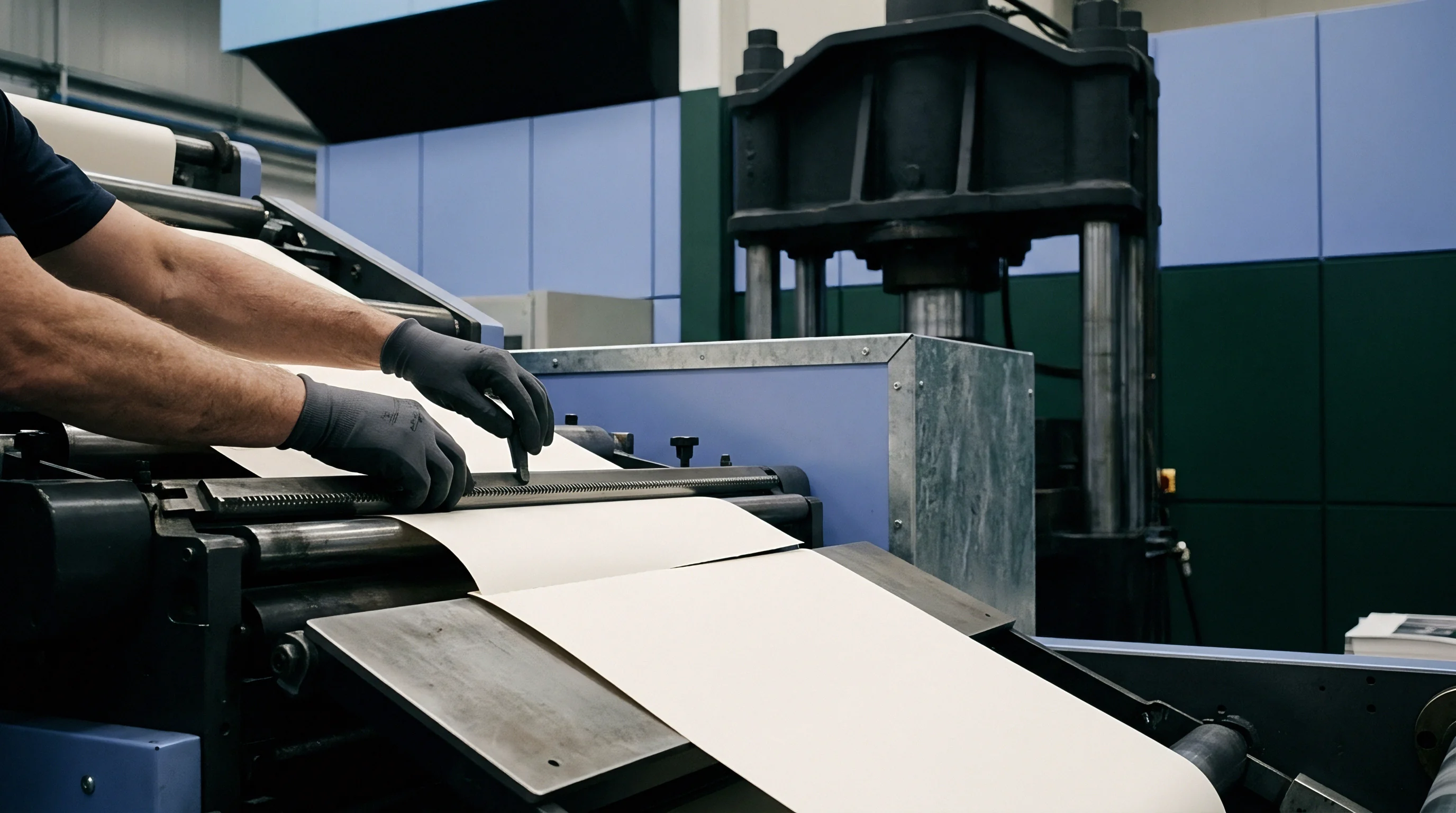
Multi-station printing and inline finishing subject continuous substrate webs to repeated mechanical cycles. Each passage through an offset, flexo, or foil stamping unit applies mechanical tension, liquid chemistries, and thermal drying energy to the substrate. These environmental and mechanical forces alter the physical dimensions of the web before it enters the next processing pass.
Hygroexpansive Fan-Out and Cross-Direction Strain
Water-based inks and offset fountain solutions introduce liquid directly into the cellulose structure during printing operations. Fibre swells under moisture. As individual wood fibres absorb water, they expand predominantly in diameter rather than length, causing significant cross-direction web growth known as fan-out.
In a multi-pass printing sequence where liquid offset lithography is followed by a second pass of rotary screen printing or hot foil stamping, this hygroexpansive expansion alters the image layout dimension across the width of the web.
Dampening solutions disrupt the hydrogen bonding network within recycled furnish faster than in virgin kraft fibers. When paper absorbs moisture under web tension, machine-direction stretch occurs alongside cross-direction swell. Paper stretches under tension.
The combined physical elongation distorts the press imposition, preventing late-stage passes from aligning with initial print registration marks unless compensated for in prepress artwork scaling.
Cross-direction hygroexpansion in recycled cartonboard during four-color wet offset printing reduces register accuracy by up to 0.4 millimeters per meter of web width.
Make-Ready Spoilage Dynamics across Sequential Unit Passages
Initial web threading and color setup consume substantial linear meters of substrate before target ink densities stabilize. Make-ready spoilage occurs at every individual pass of a multi-pass production run. On a first offset pass, an operator may run 150 meters of make-ready waste to balance ink-water equilibrium and achieve target Delta E values.
On a secondary hot foil stamping pass, another 100 meters of make-ready board is consumed to align stamping dies with the pre-printed images.
Register slips. Spoilage compounds exponentially across multi-pass operations. Material rejected during the third pass contains not only its own material cost, but also the cumulative value of all substrate, ink, foil, and press run-time expended during passes one and two.
- Hygroexpansive register drift arises from water absorption during offset passages, expanding the web laterally and forcing downstream register failure on foil stamping passes.
- Thermal web shrinkage occurs during heat-set drying or UV curing stages, driving off structural moisture and causing the web to contract unpredictably before second-pass ink application.
- Unwind tension spike causes temporary mechanical elongation of the substrate ribbon, creating pitch errors on rotary die-cutters and creasing units.
- Surface delamination happens when high-tack inks pull weak surface fibres from recycled boards during pass one, leaving debris that corrupts plate image area on pass two.
When Does Tension Variability Force Wider Gutter Margin Allocations?
Unwind brakes and dancer rolls control line pull, but sudden speed transitions induce momentary stretch across the web span. Substrates with low tensile stiffness, such as lightweight publication papers or thin filmic laminates, stretch significantly under transient tension spikes. When web tension fluctuates by more than ten percent, image registration between consecutive print passes shifts beyond acceptable visual thresholds.
Package designers must allocate wider gutter margins between individual package blanks when multi-pass processing involves substrates prone to mechanical stretch. If gutter margins are set too narrow, image drift causes print artwork from one carton panel to bleed over into the score lines or gluing flaps of adjacent cartons on the die-cut sheet layout. Deckle allocation matters.
Failing to compensate for hygroexpansive web growth across consecutive ink and varnish passes forces operators to stop presses, trim registration margins, and dump hundreds of kilograms of misregistered board into scrap.

Arithmetic
Calculating true material consumption across multi-pass conversion requires isolating fixed geometry from variable operational waste. Raw paper usage is calculated by weight, while finished packaging units are measured by unit count. Translating reel tonnage into finished cartons demands a strict accounting model that factors in edge trim, slitting losses, make-ready waste, and multi-pass running spoilage.
Cumulative Multi-Pass Spoilage Formulation
Tracking web loss across sequential processing steps relies on linking fixed area reductions to run-length defect counts. Total required input substrate mass is derived by combining the gross deckle trim loss with the compounded yield efficiencies of every sequential pass.
The mathematical formulation for total gross web mass required for a multi-pass production run is defined as:
M_gross = M_net /
Where M_gross is the total purchased roll weight, M_net is the net weight of finished converted product, W_trim is the fractional width reduction from edge slitting and gutter waste, and S_n is the fractional spoilage rate (including make-ready and running waste) for pass n.
| Production Phase | Phase Input Weight (kg) | Fixed Waste (kg) | Variable Waste (%) | Phase Yield (%) | Cumulative Yield (%) |
|---|---|---|---|---|---|
| Raw Reel Receipt | 40,000 | 200 (Core/Tare) | 0.5% | 99.50% | 99.50% |
| Edge Trim Slitting | 39,800 | 1,114 (Side Trim) | 2.8% | 97.20% | 96.71% |
| Pass 1: 6-Color Offset Offset | 38,686 | 1,160 (Make-Ready) | 1.5% (Run Waste) | 95.50% | 92.36% |
| Pass 2: Hot Foil Stamping | 36,945 | 923 (Make-Ready) | 1.2% (Run Waste) | 96.30% | 88.94% |
| Pass 3: Rotary Die-Cutting | 35,578 | 711 (Make-Ready) | 2.5% (Stripping Waste) | 95.50% | 84.94% |
| Net Delivered Good Carton Weight: 33,977 kg. Total Process Loss: 6,023 kg (15.06% Total Web Loss). | |||||

Parent Reel to Finished Net Sheet Yield Matrix
Converting continuous rolls into individual folded cartons involves multiple intermediate trim operations. Yield drops fast. Waste stacks rapidly.
Every pass costs.
To quantify exact material loss for a specific production order, consider a worked calculation for a 40-tonne order of 300 gsm folding boxboard processed across three separate machine passes. The detailed calculation sequence follows a strict procedural path:
- Determine raw input mass from mill delivery dockets after subtracting pallet skids, moisture wrapping, and fiber core tare weights.
- Calculate fixed side-trim area loss by comparing raw unwind reel width against the finished die-cut imposition knife boundary width.
- Subtract first-pass make-ready sheets consumed during ink density target acquisition and register line positioning.
- Apply first-pass running spoilage percentage to calculate good web tonnage entering intermediate reel staging storage.
- Deduct second-pass make-ready paper allocation consumed during hot foil stamping die registration setup.
- Factor in thermal contraction dimensional loss and second-pass running defective unit removals.
- Calculate third-pass rotary die-cutting matrix stripping waste and internal window cutout area subtractions.
- Divide final net good carton mass by gross starting reel mass to establish the absolute run yield coefficient.
ISO 12647-2 specifies that color control strip margins must extend across the full width of the press imposition, adding a minimum of 12 millimeters to the required machine-direction sheet layout length.
Applying this operational calculation workflow to the 40-tonne run yields a net delivered carton mass of 33,977 kilograms. The fixed slitting trim accounts for 1,114 kilograms of solid scrap, while make-ready waste across the three passes consumes 2,794 kilograms of substrate. Running defects and stripping scrap remove an additional 2,115 kilograms.
The final operational yield coefficient stands at 84.94 percent, proving that 15.06 percent of purchased substrate weight is lost to press room spoilage mechanisms.
Calculating exact yield through multi-pass conversion transforms raw tonnage estimates into realistic production unit costs.

Tolerance
Base sheet variability introduces unexpected material loss when processing tight-geometry artwork across multi-pass runs. Paperboard is not an isotropic material; its physical dimensions, thickness, and stiffness fluctuate across the master roll and throughout the length of an individual unwinding web. Operating near mechanical press limits requires explicit knowledge of raw material specification tolerances.

Grammage and Caliper Drift across Reel Length
Papermaking machines attempt to hold uniform basis weight, yet profile variations persist across the manufacturing lot. Grammage varies across the reel width due to headbox flow hydraulics and across the reel length due to pulp consistency fluctuations. Moisture drives expansion.
Caliper fluctuates across rolls. Tension changes.
Under ISO 536, commercial coated boxboard permits a grammage tolerance of plus or minus five percent from nominal specification. A 300 gsm board may legally arrive at the press room weighing 285 gsm or 315 gsm. If a sheet arrives on the light side of the tolerance band, web tension applied during multi-pass processing induces greater mechanical stretch, throwing off rotary die-cut pitch length.
Conversely, over-weight board increases reel roll outer diameter, altering roll unwind inertia and causing tension surging during press acceleration.
| Substrate Grade | Nominal Grammage (gsm) | Caliper Tolerance (ISO 534) | CD Hygroexpansion (% per 1% ΔMC) | MD Tensile Strain at Break (ISO 1924) |
|---|---|---|---|---|
| Solid Bleached Board (SBB/SBS) | 280 | ± 4.0% | 0.06 to 0.08 | 2.1% |
| Folding Boxboard (FBB – Virgin) | 300 | ± 5.0% | 0.07 to 0.09 | 1.8% |
| Coated Recycled Board (CRB/WLC) | 350 | ± 7.5% | 0.11 to 0.15 | 1.3% |
| Supercalendered Kraft Paper | 80 | ± 3.0% | 0.04 to 0.06 | 2.8% |
Caliper variations affect ink transfer dynamics on offset blankets and impression cylinder pressure settings. A localized caliper dip of ten micrometers reduces ink transfer efficiency, creating light print spots that prompt press operators to reject finished reels during final goods-in inspection.

Thermal and Moisture Recovery between Pass Staging
Inter-pass staging allows printed reels to acclimate before entering subsequent lamination or hot foil stamping units. During offset printing, infrared dryers and hot-air knives drive off surface water, temporarily lowering internal sheet moisture content below equilibrium levels. As the printed reel sits on the press floor, the outer laps absorb ambient workshop humidity while the core remains dry and hot.
This uneven moisture recovery creates tight edges or wavy borders across the rewound roll. When the reel is unwound for pass two, uneven web tension causes localized creasing, blade streaks, or lateral register oscillation.
- Equilibrium conditioning window dictates holding printed reels in controlled pressroom atmospheres for eight to twelve hours between passes to equalize internal moisture profiles.
- Caliper profile monitoring mandates measuring reel thickness at five points across the web width using handheld micrometers under TAPPI T411 procedures before loading secondary passes.
- Moisture balance checks require dielectric probe measurements to ensure web water content remains between 6.5 and 7.5 percent prior to thermal lamination.
- Web tension recalibration involves resetting dance arm pneumatic pressure to compensate for measured grammage drift across different mill production batches.
Whether high-yield bulkier boards can maintain sufficient dimensional recovery between thermal curing passes to prevent edge curl in high-humidity converting environments remains an open operational question.


Outlay
Financial losses resulting from uncollected web waste directly erode converting margins on multi-pass packaging jobs. Raw substrate typically comprises 45 to 65 percent of total package manufacturing cost. Substrate scrap cannot be viewed simply as an unavoidable pressroom artifact; it represents unrecovered capital that alters the unit price structure of every delivered carton.

Commercial Scrap Valuations and Freight Discrepancies
Trim removed at the press slitter falls into waste capture systems for eventual sale back to recycling mills. Scrap values fluctuate. Landed costs rise.
Margin disappears.
The secondary fiber market prices manufacturing scrap based on grade purity and contamination. Clean, unprinted virgin edge trim commands premium prices under standard mill waste classifications. Printed, multi-pass board contaminated with UV cured varnishes, cold foils, or laminated plastic films suffers heavy price downgrades, often selling for less than twenty percent of the original virgin reel purchase price per tonne.
Freight costs compound the net financial loss of trim waste. Converters pay outbound freight on gross reel weights delivered to the press floor, but can only bill end customers for the net weight of finished cartons shipped out the loading dock. Transporting, handling, and baling hundreds of tonnes of press trim creates secondary overhead expenses that must be recovered through unit pricing pricing matrices.
Net Delivered Cost Formulations per Thousand Units
Determining the true financial impact of multi-pass waste demands converting gross reel purchasing costs into net pack metrics. Relying on simple sheet-area math ignores the compounded expense of intermediate processing spoilage.
The true landed substrate cost per thousand finished units is calculated using the following operational equation:
C_1000 = / Net Good Delivered Units (in 1000s)
When an order experiences a 15 percent total substrate loss across three passes, the effective price paid per usable tonne of board increases by 17.6 percent over the raw mill invoice price. If intermediate spoilage increases from 15 percent to 20 percent due to uncontrolled fan-out or edge register failures, the net substrate cost per thousand cartons jumps by an additional 6.2 percent, erasing the converter’s net operating margin on the run.
A purchasing agreement that fails to tie raw web trim allowances to verifiable net unit output consistently transfers press room inefficiency directly onto the converter balance sheet.