Structural Decay
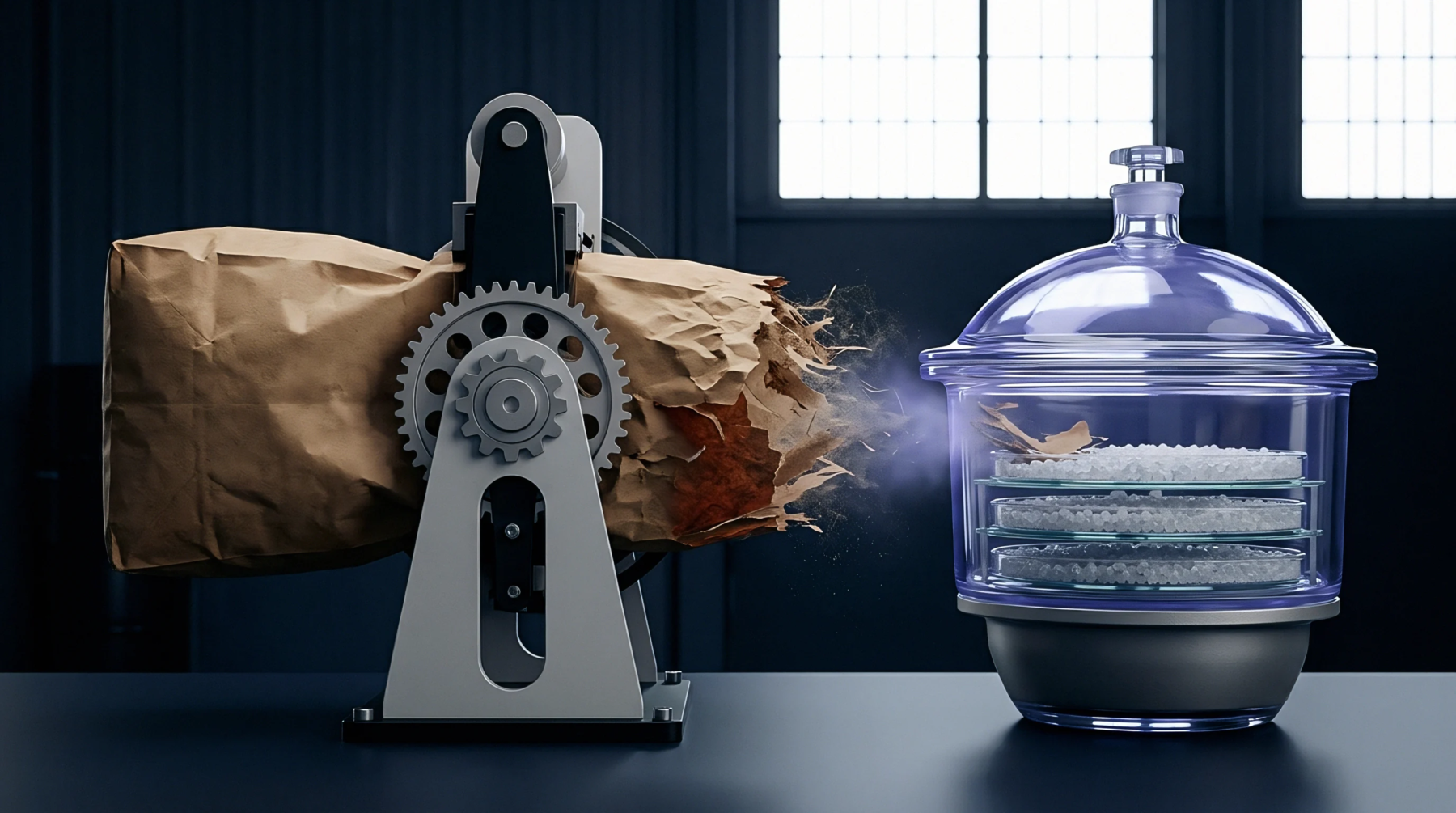
The progressive loss of compression strength in loaded packaging containers stored over an extended period describes the long-term degradation of structural materials under static pressure. In distribution networks, warehouse stacking fatigue can cause boxes to fail under loads that are far below their initial compressive strength as measured in short-term laboratory tests. This continuous deterioration occurs because the internal fiber bonds slowly yield under the constant downward force of the stack.
Moisture Acceleration
Fluctuating humidity levels in non-conditioned storage spaces accelerate this degradation process by initiating cyclic moisture sorption within the paperboard. When the relative humidity rises and falls, warehouse stacking fatigue is compounded by transient creep, which severely reduces the lifespan of the corrugated boxes. This combined mechanical and environmental stress can cause a box to fail in weeks rather than the months expected under dry, stable conditions.
Strength Calculation
Packaging engineers use safety factors to discount the measured compression strength of a new box to account for this expected long-term loss of structural integrity. A typical design calculation might apply a multiplier to the anticipated stack load, ensuring that the selected board grade possesses sufficient excess strength to survive several months in storage. This margin of safety protects the packaged goods from damage and prevents the collapse of entire storage columns during transit and warehousing.
Implementing these conservative limits allows distribution networks to run smoothly without risk of structural failure. Regular inspection of stacked pallets further assists in identifying deformed cartons before a full-scale collapse occurs, preventing workplace accidents and product losses.