Cold Warehouse Thermal Reconditioning Procedures to Prevent Edge Waviness and Fluting Defects
Cold paper pallets demand staged thermal acclimation inside unopened vapor wrap to eliminate edge waviness and fluting caused by moisture sorption gradients.
Equilibrium
A temperature differential between stored paper stock and the pressroom atmosphere initiates immediate water vapor transfer across exposed sheet edges. When a cold pallet moves into a warm environment, ambient air contacting the cool outer boundaries drops in temperature, raising the relative humidity of that boundary layer and creating a steep vapor pressure gradient toward the paper. Acting as a porous solid, the outer edges adsorb moisture rapidly to reach thermodynamic balance with this microclimate, while the dense internal core remains cold and dry.
Cellulosic fibers respond to localized moisture uptake through hygroscopic swelling, expanding up to twenty times more in diameter than in length. This cross-direction adsorption expands the outer sheet boundaries while the center sheet dimensions stay fixed, forcing the perimeter to buckle into classical edge waves. Moving warm paper into a cold, dry space reverses the problem: the edges desiccate, shrinking the sheet perimeter and leaving the center baggy and slack.

Vapor Pressure Differential across the Wrapped Pallet
Air trapped beneath protective film rapidly reaches thermodynamic saturation when chilled rolls or skids enter warm ambient spaces. Standard pressroom conditions resting at 21 degrees Celsius and 50 percent relative humidity maintain a partial vapor pressure of approximately 1.24 kilopascals. If paper core temperatures reside at 4 degrees Celsius following winter warehouse storage, air adjacent to the pallet edges drops toward 4 degrees Celsius, where saturation vapor pressure falls to 0.81 kilopascals, causing condensation that disrupts ink transfer.
This imbalance forces water vapor out of the air and directly into the cellulose structure. The rate of moisture transfer follows Fickian diffusion principles, governed by the difference in vapor pressure between the room and the sheet boundary layer. Unwrapping cold paper exposes outer ream edges to continuous moisture absorption from the surrounding air, driving edge swelling until the sheet perimeter reaches equilibrium relative humidity with the room.
Cellulose matrix moisture uptake increases by roughly 0.15 percent for every single unit percentage rise in relative humidity between thirty and sixty percent ambient levels.
Hygroexpansion Mechanisms in Coated and Uncoated Stock
Cellulose fibers swell preferentially across their diameter as ambient moisture binds to hydroxyl sites within amorphous regions. Uncoated woodfree paper grades adsorb atmospheric moisture rapidly, exhibiting cross-direction expansion coefficients between 0.015 and 0.025 percent per single percentage change in relative humidity. Coated folding boxboard grades experience slower moisture ingress through double-pigmented top coatings, but raw fiber ends along exposed cut edges take in ambient moisture unhindered.
Double-wall corrugated board suffers severe structural fluting defects under similar thermal exposure. The linerboard components adsorb ambient moisture and expand while the fluting medium remains trapped between rigid glue lines. This dimensional conflict produces visible web distortion along the flute peaks, lowering flat crush resistance measured under ISO 3035 and destabilizing automatic box-folder gluer feeding operations.
Perimeter distortion is frequently attributed to converter storage conditions rather than transit conditions, based on the assumption that unopened mill packaging guarantees moisture stability regardless of ambient thermal swings.

Dwell
Thermal conduction through dense paper stacks proceeds slowly because trapped air pockets between sheets act as effective insulating barriers. A single pallet of solid bleached sulfate board weighing 1,000 kilograms requires up to 48 hours to equalize with pressroom ambient temperatures when moved from an unheated 2 degrees Celsius warehouse into a 22 degrees Celsius printing plant. Opening stretch packaging before complete thermal stabilization causes instant condensation on exposed metal straps, outer reams, and reel edges.
Calculating required thermal reconditioning durations depends on pallet volume, substrate density, initial warehouse temperature, and ambient plant humidity. Standard paper density ranges from 0.70 to 0.95 grams per cubic centimeter, yielding thermal conductivity values between 0.11 and 0.16 Watts per meter-Kelvin. Thermal diffusivity remains low, restricting the rate at which heat penetrates from the outer perimeter toward the cold core of the stack.
Thermal Mass and Internal Temperature Gradients
Solid board loads exhibit pronounced core-to-surface lag, creating internal temperature steps that persist over several days. The mathematical modeling of thermal penetration into rectangular paper blocks follows transient conduction equations derived from Fourier Law. Sheet edges absorb heat from ambient air, but internal areas gain heat almost exclusively through conduction across thin paper sheets.
Internal thermal gradients generate mechanical tension imbalances across the web or sheet layout. Outer sheet edges expand thermally while core areas remain cold and compact. Attempting to print sheets carrying an internal 10 degrees Celsius core-to-edge gradient results in severe feed registration errors, as sheet dimensions expand dynamically while passing through infrared press drying stations.
A temperature differential exceeding five degrees Celsius between paper core and ambient room air generates edge wave amplitudes greater than three millimeters within two hours of wrapper removal.
Acclimation Schedules for Palletized Boxboard and Fine Paper
Standardized conditioning tables establish minimum holding durations based on total shipment volume and temperature delta, measured via probe thermometer. Because cold paper fibers resist swelling initially and larger skids have an unfavorable surface area to volume ratio, bulkier loads require extended holding periods.
| Temperature Differential (Celsius) | 500 kg Skid (Hours) | 1000 kg Skid (Hours) | 1500 kg Skid (Hours) | Reel 1200 mm Diameter (Hours) |
|---|---|---|---|---|
| 5 | 12 | 18 | 24 | 14 |
| 10 | 24 | 36 | 42 | 28 |
| 15 | 36 | 48 | 60 | 40 |
| 20 | 48 | 66 | 78 | 52 |
| 25 | 60 | 84 | 96 | 66 |
| Values based on TAPPI T 402 standard conditioning parameters for solid paperboard skids wrapped in 80-micrometer polyethylene stretch film. | ||||
Allowing extra conditioning time inside unopened mill wrapping preserves lay-flat stability far better than attempting press-side environmental adjustments.
Dock
Unloading chilled paper stock directly into heated pressrooms creates severe thermal shock along outer packaging surfaces, where intact vapor barriers are needed to keep edges from swelling. Receiving areas must implement staged thermal buffer zones to step paper temperatures upward in controlled increments. Staging skids in intermediate temperature zones limits boundary-layer vapor pressure spikes, reducing localized condensation risk on protective barrier wraps.
Effective thermal reconditioning protocols depend on unbroken moisture-barrier packaging. Heavyweight polyethylene stretch films, asphalt-laminated wrappers, and poly-coated kraft headers act as vapor barriers. Damaged stretch wrap allows warm humid plant air to penetrate directly into cold ream edges, causing edge waviness long before the central core achieves thermal equilibrium.
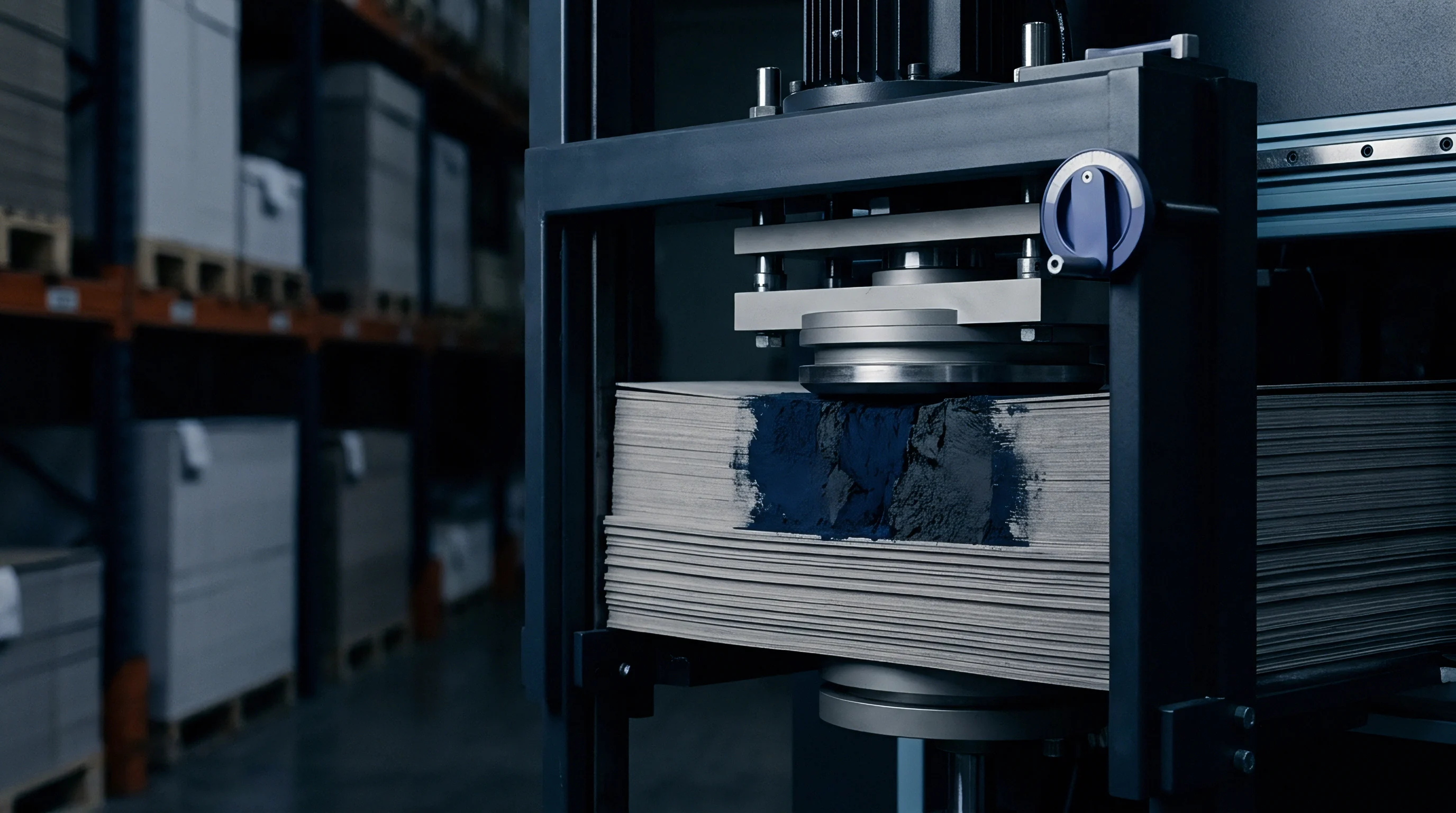
Staged Reconditioning Zones for Deep Sub-Zero Deliveries
Transitional staging areas maintain intermediate climate controls, stepping ambient temperatures upward to moderate vapor gradients. When outdoor transport temperatures drop below minus 10 degrees Celsius, moving paper stock directly into a 22 degrees Celsius pressroom establishes an extreme 32 degrees Celsius delta. Substrates staging through an intermediate 12 degrees Celsius buffer room experience reduced thermal stress and lower peak condensation potential.
- Position incoming transport vehicles inside covered receiving bays to prevent free water contact from snow or rain.
- Measure external packaging temperatures using an infrared probe to establish baseline thermal conditions upon receipt.
- Transfer wrapped pallets into an unheated secondary warehouse buffer zone maintained between 10 and 14 degrees Celsius.
- Maintain pallets within the buffer zone for a minimum of 12 hours to permit initial core warming without aggressive vapor flux.
- Relocate wrapped pallets into the primary pressroom conditioning area, maintaining full packaging integrity until internal temperatures match ambient air within 2 degrees Celsius.
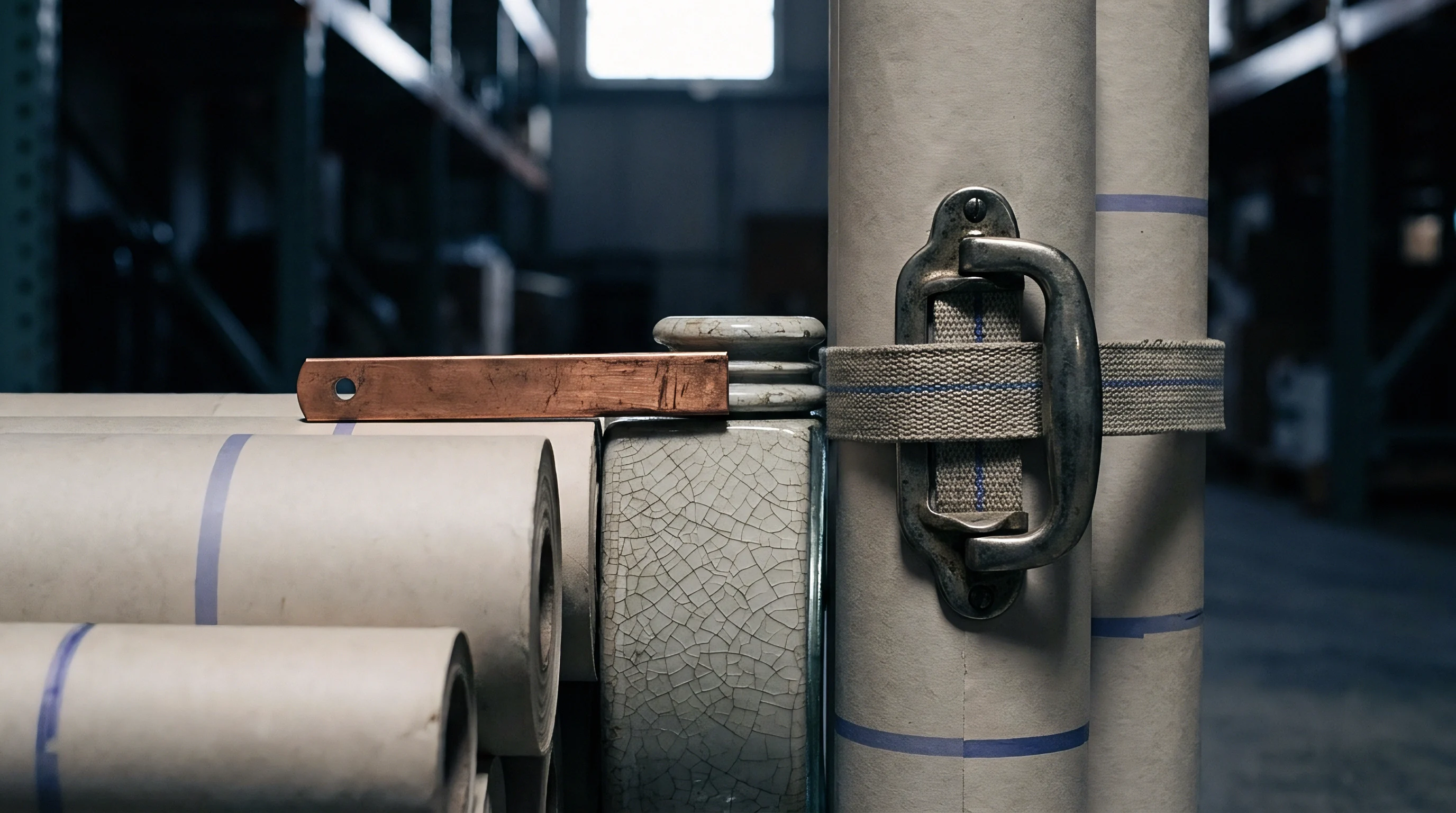
Vapor Barrier Integrity during Acclimation Phase
Polyethylene stretch films and asphalt-laminated kraft papers resist moisture migration only when outer seals stay completely intact. Minute tears created by forklift tines open localized airflow channels, exposing isolated ream sections to ambient air. Microclimate moisture entry through film punctures creates localized edge waviness, forcing printers to crop sheet margins or discard outer reams completely.
| Packaging State | Substrate Type | Exposure Duration (Hours) | Edge Moisture Increase (%) | Resulting Defect Risk | |
|---|---|---|---|---|---|
| Fully Intact Stretch Wrap | Folding Boxboard 350 gsm | 24 | 0.1 | Negligible distortion | |
| Punctured Film (10 cm Tear) | Folding Boxboard 350 gsm | 24 | 1.4 | Localized edge waviness | |
| Wrapper Removed Completely | Folding Boxboard 350 gsm | 24 | 3.8 | Severe edge fluting and feed jam | |
| Fully Intact Stretch Wrap | Uncoated Offset 90 gsm | 24 | 0.2 | Negligible distortion | |
| Wrapper Removed Completely | Uncoated Offset 90 gsm | 24 | 5.2 | Unusable sheet curl and web tear |
DIN 50014 specifies standard conditioning atmospheres of twenty-three degrees Celsius and fifty percent relative humidity for precise paper substrate stabilization.
Standard delivery contracts following ISO 187 guidelines shift financial liability for moisture distortion entirely to the buyer if stretch film seals are broken prior to complete thermal stabilization.

Probe
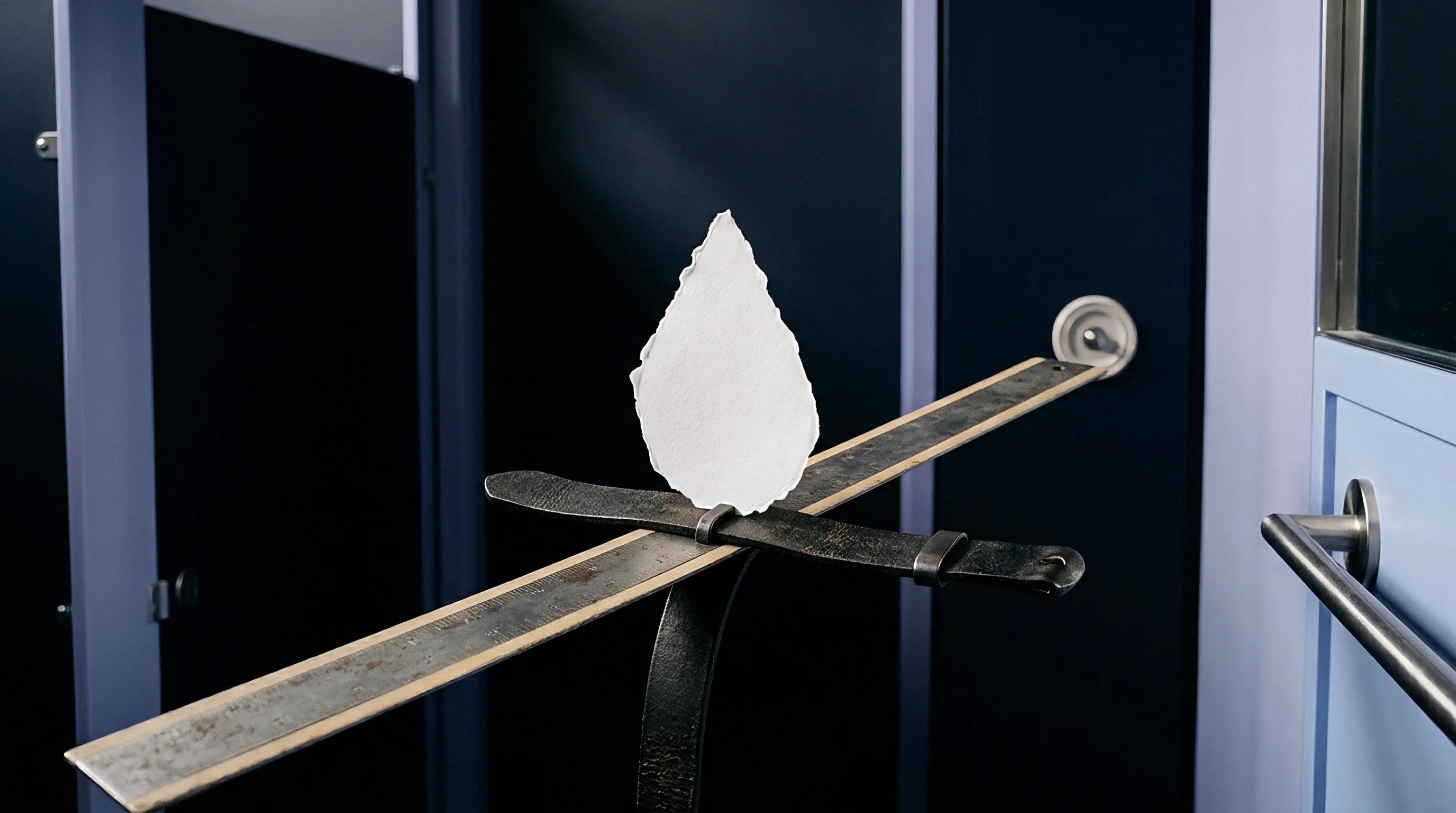
Sword-type hygrometers measure internal relative humidity by inserting a thin aluminum sensor blade directly between stacked paper sheets. Equipped with calibrated capacitive sensors, these tools determine equilibrium relative humidity (ERH) deep within the paper mass. Evaluating ERH against room air relative humidity provides direct verification of substrate readiness before removing protective wrapping.
Infrared thermometer surface readings yield incomplete thermal profiles because outer reams warm faster than core sections. Sword probes must penetrate at least 250 millimeters into the stack center to record true core humidity and temperature levels. A stack core exhibiting lower ERH than the room environment will absorb water vapor rapidly upon unwrapping, causing immediate perimeter expansion.
Equilibrium Relative Humidity Measurement Methods
Sensors inserted into paper skids register internal relative humidity values that reflect local moisture activity within isolated fiber pockets. Testing requires inserting the sword probe into the middle third of the pallet height, allowing two minutes for thermal equilibration between the blade and surrounding paper. The measurement indicates stable conditions when three consecutive humidity readings taken over five minutes show zero drift.
Standard TAPPI T 529 methods mandate that substrate ERH match ambient room relative humidity within a narrow tolerance window of plus or minus 5 percent. If room air rests at 50 percent relative humidity, internal pallet ERH readings between 45 and 55 percent indicate stable conditions suitable for wrapper removal. Readings falling below 45 percent prove that the stack remains thermally cold or hydrodynamically dry, predicting severe edge waviness upon exposure.
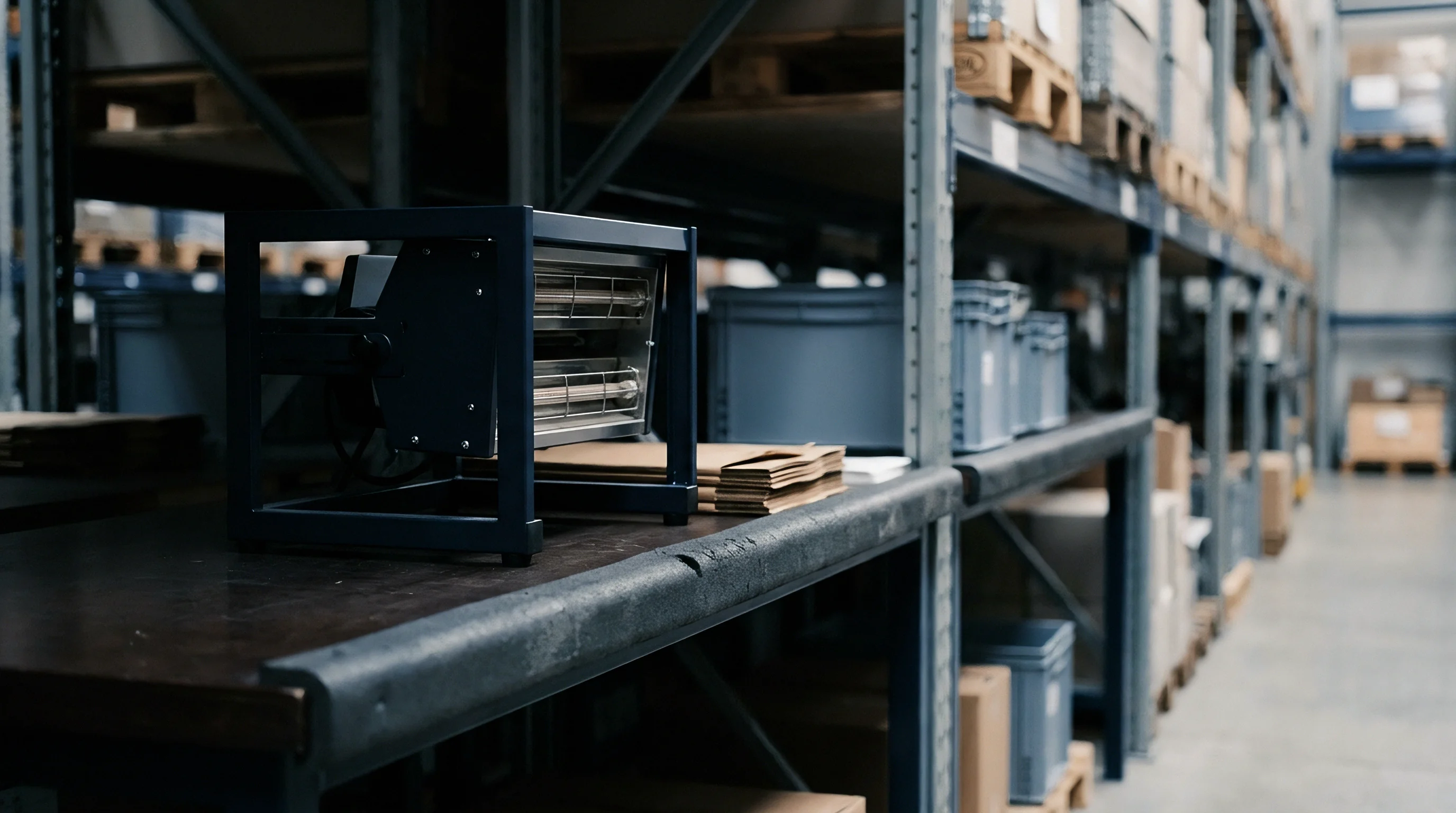
Can Cold Substrates Enter Production before Complete Thermal Uniformity?
Partial thermal acclimation leaves dense core regions cold, causing web strain variability as material passes through heated press dryers. Running incompletely conditioned paper through web-offset or flexographic printing lines leads to severe registration failure. Cold center sections contract sheet width across impression cylinders, while warm outer boundaries expand, creating uneven web tension profiles that cause diagonal web wrinkling.
- Equilibrium Relative Humidity Match within five percentage points of ambient pressroom relative humidity verified via sword probe.
- Core to Perimeter Temperature Balance exhibiting less than two degrees Celsius variance across the entire load depth.
- Intact Vapor Wrap Verification confirming zero exposure of raw sheet edges during the preceding thermal staging sequence.
- Sheet Lay Flat Stability confirmed by visual inspection of sample sheets pulled from top reams following wrapper removal.
Paper stock and pressroom air reach functional balance when equilibrium relative humidity sits within five percent of ambient room air.
Whether real-time optical surface profiling can reliably predict internal edge fluting on heavy corrugated board before web tension is applied remains unresolved.


Waste
Wavy sheet edges cause double-sheet drops, sensor trips, and immediate machine stoppages. On high-speed folding carton feeders operating at 10,000 sheets per hour, edge fluting alters vacuum pile lifter engagement, resulting in misfeeds every few hundred sheets. Press downtime charges accruing at 300 to 600 dollars per hour rapidly exceed the total purchase value of the substrate lot being processed.
Moisture-induced dimensional variance along sheet peripheries disrupts alignment against mechanical front and side lays, causing misregister that can force immediate job rejection. In multicolor offset printing, a perimeter expansion of merely 0.5 millimeters across a 1,000 millimeter sheet width creates visible color traps and misregister, rendering high-end packaging unusable under customer inspection standards.
Misregister and Jam Frequencies on High-Speed Presses
Dimensional variations along sheet peripheries alter gripper margin engagement, producing severe multicolor misregister on offset presses. Substrates with wavy edges enter the impression cylinder with uneven leading edges, as the center section engages the gripper bars before the flared outer corners and forces localized sheet buckling under impression pressure.
In corrugated board converting, edge fluting prevents uniform flexographic printing and clean rotary die-cutting. Flute warping alters board caliper, causing compression crush along high spots while light printing areas suffer washboarding defects. Die-cut scoring lines cracked due to non-uniform moisture distributions lead to box structural failure on automated high-speed packing lines.

Financial Recourse for Thermally Induced Board Defects
Filing commercial claims against paper merchants demands detailed thermal logs and verified moisture readings gathered upon initial delivery. Paper mills routinely reject claims for edge waviness if receiving logs lack documented temperature measurements taken at goods-in, dock transit times, and staging zone environmental histories. Unwrapping skids before core temperatures equalize voids standard manufacturer quality warranties.
| Defect Type | Press Downtime (Hours) | Spoiled Sheets (Units) | Direct Material Loss (USD) | Total Financial Impact (USD) |
|---|---|---|---|---|
| Feeder Stoppage from Wavy Edges | 3.5 | 2,200 | 1,870 | 3,620 |
| Multicolor Misregister Spoilage | 2.0 | 5,400 | 4,590 | 5,790 |
| Corrugator Fluting Lean and Delamination | 4.0 | 1,800 (Sheets) | 3,240 | 5,640 |
| Score Line Cracking at Gluer | 1.5 | 4,000 (Cartons) | 2,400 | 3,300 |
Substrate rejection protocols depend on systematic data collection during receiving, reconditioning, and pressroom loading phases.
- Initial Delivery Thermal Records documenting ambient trailer temperature, external pallet surface temperature, and stretch wrap integrity upon unloading.
- Dock Buffer Zone Environment Logs recording hourly temperature and relative humidity levels throughout the intermediate storage phase.
- Sword Hygrometer Calibration Dossiers proving probe measurement accuracy according to ISO 287 guidelines within thirty days of testing.
- Pressroom Environmental Continuous Monitoring Charts demonstrating stable pressroom ambient conditions during substrate exposure and processing.
- Retained Defective Sheet Samples showing pristine center sections alongside edge wave amplitudes measured under zero tension.
Prematurely unwrapping cold paper pallets generates thousands of dollars in spoiled substrate, lost press hours, and unrecoverable job delays.