Paperboard Food Contact Declarations and Recycled Fiber Traceability
Food contact safety for recycled board requires functional barrier proof and complete chain of custody documentation down to invoice line items.

Substrate
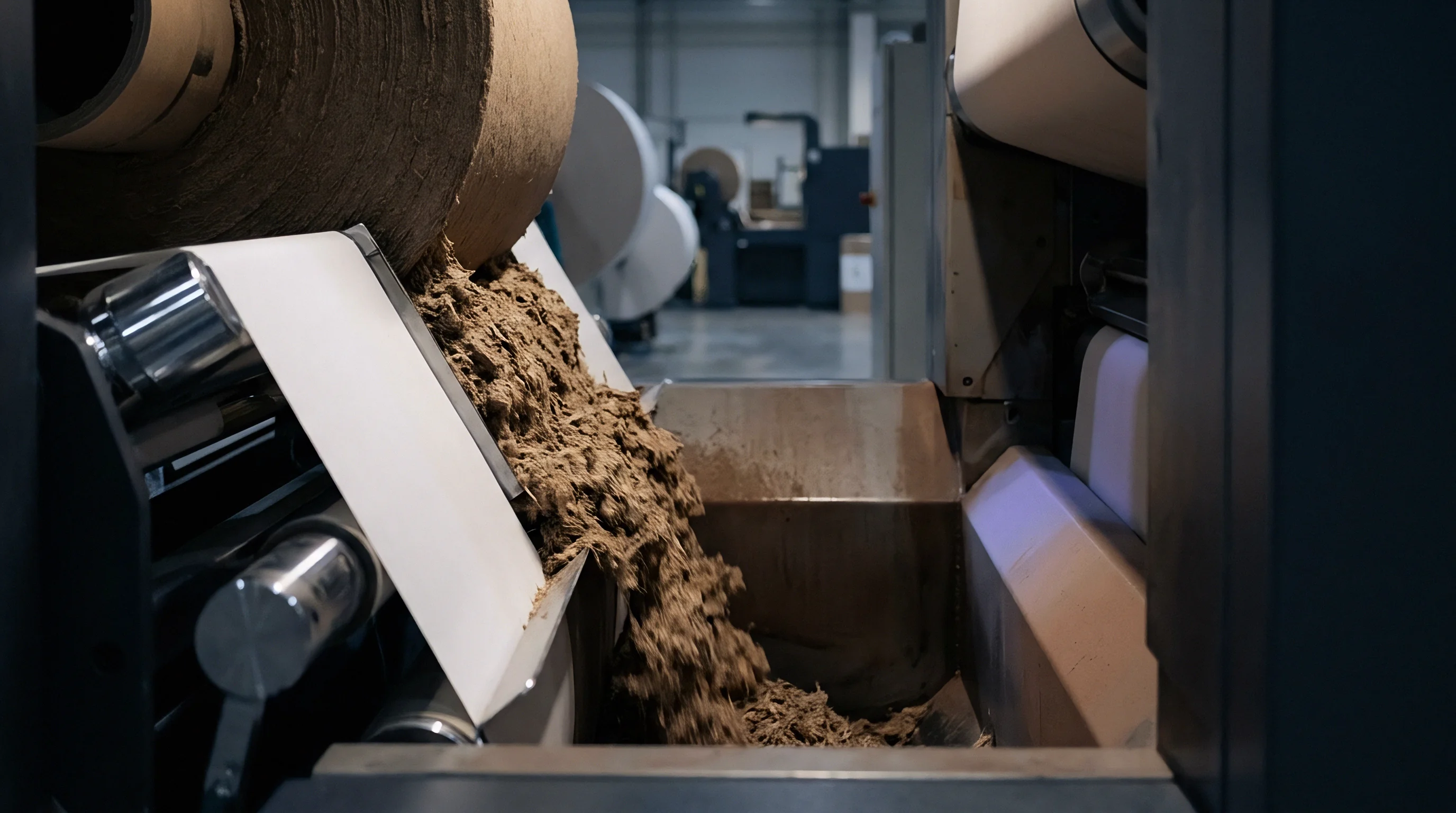
Board selection determines the migration risks inherent to paper-based packaging. Primary fiber paperboard made from virgin mechanical or chemical pulp offers a predictable chemical profile, whereas secondary fiber recovered from municipal waste streams carries an unpredictable mix of inks, adhesives, and industrial residues. Selecting the right board for food contact applications requires balancing fiber origin against structural converting needs.

Pulp Types and Structural Differences
Folding boxboard places mechanical pulp between bleached chemical layers to deliver high bending stiffness at low grammage. Solid bleached board uses chemical pulp throughout, providing low trace contamination and high structural purity. White lined chipboard features a recycled core faced with bleached virgin layers, while coated recycled board consists of multi-ply secondary fibers from post-consumer waste streams.
As paper fiber absorbs moisture, its strength drops when ambient relative humidity rises above sixty percent. Virgin wood fibers are naturally longer than recycled ones, which suffer shortened cellulose chains and reduced tensile or tear resistance after repeated repulping. Mechanical pulps retain lignin ~ causing them to yellow under ultraviolet light ~ whereas chemical pulping strips lignin away, yielding stable brightness and higher purity for food packaging.

Functional Barriers and Polymer Coatings
Extruded polyethylene and bio-based dispersion layers prevent polar molecules from passing through the paper web. Without coating, paperboard allows gas, water vapor, and low-molecular-weight organic compounds to pass directly into packaged food. Applying barrier coatings to the contact side shields food from volatile contaminants trapped in the inner fiber matrix.
Board density and internal fiber bonding dictate how deeply fluid simulants penetrate paper samples during laboratory testing.
Functional barriers need to remain intact during folding, creasing, and heat sealing, as micro-cracks along score lines break barrier continuity. Solvents, mineral oils, and plasticizers readily migrate through microscopic pinholes in thin polymer layers, making mechanical stress testing of the converted carton necessary to ensure the barrier survives processing.
European Regulation 1935/2004 establishes the safety framework for all food contact materials, while German BfR Recommendation XXXVI provides guidelines specific to paper and board. Virgin board grades meet these standards without additional barriers when used with dry, non-fatty foods. Recycled grades intended for direct contact rely on functional barrier coatings or inner foil liners to satisfy legal thresholds.


Contaminant
Chemical residues in recovered paper stocks require careful analytical screening. Newsprint inks, offset solvents, plasticizers, and thermal coatings frequently enter the pulping stream through mixed collection paper, requiring target chromatography and non-target screening to detect.

Mineral Oil Hydrocarbons and Volatile Traces
Inks from recycled newsprint introduce complex saturated and aromatic compounds into raw stock. Mineral oil saturated hydrocarbons move into dry food via vapor transport, while mineral oil aromatic hydrocarbons present potential mutagenic and carcinogenic risks. Among other migrants, diisopropylnaphthalenes originate from carbonless copy paper, phthalates stem from flexographic inks and water-based adhesives, and primary aromatic amines form when azo pigments in outer pack decoration break down.
Gas chromatography coupled with flame ionization detection isolates non-polar fractions extracted by organic solvents, while high-performance liquid chromatography separates saturated from aromatic fractions before quantification. Fractions between ten and twenty-five carbon atoms exhibit the highest vapor pressure at room temperature, whereas heavier fractions above thirty-five carbon atoms stay trapped within the matrix unless exposed to baking temperatures.

Extraction Protocols and Simulant Selection
Testing laboratories perform cold and hot water extractions to quantify water-soluble contaminants. Standard EN 645 specifies cold extraction at twenty degrees Celsius for twenty-four hours to measure formaldehyde and heavy metals, whereas EN 647 uses hot water at eighty degrees Celsius for two hours to simulate boiling water contact. Solvents extract unreacted monomers, and Poly(2,6-diphenyl-p-phenylene oxide) ~ commercially known as Tenax ~ serves under EN 14338 as the standard porous polymer simulant for dry and fatty food testing.
| Chemical Fraction | Test Method | Food Simulant | Concentration Limit |
|---|---|---|---|
| Mineral Oil Saturated Hydrocarbons (C10 to C25) | EN 14338 / GC-FID | Tenax (Modified Polyphenylene Oxide) | 2.0 mg/kg food |
| Mineral Oil Aromatic Hydrocarbons (C10 to C35) | EN 14338 / HPLC-GC-FID | Tenax (Modified Polyphenylene Oxide) | 0.5 mg/kg food |
| Diisopropylnaphthalenes (DIPN) | EN 14719 / Solvent Extraction | Iso-octane / Tenax | Detection limit (0.01 mg/kg) |
| Primary Aromatic Amines (PAAs) | EN 13130-1 / LC-MS-MS | 3% Acetic Acid | 0.01 mg/kg food total |
| Bisphenol A and Bisphenol S | EN 13130-13 / LC-MS | 95% Ethanol | 0.05 mg/kg food |
| Test conditions assume ten days storage at forty degrees Celsius representing long-term ambient shelf life under EU Regulation 10/2011 parameters. | |||
Evaluating migration results requires careful attention to surface-area-to-volume ratios. European regulations set a default exposure calculation using six square decimeters of packaging per kilogram of food. Smaller single-serve packages present higher surface-to-volume ratios, concentrating migrants into smaller food masses.
Consequently, lab reports must specify the exact surface area, simulant volume, and contact temperature used during testing.
Mineral oil aromatic hydrocarbons with carbon numbers between ten and thirty-five carry a quantification limit of zero point five milligrams per kilogram of food under German draft standards.
Secondary fiber suppliers cannot guarantee chemical purity prior to pulping due to unsorted municipal collection inputs.


Scope
Documentary proof of raw material origin underpins every certified packaging claim. Forest certification schemes track wood fiber from certified forests through manufacturing to the final package, making an understanding of their underlying accounting rules essential for preventing misleading claims.

Chain of Custody Accounting System Dynamics
Certification bodies allow mills to balance certified inputs against uncertified outputs across rolling twelve-month credit accounts under FSC-STD-40-004 and PEFC ST 2002 standards. The transfer system requires every physical fiber unit in a batch to be certified. The percentage system calculates certified input proportions to allow matching claims on finished products, while the credit system decouples certified input volume from physical output allocation entirely.
Under credit systems, a mill buys certified pulp to accumulate volume credits and can then sell paperboard with certified claims up to that balance, even if the physical board shipped contains no certified virgin fiber. By contrast, FSC Recycled claims indicate fiber from reclaimed post-consumer or pre-consumer waste, while FSC Mix claims denote a blend of virgin certified fiber, controlled wood, or reclaimed material within the accounting system.
| Scheme Model | Physical Fiber Matching | Invoice Claim Wording | Compliance Traceability Status |
|---|---|---|---|
| Transfer System | Direct 1:1 Physical Match | FSC 100% / PEFC Certified | Fully traceable physical batch origin |
| Percentage System | Statistical Batch Ratio | FSC Mix XX% / PEFC XX% Certified | Proportional physical fiber allocation |
| Credit System | No Physical Guarantee | FSC Mix Credit / PEFC Credit | Accounting mass balance balance only |
| Controlled Wood | Risk Assessed Non-Certified | FSC Controlled Wood | Excludes illegally harvested timber |
Verifying a claim requires checking certificate numbers against public scheme databases. Valid certificates include explicit scope descriptions detailing approved product types, processes, and claim categories. Even with a valid chain of custody certificate, a converter cannot issue a certified invoice claim if the underlying board grade lies outside their documented scope.

Is Recycled Fiber Permitted for Direct Fatty Food Contact?
Uncoated secondary paperboard carrying mineral residues misses safety benchmarks unless a barrier film covers the inner contact surface. Under Commission Regulation 1935/2004, materials must not transfer constituents to food in amounts that threaten human health. Direct contact between recycled fibers and fatty foods causes non-polar mineral hydrocarbons to dissolve rapidly into the food matrix.
Inserting an aluminum foil or multi-layer ethylene vinyl alcohol copolymer barrier between recycled board and fatty food eliminates direct migration. These functional barriers block vapor-phase transport of mineral oil saturated hydrocarbons, allowing brand owners to use recycled paperboard for outer packaging while remaining fully compliant.
How regional enforcement agencies will reconcile credit-account fiber declarations with batch-level mass spectrometry migration testing under updated packaging regulations remains unresolved.


Pulp
Raw secondary material requires multi-stage washing and screening to isolate usable cellulose. Repulping breaks recovered paper into loose fibers suspended in water, where removing non-fiber contraries, coatings, inks, and sticky adhesives determines the final slurry’s purity.

De-Inking Efficiency and Recovered Feedstock Processing
Flotation cells remove hydrophobized particles while alkaline peroxide bleaching breaks down remaining optical brighteners. Air bubbles injected into pulping vats latch onto hydrophobic ink particles and carry them to the surface as foam, which skimmers strip away. Fine slotted screens catch plastic fragments, hot-melt glues, and unpulped flakes, while high-density cleaners use centrifugal force to separate heavy contaminants like staples, sand, and glass.
Because inks contain volatile solvents and clay coatings reduce porosity, de-inking efficiency varies widely across feedstock grades. Post-consumer newsprint carries high concentrations of carbon black ink that demand intense chemical washing. Graphic papers with UV-cured inks yield rigid flakes that resist flotation separation, leaving residual ink particles in the matrix that contribute to baseline mineral oil hydrocarbon counts.

Post-Consumer Stream Control and Batch Uniformity
Sorting waste into clean corrugated cardboard and mixed graphic paper establishes the starting composition for repulping. Post-consumer waste comes from household recycling bins, offices, and municipal collection centers, whereas post-industrial waste consists of converting scrap, print-shop trimmings, and unprinted mill break-board. Thanks to known processing histories, post-industrial streams carry minimal chemical contamination risks.
- Collect ten representative sheet specimens across the front, middle, and back of the mill roll.
- Extract dry paper solids using iso-octane solvent at sixty degrees Celsius for two hours.
- Inject the concentrated extract into a gas chromatograph with tandem mass spectrometry.
- Measure total hydrocarbon peak areas between carbon numbers ten and thirty-five against internal standard calibrations.
- Log lot rejection if aromatic hydrocarbons exceed zero point five milligrams per kilogram of dry paperboard.
Batch-to-batch chemical variance occurs naturally when producing recycled pulp. A mill processing municipal waste faces seasonal shifts in fiber composition, moisture, and adhesive loads, meaning sampling protocols must capture specimens across entire production runs rather than single reels. Because recycled pulp contains shorter fibers, testing physical strength parameters alongside chemical extractions confirms whether board meets both converting and safety specifications.
Failure to specify post-consumer waste origins in pulp purchase contracts invalidates buyer claims under national eco-modulation tariff schedules.
Section 4.2 of the mill delivery specifications revokes supplier indemnification whenever raw waste paper stock exceeds two percent total non-paper contraries by dry mass.


Dossier
Assembling a complete compliance file requires systematically collecting laboratory reports and mill declarations. Buyers must gather evidence of chemical safety, fiber origin, and regulatory compliance before placing packaging on the market, as incomplete files expose importers and brand owners to serious legal liability.

Declaration of Compliance Structural Requirements
A valid food contact certificate lists chemical identities, dual-use additives, and explicit thermal contact boundaries. While European legislation mandates declarations of compliance for plastic layers and active packaging components, paperboard declarations follow national rules like German BfR Recommendation XXXVI or Dutch Warenwet guidelines. Each declaration identifies the issuing operator, manufacturer, substrate trade name, and issue date.
Declarations must spell out specific contact limitations; dry food applications, for example, cannot be switched to wet or fatty foods without updated compliance proof. Temperature limits specify whether packaging can handle hot-fill, microwave reheating, or deep-freeze storage, while any dual-use additives in coatings or treatments must be disclosed to ensure total limits in finished foods are not exceeded.
| Supply Chain Actor | Mandatory Declaration Elements | Supporting Documentation Required | Common Inspection Gaps |
|---|---|---|---|
| Chemical Supplier | Substance identity, CAS numbers, REACH registration status | Toxicological data, purity certificates | Missing non-intentionally added substance (NIAS) screening |
| Paperboard Mill | Fiber composition, heavy metal compliance, BfR/FDA status | Extractable testing, CoC certificate copy | Unclear functional barrier performance specifications |
| Converter / Printer | Ink migration compliance, adhesive safety, curing confirmation | Overall and specific migration test reports | Failure to list dual-use additives in written declarations |
| Brand Owner / Importer | Final pack fitness statement, surface-to-volume ratio checks | Complete dossier assembly, exposure assessments | Assuming converter certificates cover end-use food types |

Calculated Migration Exposure and Barrier Verification
Piringer mathematical modeling estimates volatile molecule diffusion through packaging walls without requiring physical tests. These conservative models assume total transfer of volatile substances from board to food; if calculated migration stays below legal thresholds, physical testing is unnecessary under European packaging rules.
Consider a 300 g/m² coated recycled board with a 15 g/m² polyethylene barrier layer used for dry cereal at a surface-to-volume ratio of 6 dm² per kg of food. Laboratory extraction detects 100 mg/kg MOSH in the uncoated board stock. Worst-case mathematical modeling assuming no barrier resistance predicts 60 mg/kg MOSH migration into the cereal, well above the 2.0 mg/kg legal target.
However, applying verified gas-phase migration test data for the 15 g/m² polyethylene barrier shows actual migration remains below 0.1 mg/kg over twelve months at ambient temperatures, confirming safety compliance for this application.
Assembling a defensible file requires compiling five essential document types:
- Identity of Declarant includes full legal company name, manufacturing site address, and authorized compliance officer signature.
- Substrate Identity lists exact commercial grade names, basis weight ranges, and documented fiber composition breakdowns.
- Food Category Scope designates allowed food types, temperature thresholds, and maximum duration of direct or indirect contact.
- Functional Barrier Proof provides experimental migration data or mathematical modeling proving migration remains below legal limits.
- Dual-Use Additive Disclosure names all food additives or flavorings present in the board that carry regulatory limits in food.
Because paperwork validation demands ongoing maintenance ~ with certificates expiring after five years and auditors inspecting raw mill invoices ~ compliance files must be updated whenever substrate formulations, ink systems, or raw material suppliers change.
A declaration of compliance written for dry food contact offers zero legal protection when the carton holds high-moisture or fatty goods.
Upstream chemical safety declarations remain valid only while conversion temperatures, printing ink systems, and food contact geometry match the tested reference parameters.


Audit
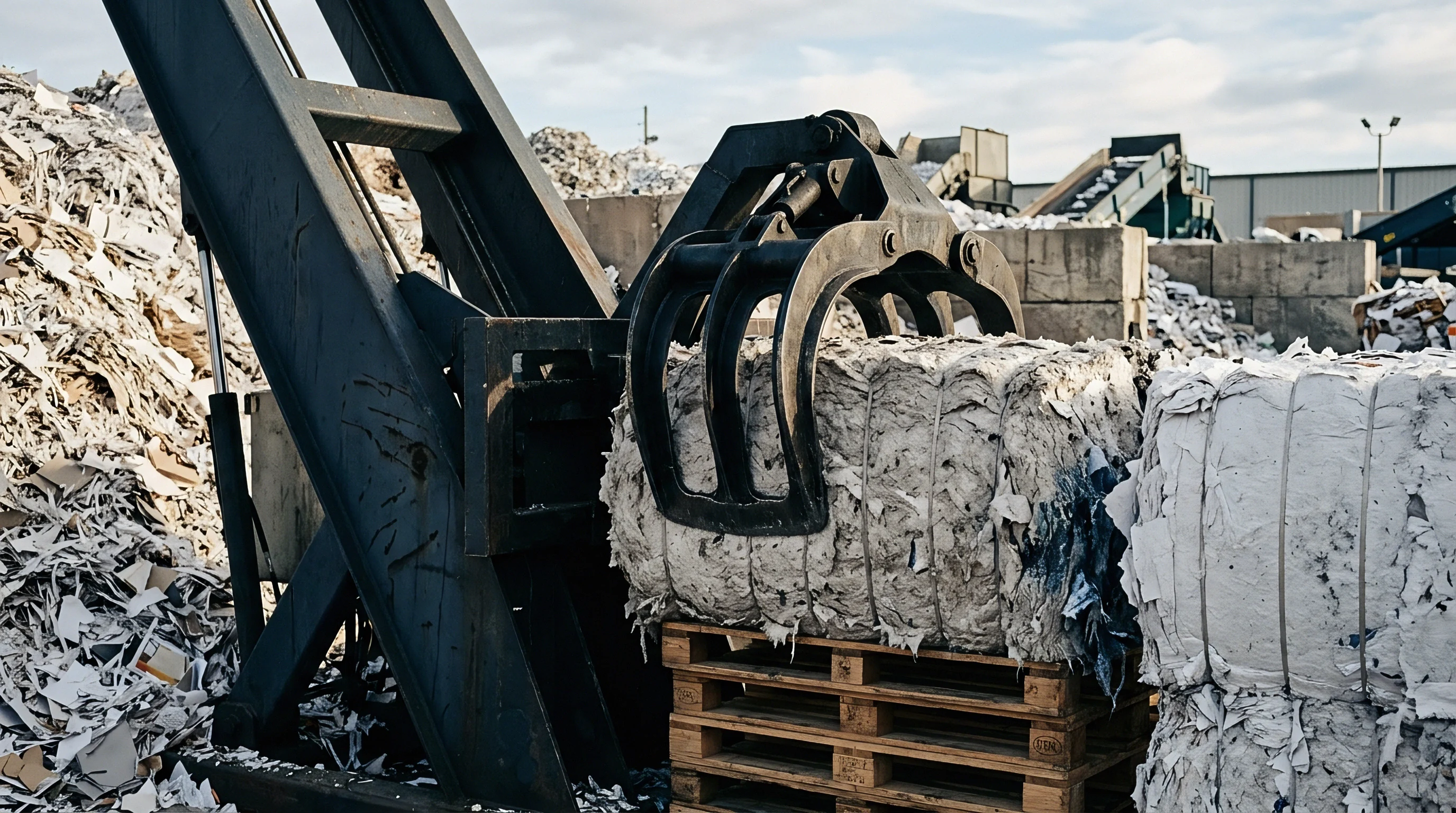
Customs authorities and market surveillance agencies enforce packaging compliance through unannounced sampling and document checks. Border controls inspect incoming shipments for correct tariff classification, environmental labeling, and illegal chemical residues, with non-compliant packaging subject to quarantine, rejection, or destruction at the port of entry.
Border Customs Inspections and Tariff Classifications
Harmonized System heading 4810 governs clay-coated paperboard, whereas plastic-laminated boards fall under heading 4811. Customs inspectors match invoice descriptions against physical roll or sheet properties, as incorrect tariff classification leads to duty back-charges, administrative fines, and costly delays. Shipments declared as recycled paperboard must present chain-of-custody documentation confirming recycled fiber claims when requested by border officials.
As the party carrying border liability, the importer of record answers for any chemical safety non-compliance uncovered during market surveillance. National food safety authorities regularly draw packaging samples from retail distribution centers for testing; finding undeclared mineral oil aromatic hydrocarbons or illegal phthalate migration triggers rapid alert notifications, product recalls, and public warnings.

Market Surveillance and Packaging Regulatory Sanctions
National enforcement authorities take finished boxes from retail shelves to verify printed claims against laboratory findings. Greenwashing regulations penalize unsubstantiated claims, and claiming a box is one hundred percent recycled without valid credit accounting records or physical fiber proof violates consumer protection laws across European member states.
Packaging compliance failures typically stem from systemic chain of custody gaps:
- Invoice Certificate Omission occurs when a supplier quotes certified fiber but omits the chain of custody code from the final shipping document.
- Mismatched Scope Claims arises when a converter holds certification for folding carton assembly but purchases uncertified board for the production run.
- Unsubstantiated Recycled Claims happens when printed pack logos assert recycled content that exceeds the physical input percentage without credit account balances.
- Expired Migration Testing leaves buyers exposed when underlying laboratory reports rely on outdated standards or superseded chemical lists.
Contractual agreements must clearly assign compliance risk between buyers, converters, and raw material suppliers. Supply contracts should include indemnification clauses covering recall costs, customs fines, and legal fees resulting from false declarations, especially as retailers increasingly penalize vendors who fail to supply valid documentation within forty-eight hours of an audit request.
Delisting by major retail chains and customs seizures of uncertified packaging lots transfer all re-boxing and disposal costs directly onto the importer of record.