Polymeric Coating Viscoelastic Creep Modeling under Environmental Moisture Cycling
Coupling dynamic moisture diffusion into viscoelastic constitutive models prevents structural failure and seal creep in polymeric barrier coatings.
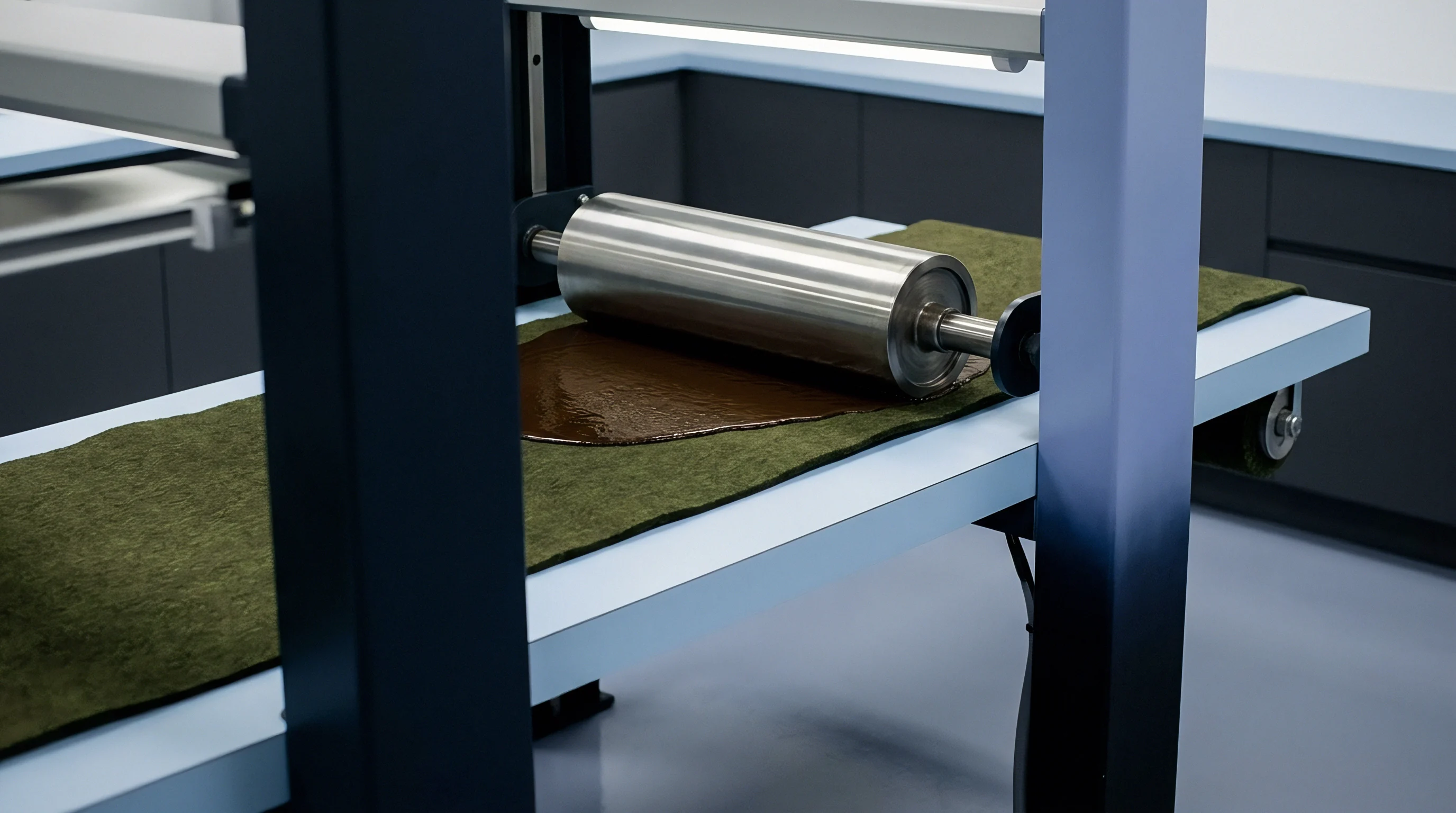
Strain
A continuous polymeric film applied to folding boxboard experiences immediate mechanical load when stacked under warehouse pallets. Polymer chains slide under load. Over extended storage periods, this sustained stress produces time-dependent dimensional change.
When atmospheric water vapor enters the packaging environment, absorbed water molecules infiltrate the amorphous regions of the polymer film. Water lowers glass transition. The absorption of moisture increases free volume between polymer chains, accelerating structural deformation beyond predictions based on dry mechanical testing.
Creep strain accumulates rapidly.
Packaging converters evaluating water-based acrylic, polyolefin extrusion, or bio-polyester barrier coatings encounter severe dimensional instability when containers travel through uncontrolled relative humidity environments. A coating that maintains rigid barrier properties under constant 50 percent relative humidity can exhibit excessive extension, thinning, and microstructural failure when subjected to ambient humidity swings between 30 percent and 90 percent. Modeling this behavior requires separating pure viscoelastic deformation from moisture-induced mechano-sorptive acceleration.
A polymeric barrier subjected to cyclic humidity reaches terminal creep strain earlier than under constant high relative humidity.

Constitutive Mechanics under Static Stress
Polymeric barriers deform over extended timeframes through delayed molecular chain uncoiling. Under a constant tensile or compressive force, total strain splits into three distinct operational components: immediate elastic recovery, delayed viscoelastic compliance, and permanent viscous flow. The total mechanical response follows the classic linear constitutive relationship:
ε(t) = σ0 ·
where σ0 represents the applied stress, J0 is the instantaneous elastic compliance, Ji represents the retardation compliance for the i-th relaxation mode, τi is the corresponding retardation time, and η0 represents the zero-shear viscosity governing unrecoverable plastic flow. In paperboard packaging applications, stacking loads on corrugated containers apply continuous compressive stress ranging from 0.2 MPa to 1.5 MPa on the perimeter heat seals and fold creases.
When atmospheric moisture remains static, temperature governs the relaxation spectrum through standard Arrhenius time-temperature superposition principles. However, relative humidity variations introduce a transient plasticization effect that shifts retardation times across several orders of magnitude.
Mechano Sorptive Coupling Phenomena
Cyclic humidity drives water ingress that lowers the glass transition threshold within amorphous polymer regions. Free volume opens instantly. During active absorption or desorption phases, the rate of creep extension exceeds the steady-state compliance measured at either the initial or final equilibrium moisture content.
This phenomenon, known as the mechano-sorptive effect, results from localized transient stress concentrations and temporary molecular mobility spikes as water molecules migrate through the polymer matrix.
The total strain rate during environmental moisture cycling includes an explicit mechano-sorptive term alongside purely hygroscopic expansion:
dε/dt = (dε/dt)viscoelastic + β · dM/dt + μ · σ · |dM/dt|
where β represents the coefficient of hygroscopic expansion, M is the local moisture concentration, μ is the mechano-sorptive coupling coefficient, and σ represents applied stress. The absolute value operator on the moisture rate demonstrates that both wetting and drying cycles accelerate permanent deformation, creating a cumulative ratcheting effect that degrades barrier continuity.
- Moisture diffusion rate measure of water vapor transport through the amorphous matrix that sets the velocity of plasticization fronts.
- Glass transition depression reduction in polymer softening temperature resulting from absorbed water molecules disrupting inter-chain hydrogen bonding.
- Mechano-sorptive compliance coefficient dimensionless coupling multiplier governing additional transient strain per unit of moisture concentration change.
- Activation energy for viscous flow energy barrier governing permanent polymer chain segment sliding under sustained mechanical load.
Selecting polymers with higher ambient glass transition temperatures generally provides superior resistance against cyclic moisture acceleration on folding boxboard.


Diffusion
Moisture transport through aqueous dispersion coatings deviates from standard linear predictions during rapid relative humidity shifts. Fickian assumptions fail here. Water molecules entering the polymer layer induce localized swelling, altering the local diffusion coefficient as a function of instantaneous water concentration.
In paperboard barrier applications, the underlying cellulosic matrix acts as a high-capacity moisture sink, creating steep concentration gradients across the thin polymeric film interface.
Accurate creep modeling requires solving the coupled non-linear mass transfer equation simultaneously with the mechanical constitutive equations. When a packaging container moves from cold storage into ambient distribution, transient condensation establishes surface saturation within seconds, triggering rapid moisture uptake and severe local compliance spikes.
Water dispersion acrylic coatings exhibit a 42 percent increase in transient creep compliance when relative humidity shifts from 50 percent to 85 percent at 23 °C over a 12-hour cycle.
Transient Sorption and Fickian Deviations
Water molecules enter amorphous polyolefin matrices through concentration gradients driven by ambient humidity. Under classical Fickian behavior, mass sorption scales linearly with the square root of time. However, polar polymer coatings such as ethylene vinyl alcohol, polyamides, and bio-based polyesters display anomalous, non-Fickian transport driven by structural polymer relaxation.
The governing mass transport equation incorporates a concentration-dependent diffusion coefficient:
∂M/∂t = ∇ ·
where the diffusion coefficient D(M) increases exponentially with moisture content M according to the relation D(M) = D0 · exp(α · M). As water content increases, the parameter α quantifies the strength of plasticization. Moisture changes material response.
| Coating Polymer Chemistry | Test Conditioning | Equilibrium Moisture Content (%) | Instantaneous Compliance J0 (1/GPa) | Retarded Compliance J1 (1/GPa) | 100-Hour Terminal Creep Strain (%) |
|---|---|---|---|---|---|
| Low-Density Polyethylene (LDPE) | 50% RH Static | 0.08 | 0.42 | 0.18 | 1.12 |
| Low-Density Polyethylene (LDPE) | 50% to 90% RH Cyclic | 0.12 | 0.45 | 0.31 | 1.85 |
| Aqueous Acrylic Dispersion | 50% RH Static | 1.85 | 0.28 | 0.44 | 2.40 |
| Aqueous Acrylic Dispersion | 50% to 90% RH Cyclic | 4.20 | 0.35 | 1.12 | 6.75 |
| Polyhydroxyalkanoate (PHA Bio-polyester) | 50% RH Static | 0.95 | 0.31 | 0.22 | 1.55 |
| Polyhydroxyalkanoate (PHA Bio-polyester) | 50% to 90% RH Cyclic | 2.60 | 0.38 | 0.74 | 4.10 |
| Data measured under ISO 2233 conditioning schedules using dynamic mechanical thermal analysis fixtures at 1.0 MPa constant applied tensile stress. Cyclic testing conducted on a 12-hour sinusoidal humidity wave profile. | |||||
Can Time Moisture Superposition Model Coating Creep?
Shift factors mapped across relative humidity gradients construct master curves for long term compliance projection. Similar to the Williams-Landel-Ferry equation for temperature superposition, the horizontal shift factor aM translates creep curves measured at elevated relative humidity to equivalent timescales under standard room conditions:
log(aM) = -C1 · (M – Mref) /
where C1 and C2 represent empirical material constants, and Mref is the baseline reference moisture content. Applying time-moisture superposition allows packaging engineers to accelerate creep characterization tests from months to days. Creep rate spikes during desorption.
The validity of time-moisture superposition relies on the polymer remaining thermorheologically simple across the entire humidity range. When moisture induces physical aging, micro-phase separation, or localized crystallization, simple horizontal shifts fail, requiring two-dimensional vertical and horizontal compliance adjustments.
- Interfacial delamination separation of the coating film from cellulosic fibers caused by localized shear stress concentration during moisture transport.
- Micro-fracture propagation formation of microscopic cracks within brittle crystalline domains during rapid desorption phases.
- Heat seal creep failure gradual elongation and separation of heat-sealed joint seams under static package stack pressures.
- Pin-hole formation localized loss of barrier continuity where expanding substrate fibers puncture stress-softened polymer layers.
Coating manufacturers frequently claim that laboratory moisture vapor transmission rates measured under static conditions fully represent real world barrier performance during dynamic transit.
Rheology
Viscoelastic behavior in synthetic barrier films reflects combined elastic spring responses and viscous liquid damping. Springs store elastic energy. Dashpots dissipate viscous stress.
Under environmental cycling, mechanical parameters within rheological models do not remain constant. They vary dynamically as functions of instantaneous moisture concentration and thermal excitation. Formulating constitutive equations for packaging design demands multi-element viscoelastic networks capable of reproducing both short-term impact recovery and long-term creep under stack loading.
Engineers simulating boxboard performance utilize mechanical analog arrays to capture non-linear deformation profiles. Simple two-element models lack the relaxation spectrum required to model complex humidity step responses, necessitating generalized multi-mode network formulations.
Burger model spring parameters drop significantly as moisture concentration reaches equilibrium within the polymer matrix.
Generalized Kelvin Voigt Parameter Fitting
Mechanical elements arranged in parallel combinations represent instantaneous elastic recovery alongside delayed viscous deformation. The generalized Kelvin-Voigt model connects an arbitrary number of Maxwell elements in parallel with an initial elastic spring and terminal dashpot. The total retardation spectrum models transient responses across multiple time decades:
J(t, M) = J0(M) + ∑ Ji(M) ·
Fitting experimental creep data requires non-linear least-squares optimization across multiple relative humidity levels. Each retardation parameter Ji and characteristic time τi expands into a function of moisture content M:
τi(M) = τi,0 · exp(-γi · M)
where γi governs the moisture sensitivity of the i-th relaxation mode. Acrylic dispersion coatings fitted with a three-mode Kelvin-Voigt network demonstrate that long-term retardation modes exhibit three times higher moisture sensitivity than short-term elasticity modes.
| Viscoelastic Model Architecture | Moisture Coupling Formulation | Relative Error vs Experimental Data (%) | Processing Time per Load Step (s) | Calibrated Parameter Count |
|---|---|---|---|---|
| 3-Element Burger Model | Linear Shift Factor | 14.8 | 0.02 | 5 |
| Generalized Kelvin-Voigt (5 Elements) | Concentration-Dependent Shift | 4.2 | 0.15 | 12 |
| Nonlinear Schapery Model | Free Volume Strain Coupling | 2.1 | 1.85 | 18 |
| Mechano-Sorptive Finite Element Array | Coupled Fickian Viscoelasticity | 1.6 | 12.40 | 24 |
Nonlinear Compliance under Moisture Cycles
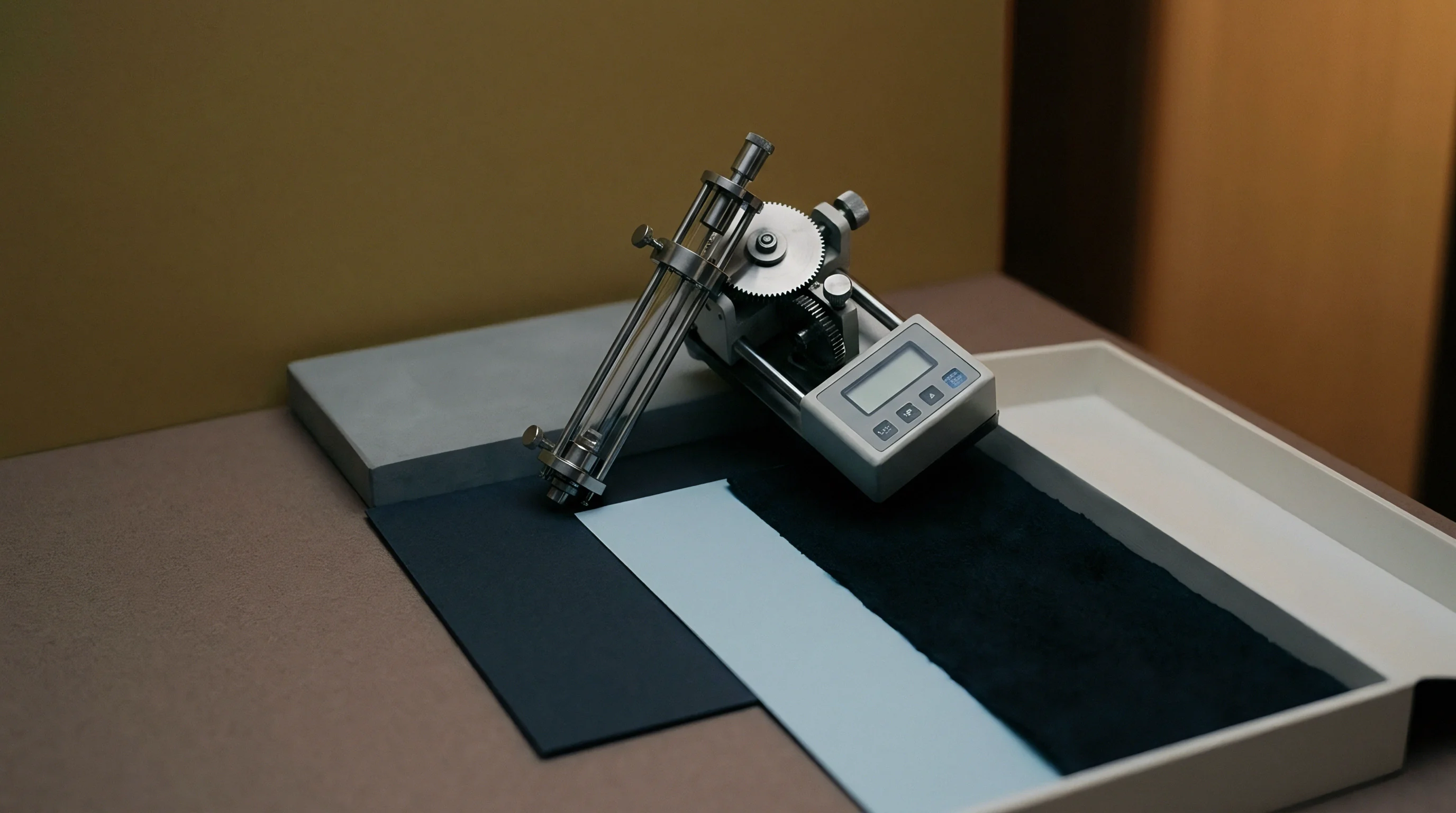
High internal stress levels accelerate molecular slip across polymer chains during absorption phases. When applied stress exceeds 20 percent of ultimate tensile yield strength, linear viscoelastic assumptions underestimate creep accumulation. Non-linear constitutive formulations, such as Schapery’s thermodynamics-based theory, introduce stress-dependent stress factors &gamm;0, &gamm;1, &gamm;2, and aσ:
ε(t, σ, M) = g0(σ, M) · J0 · σ + g1(σ, M) · ∫ ΔJ(psi – psi’) · dτ
where psi represents reduced time integrated over moisture and stress history. Under fluctuating environmental conditions, the reduced time variable contracts during absorption and expands during desorption, driving asymmetrical deformation profiles.
- Linear Burger model suitability applicable when stress levels remain below 20 percent of ultimate tensile yield under steady moisture conditions.
- Nonlinear Kelvin Voigt array needed for stress levels exceeding 35 percent yield strength during rapid relative humidity swings.
- Time moisture superposition validity restricted to amorphous polymer networks exhibiting thermorheologically simple behavior across the operating range.
- Finite element mesh density minimum three element layers required across the coating cross section to capture sharp concentration gradients.
Whether non-Fickian moisture relaxation peaks align directly with secondary mechanical relaxation spectrum transitions under dynamic relative humidity sweeps remains disputed across experimental literature.
Substrate
Cellulosic baseboard acts as a hygroscopic anchor that expands and contracts in response to atmospheric moisture. Moisture drives interface shear. Paperboard fibers absorb water directly into their crystalline microfibrils, causing dimensional swelling up to five times greater in the cross-machine direction than in the machine direction.
When a continuous polymeric coating adheres tightly to the board surface, differential dimensional change generates intense shear stress at the interface.
This substrate-induced restraint alters the apparent creep rate of the barrier layer. While an unconstrained free polymer film expands uniformly during moisture sorption, a film bonded to rigid fibers faces lateral displacement constraints, translating swelling into compressive out-of-plane stresses and elevated interfacial shear strain.
Testing per ASTM D685 conditioning fails to capture mechano-sorptive creep amplification occurring during ambient field cycles under ISO 2233 Schedule C.
Interfacial Shear and Cellulose Swelling
Paperboard fibers swell orthogonally upon water vapor adsorption, imposing localized tension on the adjacent polymer layer. Fibers swell across grain. The hygroscopic expansion coefficient of standard bleached sulfate board ranges from 0.00015 to 0.00035 strain per percent relative humidity change in the machine direction, while cross-machine values reach 0.0012 strain per percent relative humidity.
The resulting mismatch in expansion coefficients creates severe shear strain γint along the bond line:
γint = (βboard – βpolymer) · ΔRH / hcoat
where hcoat represents coating thickness. Thin barrier layers under 15 micrometers experience interface shear stresses that promote delamination, blistering, and micro-tearing during cyclic moisture events.

Barrier Degradation and Pinhole Genesis
Microscopic microcracks emerge along interface stress peaks during repeated relative humidity oscillations. Pinholes ruin barrier protection. As the polymer layer creeps under sustained load while undergoing cyclic interfacial shear, localized thinning occurs over surface fiber peaks.
This localized reduction in film thickness concentrates moisture flux, creating local hot spots of accelerated degradation.
Accurate verification of moisture-induced creep resistance requires standardized conditioning protocols that replicate transient field transport rather than static laboratory air.
- Mount the coated paperboard specimen in the tensile fixture with precise alignment along the machine direction.
- Apply a constant baseline mechanical tension equal to ten percent of specified yield strength.
- Enclose the test chamber and establish an initial baseline relative humidity of 50 percent at 23 °C for four hours.
- Initiate relative humidity cycling between 35 percent and 85 percent at two-hour interval ramps.
- Record high-frequency displacement data across twenty complete humidity oscillation cycles.
- Calculate compliance parameters by subtracting purely thermal expansion strain from total measured strain.
Incorporating ISO 2233 conditioning Schedule C into purchase agreements establishes enforceable testing obligations that shift moisture-induced delamination liabilities directly back to the primary paper mill.

Warranty
Commercial supply contracts for coated packaging board require clear legal definitions of environmental durability. Customs holds noncompliant pallets. Uncertified claims incur fines.
When packaged goods fail due to stack collapse, heat seal separation, or moisture ingress during ocean transit, disputes focus immediately on whether material performance met purchase specifications. A specification defining tensile yield and water vapor transmission rate solely under static 23 °C and 50 percent relative humidity conditions leaves buyers exposed to field failure risks caused by dynamic creep.
Defending claims requires comprehensive testing documentation backed by accredited chain-of-custody and technical verification dossiers. Buyers specifying paperboard packaging must tie performance guarantees directly to verified simulation models and environmental cycling standards.

Compliance Verification for Export Cold Chains
Customs authorities in importing jurisdictions inspect packaging integrity against physical deformation benchmarks. Overseas container transport subjects packaging to relative humidity fluctuations between 40 percent and 95 percent alongside daily temperature swings. Certified test reports must demonstrate compliance with both recyclability parameters under EN 13430 and barrier performance after mechanical stress conditioning.
Sourcing practices mandate verifying that laboratory test reports carry full ISO/IEC 17025 accreditation scopes covering cyclic climatic exposure. A standard certificate covering static water vapor transmission rate provides no legal protection when containers collapse under mechano-sorptive creep acceleration.
Contractual Risk Allocation for Creep Defect Claims
Purchase specifications state exact relative humidity cycles and mechanical force thresholds to assign financial responsibility between converter and buyer. Technical annexes must define maximum allowable creep strain percentages following 100 hours of cyclic exposure under ISO 2233 conditioning profiles. Inclusion of explicit creep compliance limits shifts financial liability for stack collapse to the material converter.
| Failure Mode | Primary Root Cause | Test Standard Reference | Commercial Exposure Level | Liability Carrier |
|---|---|---|---|---|
| Seal Delamination | Mechano-Sorptive Creep in Seal Zone | ASTM F88 / ISO 2233 | Container Rejection at Port | Packaging Converter |
| Pallet Creep Collapse | Compression Creep under Humidity Cycles | ISO 12048 / ASTM D642 | Total Product Destruct Claim | Substrate Manufacturer |
| Barrier Permeation Spike | Micro-cracking from Cyclic Strain | ASTM E96 / DIN 53122 | Retail Delisting and Product Recall | Coating Resin Chemical Supplier |
| Pinhole Cracking | Fiber Interface Shear Stress Concentration | EN 13676 / ISO 16532 | Batch Quarantine and Repackaging Fee | Extrusion Lamination Operator |
Neglecting mechano-sorptive creep parameters during packaging specification results in crushed pallet stacks, rejected retail shipments, and complete forfeiture of commercial claims against substrate manufacturers.