Viscoelastic Recovery Mechanics in Polyethylene Extrusion Barrier Laminates
Polyethylene viscoelastic strain recovery causes barrier laminate curl and crease springback, controlled via resin density selection and chill roll quench profiles.
Melt
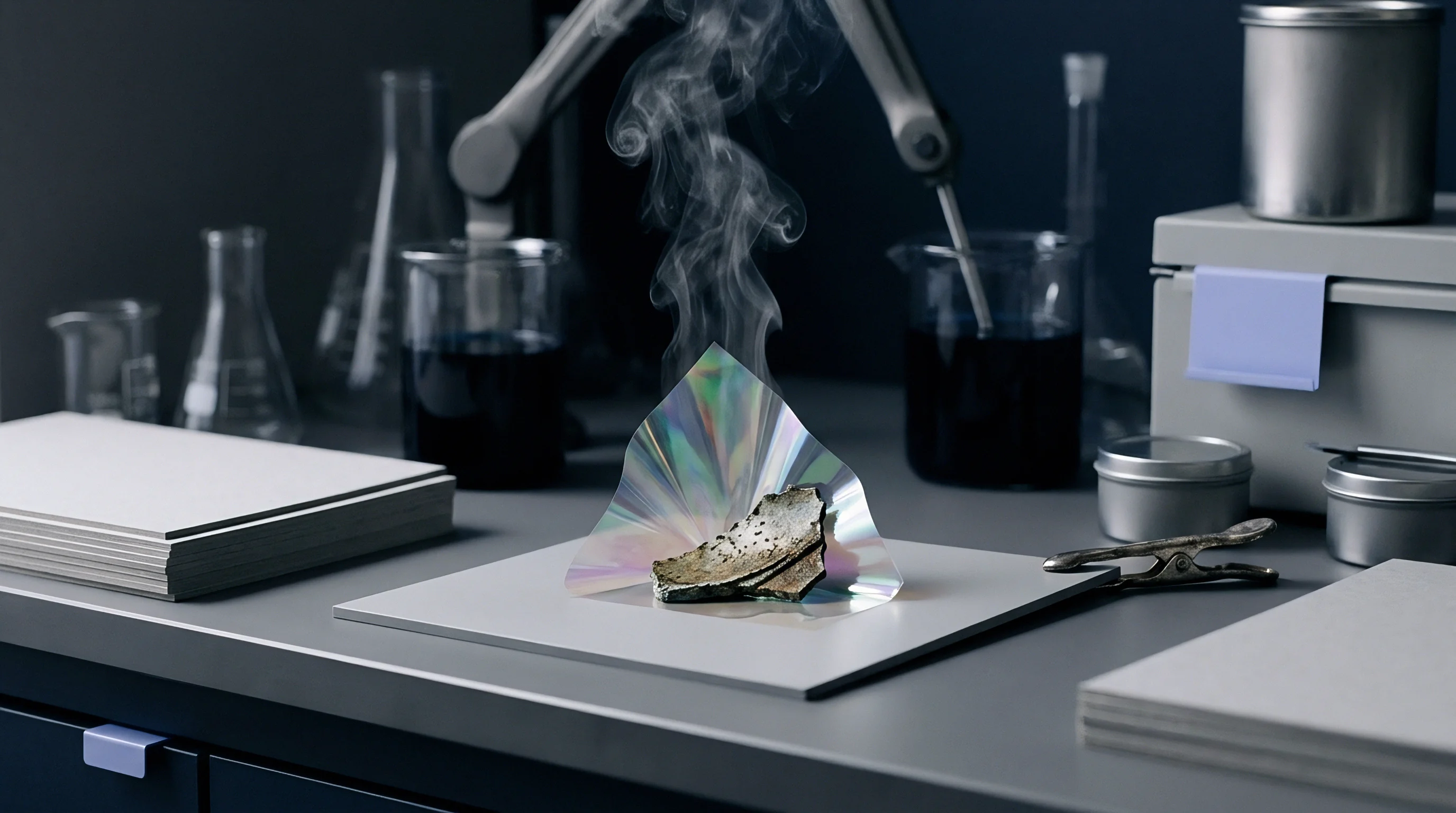
Polymer flow through a flat extrusion die subjects molten polyethylene to intense planar elongation and high shear rates. During exit from the die lip, low-density polyethylene resins experience rapid stress development followed by instant strain release in the air gap before touching the moving paperboard web. High draw ratios squeeze the molten curtain down to thin calipers, forcing polymer chains into aligned, extended configurations.
Rapid contact with a chilled metallic roll at fifteen to twenty-five degrees Celsius freezes this oriented state into the solid layer before molecular chains relax to their equilibrium coiled states.
Extrusion processing speeds directly alter this frozen strain profile. High line velocities reduce transit time through the draw zone, elevating the Deborah number of the flow field. Under these conditions, the time scale of the deformation is much shorter than the characteristic relaxation time of the polymer melt.
Strain Entanglement in Extrusion Coating
Long-chain branching architectures generate elevated melt elasticity during high-speed web coating. Autoclave-synthesized low-density polyethylene contains dense long-chain branches that promote strain hardening under extensional deformation. This strain hardening stabilizes the melt curtain against neck-in and edge-weave during rapid draw-down.
Linear low-density polyethylene lacks these long-chain branches. It deforms with less extensional viscosity, increasing neck-in while reducing internal orientation stress in the quenched film.
Molecular mass distribution broadens the relaxation spectrum of the solidifying polymer. Resins with broad polydispersity indices retain long-relaxation-time modes. These long modes do not relax during the brief transit between the die exit and the chill roll nip.
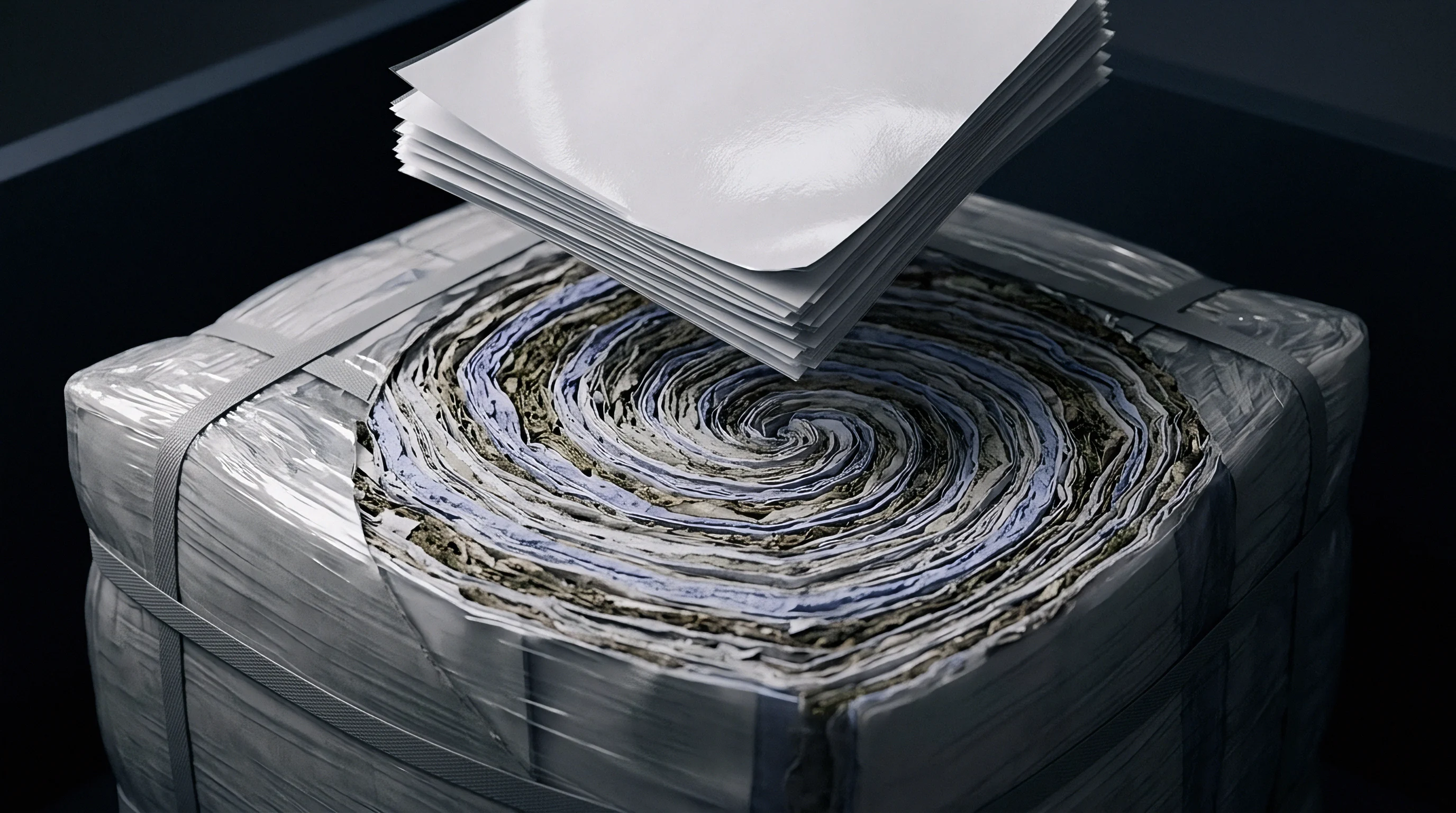
Chains remain trapped in high-energy, non-equilibrium conformations within the solid coating layer. Polymer molecules exert persistent internal shear stresses against the adjacent fibrous web as room temperature equilibration occurs.
Extrusion-coated low-density polyethylene webs quenched at twenty degrees Celsius retain up to eighteen percent unfrozen elastic strain memory.
Cooling rates across the thickness profile establish differential stress gradients. The resin surface touching the cold steel chill roll solidifies almost instantaneously, capturing high orientation levels. The inner surface, bonded directly to the hot paperboard web, cools at a slower rate dictated by the thermal diffusivity of the cellulosic fibers.
Slow cooling permits substantial molecular relaxation. This thermal gradient produces an asymmetric stress profile through the thickness of the polymer coating.
Resin synthesizers frequently attribute edge-tear and post-extrusion dimensional instability to mill-floor chill roll temperature fluctuations rather than variations in long-chain branching architecture.

Warp
Dimensional instability in extrusion barrier laminates stems directly from the mechanical equilibrium between the elastic paperboard substrate and the relaxing polymer layer. Residual strain locked within the polyolefin coating releases gradually over days or weeks following manufacture. As oriented amorphous chains recover toward random coil states, the polymer film contracts in both machine and cross directions.
The rigid cellulosic substrate resists this planar contraction, generating a continuous bending moment across the sheet.
Cross-direction web curvature destabilizes high-speed converting machinery. When polymer relaxation stress overcomes the flexural rigidity of the paperboard, edges lift, creating layflatness defects. Curl severity depends on substrate thickness, coating grammage, moisture content, and environmental relative humidity.
What Triggers Delayed Curvature in Coated Barrier Stock?
Temperature fluctuations inside storage warehouses reactivate stored viscoelastic memory. Heating solid polyethylene above its alpha-relaxation temperature accelerates chain mobility within amorphous regions between crystallites. Locked-in strain dissipates rapidly, driving sudden macroscopic curl.
Damp storage environments compound this effect. Paperboard absorbs ambient moisture and loses flexural stiffness, allowing the continuous elastic strain recovery of the polymer layer to curl the laminate.
| Resin Blend Composition | Density (g/cm³) | Melt Index (g/10 min) | Peak Relaxation Modulus (MPa) | 24h Dimensional Recovery (%) | Equilibrium Curl Radius (mm) |
|---|---|---|---|---|---|
| 100% Autoclave LDPE | 0.918 | 4.5 | 145 | 12.4 | 185 |
| 80% LDPE / 20% LLDPE | 0.922 | 3.8 | 168 | 9.1 | 240 |
| 60% LDPE / 40% Metallocene LLDPE | 0.925 | 3.1 | 192 | 6.2 | 310 |
| 100% Tubular LDPE | 0.920 | 5.6 | 130 | 14.8 | 155 |
Asymmetric coextrusion structures amplify curl potential. Multi-layer barrier films combining ethylene vinyl alcohol, tie layers, and low-density polyethylene possess distinct glass transition temperatures, thermal expansion coefficients, and viscoelastic relaxation spectrums. Each layer attempts to recover residual strain at a different rate.
Interlayer shear stresses develop at the boundary surfaces. Weak tie-layer adhesion allows these viscoelastic forces to trigger localized micro-delamination along high-stress lanes.
Slitting operations release locked-in cross-direction web tensions. Web rolls wound directly after extrusion trap significant inter-wrap radial pressures. As residual stresses relax inside the tightly wound roll, radial pressure distribution shifts.
Edge lanes recover differently than center lanes. Downstream sheeting reveals camber and twist defects that destroy feed accuracy on automatic packaging lines.
Failure to match resin relaxation rates to substrate stiffness results in rejected pallet shipments, jam-ups on high-speed folder-gluers, and costly customer claims for non-planar barrier packaging.

Rheology
Dynamic Mechanical Analysis captures viscoelastic recovery dynamics with high precision. Isothermal strain sweep measurements identify the linear viscoelastic region of solid polymer layers isolated from paperboard substrates. Temperature sweeps from minus fifty degrees Celsius to one hundred degrees Celsius map alpha, beta, and gamma relaxation transitions.
These spectral peaks reveal exact temperatures where stored elastic energy releases back into the laminate matrix.
Creep compliance testing isolates time-dependent deformation and elastic recovery under continuous mechanical loads. Applying a fixed tensile stress to a free coating film induces instant elastic strain, followed by retarded viscous creep. Removing the stress initiates immediate elastic recovery, followed by delayed viscoelastic strain recovery.
The permanent viscous deformation remains as residual set.
Viscoelastic Measurement Standards and Testing Protocols
Creep recovery analysis requires precise environmental control. Testing according to standardized protocols ensures repeatable compliance data across different laboratory environments.
- Sample preparation demands careful mechanical stripping or chemical dissolution of the paperboard backing using alpha-amylase enzymes at forty degrees Celsius to isolate the polyolefin film without inducing mechanical pre-strain.
- Specimens rest inside an environmental chamber conditioned at twenty-three degrees Celsius and fifty percent relative humidity for forty-eight hours to establish thermodynamic equilibrium.
- Dynamic mechanical analyzers load specimens under uniaxial tension using controlled strain amplitudes within the linear viscoelastic region, typically between zero point zero one percent and zero point one percent strain.
- Frequency sweeps ranging from zero point zero one Hertz to one hundred Hertz construct master curves through time-temperature superposition, predicting stress relaxation behavior over multi-month timescales.
- Transient creep recovery modes apply constant tensile stress for one thousand seconds, followed by zero-stress recovery monitoring for three thousand seconds to quantify recoverable compliance coefficients.
ASTM D2990 creep compliance testing performed without twenty-four hour atmospheric conditioning yields invalid strain recovery coefficients.
| Layer Construction | Test Temp (°C) | Storage Modulus E’ (MPa) | Loss Modulus E” (MPa) | Tan Delta Peak | Instant Recovery (%) | Delayed Recovery (%) |
|---|---|---|---|---|---|---|
| LDPE (20 g/m²) | 23 | 210 | 28 | 0.133 | 68.5 | 24.1 |
| LDPE / EVOH / LDPE (30 g/m²) | 23 | 540 | 52 | 0.096 | 81.2 | 12.8 |
| LLDPE / LDPE Blend (15 g/m²) | 23 | 310 | 36 | 0.116 | 74.0 | 19.5 |
| LDPE (20 g/m²) | 50 | 85 | 18 | 0.211 | 42.1 | 38.6 |
Stress relaxation experiments measure time-dependent modulus decay under constant strain. Applying step strain generates peak initial stress. Entangled polymer chains rearrange over time, dissipating force through viscous flow.
The rate of stress decay follows a Maxwell-Weichert model containing multiple relaxation modes. Short relaxation times govern immediate post-extrusion springback, while long relaxation times govern month-long storage curl.
How do non-linear strain histories during high-speed nip compression alter the long-term relaxation spectrum of highly oriented polyolefin tie-layers?

Nip
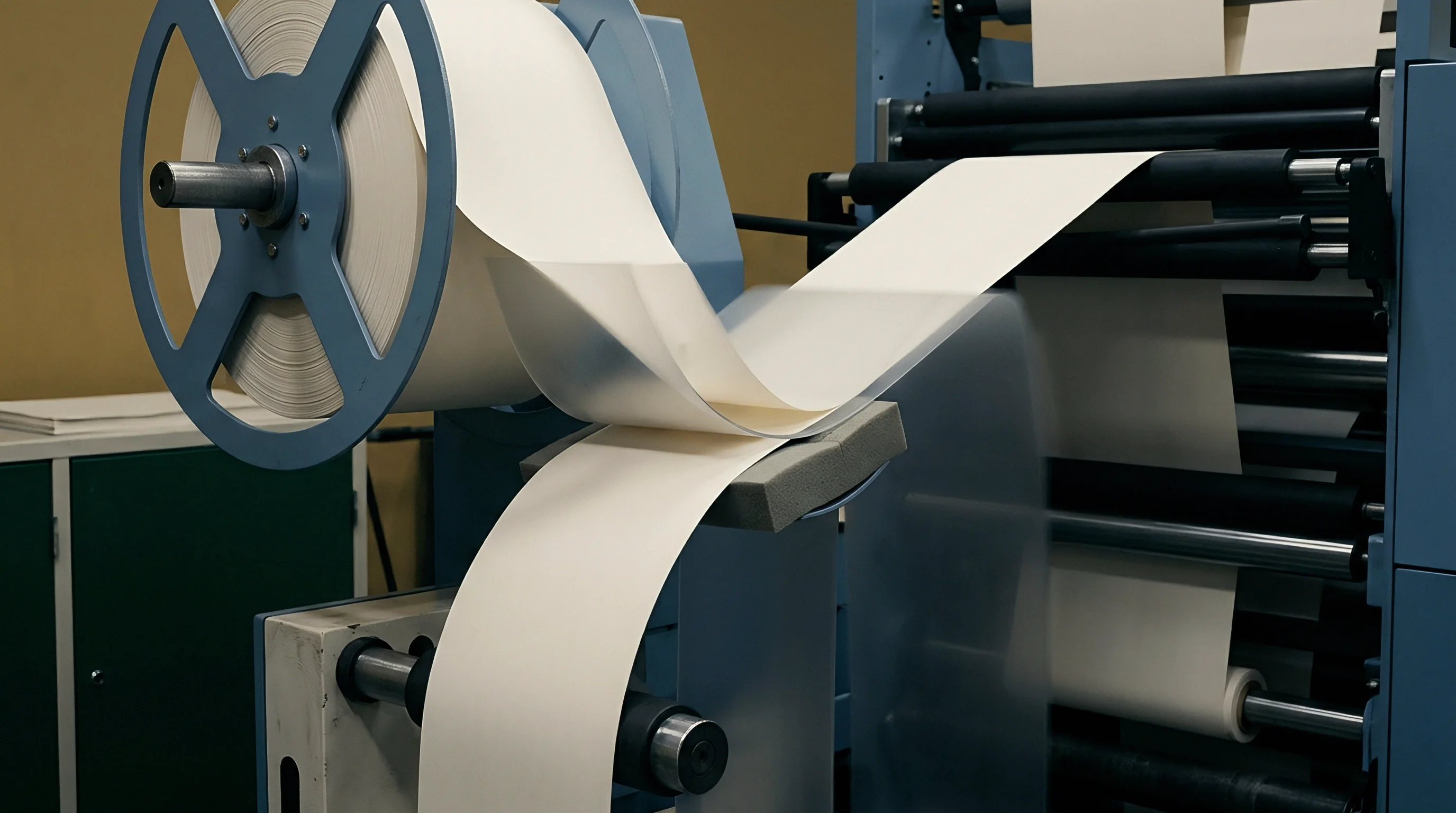
Compressive deformation within calender and converting nips alters the physical structure of extrusion barrier coatings. Passing barrier paperboard through high-pressure steel-to-rubber roller nips flattens surface topographies and reduces total board caliper. Polyethylene layers suffer instantaneous elastic compression combined with delayed viscoelastic deformation.
Upon exit from the nip zone, the polymer layer recovers a fraction of its pre-compressed caliper immediately.
Thickness recovery continues slowly over hours. This delayed caliper expansion affects roll tightness, reel diameter, and stacking height consistency on converting lines.
Score Line Springback in Carton Converting
Scoring and creasing tools create localized strain zones in barrier packaging substrates. Male creasing rules force the laminate into female die channels, stretching the outer polyolefin coating beyond its yield point. Polyethylene deforms elastically and plastically across the crease bead.
Tensile stresses concentrate at the outer bend radius while compressive stresses compress the inner layer touching the paperboard crease.
Crease recovery angles shift as viscoelastic strain releases after scoring. Immediately after creasing, damaged fiber networks and strained polymer layers yield a primary score angle. Stored elastic strain inside the polyethylene layer slowly forces the crease to open up toward a flatter state.
Automatic carton folding machines encounter varying mechanical resistance when handling board scored with elastic, low-density polyethylene compared to highly inelastic water-based dispersion coatings.
The following sequence details the precise procedure for evaluating score line viscoelastic recovery in converted barrier board:
- Cut test strips fifty millimeters wide by one hundred millimeters long with the score line positioned exactly at the longitudinal center point.
- Place test specimens in a standard conditioning atmosphere operating at twenty-three degrees Celsius and fifty percent relative humidity for twenty-four hours.
- Mount the uncreased end of the specimen securely into the pneumatic clamp of an automated crease recovery tester.
- Deflect the scored tail of the specimen through a ninety-degree angle at a uniform angular velocity of fifteen degrees per second.
- Hold the bent specimen at ninety degrees deflection for exactly fifteen seconds to record peak bending moment.
- Release the deflecting force completely and continuously measure the springback recovery angle over a sixty-second relaxation window.
- Calculate the final crease springback resistance index from the ratio of retained residual force to peak bending force.
Higher short-chain branching concentrations accelerate stress relaxation in heat-sealed barrier seams under continuous tension.
Heat-sealing operations introduce combined thermal and compressive strain cycles. Sealing jaws compress overlapping barrier layers at temperatures above the polymer melting point. Polymer chains in the molten state flow together, entangling across the interface.
As jaws open, the cooling weld faces mechanical peel forces generated by substrate springback. Rapid viscoelastic relaxation in the cooling weld layer prevents seam separation during high-speed vertical form-fill-seal packaging cycles.
Resin formulations exhibiting low elastic recovery under high temperatures produce superior score fold stability and tighter heat-sealed package corners.

Allowance
Purchasing specifications for barrier laminates demand precise control over coat weight tolerances and elastic recovery limits. Polyethylene coat weight variations alter substrate stiffness and laminate balance. Standard mill specifications permit a coat weight tolerance band of plus or minus five percent across the web width.
When viscoelastic neck-in creates thick bead edges, trim waste increases significantly. Uncontrolled edge bead recovery forces converters to trim up to thirty millimeters of usable web width per side.
Resin density and melt index selections dictate both material cost and converting performance. Autoclave LDPE grades carry price premiums over standard tubular grades due to specialized reactor operating conditions. Autoclave resins deliver superior melt strength, lower neck-in, and predictable strain recovery behavior.
Substituting cheaper tubular resins without adjusting line speeds leads to severe layflatness failures and higher waste rates on printing presses.
Commercial Failure Modes in Viscoelastic Barrier Laminates
Converter cost structures break down when raw material performance departs from contract parameters. The following failure modes directly impact operational yield and financial performance:
- Interlayer Bond Degradation occurs when persistent elastic recovery stresses overcome chemical anchor sites or corona treatment primers, causing slow film delamination inside finished packages.
- Edge Bead Thickness Recovery drives uneven roll build-up during winding, producing stretched lanes, localized gauge bands, and non-uniform unwinding tension on converting lines.
- Crease Bead Rebound forces folded carton flaps to open before adhesive sets, causing machine jams and unsealed package rejects on high-speed cartoning equipment.
- In-Register Print Misalignment develops when post-extrusion web contraction alters image repeat lengths across long printing runs on flexographic or rotogravure presses.
- Pouch Seam Creep manifests as slow channel formation through heat-sealed areas exposed to continuous internal pressure or elevated ambient storage temperatures.
Quality documentation must establish clear acceptance criteria for viscoelastic recovery parameters. Receiving inspection protocols should check layflatness, coat weight uniformity, and curl radius before releasing material rolls into production inventory.
| Extrusion Processing Parameter | Standard LDPE (High Recovery) | Optimized Blend (Low Recovery) | Yield Impact per 10 Tonne Lot | Financial Variance (€) |
|---|---|---|---|---|
| Edge Neck-in Trim (mm per side) | 28 | 12 | + 2.8% Usable Web Area | + 840 |
| Cross-Direction Curl Scrap (%) | 3.5 | 0.8 | + 270 kg Finished Stock | + 675 |
| Crease Springback Jam Rate (%) | 1.8 | 0.2 | – 16 Machine Downtime Hours | + 1,920 |
| Thickness Recovery Gauge Drift (µm) | 4.2 | 1.1 | – 1.5% Excess Resin Usage | + 450 |
Contractual procurement terms must specify strict compliance with international testing standards. Procurement specifications must mandate compliance with ISO 1924-3 for tensile energy absorption and ISO 1183 for polyolefin density verification across every delivered pallet lot.
Technical Qualification Dossier Requirements
A complete technical qualification dossier protects buyers against unannounced grade substitutions. Suppliers must furnish comprehensive analytical data prior to commercial material acceptance.
- Melt Rheology Profile documenting storage modulus, loss modulus, and complex viscosity across temperature sweeps from one hundred to two hundred degrees Celsius.
- Gel Permeation Chromatography report stating weight-average molecular mass, number-average molecular mass, and polydispersity index of the base resin.
- Dynamic Mechanical Analysis spectrum identifying glass transition points and elastic recovery percentages under standardized laboratory strain rates.
- Certificate of Analysis detailing melt flow rate, density, coat weight profile across fifteen web points, and thirty-day post-production curl measurements.
Contracts incorporating EN 13431 packaging standards bind the substrate supplier to maximum permitted residual strain limits, transferring financial liability for layflatness-induced converting scrap directly back to the extrusion mill.