Grammage and Caliper Variance Mechanics in Packaging Board Swaps
Grammage and caliper variance mechanics govern substrate bulk, bending stiffness, press throughput, and sheet yield per metric tonne in packaging board swaps.

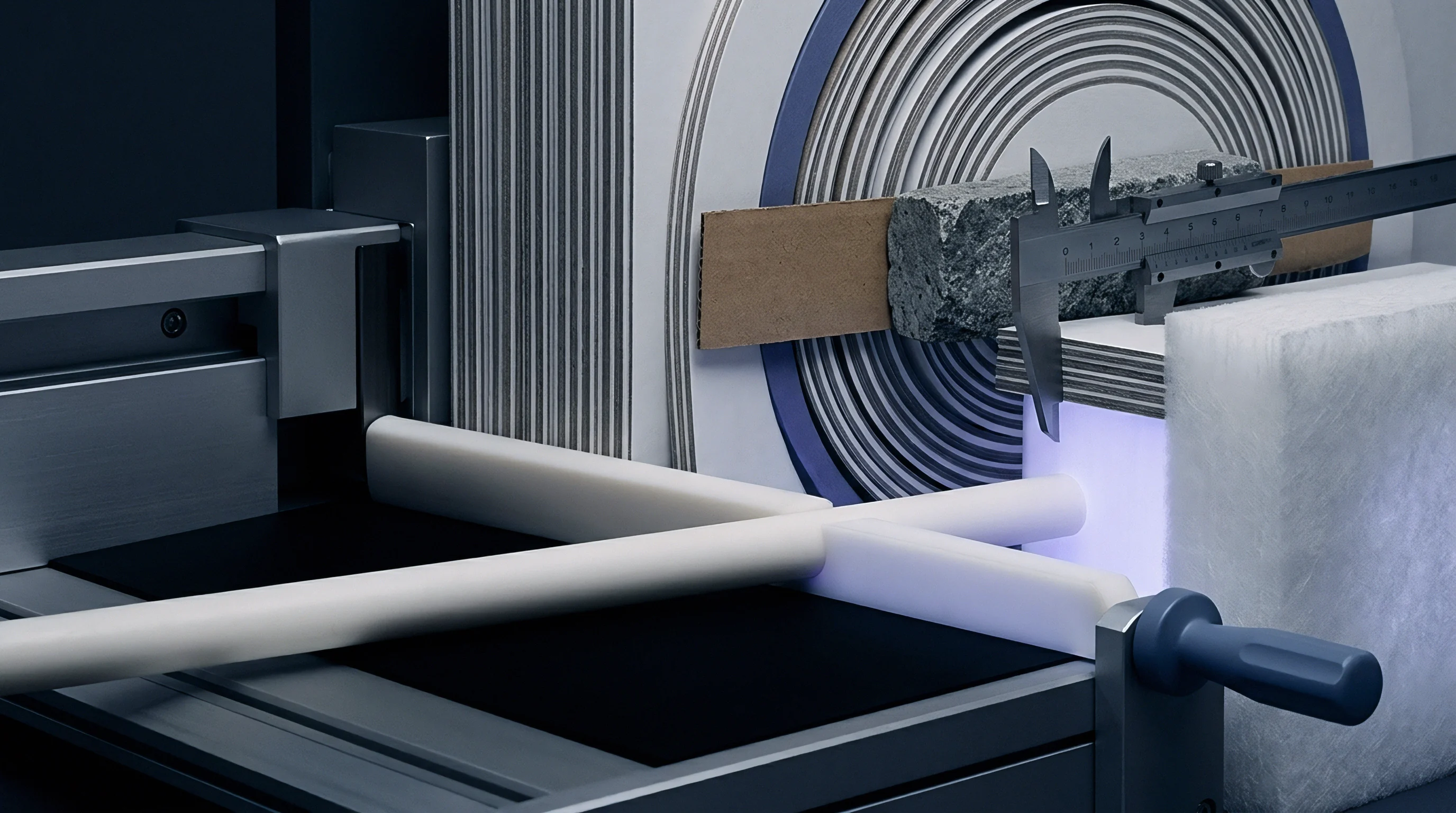
Web
Multi-ply Fourdrinier and multi-former machines establish the fundamental mass and thickness boundaries that govern board conversion down the line. Grammage ~ the dry mass in grams per square meter ~ inevitably drifts both along the machine direction and across the wire. These shifts come down to headbox hydraulics, slurry consistency, drainage on the forming table, and press nip profiles.
Headbox stock generally enters at 0.3 percent to 1.2 percent solids. Slice lip turbulence sets up local cross-flow micro-variations that automated slice profiling can only partially flatten out, bounded as it is by fluid dynamics. Under ISO 536, an allowable grammage tolerance of plus or minus 3 percent to 5 percent around nominal values applies across a production lot.
On an order of 300 g/m² Folding Boxboard, delivered basis weight can span from 285 g/m² to 315 g/m² between reels or runs without breaching standard contract terms.
Caliper, defined as the perpendicular distance between opposing faces under standard static load, reflects both stock distribution at the wet end and the mechanical pressure profile through the calender stack. Standard ISO 534 testing applies 50 kPa using a 200 square millimeter circular deadweight anvil. Machine calenders consolidate the web to smooth the surface and control thickness across the deckle, using soft-nip and hard-nip configurations loaded from 20 kN/m to 150 kN/m.
If sheet moisture varies entering the stack, web compressibility shifts with it. A localized moisture increase of 1.5 percent softens the fibers enough to cause noticeable localized thinning under constant nip loading. Local caliper variations do not correlate cleanly with local basis weight shifts, because wet-end mass changes and calender nip mechanics interact non-linearly across the parent roll.

Cross Direction Basis Weight Profiles and Headbox Dynamics
Headbox dilution systems attempt to decouple basis weight control from fiber orientation by adjusting slice openings or profiling low-consistency white water injection across the pond. Fiber alignment remains governed by the jet-to-wire speed ratio: when slurry exits faster than the wire travels, fibers orient predominantly in the machine direction. This preferential alignment elevates MD tensile strength and bending stiffness at the direct expense of cross-direction values.
CD mass variations also disrupt drying rates across the machine. Heavy streaks enter the dryer section with higher water loads and hold moisture longer, setting up differential shrinkage. The web can shrink up to 8 percent in the cross direction during drying, compared to less than 2 percent along the machine direction.
ISO 536 testing at 23°C and 50% relative humidity dictates a mass variance allowance within plus or minus 3% across a single production reel.
Cross-machine profile controls struggle with narrow, high-frequency mass variations. Traversing scanners at the reel measure grammage, moisture, and caliper roughly every five seconds via infrared absorption and beta-transmission sensors. While these measurements inform control algorithms driving slice actuators, fluid mixing dynamics and transport lag limit correction speeds.
Narrow mass streaks spanning 50 millimeters to 200 millimeters routinely pass into the wound reel. When converters slit wide master rolls down for packaging lines, each slit roll takes on a distinct mass profile determined by its original lane across the parent web.

Moisture Distribution and Density Variations across the Roll
Manufactured board leaves the machine at 5 percent to 9 percent moisture by weight, reaching equilibrium at 23°C and 50 percent relative humidity under standard ISO 187 conditions. Water vapor binds to amorphous cellulose zones via hydrogen bonding, swelling fiber diameters by up to 15 percent while changing fiber length by under 1 percent. As the substrate picks up moisture, mass increases and the expanding fiber walls push out the caliper: a 2 percent change in absolute moisture shifts sheet thickness by roughly 1.5 percent to 3 percent, depending on the furnish and refining degree.
Because mechanical pulps retain hydrophobic lignin networks, they take up less ambient water vapor than fully bleached chemical pulps. Consequently, Thermo-Mechanical Pulp and Groundwood layers maintain volumetric stability far better under shifting humidity than swelling chemical fiber layers. When rolls sit unprotected in unconditioned storage, moisture migrates into the exposed ends, setting up an edge-to-core gradient.
Edge absorption causes bagginess and wavy edges as margins expand around a drier core; dry storage draws moisture out of the ends, producing tight centers. These gradients complicate accurate thickness indexing during press setup.
| Grade Type | Furnish Construction | Nominal Grammage (g/m²) | ISO 536 Mass Tolerance (%) | Nominal Caliper (µm) | ISO 534 Caliper Tolerance (%) | Typical Bulk Coefficient (cm³/g) |
|---|---|---|---|---|---|---|
| Folding Boxboard (FBB) | Bleached Chemical Outer Plies, Mechanical Core | 300 | ±3.0 | 480 | ±5.0 | 1.60 |
| Solid Bleached Sulfate (SBS) | 100% Bleached Chemical Fiber | 300 | ±3.0 | 375 | ±4.0 | 1.25 |
| Coated Unbleached Kraft (CUK) | Unbleached Kraft Base, Clay Coated Surface | 300 | ±4.0 | 420 | ±5.0 | 1.40 |
| Coated Recycled Board (CRB) | Recovered Waste Paper Fibers, Multi-Ply | 300 | ±5.0 | 390 | ±5.0 | 1.30 |
Apparent sheet density tracks inversely with bulk. Calender loading compacts the fiber structure, raising sheet density while reducing caliper. Yet maintaining flexural rigidity imposes a hard ceiling on densification, because bending stiffness scales with the cube of sheet thickness for a given fiber composition.
Stripping 10 percent of caliper through heavy calendering cuts bending stiffness by up to 27 percent. Mill operations constantly balance refining and wet-end drainage to preserve bulk while meeting surface smoothness targets.
Cross-machine profile shifts remain within trade tolerances because automated headbox adjustments prioritize uniform web moisture over localized mass consistency.

Ply
Multi-ply boards derive their mechanical properties from engineered ply stratification. The outer plies use bleached or unbleached chemical pulps, refined to promote hydrogen bonding, high surface smoothness, and tensile capacity. The center plies use bulky, high-yield mechanical pulps or recycled fibers that physically separate the outer liners.
This functions precisely like an I-beam: outer chemical liners absorb the extreme tensile and compressive forces, while the bulky middle ply provides shear resistance and separation. Bending stiffness depends directly on core thickness ~ if the center ply compresses, stiffness drops sharply even if the overall basis weight remains constant.
Stratified forming relies on multi-channel headboxes or distinct wet-end former units. Plies join while moisture remains high enough for inter-fiber bonding across the interfaces under press nip pressure. Starch sprayed between plies or applied at the size press bolsters this interface.
Bending resistance is evaluated under ISO 2493, while ISO 16260 tracks internal bond strength by measuring energy absorption during rapid Z-direction delamination. Inadequate internal ply bond strength triggers delamination during die-cutting, scoring, and folding, leading to carton failures on automated packing lines.

Stratified Fiber Furnish and Stiffness Variations
Chemical pulp fibers have thin cell walls that collapse into a dense, tightly bonded network with low volumetric bulk, typically between 1.1 cm³/g and 1.3 cm³/g. Mechanical pulps retain rigid, lignin-rich walls that resist wet pressing. Groundwood and Thermo-Mechanical Pulps form an open, airy core yielding bulk values from 1.5 cm³/g to 2.2 cm³/g.
Replacing Solid Bleached Sulfate with Folding Boxboard of identical grammage yields a 25 percent to 35 percent increase in sheet caliper. That added thickness delivers higher bending stiffness at equal weight, allowing brand owners to light-weight packaging structures without sacrificing top-load strength.
Recycled fibers from post-consumer waste suffer from repeated wetting and drying cycles. Shortened fibers, hornification, and fines accumulation degrade natural bonding. To offset this, Coated Recycled Board employs multi-ply layouts with up to seven layers, using starches and synthetic dry-strength resins to maintain cohesion.
Bulk values for recycled board sit around 1.25 cm³/g to 1.35 cm³/g. As a result, recycled grades require significantly higher grammage to match the thickness and bending resistance of virgin mechanical or chemical pulp boards.
Shifting furnish specifications changes conversion dynamics. Substituting Coated Recycled Board for virgin Folding Boxboard alters both sheet geometry and line behavior. A 350 g/m² Folding Boxboard with a bulk of 1.60 cm³/g yields a nominal caliper of 560 microns.
Matching that 560-micron thickness with Coated Recycled Board at 1.30 cm³/g bulk requires stepping up to roughly 430 g/m². That 22 percent increase in carton mass adds freight weight and can push finished packaging into higher extended producer responsibility fee tiers.

Score Creasing and Bending Moment Failure Mechanisms
Score creasing creates controlled lines of weakness that allow packaging board to fold cleanly at 90 or 180 degrees without rupture. A male creasing rule forces the board into a female channel, inducing high shear stresses that intentionally break internal bonds within the middle plies. This controlled delamination allows the outer tension liner to stretch cleanly into a hinge while the inner compression layers buckle inward.
Incorrect matrix selection results in cracked liners or weak, rounded folds.
The crease stiffness ratio measures the force required to bend a scored line relative to the bending resistance of the uncreased sheet. Effective creasing produces a ratio between 40 percent and 60 percent of initial stiffness. When internal ply bonding is excessively high, the core resists shear during impression, shifting strain directly to the outer plies and cracking the surface coating.
Conversely, weak ply bonding allows delamination to run wild across the panel, softening box corners and undermining vertical stacking strength.
Mechanical pulps in center plies deform brittly under creasing forces, while chemical liners stretch by rearranging their fiber networks. When board caliper varies within a delivery, the matrix channel depth and width require adjustment on the platen. Running a 500-micron board through tooling cut for 450 microns over-compresses the hinge, cutting the outer liner and generating excessive dust.
Running a 450-micron board through that 500-micron setup leaves shallow, poorly defined scores that wander during high-speed folding.
- Crease Delamination ~ Uncontrolled internal separation spreading past the creasing zone degrades panel stiffness and lowers vertical box stacking strength.
- Score Cracking ~ Tensile splits in clay coatings or bleached chemical outer liners expose underlying raw fibers along fold lines.
- Springback Resistance ~ Variable elastic recovery along scores creates high opening forces during gluing, causing side-seam pops on high-speed folder-gluers.
- Die Cut Flaking ~ Mechanical shear failure along cut edges creates fiber debris and dust that fouls printing plates and packaging equipment.
Standard DIN 53121 stiffness compliance clauses prevent press room speed reductions by enforcing minimum longitudinal bending resistance thresholds.
Symmetry across the ply layup controls how the sheet responds to atmospheric moisture shifts during converting. Asymmetric constructions build internal stress gradients, as unequal moisture expansion between top and bottom plies drives sheet curl and twist. On high-speed offset presses, fountain solution wets the raw back liner faster than the coated face.
Mills counter this by applying water-resistant back-coatings, but baseline dimensional stability requires matched fiber orientations and refining degrees on opposing faces.
Thick mechanical center plies provide bulk and stiffness, while thin chemical outer liners carry the tensile strain when folds are formed.

Gauge
Caliper readings vary with anvil contact pressure, foot area, and instrument lowering speed. Testing under ISO 534 requires a static load of 50 kPa ± 2 kPa applied through a 200 mm² flat circular anvil. TAPPI T 411 similarly specifies 50 kPa, though minor differences in anvil descent speed and parallelism yield divergent readings on compressible grades.
Online laser gauges read thickness without physical contact, typically measuring 3 percent to 6 percent higher than offline bench instruments because surface topography peaks do not deform under an optical beam.
Compressibility defines the loss of thickness under mechanical load. Bulky mechanical grades can lose up to 12 percent of their caliper when test pressure steps from 20 kPa to 100 kPa, whereas dense bleached kraft yields under 4 percent across that same range. Surface coatings and unrefined fiber matrices yield under standard deadweight anvils, frequently causing discrepancies between receiving dock verifications and mill certificates.

Micrometer Contact Dynamics and Method Differences
Mechanical bench micrometers rely on precision screws or linear optical encoders to measure down to single micrometers. Reliable units use deadweight mechanisms to eliminate operator pressure bias. Parallelism is critical: an anvil tilt of just 0.01 degrees across a 16-millimeter foot introduces up to 3 microns of error.
Paper dust or coating flakes accumulating on anvil faces register as false peaks, making frequent calibration against certified gauge blocks mandatory across the testing range.
Non-contact thickness gauges employ laser triangulation or optical coherence sensors to determine distance from surface reflections. Sheet roughness directly influences optical accuracy: smooth, clay-coated tops provide clean specular reflections, whereas rough kraft backs scatter the beam and introduce sensor noise. Good laboratory records capture instrument models, anvil dimensions, and sample conditioning histories alongside raw micron values.

How Does Caliper Variance Shift Die Stacking?
Flatbed die-cutting tooling uses steel rules set into laser-cut plywood dieboards, backed by ejection rubber to strip the sheet clear after the stroke. Creasing rule height is determined by target board caliper and matrix depth. Standard cutting rules measure 23.80 millimeters high; for 400-micron board, tooling typically combines a 23.40-millimeter creasing rule with a 0.40-millimeter matrix channel.
Caliper drift across incoming pallets upsets these geometric relationships. If board caliper swells to 440 microns without tooling adjustments, rule penetration exceeds designed limits by 10 percent, pinching the board against the matrix bottom and rupturing the outer liner. When caliper thins to 360 microns, the rule does not push deep enough to shear the middle plies, producing shallow scores that increase carton opening resistance and cause jams in packing magazines.
These variations compound rapidly in blank feed hoppers. A 20-micron shift on an individual sheet appears negligible on a test report, but across a 500-blank stack, it alters overall height by 10 millimeters. High-speed folder-gluer feed gates maintain tight operating clearances; an over-gauge stack jams against the gate knife, while an under-gauge stack permits double feeds that crash downstream folding sections.

Bulk Variations and Converting Line Throughput Yields
Volumetric bulk is the inverse of density, calculated by dividing sheet caliper in micrometers by dry grammage in grams per square meter. A 450-micron sheet at 300 g/m² provides a bulk of 1.50 cm³/g. Mills manage bulk by balancing furnish selection, refining intensity, and calender nip pressure.
Easing calender pressure preserves thickness but leaves a rougher surface that challenges ink transfer, whereas heavy calendering smooths the coating at the expense of thickness and flexural rigidity.
Substrate yield directly governs conversion economics: raw board purchased by mass is converted into cartons sold by unit count or surface area. Maintaining caliper while reducing basis weight yields more blanks per metric tonne. Switching from 350 g/m² board to a 310 g/m² high-bulk alternative delivers 12.9 percent more finished sheets per tonne of material.
Uncontrolled bulk losses at the mill erode converting margins whenever raw material is bought by the tonne against fixed carton counts.
| Substrate Grade | Nominal Grammage (g/m²) | Nominal Caliper (µm) | Bulk Coefficient (cm³/g) | Yield per Tonne (700×1000mm Sheets) | Area Coverage per Tonne (m²) | Comparative Yield Shift (%) |
|---|---|---|---|---|---|---|
| Standard SBS | 350 | 435 | 1.24 | 4,081 | 2,857 | Baseline |
| High-Bulk SBS | 310 | 435 | 1.40 | 4,608 | 3,225 | +12.9% |
| Standard FBB | 330 | 530 | 1.60 | 4,329 | 3,030 | +6.0% |
| High-Bulk FBB | 290 | 530 | 1.82 | 4,926 | 3,448 | +20.7% |
| Coated Recycled Board | 380 | 494 | 1.30 | 3,759 | 2,631 | -7.8% |
Converting speeds mirror substrate consistency. Running lots with wide caliper distributions frequently forces press speed reductions of 15 percent to 25 percent. To avoid blanket smash on heavy sheets, press operators reduce impression pressure, which impairs dot reproduction and slows ink drying.
These constant mechanical adjustments consume chargeable press hours and inflate unit production costs.
- Measure caliper using ISO 534 deadweight pressure across ten randomized points per sheet.
- Weigh the same sample sheets on a calibrated balance to confirm exact area mass.
- Divide average thickness by grammage to calculate the volumetric bulk coefficient.
- Compare calculated bulk against mill specification thresholds to determine claim or downgrade rights.
Buying substrate on volumetric yield protects converting margins against hidden density inflation from heavy filler loadings.
Procurement specifications require clear limits for both basis weight and caliper, supported by goods-in verification. Ordering solely on grammage allows mills to supply over-calendered, dense board that meets mass specifications but lacks bending resistance. Ordering solely on caliper allows mills to load inexpensive mineral fillers that build thickness while degrading structural strength.
Binding grammage ranges, minimum caliper floors, and bulk minimums into contracts safeguards both carton strength and surface yield.
Yield guarantee clauses specifying minimum caliper floors rather than nominal weights force mills to maintain sheet bulk without quietly passing on excess fiber weight.


Audit
Receiving inspections intercept non-conforming shipments before stock reaches the converting floor. Sampling per ISO 2859-1 establishes inspection lots and acceptable quality limits based on order volume: on a twenty-pallet delivery, quality teams pull sheet samples from top, middle, and bottom tiers across five randomized pallets. Sample conditioning is mandatory under ISO 187, requiring at least 24 hours at 23°C ± 1°C and 50% ± 2% relative humidity.
Unconditioned micrometer measurements taken directly on cold receiving docks yield invalid data that mills routinely reject in dispute proceedings.
Accurate verification demands calibrated equipment: analytical balances resolving to 0.001 grams and bench micrometers checking caliper across ten locations per sheet. Recording individual measurements rather than simple lot means exposes cross-deckle profiling patterns, while standard deviation reflects run stability. A delivery with an acceptable mean caliper can still cause converting failures if internal thickness variation exceeds a 3 percent standard deviation around nominal targets.
Goods-In Sampling Protocols and Statistical Lot Verification
Acceptance sampling balances producer risk (the rejection of acceptable lots due to localized anomalies) against consumer risk (where out-of-spec board reaches the pressroom). Specifying an Acceptable Quality Level (AQL) of 1.0 percent on core dimensional metrics ensures roughly 95 percent of conforming lots clear receiving while keeping defective batches off production lines.
Roll-map files from mill scanners capture quality parameters continuously, charting mass, moisture, and caliper along the full reel length. Standard Mill Certificates of Analysis provide only averaged numbers, masking short-term spikes and cross-direction streaks. Requiring raw profile data from paper mills reveals moisture bands and machine-direction weight surges that aggregate reports conceal.
Cross-referencing roll-map coordinates against slit roll identifiers lets converters quarantine problem stock prior to sheeting.
| Parameter | On-Machine Scanner (On-Line) | ISO Bench Measurement (Off-Line) | Measurement Delta Variance | Primary Source of Divergence |
|---|---|---|---|---|
| Grammage (g/m²) | Beta-Ray / Infra-Red Absorption | ISO 536 Gravimetric Sheet Weight | ±1.5% to ±2.5% | Web Speed and Moisture Compensation Lag |
| Caliper (µm) | Optical Laser Triangulation | ISO 534 Deadweight Micrometer (50 kPa) | +3.0% to +6.0% | Surface Peak Profiles vs Anvil Compression |
| Moisture (%) | Infra-Red Resonance | ISO 287 Oven-Drying Method | ±0.5% to ±1.2% | Evaporative Loss During Sample Transport |
| Bulk (cm³/g) | Calculated from On-Line Sensors | Calculated from ISO 536/534 Data | ±2.0% to ±4.0% | Compounded Grammage and Caliper Sensor Noise |
Non-destructive instruments provide rapid initial screening at goods-in. Ultrasonic testing measures acoustic velocity through the board, which correlates directly with fiber alignment, apparent density, and elastic modulus. Shifts in acoustic velocity identify local mass variations and compromised ply bonding without destroying samples, flagging suspect lots for formal ISO verification testing.

Discrepancy Resolution between Mill Dossiers and Press Performance
When board fails on press despite compliant mill test certificates, root-cause testing isolates the source of error. The procedure requires verifying conditioning chamber records to confirm samples did not drift in transit humidity, checking micrometer calibration, and auditing conditioning durations. If re-testing confirms out-of-spec dimensions, formal non-conformance claims are issued alongside retained sample sheets.
Claim resolution depends on unbroken traceability. Roll numbers, pallet tags, mill order numbers, and tambour reel codes tie defective sheets back to production timestamps. Mill engineers review scanner records for those exact machine coordinates.
When physical evidence verifies systemic out-of-tolerance drift, mills issue credit adjustments, arrange replacement tonnage, or absorb press downtime expenses incurred during the run.
Accepting a three-ply linerboard lot whose delivered bulk sits two percent below mill certificate values can incur forty thousand Euros in rework charges.


Friction
Presses running over 40,000 sheets per hour tolerate little variation in sheet geometry. Feeder heads pick the lead edge from the pile using suction cups, while air blasts separate sheets to overcome vacuum locking on smooth, coated boards. Fluctuations in caliper alter blank weight, stiffness, and air permeability, disrupting pick-up timing and causing feeder trips, double feeds, or front-lay registration errors.
Static and kinetic friction coefficients determine how sheets slide apart during feeding. In TAPPI T 549 testing, clay-coated surfaces show kinetic friction coefficients between 0.35 and 0.45, whereas uncoated backs range from 0.50 to 0.65. Friction variations disrupt sheet travel across feed boards.
If board caliper spikes, feed gates pinch incoming sheets, scuffing the coating and producing fine mineral dust that fouls suction cups and optical photo-eyes.
Feeder Mechanism Mechanics and Thickness Sensitivity
Automated feeders use coordinated mechanical timing: lifting suckers elevate the sheet tail, and forwarding suckers advance it toward the feed board. When sheet caliper increases, added mass and bending stiffness resist suction lift. Vacuum levels calibrated for 350-micron board fail to seal reliably when caliper reaches 390 microns, causing vacuum loss and tripping line interlocks.
Feed gate clearance on folder-gluers controls blank separation, typically set to 1.5 times nominal board thickness to admit single blanks while blocking doubles. On a 400-micron board run, the gate is set to 600 microns. If caliper creeps up to 450 microns, two blanks total 900 microns and stop at the gate; if caliper drops to 350 microns, two blanks measure 700 microns and can wedge through together, jamming belt carriers and damaging downstream scoring tools.
- Feeder Vacuum Setting ~ Adjust suction pressure for board porosity and weight to guarantee clean sheet pick-up without marking coated surfaces.
- Feed Throat Clearance ~ Set gate height to precisely one point five times maximum caliper to block double-sheet feeding.
- Folder Belt Compression ~ Calibrate nip wheel pressure to transport blanks cleanly without crushing bulky middle plies.
- Ejection Sensor Calibration ~ Program double-sheet detection thresholds to measured caliper ranges so double feeds trigger auto-diversion rather than press stops.

Cumulative Stack Height Dynamics and Gluer Jamming Risks
Folder-gluer feed hoppers rely on stack weight to maintain friction against bottom feed belts. Friction-belt feeders strip individual blanks from the bottom of the pile; variations in board caliper alter total stack mass and downforce. Excessive stack weight increases friction on lower blanks, causing belt slippage and misaligning blank entry into the folding section.
Cumulative thickness variance across a pallet stack shifts blank alignment into automatic folder-gluer feed throats.
The folding section uses guide rails, swords, and rotating hooks to break and fold blanks along 90-degree and 180-degree scores. When caliper variations compromise crease formation, folding accuracy deteriorates. Over-gauge board increases folding resistance, skewing blanks and producing fishtailed cartons.
These misaligned blanks jam the final compression section, requiring line shutdowns to clear damaged stock and clean glue off transport belts.
Automated packaging machinery demands tight dimensional consistency. High-speed cartoners erect flat boxes, insert contents, and seal flaps at speeds reaching 500 cartons per minute. Inconsistent caliper and score stiffness alter opening force; cartons with high springback resist opening arms and crush against insertion pushers.
Packing line stoppages can cost hundreds of Euros per minute in lost output, prompting carton buyers to bill downtime charges back to converters and mills.
Whether non-contact laser calipers can achieve the same operational reproducibility on high-speed folder-gluer feed tracks as mechanical deadweight anvils remains subject to ongoing mill trial verification.


Invoice
Paperboard purchasing carries an inherent structural tension: raw material is purchased by weight, while finished packaging is sold by unit count or surface area. Mills invoice substrate at a rate per metric tonne, whereas converters price jobs per thousand cartons. Volumetric bulk links these commercial models, determined by basis weight and caliper choices.
When a mill ships board at the upper threshold of its weight tolerance, sheet count per tonne drops, saddle-bagging converters with unrecoverable raw material costs.
Furnish changes alter production economics. Substituting a 350 g/m² Solid Bleached Sulfate at 1,200 Euros per metric tonne with a 310 g/m² high-bulk Folding Boxboard at 1,350 Euros per metric tonne appears on the surface as a 12.5 percent cost increase. However, the high-bulk board delivers 12.9 percent more sheets per tonne at identical caliper and stiffness.
That yield gain offsets the higher price per tonne, lowering the net board cost per thousand cartons. Comparing grades on price per tonne alone obscures landed production costs.

The Tonne to Sheet Conversion Math in Board Swaps
Converting tonnage to sheet count requires calculating single-sheet area mass. A sheet measuring 700 mm by 1,000 mm covers 0.70 square meters. At 300 g/m², each sheet weighs 210 grams; dividing 1,000,000 grams (one metric tonne) by 210 grams yields 4,761 sheets per tonne.
If the mill delivers board at the upper ISO 536 limit of 315 g/m², unit weight rises to 220.5 grams and yield drops to 4,535 sheets per tonne ~ a loss of 226 sheets on every tonne purchased.
On a 50-tonne order requiring 238,000 finished sheets, a 5 percent positive weight drift forces the printer to purchase an additional 2.5 tonnes of board to complete the order. At 1,300 Euros per metric tonne, that weight shift adds 3,250 Euros in unbudgeted material expense. Conversely, if delivered stock runs 5 percent below nominal weight while preserving caliper through mechanical pulps, yield increases to 5,012 sheets per tonne, improving margins as long as the board meets physical strength requirements.
Evaluating furnish changes also requires accounting for slitting and sheeting scrap. Converting master rolls into press-ready sheets generates edge-trim waste typically between 2 percent and 6 percent of web width. Swapping to high-bulk grades that require wider roll dimensions to fit gripper margins can increase trim waste.
True carton unit economics must factor in surface yield, trim scrap, make-ready waste, and freight costs.

Commercial Contract Clauses to Neutralize Density Arbitrage
Procurement agreements require protective terms to guard against density creep and wide trade allowances. Standard industry trade rules grant mills broad leeway, frequently permitting combined mass and caliper tolerances up to plus or minus 5 percent. Mills can utilize this leeway by loading furnish with mineral fillers, hitting target grammage while degrading sheet yield per tonne.
Specifying guaranteed minimum sheet counts per pallet in purchase contracts prevents density arbitrage.
Yield-based billing clauses adjust substrate invoices automatically whenever delivered sheet mass exceeds target specification medians by more than 1.5 percent. If receiving audits show average grammage running 3 percent over target, the invoice drops by 3 percent to offset lost yield. Guaranteeing yield aligns mill production incentives with converter needs, removing any financial payout for shipping heavy board.
- Grammage Floor Thresholds ~ Set a minimum mass per square meter to protect structural integrity without paying for excess sheet weight.
- Caliper Range Limits ~ Restrict thickness variations to prevent press feeder trips, score cracking, and stack height issues.
- Volumetric Density Caps ~ Cap maximum allowable bulk density to block filler strategies that artificially inflate sheet weight.
- Price Adjustment Formulas ~ Mandate automatic tonnage rebates whenever delivered board yields fewer sheets per metric tonne than contracted targets.
Sound substrate specification underpins packaging economics. Connecting ply mechanics, pressroom clearance limits, and commercial contract terms gives converters and brand owners genuine control over final unit costs. Every micron of caliper and point of grammage in a specification represents tangible financial and operational performance on the production floor.