Psychrometric Dynamics and Boundary Layer Condensation in Freight Units
Boundary layer condensation drops containerboard compression fifty percent, demanding virgin kraft liners and desiccant capacity sized to total stowage moisture.

Dew
Thermal gradients across steel container walls convert internal vapor into liquid runoff during maritime transit. Ocean freight routes passing from warm loading ports through cold open water experience rapid skin cooling on exterior panels. Marine ambient temperatures drop ten degrees Celsius within six hours after crossing oceanic currents.
Interior atmospheres retain absolute moisture evaporated from wooden pallets, corrugated containers, and paper stock. Warm internal air contacts the chilling steel ceiling, driving local relative humidity beyond saturation. Droplets nucleate along the corrugation peaks of roof sheets, gathering mass until surface tension breaks.
Metal skins chill first. The ceiling sheds liquid droplets.
Cargo sweat develops along a distinct psychrometric path. When refrigerated or chilled merchandise enters a warm, humid discharge port, ambient vapor condenses directly onto cold carton surfaces. Container sweat operates in reverse, depositing internal vapor onto cold steel walls during transit into freezing zones.
Both phenomena ruin paper packaging through direct liquid impingement and vapor absorption. Paper buyers who evaluate freight packaging solely by ambient dry-bulb temperature ignore the dew point spread. Condensation risk begins the moment roof temperature drops below the interior dew point.
Water vapor moves along thermal gradients.
Container ceiling drippage strikes the top pallet tier hours before side walls show liquid runoff.

Saturated Air Mass Transitions
Enclosed freight containers behave as closed thermodynamic vessels with limited air exchange. Standard passive vents allow fewer than two complete air turnovers every twenty-four hours under normal sailing trim. Absolute humidity inside an unventilated forty-foot box loaded with paper products often reaches twenty-eight grams of water per cubic meter.
When diurnal cooling lowers exterior temperatures from thirty-five degrees Celsius at midday to eighteen degrees at midnight, saturation occurs rapidly. Internal relative humidity climbs from sixty-five percent to saturation without adding a single gram of new liquid.
Psychrometric charts confirm that air at thirty degrees Celsius holds roughly thirty grams of water vapor per cubic meter at saturation. Cooling that identical air volume to fifteen degrees reduces holding capacity to twelve point eight grams. The remaining seventeen point two grams per cubic meter must condense onto any nearby surface colder than the dew point.
A forty-foot container holds sixty-seven cubic meters of free volume when loaded to typical cube utilization. That volume precipitates over one liter of free water in a single cooling cycle. Cellulose absorbs vapor rapidly.
| Dry Bulb Temperature | Relative Humidity | Dew Point Temperature | Absolute Humidity | Vapor Pressure |
|---|---|---|---|---|
| 35.0 C | 85 % | 32.1 C | 33.7 g/m3 | 4.78 kPa |
| 30.0 C | 75 % | 25.1 C | 22.8 g/m3 | 3.18 kPa |
| 25.0 C | 65 % | 18.0 C | 15.0 g/m3 | 2.06 kPa |
| 20.0 C | 60 % | 12.0 C | 10.4 g/m3 | 1.40 kPa |
| 15.0 C | 55 % | 5.9 C | 7.1 g/m3 | 0.94 kPa |
| 10.0 C | 50 % | 0.1 C | 4.7 g/m3 | 0.61 kPa |
| Values calculated at standard barometric pressure of 101.325 kPa according to ASHRAE psychrometric formulations. | ||||

Condensation Patterns across Corrugated Cargo
Top pallet layers absorb the greatest volume of overhead water droplets. Gravity channels roof runoff along corrugated roof valleys, concentrating dripping points above pallet gaps and case edges. Liquid strikes carton top flaps, soaking into the linerboard matrix and softening water-soluble starch adhesive lines.
Side walls produce vertical sheeting that runs down to container floorboards. Plywood flooring saturated with floor runoff re-evaporates water back into the lower case tiers during midday reheating cycles. Relative humidity exceeds ninety percent.
Moisture accumulation follows a continuous loop across multi-day voyages. Daytime heating through solar radiation on exposed container roofs drives absorbed water out of top cartons and wood pallets into the headspace. Nightfall chills the roof skin, condensing that vapor back onto the top cases.
This daily pumping action strips sizing chemistry from paper liners and concentrates minerals on carton surfaces. Cold container roofs drip continuously.
Warm cargo loaded into cold freight units sheds vapor, whereas cold stock entering humid zones gathers liquid.
Isotherm
Equilibrium moisture content of cellulosic packaging reflects the balance between ambient relative humidity and the internal sorption capacity of wood fibres. Packaging engineers measure this balance through sorption curves that plot moisture uptake against ambient vapor pressure at constant temperature. Virgin unbleached kraft papers exhibit a classic sigmoid sorption profile under TAPPI T402 conditioning.
At forty percent relative humidity, a standard virgin kraft liner holds roughly six percent water by dry weight. Raising ambient humidity to ninety percent increases fibre moisture content past fourteen percent. Fibre bonds loosen at saturation.
Cellulose fibrils contain free hydroxyl groups along amorphous polymer chains that form hydrogen bonds with atmospheric water molecules. Monomolecular adsorption dominates between zero and twenty percent relative humidity. Polymolecular layering occurs between twenty and seventy percent.
Capillary condensation fills microvoids and fibre lumen spaces when humidity exceeds seventy-five percent. As water fills the capillary structure, fibre walls expand, increasing sheet caliper while degrading internal fibre-to-fibre bonding strength. Paper buyers see this shift as soft, spongy board that loses crease definition.
Conditioned kraft linerboard at twenty-three degrees Celsius and ninety percent relative humidity absorbs fourteen grams of water per hundred grams of dry fibre under ISO 187 conditioning.
Moisture Sorption in Virgin Kraft Liners
Softwood fibres refined from southern pine or northern bleached softwood kraft maintain long, durable polymer chains that resist rapid water uptake. High levels of natural hydrophobic wood components like lignin and rosin sizing agents retard capillary wetting. Water absorption measured by the Cobb method according to ISO 535 typically holds below thirty grams per square meter over sixty seconds on well-sized virgin liners.
When exposure extends across a fourteen-day ocean crossing, sizing barriers delay liquid entry but cannot prevent vapor transmission.
Virgin liners reach an equilibrium moisture level of eight point five percent at fifty percent relative humidity, climbing to sixteen percent at ninety percent humidity. The sheet caliper increases by seven to eleven percent across this range. Swelling occurs primarily across the thickness of the sheet because paper fibres align along the machine direction during web formation.
Fibre diameter swells up to twenty percent while fibre length expands less than two percent. This directional imbalance distorts carton dimensions and weakens corner scores.
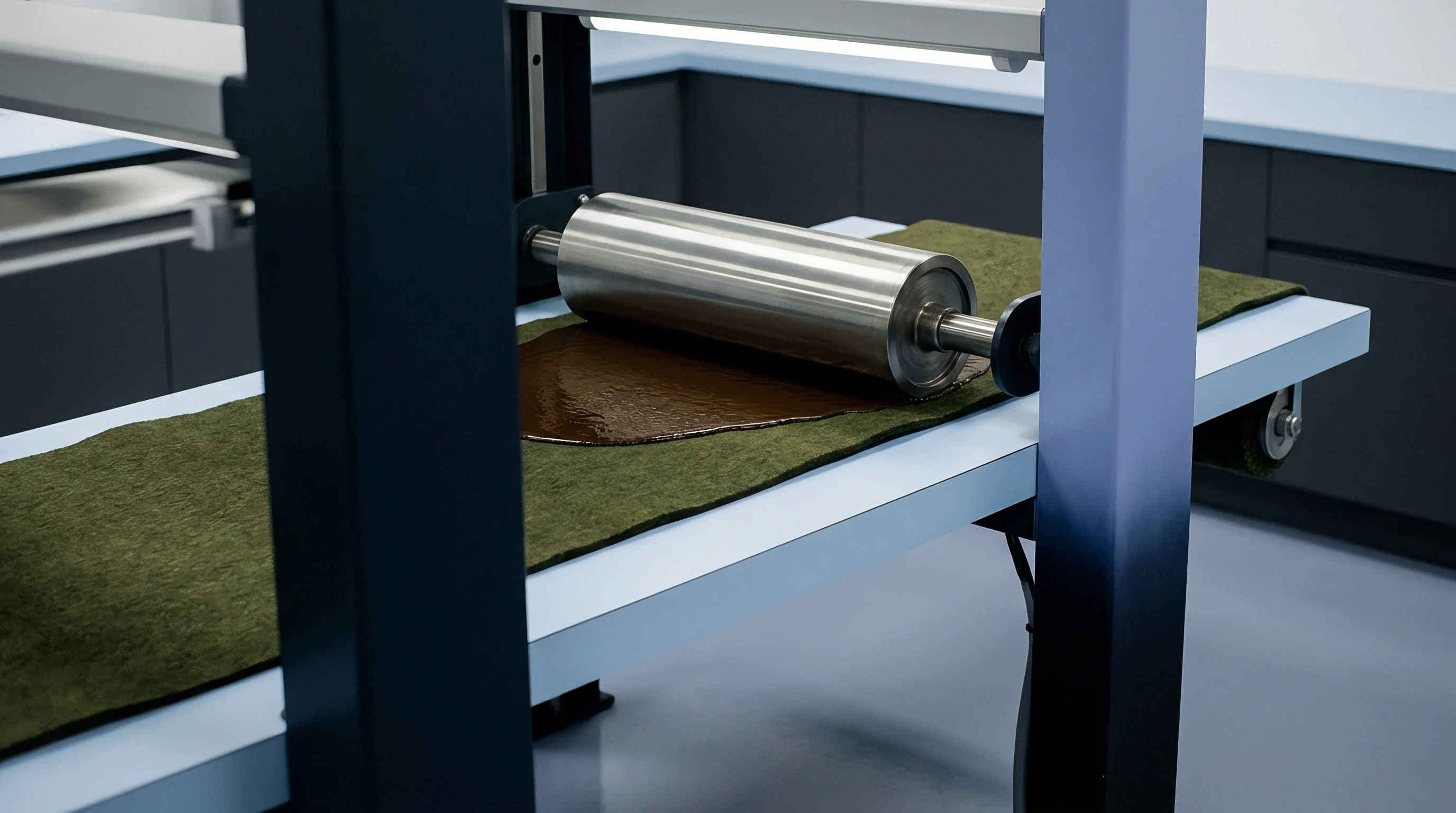
Hysteresis Gaps in Recycled Mediums
Secondary fibres processed through repetitive repulping cycles present a fractured physical structure with shortened fibre lengths and collapsed lumens. Recycled fluting mediums made from testliner or old corrugated containers absorb water faster than virgin unbleached materials. Hornified fibres from repeated drying cycles have fewer internal bonding sites, forcing water into inter-fibre voids rather than cell wall structures.
Desorption curves sit significantly higher than adsorption curves, creating an operational hysteresis gap. Recycled fibres swell unevenly.
Board that absorbs moisture during an ocean passage retains that water tenaciously when ambient humidity falls. A recycled containerboard medium exposed to eighty-five percent humidity absorbs thirteen percent water. When ambient air drops back to fifty percent humidity, the sheet desorbs water slowly, holding ten percent moisture instead of returning to its original seven percent baseline.
This retained moisture keeps the corrugating medium soft long after ambient transit conditions normalize.
Cyclic transit moisture creates progressive degradation through specific physical mechanisms:
- Creep acceleration occurs when repeated humidity swings force fibres to expand and contract under constant pallet stacking pressure, accelerating structural failure.
- Scoreline delamination develops because swollen outer plies crack along machine-direction creases when cases flex during rail shunting or vessel rolling.
- Adhesive line hydrolyzation dissolves water-soluble starch bonds between medium flutes and linerboard facings, producing blistered or loose liners.
- Surface sizing wash strips surface starch and fluorochemical barriers, allowing subsequent liquid droplets to penetrate untreated base stock directly.
Moisture dynamics inside containerized packaging follow sorption isotherms that lock water into recycled fibre networks, maintaining elevated internal moisture regardless of external ventilation.
Boundary
Stagnant air zones form along interior container panels where air velocity drops to zero. Fluid mechanics dictates that moving air forms a velocity boundary layer adjacent to solid boundaries. Air velocity within two millimeters of a corrugated steel wall remains effectively stagnant even during forced vessel ventilation.
Heat transfers through this static layer purely by conduction rather than convection, slowing thermal equalization between cargo and exterior weather. Stagnant air insulates the wall, intensifying temperature gradients between cargo faces and steel skins.
When moist air encounters this cold boundary layer, air temperature drops below the dew point before the bulk air mass cools. Microscopic condensation forms inside the boundary zone, creating mist that deposits onto adjacent carton walls. Cartons stowed within five centimeters of container side walls absorb boundary moisture even when bulk headspace air reads ten percent below saturation.
Space allowance between cargo and container walls governs whether free air circulates or boundary layer stagnation traps vapor.
Cold packaging entering warm tropical ambient air condenses vapor directly into the paper matrix before wall runoff begins.
Do Desiccant Packs Arrest Boundary Layer Saturation?
Calcium chloride and bentonite clay desiccant bags absorb ambient vapor to suppress container dew point levels. Standard dry bags contain mixtures of calcium chloride and gelling starches that pull water vapor across semi-permeable membranes. One kilogram of high-grade calcium chloride absorbs over two kilograms of water at eighty percent relative humidity and twenty-five degrees Celsius.
Desiccant bags reach capacity early.
Desiccants fail when placed outside boundary layer convective currents. Hanging desiccant poles along container walls captures boundary air, but placing flat clay bags across the top of pallets leaves wall boundary layers untreated. If total stowage moisture across pallets, timber dunnage, and carton stock exceeds desiccant absorption capacity, relative humidity rises despite desiccant presence.
A typical container stow containing ten tons of corrugated boxes and twenty wooden pallets carries over eight hundred kilograms of embedded water. Absorbing a five percent shift in that total load demands forty kilograms of active calcium chloride.
| Transit Day | Boundary Layer Temp | Headspace RH | CaCl2 Desiccant Uptake | Condensation Rate |
|---|---|---|---|---|
| Day 1 | 28.5 C | 68 % | 12 % of dry wt | 0.0 g/m2/h |
| Day 3 | 22.1 C | 76 % | 45 % of dry wt | 0.0 g/m2/h |
| Day 6 | 14.0 C | 88 % | 110 % of dry wt | 1.8 g/m2/h |
| Day 9 | 8.2 C | 96 % | 185 % of dry wt | 6.4 g/m2/h |
| Day 12 | 4.5 C | 99 % | 230 % of dry wt | 12.1 g/m2/h |
| Day 14 | 2.1 C | 100 % | 245 % of dry wt | 15.8 g/m2/h |
Air Gap Convection and Surface Heat Transfer
Natural buoyancy forces drive airflow through gaps between pallet stacks. Warm air rises through the cargo center, travels outward across the top cargo surface toward the cold roof, and sinks down cold side walls. This chimney effect operates continuously throughout night cooling cycles.
When cargo stacks fit tightly against container side walls, air passages close, stopping natural convection. Stagnant pockets cool below the dew point, saturating adjacent corrugated packaging.
Maintaining a minimum seventy-five millimeter air channel around the perimeter of cargo stacks allows sinking cold air to drain to floor channels without penetrating carton faces. Flute orientation within stacked boxes also dictates local heat transfer rates. Corrugation flutes aligned vertically trap internal air columns that resist lateral heat flow, keeping box interiors warm while outer linerboard plies match container skin temperatures.
This thermal gradient causes internal vapor migration, pulling moisture from warm internal contents toward cold exterior linerboard facings.
The box plant representative claimed the ambient sea air overwhelmed the clay bags through container vent holes.

Flute
Corrugating profiles determine how vertical loads transfer down container walls to pallet decks. Standard A, C, and B flutes provide distinct geometric spacing and structural stiffness under dry laboratory conditions. Standard C-flute board provides roughly one hundred and twenty flutes per linear meter with an average flute height of three point six millimeters.
The arched structure of the corrugating medium acts as a continuous series of trusses supporting outer linerboard facings. Under normal conditions, these trusses prevent linerboard facings from buckling under stacking weights.
Moisture absorption destabilizes the geometry of the flute arch. As cellulosic fibres absorb vapor from boundary layer condensation, internal elastic modulus values plummet. Wetting decreases the shear modulus of the corrugating medium, allowing the flute arches to roll laterally under compressive vertical loads.
The structural failure of a corrugated container rarely begins with vertical crushing of the linerboard faces. Failure initiates when the flute medium rolls, removing lateral support from the liners and triggering sudden panel buckling. Compression strength drops forty percent.
What Equilibrium Moisture Threshold Breaks Stacking Strength?
Edge Crush Test values measured according to ISO 3037 drop precipitously when paper moisture exceeds ten percent. Standard unbleached kraft board demonstrates an Edge Crush Test loss of approximately eight percent for every single percent increase in sheet moisture between seven and twelve percent. Once sheet moisture surpasses fourteen percent, strength loss accelerates non-linearly.
At sixteen percent moisture content, a double-wall corrugated container loses over half of its initial compression capacity.
Box Compression Test performance calculated using the McKee formula relies directly on flexural stiffness and edge crush resistance. Both variables depend on the tensile modulus of the constituent paper plies. When boundary layer sweating elevates box moisture to fifteen percent during transit, a box rated for six hundred kilograms of static compression load fails under less than three hundred kilograms.
Bottom cases on pallet stacks collapse, tilting entire pallet columns against container walls. Stacking boxes buckle under load.
Compressive Loss under Dynamic Creep
Dynamic forces during vessel pitch and roll multiply the destructive effects of moisture absorption. Ocean vessels impart continuous cyclic accelerations between zero point two and zero point eight gravities to stowed cargo. A pallet stack carrying five hundred kilograms per box under static warehouse conditions experiences peak dynamic loads exceeding eight hundred kilograms at sea.
When cyclic loading coincides with rising moisture content, packaging experiences accelerated mechano-sorptive creep.
Under static moisture conditions, paper deforms predictably under load. When moisture levels cycle up and down while boxes remain under load, deformation rates multiply by factors of three to ten. Hydrogen bonds within cellulose break and reform in altered positions as water molecules migrate through the amorphous regions of the fibre.
This molecular slip permanently thins the sheet, compresses flute heights, and leads to carton collapse even when peak loads sit well below dry design limits. Kraft liners retain greater stiffness.
Qualifying corrugated stock for ocean freight demands rigorous bench steps:
- Precondition specimen sheets at twenty-three degrees Celsius and fifty percent relative humidity under ISO 187 standards to establish base weight and caliper.
- Expose test specimens to ninety percent relative humidity at twenty-five degrees Celsius inside an environmental chamber for seventy-two hours to achieve capillary saturation.
- Execute Edge Crush Test measurements under ISO 3037 immediately upon chamber removal, recording maximum compressive force before load slip.
- Perform Ring Crush Tests on linerboard and Concora Medium Tests on fluting according to ISO 12192 and ISO 7263 to isolate individual component failures.
- Calculate McKee box compression limits using wet board parameters to establish safe pallet stacking heights for ocean transit.
Procurement specifications for ocean shipping must control raw material thresholds:
- Virgin kraft composition specifies an unbleached softwood furnish exceeding eighty percent of total sheet weight to limit moisture absorption rates.
- Sizing degree limits enforce Cobb sixty values below twenty-eight grams per square meter on outer liners to resist liquid droplet ingress.
- Wet strength resin additions require polyamide-epichlorohydrin or melamine resins in corrugating mediums to retain wet flute stiffness.
- Safety factor margins establish a minimum four-to-one design ratio between box compression test ratings and actual static pallet weights.
Specifying inadequate paperboard grades leads to collapsed bottom cartons, crushing primary goods, and contaminating entire container loads with fungal bloom.
Settlement
Underwriters resolve maritime packaging losses through documented proof of physical transit conditions and packaging compliance. When cargo arrives with crushed cartons and wet liners, carriers routinely deny liability by citing inherent vice of the cargo or insufficient packaging under Article IV of the Hague-Visby Rules. Packaging buyers must prove that delivered packaging met internationally recognized performance standards for maritime voyages.
Proving adequate packaging requires complete audit trails including mill certificates, Edge Crush Test logs, and desiccant placement calculations. Cargo surveys document water marks.
Independent marine surveyors inspect damaged containers immediately upon devanning at destination terminals. Surveyors verify whether water marks on carton roofs resulted from external container leaks or internal condensation. Silver nitrate chemical testing determines whether moisture originated from salt sea spray penetrating damaged door gaskets or fresh water condensing from internal humidity.
A negative chloride reaction confirms internal container sweat, transferring legal liability from the vessel operator to the cargo shipper unless proper stowage procedures were documented. Carriers reject unventilated stowage claims.
Cargo Loss Allocation under Maritime Carrier Rules
Carriers claim protection under ocean bills of lading when atmospheric temperature fluctuations cause sweat damage inside sound, unbreached shipping containers. The legal precedent treats condensation inside a weather-tight container as a natural physical consequence of ocean transit unless the shipper explicitly contracted for mechanical ventilation or temperature-controlled equipment. Shippers who pack moist wooden pallets alongside hygroscopic paper cartons bear the burden of moisture-induced damage.
The presence of green timber dunnage containing over twenty percent moisture completely invalidates packaging failure claims.
Subrogation claims filed by cargo insurance underwriters against shipping lines fail in over eighty percent of condensation disputes. Underwriters seek recourse against packaging converters instead, claiming that delivered corrugated boxes lacked specified wet crush strength. Converters defend claims by verifying that supplied board met contracted dry test specifications, exposing the gap between dry testing standards and actual ocean shipping environments.
Mill test certificates showing twenty-three degrees Celsius and fifty percent humidity provide zero legal protection against ocean freight failures.
| Risk Factor | Standard Specification | Ocean Transit Specification | Claim Rejection Risk | Cost Variance per Container |
|---|---|---|---|---|
| Linerboard Grade | 100% Recycled Testliner | Virgin Unbleached Kraft | High under Testliner | + $ 1,450.00 |
| Fluting Chemistry | Standard Semi-Chemical | Wet-Strength Resin Sized | Moderate | + $ 620.00 |
| Desiccant Sizing | None (Bulk Stow) | 32 kg Calcium Chloride | Critical | + $ 280.00 |
| Barrier Coating | Uncoated Facing | Water-Dispersible Polymer | Low under Barrier | + $ 890.00 |
| Pallet Timber Prep | Air-Dried (22% H2O) | Kiln-Dried (<15% H2O) | Critical | + $ 340.00 |
Commercial Recovery and Rejection Thresholds
Insurance payouts depend on clear contractual definitions of total constructive loss. When pallet stacks lean or collapse due to bottom tier crushing, automated distribution centers reject entire shipments at receiving docks. Inability to run distorted cartons through high-speed depalletizers converts partially damaged loads into total commercial losses.
Repalletizing and sorting costs at port facilities frequently exceed the salvage value of the merchandise, forcing cargo abandonments.
Paper sourcing agreements must stipulate humidity performance metrics directly within technical supply contracts. Relying on basic grammage and burst strength ratings leaves buyers unprotected when containerboard collapses under boundary layer sweating. Incorporating environmental cycling test criteria into procurement schedules shifts material failure liability back to packaging converters.
Contracts that explicitly tie board acceptance to ninety percent humidity compression retention ensure converters supply virgin furnish with robust internal sizing.
Federation of Oils, Seeds and Fats Associations contract clause fourteen bars claims for cargo sweat when ventilation records lack twice-daily psychrometer entries.
Institute Cargo Clauses A cover general transit risks but specifically exclude packaging insufficiency under Clause 4.3 unless packaging adequacy was audited and endorsed prior to container sealing.