Structural Failure
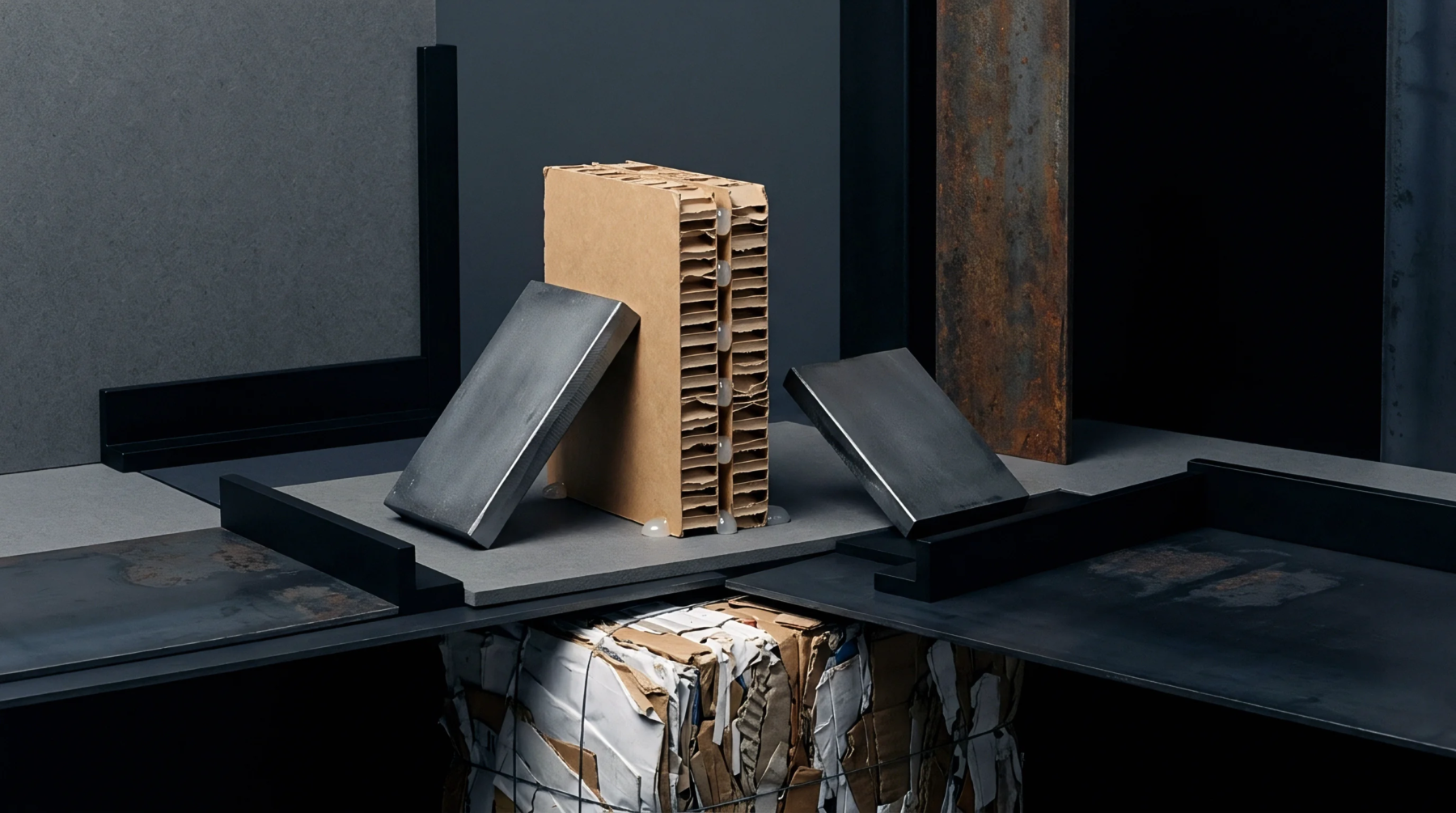
Separations occurring along the adhesive interface between containerboard facings and fluted medium define mechanical bond degradation in paperboard packaging. Known in quality control testing as corrugated delamination, this structural defect undermines box compression strength and stacking capability during transport. The failure occurs when starch adhesive bonds between the flute tips and the inner liner face fracture under tensile, shear, compression, or moisture stress.
Evaluation relies on pin adhesion testing according to TAPPI T 821, measuring the force required to separate facings from fluted medium. Boundary limits restrict this phenomenon to bonded corrugated board interfaces, excluding edge tearing or surface fibre picking on unprinted linerboard surfaces.
Adhesive Failure
Starch gelatinization temperatures and application rates dictate the strength of the green bond formed at the corrugator single facer and double facer. Inadequate heat transfer prevents complete raw starch swelling, resulting in poorly cured adhesive lines that fracture under minor physical loads. Excessive water in the formulation weakens bond line density, causing the adhesive to sink into porous linerboard fibres before crosslinking completes.
Furthermore, incorrect doctor roll gaps leave thin glue lines that lack sufficient area to bridge paper gaps. When mechanical vibrations act on converting lines, weak glue joints fail completely and separate the medium from the liner facing.
Environmental Stress
High relative humidity weakens cured starch bonds through moisture absorption, reducing shear strength across packaging runs. Wet-strength resins resist water degradation, but un-modified starches hydrolyze when exposed to free moisture over extended storage periods.