Mass Balance Yield Verification in Multistage Bleached Softwood Fiber Chain of Custody Accounting
Multistage bleached softwood fiber chain of custody accounting requires bone-dry mass yield reconciliation at each chemical pulping and bleaching stage.


Bark
Northern softwood roundwood arrives at chemical pulp processing sites containing between ten and fourteen percent epidermal bark by green mass. Green roundwood carries high moisture. Chain of custody verification starts at the weighbridge, where physical log truck deliveries convert to oven-dry wood equivalents through bone-dry metric ton sampling under ISO 638 testing standards.
Certified fiber inputs must match certified harvest allocations registered under forest management certificates before physical processing commences.
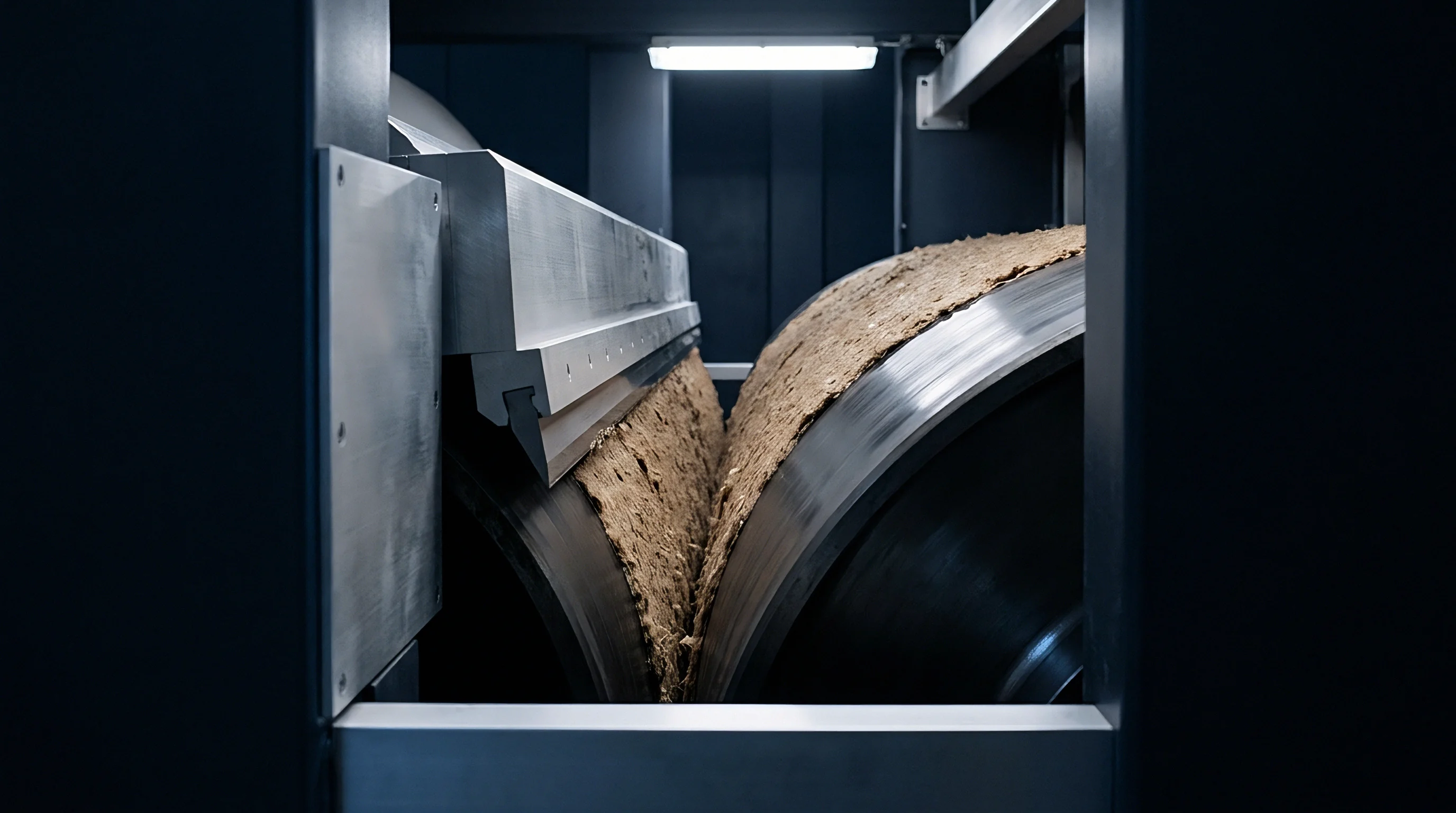
Woodroom operations remove non-cellulosic outer layers using mechanical debarking drums before chipping. Fiber mass tracking separates usable roundwood content from bark rejects, which enter auxiliary boilers as biomass fuel rather than fiber inventory. Knots reduce pulping efficiency.
Over-thick chips and under-sized fines removed during rotary screen classification represent direct mass reductions to the certified fiber stream.

Raw Log Intake and Fibre Allocation
Delivered roundwood consignments carry certified status codes on delivery notes matched against forest management certificates in public databases. Scaled weight measurements combine with moisture meters to compute net dry wood mass. Accounting entries split incoming green logs into dry fiber potential and bark residue fractions based on species-specific volumetric conversion factors.
Softwood species such as Picea abies and Pinus sylvestris exhibit mean bark fractions of eleven point five percent by dry weight, established through TAPPI T 257 sampling procedures.

Reject Fractions in Woodroom Screening
Chipping operations generate chip populations screened across disk screens to remove fraction sizes outside the three to twenty-five millimeter thickness band. Oversize chips pass through re-chippers, whereas pins and sawdust divert to the power boiler or particleboard raw material streams. Woodroom screening yield factors reflect physical wood losses occurring prior to chemical digester charging.
- Bark Separation Mass Loss removes epidermis and phloem tissues, directing ten to fourteen percent of total incoming green log weight into biomass combustion circuits.
- Screening Reject Sawdust Mass extracts fines under three millimeters, subtracting two to four percent of total dry chipped wood from pulping availability.
- Knotter Trap Removal Mass intercepts dense branch bases and unchipped fragments, ejecting one point five percent of dry mass ahead of chemical digestion.
- Pulping Wash Yield Loss washes soluble sugars and dissolved volatile organic compounds into liquor recovery during wood chip pre-steaming steps.
Mill operators state that log storage drying accounts for unexpected weight variations between woodland scaling and site weighbridge receipts.

Bleach
Chemical pulping of softwood chips using the kraft process dissolves structural lignin to isolate cellulose and hemicellulose fibers. White liquor containing sodium hydroxide and sodium sulfide breaks ether linkages within the protolignin matrix at digester temperatures between one hundred sixty and one hundred seventy degrees Celsius. Digester yield for softwood pulping ranges from forty-four to forty-seven percent on an oven-dry wood basis, determined by target residual Kappa numbers between twenty and thirty.
Delignification dissolves residual hemicellulose. Unbleached pulp passes into oxygen delignification reactors, where high-pressure oxygen and sodium hydroxide reduce residual lignin content by fifty percent. Oxygen delignification reduces the Kappa number from twenty-five down to twelve, accompanied by a dry mass yield reduction of one point five to two percent.
Dissolved solids pass into black liquor evaporators for chemical recovery rather than fiber pulp yield accounting.

Dissolution Mechanisms in Kraft Digestion
Kraft pulping reactions target hydrophobic lignin while attempting to preserve hydrophilic carbohydrates. Residual lignin removal inevitably causes simultaneous degradation and dissolution of low molecular weight galactoglucomannans and xylan hemicelluloses. Delignification rate constants accelerate above one hundred forty degrees Celsius, increasing carbohydrate extraction rates alongside lignin removal.
Unbleached pulp yield balances structural integrity against residual chemical demand in downstream purification stages.
Northern bleached softwood kraft pulping yields forty-two percent oven-dry fiber from original green roundwood when operating at Kappa number twenty-five.

Yield Loss across Multistage Oxidation Cycles
Bleaching sequences convert brownstock pulp into bright white fiber suitable for fine paper and packaging boards. Elemental chlorine free multistage bleaching sequences utilize chlorine dioxide, oxygen, hydrogen peroxide, and sodium hydroxide across alternating acidic and alkaline towers. Chlorine dioxide preserves cellulose chain length.
Each stage removes residual chromophores and modified lignin, accompanied by minor dissolution of oxidized hemicellulose fragments.
A typical sequence configured as chlorine dioxide stage, alkaline extraction with oxygen and hydrogen peroxide, chlorine dioxide stage, and final chlorine dioxide stage generates progressive yield drops. Total dry organic mass loss across an elemental chlorine free bleaching plant averages two point five to three point five percent of brownstock input mass, driven by lignin extraction and carbohydrate solubilization.
| Process Stage | Chemical Agent | Kappa Number Range | Stage Mass Yield | Cumulative Mass Yield |
|---|---|---|---|---|
| Woodroom Screening | Mechanical Screening | Not Applicable | 95.5 percent | 95.5 percent |
| Kraft Digestion | NaOH and Na2S | 25.0 to 28.0 | 46.0 percent | 43.9 percent |
| Oxygen Delignification | O2 and NaOH | 11.0 to 13.0 | 98.2 percent | 43.1 percent |
| First Chlorine Dioxide Stage | ClO2 (Acidic) | 3.0 to 5.0 | 98.8 percent | 42.6 percent |
| Oxidative Extraction | NaOH, O2, H2O2 | 1.5 to 2.0 | 99.1 percent | 42.2 percent |
| Second Chlorine Dioxide Stage | ClO2 (Acidic) | Below 1.0 | 99.6 percent | 42.0 percent |
| Pulp Machine Drying | Thermal Evaporation | Below 0.5 | 99.2 percent | 41.7 percent |
Flawed mass balance assumptions that ignore chemical yield losses during oxygen delignification and multistage bleaching generate inflated chain of custody credit balances, causing non-compliance findings during annual chain of custody surveillance audits.

Conversion
Accounting for certified fiber movements through chemical pulping requires calculating physical conversion factors at every transformation stage. Conversion factors link dry weight wood input to net air-dry finished pulp output. Certified claim accounting utilizes conversion factors to establish credit balance allocations within mass balance software ledgers.
Bone-dry mass determines credit volume. Air-dry pulp standard trade practice defines commercial weight at ten percent moisture content, meaning ninety percent bone-dry fiber content. A mill processing unbleached brownstock through bleaching units must adjust volume credits down to match physical losses observed across chemical purification stages.

Mathematical Formulation of Mass Yield Ratios
Calculating the overall mass balance yield conversion factor requires establishing bone-dry fiber balance equations. The input mass of oven-dry chips multiplied by the cumulative process efficiency factor yields the bone-dry pulp mass output. Expressing input and output in identical moisture states prevents false inflation caused by water weight disparities.
The conversion factor equals net air-dry bleached pulp output divided by total oven-dry wood chip input. Fiber lines track this factor on a daily, monthly, and rolling twelve-month basis. Physical losses occurring in screen rejects, brownstock washer losses, chemical dissolution, and pulp machine dry-end trimming must enter conversion factor equations.
- Raw Roundwood Delivery Weighing establishes total gross wet log intake via certified weighbridge scales under national metrology standards.
- Moisture Content Sampling ISO 638 calculates bone-dry wood mass by oven-drying core samples at one hundred five degrees Celsius until mass reaches equilibrium.
- Digester Wood Chip Charging records dry chip weight entering chemical reactors using belt scale weightometers calibrated against static reference weights.
- Unbleached Brownstock Fiber Measurement measures bone-dry brownstock mass using consistency transmitters and magnetic flow meters located ahead of oxygen delignification.
- Bleached Fiber Machine Output Weighing tallies finished pulp bales using automated inline scales linked directly to plant accounting databases.
FSC-STD-40-004 Clause 5.2 mandates immediate cancellation of credit balance allocations whenever mill physical conversion factors exceed published annual historical averages by more than two percent.

Worked Example for Kraft Mill Balance
Take an industrial pulp manufacturing facility receiving a batch consignment of 1,000 bone-dry metric tonnes of certified softwood roundwood chips. Assume woodroom screening and washing losses consume 2.5 percent of initial chip mass prior to digester loading. Digester cook conditions target Kappa number 26, yielding 45.5 percent unbleached fiber on dry chip input.
Brownstock screening and knotter traps reject 1.2 percent of fiber mass.
Oxygen delignification reduces Kappa number to 12.0 with an accompanying yield efficiency of 98.2 percent. The elemental chlorine free bleaching sequence exhibits an overall chemical dissolution yield of 97.4 percent across four stage towers. Pulp dryer trim and sheet finishing losses account for 0.8 percent of machine dry mass.
Output pulp packages contain 10.0 percent moisture under standard air-dry trade terms, where one air-dry metric tonne equals 0.900 bone-dry metric tonnes.
| Processing Sequence Step | Stage Efficiency Factor | Bone-Dry Mass Output (t) | Air-Dry Equivalent Mass (t) | Cumulative Conversion Ratio |
|---|---|---|---|---|
| Initial Wood Chip Input | 1.0000 | 1000.00 | 1111.11 | 1.0000 |
| Woodroom Screening and Washing | 0.9750 | 975.00 | 1083.33 | 0.9750 |
| Kraft Digester Chemical Cook | 0.4550 | 443.63 | 492.92 | 0.4436 |
| Brownstock Screening and Washing | 0.9880 | 438.30 | 487.00 | 0.4383 |
| Oxygen Delignification Stage | 0.9820 | 430.41 | 478.23 | 0.4304 |
| Multistage ECF Bleach Plant | 0.9740 | 419.22 | 465.80 | 0.4192 |
| Pulp Machine Drying and Trim | 0.9920 | 415.87 | 462.08 | 0.4159 |
1,000 bone-dry metric tonnes of softwood chips yields 415.87 bone-dry metric tonnes of finished bleached pulp, corresponding to 462.08 air-dry metric tonnes at ten percent moisture. The physical conversion factor for certified credit calculation stands at 0.4621 air-dry tonnes of pulp per bone-dry tonne of wood chip input.
FSC-STD-40-004 Clause 5.2 establishes that conversion factors must be calculated using historical production data and updated at least annually to prevent credit ledger inflation.
Scheme
Chain of custody accounting relies on distinct system frameworks to maintain credit integrity across transformation processes. Transfer systems require complete physical separation of certified material batches. Percentage systems calculate input ratios and apply identical proportions to output batches.
Credit systems establish volumetric accounting balance ledgers where certified inputs generate claimable credit quantities for subsequent output sales.
Mill scales require weekly calibration. Softwood pulp production facilities operate under credit system balance rules due to continuous fiber blending during digestion and bleaching. Certified inputs enter credit ledgers upon physical receipt, adjusted for verified yield factors before allocation to certified sales lines.

Credit Accounting Rules under FSC and PEFC
International standard bodies enforce rigid accounting constraints on credit balance management. FSC-STD-40-004 and PEFC ST 2002 dictate that certified credit additions cannot exceed physical output capacities derived from calculated conversion factors. Credit ledgers maintain strict balance caps, restricting total credit accumulation to twelve months of physical mill throughput.
Wet lap pulp retains bound water. Expired credits forfeit eligibility and drop off ledgers automatically upon reaching the twelve-month maximum storage limit. System balance accounts cannot run in negative figures, preventing mills from claiming prospective credit balances prior to physical raw material processing.
| Accounting System Feature | Transfer System | Percentage System | Credit System |
|---|---|---|---|
| Physical Segregation Requirement | Strict physical separation required | Physical mixing permitted | Physical mixing permitted |
| Claim Basis on Output Products | 100 percent certified claim | Proportional percentage claim | Rolling volume credit balance |
| Conversion Factor Application | Direct batch yield tracking | Batch-specific input ratio | Annual averaged yield factor |
| Maximum Credit Storage Time | Not applicable | Not applicable | Maximum 12 months rolling |
| Negative Balance Allowed | No | No | Strictly prohibited |

Claim Ledger Integrity across Production Cycles
Managing credit ledgers requires tracking certified raw log and chip entries alongside uncertified inputs entering common fiber lines. Non-certified inputs must meet Controlled Wood or PEFC Controlled Sources standards to prevent unverified forest materials from entering certified supply lines. Credit balance deductions occur automatically upon issuance of shipping documentation bearing certified claim designations.
Can physical fiber loss during chemical bleaching generate certified credit balances under current international chain of custody standards?


Tolerance
Measurement uncertainty across continuous industrial pulp processing introduces variance between calculated conversion factors and actual physical yields. Moisture content measurement represents the primary source of weight determination error. Automatic microwave sensors and nuclear density meters carry measurement error tolerances between zero point five and one point five percent under operational mill conditions.
Credit accounts expire after twelve months. Wood chip pile storage conditions induce physical density changes and biological decomposition mass loss reaching zero point five percent per month during warm weather. Conversion factors updated annually create systemic lead or lag errors when seasonal wood property shifts occur.

Moisture Fluctuations and Measurement Errors
Determining bone-dry fiber mass across wood log truck shipments depends on representative core sampling. Sampling protocols under TAPPI T 257 require extracting core samples across multiple truck locations. Variances in heartwood to sapwood ratios generate moisture differences exceeding eight percent within a single roundwood load.
Bleached pulp bales exiting dryer sections exhibit moisture gradients across sheet widths. Online infrared moisture gauges calibrate against physical oven-drying procedures defined in ISO 638. Measurement shifts of one percent moisture content across a 500,000 tonne annual output alter reported dry pulp weight by 5,000 tonnes, directly impacting certified credit balances.
Fiber mass lost to chemical dissolution during elemental chlorine free bleaching cannot be converted into chain of custody credits.

Where Does Yield Loss Breach Credit Accounting Limits?
Uncorrected chemical yield loss creates illegal credit inflation when unbleached brownstock mass entries convert directly into bleached pulp output credits without applying oxidation dissolution factors. Standard audit protocols evaluate yield factors against chemical loss expectations derived from Kappa number reductions across oxygen delignification and chlorine dioxide stages.
System losses cannot generate certified credits. Audits flag discrepancies whenever calculated conversion factors remain constant while mill operating conditions shift from low brightness unbleached grades to high brightness fully bleached market pulps.
- Sample green roundwood trucks using core drills across five designated load grid points.
- Determine green mass immediately using laboratory analytical scales calibrated to zero point zero one grams.
- Place test specimens into forced-air drying ovens at one hundred five degrees Celsius for sixteen hours under ISO 638.
- Calculate dry matter content percentage by dividing final dry mass by initial green mass.
- Adjust weighbridge gross intake entries using calculated moisture fractions to establish net bone-dry wood mass.
- Apply established chemical process yield conversion factors to establish legitimate chain of custody credit allocations.
Actual physical fiber recovery always governs credit accounting limits regardless of theoretical process efficiency targets.


Audit
Certification body auditors perform annual surveillance inspections to verify chain of custody accounting accuracy across pulp mill processing lines. Verification checks reconcile chip intake weighbridge records against chemical digester logs, bleaching liquor consumption data, and finished dry pulp warehouse dispatch records. Auditors recalculate physical conversion factors to ensure mass balance integrity.
Uncertified fiber dilutes physical purity. Systematic discrepancies between reported credits and physical yield factors trigger major non-conformity findings under certification scheme regulations. Major non-conformities mandate corrective action within ninety days to avoid immediate certificate suspension.

Surveillance Sampling and Reconciliation Protocols
Surveillance inspections analyze mass balance ledger entries across twelve-month audit periods. Auditors sample specific production runs to trace physical fiber progression from forest harvest documentation through woodroom processing, digester cooking, bleaching, and packaging dispatch lines. Verification routines cross-check raw log purchase orders against public certificate registers to validate certified status claims.
Discrepancies trigger immediate certificate suspension. Reconciling credit allocations requires verifying that sales volumes bearing certified claims stay strictly within calculated credit balances. Certified sales exceeding ledger balances represent unauthorized certification mark usage, requiring immediate product recall protocols.

Customs Verification and Entry Penalties
Cross-border pulp shipments face strict regulatory scrutiny regarding tariff classifications and certification documentation. Customs authorities scrutinize Bleached Softwood Kraft declarations under Harmonized System code 4703.21 to ensure trade invoice volumes match physical shipment specifications. Fraudulent claims destroy compliance files.
Customs inspectors freeze physical shipments when certified weight documentation displays irreconcilable discrepancies compared to physical container scale weights. Downstream importers face duty re-assessments and administrative fines under national customs enforcement acts when imported market pulp carries unsupported environmental claims derived from invalid chain of custody credit calculations.
Importers holding pulp consignments backed by audited mass balance dossiers demonstrating bone-dry yield verification successfully clear frontier inspections without delay.