Benchmarking Laboratory Fiber Yield Assessment Methods for EcoModulation Fee Calculation
Laboratory fiber yield metrics depend on screen slot geometry and ash corrections, directly determining EPR eco-modulation fee surcharges on packaging.

Slurry
Laboratory defibering procedures isolate recyclable cellulosic material from coatings, wet-strength treatments, and inorganic fillers. Measuring net fiber yield requires standardized aqueous pulping conditions that simulate industrial hydropulper shear without breaking down non-paper components into unfilterable fines. This preparation stage sets the particle size distribution for both accepted fibers and retained rejects, directly establishing the gravimetric baseline used in producer responsibility fee calculations.
Laboratory Disintegration Conditions and Standard Hydropulping
The mechanical energy applied during pulping governs how quickly recovered paper samples break down. Standard testing protocols specify rotational speed, stock consistency, water temperature, and total disintegration revolutions to ensure repeatable results. Even small variations in hydropulping intensity can cause notable shifts in measured fiber yield across identical grades of packaging board.
ISO 5263-1 mandates a wet disintegration apparatus operating at 3,000 revolutions per minute with a stock consistency of 2.0 percent by oven-dry weight and a water temperature of 20 degrees Celsius. By contrast, Cepi Recyclability Test Method Version 2 calls for a 2.5 percent consistency at 40 degrees Celsius for 10 minutes to mirror commercial repulping conditions. Higher temperatures soften thermoplastic coatings and polyethylene barriers, changing how film fragments detach from underlying fibers.
Lower temperatures boost mechanical friction, causing brittle coatings to shatter into micro-debris that slips through screening plates and falsely inflates accepted fiber mass.
A 10-minute pulping cycle at 3 percent consistency yields high fiber recovery while minimizing fragment breakdown.
Pulp consistency directly dictates shear mechanics. Agitation at lower consistency increases fiber-to-water impact, whereas higher consistency promotes fiber-to-fiber attrition. This inter-fiber friction strips surface coatings from packaging board without destroying individual cellulose structures.
When testing heavy folding boxboard or solid bleached board, insufficient consistency leaves behind large, un-defibered flakes that artificially depress calculated yield.
| Testing Standard | Consistency (%) | Temperature (°C) | Disintegration Energy (Revs) | Primary Screening Cutoff |
|---|---|---|---|---|
| ISO 5263-1 | 2.0 | 20 | 30,000 | 0.15 mm slotted |
| PTS-RH 021/11 Category 1 | 2.5 | 40 | 30,000 | 0.15 mm slotted |
| INGEDE Method 11 | 15.0 (High Density) | 45 | 45,000 | 0.15 mm slotted |
| Cepi Version 2 | 2.5 | 40 | 30,000 | 0.15 mm slotted |
| Data normalized to standard laboratory TAPPI T 205 and ISO test conditions; dry mass balances verified at 105 degrees Celsius. | ||||
Mechanistic Loss Modes during Primary Defibering
Cellulosic materials swell and hydrate when immersed in warm aqueous agitation. Water breaks inter-fiber hydrogen bonds, releasing individual papermaking fibers into suspension while mechanical agitation separates barrier laminates, wet-strength resins, and synthetic adhesives from the organic matrix. Yield losses generally stem from three mechanisms: incomplete defibering, excessive mechanical fragmentation, and the dissolution of soluble components.
Incomplete defibering leaves intact paper bundles ~ known as flakes ~ mixed into coarse reject streams. Wet-strength additives like polyamide-epichlorohydrin resins resist water penetration into fiber cross-links, meaning standard disintegration cycles cannot break down treated paperboard without extra pulping time or elevated pH. These unseparated flakes remain caught on screening plates, registering as process loss even though they consist of valuable fiber.
Meanwhile, excessive agitation breaks polymeric films into fine fragments that pass through coarse laboratory screens into the accepted fiber stream, artificially inflating short-term yield while introducing downstream contamination that undermines eco-modulation scores.
Soluble components create additional yield variance. Starch coatings, wet-end sizing agents, and water-soluble binders dissolve into the process liquid, and this loss of dissolved organic mass lowers the final recovered yield during gravimetric accounting. Warm water agitation helps release flexible fibers before rigid polymer coatings break down into fine fragments.
Disintegration
Mechanical screening separates usable fibers from macro-contaminants and non-pulpable residues. Laboratory evaluation protocols rely on slotted screen plates to measure the mass ratio between accepted pulp and coarse rejects. Yield calculations depend on screen plate geometry, slot width, wash liquid volume, and the analytical corrections made for non-cellulosic inorganic fillers.
Screen Plate Geometry and Reject Cutoff Thresholds
Slotted laboratory equipment marks the boundary between accepted slurry and coarse debris. The Somerville and Haindl fractionators are the standard units used to measure screening performance, with the Somerville apparatus employing a screen plate featuring parallel slots 0.15 millimeters wide and 45 millimeters long under continuous water spray pulsation.
A 0.15 millimeter slot retains coarse synthetic film fragments, unpulped paper flakes, and pressure-sensitive adhesive agglomerates while letting individual cellulose fibers pass into the accepted fraction. Switching to a 0.20 millimeter screen plate allows larger polymer flakes and unseparated fiber bundles through, underestimating rejects by 3 to 8 percent on film-laminated folding carton grades. Conversely, a 0.10 millimeter slot restricts long softwood kraft fibers, inflating false reject figures and unfairly penalizing high-strength virgin board.
Screening duration and wash liquid volume require strict control. Standard Somerville runs last 10 minutes at a water flow rate of 8.6 liters per minute. Excessive wash volume forces flexible film fragments through the slots under hydraulic pressure, while insufficient washing leaves accepted fibers trapped inside coarse debris mats on top of the plate.

Ash and Non-Cellulosic Mass Correction Formulas
Mineral coatings and calcium carbonate fillers increase gross dry weight without adding structural fiber. Paperboard packaging formulations often contain high levels of mineral additives ~ such as kaolin clay, titanium dioxide, and calcium carbonate ~ that can reach up to 35 percent of total package mass in heavily coated folding boxboards. Calculating raw gravimetric yield without adjusting for ash content distorts the assessment of actual recyclable potential.
ISO 5263 specifies neutral pulping conditions to prevent chemical breakdown of wet-strength additive bonds.
Gross dry yield is calculated by dividing total oven-dry accepted mass by total initial dry sample mass, but this uncorrected figure does not reflect true organic fiber recovery. Standardized EcoModulation frameworks require an ash-corrected net yield calculation instead. Gravimetric ash content determination follows ISO 1762 at 525 degrees Celsius, burning off organic cellulose while leaving inorganic calcium carbonate and mineral fillers intact.
Subtracting ash mass from both the initial sample mass and the accepted pulp mass isolates the true net organic fiber yield percentage.
- Sticky agglomeration blocks screen apertures, preventing clean fiber passage during Somerville fractionator washing cycles.
- Over-maceration of wet-strength polymers creates fine flake debris that contaminates the accepted fraction.
- Filler dissolution causes unmeasured soluble material losses in wash water, altering gravimetric yield accounting.
- Delamination failure traps usable virgin fiber inside unseparated barrier foil structures, swelling coarse reject weights.
Net organic fiber yield calculations rely on a three-part mass balance formula. First, measure the initial sample’s oven-dry mass and burn an aliquot to establish initial inorganic content. Second, measure total oven-dry accepted pulp mass and determine its ash fraction.
Third, divide net organic accepted mass by net initial organic mass. Packaging materials with high mineral content lose some ash into process water during washing; uncorrected calculations assume all mineral fillers remain in the fiber stream, distorting the final yield score. In practice, laboratory screening slot dimensions can artificially restrict heavy-duty paperboard fibers that otherwise repulp successfully in commercial high-consistency hydropulpers.

Flotation
Adhesive removal and ink separation depend on surface chemistry differentials in aqueous pulping environments. Secondary decontamination stages, including laboratory froth flotation and mechanical washing, isolate hydrophobic contaminants from hydrophilic wood pulp. Evaluating yield performance across complex printed and coated packaging requires balancing contaminant mass loss against overall fiber recovery.

What Secondary Reject Fractions Shift Net Yield Fees?
Coarse contaminants caught on slotted screen plates represent immediate mass deductions from accepted fiber stock. Plastic films, aluminum foil layers, wax coatings, and heavy wet-strength flakes form this primary reject mass. Secondary reject fractions comprise fine stickies, dispersible hot-melt adhesives, cross-linked printing inks, and micro-plastics removed in froth flotation cells or centrifugal cleaners.
- Soak the packaging sample in distilled water at twenty degrees Celsius for fifteen minutes prior to pulping.
- Defiber the hydrated sample in an ISO disintegrator at thirty thousand revolutions under three percent consistency.
- Pass the suspension through a Somerville fractionator fitted with a zero point one five millimeter slotted plate.
- Calcimate the oven-dry accept and reject fractions at five hundred twenty-five degrees Celsius to determine mineral content.
- Calculate net usable organic fiber yield by deducting corrected ash content and barrier film weight from initial sample mass.
Laboratory flotation cells running under INGEDE Method 11 parameters introduce air bubbles into a 0.8 percent consistency pulp suspension containing sodium silicate, oleic acid, and sodium hydroxide. Hydrophobic ink particles and fine adhesives attach to the bubbles and rise as foam. Scraping this froth removes contaminants alongside some good papermaking fiber; carryover into flotation skimmings typically ranges between 1.5 percent and 4.0 percent of total sample mass.
Omitting flotation loss overstates usable mill yield for printed packaging substrates.

Barrier Film Delamination and Contaminant Loss Metrics
Polyethylene laminates and extruded surface coatings rely on mechanical shear to separate from underlying paper. Double-sided barrier films, common in liquid packaging board and frozen food containers, encapsulate fibers between plastic layers. Incomplete delamination leaves fiber bundles stuck to discarded plastic film strips, significantly increasing coarse reject weight.
Coarse screen rejects containing intact paper fragments signal under-defibering rather than unrecyclable fiber.
Delamination efficiency measures the percentage of available fiber successfully liberated from poly-coatings. Quantifying this involves manually stripping residual fibers from coarse plastic rejects using solvent extraction or extended high-shear washing, followed by gravimetric drying. Unseparated fiber attached to plastic film rejects acts as a double penalty, reducing accepted fiber mass while increasing reported contaminant mass.
| Substrate Category | Coating / Barrier Type | Coarse Reject Yield Offset (%) | Fine / Ash Offset (%) | Net Recyclable Yield Range (%) |
|---|---|---|---|---|
| Uncoated Folding Boxboard | None (100% Virgin Fiber) | 0.5 – 1.2 | 1.0 – 3.0 | 95.8 – 98.5 |
| Clay-Coated SBB | Kaolin / Latex Coating | 1.0 – 2.5 | 12.0 – 18.0 | 79.5 – 87.0 |
| Poly-Coated Liquid Board | Double LDPE Barrier Film | 14.0 – 22.0 | 1.5 – 3.0 | 75.0 – 84.5 |
| Metallized Board | PET / Aluminum Foil Laminate | 18.0 – 28.0 | 2.0 – 4.5 | 67.5 – 80.0 |
| Wax-Treated Corrugated | Cascaded Paraffin Wax | 25.0 – 40.0 | 0.5 – 2.0 | 58.0 – 74.5 |
Measuring non-paper components demands precise mass balance tracking. Misclassifying unseparated fiber flakes as permanent reject mass inflates calculated surcharges by pushing packaging into punitive eco-modulation brackets.
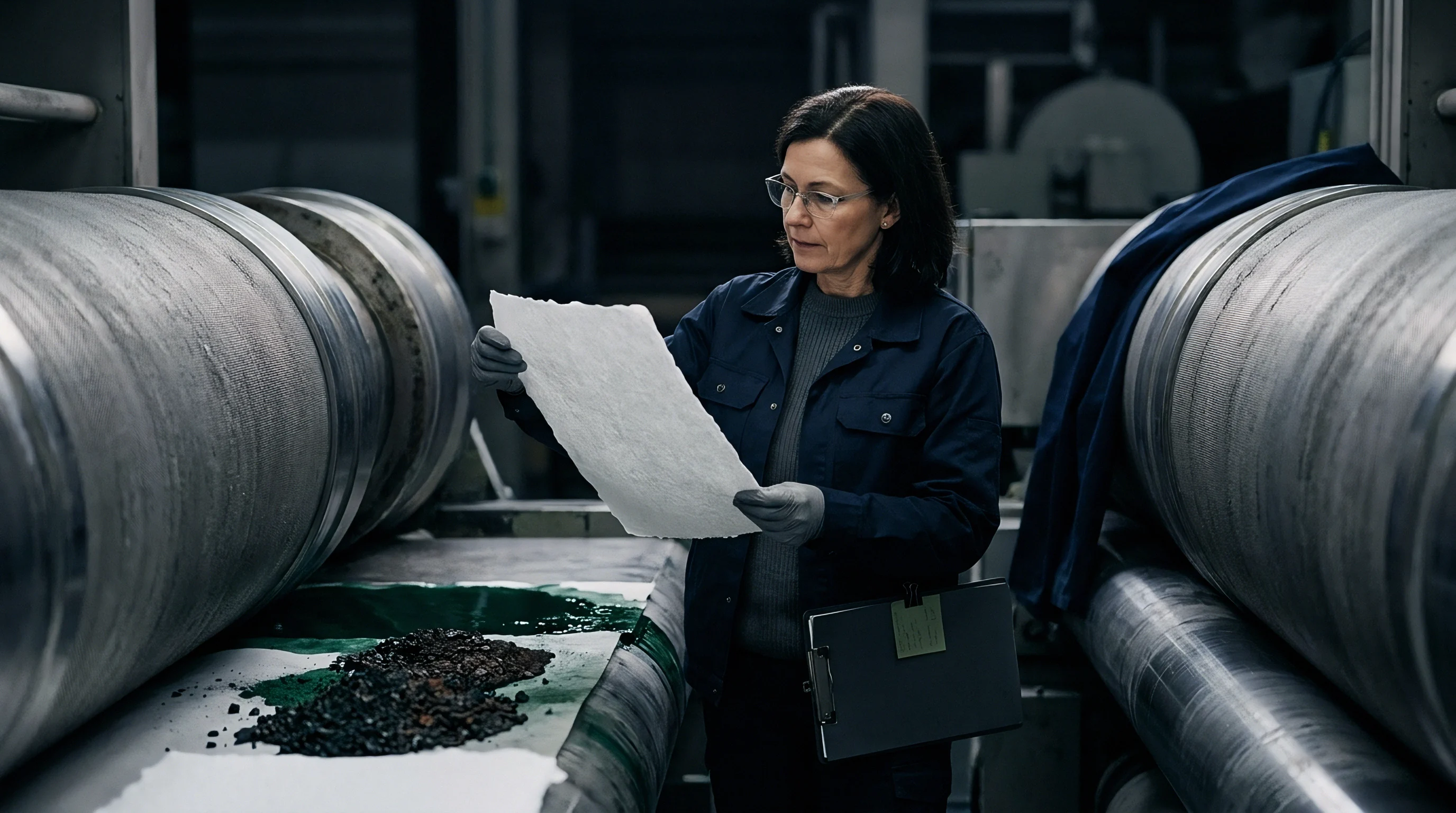
Audit
Verification bodies evaluate laboratory test reports against national producer responsibility registry guidelines to assign fee rates. Discrepancies between testing methods, sample conditioning parameters, and compliance declarations expose importers and brand owners to retroactive fee adjustments and administrative penalties. Rigorous audit trails trace the process from sample preparation through fractionation data down to the calculated eco-modulation tariff line item.
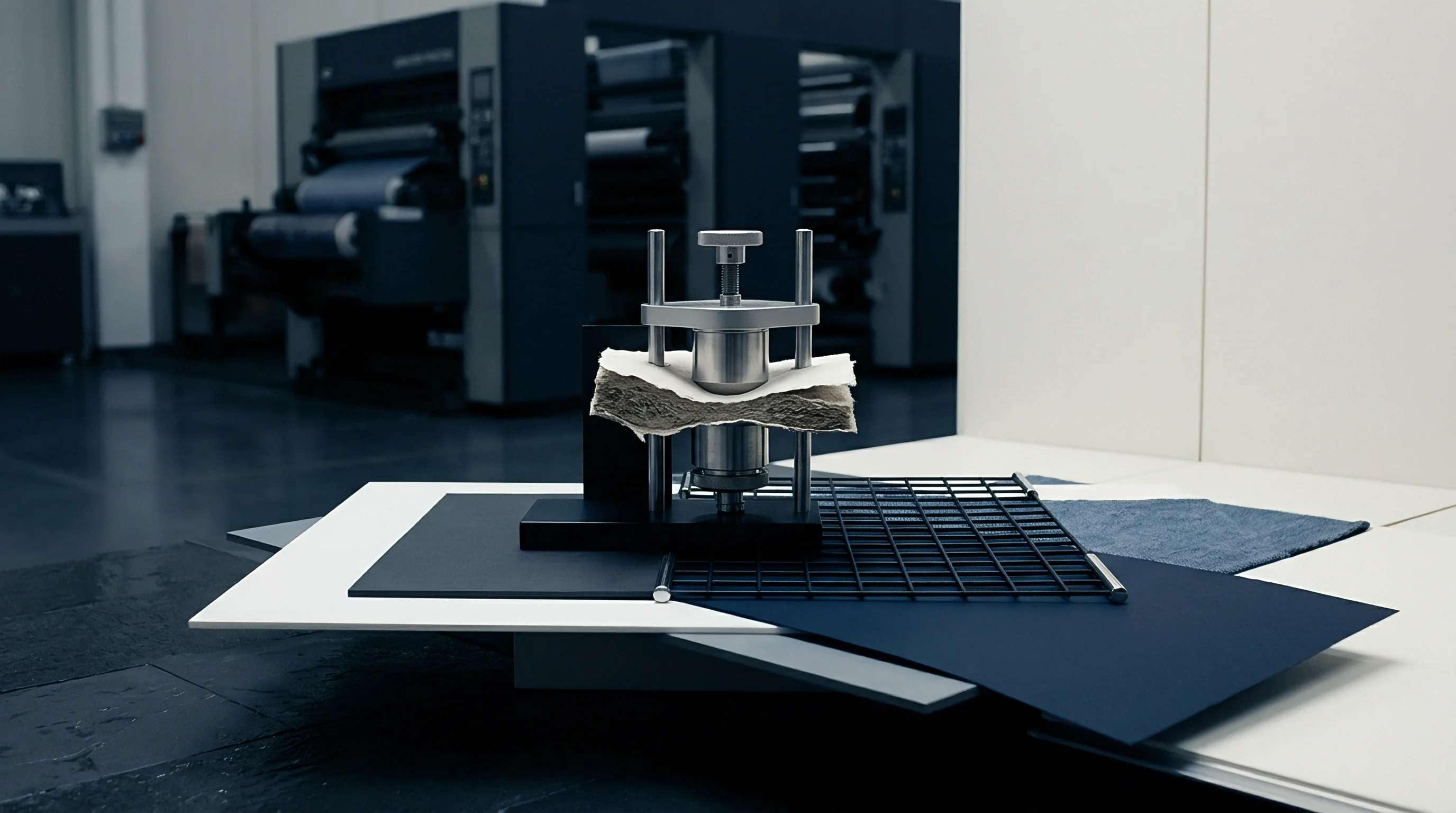
Converting Test Report Yields to EcoModulation Fee Tiers
Producer responsibility schemes categorize paperboard packaging by net organic fiber recovery. System operators across EU member states use multi-tiered fee structures to encourage design-for-recyclability. Packaging with high net fiber yield qualifies for baseline or discounted Extended Producer Responsibility (EPR) rates, whereas low-yield designs trigger substantial surcharges.
Producer responsibility organizations apply maximum fee surcharges to packaging designs failing minimum fiber yield thresholds.
Threshold cutoffs vary by jurisdiction, complicating cross-border packaging specifications. Common guidelines set 85 percent net organic fiber yield as the baseline qualification mark for standard fiber packaging. Packaging yielding between 75 percent and 84.9 percent incurs a moderate eco-modulation surcharge, while materials yielding under 75 percent organic fiber face severe malus fees or exclusion from the paper recycling stream, forcing re-categorization into plastic or mixed waste fee schedules.

Worked Calculation of Fee Adjustments from Yield Variances
Consider a five-hundred-tonne annual production run of poly-coated solid bleached board declared at eighty-eight percent fiber content. The packaging features a 280 g/m² virgin fiber baseboard laminated with a 24 g/m² low-density polyethylene (LDPE) coating layer, intended for European chilled food packaging.
Compliance evaluation requires subjecting production samples to standardized laboratory disintegrator testing under Cepi Version 2 parameters. The initial declaration assumed a theoretical yield of 88.0 percent based strictly on component mass ratios (280 g organic fiber out of 304 g total weight). However, laboratory analysis using a 0.15 millimeter Somerville screen plate reveals incomplete barrier delamination, with long virgin fibers remaining attached to the LDPE reject film.
Gravimetric analysis yields the following raw measurement figures:
- Initial dry sample mass: 100.00 grams.
- Total oven-dry coarse rejects retained on 0.15 mm slot: 16.20 grams.
- Oven-dry accepted fiber pulp mass: 80.50 grams.
- Dissolved organic solids and unrecovered fine suspended solids: 3.30 grams.
- Ash content of initial sample (ISO 1762 at 525°C): 2.10 grams.
- Ash content of accepted pulp fraction: 0.40 grams.
Calculating raw uncorrected yield produces 80.50 percent (80.50 g accepted pulp divided by 100.00 g initial mass). Applying inorganic ash corrections isolates net organic fiber mass: net initial organic mass equals 100.00 g minus 2.10 g ash (97.90 grams), while net accepted organic fiber mass equals 80.50 g minus 0.40 g ash (80.10 grams). Dividing 80.10 g net organic accepted mass by 97.90 g net initial organic mass gives an ash-corrected net fiber recovery rate of 81.82 percent.
The operational financial impact of this method variance shifts the packaging lot into a higher EPR fee bracket under standard national eco-modulation rules:
- Tier 1 qualification threshold requires minimum 85.0 percent net fiber yield; standard base EPR fee equals 150 Euros per tonne.
- Tier 2 eco-modulation surcharge bracket applies to yields between 75.0 and 84.9 percent; surcharge adds 120 Euros per tonne (total fee equals 270 Euros per tonne).
- Tier 3 malus penalty bracket applies to yields below 75.0 percent; malus adds 350 Euros per tonne (total fee equals 500 Euros per tonne).
Under the initial unverified self-declaration of 88.0 percent yield, the annual EPR fee for the 500-tonne volume equals 500 tonnes multiplied by 150 Euros, totaling 75,000 Euros. Based on the audited yield of 81.82 percent, the packaging falls into the Tier 2 surcharge bracket, raising the fee to 500 tonnes multiplied by 270 Euros, or 135,000 Euros. Laboratory verification uncovers a net financial liability difference of 60,000 Euros on a single packaging line item.
- Methodology scope verification confirms whether the lab standard accounts for inorganic filler content during yield math.
- Screen slot standardization ensures test reports specify zero point one five millimeter plate geometry for cross-border comparisons.
- Accreditation validity check verifies ISO 17025 testing scope covering specific recyclability pulping methods.
- Sample conditioning alignment cross-references lab relative humidity settings against ISO 187 atmospheric standards.
To manage these exposure risks, standard purchasing specifications frequently incorporate clause 4.2 of the Cepi Recyclability Guidelines, binding suppliers to reimburse eco-modulation fee surcharges arising from laboratory yield discrepancies exceeding two percentage points.


Tariff
National producer responsibility organizations use differentiated financial contributions to encourage recyclable packaging design. Aligning laboratory testing methods across European jurisdictions forms the technical foundation for upcoming EcoModulation fee harmonization under the EU Packaging and Packaging Waste Regulation (PPWR). Technical dossiers submitted to regulatory portals must directly link standardized laboratory yield outputs to published fee schedule line items.
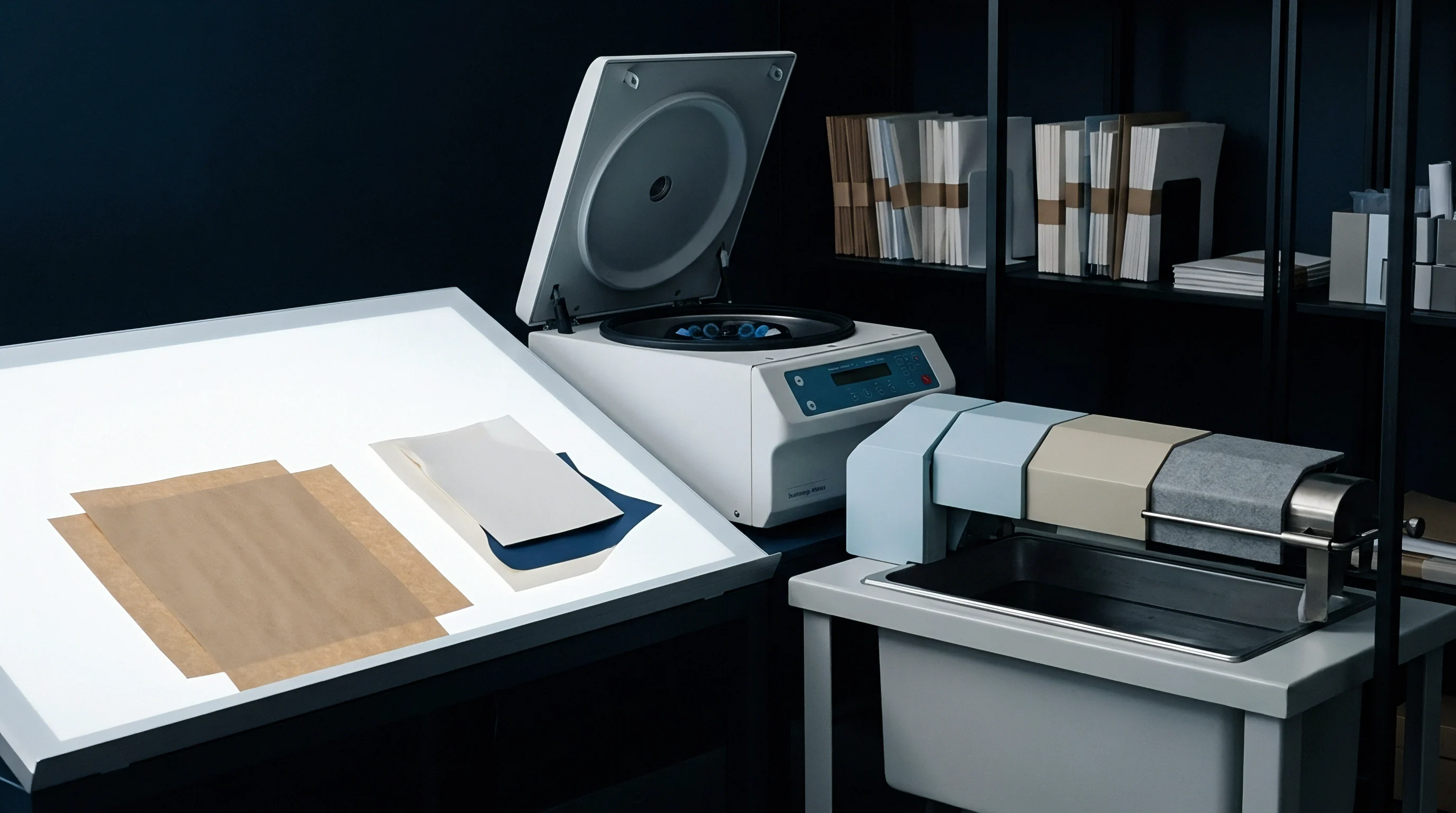
Harmonized Recyclability Grading and EcoModulation Surcharges
European packaging regulations mandate performance categories based on material recovery potential in standardized recycling streams. Annex II of the PPWR establishes recyclability grades from Class A to Class D, linking laboratory fiber recovery metrics directly to financial modulation percentages.
Class A packaging demonstrates a net recyclable yield equal to or exceeding 95 percent under standardized testing, qualifying for maximum fee discounts. Class B yields between 90 and 94.9 percent, receiving baseline EPR rates. Class C packaging produces yields between 80 and 89.9 percent, incurring moderate financial surcharges, while Class D yields between 70 and 79.9 percent and faces heavy malus penalties.
Packaging yielding below 70 percent organic fiber is classified as technically non-recyclable, triggering maximum eco-design penalties and potential commercial bans across member states.
| PPWR Performance Grade | Laboratory Net Yield Range (%) | CITEO Tariff (France) (€/Tonne) | CONAI Tariff (Italy) (€/Tonne) | Ecoembes Tariff (Spain) (€/Tonne) |
|---|---|---|---|---|
| Grade A (High Recyclability) | ≥ 95.0 | 120.00 | 15.00 | 140.00 |
| Grade B (Standard Recyclability) | 90.0 – 94.9 | 165.00 | 55.00 | 185.00 |
| Grade C (Moderate Recyclability) | 80.0 – 89.9 | 290.00 | 130.00 | 310.00 |
| Grade D (Poor Recyclability) | 70.0 – 79.9 | 480.00 | 280.00 | 520.00 |
| Non-Recyclable / Unclassified | < 70.0 | 850.00 | 540.00 | 890.00 |

Documented Evidence Requirements for Compliance Files
Importers and brand owners must maintain technical dossiers containing laboratory analysis certificates for customs inspections. Producer responsibility audits require verifiable evidence that laboratory yield calculations accurately reflect the packaging construction sold on the market, as mismatches between tested swatches and commercial production runs invalidate declared fee rates.
A compliant technical audit dossier requires three mandatory elements: an accredited ISO/IEC 17025 test report specifying disintegration energy, pulping consistency, screening slot width, and ash content corrections; a complete bill of materials declaring dry mass percentages for virgin fiber, recycled fiber, mineral coatings, plastic films, and barrier resins; and a trace certificate linking test report sample reference numbers directly to commercial production batch codes and purchase invoices. Technical committees continue to debate whether future EU-wide packaging regulations will mandate a single standardized disintegrator slot width or allow national producer responsibility registers to maintain regional testing preferences.