Paperboard Repulpability Assessment under Standard Laboratory Disintegration Conditions
Standard laboratory disintegration assesses paperboard repulpability by measuring defibering rates, fiber yield, and screen reject fractions under fixed shear.
Slurry
A wet disintegration trial begins with dry paperboard specimens weighed to exactly thirty grams bone-dry mass after moisture equilibrating in an ISO 187 conditioning room at twenty-three degrees Celsius and fifty percent relative humidity. Standard laboratory protocols evaluate repulpability by subjecting these specimens to calibrated hydraulic shear within a baffled cylindrical vessel. Whether a packaging grade yields usable pulp or generates excessive waste during mill recovery depends on how cleanly its cellulosic fibers separate.
Disintegration efficiency is measured through pulp suspension uniformity, un-defibered flake counts, and fiber length preservation over set agitation cycles.
Disintegration Rotor Mechanics and Shear Force
Benchtop hydropulping equipment reproduces full-scale recycling pulpers through calibrated hydraulic shear. Standard disintegrators specified under ISO 5263-1 and TAPPI T 205 feature a two-bladed propeller driven by an electric motor operating at three thousand revolutions per minute. The disintegrator container carries four helical internal baffles that prevent circular vortexing, forcing the pulp suspension into high-energy turbulence across the rotor face.
Blade geometry, container dimensions, and rotor clearance relative to the vessel base are strictly fixed to maintain test comparability across laboratories.
Mechanical shear breaks inter-fiber hydrogen bonds without severing individual wood tracheids. While high-consistency pulping at twelve to fifteen percent solids relies on fiber-to-fiber friction to tear sheets apart, low-consistency bench disintegrators run at two and a half percent consistency, relying instead on fluid velocity gradients. When paperboard coatings or wet-strength resins resist wetting, hydraulic shear fails to break the matrix, leaving un-disintegrated fragments as dense flakes that cannot pass downstream screening equipment.
Standard laboratory disintegration of wet-strength board yields double the mass of coarse flakes when water temperature drops from forty degrees to twenty degrees Celsius during a thirty thousand revolution cycle.
Standard Laboratory Bench Parameters
Published protocols fix water temperature, rotor speed, and pulp consistency to ensure reproducible defibering. Cepi Recyclability Laboratory Test Method Version 2 mandates a disintegration temperature of forty degrees Celsius to match commercial mill pulpers, whereas historical TAPPI standards used ambient water at twenty degrees Celsius. Higher slurry temperatures soften synthetic binders, lower fluid viscosity, and speed water penetration through the cellulosic matrix.
Temperature controls hold vessel conditions within a two-degree margin throughout the run.
- Cut conditioned paperboard samples into fifteen millimeter by fifteen millimeter square specimens to prevent rotor jamming during initial charge.
- Determine sample dry mass by oven drying a parallel specimen at one hundred five degrees Celsius until constant weight arrives.
- Soak sample squares in two liters of deionized water inside the disintegrator vessel for ten minutes before engaging the rotor drive.
- Operate the disintegrator propeller at three thousand revolutions per minute for thirty thousand total revolutions monitored by a digital counter.
- Transfer the pulped suspension quantitatively into a secondary holding vessel using deionized rinse water to ensure complete sample recovery.
Variations in water hardness, pH, or soak time shift the threshold between defibered accepts and coarse rejects. Using distilled or deionized water prevents multivalent cations such as calcium and magnesium from cross-linking polymer coatings or altering wet-strength resin solubility. Slurry pH remains unbuffered between six point five and seven point five unless evaluating specific chemical pulping additives.
Reports lacking exact temperature or rotation counts fail compliance audits, leaving buyers unable to substantiate recyclability claims before regulatory authorities.
| Protocol Reference | Slurry Consistency (%) | Water Temperature (°C) | Total Revolutions |
|---|---|---|---|
| Cepi Recyclability Test Method V2 | 2.5 | 40 | 30,000 |
| PTS-RH 021/97 Method 2 | 2.5 | 50 | 50,000 |
| ATICELCA 501/19 Standard | 1.5 | 20 | 30,000 |
| TAPPI T 205 sp-12 | 1.2 | 20 | 50,000 |
| Testing parameters compiled from accredited laboratory standard procedures; consistency calculated on bone-dry fiber mass per volume of water. | |||
Running disintegration trials at non-standard rotor speeds distorts yield calculations, leaving buyers vulnerable to unexpected mill rejections and freight surcharges when commercial pulpers fail to break down the board.
Screen
Fractionation separates fully defibered material from coarse fragments and non-paper contaminants. After hydropulping, the pulp slurry flows over aperture barriers designed to retain coarse flakes while allowing single cellulosic fibers to pass through. Laboratory fractionators mirror industrial cleaning circuits, generating mass balance data on usable fiber recovery that underpins paperboard recyclability certifications globally.
Somerville Apparatus and Slot Geometry
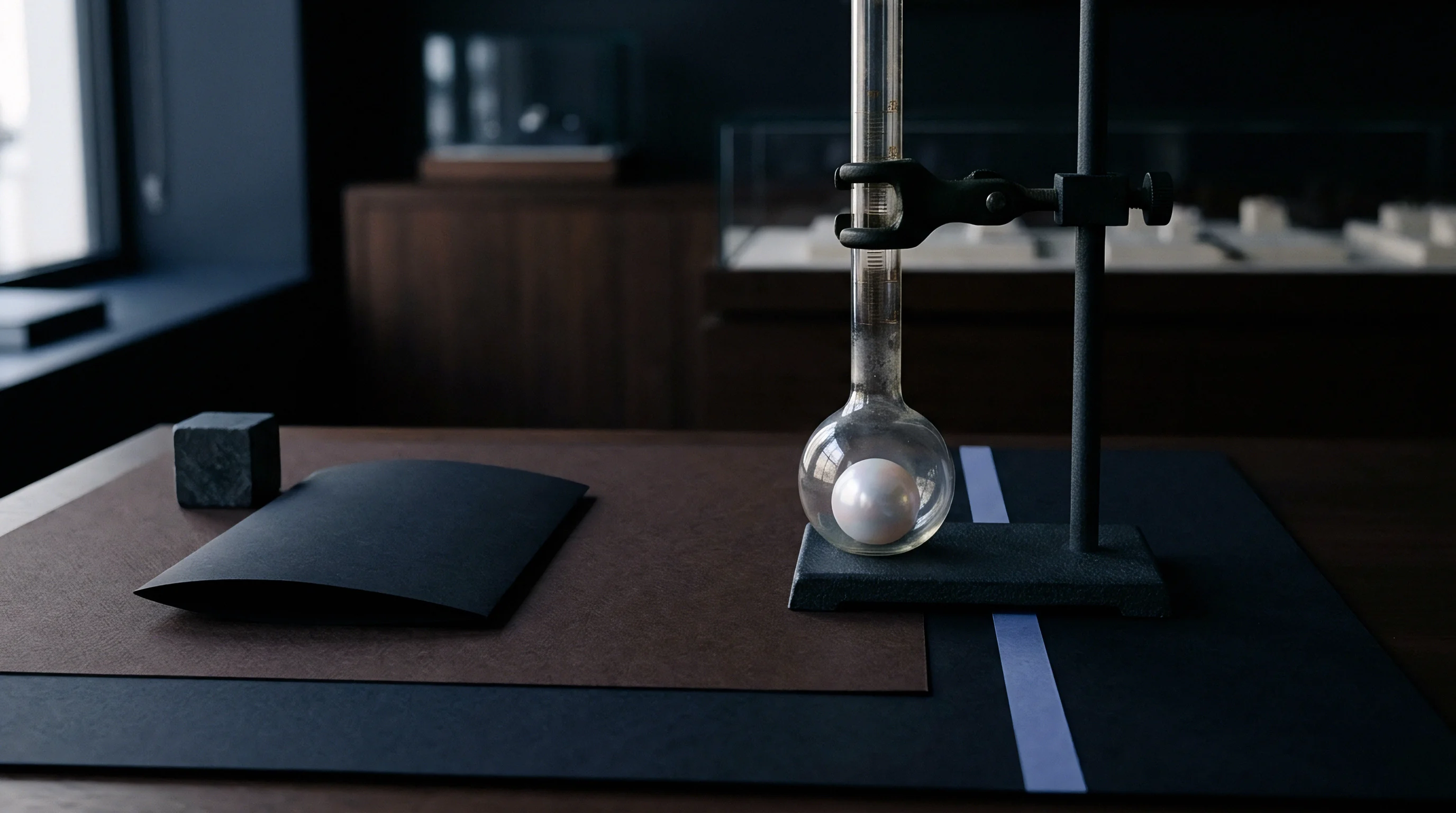
A brass plate perforated with precise one-hundred-and-fifty-micrometer apertures serves as the primary benchmark for accept separation. The Somerville fractionator holds a horizontal screen plate subjected to continuous water spray and diaphragm oscillation at seven hundred cycles per minute. Water jet pressure keeps fluid moving across the slotted plate, preventing fiber mat formation that would blind apertures and skew results, while the slots retain non-disintegrated coating flakes and coarse rejects that would clog commercial equipment.
Slot width precision directly governs separation resolution. A variation of just ten micrometers alters total coarse reject retention by up to fifteen percent on heavy barrier board grades, which is why engineering standards enforce tolerances of plus or minus five micrometers across screen slots. Alternative equipment, such as Haindl fractionators or wire-cloth sieve assemblies, relies on different hydrodynamic conditions and aperture shapes, but comparative tests show Somerville slotted plates offer better reproducibility for rigid board flakes than round-hole sieves.
A board sample that leaves sticky elastomeric flakes on the fractionator plate will blind commercial mill cleaning systems regardless of overall fiber yield percentages.
Reject Fractionation and Mass Calculations
Standardized recycling testing methods define total coarse residue exceeding two percent of initial oven-dry mass as an operational failure. After fractionation completes, testing technicians collect all material retained on the screen plate, transfer the fraction to an evaporating dish, and dry the sample at one hundred five degrees Celsius to constant mass. Gravimetric analysis compares the dried reject weight against total dry input weight to calculate the percentage coarse reject fraction, taking into account how water temperature influences fiber swell velocity.
- Coarse Flake Reject consists of un-defibered paperboard fragments that failed to break apart during rotor agitation, signaling incomplete hydropulping breakdown.
- Polymer Film Reject consists of continuous synthetic barrier films or plastic laminates peeled intact from board surfaces during mechanical agitation.
- Sticky Contaminant Reject comprises tacky adhesive particles, wax fragments, or hot-melt residues that adhere to screen hardware and resist water washing.
- Fine Particle Accept encompasses individual fibers and micro-fillers that pass through the one-hundred-and-fifty-micrometer slots into the usable pulp recovery stream.
Screening analysis also evaluates whether barrier coatings shatter into micro-particles under shear. Films that break down into microscopic flakes pass through screen slots directly into the accept stream, where they contaminate finished sheets, lower paper strength, cause surface blemishes, and foul papermaking machinery. Comprehensive reports therefore record both the retained reject mass and visual contamination levels in the accept fraction.
| Fractionator Type | Aperture Size and Shape | Primary Separated Material | Standard Pass Threshold (% Mass) |
|---|---|---|---|
| Somerville Apparatus | 0.15 mm Slotted Plate | Coarse Flakes and Plastic Film | < 1.5 Reject Fraction |
| Haindl Fractionator | 0.15 mm Slotted Plate | Undefibered Fiber Bundles | < 2.0 Reject Fraction |
| Standard Sieve Bend | 0.10 mm Slotted Screen | Fine Synthetics and Shives | < 1.0 Reject Fraction |
| Wire Cloth Frame | 297 µm (50 Mesh) Square | Gross Packaging Debris | < 3.0 Reject Fraction |
Clause 6.2 of the Cepi recyclability test method mandates gravimetric drying of retained residues at one hundred five degrees Celsius, eliminating moisture variances that once allowed wet coating flakes to pass compliance audits.

Fiber
Cellulosic structural elements undergo progressive mechanical hydration and swelling during wet disintegration. Fiber dimensions and surface chemistry dictate how readily hydrogen bonds break under hydraulic shear: long-tracheid virgin unbleached softwoods withstand agitation well, while short hardwood fibers and recycled secondary furnishes hydrate quite differently. Assessing repulpability requires tracking how energy inputs alter fiber physical properties alongside defibering rates.
What Mechanical Energy Thresholds Trigger Fiber Fragmentation?
Excessive rotational velocity in the pulping chamber cuts cell walls long before synthetic barrier coatings release their bond. Over-disintegrating board samples to force stubborn barrier materials through screen plates degrades cellulosic quality, generating fine fragments known as fines that reduce paper yield during commercial washing and drainage. Standard laboratory protocols place strict upper limits on total revolutions to prevent artificial defibering from masking poor repulpability.
Energy input balance is critical to test validity. Mechanical energy transferred to the suspension should break weak inter-fiber bonds while leaving primary cell walls intact. Wet-strength resins like polyamide-epichlorohydrin cross-link cellulose chains with covalent bonds that resist hydraulic separation, causing pulp drainage and freeness to drop sharply when over-processed.
Breaking these resin bridges requires chemical additives or thermal energy, which standard mechanical disintegration protocols prohibit in order to evaluate baseline repulpability.
EN 13430 compliance requires documented proof that repulping operations preserve pulp drainage properties within twenty percent of virgin furnish standards.
Drainage Behavior and Freeness Loss
Schopper-Riegler values measure how quickly water drains through a formed pulp mat. Laboratories evaluate accept fractions using ISO 5267-1 Schopper-Riegler testing or TAPPI T 227 Canadian Standard Freeness apparatus. A sharp rise in Schopper-Riegler values signals severe fiber fibrillation, cutting, or fine accumulation during disintegration, and excessive freeness loss severely slows paper machine formation speeds during commercial recycling runs.
Secondary fiber recovery depends on maintaining adequate drainage. High filler loadings, dispersion binder fragments, or damaged recycled fibers slow drainage dramatically. Testing facilities compare the baseline freeness of un-pulped furnish against accept pulp freeness to determine whether repulping compromises fiber reusability in high-speed papermaking.
Hardwood fibers clear laboratory fractionator plates more readily than long softwood tracheids, while unbleached kraft retains structural integrity far longer than secondary recycled furnishes under identical hydropulping shear.
Matrix
Barrier coatings and polymer films form continuous surface layers that shield cellulosic structures from water penetration during pulping. Converters apply extrusion polyethylene, aqueous dispersion coatings, aluminum foil, and functional waxes to impart oil, moisture, and vapor resistance. These barrier matrices complicate laboratory disintegration, making repulpability assessment dependent on how effectively water penetrates beneath or through synthetic coatings to hydrate internal fibers.
Extrusion Polyethylene and Laminate Behavior
Low-density synthetic polymers bonded to board surfaces do not break down into soluble components, creating large sheet-like remnants during wet pulping. Extrusion-coated polyethylene layers remain largely inert under neutral water conditions at forty degrees Celsius and resist hydraulic shear. When shear tears the paperboard substrate, polyethylene separates as continuous films that entrain un-defibered pulp along their edges, blinding screen apertures or carrying valuable fiber into coarse reject streams.
Aluminum foil laminates present dual challenges during recovery testing. Metallic foils resist mechanical tearing and do not dissolve, requiring complete delamination from the paperboard substrate. Foil fragments retained on fractionation screens carry significant fiber mass if the adhesive bond survives hydropulping, so test protocols evaluate water-solubility to confirm that metallic layers separate cleanly without carrying away usable fiber.
Dispersion coated board achieves high repulpability yields only when particle agglomeration prevents microscopic polymer fragments from passing into paper machine white water circuits.
Dispersion Coatings and Fragment Agglomeration
Aqueous polymer emulsions break down into micro-particles under hydraulic agitation, passing through separation slots into the accept stream. Acrylic and styrenic dispersion coatings provide moisture barriers while offering repulpability advantages over solid polyethylene films. However, if dispersion coatings shatter into microscopic hydrophobic particles under shear, they pass through fractionator screens and accumulate in process water circuits, forming tacky deposits known as stickies.
- Polymer Delamination Resistance defines the mechanical bond strength between barrier films and paperboard layers during initial wet soaking cycles.
- Film Fragmentation Geometry classifies whether synthetic coatings break into large removable sheets or troublesome microscopic particles during pulping.
- Adhesive Water Sensitivity evaluates whether cold-set and hot-melt laminating glues dissolve or remain tacky during neutral water agitation.
- Fiber Carryover Rate calculates the dry mass of usable wood fibers trapped on retained barrier reject films after screen fractionation.
- Stickie Formation Potential measures the thermal and pressure sensitivity of dispersed polymer particles captured in the accept pulp fraction.
Matrix evaluation extends to repulpability additives and functional sizing agents. Fluorochemical-free oil barriers and bio-based polymers such as polylactic acid exhibit distinct disintegration kinetics; polylactic acid coatings remain brittle, shattering into sharp flakes that resist hydration. Compliance files must detail exact coating formulations, coat weights in grams per square meter, and application methods alongside disintegration test results.
High-shear industrial pulpers break down dispersion films more thoroughly than laboratory bench units, though unseparated micro-plastics can still cause severe sheet defects in downstream papermaking.

Tariff
Extended producer responsibility fees across European jurisdictions penalize packaging grades that fall short of standardized repulpability thresholds. National eco-modulation guidelines tie certified lab outcomes directly to mandatory contributions paid by importers and brand owners. Structures passing disintegration standards qualify for reduced fees, while uncertified or low-yielding barrier boards face steep surcharges and potential distribution restrictions.
Regulatory Classification Frameworks
Harmonized European rules establish recyclability performance classes from Grade A to Grade C based on lab-proven yield percentages. The Packaging and Packaging Waste Regulation mandates that all market packaging achieve verified recyclability through standardized testing protocols, with Grade A requiring fiber yield equal to or exceeding ninety-five percent and coarse rejects at or below one point five percent. Yield calculations dictate this compliance status, determining whether a material qualifies for preferential rates or severe surcharges.
Compliance dossiers require accredited laboratory test reports matching the exact commercial grammages and barrier coat weights placed on the market. Documentation must record disintegration conditions, screen rejection percentages, Schopper-Riegler freeness impact, and visual accept cleanliness scores. Audits scrutinize non-accredited reports, and declarations resting on unverified claims trigger compliance rejections at border inspection points.
| Performance Class | Laboratory Fiber Yield Threshold (%) | Coarse Reject Maximum Limit (%) | EPR Fee Modulation Differential (€/Tonne) |
|---|---|---|---|
| Grade A (High Recyclability) | ≥ 95.0 | ≤ 1.5 | Base Rate (-20% Discount) |
| Grade B (Standard Recyclability) | ≥ 90.0 | ≤ 3.0 | Base Rate (+0% Standard) |
| Grade C (Sufficient Recyclability) | ≥ 80.0 | ≤ 5.0 | Base Rate (+30% Penalty) |
| Non-Recyclable (Restricted) | < 80.0 | > 5.0 | Base Rate (+100% Maximum Surcharge) |
Commercial Financial Surcharges
National eco-organizations impose surcharges up to five hundred Euros per tonne when dossiers show coarse reject rates above six percent. Consider a packaging importer contracting forty tonnes of polyethylene-extruded solid bleached sulfate board for frozen food packaging, with a standard EPR base rate of one hundred fifty Euros per tonne.
If laboratory testing demonstrates a ninety-six percent fiber yield and a one percent coarse reject fraction, the board achieves Grade A classification. The applicable EPR rate reflects a twenty percent discount to one hundred twenty Euros per tonne, yielding a total liability of four thousand eight hundred Euros across forty tonnes.
If that same forty-tonne shipment uses a heavy multi-layer polymer laminate yielding only seventy-eight percent usable fiber during lab pulping, it fails Grade C requirements. Falling into the non-recyclable category triggers a one hundred percent penalty surcharge, raising the fee to three hundred Euros per tonne. Total EPR exposure rises to twelve thousand Euros on the order, meaning unverified repulpability adds seven thousand two hundred Euros in direct regulatory costs.
Whether regulatory enforcement authorities will accept laboratory disintegration reports from non-accredited converter facilities when auditing PPWR Grade A compliance remains an unsettled legal question across member states.