Standard Bench Viscometry Methods for Aqueous Paper Coating Emulsions
Bench viscometry of paper coating emulsions requires standardized temperature control, verified spindle geometry, and multi-shear profiling to ensure runnability.
Spindle
A spindle submerged in an aqueous pigment suspension encounters drag proportional to its surface area, shear strain, and fluid resistance. In low-shear laboratory testing, this rotational geometry converts motor torque into apparent dynamic viscosity readings. Standard instruments rely on internal springs calibrated to specific torque ranges: RV for medium viscosities between 100 and 2,000,000 mPa·s, HA for higher-torque uses, and HB for high-solids mineral slurries.
Selecting the proper rotating element keeps measurements focused on true fluid shear response rather than noise from wall slip, mechanical turbulence, or container boundaries.

Rotational Torque and Fluid Resistance Mechanics
Accurate measurements depend on matching the submerged element’s drag area to the fluid viscosity range so spring deflection remains between 10 and 90 percent of full scale. Running below 10 percent magnifies spring hysteresis errors, rendering data unsuitable for quality control records. Working above 90 percent risks overloading the internal pivot point and beryllium copper spring shaft assembly.
TAPPI T 648 defines low-shear viscosity testing for paper coating formulations at 100 revolutions per minute using standard RV disk geometry. At this speed, the shear rate applied across the fluid volume is non-uniform, peaking at the disk edge and dropping exponentially toward the container wall. Mechanical resistance in high-solids paper coating formulations containing kaolin clay, ground calcium carbonate, and synthetic latex binders departs from classic Newtonian behavior; apparent viscosity drops as shear rate rises, demonstrating pseudoplastic shear-thinning under standard conditions.
When an RV disk turns in a beaker filled with 62 percent solids coating slurry, the local shear rate near the disk edge reaches roughly 28 reciprocal seconds at 100 revolutions per minute. While this is far below the 1,000,000 reciprocal seconds found beneath a high-speed metering blade, it offers a necessary baseline for fluid behavior during pumping, screen filtration, and pan recirculation loops. Spring torque calibration builds on the mathematical link between torque and shear stress, where absolute shear stress depends directly on the radius, thickness, and rotational speed of the immersed element.
Standard testing calls for cylindrical containers with an internal diameter of 83 millimeters, corresponding to a standard 600-milliliter low-form glass beaker. Changing container dimensions alters the effective distance to the outer wall, shifting apparent viscosity readings by altering fluid shear conditions at the boundary.

Disk versus Cylinder Geometries in Aqueous Coating Slurries
Disk configurations, such as standard number 3 or number 4 RV elements, consist of a thin horizontal flange mounted on a central shaft. Though effective for uniform Newtonian oils, these horizontal disk surfaces invite measurement error in structured paper coating emulsions. Pigment particles settle onto the upper flat ledge during testing, altering instrument mass and surface drag.
Furthermore, high-shear mixing often incorporates micro-air bubbles that collect beneath the lower disk face, creating air pockets that artificially suppress torque readings. Cylindrical geometries present a smooth vertical profile that minimizes particle settling and bubble entrapment. Shear fields surrounding coaxial cylinders ~ like the DIN 53019 or ISO 3219 standard cup-and-bob setups ~ are far better defined mathematically than open-beaker disk arrangements.
In a closed coaxial gap where the ratio of outer to inner radius stays under 1.10, the shear rate across the fluid annulus varies by less than 5 percent. This geometric precision elevates rotational bench viscometers from relative index tools to instruments capable of quantifying absolute yield stress and true shear viscosity. Guard legs mounted to viscometer drive heads protect the spindle pin while establishing the fixed reference ground for shear calculations.
Removing the guard leg to fit tight container openings alters the distribution of torque lines through the fluid, reducing recorded viscosity values by 8 to 12 percent depending on total pigment solids loading. Testing aqueous coating colors requires maintaining identical physical configurations across all testing stations to eliminate artificial batch-to-batch variation.

Shear Rate Calculations and Multi-Speed Rheological Profiling
Single-speed rotational testing provides only a static viscosity value, concealing how fluid structures respond to changing process stresses. Evaluating samples across 10, 20, 50, and 100 revolutions per minute maps structural breakdown and yield behavior in pigment-binder matrices. Calculating exact shear rates involves converting rotational speed into angular velocity and applying specific geometry-dependent shear factors.
| Spindle Number | Geometry Type | Effective Radius (mm) | Shear Rate Factor (s⁻¹/rpm) | Viscosity Range at 100 rpm (mPa·s) | Torque Error at 10% Scale (mPa·s) |
|---|---|---|---|---|---|
| RV-1 | Cylindrical solid | 28.10 | 0.209 | 10 to 100 | ±1.0 |
| RV-2 | Cylindrical solid | 18.60 | 0.209 | 100 to 400 | ±4.0 |
| RV-3 | Disk flange | 12.60 | 0.209 | 400 to 1,000 | ±10.0 |
| RV-4 | Disk flange | 9.40 | 0.209 | 1,000 to 2,000 | ±20.0 |
| RV-5 | Disk flange | 7.90 | 0.209 | 2,000 to 4,000 | ±40.0 |
| RV-6 | Disk flange | 6.30 | 0.209 | 4000 to 10,000 | ±100.0 |
| Data measured in 600 mL low-form beaker at 23.0 °C ± 0.1 °C following TAPPI T 648 specifications with guard leg installed. | |||||
Multi-point measurements reveal thixotropy ~ the time-dependent structural recovery of a fluid following shear. Dividing low-speed apparent viscosity at 10 revolutions per minute by the 100-rpm value gives the thixotropic index. A high index points to a robust internal pigment network, which hinders post-application sagging but raises pumping resistance in mill delivery lines.
Single-speed checks across multiple production lines easily obscure divergent high-shear performance. Two formulations presenting identical 100-rpm Brookfield values of 1,200 mPa·s can exhibit radically divergent viscosities when exposed to 50,000 reciprocal seconds under a coater metering blade. Multi-speed profiling catches these structural discrepancies before coating enters mill supply tanks.
Physical setup errors during low-shear testing introduce distinct failure mechanisms:
- Wall slip artifacts occur when a smooth spindle surface loses mechanical adhesion with high-solids emulsions, forming a localized water film that reduces torque readings by up to 25 percent.
- Sample thermal stratification happens when unjacketed vessels absorb room temperature changes, creating vertical density gradients that alter torque resistance over extended test cycles.
- Container boundary proximity effects emerge when operators substitute narrower sample vessels, forcing shear boundaries against beaker walls and artificially inflating dynamic viscosity values.
- Secondary flow vortices form at rotational speeds above 100 revolutions per minute in low-viscosity latex binders, introducing turbulent energy losses that look like false shear-thickening.
An RV-4 immersion disk operating at 100 revolutions per minute in a 65 percent solids kaolin clay slurry generates an effective shear rate of 20.9 reciprocal seconds, yielding a true dynamic viscosity reading of 1,450 mPa·s at 23 °C.
Interpreting rotational data without checking scale deflection limits routinely leads to misformulated batches. Selecting a spindle that runs below 10 percent spring capacity masks subtle binder flocculation, resulting in unexpected pigment phase separation during high-speed pumping and immediate runnability loss across the blade gap.


Dilatancy
Shifts from shear-thinning to shear-thickening flow behavior jeopardize paper coater runnability.
High-solids aqueous formulations containing mineral pigments and latex binders undergo complex non-Newtonian structural shifts under sudden hydrodynamic stress. Once shear rates cross a critical threshold, tightly packed mineral particles expand in total volume, drawing interstitial water into micro-voids and raising internal friction across solid surfaces. Bench instruments must identify this shear-thickening threshold before raw materials reach mill coater supply loops.

Non-Newtonian Flow Profiles under High Hydrodynamic Stress
Solids concentration in paper coating emulsions frequently exceeds 65 percent by weight to minimize drying energy on the paper machine. At these high volume fractions, pigment particles sit in close proximity, separated only by thin hydration layers and adsorbed polymeric dispersants. Low shear rates allow particles to slide past one another with minimal resistance, producing pseudoplastic flow where viscosity drops as deformation speed accelerates.
As deformation accelerates toward critical thresholds, hydrodynamic forces overcome electrostatic repulsion maintained by sodium polyacrylate dispersants. Pigment particles crowd into dense structural clusters known as hydroclusters. These physical agglomerates block flow channels within the liquid carrier, causing a sharp jump in apparent dynamic viscosity.
In severe cases, the emulsion behaves like a semi-solid mass that resists mechanical displacement entirely. Standard low-shear rotational viscometers regularly miss dilatant behavior that occurs above 1,000 reciprocal seconds. A formulation showing smooth flow characteristics at 100 revolutions per minute can turn extremely dilatant beneath a coater blade operating at 1,500 meters per minute.
Uncovering this latent instability requires high-shear capillary or narrow-gap cone-and-plate bench instruments capable of reaching shear levels representative of coater nib dynamics.
Low-Shear Bench Profiling versus Coater Nib Dynamics
Evaluating paper coating colors requires spanning shear rates across four orders of magnitude. Standard rotational bench units cover 1 to 100 reciprocal seconds ~ the domain of storage stability and low-pressure pumping. High-shear capillary units, such as the Hercules capillary viscometer or ACA high-shear slit viscometer, extend laboratory testing capability from 10,000 to over 1,000,000 reciprocal seconds.
| Instrument Architecture | Primary Standard Method | Shear Rate Range (s⁻¹) | Sample Volume (mL) | Target Process Correlation |
|---|---|---|---|---|
| Brookfield Rotational RVT | TAPPI T 648 / ISO 2555 | 0.1 to 21 | 500 | Storage settlement and filter pump pressure drop |
| Cone and Plate Geometry | ISO 3219 / DIN 53019 | 1 to 10,000 | 1.5 | Metering roll nip and screen passage dynamics |
| Hercules Capillary Unit | TAPPI T 569 / ISO 11443 | 10,000 to 100,000 | 25 | Pond roll turbulence and air knife boundary flow |
| ACA High-Shear Slit System | ASTM D7395 / TAPPI T 700 | 100,000 to 2,000,000 | 50 | High-speed blade coater nib shear and streak formation |
Capillary viscometry drives a precise volume of coating formulation through a calibrated stainless steel tube under nitrogen gas pressure up to 10 MPa. Flow velocity through the capillary orifice directly measures fluid flow resistance at extreme shear rates. Plotting flow rate against driving pressure generates high-shear flow curves that identify the precise pressure where shear-thickening begins.
Cone-and-plate viscometry utilizes a very shallow cone angle, typically 1 or 2 degrees, positioned above a temperature-controlled flat plate. This physical arrangement creates a uniform shear rate across the entire sample gap, allowing accurate rheological modeling of complex emulsions. Because sample volume stays below 2 milliliters, thermal equilibrium is reached rapidly, minimizing viscous heating artifacts during high-speed testing runs.
Contractual delivery bounds for paper coating starch solutions specify that dynamic viscosity measured via high-shear capillary at 100,000 reciprocal seconds shall not exceed 120 mPa·s at 40 °C, preventing coater blade bleeding during application.
Extrapolating single-point Brookfield readings to high-shear coater conditions assumes a constant power-law index that multi-phase mineral suspensions rarely maintain. Particle shape heavily dictates dilatant transitions. Platy kaolin clays become dilatant at lower solids fractions than spherical ground calcium carbonate particles due to mechanical interlocking during shear.
When evaluating high-solids formulations, blending 30 percent spherical ground calcium carbonate into a 100 percent fine clay system delays the onset of shear-thickening by 35,000 reciprocal seconds. This rheological shift permits increasing total coating solids without raising coater headbox delivery pressures. High-shear bench measurements quantify this interaction before full-scale mill trials occur, just as subtle shifts in latex binder particle size distribution alter high-shear dilatancy thresholds in fully formulated paper coatings.
Temperature
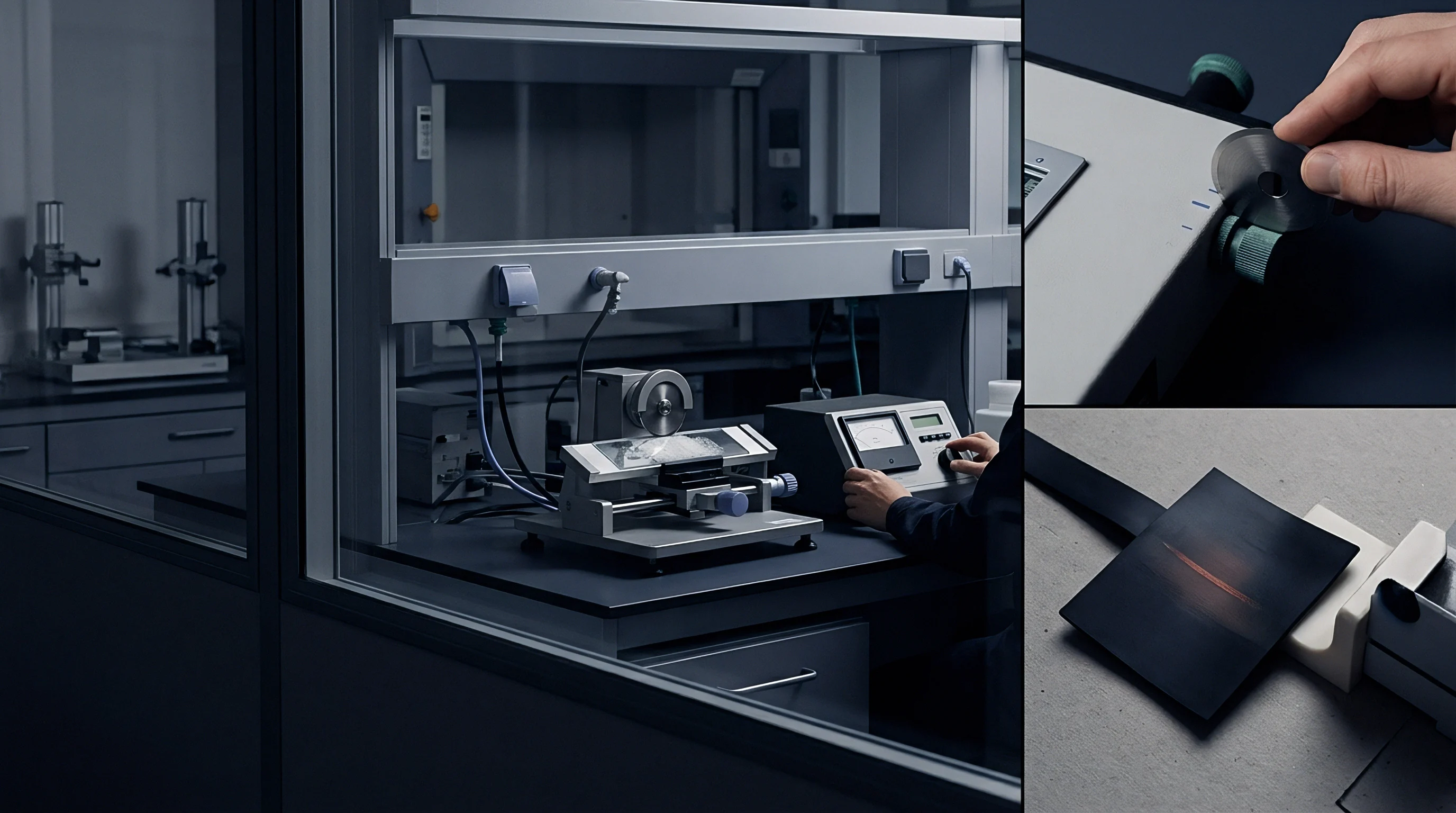
Thermal energy affects hydrogen bonding, hydration layer thickness, and the effective volume fraction of aqueous coating components. Viscosity decreases exponentially as temperature rises, following Arrhenius relationships that vary among synthetic latex polymers, solubilized starches, and mineral dispersants. Reliable bench viscometry requires tight thermal control of the sample container, as a 1 °C temperature shift alters viscosity readings by 2 to 5 percent in high-solids systems.

Thermal Sensitivity of Latex Binders and Starch Matrices
Carboxylated styrene-butadiene and styrene-acrylic latex emulsions undergo marked changes in particle swelling as bath temperature shifts. Alkylated alkali-swellable emulsions, used as rheology modifiers, show sharp viscosity drops when thermal energy disrupts their hydrophobic association networks. Solubilized starch binders demonstrate retrogradation upon cooling, where linear amylose chains realign into rigid gel structures that falsely inflate bench viscosity measurements.
ISO 187 demands maintaining test environments at 23 °C ± 1 °C and 50 percent ± 2 percent relative humidity. However, coating formulations delivered to coater supply pans operate at elevated temperatures between 35 °C and 50 °C to reduce energy demands in the drying tunnel and lower application viscosity. Measuring coating colors exclusively at room temperature creates a misalignment between laboratory quality control records and true mill operational conditions.
Water evaporation during bench testing poses a severe risk to measurement accuracy when handling warm coating colors. At 45 °C, open-beaker rotational viscometry loses water rapidly from the surface layer, creating a high-solids skin that wraps around the rotating spindle shaft. This dried skin artificially increases torque drag, generating false viscosity increases that mask thermal thinning behavior.
Double-walled circulating water bath jackets equipped with evaporation covers eliminate surface skinning during thermal sweeps.
Thermal Variance Effects on Bench Measurements
Maintaining uniform thermal control across sample volumes requires circulating liquid bath systems directly integrated into the viscometer measurement cell. Simple immersion of a beaker into a standing water bath permits thermal gradients to develop between the container walls and the sample core. Pigment-dense coatings exhibit poor thermal conductivity, requiring a minimum 15-minute equilibration soak time before initiating rotational testing.
| Emulsion Component | Solids Content (%) | Viscosity at 23 °C (mPa·s) | Viscosity at 45 °C (mPa·s) | Activation Energy Ea (kJ/mol) | Thermal Stability Class |
|---|---|---|---|---|---|
| Styrene-Butadiene Latex | 50.0 | 180 | 110 | 16.4 | Stable across 20-60 °C |
| Styrene-Acrylic Emulsion | 48.0 | 250 | 140 | 18.2 | Reversible thermal thinning |
| Enzyme-Converted Corn Starch | 28.0 | 1,200 | 420 | 34.1 | Gelation below 30 °C |
| Carboxymethyl Cellulose (CMC) | 8.0 | 2,400 | 1,150 | 23.8 | Gradual thermal degradation |
| HASE Rheology Modifier | 5.0 | 4,500 | 1,600 | 31.5 | Hydrophobic bond dissociation |
Quantifying thermal sensitivity involves determining the activation energy of viscous flow (Ea). Applying the Arrhenius equation models viscosity (η) as a function of absolute temperature (T in Kelvin), gas constant (R), and material constant (η0): η = η0 · expleft(fracEaR · Tright) Higher activation energy values indicate that a binder or thickener undergoes drastic viscosity shifts during minor process temperature swings. Hydrophobically modified alkali-swellable emulsions exhibit activation energies above 30 kJ/mol, demanding thermal control within ±0.2 °C during standard bench qualification testing.
A standardized bench temperature calibration sequence verifies thermal stability across all testing stations: 1. Connect the double-walled sample vessel to a calibrated circulating water bath capable of holding temperature stability to within ±0.1 °C.
2. Pour 500 milliliters of fresh coating color into the jacketed vessel, ensuring fluid level covers the spindle insertion mark completely.
3.
Lower the viscometer head and position the spindle coaxially within the vessel, placing an evaporation cover over the top opening.
4. Insert a calibrated PT100 digital temperature probe directly into the coating color 10 millimeters away from the rotating spindle path.
5. Record low-shear torque at 100 revolutions per minute only after the internal thermal sensor confirms target temperature stability for ten continuous minutes.
A 1 °C temperature drift in a high-solids starch-latex paper coating color shifts the measured low-shear dynamic viscosity by approximately 45 mPa·s at standard bench test conditions.
In mill laboratory practice, coating samples must reach thermal equilibrium inside a sealed, jacketed container before spindle rotation commences, ensuring consistent temperature distribution throughout the sample volume.


Calibration
Maintaining physical measurement accuracy across rotational bench viscometers requires scheduled verification using traceably certified Newtonian standard fluids. Over time, internal pivot points lose precision due to dust accumulation, bearing corrosion, and mechanical shock caused by improper spindle attachment.
Spring tension degrades under continuous high-torque testing, leading to systemic calibration shifts that yield invalid test certificates. Standardizing routine calibration protocols ensures alignment between chemical suppliers, paper mills, and converting plants.

Standard Fluid Verification and Yield Stress Determinations
Calibration procedures use certified silicone or refined mineral oil standards traceable to international reference bodies. Silicone oils exhibit Newtonian behavior, keeping viscosity constant across variable shear rates under controlled temperatures. Mineral oils offer superior resistance to surface tension variations but require strict temperature control due to higher thermal expansion coefficients.
Verifying instrument accuracy involves measuring two distinct viscosity standards that span the operating range of the target coating color. The recorded viscosity must fall within the combined error allowance of the instrument and the calibration standard fluid. Standard rotational viscometers guarantee accuracy within ±1.0 percent of full scale capacity, while certified standard oils carry a tolerance of ±1.0 percent of their labeled viscosity.
Yield stress represents the minimum force required to initiate flow in a structured fluid. Aqueous coating colors form three-dimensional networks held together by van der Waals forces, polymer entanglements, and electrostatic interactions. Accurately measuring yield stress prevents mill issues like pigment sedimentation in storage tanks and uneven coating distribution during slow-speed application.
Dynamic yield stress determinations utilize vane spindles consisting of four thin vertical blades positioned radially around a central pin. Unlike solid cylindrical spindles, vane geometries insert into structured emulsions without disturbing delicate internal network bonds. Rotating the vane at a low speed, such as 0.5 revolutions per minute, measures peak torque right before structural yield occurs.
Calculating yield stress (τy) from maximum recorded torque (Mmax) depends on vane diameter (D) and vane height (H): τy = frac2 · Mmaxπ · D2 · left(H + fracD3right) Establishing precise yield stress criteria allows mill operators to control coating thickness during low-speed air-knife coater operations and prevent pigment settling during overnight vessel storage.
Instrument Drift and Mechanical Compliance Checks
Routine inspection of viscometer drive assemblies catches mechanical errors before they compromise factory quality records. Spindle shafts must rotate without visible eccentric wobble. A bent spindle shaft introduces lateral oscillation that artificially inflates dynamic torque measurements by altering the fluid boundary zone.
Standardized quality compliance frameworks require maintaining structured evaluation steps for laboratory viscometry infrastructure: Spindle runout checks measure shaft straightness using a dial indicator gauge positioned along the lower shaft axis, rejecting any element exceeding 0.05 millimeters total deflection.
Pivot point sharp assessments verify pointer return to absolute zero when spring torque releases rapidly from a 50 percent scale deflection position.
Standard fluid validation records temperature-corrected readings across three rotational speeds, confirming measured viscosity sits within combined system error bounds.
Container dimension audits enforce compliance with standardized 600-milliliter low-form beaker geometries, prohibiting non-standard container substitutions across all testing shifts.
Per ISO 17025 laboratory accreditation rules, bench viscometers used for official coating batch release documentation shall undergo full physical calibration verification against certified reference standards every twelve months.
Skipping annual instrument calibration routines exposes paper mills to severe commercial disputes. Delivering a 20-tonne shipment of off-specification coating emulsion certified by a drifting viscometer leads directly to coater blade streaking, web breaks, rejected paper rolls, and financial claims for lost paper machine downtime.

Formulation
Chemical interactions among paper coating components dictate the final flow properties measured at the bench testing station.
Dispersed mineral pigments, synthetic latex emulsions, water-soluble polymers, and rheology modifiers form complex physical networks that respond dynamically to applied mechanical forces. Balancing these chemical ratios achieves target coat weight control, superior sheet smoothness, and defect-free runnability on high-speed coater installations.
Thickeners and Hydrophobically Modified Alkali-Swellable Emulsions
Water-soluble thickeners govern the water retention value and low-shear viscosity profile of aqueous paper coatings. Sodium carboxymethyl cellulose (CMC) builds viscosity through electrostatic repulsion and chain entanglement in the water phase. Higher molecular weight CMC grades increase low-shear viscosity efficiently, but excess addition can trigger depletion flocculation, causing pigment phase separation and elevated yield stress.
Hydrophobically modified alkali-swellable emulsions (HASE) feature a carboxylated polymer backbone grafted with hydrophobic alkyl side chains. At alkaline pH levels between 8.5 and 9.5, carboxyl group neutralization causes polymer chains to expand and dissolve into solution. The hydrophobic side chains aggregate into transient hydrophobic domains that bind latex particles and mineral surfaces into a temporary three-dimensional network.
This physical network imparts high pseudoplasticity, producing high Brookfield viscosity at rest alongside low viscosity under high shear coater blade conditions. When bench measurements show an unexpectedly high thixotropic index in HASE-modified coatings, it indicates strong hydrophobic association network strength that effectively prevents pigment settling during static vessel holding. Synthetic latex emulsion particles, typically ranging from 120 to 200 nanometers in diameter, contribute directly to formulation rheology.
Narrow particle size distributions produce higher viscosity at equivalent solids levels compared to bimodal distributions. Bimodal latex blends allow smaller particles to pack within spaces between larger particles, lowering internal friction and dynamic viscosity under high solids loading.

Translating Bench Viscometry into High-Speed Blade Coater Performance
Connecting laboratory viscosity data to machine performance requires rheological profiles spanning low-shear storage conditions up to high-shear blade coater dynamics. Low-shear bench testing at 100 revolutions per minute confirms coating stability in supply loops, ensuring the fluid flows smoothly through 100-mesh pressure screens without clogging filter media. Intermediate-shear testing using cone-and-plate geometries predicts coating flow behavior inside the coater pond and application roll nip. High-shear capillary measurements determine coat weight stability under the trailing metering blade. When high-shear viscosity rises too high, blade pressure must increase to maintain target coat weight, accelerating mechanical blade wear and raising the risk of web breakage. Tracking viscosity decay curves across multi-stage preparation systems alerts engineering teams to chemical dosage errors or polymer degradation. Catching formulation errors at the bench stage prevents loading hundreds of gallons of off-specification coating color into active machine supply tanks. Formulation quality documentation must capture complete physical parameters to guarantee cross-batch repeatability across manufacturing runs: Exact pigment slurry solids content verified by microwave drying analysis prior to binder addition.
Active dispersant dosage calculated as a dry percentage relative to total mineral pigment mass.
Sequence and duration of chemical component addition during high-speed dispersion mixing cycles.
Target pH control bounds established using calibrated glass electrode systems at 23 °C.
Low-shear and high-shear viscosity limit values paired with explicit test methods and conditioning records. Coating formulation optimization relies on balancing pigment packing efficiency, binder level, and thickener selection to achieve precise target flow properties. Bench viscometry provides the fundamental measurement framework needed to control raw material variations, adjust chemical additions, and protect paper machine productivity. Systematic testing protocols turn complex emulsion physics into actionable laboratory data, securing consistent product quality across every reel of coated paper produced.