Tenax Adsorption Bench Protocols for Differentiating Saturated and Aromatic Mineral Oils
Tenax TA vapor capture combined with LC-GC-FID and chemical epoxidation provides defensible separation of volatile MOSH and MOAH fractions in paperboard.


Tube
Evaluating mineral oil hydrocarbon release from recycled paperboard relies on solid porous polymer beds to trap volatile fractions. Poly(2,6-diphenyl-p-phenylene oxide), known commercially as Tenax TA, serves as the primary sorbent for collecting vaporized molecules migrating out of packaging substrates. Gas-phase transport of mineral oil saturated hydrocarbons (MOSH) and mineral oil aromatic hydrocarbons (MOAH) concentrates within the C10 to C28 carbon volatility window at room temperature and under elevated thermal test conditions.
Setting precise physical bed parameters prevents both early compound breakthrough and irreversible adsorption.
Vapour Phase Migration Dynamics
Paperboard matrices contain complex mineral oil mixtures originating from offset inks, recycled newsprint pulp, and functional additives. Direct solvent extraction of the solid board pulls out heavy molecular species that do not migrate during normal ambient storage. To simulate real contamination of dry food, testing must isolate only the volatile and semi-volatile fraction moving across an air gap.
Testing setups place the paper sample next to a purified sorbent layer, separated by a controlled air space or light physical contact per DIN EN 14338 guidelines. Saturated and aromatic structures migrate at speeds determined by their vapor pressures and ring substitution geometries.
Tenax TA retains lipophilic compounds while showing low affinity for moisture, which stops water vapor condensation from altering sorbent capacity. Bench experiments run at 40°C, 60°C, or 70°C to accelerate diffusion from the paper matrix into the headspace. Hydrocarbons above C30 show negligible gas-phase transfer over standard test times, limiting Tenax sorption profiling to volatile MOSH and MOAH ranges.
The non-polar polymer surface yields reproducible adsorption enthalpy across linear alkanes and alkylated aromatic rings.

Particle Mesh Specifics and Conditioning Standard
Preparing the sorbent material determines baseline purity during gas chromatographic analysis. Commercial Tenax TA resin requires narrow sieve fractioning ~ typically between 60 mesh and 80 mesh ~ to ensure uniform packing density and steady flow resistance. Fine particles build excessive backpressure during thermal desorption or solvent rinsing, while oversized granules form channels that degrade sorption capacity.
Tubes are pre-conditioned by flushing the packed glass with high-purity nitrogen sweep gas at 50 mL/min while heating at 300°C for four hours. This high-temperature purge strips out residual monomer fragments and background contaminants before paperboard swatches are tested.
| Parameter | Standard Specification | Impact on MOSH/MOAH Separation |
|---|---|---|
| Particle Size Range | 60 ~ 80 mesh (180 ~ 250 µm) | Ensures uniform bed packing and prevents gas channeling during sorption. |
| Specific Surface Area | 35 m²/g | Determines maximum hydrocarbon adsorption capacity before breakthrough occurs. |
| Thermal Stability Limit | 350°C maximum temperature | Permits thermal desorption clean-up without polymer degradation or ghost peaks. |
| Target Hydrocarbon Range | C10 to C28 equivalency | Captures gas-phase volatile fraction while excluding non-migrating heavy wax components. |
Recycled paperboard batches often carry variable volatile loads that can overload under-conditioned sorbent beds. Analytical laboratories frequently encounter ghost peaks caused by incomplete thermal purging of reused polymer traps. Observed chromatographic background artifacts can stem from thermal re-conditioning history rather than residual monomer bleed from the polymer matrix.


Kinetics
Mass transfer kinetics determine how fast saturated and aromatic mineral oil molecules leave the cellulosic fiber matrix and gather on the adsorbent substrate. Migration happens in two steps: internal matrix diffusion followed by gas-phase sorption onto the Tenax surface. Structural differences between saturated alkane chains and aromatic ring systems alter sorption thermodynamics, changing accumulation speeds over longer test runs.
Relating short-term high-temperature exposure to real shelf life requires verified kinetic equivalence curves.

Temperature Regimes and Time Invariance
Thermal acceleration shortens test runs from months to days without altering the migration profile. Exposing paperboard specimens to 60°C for ten days simulates extended room-temperature storage of dry food packaging under European Joint Research Centre protocols. Higher temperatures like 70°C or 100°C can melt internal polyolefin waxes or break down paper sizing agents, forming artificial migration channels that do not occur at ambient temperatures.
Saturated hydrocarbons diffuse faster than polycyclic aromatics of equivalent carbon number because they are less planar and interact less strongly with cellulosic fibers.
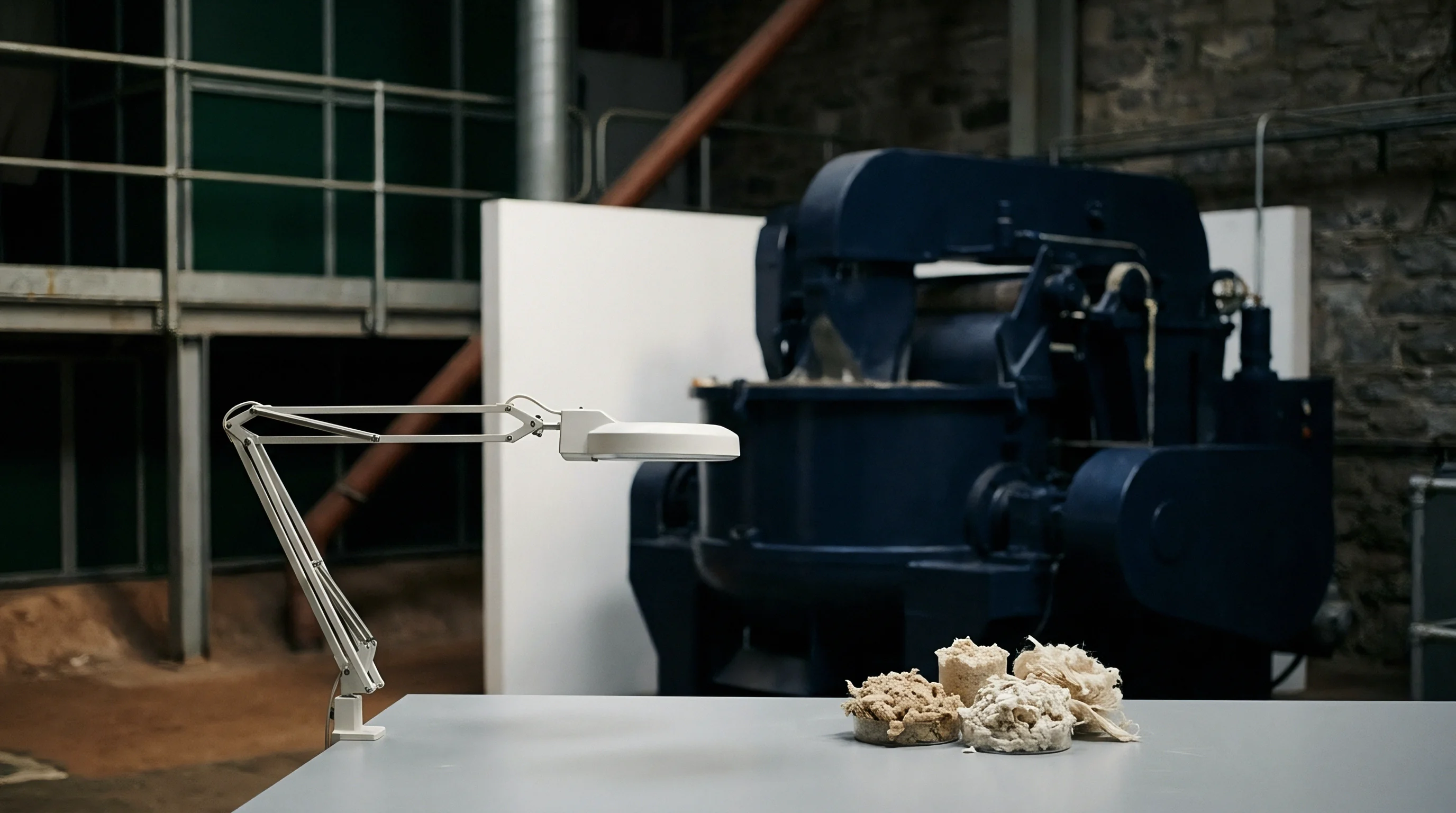
Sorbent bed saturation leads to preferential loss of volatile C10 to C14 alkanes as heavier aromatic species displace previously adsorbed compounds. Controlling the sorbent-to-sample ratio prevents target analyte saturation. Maintaining at least 10 mg Tenax per square decimeter of paper sample avoids overloading bed capacity during ten-day thermal conditioning cycles.
At 60 degrees Celsius over ten days, a ten-milligram Tenax bed achieves ninety-eight percent capture efficiency for C16 to C24 hydrocarbons without breakthrough.
How Does Breakthrough Volume Impact Hydrocarbon Fractionation?
Retention volumes determine whether light volatile fractions stay bound to the sorbent or escape during long testing runs. Breakthrough volume marks the gas volume required to carry a specific solute through a unit mass of bed before elution starts. Light MOSH compounds like n-decane (C10) and n-dodecane (C12) have much lower breakthrough volumes on Tenax TA than bicyclic MOAH compounds such as dimethylnaphthalene.
When measuring gas-phase release over ten days at 60°C, the total purged vapor volume must stay comfortably below the breakthrough threshold of the lightest compound under study.
A sample calculation shows how breakthrough occurs during a dual-component challenge. Consider a 100 mg Tenax TA tube subjected to a continuous nitrogen sweep of 20 mL/min at 60°C across a 240-hour cycle, producing a cumulative gas volume of 288 liters. Published specific retention volumes (Vg) at 60°C are 3,200 L/g for n-C10 alkane and 14,500 L/g for C2-alkylnaphthalene.
Multiplying Vg by sorbent mass (0.10 g) sets absolute breakthrough limits at 320 liters for n-C10 and 1,450 liters for the aromatic marker. Here, n-C10 runs at 90 percent of its retention capacity (288 L / 320 L), while the bicyclic MOAH marker sits below 20 percent. Raising flow rate to 25 mL/min pushes cumulative volume to 360 liters, driving off C10 MOSH analytes while leaving MOAH fractions behind.
Underestimating breakthrough kinetics leads to loss of short-chain saturated hydrocarbons, producing artificially low MOSH migration values that fail regulatory audits.


Fractionation
Desorbing captured mineral oil components from Tenax marks the transition from sample collection to chromatographic quantification. Traps release analytes through automated thermal desorption (TD) or liquid solvent extraction with high-purity organic solvents. Once extracted, the sample contains an unresolved complex mixture of MOSH and MOAH that requires clean separation before reaching the detector.
Liquid chromatography (LC) coupled on-line or off-line with gas chromatography and flame ionization detection (GC-FID) serves as the standard analytical approach.
Solvent Extraction and Thermal Desorption Bench Pathways
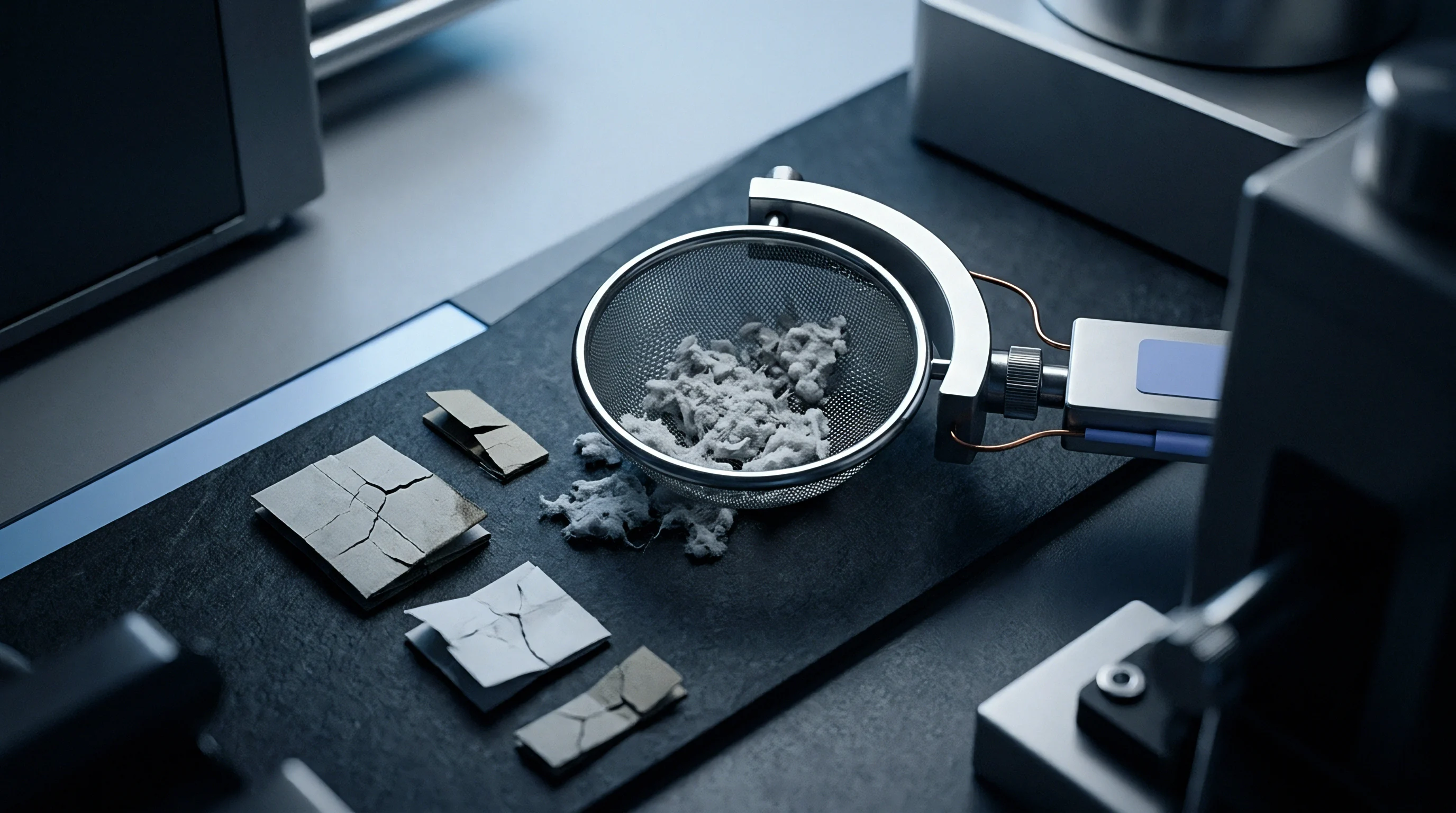
The choice of desorption method alters sensitivity and laboratory throughput. Thermal desorption units heat sorbent tubes rapidly to 320°C under reverse gas flow, sweeping the entire adsorbed mass into a cold trap for cryo-focusing before GC injection. Going solvent-free eliminates dilution and yields lower detection limits suitable for trace analysis.
Liquid elution uses solvents like n-hexane, diethyl ether, or dichloromethane to wash the sorbent bed, with alkanes eluting early during extraction. While solvent washing allows repeated injections and off-line cleanup, sample dilution lowers overall mass sensitivity.
DIN EN 14338 specifies a minimum recovery threshold of eighty percent for C12 to C30 mineral oil hydrocarbons subjected to modified Tenax contact.

Silica Gel Impregnation and Olefin Elimination
Separating saturated hydrocarbons from aromatic moieties relies on silver nitrate-impregnated silica gel ~ which binds polycyclic rings ~ or LC columns using silica and pentane-dichloromethane eluent systems. The polar stationary phase retains aromatic structures through pi-electron interactions while allowing aliphatic chains through into the MOSH fraction. A second elution with stronger dipole solvents then washes retained MOAH compounds into a collection vial or second GC loop.
Synthetic paper coatings and printing inks introduce interference molecules, particularly alkenes and natural rubber oligomers, that elute alongside target fractions if secondary cleanup is omitted.
| Analytical Metric | Liquid Solvent Elution + LC-GC-FID | Direct Thermal Desorption + GC-MS |
|---|---|---|
| Extraction Efficiency (C12 ~ C28) | 85% ~ 95% | 92% ~ 99% |
| Method Limit of Quantification | 0.5 mg/kg food equivalent | 0.1 mg/kg food equivalent |
| Interference Removal Capacity | High (allows full epoxidation and silver silica) | Limited (direct transfer without chemical clean-up) |
| Sample Re-analysis Capability | Multiple injections preserved | Single-shot destructive desorption |
European food-contact guidelines require strict separation of mineral oil aromatics from olefinic interferences, forcing analytical labs to incorporate LC-GC-FID separation schemes into standard testing procedures.


Interference
Paperboard extracts contain non-mineral lipophilic substances that co-elute with target hydrocarbons and distort analytical results. Polyolefin oligomeric saturated hydrocarbons (POSH) from polyethylene or polypropylene films, polyalphaolefins (PAO) from synthetic lubricants, and plant terpenes migrate onto Tenax during testing. Natural vegetable oils in recycled packaging introduce fatty acids, triglycerides, and steroidal compounds, while plant waxes generate false positive peaks.
Without chemical cleanup, analytical software incorporates these native components into the mineral oil area, inflating reported contamination levels.

Oligomer Distinctions and Alkene Degradation
Polyolefin oligomers form regularly spaced chromatographic clusters that overlap with the unresolved complex mixture (UCM) hump of MOSH. Distinguishing POSH from MOSH requires checking branching patterns and mass spectrometric fragment ions, specifically m/z 57, 71, and 85 relative to specific branch fragments. Olefinic compounds containing double bonds, such as squalene, carotenoids, and rosin resin acids, elute in the MOAH fraction during LC separation because of their polarizable double-bond structure.
Left untreated, these non-aromatic unsaturated molecules inflate reported MOAH figures.

Epoxidation Kinetics and Ring Preservation
Chemical modification using ethanol-free meta-chloroperbenzoic acid (mCPBA) selectively converts interfering alkenes into polar epoxides. These polar epoxidized species bind tightly to the silica gel column during pre-separation, preventing them from eluting into the MOAH fraction. Running the reaction at room temperature for 15 minutes oxidizes non-aromatic double bonds while keeping mono-aromatic and polycyclic aromatic hydrocarbon rings intact.
Excessive peracid exposure or high temperatures can cleave alkylated naphthalene rings, causing under-reporting of genuine MOAH contaminants.
Interference management requires structured identification of non-mineral sources across four distinct contaminant classes:
- Polyolefin Oligomers represent low molecular weight branched alkanes migrating from synthetic polymer coatings that mimic MOSH signal humps.
- Natural Terpenes comprise volatile pine and wood extractives present in virgin and recycled mechanical pulp fibers that interfere with light MOAH quantification.
- Rosin Acid Esters include tackifying resins from hot-melt adhesives that generate broad unresolved chromatographic signals in the C20 to C30 region.
- Plasticizer Migration involves phthalates and adipates from converting machinery lubricants that require specific mass spectral ion filtering for isolation.
Incomplete epoxidation transforms natural plant terpenes into broad chromatographic humps that obscure aromatic mineral oil rings.
Maintaining reagent temperature stability during epoxidation ensures complete olefin reaction more reliably than extended solvent shaking.


Calibration
Quantifying unresolved complex mixtures requires dedicated integration methods and internal standard mixtures. Unlike single-compound peak integration, mineral oil analysis calculates the total area between the chromatographic baseline and the envelope curve resting above it. Internal standards containing deuterated or non-native hydrocarbon markers are spiked into the Tenax extract before chromatographic separation.
Choosing calibration standards fixes the response factors applied to calculate final milligram-per-kilogram concentrations.

Internal Standards and Response Factor Harmonization
Standard protocols established by the German Federal Institute for Risk Assessment (BfR) and the European Commission Joint Research Centre mandate specific internal standard components. The standard mix includes bicyclohexyl (CyCy), n-C11, n-C13, cholestane (5-alpha-cholestane), pentylbenzene (1-phenypentane), 1-methylnaphthalene, and 2-methylnaphthalene. CyCy and cholestane monitor MOSH fraction recovery and elution boundaries, while pentylbenzene and alkylnaphthalenes mark MOAH retention cut-offs, with baseline runs preventing baseline distortion.
Signal response factors for linear alkanes and polycyclic aromatics are assumed to be 1.0 under flame ionization detection, though instrument drift requires daily checking against certified reference oils.
Internal standard loss during column elution directly inflates calculated mineral oil concentrations on final test certificates.

Integration Boundaries for Hump Quantification
Calculating the unresolved hump area requires strict baseline settings, anchored by calibration standards. Integration begins at the peak apex of n-C10 alkane and ends where n-C50 alkane exits. The software constructs a straight baseline connecting the signal before n-C10 to the signal following n-C50.
Sharp discrete peaks sitting atop the hump ~ such as native n-alkanes or defined additive peaks ~ must be subtracted when isolating pure mineral oil distillates. Limits of quantification (LOQ) stand at 0.5 mg/kg food for MOSH and 0.15 mg/kg food for MOAH under standard lab conditions.
| Analyte Class | Mandatory Internal Standard | Target LOQ (Packaging) | Target LOQ (Dry Food) |
|---|---|---|---|
| MOSH (C10 ~ C16) | n-C11, n-C13 | 0.5 mg/kg | 0.2 mg/kg |
| MOSH (C16 ~ C35) | Bicyclohexyl (CyCy), Cholestane | 0.5 mg/kg | 0.5 mg/kg |
| MOAH (C10 ~ C25) | 1-Phenylpentane, 1-Methylnaphthalene | 0.15 mg/kg | 0.15 mg/kg |
| MOAH (C25 ~ C35) | 2-Monomethylnaphthalene, Perhydroanthracene | 0.15 mg/kg | 0.15 mg/kg |
System verification follows a four-step laboratory sequence to confirm instrument stability before processing compliance samples:
- Standard Addition Injection verifies detector linearity across five concentration levels spanning 1 µg/mL to 50 µg/mL using certified mineral oil standards.
- Baseline Integration Verification establishes correct baseline subtraction parameters using blank solvent runs processed through identical sorbent tubes.
- Response Factor Calculation checks flame ionization detector parity between aliphatic markers and aromatic markers, requiring recovery balance within five percent.
- Limit Calibration Audit confirms method sensitivity by verifying signal-to-noise ratios exceeding ten-to-one at the target limit of quantification.
Achieving uniform ionization response factors across diverse polycyclic ring geometries with flame ionization detection remains an open analytical question across European reference laboratories.


Conformity
Converting bench reports into defensible regulatory dossiers demands linking migration data to packaging specifications and legal frameworks. European Union Regulation 1935/2004 mandates that packaging materials must not transfer constituents to food in quantities that endanger human health. While specific harmonized EU limits for MOSH and MOAH remain under draft review, national laws and retailer specifications impose strict enforcement limits.
Draft proposals from the German Mineral Oil Ordinance and EU Packaging and Packaging Waste Regulation (PPWR) criteria demand verified proof of compliance prior to market placement.

Regulatory Limits and Certificate Scopes
Compliance thresholds treat saturated and aromatic fractions differently. German draft recommendations set a maximum MOSH transfer limit of 2.0 mg/kg food for volatile fractions between C10 and C20, while taking a zero-tolerance stance on MOAH fractions, defined as non-detectable at or above 0.15 mg/kg in dry food matrices. Packaging converters must verify whether testing reports cover direct paperboard extraction or true gas-phase Tenax migration, as functional barrier coatings reduce migration potential.
Direct solvent extraction results reflect total substance content rather than actual exposure, leading to false non-compliance calls for barrier-coated papers.

Supplier Declarations and Custom Clearance Risks
Customs authorities and market surveillance inspectors actively monitor recycled paperboard packaging in food distribution chains, where incomplete files trigger customs holds. Declarations of compliance must explicitly cite the analytical test method, sorbent conditioning settings, epoxidation protocols, and achieved limits of quantification. Buyer risk increases when certificates present generic total hydrocarbon values without separating MOSH from MOAH, or when reports omit whether olefinic interferences were removed during sample cleanup.
Establishing an audit-ready compliance dossier demands systematic verification of four critical technical criteria:
- Substrate Batch Traceability links specific paper mill roll numbers directly to accredited test report certificates.
- Migration Limit Conformity demonstrates MOSH and MOAH values remain strictly below target thresholds under EN 14338 Tenax contact conditions.
- Epoxidation Protocol Proof confirms chemical removal of natural terpenes and polyolefin oligomer interferences to validate reported MOAH levels.
- Scope Inclusion Check verifies the certificate covers the precise food contact surface-to-volume ratio and intended shelf-life thermal profile.
Importing uncertified recycled paperboard packaging exposes brand owners to product recalls, inventory seizures, and substantial administrative fines under national enforcement mandates. Retaining complete laboratory documentation ~ including raw chromatograms, internal standard recovery calculations, and sorbent breakthrough validation logs ~ ensures full legal defensibility during regulatory inspections of packaging supply chains.