Mechanical Greaseproof Paper Grade Selection for Bakeries and Fast Food Packaging
Optimize mechanical greaseproof paper selection by specifying 80-88 SR refining and 15000+ s Gurley porosity to secure non-PFAS grease resistance.

Refining
Bleached softwood kraft furnish beaten under high specific edge loads establishes the structural foundation for non-fluorinated grease barrier papers. Fiber selection directly controls the final hydrogen bonding density reached as the wet web consolidates on the paper machine wire. Northern Bleached Softwood Kraft pulps from spruce and pine species supply long, flexible fibers averaging 2.5 to 3.2 millimeters, capable of withstanding intense mechanical force without cell wall destruction.
Adding controlled proportions of short hardwood fibers improves sheet formation and opacity. Ultimately, balancing fiber length retention against cell wall hydration determines whether a mill reaches target barrier properties at acceptable production speeds.
Mechanical hydration alters the internal structure of cellulosic fibers. Unrefined wood pulp fibers are hollow tubes with rigid cell walls. Initial beating strips away the primary wall, exposing the secondary S2 layer to water molecules.
Hydrolytic swelling expands fiber wall volume and induces internal fibrillar shear. As mechanical energy transfers into the slurry, micro-fibrils peel away from the outer fiber surface. Under intense mechanical shear, softwood tracts collapse into a dense, film-like cellulosic sheet structure.
These uncoiled cellulose chains expose free hydroxyl groups, establishing millions of hydrogen bonds per square millimeter as moisture evaporates during cylinder drying.

Mechanical Hydration Mechanics
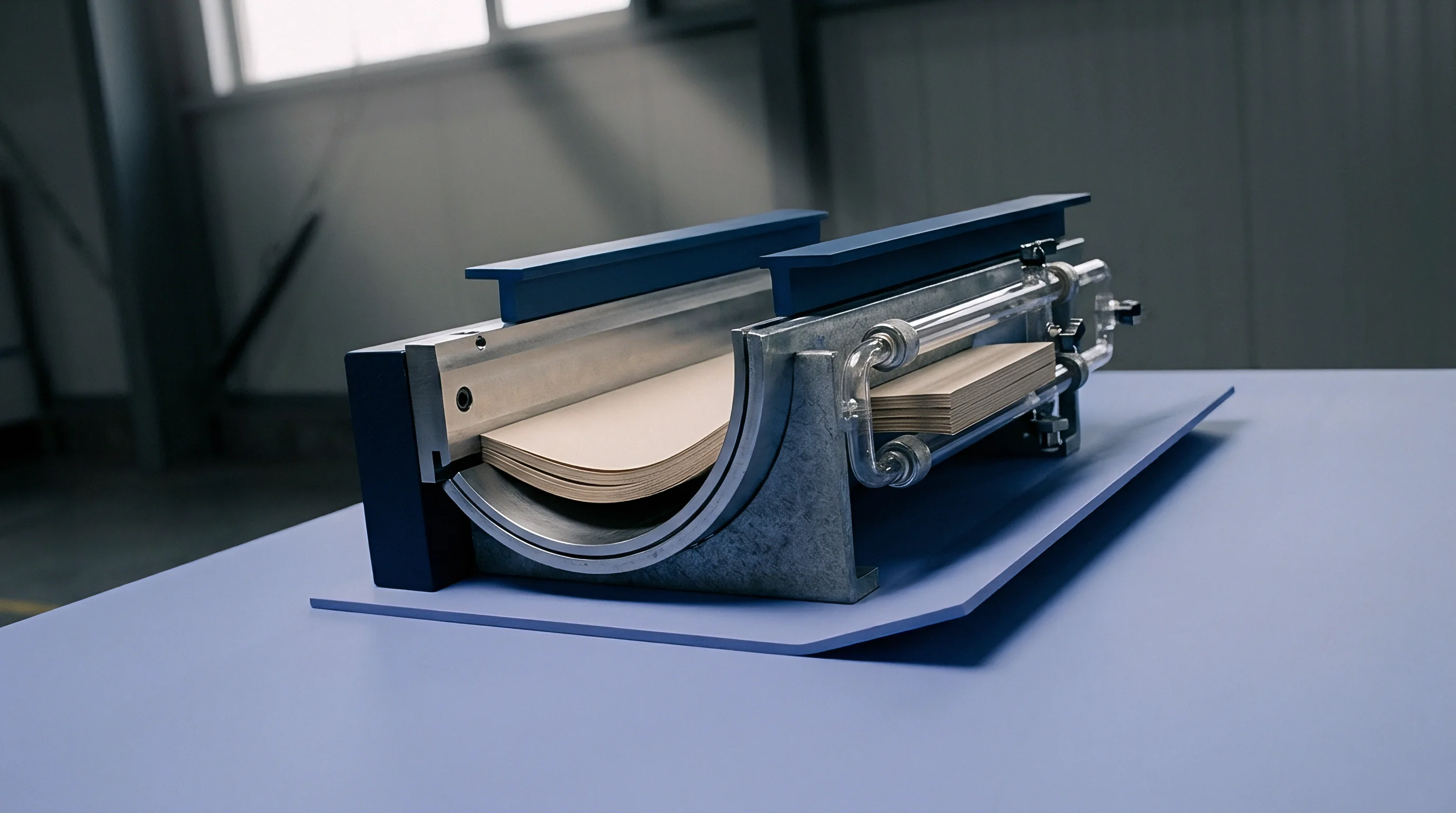
Stock preparation systems run double-disc or conical refiners equipped with fine-bar pattern tackle to treat pulp at consistency levels between 3.5% and 4.5%. Refiner plate geometry, bar width, and groove depth dictate the ratio of cutting energy to fibrillating energy. Running at low specific edge loads from 0.5 to 0.8 Joules per meter favors external fibrillation over transverse fiber shortening.
This mechanical treatment forces water deep into the crystalline cellulose matrix, increasing the Water Retention Value from an initial 100% up to 240%.
Schopper-Riegler freeness measurements quantify stock treatment according to ISO 5267-1 testing protocols. Unrefined chemical pulp drains rapidly, recording values between 13° SR and 18° SR. Mechanical greaseproof paper manufacture requires beating stock to high freeness levels ranging from 80° SR to 93° SR.
At these extreme levels, water drainage on the Fourdrinier wire slows substantially, requiring extended vacuum suction box sections and reduced machine line speeds. The resulting paper web loses its bulky fibrous structure, consolidating into a dense, semi-translucent sheet with bulk values falling below 0.85 cubic centimeters per gram.

Fibrillation Failure Modes
Extensive stock beating introduces distinct physical trade-offs across mill converting operations. While heavy mechanical action boosts grease resistance, it weakens individual fiber walls and lowers sheet mechanical tear strength. Mills balancing furnish formulations face distinct stock failure modes during ultra-high beating regimes:
- Fiber length degradation occurs when refiner plate contact forces cut fiber stems prematurely, reducing average fiber length below 1.2 millimeters and triggering edge tearing on web presses.
- Drainage impedance manifests on the paper machine wire when excessive fines generation traps water, causing web crushing underpress rolls and limiting web speed.
- Dimensional instability arises from extreme cell wall hydration, causing excessive cross-direction sheet shrinkage, web cockling, and severe edge curling during ambient moisture changes.
- Tear resistance loss develops as hydrogen bonding density saturates, shifting failure mechanisms from fiber pull-out to sharp brittleness along stress concentration points.
Energy consumption during extreme mechanical refining accounts for a massive portion of total paper mill operating expenditure. Beating softwood pulp to 88° SR requires energy inputs between 250 and 450 kilowatt-hours per metric tonne of dry pulp. This electrical energy input directly alters the physical paper matrix, shrinking mean pore diameters down to sub-micron scales.
Dense hydrogen bonding creates a continuous physical barrier capable of resisting non-polar lipid penetration without relying on synthetic coatings, blocking oils through pure physical pore restriction governed by capillary flow dynamics.
| Specific Energy Input (kWh/t) | Schopper-Riegler (°SR) | Sheet Density (g/cm³) | Gurley Air Resistance (s/100 mL) | TAPPI T 559 Kit Value |
|---|---|---|---|---|
| 80 | 25 | 0.58 | 12 | Kit 1 |
| 180 | 55 | 0.72 | 450 | Kit 3 |
| 290 | 78 | 0.88 | 4,800 | Kit 5 |
| 380 | 86 | 0.96 | 18,500 | Kit 7 |
| 460 | 92 | 1.08 | 65,000 | Kit 9 |
While ultra-high Schopper-Riegler freeness is often expected to deliver complete grease immunity comparable to plastic films, mechanical refining alone leaves micro-voids in practice. Field inspection of converted fast food wraps demonstrates that mechanical refining alone leaves micro-voids susceptible to low-viscosity fatty acid penetration when thermal stress lowers lipid surface tension.
Porosity
Air permeability measurements serve as the primary laboratory indicator for evaluating continuous film integrity in grease-resistant paper grades. Sub-micron pore architecture governs how lipid molecules traverse the cellulosic web under ambient and elevated temperatures. Standard air resistance testing according to ISO 5636-5 utilizes a Gurley densometer, tracking the time required for 100 milliliters of air to pass through a soft-gasketed paper sample area under a fixed pressure head of 1.22 kilopascals.
Standard kraft packaging papers display Gurley values under 50 seconds. Mechanical greaseproof paper grades require values exceeding 10,000 seconds per 100 milliliters to verify adequate barrier performance.
Gurley air resistance values measured under ISO 187 conditioning must exceed 15,000 seconds per 100 milliliters to prevent vegetable oil migration in fast food wrap applications.
Fluid dynamics within the dense paper matrix follow the Lucas-Washburn equation for capillary flow. The depth of lipid liquid penetration into internal pores relates directly to average pore radius, liquid surface tension, contact angle, and dynamic viscosity. Mechanical refining reduces the maximum pore radius r within the fiber network.
When maximum pore diameters drop below 15 nanometers, capillary driving pressure falls below the threshold required for non-polar oils to wet untreated cellulose walls readily. Maintaining high density prevents free fatty acids from penetrating the sheet during short-term food contact.
Which Refining Level Prevents Fat Migration?
Achieving stable grease resistance requires matching the pulp freeness degree to the specific lipophilic profile of target food products. Bakery formulations containing animal fats, butter, and short-chain triglycerides exert high capillary action against paper packaging. Fast food items coated in hot vegetable oils at temperatures above 70°C lower fluid viscosity dramatically, accelerating penetration through open pore structures.
Testing grease resistance relies on standardized chemical challenges specified in TAPPI T 559, commonly designated as the Kit Test. The procedure applies twelve aggressive mixtures of castor oil, toluene, and n-heptane to the paper surface. Kit 1 consists of pure castor oil with low aggressive capillary force, while Kit 12 contains high proportions of non-polar n-heptane designed to penetrate micro-porous networks rapidly.
Mechanical greaseproof paper without fluorochemical treatments typically achieves Kit values between Kit 4 and Kit 8. Higher Kit values require surface application of modified starches, carboxymethyl cellulose, or polyvinyl alcohol at the size press.
Distinguishing continuous micro-porosity from isolated pinhole defects remains essential for goods-in material verification. Air permeability tests reflect average web pore volumes across a wide sample area. Pinhole leaks represent localized mechanical defects caused by air bubbles in the wet headbox, fiber clumps, or wire contamination.
A paper reel exhibiting exceptional average Gurley permeability will fail in service if pinhole frequency exceeds acceptable quality limits.
Quantifying localized pinhole defects involves applying dye penetration tests according to DIN 53116. Red dye dissolved in diethyl phthalate or palm oil highlights localized web breaches within five minutes of contact. Microscopic inspection reveals whether grease failure stems from insufficient refining across the general web matrix or discrete structural pinholes formed during sheet consolidation on the paper machine forming wire.
Standard oil penetration tests track continuous film integrity under controlled laboratory conditioning.
Surface sizing treatments applied via metering rod coaters seal surface micro-voids, elevating grease barrier performance without increasing refiner electrical energy consumption. Starch molecules fill outer pore entrances, forming an effective barrier against mid-viscosity fats while preserving full pulp repulpability during recycling. Thin surface size films complement internal fiber hydration, creating a reliable barrier structure for commercial bakery wraps.
A dense sheet structural matrix free of pinhole defects holds grease reliably regardless of surface smoothness variations.
Converting
High-speed packaging machinery places intense mechanical stress on dense cellulosic webs during slitting, folding, and gluing operations. Paper reels move through converting equipment at line speeds reaching 400 meters per minute. Mechanical greaseproof paper exhibits physical property balances distinct from standard kraft grades.
High mechanical beating increases density and tensile modulus while lowering cross-direction tear index and elongation at break. Machinery operators must calibrate web tension controls precisely to prevent web snaps during unwind and folder section passes.
Converting operations depend on sheet flexibility and crack resistance along mechanical score lines. Creasing a dense paper web compresses fibers on the inside radius while subjecting outer surface fibers to extreme elongation forces. In dense greaseproof papers, hydrogen-bonded fiber networks lack the internal slip allowance present in bulkier, unrefined kraft papers.
Folding along high-pressure scores ruptures cellulose hydrogen bonds, creating micro-fractures that compromise barrier performance along bag seams and box corners.

Score Line Barrier Degradation
Evaluating grease resistance degradation along folded scores requires precise testing. Standard TAPPI T 559 Kit solutions applied to uncreased flat samples may indicate Kit 7 performance, yet testing along a 180-degree machine crease often reveals performance drops down to Kit 3, as outer fiber splitting exposes open capillary channels where hot fats easily penetrate.
Deadfold retention represents a primary functional requirement for fast food sandwich wraps. When a counter worker wraps a hot burger, the paper must retain tight folds without springing open or requiring adhesive tape. Mechanical greaseproof paper excels in deadfold retention due to high density and low elastic springback.
Unlike plastic-coated sheets or extruded polyethylene laminates that slowly unroll due to polymer memory, dense cellulosic sheets retain sharp manual folds reliably under service conditions.
Evaluating crease resistance utilizes a standardized laboratory fold procedure to quantify pinhole development across converted packaging seams.
- Condition flat mechanical greaseproof paper specimens at 23°C and 50% relative humidity for 24 hours in accordance with ISO 187 standards.
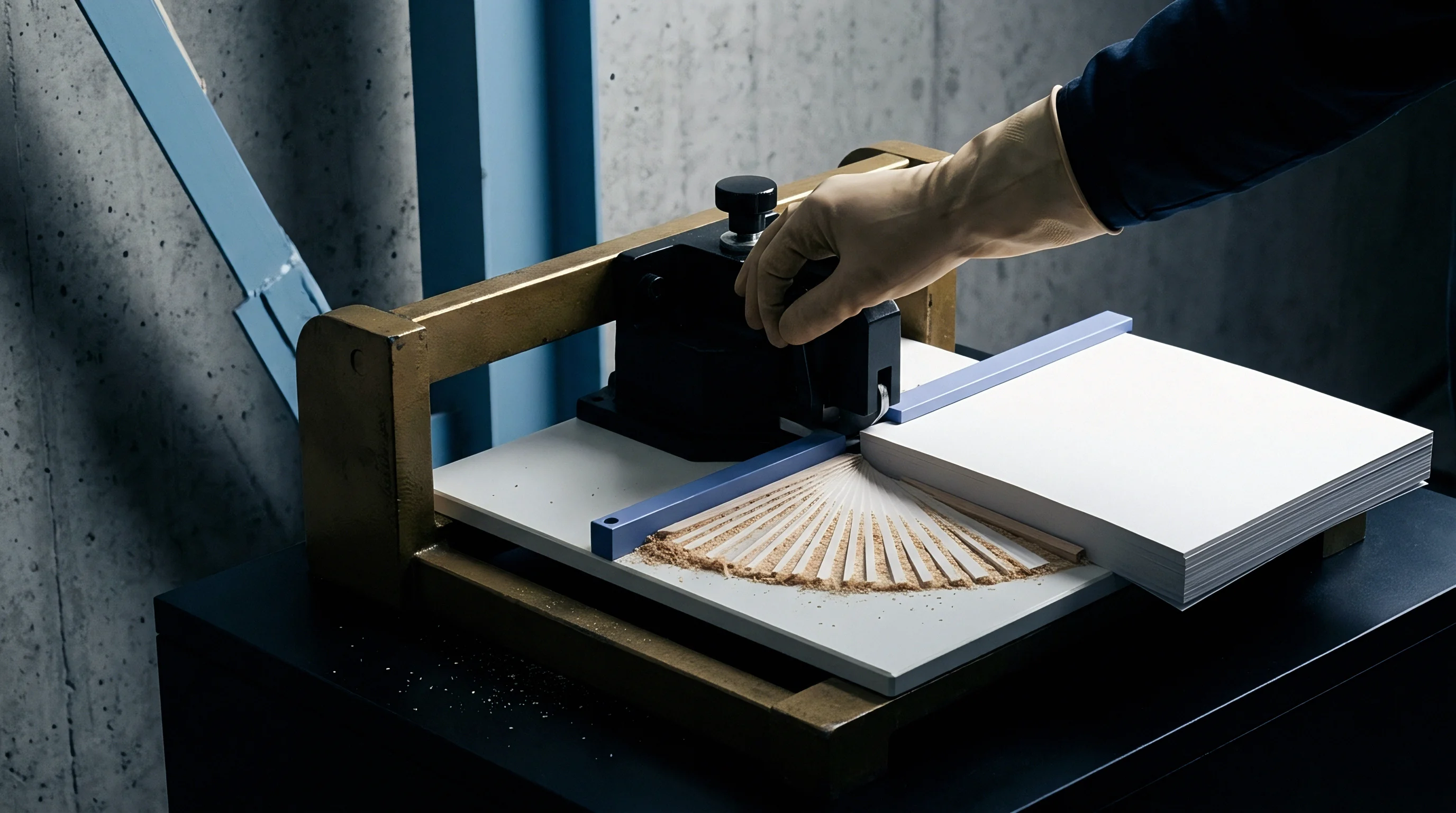
- Cut rectangular test strips measuring 100 millimeters by 200 millimeters parallel to the machine direction and cross direction using a precision guillotine cutter.
- Fold the conditioned paper specimen 180 degrees back on itself along a marked central transverse line.
- Pass a standardized 2.0-kilogram steel roller over the folded edge at a constant velocity of 10 millimeters per second without applying additional hand pressure.
- Unfold the specimen and repeat the rolling procedure along the exact same crease line in the reverse direction to induce maximum mechanical shear.
- Apply dyed red palm oil test liquid conforming to DIN 53116 directly across the creased line for a duration of 15 minutes.
- Blot residual oil from the creased surface using absorbent filter paper and examine the reverse side for dye penetration under 10x optical magnification.
Web coefficient of friction governs how smoothly sheets feed through automatic bag-forming tubbers and rotary cutters. ISO 8295 outlines procedures for measuring static and dynamic coefficient of friction. Smooth, highly beaten mechanical greaseproof papers present low static friction values between 0.25 and 0.35 when untreated, causing double-feeding in sheet-fed conversion presses and reel telescoping during rewind operations.
Incorporating anti-slip silica additives or controlling surface size roughness elevates dynamic friction to target operating bands between 0.45 and 0.55.
Contract specifications must state maximum allowable Kit value drops across 180-degree machine creases, capping barrier degradation to two Kit points under ISO 187 conditioning.
Gluing mechanical greaseproof paper requires careful adhesive formulation selection. Water-based polyvinyl acetate and dextrin adhesives depend on liquid absorption into the paper substrate to dry and form mechanical interlocks. Low porosity and dense surface sizing impede water penetration from the glue line, extending open assembly times and slowing initial tack development.
Converting lines running at high speeds utilize specialized high-solids synthetic hot-melt adhesives or modified acrylic emulsion systems engineered to wet low-energy cellulosic surfaces rapidly.
| Property Standard | Mechanical Greaseproof (40 g/m²) | Vegetable Parchment (41 g/m²) | PFAS Kraft (40 g/m²) | PE Extruded Paper (40+15 g/m²) |
|---|---|---|---|---|
| ISO 534 Caliper (µm) | 38 | 42 | 54 | 68 |
| ISO 5636-5 Permeability (s) | 22,000 | 100,000+ | 150 | 100,000+ |
| TAPPI T 559 Kit Rating | Kit 7 | Kit 12 | Kit 10 | Kit 12 |
| ISO 1924 Tensile MD (kN/m) | 4.8 | 5.2 | 3.6 | 4.1 |
| DIN 53112 Deadfold Memory (%) | 92 | 96 | 68 | 42 |
| Maximum Thermal Limit (°C) | 200 | 230 | 180 | 110 |
| PTS-RH 021/97 Repulpability | 99% Yield | 98% Yield | 95% Yield | 12% Yield |
Evaluating crease resistance across converted fold scores verifies that mechanical beating levels maintain barrier integrity without matrix fracture. Setting incorrect web tension parameters or using unsuitable adhesive formulations results in continuous jam incidents, open seam failures on end-user packaging lines, and catastrophic grease staining across retail outer cases.

Heat
Bakery and fast food packaging applications impose vastly different thermal stress profiles on greaseproof paper grades. Bakery operations expose papers to dry elevated temperatures ranging from 180°C to 220°C inside deck ovens and rack ovens for durations between 15 and 45 minutes. Pan liners, pastry sheets, and bake-in mold containers demand absolute thermal stability, dimensional retention, and anti-stick performance.
Fast food packaging encounters lower temperatures, typically between 65°C and 90°C, but deals with concentrated free fatty acids, hot animal fats, steam condensation, and physical pressure from stacked wraps.
Thermal stress accelerates fat migration by altering physical fluid dynamics. As temperature rises from 20°C to 80°C, the dynamic viscosity of butter fat and vegetable frying oil drops by over 80%. Lower viscosity increases liquid mobility, allowing oil molecules to enter tiny structural pores that resist cold fat penetration.
Thermal expansion of trapped air within paper voids forces liquid fat deeper into the fiber network, increasing strike-through risk during extended holding periods under heat lamps.
Pure mechanical greaseproof paper without synthetic plastic coatings withstands baking temperatures up to 200°C without charring or releasing chemical odors.

Bakery Oven Duty Vs Fast Food Thermal Stress
Bake-in bakery applications require high thermal release performance alongside fat resistance. Raw dough contains moisture, sugars, shortening, and proteins that stick to hot surfaces during starch gelatinization and sugar caramelization. Standard untreated mechanical greaseproof paper allows baked goods to adhere tightly, tearing the pastry crust upon release.
Mills coat greaseproof stock with thin release layers of food-grade silicone (polydimethylsiloxane) at coat weights between 0.2 and 0.6 grams per square meter per side to provide effortless food release.
Fast food service involves complex moisture vapor dynamics. Hot fried foods emit steam continuously while sitting inside wrapped paper bags or foil-laminated sheets. If a packaging paper presents zero air permeability, steam condenses inside the package, turning fried batter soft and soggy.
Mechanical greaseproof paper balances grease retention with controlled moisture vapor transmission, allowing excess steam to escape while holding free oils inside the wrap matrix.
Oven baking subjects cellulosic fibers to thermal degradation if processing parameters fall outside safe operating windows. Pure bleached kraft fibers begin slow pyrolysis at temperatures above 200°C, leading to fiber browning, brittleness, and loss of tensile strength. Unlike polyethylene-coated boards that melt at 115°C and emit unpleasant plastic fumes, pure cellulosic greaseproof papers remain stable and odor-free under commercial baking conditions.
Pinhole expansion occurs under intense heat. Microscopic bubbles or unrefined areas within the paper web expand when exposed to steam pressure during baking. If internal steam pressure exceeds the local web z-directional tensile strength, internal micro-delamination forms small blisters, disrupting surface smoothness and letting grease leak through.
Selecting dense, highly bonded greaseproof paper grades prevents blistering failure during bake-in operations.
Do fast food operators gain commercial advantages by specifying dual-coated release sheets over single-sided mechanical greaseproof papers for high-temperature holding cabinets?
Compliance
Food contact legislation imposes strict chemical safety standards on raw paper substrates intended for bakery and fast food packaging. In the European Union, Regulation (EC) No 1935/2004 dictates that materials must not transfer constituents to food in quantities that endanger human health or alter food composition unexpectedly. German BfR Recommendation XXXVI/2 specifies approved pulp raw materials, processing chemicals, surface sizing agents, and testing criteria for paper and board intended for baking applications.
North American compliance relies on US FDA 21 CFR 176.170 specifications for paper constituents contacting aqueous and fatty foods. Compliance demands rigorous extraction testing using food simulants under specific time and temperature protocols. Standard food simulants include n-heptane for fatty food contact, 50% ethanol for alcoholic products, and Tenax (poly-2,6-diphenyl-p-phenylene oxide) for dry high-temperature baking applications.
Total overall migration limits (OML) must not exceed 60 milligrams per kilogram of food simulant or 10 milligrams per square decimeter of paper contact area.

PFAS Phase-Out and Sustainability Directives
Legislative bans targeting per- and polyfluoroalkyl substances (PFAS) have transformed global paper grade selection strategies. Historical greaseproof papers relied heavily on short-chain (C4-C6) and long-chain (C8) fluorochemical treatments to lower paper surface energy, achieving high Kit 10 to Kit 12 performance on open-structure kraft papers. Environmental persistence, bioaccumulation risks, and strict regulations in the European Union and across numerous US states now prohibit intentionally added PFAS in food packaging.
Mechanical greaseproof paper supplies a fully non-fluorinated alternative for grease-resistant packaging applications. Pure mechanical refining achieves oil resistance by physical pore reduction rather than surface chemical repulsion. Replacing fluorinated additives with mechanical refining eliminates PFAS chemical migration risks, simplifying global food safety compliance and regulatory audit trail management.
Pure cellulosic mechanical greaseproof paper containing under four percent surface starch achieves ninety-nine percent repulpability yield under standard PTS-RH 021/97 laboratory recycling protocols.
Compliance documentation mandates total traceability. Brand owners requiring sustainable end-of-life pathways look to compostability and recyclability certifications. Standard EN 13432 and ASTM D6400 define specifications for packaging recoverable through industrial composting, requiring over 90% disintegration within 12 weeks and complete biodegradation to carbon dioxide, water, and biomass within six months.
Mechanical greaseproof papers pass industrial composting checks easily because natural cellulose breaks down quickly under microbial action.
Paper recycling certification relies on protocols such as PTS-RH 021/97 or the CEPI Recyclability Test Method Version 2. Mechanical greaseproof papers re-pulp readily in standard warm-water hydrapulpers without requiring chemical wet-strength additives. Minimal surface starch treatments keep fiber recovery yields high, allowing converting scrap and post-consumer wraps to re-enter ordinary paper recycling streams cleanly.
Quality assurance programs require comprehensive verification steps to maintain full regulatory compliance across production lots:
- Raw material traceability audits track pulping logs, chemical additives, and mill batch codes back to primary timber origin points.
- Heavy metal migration screening verifies that lead, cadmium, mercury, and hexavalent chromium concentrations remain under 100 parts per million combined per EN 71-3.
- Volatile organic compound analysis confirms zero residual solvents or chemical off-gassing remain following high-speed flexographic printing steps.
- Fluorine total content testing utilizes combustion ion chromatography to verify absolute absence of fluorinated grease-proofing chemicals below 50 parts per million total fluorine limits.
BfR Recommendation XXXVI/2 mandates that dry matter mass transfer from paper into fatty food simulants shall not exceed 50 milligrams per square decimeter under maximum test conditions.


Tariff
Commercial paper purchasing operates on a weight basis per metric tonne, whereas converted packaging products sell by surface area or unit piece counts. Paper grammage (basis weight in grams per square meter) dictates total yield per purchased metric tonne. Sourcing engineers balance physical strength and barrier performance against minimum basis weight targets to minimize unit packaging costs.
Downgauging options allow significant landed cost reductions when mill refining controls are tight. Selecting a 38 g/m² mechanical greaseproof paper over a 45 g/m² grade increases square meter yield per metric tonne by 18.4%. High-density mechanical refining yields thin calipers, allowing a 38 g/m² sheet to hold an average caliper of only 34 microns.
This compact thickness increases the number of sheets packed per freight pallet, lowering downstream transport and warehousing costs.

Yield Optimization and Trim Arithmetic
Calculating financial yield from raw paper reels to converted fast food wraps requires tracking basis weight tolerances, trim margins, and converting waste allowances. Parent reels cut on mill winders must align with target machine deckle widths to avoid generating useless off-cut edge waste. Calculating parent reel trim efficiency establishes true yield per metric tonne across commercial packaging formats.
Consider a standard commercial fast food wrapper job requiring 100,000 finished sheets measuring 300 millimeters by 350 millimeters. Calculating total raw material consumption and landed costs highlights the financial impact of basis weight selection and trim efficiency optimization.
Total target surface area equals 10,500 square meters of net converted paper. Operating a converting bag machine with a standard 3.5% web trim waste and a 1.5% setup spoilage rate requires ordering 11,025 square meters of parent roll stock.
| Substrate Option | Basis Weight (g/m²) | Parent Stock Weight (kg) | Landed Stock Price ($/tonne) | Substrate Cost per 1,000 Sheets ($) | EPR Eco-Fee per 1,000 Sheets ($) |
|---|---|---|---|---|---|
| Mechanical Greaseproof 35 g/m² | 35 | 385.9 | 1,680 | 6.48 | 0.12 |
| Mechanical Greaseproof 40 g/m² | 40 | 441.0 | 1,620 | 7.14 | 0.14 |
| Mechanical Greaseproof 50 g/m² | 50 | 551.3 | 1,580 | 8.71 | 0.17 |
| PE-Coated Kraft (40+15 g/m²) | 55 | 606.4 | 1,850 | 11.22 | 0.85 |
Selecting the 35 g/m² mechanical greaseproof grade reduces raw material tonnage requirements down to 385.9 kilograms for the 100,000-sheet run, compared to 551.3 kilograms for the 50 g/m² option. Even though lighter grammage paper carries a slightly higher mill price per metric tonne due to extended refining energy demands, the net unit cost per thousand finished sheets drops from $8.71 to $6.48.
Extended Producer Responsibility (EPR) packaging fees heavily penalize composite, non-recyclable plastic-laminated papers. Monomaterial mechanical greaseproof paper containing zero fluorochemicals qualifies for favorable eco-modulated EPR fee tiers in major markets. Switching from polyethylene-laminated paper (55 g/m² total weight) to a 40 g/m² mechanical greaseproof paper cuts packaging substrate material costs by 36% while reducing annual regulatory producer responsibility fees by over 80%.
Mill minimum order quantities (MOQs) and reel width slitting schedules dictate true commercial availability. Standard paper machines run width profiles between 2.80 meters and 5.40 meters. Converters ordering custom reel widths that leave unmatched deckle edges on the mill winder absorb trim charges ranging from 4% to 8% of total order value.
Aligning specification dimensions with standard master roll trim multiples protects gross converting margins across high-volume fast food packaging contracts.