Drainage Measurement
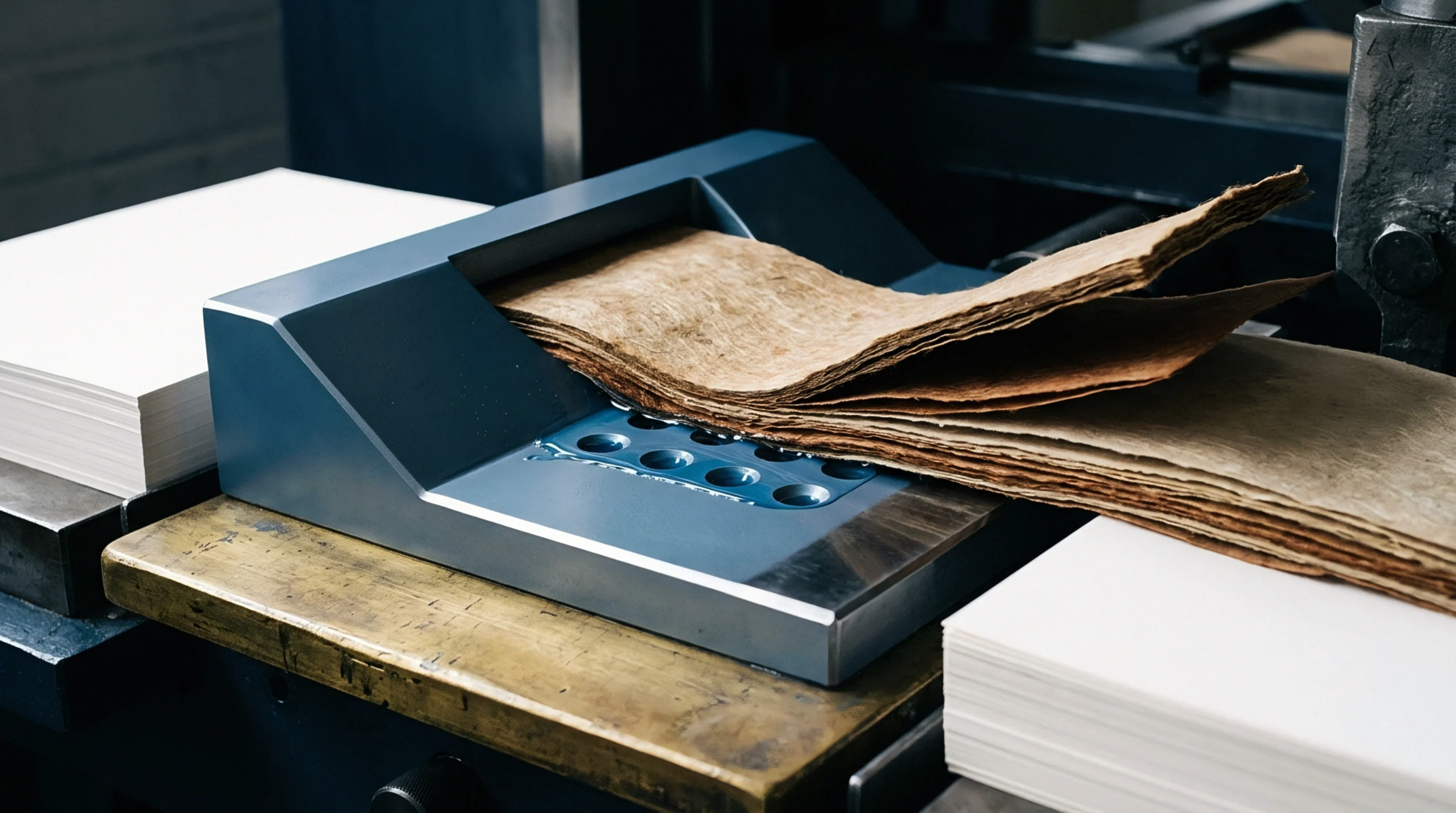
Empirical test measures the rate at which water drains from a diluted pulp suspension through a standardized wire mesh. Schopper-Riegler freeness is the primary metric used in European paper mills to monitor the degree of refining or beating applied to the fibers. It is expressed in degrees SR, where a higher number indicates a slower drainage rate and more heavily processed fiber.
This value directly correlates with the physical properties of the resulting paper sheet.
Refining Mechanism
As fibers are beaten, they become more flexible and develop fine hair like structures called fibrils on their surface. This increased surface area traps more water and slows the drainage process on the paper machine. Low freeness values, such as fifteen degrees, are typical for bulky, porous papers like tissue.
High values, exceeding eighty degrees, are found in dense, strong papers like glassine or greaseproof. Controlling this property is essential for maintaining consistent thickness and strength across different production batches. The operator adjusts the refining pressure in real time to keep the drainage within the specified range for the target grade.
Technical Limit
Excessive refining can damage the fibers and lead to a brittle sheet with low tear resistance. The test provides the boundary where further processing becomes counterproductive for the paper quality.