Parent Sheet Yield Optimization in Commercial Packaging Converting
Parent sheet yield optimization balances mill deckle widths, carton grain direction, and interlocking nested dies to lower delivered carton unit costs.


Deckle
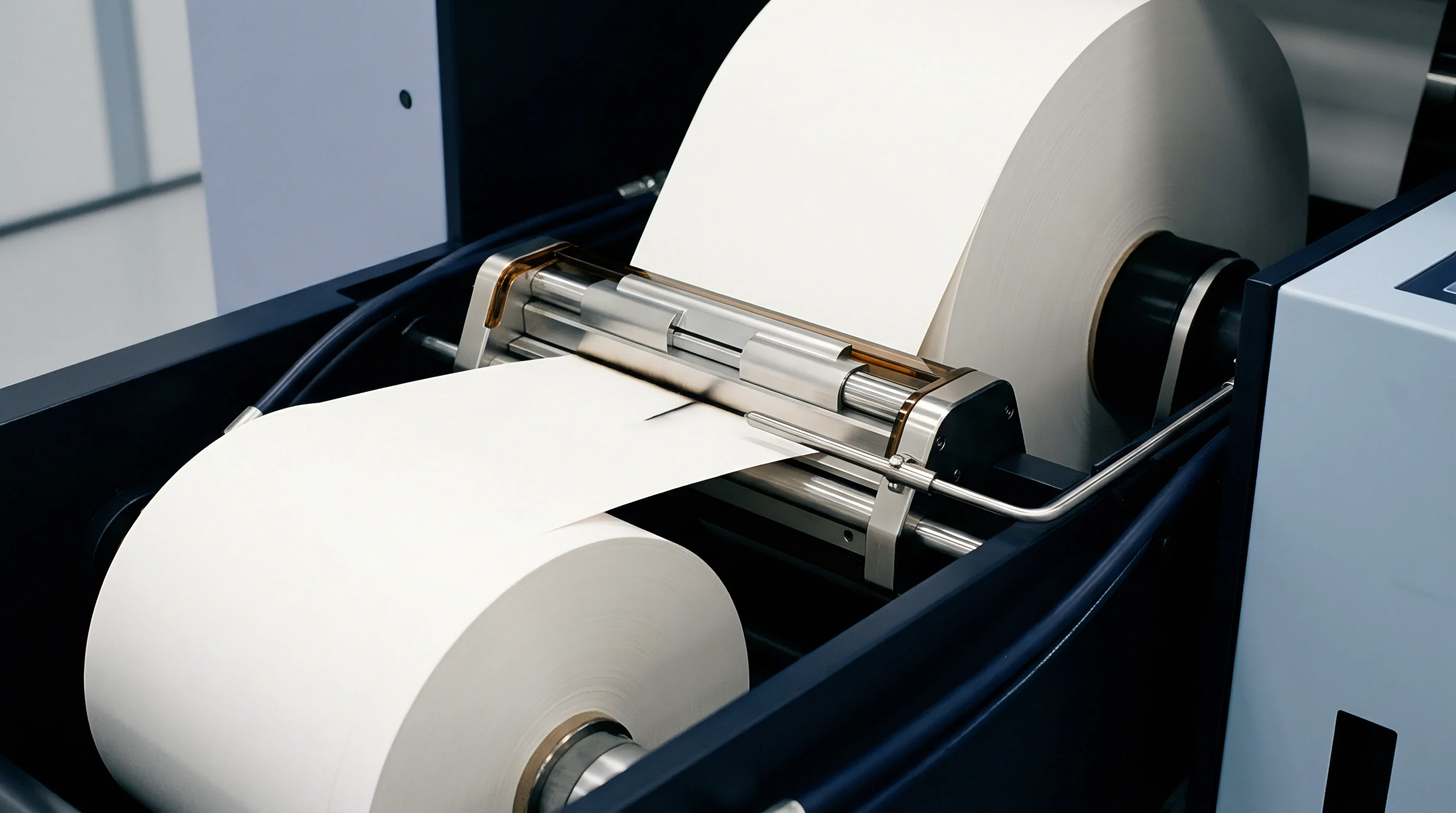
Mill winders slice parent reels into customer rolls with high carbon steel circular knives spaced across a continuous web. A primary paper machine producing solid bleached sulphate at five metres wide sheds three to five percent of its edge trim back into the hydrapulper before the slitter rewinder ever turns. When a converter orders custom sheet dimensions rather than stocking standard formats like 720 by 1020 millimetres, the mill scheduler fits those slit widths across the total machine width.
Any unallocated web sliver turns into dry broke. The paper mill charges the buyer for every kilogram of that wasted edge unless another order fills the remaining reel trim. The knife severed the web.
Stock procurement begins by auditing paper machine trim geometries across qualified suppliers. A machine running a 2800 millimetre usable web accommodates four 700 millimetre roll widths without offcut, while a 3200 millimetre machine running the same carton order leaves a 400 millimetre gap that incurs severe financial surcharges. Converters buying mill sheets directly absorb these geometry penalties into their per-tonne invoice.
Calculated trims dictate commercial survival.
A mill web slit at 23 degrees Celsius and 50 percent relative humidity sheds up to 1.8 percent dry mass when edge trimmers clear cross-direction basis-weight drift under ISO 536.
Sheet cutters working from reels face mechanical boundaries that restrict parent dimensions before the press feeder takes a single pallet. High-speed synchro-fly rotary sheeters run two to four rolls simultaneously, slicing sheet lengths between 400 and 1600 millimetres with a cut tolerance of plus or minus 0.5 millimetres. The sheet-fed offset press room frequently selects standard inventory formats to avoid mill minimum tonnage commitments, yet standard parent formats force packaging converters to run excessive sheet margins.
The sheet width directly determines how many carton blanks nest across the cylinder circumference.
| Machine Trim Width (mm) | Usable Slit Rolls | Total Consumed Web (mm) | Unallocated Trim (mm) | Trim Waste Rate (%) |
|---|---|---|---|---|
| 2500 | 3 | 2160 | 340 | 13.60 |
| 2880 | 4 | 2880 | 0 | 0.00 |
| 3200 | 4 | 2880 | 320 | 10.00 |
| 3650 | 5 | 3600 | 50 | 1.37 |
| 4200 | 5 | 3600 | 600 | 14.29 |
The procurement contract defines whether the buyer or the mill shoulders the financial consequence of leftover web slivers. Standard international trade customs for paperboard state that any web fraction narrower than the mill knife minimum remains billable tonnage if the order demands custom roll widths without matching pool orders.
Grain
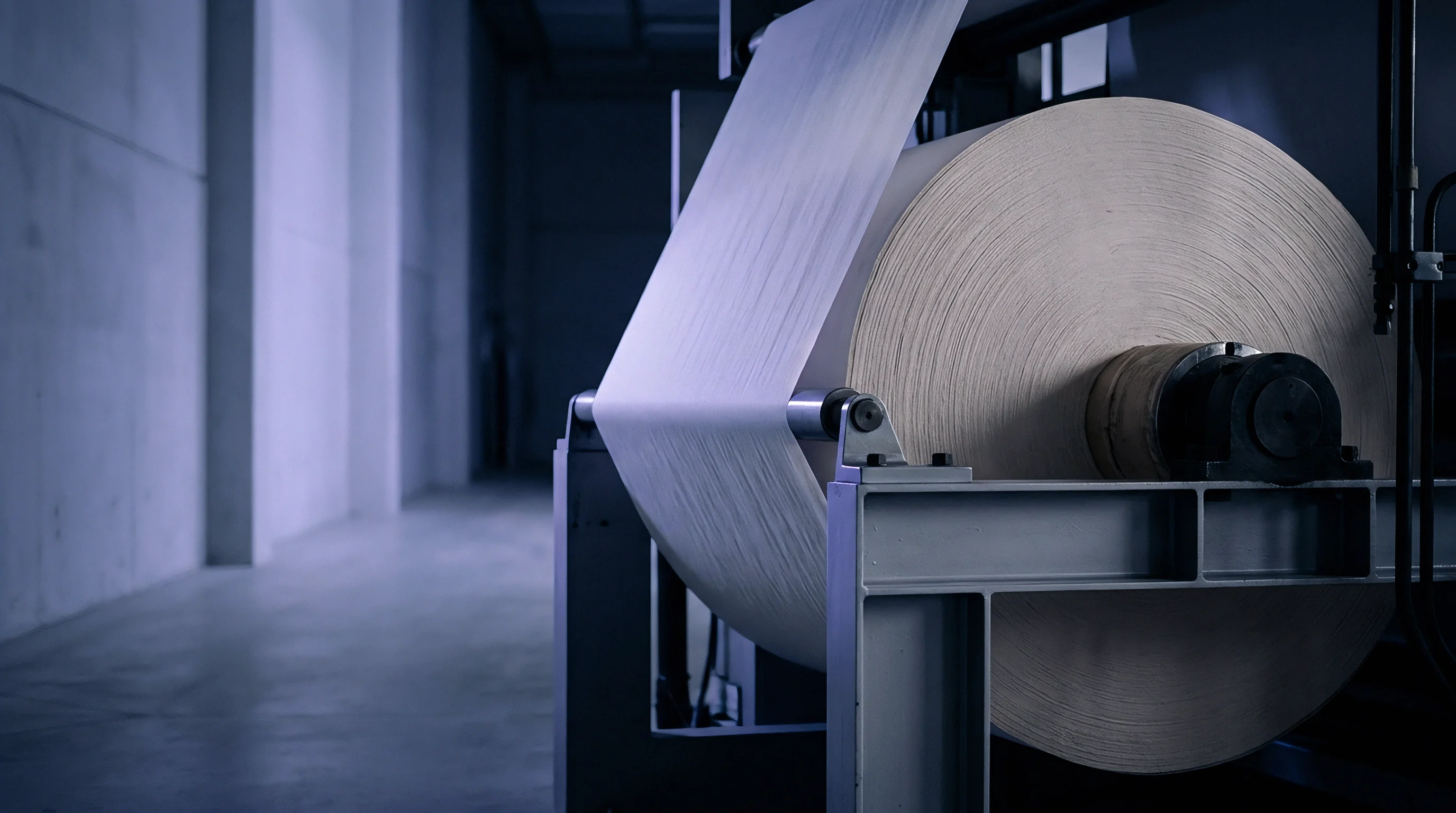
Cellulose fibres align predominantly along the manufacturing axis during web formation on the wire section. This machine direction orientation confers double or triple the bending resistance compared to the cross direction, according to ISO 2493-1 measurements at a 15-degree deflection angle. Folding carton packaging requires high panel stiffness to resist top-load compression during pallet stacking, yet demands low bending resistance across crease lines so cartons fold cleanly without spring-back on automatic cartoning lines.
Sheet layout optimization balances these conflicting demands against raw sheet yield. Tensile stiffness peaks along the web.
When layout drafts rotate carton blanks ninety degrees to cram extra impressions onto a parent sheet, score lines frequently land parallel to the primary fibre alignment. Scoring across the fibre direction bends the wood fibres cleanly across an anvil, whereas scoring parallel to the fibre direction forces fibres apart, causing scoreline splitting and unsightly delamination along coated carton edges. The score line ruptured instantly.
Under DIN 55437 crease testing, folding boxboard creased parallel to fibre alignment shows a thirty percent wider score crack zone than board scored perpendicular to fibre alignment.
Solid bleached sulphate, folding boxboard, and coated recycled cartonboard exhibit distinctly different stiffness ratios. Virgin softwood furnish creates longer fibre bonds that tolerate moderate angular misalignment, whereas mechanical pulp layers in folding boxboard crack severely when carton creases fight the machine direction. The buyer evaluates bending stiffness in milliNewtons before approving a revised sheet gang layout.
A package designer seeking maximum pallet compression strength positions vertical carton panels parallel to the machine direction. If yield optimization rotates blanks horizontally to gain five percent more impressions per sheet, top-load box compression drops by twenty-five to forty percent under ISO 12048 compression testing. The converter faces rejected packaging lots, jammed erection machines at customer filling plants, and crushing failures in transit warehouses.

Grid
Imposition planning locks carton contours into a repeatable mechanical arrangement on the die plate. Packaging blanks with protruding dust flaps and tapered glue tabs interlock through combination layouts, reducing the linear distance between successive carton bodies. Straight tuck designs nest tightly, while reverse tuck configurations leave wider skeletal voids that consume costly paperboard without contributing to carton functionality.
Glue flaps require clean cuts.

What Imposition Geometry Prevents Die Cutting Drift?
Flatbed autoplaten die-cutters demand specific perimeter margins to maintain structural integrity across the sheet as it travels through the cutting, stripping, and blanking stations. Common-knife cutting merges adjacent carton boundaries into a single shared knife, eliminating the double cut rule and stripping scrap between cartons. A common-knife arrangement extracts four to eight percent greater yield from identical parent sheet acreage.
Common knives save board area.
The operational risks in aggressive carton interlocking stem from mechanical movement inside the die station:
- Differential Knife Deflection occurs when shared cutting rules experience unequal counter-pressure from asymmetric carton geometries, causing dimensional drift across impressions.
- Stripping Jam Risks intensify whenever scrap voids between interlocking blanks drop below three millimetres, preventing steel pins from ejecting waste chads cleanly.
- Flap Nick Tearing develops when small retention nicks fail under rapid gripper acceleration, leaving severed cartons adrift inside the platen bed.
- Blanking Tool Binding arises when carton separation grids lack adequate clearance for lower pushers during high-speed pallet delivery.
A packaging layout that leaves zero structural skeleton between nested flaps sacrifices machine running speed for theoretical board savings.
Press grippers take ten to twelve millimetres of untouched board along the leading sheet edge. Side guides claim another five to eight millimetres along the lateral edge to align sheets before impression cylinders close. Color control strips, registration targets, and die-chase side trims expand the minimum parent sheet boundary beyond the printed carton cut line.
Imposition rules govern carton margin.
| Imposition Style | Carton Format (mm) | Parent Sheet (mm) | Cartons Per Sheet | Sheet Area Efficiency (%) |
|---|---|---|---|---|
| Straight Tuck Interlocked | 120 x 45 x 180 | 720 x 1020 | 12 | 86.4 |
| Reverse Tuck Nested | 120 x 45 x 180 | 720 x 1020 | 10 | 74.2 |
| Straight Tuck Common Knife | 120 x 45 x 180 | 700 x 1000 | 12 | 89.1 |
| Reverse Tuck Standard Spaced | 120 x 45 x 180 | 740 x 1040 | 10 | 70.8 |
Layout geometry succeeds when interlocked carton flaps maintain sufficient surrounding perimeter web to pull the trimmed skeleton intact into the waste shredder without manual line stoppages.


Scrap
Press make-ready procedures burn through paperboard long before finished cartons accumulate on the pallet. Registering four to six process and spot color inks, setting ink-water balance, matching spectrophotometric Delta E targets under ISO 12647-2, and synchronizing inline varnish blankets consumes between two hundred and five hundred parent sheets per setup. Die-cutting make-ready adds another one hundred to two hundred sheets to calibrate cutting rule pressure and dynamic balance.
Press grippers demand ten millimetres.

Is Rotary Sheeting Accurate Enough for Feeders?
Inline sheeters mounted directly behind the press feeder allow converters to purchase paperboard in reels while feeding cut sheets into offset presses. Reels cost five to ten percent less per tonne than precision guillotined sheets, yet inline sheeter knives introduce squareness variations if web tension fluctuates during roll unwind. A sheet out of square by more than 0.5 millimetres skews against front lay stops, tripping feeder optical detectors and causing press shutdowns.
Side guides register each incoming edge.
Pressroom technicians execute setup tasks in a strict mechanical sequence to limit sheet spoilage:
- The operator adjusts side lay detector tensions to match the calibrated caliper of the incoming batch.
- Feeder vacuum suckers undergo timing alignment to lift the sheet trailing edge without dragging double sheets into the feed board.
- Ink fountains fill while ink keys preset based on computerized prepress surface area calculations.
- The press runs sixty make-ready sheets on low crawl speed to distribute ink film across rollers.
- Impression cylinders engage at operating velocity to verify target ink densities across solid patch bars.
- Die-cutting plates lock into chases while carbon paper checks verify uniform counter-plate rule indentation.
Stripping pins clear inner cutouts. Skeleton retention relies on microscopic nicks ground into steel cutting rules with handheld pneumatic grinders. If the diemaker cuts nicks too thin, the paperboard skeleton breaks inside the press, jamming the stripping cylinder.
If nicks are ground too thick, finished carton blanks display fibrous tags that foul high-speed packaging equipment. Nick retention holds the skeleton together.
Converters frequently claim that three percent scrap is the natural physical baseline for offset sheetfed packaging runs, attributing missing carton counts to unpredictable mill caliper drift or unavoidable sheet feeder trips.

Net
Converting economics hinge on the delivered cost per thousand cartons rather than the purchase price per gross tonne of raw paperboard. A buyer calculating parent sheet utilization balances raw board area against press run hours, die tooling costs, and baled trim scrap value. Reclaimed white cutting waste brings fifteen to twenty-five percent of virgin board purchase value from recycling mills, whereas heavily printed, varnished, or laminated waste yields minimal scrap value.
Reels eliminate distributor markups.
Evaluating an operational order clarifies the trade-off. Assume a production run of 100,000 folding cartons produced from 350 gsm virgin folding boxboard priced at 1,400 euros per metric tonne. Option A uses a standard distributor stock sheet measuring 720 by 1020 millimetres, yielding 8 cartons per sheet with 18 percent trim waste, demanding 12,500 gross parent sheets plus 500 make-ready sheets.
The gross board weight equals 3,346 kilograms, generating a substrate outlay of 4,684 euros. Mill surcharges penalize odd widths.
Option B engineers a custom mill-sheeter format measuring 680 by 980 millimetres, retaining the 8 cartons per sheet by tightening perimeter margins and adopting common-knife die tooling. The gross board area drops from 0.7344 to 0.6664 square metres per sheet. Total paperboard consumption falls to 3,032 kilograms, yielding an outlay of 4,245 euros.
Tooling for common-knife cutting costs an extra 350 euros. Option B produces a net saving of 89 euros on the initial production run, with every subsequent repeat run yielding an unencumbered 439 euro saving. Net yields decide the contract.
Paperboard purchasing contracts that ignore sheet squareness tolerances forfeit all nesting savings when misaligned sheets jam automatic platen feeders.
The unresolved commercial tension lies in deciding at what precise annual run threshold the converter should abandon standard parent sheets entirely, given that mill order minimums tie up operational working capital while custom web trims shift production scheduling risks directly onto the packaging converter.