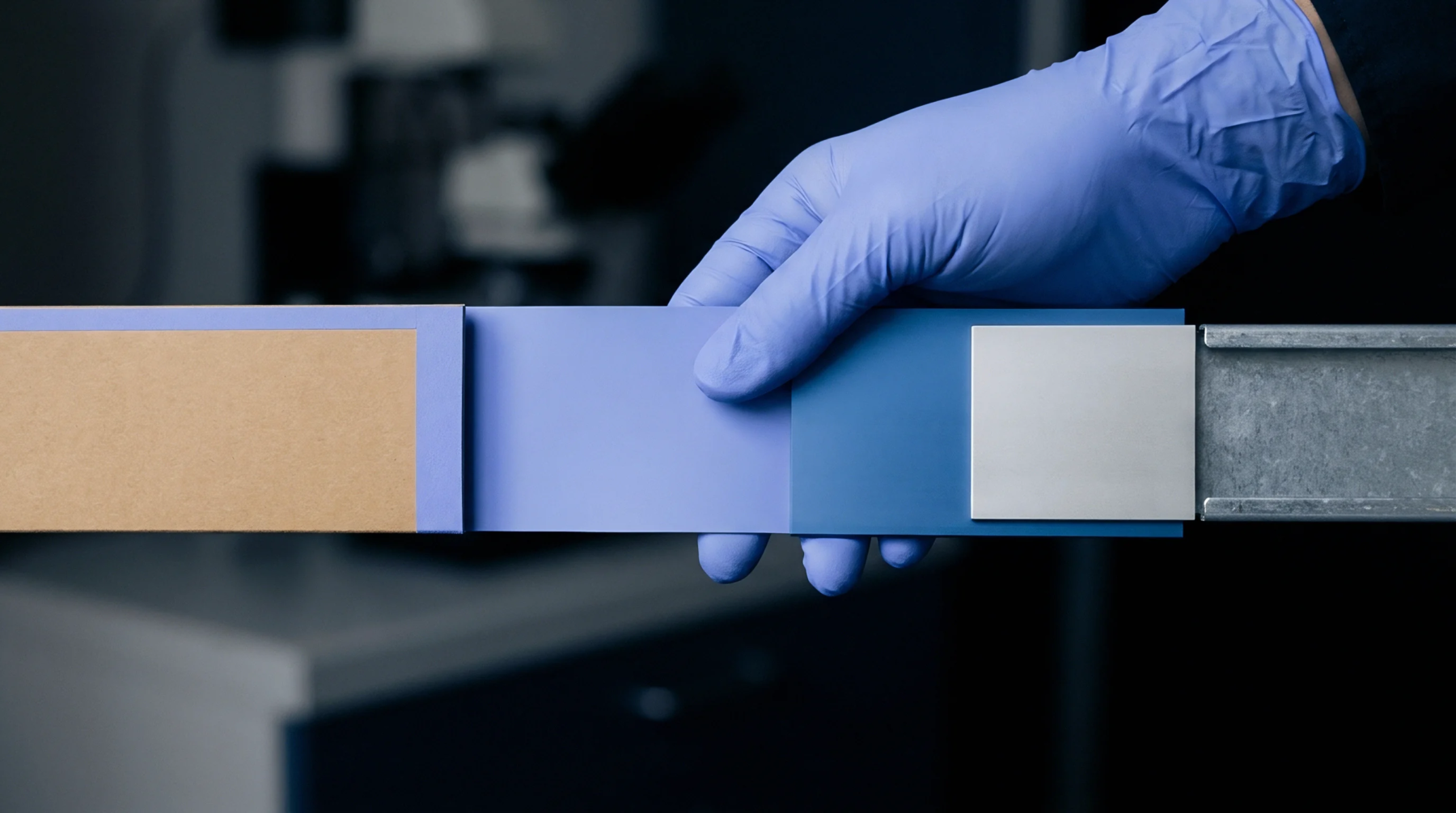
Thickness Deviation
Measurement against nominal sheet specifications defines dimensional fluctuation across a paperboard lot. High-speed packaging lines require uniform stock, where caliper variance describes the deviation between local thickness readings and designated baseline caliper. Test standards employ micrometer contacts under fixed anvil pressure to record cross-machine profiles.
This physical metric excludes micro-roughness, governing gross structural thickness swings.
Converting Impact
High-speed folder-gluers experience feeding failures when paperboard thickness swings beyond operational tolerances. Unplanned machine stoppages occur as irregular board thickness causes double-sheet feeding or misaligned creasing matrix engagement. Adjusting feed rollers accommodates minor shifts, but wide fluctuations compromise folder-gluer alignment and carton folding accuracy.
Consistent board thickness maintains uniform ink transfer in offset printing units, preventing impression cylinder pressure shifts that create localized density variations.
Process Mechanism
Fiber distribution during wet-end web formation determines the structural uniformity of paperboard stock. Stock consistency fluctuations at the headbox produce localized basis weight shifts, altering sheet thickness after press section dewatering and calender stack consolidation. Online scanning sensors record web thickness continuously across the moving sheet, feeding real-time positional adjustments back to automated dilution control valves along the headbox slice.
Calender roll nip pressure adjustments and thermal roll profiling correct localized thick spots before reel winding occurs. Caliper variance decreases when headbox hydraulics and calender thermal profiles operate in closed-loop control.