Matrix Coefficient Variance in Polar Solvent Desorption from Polyurethane Lamination Adhesives
Matrix-driven partition coefficient shifts cause static headspace analysis to understate polar solvent residues in polyurethane laminates by up to 35 percent.

Nip
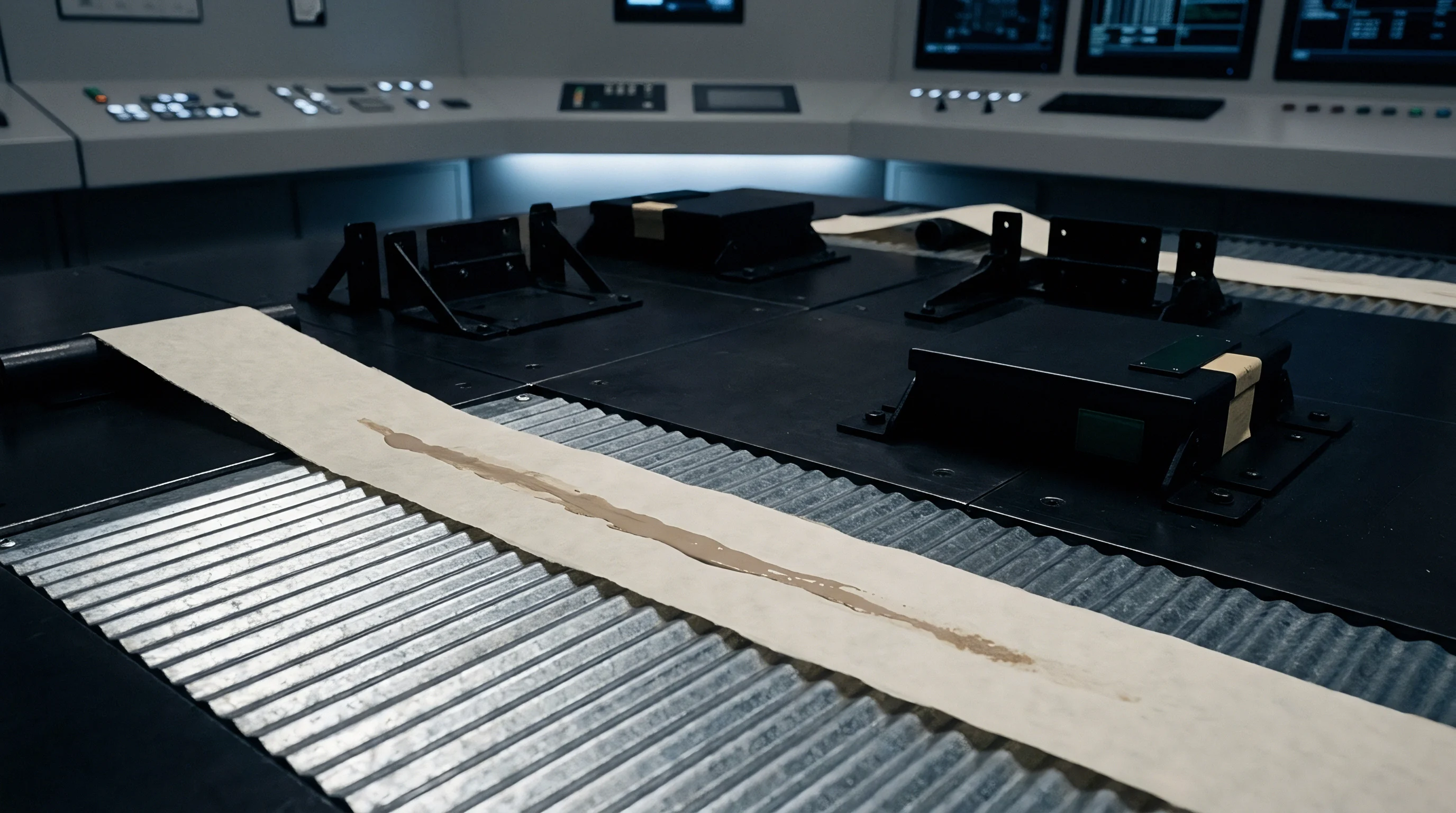
Solvent retention in flexible packaging laminates reveals itself when slitting reels release an ester odor across the rewind deck. A web running at 320 meters per minute through a three-stage drying tunnel loses the bulk of its carrier fluid before reaching the laminating rollers. The remaining polar volatiles enter the marriage point trapped beneath the secondary substrate.
Pressure across the steel and rubber rolls forces the fluid into direct contact with the reacting polyol and isocyanate prepolymers. Trapped ethyl acetate and ethanol interact with developing urethane linkages rather than clearing into the exhaust hood. This entrapment alters the baseline distribution of volatiles across the web.
Converting engineers measure total residual solvents by gas chromatography to confirm compliance with consumer safety limits. Industry standards set maximum allowable solvent retention below 5.0 milligrams per square meter for food-contact barrier webs, with individual polar components restricted below 1.0 milligram per square meter. The analytical measurement assumes that volatiles desorb uniformly from the lamination adhesive during test chamber heating.
Physical realities inside the crosslinked polymer invalidate this assumption. Curing polyurethane adhesive forms a selective boundary that retains polar molecules while releasing non-polar species. The partition coefficient governing equilibrium between the adhesive matrix and the vapor space changes dynamically as polymerization progresses.
Ambient air velocity across the drying web removes free surface solvent while leaving bound polar fractions immobilized inside the wet film.
When line speeds increase to satisfy tight delivery schedules, operators compensate by boosting tunnel temperatures. Elevated heat skin-plates the surface of the solvent-borne polyurethane coating, creating a dense boundary layer. The skin curtails the evaporation rate of high-boiling polar components, such as 1-methoxy-2-propanol and ethanol, leaving them dissolved in the core.
The laminating cylinders seal this incomplete state against oriented polypropylene, polyethylene, or aluminium foil. The trapped solvents become permanent plasticizers within the urethane network.
Tension imbalances across the web accentuate the uneven retention of solvent across the roll width. Edge zones experience higher ambient air exchange, promoting volatilization before contact. Central lanes retain an elevated solvent fraction under identical drying settings.
A single roll therefore exhibits severe lateral variance in desorption efficiency. Laboratory technicians testing samples from reel edges miss the elevated residues concentrated in the package core. Volatiles continue to diffuse during reel rewinding, establishing a non-uniform concentration gradient throughout the wound spool.
The operational compromise appears on the ledger when unreacted groups encounter retained alcohols. Mono-functional alcohols consume isocyanate hardener, lowering final crosslink density. Bond strength drops below specification limits after three days of ambient room conditioning.
Delamination occurs during downstream pouch forming or heat sealing operations. Line speeds remain constrained by this chemical competition between evaporation and resin cure.
A laminator will always trade solvent clearance for running speed when exhaust volumes remain fixed.
Segment
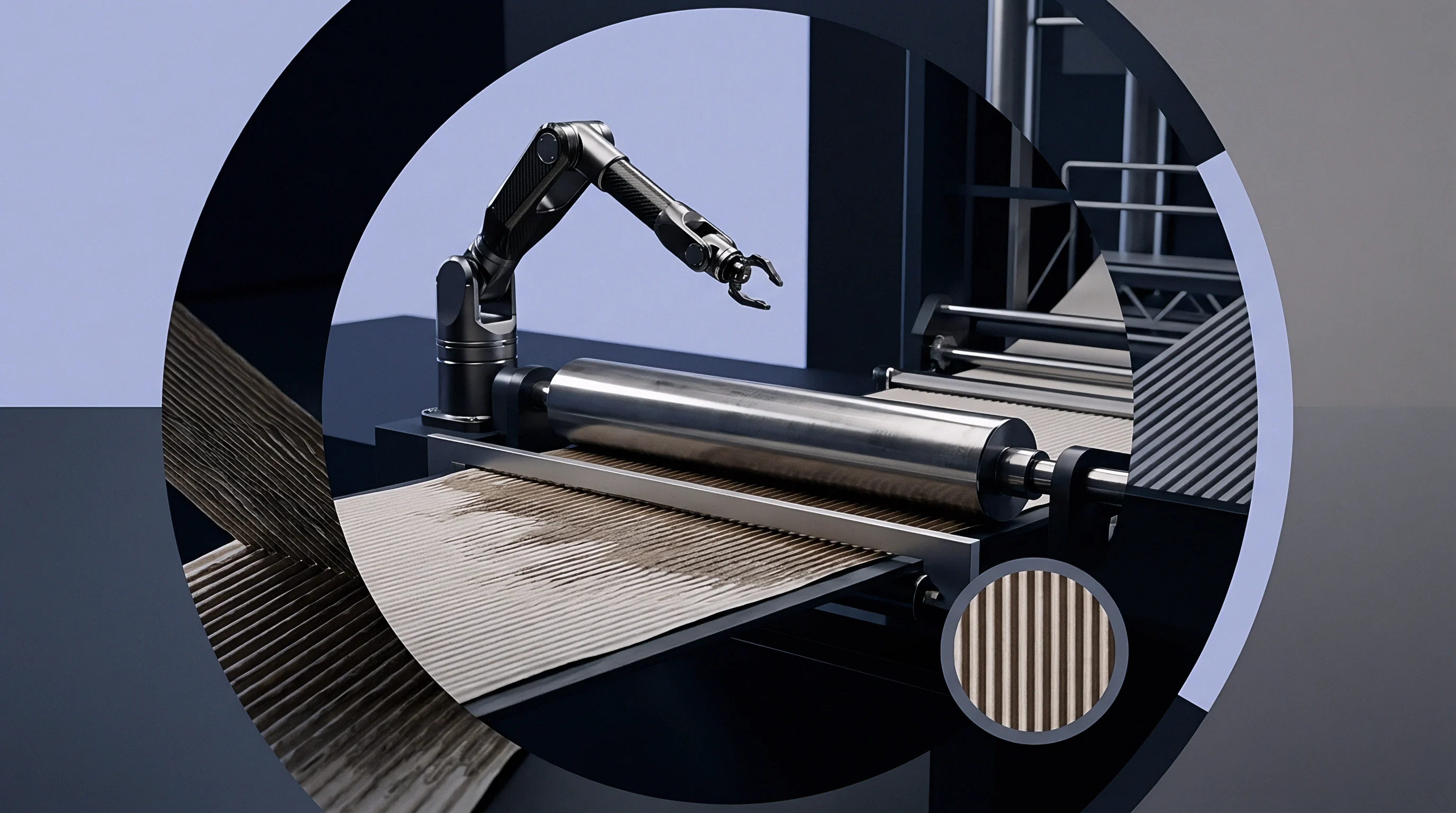
Polyurethane lamination adhesives derive mechanical toughness from phase separation between soft polyol segments and rigid polyurethane-polyurea domains. Polyester or polyether backbones provide elasticity, while diisocyanates, typically aromatic diphenylmethane diisocyanate or aliphatic isophorone diisocyanate, form hard crystalline clusters. Polar solvents used in adhesive formulation demonstrate distinct thermodynamic affinities for these separate chemical domains.
Ethyl acetate partitions preferentially into the ester soft segments. Alcohols associate with hard urethane segments through strong hydrogen bonding.
Secondary bonding between ethanol hydroxyl groups and the carbonyl oxygens of urethane linkages restricts desorption. The activation energy required to liberate hydrogen-bonded alcohol exceeds the energy needed to volatilize unbound solvent by 28 kilojoules per mole. Solvent retention data collected at room temperature fails to predict behavior at elevated temperatures.
In static headspace extraction, thermal energy disrupts these secondary bonds, releasing a sudden burst of polar solvent into the gas phase. The measured matrix coefficient shifts as temperature alters the balance between physical dispersion and chemical dissociation.
Polyurethane test specimens conditioned at forty degrees Celsius retain hydrogen-bonded ethanol thirty percent longer than unbonded aliphatic hydrocarbons.
Varying the isocyanate-to-hydroxyl stoichiometric ratio directly modifies the density of these polar retention sites. Formulators specify an isocyanate index between 1.2 and 1.8 for two-component solvent-based laminating systems to ensure full cure despite ambient moisture interference. Excess isocyanate generates urea and allophanate bridges that multiply active polar bonding sites.
The adhesive network tightens progressively over seven days in curing chambers held at forty degrees Celsius. As the glass transition temperature climbs from minus fifteen degrees to positive twenty degrees Celsius, the diffusion coefficient of ethyl acetate contracts by two orders of magnitude.
The molecular weight distribution of the polyol controls the free volume available for solvent migration. High molecular weight polyesters create expansive amorphous regions that store residual ethyl acetate without immediate phase rejection. Low molecular weight resins generate tightly packed networks that force solvent molecules into micro-voids at the film interface.
These micro-voids act as solvent reservoirs that desorb erratically during thermal analytical cycles.
Laboratory drawdowns fail to replicate the structural morphology of adhesives cured under industrial roll winding pressure. Compressive stress within thousand-meter reels consolidates the polymer chains, accelerating domain ordering and restricting molecular escape routes. Solvents trapped within hard segment crystallites remain locked until elevated temperatures break down domain boundaries.
Analysts observing low volatile release during initial bench screenings encounter unexpected compliance failures once reels complete warehouse cure cycles.
Adhesive formulators routinely claim that cure kinetics eliminate residual polar solvents through complete entrapment inside hard domains.

Diffusivity
Fickian diffusion principles explain mass transfer through amorphous polymers when the solvent concentration remains low. The diffusion flux is proportional to the concentration gradient across the cross section. In polar solvent desorption from polyurethane adhesives, deviations from pure Fickian mechanics arise from concentration-dependent swelling.
Swelling creates an advancing solvent front that alters the local diffusion coefficient. As ethyl acetate desorbs from the outer adhesive boundary, the local matrix collapses into a glassy state, severely suppressing the mobility of remaining volatile molecules.
The mathematical treatment of desorption relies on the matrix partition coefficient, defined as the ratio of solvent concentration within the polyurethane matrix to the solvent concentration in the vapor phase at equilibrium. Thermodynamic non-ideality causes this coefficient to fluctuate with adhesive composition, moisture content, and cure percentage. When water molecules infiltrate the adhesive layer from humid paperboard or atmospheric exposure, water competes for polar urethane sites.
The displaced alcohols and esters exhibit sudden spikes in volatility, shifting the partition coefficient toward the gas phase.
| Solvent Compound | Adhesive Type | Diffusion Coefficient (sq cm/s) | Partition Coefficient K | Desorption Recovery Rate (percent) |
|---|---|---|---|---|
| Ethyl Acetate | Polyester-Urethane | 1.4 x 10^-8 | 420 | 94.2 |
| Ethanol | Polyester-Urethane | 6.8 x 10^-9 | 890 | 81.5 |
| 1-Methoxy-2-Propanol | Polyester-Urethane | 2.1 x 10^-9 | 1450 | 68.3 |
| Ethyl Acetate | Polyether-Urethane | 3.2 x 10^-8 | 310 | 97.8 |
| Ethanol | Polyether-Urethane | 1.5 x 10^-8 | 620 | 88.6 |
| 1-Methoxy-2-Propanol | Polyether-Urethane | 4.7 x 10^-9 | 1120 | 76.1 |
Can Crosslink Density Suppress Polar Entrapment?
Crosslink expansion alters matrix permeability by restricting chain segment mobility. Tri-functional isocyanates build a three-dimensional lattice that lowers the free volume accessible to volatile penetrants. Smaller solvent molecules migrate through interstitial gaps with less resistance than bulky molecules.
Ethanol penetrates tight polymer cages where 1-methoxy-2-propanol experiences steric hindrance. The diffusion rate of bulky ether-alcohols drops sharply in heavily crosslinked adhesives.
Testing laboratories encounter analytical errors when calculating residual solvents using static partition constants. A single constant cannot represent an adhesive transitioning through multiple crosslinking phases. Early in the curing cycle, high diffusivity permits rapid extraction into headspace vials.
Five days later, the identical chemical mass requires twice the thermal dwell time to release forty percent of its volatile payload. Analysts mistake physical immobility for chemical absence.
Substrate permeability creates an asymmetrical boundary condition during industrial desorption. In paper-to-foil structures, solvent vapors escape easily through the porous cellulose sheet during oven transit. In polyester-to-cast-polypropylene structures, both plastic films act as volatile barriers.
Solvents face diffusion distances dictated entirely by the adhesive layer thickness. Increasing coating weight from 1.8 to 3.5 grams per square meter quadruples the time required for polar fractions to reach the laminate edges.
Contractual specifications referencing standard EN 13628-1 mandate that total residual solvent evaluations carry a calibration matrix matching the exact industrial substrate structure and cure age.

Vapor
Analytical quantification of volatile residues relies on gas chromatography coupled with flame ionization detection or mass spectrometry. Standard test protocols mandate sealing a specified surface area of laminate inside a twenty-milliliter vial, followed by thermal incubation. The volatile species vaporize until the system reaches thermodynamic equilibrium between the condensed phase and the gaseous headspace.
An aliquot of this vapor is transferred to the chromatographic column for separation. Quantification accuracy hinges on knowing the true phase distribution constant across the system.
Calibration methods diverge into two commercial practices: external liquid standard injection and multiple headspace extraction. External standard calibration injects known solvent quantities onto a piece of bare aluminium foil inside the calibration vial. This approach assumes the sample adhesive releases solvent with identical efficiency to clean metal foil.
The assumption generates substantial analytical skew. The cured polyurethane matrix exerts significant retentive forces on polar molecules, retaining them far more effectively than bare metal surfaces.
Hydrocarbon gas detectors in petrochemical refining operations face similar phase-partition challenges when sniffing volatile organics absorbed into pipeline seal elastomers. The rubber matrix holds polar additives tenaciously until thermal desorption chambers overwhelm polymer affinity. The physics of matrix-induced chromatographic attenuation remains uniform whether monitoring a North Sea pipeline gasket or a snack pouch adhesive.
Multiple headspace extraction overcomes matrix interference through repetitive heating and flushing cycles. The technician heats the sample, samples the vapor, vents the vial, and repeats the cycle four to six times. Plotting the logarithm of peak area against cycle count yields a linear decay slope.
Mathematical extrapolation reveals total residual solvent regardless of matrix retention strength. This method requires fifty minutes of instrument run time per sample, rendering it costly for high-throughput production laboratories.
| Extraction Protocol | Equilibration Time (minutes) | Carrier Gas Flow (mL/min) | Recovery Bias: Ester (percent) | Recovery Bias: Alcohol (percent) |
|---|---|---|---|---|
| External Liquid Spike on Foil | 45 | 1.2 | -14.5 | -32.8 |
| Matrix-Matched Cured Standard | 60 | 1.2 | -3.1 | -5.4 |
| Multiple Headspace Extraction | 180 | 1.2 | +1.2 | +0.8 |
| Full Evaporation Technique | 90 | 0.8 | -1.8 | -2.2 |
Published literature documents an average matrix suppression factor of 0.68 for ethanol desorbing from solvent-based polyurethane adhesives tested under standard conditions of sixty minutes at one hundred degrees Celsius. This value rests on laboratory trials using fifty-micrometer polyether adhesive films cured with monomeric diphenylmethane diisocyanate, calibrated with five-point external standard curves. Altering the polyol chemistry from polyether to polyester shifts this recovery factor from 0.68 to 0.44 due to increased ester-hydroxyl associations.
A laboratory relying on the polyether factor for polyester lamination under-reports residual ethanol by thirty-five percent.
A standard single-injection static headspace measurement understates bound polar volatiles by twenty to forty percent compared to multiple headspace extraction.
The desk cannot defend single-run static headspace values for 1-methoxy-2-propanol when curing times remain under seventy-two hours. Conversion facilities navigating this uncertainty must calibrate via matrix-matched reference films prepared from the identical adhesive lot and substrate laminate. Analysts build calibration curves across multiple spiked concentrations inside actual cured laminates rather than relying on pure vapor injections.
This procedural correction restores accuracy to high-speed quality checks.
Failure modes multiply when testing facilities ignore the temperature sensitivity of the partition coefficient. Raising incubation temperature from eighty to one hundred and twenty degrees Celsius does not merely accelerate diffusion. It alters the thermodynamic equilibrium constant K, liberating tightly bound solvent clusters.
Adhesives crosslinking past their gelation threshold undergo thermal relaxation, releasing captured polar fragments into the headspace. The testing methodology must reflect real packaging storage temperatures rather than exaggerated analytical regimes.
Headspace testing protocols govern product release, yet laboratory managers dispute whether non-destructive gas-phase extraction can ever fully account for polar molecules locked inside glassy crystalline domains.

Penalty
Regulatory frameworks across international jurisdictions treat retained solvents as primary food-contact compliance hazards. European Union Regulation 10/2011 on plastic materials intended for food contact establishes strict specific migration limits for volatile species. Ethyl acetate carries a toxicological evaluation threshold, while glycol ethers face stringent screening due to reproductive toxicity classifications.
European standard EN 14477 defines total allowable solvent limits across food pouches. When an uncalibrated testing procedure reports 3.8 milligrams per square meter while actual retention sits at 8.2 milligrams, legal liability passes directly to the converting facility.
Organoleptic impairment damages packaged food brands before chemical migration creates legal citations. Confectionery, dry dairy powders, and ground coffee absorb airborne polar solvent vapors instantly across thin sealant films. Ethanol and ethyl acetate alter chocolate flavor profiles at concentrations down to 1.5 milligrams per square meter of laminate.
Brand owners receiving consumer odor complaints initiate warehouse quarantines that paralyze supply channels. The converter faces batch rejection, print cylinder remake costs, and financial claims for spoiled customer ingredients.
The operational cost calculation demonstrates the commercial scale of analytical errors:
- Uncalibrated Headspace Sampling produces a false pass during internal batch release, clearing fifty thousand square meters of high-barrier coffee laminates for distribution.
- Secondary Sensory Audits executed by brand owners detect distinct solvent off-notes within seventy-two hours of incoming inspection, triggering immediate shipment hold.
- External Confirmatory Gas Chromatography using multiple headspace extraction identifies 9.4 milligrams per square meter of mixed polar volatiles, exceeding the contractual ceiling.
- Commercial Scrap Settlements require debiting the converter forty-two thousand euros for ruined substrate, plus twenty-eight thousand euros for unrecoverable coffee beans.
Quality insurance claims stall when the insurer determines the converter failed to execute validated test protocols. Packaging contracts stipulate that testing laboratories utilize matrix-compensated calibration regimes for polar components. Operating with basic liquid-spike calibration curves invalidates the testing certificate attached to shipping manifests.
The loss adjustment falls entirely on converter margins.
Production scheduling collapses when cured reels must be quarantined for secondary aeration. Curing rolls cannot simply be unwound and passed through heating tunnels a second time without risking web distortion and adhesive failure. The material must remain in storage bays under monitored temperatures, tying up working capital and delaying production queues.
Floor space dedicated to post-cure conditioning penalizes overall plant capacity.
A false release protocol shifts the cost of analytical negligence from the testing bench directly onto the balance sheet as unrecoverable waste claims.