Pore Network Structure Modulating Offset Ink Vehicle Absorption Rates
Narrow coating pore throats below 0.05 micrometres maximize capillary pressure, driving rapid ink vehicle separation and set speed on offset press.
Capillary
Liquid vehicle separation in offset printing inks depends on the void geometry established within the coating matrix of paper and board. When ink transfers from blanket to substrate under nip pressures between 1.5 and 3.0 MPa, fluid transport proceeds by two distinct mechanisms. Pressure-driven filtration dominates during the fraction of a millisecond the sheet spends in the press nip.
Capillary forces take over the instant the sheet leaves the nip, drawing low-viscosity mineral or vegetable oil vehicle out of the high-molecular-weight resin and pigment matrix and into the void network.
Pore radius governs the capillary pressure developed inside the coating layer. Fine voids generate intense suction according to the Young-Laplace relationship, where capillary pressure equals twice the interfacial surface tension multiplied by the cosine of the contact angle, divided by the pore radius. Narrow pores between 0.02 and 0.08 micrometres pull organic solvents out of the ink film quickly, accelerating setting and tack build.
Viscous drag inside those same narrow channels works in the opposite direction. The Lucas-Washburn model expresses liquid penetration distance as a function of time, pore radius, surface tension, contact angle, and dynamic viscosity. While finer capillaries raise the driving pressure, they also restrict volumetric flux because flow resistance increases inversely with the fourth power of the radius under Poiseuille conditions.
The balance struck between capillary suction and viscous dissipation sets the actual absorption rate.
| Coating Matrix Class | Mean Pore Radius (µm) | Capillary Pressure (MPa) | Vehicle Viscosity (mPa·s) | Absorption Velocity (µm/ms) |
|---|---|---|---|---|
| Coarse GCC Blend | 0.180 | 0.48 | 8.5 | 12.4 |
| Fine GCC Blend | 0.065 | 1.33 | 8.5 | 28.1 |
| Narrow-PCC Structure | 0.035 | 2.47 | 8.5 | 41.6 |
| Platy Kaolin Clay Blend | 0.022 | 3.93 | 12.0 | 18.3 |
| High-Binder Offset Coat | 0.015 | 5.76 | 18.0 | 8.7 |

Fluid Dynamics in Porous Media
Initial liquid intake begins within microseconds of contact. Early fluid transport departs from standard Lucas-Washburn kinetics because inertial forces resist instantaneous acceleration of the vehicle column inside empty capillaries. The Bosanquet equation accounts for this fluid inertia alongside viscous resistance, showing that initial penetration velocity remains constant before settling into classical square-root-of-time diffusion.
Coating formulations with uniform sub-micron pore distributions maximize capillary suction while minimizing local ink vehicle drainage variation.
Vehicle separation rearranges the physical structure of the wet ink layer. Offset formulations combine alkyds, hard synthetic resins, pigments, and aliphatic hydrocarbon solvents or fatty acid esters. As thin solvent drains into the porous coating, the resin concentration in the remaining surface ink film rises sharply.
This loss of solvent triggers rapid phase separation, turning the liquid ink into a stiff, highly viscous gel network, a transformation accelerated by finer voids.
Sub-surface pore throat size dictates how cleanly this filtration occurs. If entry throats are wider than the dissolved resin complexes or micro-gel agglomerates in the vehicle, resin enters the coating void network alongside solvent rather than separating at the boundary. Clean separation requires pore throats narrower than the hydrodynamic radius of the polymer complexes, forcing solvent through while pinning binder resin at the surface to lock down the pigment.

Capillary Pressure and Viscous Drag Resistance
Surface energy interactions between mineral coating pigments and aliphatic ink solvents provide the thermodynamic driving force for wetting. Hydrocarbon solvents spread with low contact angles, typically below 20 degrees, across calcium carbonate and kaolin clay. This high wettability keeps the cosine of the contact angle near unity, maximizing capillary pressure in Washburn calculations.
Dynamic surface tension drops caused by surfactants in the fountain solution alter that equilibrium during wet-offset runs.
Fountain solution emulsified into the ink film modifies the rheology of the absorbing liquid. Water-in-oil emulsification raises effective vehicle viscosity ~ which is already climbing as solvent departs ~ and reduces interfacial energy against mineral pore walls. Moisture held in the film slows vehicle absorption, delaying tack development and raising the risk of set-off in the delivery pile.
On press, emulsification above 18 percent water cuts vehicle absorption rates by more than half compared to neat ink.
Network tortuosity increases the actual distance the vehicle must travel. Pore channels in mineral coatings are rarely straight tubes; they consist of irregular chambers connected by narrow constrictions. The tortuosity factor, the ratio of actual flow path length to coating thickness, runs from 1.5 in spherical pigment structures to over 4.0 in highly oriented platy clay coatings.
Higher tortuosity adds viscous drag and slows absorption without diminishing the static capillary pressure generated at entry throats.
How does the spatial distribution of pore throat constrictions across microscopic coating domains alter local phase separation rates during high-speed offset runs?

Substrate
Mineral coating formulations dictate the spatial architecture of the porous network applied to paperboard and fine paper grades. The mineral blend typically relies on ground calcium carbonate, precipitated calcium carbonate, and hydrous kaolin clay. Each brings a characteristic particle size distribution and crystal habit that governs how individual particles pack during application and subsequent drying under infrared or hot-air hoods.
Ground calcium carbonate features blocky, irregular particle geometries. Broad particle distributions allow fines to settle between larger grains, packing into a dense layer with low total void volume and wide pore size distributions. Narrower distributions of ground calcium carbonate yield looser packing with higher porosity and pore diameters directly proportional to median particle size.
These narrow distributions produce uniform capillary networks that absorb ink vehicle evenly and rapidly.
Precipitated calcium carbonate pigments offer synthetic control over particle morphology, yielding scalenohedral, aragonitic, or rhombohedral crystal habits. Scalenohedral grades form an internal structure of interlocking needles, producing high void volume alongside uniform pore throats around 0.04 micrometres. These synthetic geometries generate elevated capillary pressures that strip solvents rapidly without requiring heavier coat weights, whereas platy clays introduce far more tortuous flow paths.
- Ground Calcium Carbonate Modalities Broad particle distributions compact tightly to yield lower pore volume, whereas narrow distributions create open structures with predictable capillary radii.
- Scalenohedral Precipitated Carbonate Interlocking needle geometries create high internal void fractions with uniform sub-micron pore throat diameters that optimize ink vehicle filtration kinetics.
- Platy Kaolin Clay Structures Plate-like particle orientations align parallel to the substrate during blade coating, extending fluid path tortuosity and reducing vertical absorption rates.
- Synthetic Silica Additives Ultra-high surface area particles introduce structured meso-porosity that accelerates fluid absorption through extreme surface energy driving forces.

Pigment Packing Geometry and Pore Volume
Latex and starch binders added to coating formulations occupy void space between mineral pigment particles. Synthetic latex polymers, typically styrene-butadiene or styrene-acrylate emulsions, deform and film-form during drying. As water evaporates from the wet coating film, latex particles consolidate at mineral contact points, forming polymer bridges that provide internal coating strength and surface picking resistance at the expense of total void volume.
Excessive binder chokes the pore network by blinding entry throats. The binder volume concentration defines the volumetric ratio of solid binder to total dry solids in the formulation. Raising binder volume concentration from 10 percent to 18 percent drives down total porosity, shifting the median pore throat diameter downward and reducing overall void volume.
High binder levels leave a tight, impermeable surface film that retards vehicle absorption, extending ink set times drastically.
| Pigment Formulation | Binder Vol Conc (%) | d50 Pore Diameter (µm) | Tortuosity Factor (τ) | Filtration Rate (cm³/m²·s^0.5) |
|---|---|---|---|---|
| 100% Fine GCC (0.8 µm) | 11.0 | 0.062 | 1.62 | 4.15 |
| 100% Scalenohedral PCC | 11.0 | 0.038 | 1.85 | 6.80 |
| 60/40 GCC/Platy Clay | 12.5 | 0.028 | 2.95 | 2.10 |
| 80/20 GCC/Fine Clay | 15.0 | 0.021 | 3.40 | 1.15 |
| 100% Coarse GCC (1.5 µm) | 10.0 | 0.140 | 1.45 | 2.85 |

Binder Concentration Modulating Throat Tortuosity
Drying kinetics during coating application drive binder migration toward the top of the layer. Rapid hot-air impingement and high infrared drying inputs trigger aggressive capillary evaporation of water from the wet surface. Capillary draw carries liquid water along with dissolved starch or uncoalesced latex particles toward the upper evaporation front before the coating structure consolidates.
This surface binder enrichment leaves a dense, low-porosity skin right at the print interface.
Base paper characteristics exert secondary modulation over vehicle absorption through water absorption and z-direction compressibility. Fibrous cellulose base sheets possess large pore radii ranging from 1.0 to 10.0 micrometres, generating low capillary pressure compared to mineral coatings. When an uncoated or light-coated sheet receives offset ink, initial vehicle absorption is slow until pressure nip consolidation forces fluid into the coarse inter-fibre voids, after which fibre swelling further alters local pore geometry.
Double and triple coating formulations segregate absorption duties across distinct stratum layers. A coarse ground calcium carbonate pre-coat provides high porosity and large void volume to retain absorbed solvents, while a fine top-coat provides narrow pore throats to filter ink resins. This pore size gradient creates an asymmetrical capillary pressure driver that sucks solvent through the thin top-coat and stores it in the high-capacity pre-coat, protecting the surface ink film from setting failure.
Increasing the proportion of platy kaolin clay in a mineral coating formulation extends vehicle absorption times and enhances surface ink gloss retention without changing total coat weight.

Bench
Quantifying pore network parameters requires standardized laboratory instrumentation capable of isolating pore volume, pore size distribution, and fluid absorption kinetics. Mercury intrusion porosimetry serves as a primary benchmark technique for characterizing the porous structure of paper coatings. The instrument forces non-wetting liquid mercury into the void network under progressively increasing hydrostatic pressure, recording intruded mercury volume as a function of applied pressure up to 414 MPa.
Washburn principles govern mercury intrusion calculations, mapping applied pressure directly to equivalent pore throat radii. Low intrusion pressures between 0.01 and 0.2 MPa fill large inter-fibre voids in the base sheet, whereas high pressures between 10 and 400 MPa fill sub-micron voids within the mineral coating layer. In this way, mercury intrusion porosimetry provides precise pore throat size distributions, total void volume, bulk density, and specific surface area for isolated coating films or finished substrate samples.
Liquid penetration testing offers dynamic measurement of vehicle absorption rates under short timescale conditions relevant to commercial printing presses. Ultrasonic penetration equipment measures the attenuation of ultrasonic signals transmitted through the substrate as a liquid solvent wets and penetrates the sheet structure. Rapid drop in signal amplitude correlates with fluid displacement of air inside the void network, producing penetration curves that isolate surface wetting, capillary absorption, and base sheet saturation phases.
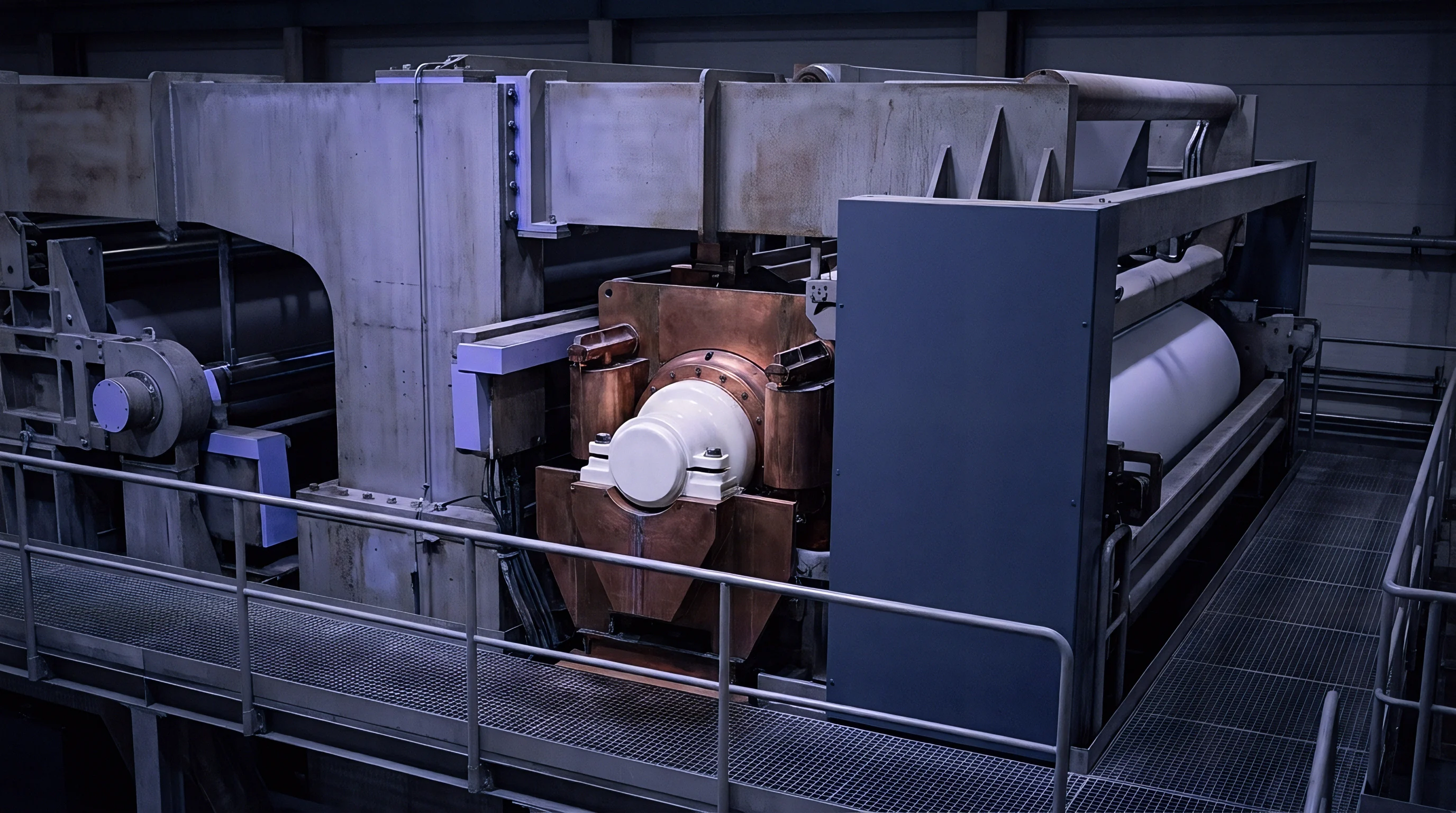
Which Analytical Method Isolates Surface Pore Radius?
Dynamic contact angle goniometry tracks liquid droplet spreading and absorption profiles over millisecond time increments. High-speed video cameras record drop geometry as an ink solvent or test fluid deposits onto the substrate surface. Automated image analysis software then calculates contact angle, droplet volume, and base diameter as functions of time according to TAPPI T 558 protocols, reflecting how pigment selection shapes underlying pore dimensions.
Mercury intrusion porosimetry shows how latex binder levels alter the critical pore throat inflection point on coated paperboards, revealing whether binder reduction opens inter-particle channels or creates micro-cracks in the consolidated coating matrix.
- Fill the measurement cell with test liquid and adjust the automated optical meniscus sensor to zero point.
- Place the conditioned paper specimen securely over the fluid absorption chamber clamp aperture.
- Initiate pneumatic pressure pulse to bring the liquid column into physical contact with the lower specimen surface.
- Record the precise volumetric fluid drawdown rate using the laser interferometry sensor over a 500-millisecond duration.
- Calculate absorption rate constants by plotting cumulative absorbed volume against the square root of contact time.
Compliance with ISO 187 atmospheric conditioning mandates testing substrates at 23 degrees Celsius and 50 percent relative humidity, as ambient moisture shifts cellulose pore geometries and alters ink vehicle absorption values.

Standardized Protocols and Conditioning Atmosphere
Automated absorption testers utilizing gravimetric principles measure mass uptake during short contact intervals. The substrate specimen attaches to a precision analytical balance, bringing the lower surface into contact with a reservoir containing synthetic ink solvent. The balance logs weight gain at millisecond intervals, generating high-resolution sorption curves.
The slope of the weight-gain square-root-of-time curve defines the surface sorptivity coefficient of the coating layer.
Scanning electron microscopy coupled with focused ion beam sectioning delivers three-dimensional tomographic reconstructions of the pore network. High-energy ion beams cut ultra-thin cross sections through the mineral coating layer without smearing soft latex binders or distorting fragile pore geometry. Backscattered electron image stacks undergo digital image analysis to compute volumetric porosity, pore throat connectivity, local channel tortuosity, and spatial distribution of binder polymers.
Automated liquid absorption measurements conducted according to TAPPI T 558 standard guidelines are valid only when test fluid temperature remains within plus or minus 0.5 degrees Celsius of ambient conditioning standards throughout the test sequence.
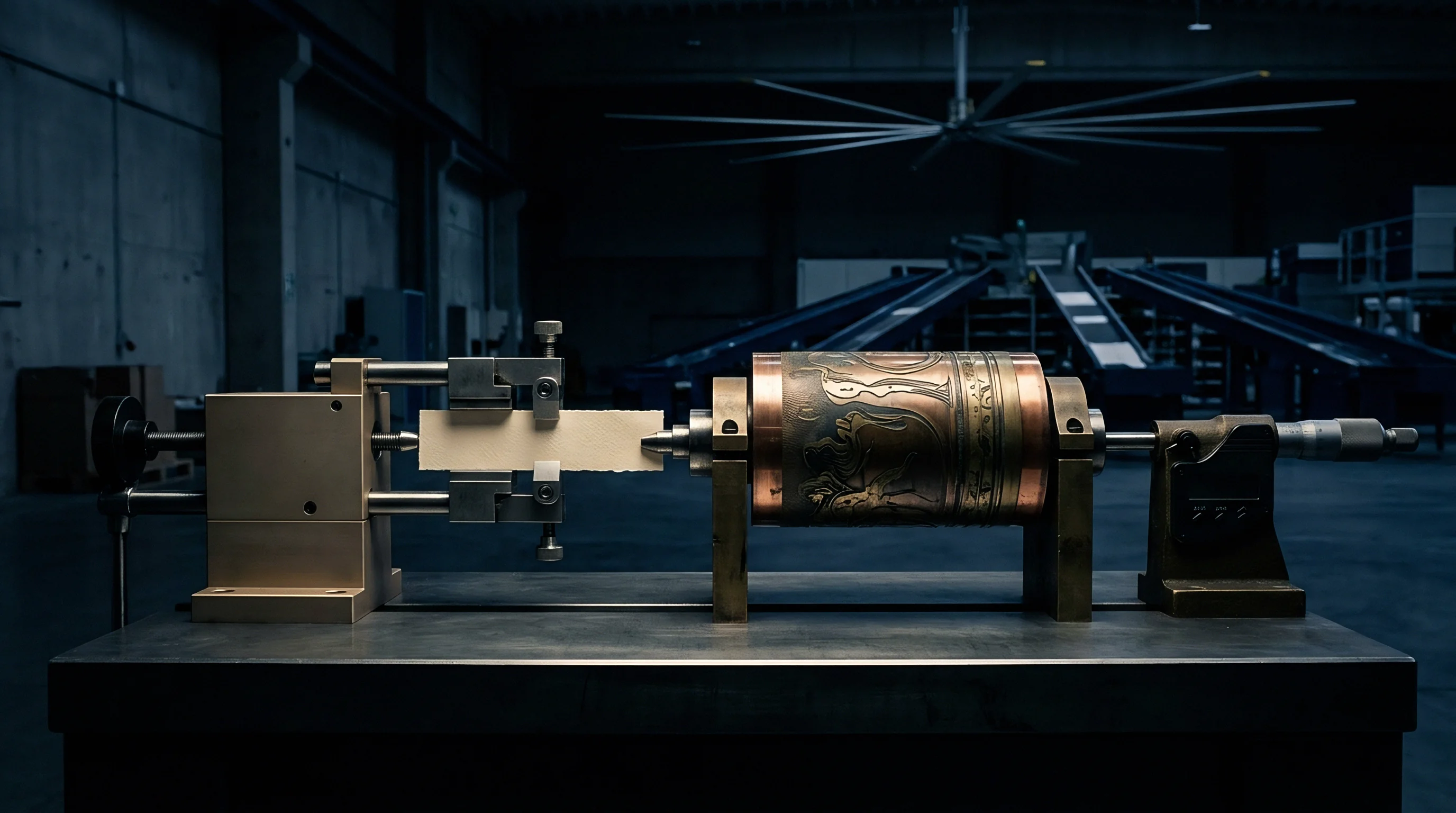

Transit
Transfer of offset ink from blanket to substrate occurs under high hydrodynamic shear forces inside the printing nip. As the paper web enters the nip contact zone, mechanical pressure compresses the sheet structure and forces the liquid ink film into intimate contact with the coating surface. Hydrodynamic pressure forces low-viscosity components of the ink vehicle into entry pore throats before capillary suction takes effect, establishing the initial filtration rate that governs ink setting.
Exit from the press nip relieves mechanical pressure, triggering elastic recovery of the compressed paper structure. Sheet expansion creates momentary negative pressure inside unsaturated surface pores, supplementing early capillary draw. Fluid transport transitions instantly from pressure-driven flow to capillary-driven filtration.
The vehicle filtration rate dictates how fast the surface ink layer consolidates, directly influencing ink transfer efficiency and back-trap mottle tendencies on subsequent printing units.
Viscosity of the setting ink film increases continuously as solvent vehicle drains into the underlying pore network. Phase separation concentrates the alkyd and hydrocarbon resin molecules at the ink-coating interface. The ink film transitions from a low-viscosity liquid with high tack to a sticky, viscoelastic gel structure.
Tack rises to a peak value, termed maximum ink tack, before declining as the ink film dries completely through oxypolymerization.
Filtration testing under 2.0 MPa applied pressure shows fine PCC coatings extract aliphatic solvents from standard offset inks within 15 milliseconds at 23 degrees Celsius.
Nip Consolidation and Hydrodynamic Pressure Penetration
Tack development speed governs press performance and multi-color wet-on-wet printing behavior. If vehicle absorption proceeds too fast, ink tack rises excessively before the sheet reaches the next printing unit. Elevated ink tack exerts high splitting forces during blanket release, causing surface picking, coating delamination, or fibre tail-out failures, a tendency further influenced by sheet temperature shifting fluid viscosity.
Slow vehicle absorption leads to incomplete ink setting at the end of the press. Wet ink films leave the final printing unit without sufficient cohesion, causing ink transfer onto guide rollers or set-off in the delivery pile. In multi-color printing, slow setting causes improper ink acceptance on downstream blanket stations, an operational defect known as poor ink trapping or back-trap mottle, as tack reaches its peak during this period of rapid solvent loss.
Phase Separation and Ink Tack Buildup Kinetics
Offset fountain solution emulsified into the ink film alters phase separation kinetics on the substrate surface. During press operation, dampening solution forms a fine water-in-oil emulsion within the ink matrix. Upon nip transfer, free surface water must absorb into the coating layer or evaporate before the non-polar aliphatic solvent vehicle can access entry capillary pore throats, meaning excess surface moisture directly retards vehicle absorption kinetics.
Temperature variations across the press roll stack modify ink vehicle viscosity and absorption rates. Increased operating temperatures reduce liquid solvent viscosity, accelerating capillary flow velocity according to Washburn equations. Higher press room temperatures cause faster tack buildup and premature ink setting unless coating pore networks are designed with appropriate tortuosity margins to damp temperature sensitivity.
Variable ink setting performance on press often stems from batch-to-batch coat weight distribution defects across the web rather than fluctuations in ink solvent composition.

Flaw
Inconsistent pore network distribution across substrate surfaces causes severe printing defects during high-speed offset production runs. Absorbency mottle represents one of the most commercially damaging, appearing as random micro-variations in print gloss and optical density across solid print areas. It develops when localized coat weight variations or binder migration unevenness create spatial differences in capillary vehicle absorption rates across millimeter-scale domains.
Fast vehicle absorption areas extract solvent rapidly, forcing early ink phase separation and high print gloss. Adjacent low-absorbency domains absorb solvent slowly, allowing the ink film to level over longer durations while retaining dissolved resin at the surface. Optical density and gloss discrepancies between these adjacent zones produce a cloudy, uneven print appearance that ruins high-end solid packaging work.
Chalking represents a severe ink film failure caused by excessively fast capillary vehicle absorption. When the coating matrix contains an overabundance of narrow pore throats below 0.03 micrometres with low binder volume concentration, capillary suction forces become extreme. The substrate extracts the low-viscosity solvent along with the soluble alkyd binder resin away from the ink pigment matrix.
Binder-depleted ink pigment remains on the sheet surface as a loose, dry powder that rubs off under minimal abrasive contact.
- Absorbency Mottle Non-Uniformity Spatial variance in capillary suction rates across localized coating domains causes irregular ink vehicle drainage, producing visual gloss and density variations.
- Chalking Degradation States Extreme capillary suction strips soluble binder resins from the ink film along with the solvent, leaving loose pigment powder on the substrate surface.
- Set-Off Sheet Defection Insufficient pore volume or slow filtration kinetics leave wet ink films on delivered sheets, transferring ink onto the unprinted undersides of stacked boards.
- Coating Delamination Picking Uncontrolled tack rise resulting from ultra-fast vehicle drainage exceeds the internal bond strength of the coating, plucking mineral flakes off the sheet.
- Blistering Failure Modes Low vapor permeability in dense coated heatset papers traps boiling solvent vapor inside the base sheet, exploding surface coating layers in drying ovens.
Mottle Formation from Substrate Absorptivity Variance
Set-off occurs when slow vehicle absorption leaves an uncompressed, wet ink layer on top of sheets landing in the delivery stack. Under the weight of accumulating paper or packaging board, wet ink transfers onto the reverse side of adjacent sheets. Remedies require increasing anti-set-off spray powder application or slowing down press running speeds, both of which increase production costs and introduce surface dusting defects in downstream converting operations.
Picking occurs when ink tack development outpaces the internal structural strength of the coating or base sheet. Rapid vehicle absorption increases ink tack rapidly inside early press nips. If the tensile force generated during blanket separation exceeds the local cohesion of the latex-pigment matrix or the z-direction strength of the base paper, coating flakes or raw fibres pull away from the sheet, contaminating printing blankets and creating unprinted white specks across subsequent sheets.
Chalking Set off and Surface Picking Mechanics
Heatset web offset printing introduces heat-induced blistering hazards on heavily coated stocks. Heatset inks dry by driving off volatile hydrocarbon solvents inside high-temperature hot-air ovens operating between 180 and 250 degrees Celsius. Rapid heating boils moisture trapped inside the base paper alongside ink solvents.
If the coating pore network possesses high tortuosity and ultra-fine pore throats, steam and solvent vapor cannot escape fast enough, generating internal gas pressures that burst the coating layer to form visible blisters.
Uneven binder distribution correlates directly with local back-trap mottle severity scores on multi-color sheetfed offset presses. Spatial maps confirm that coat weight non-uniformity triggers local absorbency variations that ruin tone reproduction accuracy.
Selecting a substrate with erratic coat weight distribution and uncalibrated binder levels leads to chronic ink setting failures, excessive press downtime, higher anti-set-off powder consumption, and costly scrap rates during high-speed converting.

Arithmetic
Optimizing substrate pore structures requires balancing physical performance against chemical formulation expenditures and landed material costs. Mineral pigment selection directly dictates coating raw material expenditures. Standard ground calcium carbonate represents a low-cost foundational pigment, whereas engineered precipitated calcium carbonates and high-brightness specialty kaolin clays command material price premiums ranging from 35 to 80 percent per dry metric tonne.
Coating binder formulation introduces significant cost modulation. Synthetic latex polymers represent one of the most expensive chemical components in a coating slip per kilogram dry weight. Reducing latex binder volume concentration from 14 percent to 10 percent lowers dry coating raw material costs while opening up pore networks to accelerate vehicle absorption.
This binder reduction lowers internal coating strength, increasing the risk of surface picking defects that cause press stoppages and ruined print runs.
| Substrate Grade Specification | Coat Weight (g/m²) | Pore Vol (cm³/g) | Tack Peak Time (s) | Max Press Speed (sph) | Landed Cost (€/1000 sh) |
|---|---|---|---|---|---|
| Single Coated Board (GCC) | 12.0 | 0.082 | 14.5 | 11,000 | 142.50 |
| Double Coated Board (GCC/PCC) | 20.0 | 0.115 | 6.2 | 16,500 | 168.00 |
| Triple Coated Fine (GCC/PCC/Clay) | 28.0 | 0.138 | 4.1 | 18,000 | 195.20 |
| Economical Low-Binder Fine | 16.0 | 0.102 | 5.0 | 14,000 | 154.10 |
| Heavy Matte Coated (Clay Rich) | 22.0 | 0.071 | 18.0 | 9,500 | 176.80 |
Coat Weight Optimization and Binder Economics
Coat weight optimization determines total substrate absorption capacity. Light coat weights below 8 grams per square metre lack sufficient pore volume to absorb the full volume of ink vehicle deposited during heavy four-color solid coverage. Excess vehicle remains trapped in the upper ink layer, extending drying times and requiring heavy applications of starch anti-set-off powder.
Increasing coat weight to 20 grams per square metre provides ample pore volume to absorb vehicles fully, allowing press operators to run at maximum rated mechanical speeds without set-off risks.
Yield arithmetic demonstrates the commercial trade-offs between coat weight, grammage, and delivered sheet counts. Applying high mineral coat weights increases overall sheet caliper and stiffness, enabling papermakers to reduce base fibre grammage while maintaining structural packaging performance. Base fibre costs significantly exceed mineral coating costs per dry metric tonne.
A mill replacing 10 grams per square metre of kraft pulp furnish with 10 grams per square metre of calcium carbonate coating layer reduces raw material expenses while producing a sheet with superior ink vehicle absorption characteristics.
Consider a commercial folding carton converter producing 5,000,000 package units on a 720 x 1020 millimetre sheet format, running six-color offset lithography with heavy solid background coverage. The job runs across two substrate options. Option A utilizes a single-coated white-lined chipboard specifying 12 grams per square metre of coarse GCC coating, priced at 1,150 Euros per metric tonne at a basis weight of 350 grams per square metre.
Option B specifies a double-coated solid bleached sulfate board featuring 22 grams per square metre of engineered PCC/GCC top coating, priced at 1,480 Euros per metric tonne at an equivalent caliper yielding 310 grams per square metre basis weight.
Option A single-coated board demonstrates slow vehicle absorption kinetics, with tack peak times extending to 14.5 seconds due to coarse pore throats and low total void volume. Slow setting forces the press operator to cap printing speed at 11,000 sheets per hour to prevent back-trap mottle and stack set-off. Anti-set-off powder application must be set to maximum delivery rates, adding 0.85 Euros per thousand sheets in material costs and requiring manual press blanket washing every 8,000 sheets due to powder build-up.
Make-ready spoilage increases by 2.5 percent across the production run.
Option B double-coated substrate exhibits optimized capillary pore networks with average pore throat diameters of 0.045 micrometres and high pore volume. Ink vehicle phase separation occurs rapidly, dropping tack peak times down to 4.2 seconds. Rapid setting enables the press operator to run the equipment at its maximum rated speed of 16,500 sheets per hour without set-off risks.
Anti-set-off powder usage drops by 70 percent, blanket wash intervals extend to 35,000 sheets, and make-ready waste drops by 1.8 percent overall.
Calculating landed sheet costs requires translating basis weight and tonnage pricing into unit sheet costs. Option A weighs 257.0 grams per parent sheet, yielding 3,891 sheets per metric tonne. Material sheet cost equals 0.2955 Euros per sheet, or 295.50 Euros per thousand sheets landed.
Option B weighs 227.7 grams per parent sheet, yielding 4,391 sheets per metric tonne due to its lower basis weight at equivalent structural caliper. Material sheet cost equals 0.3370 Euros per sheet, or 337.00 Euros per thousand sheets landed.
Press operating economics reverse the initial substrate purchase cost advantage. Press operating rates carry a fixed shop floor charge of 240.00 Euros per hour. Printing 1,285,000 parent sheets for the 5,000,000 carton yield requires 116.8 press hours on Option A at 11,000 sheets per hour, generating 28,032.00 Euros in press hourly machine costs.
Printing the same sheet volume on Option B requires 77.9 press hours at 16,500 sheets per hour, generating 18,696.00 Euros in press hourly machine costs. Press speed gains save 9,336.00 Euros in press time on Option B.
Waste and downtime arithmetic widens the margin. Option A requires 160 press washes over the run duration, consuming 26.6 press hours valued at 6,384.00 Euros, alongside 32,125 spoilage sheets valued at 9,492.00 Euros. Option B requires 36 press washes consuming 6.0 press hours valued at 1,440.00 Euros, alongside 8,995 spoilage sheets valued at 3,031.00 Euros.
Total job cost on Option A lands at 423,433.00 Euros, whereas total job cost on Option B lands at 456,127.00 Euros minus 19,279.00 Euros in press room productivity savings, bringing the effective landed economic gap down to less than 3 percent while delivering superior visual print gloss and zero customer field failure risks.
Press Efficiency Ink Consumption and Landed Yield
Substrate absorptivity dictates ink volumetric consumption rates over long production runs. Highly porous, un-coated or coarse-coated substrates draw ink vehicle and pigment deep into surface macro-pores, requiring thicker wet ink films to achieve target solid optical densities. A coarse sheet requires a wet ink film thickness of 1.5 micrometres to achieve a 1.40 status T reflection density, whereas a fine engineered PCC coated sheet achieves the same optical density at a wet film thickness of only 1.0 micrometres due to efficient surface pigment retention.
Running thinner ink films reduces ink fluid consumption per sheet directly, yielding substantial cost savings on expensive lightfast packaging inks and metallic formulations. Lower ink film thickness accelerates drying speeds, reduces ink transfer distortion, and sharpens dot gain curves, enabling higher screen ruling density and superior halftone detail reproduction without increasing pressroom running risks.
Landed packaging unit economics across high-volume folding carton runs demonstrate how engineered pore structures offset higher mill sheet prices by driving down total converting conversion costs. Substrate specification decisions made prior to plate output establish the absolute press productivity potential and final margin profile of the printed pack.