Quantifying Micro-Pore Gas Permeation Mechanics across Water-Based Inline Barrier Coating Layers
Inline water-based barriers stop gas transmission only when drying and holdout prevent micro-pores larger than ten nanometers from piercing the dry coating layer.

Transport
Water-based inline barrier coatings deposit polymer dispersions onto paperboard webs to replace extruded polyolefin films. Gas transport across these dried synthetic or bio-based polymer layers proceeds along two distinct pathways that operate concurrently. The first pathway involves molecular solution-diffusion through the dense, continuous polymer matrix according to Fickian mechanics.
Penetrant gas molecules dissolve into the coating surface at a rate governed by Henry’s law, diffuse down a chemical potential gradient within the polymer free volume, and desorb into the lower-concentration headspace. The second pathway involves convective and diffusive flux through physical micro-pores, pinholes, incomplete film coalescences, and micro-fissures that penetrate the dry layer caliper. When micro-pores exceed molecular dimensions, gas permeation rates increase by three to five orders of magnitude above theoretical solution-diffusion baselines.
Quantifying gas flux through these microscopic apertures depends on the Knudsen number, defined as the ratio of the gas molecular mean free path to the pore diameter. At 23 degrees Celsius and atmospheric pressure, the mean free path for oxygen measures roughly 68 nanometers, while water vapor measures approximately 40 nanometers. When coating drying profiles or pigment volume concentrations yield micro-pores narrower than 10 nanometers, the Knudsen number exceeds 10.
Gas molecules collide primarily with the pore walls rather than with each other. Knudsen diffusion dominates this regime, where molar flux scales inversely with the square root of the gas molecular weight.
Under standard test conditions of 23 degrees Celsius and zero percent relative humidity, pure Knudsen flow across a five-nanometer pore yields an oxygen transmission rate inversely proportional to the square root of thirty-two.
Pore diameters between 50 nanometers and 2 micrometers shift transport into transition diffusion and viscous Poiseuille slip flow. In this transition zone, intermolecular gas collisions occur alongside wall impacts. Permeation rates scale with the square of the pore radius and depend directly on bulk dynamic gas viscosity rather than molecular weight alone.
Any total pressure differential across the cartonboard wall, such as pressure swings during hot-filling, high-altitude transit, or vacuum skin pack cycles, drives convective bulk flow through continuous capillary channels. Convective gas leakage through a single two-micrometer pinhole on a carton face overwhelms the entire matrix-retarded diffusion of a thirty-square-centimeter barrier panel.
Polymer chemistry dictates the baseline solubility and diffusivity of the continuous phase. Water-dispersed barrier chemistries incorporate functional groups tailored to specific gases:
- Ethylene acrylic acid dispersions provide significant grease holdout and moderate water vapor resistance, while displaying oxygen transmission rates above 800 cubic centimeters per square meter per day at standard atmospheric conditions.
- Polyvinylidene chloride emulsions yield dense crystalline domains that restrict both oxygen and water vapor transfer, achieving oxygen transmission figures below 5 cubic centimeters per square meter per day under 23 degrees Celsius and 85 percent relative humidity.
- Styrene-butadiene latex systems blended with plate-like mineral pigments establish tortuous diffusion paths, reducing gas transport rates by forcing penetrant molecules to navigate lateral aspect ratios.
- Micro-fibrillated cellulose suspensions generate hydrogen-bonded crystalline sheets that block non-polar oxygen molecules effectively at zero percent humidity, yet swell rapidly when relative humidity climbs past 70 percent.
Permeation rates through dense films remain linear with pressure differentials under Henry’s law assumptions. The presence of physical micro-capillaries introduces non-linear transport behavior. Viscous flow mechanisms create quadratic dependencies on total pressure gradients.
Converting operations that pull vacuum on thermoformed barrier trays experience sudden oxygen ingress spikes when micro-cracks form in the coating shoulder during male plug assistance. Mechanical stretching expands nanometer voids beyond the Knudsen threshold into the viscous laminar flow domain.
Inline coaters running on printing presses or offline tandem coating decks apply dispersion coats at web speeds from 150 to 450 meters per minute. The drying window on these presses rarely exceeds two seconds per station. Capillary transport through the wet film during flash dewatering creates localized convective channels before polymer latex spheres can deform and fuse.
Gas molecules exploit these persistent channels across the finished carton substrate.
Pin

Pore Formation Mechanics
Film formation from an aqueous polymer dispersion follows three discrete physical stages: water evaporation bringing particles into close-packed arrays, particle deformation under capillary and surface tension forces, and interdiffusion of polymer chain ends across particle boundaries. Disruptions at any stage create micro-voids. Pigment particles introduced to improve economics or reduce blocking disrupt polymer coalescence.
The critical pigment volume concentration defines the exact formulation threshold where binder volume equals the void volume between tightly packed pigment particles.
Formulations loaded beyond this threshold exhibit exposed mineral edges and unfilled interstitial gaps. Gas molecules bypass the polymer matrix entirely through these interconnected void networks. Kaolin clays and engineered talcs possess high aspect ratios between 30 and 100, extending the tortuous pathway.
When dispersion rheology fails under the high shear of a metering blade or anilox chamber, these platelets flocculate into disordered aggregates. Flocculation generates structural micro-pores with hydraulic diameters measuring between 0.1 and 1.5 micrometers.
Entrained micro-foam represents another mechanical source of pinholes. Surfactants and wetting agents added to stabilize aqueous polymer emulsions stabilize air bubbles during mixing, pumping, and blade doctoring. Bubbles smaller than 50 micrometers pass through feed pumps without cavitating.
When the meter roller deposits the wet film onto board, internal buoyant forces drive micro-bubbles toward the coating surface. Rapid surface skinning in high-velocity hot air dryers traps these bubbles midway through the drying layer. The bubble domes burst under rising internal vapor pressure, leaving open volcanic craters that pierce the dry coating thickness.
| Pore Diameter Range | Transport Regime | Governing Relationship | Permeation Rate Sensitivity |
|---|---|---|---|
| Less than 2 nanometers | Fickian solution-diffusion | Activated molecular jump frequency | Exponentially dependent on polymer free volume |
| 2 to 50 nanometers | Knudsen diffusion | Inverse square root of molar mass | Linear with partial pressure difference |
| 50 to 500 nanometers | Transition slip flow | Combined Knudsen and Poiseuille equations | Moderately non-linear with pressure differential |
| Greater than 500 nanometers | Viscous laminar flow | Poiseuille fourth-power radius dependence | Directly proportional to bulk pressure differential |
Physical surface tension mismatches cause de-wetting micro-defects. Paperboard base sheets present dynamic surface energies ranging from 28 to 44 millinewtons per meter depending on internal sizing agents like alkyl ketene dimer or alkenyl succinic anhydride. If the dynamic surface tension of the aqueous barrier formulation exceeds the surface energy of the incoming board, the liquid film retracts locally before evaporation locks the geometry.
This retraction forms pinholes with diameters between 5 and 80 micrometers, exposing raw cellulose fibers.
Mathematical Expression of Composite Flux
Permeation models for defect-bearing barrier layers combine the solution-diffusion coefficient of the intact polymer matrix with convective flow terms calculated over total defect area fraction. The overall gas transmission rate through an imperfect barrier coating layer can be expressed by combining matrix solubility-diffusivity with pore transport mechanics:
Total Transmission Rate equals the sum of matrix flux and aperture flux across the substrate surface area. The matrix contribution follows the standard permeation coefficient divided by the barrier coating thickness, multiplied by the partial pressure driving force across the panel. The aperture contribution models flow through circular micro-channels according to the Dusty Gas Model, which superimposes Knudsen diffusion upon viscous Poiseuille flow.
Let epsilon represent the areal porosity fraction of the dry coating, defined as total open defect area divided by total sheet area. Let tau represent pore tortuosity, typically ranging between 1.2 for vertical bubble perforations and 4.5 for labyrinthine platelet interfaces. Let r represent the average pore radius, while L denotes coating layer thickness.
The flux through the open pore network assumes the following mathematical structure:
Pore Flux = (epsilon / tau) Delta_P
In this relationship, R represents the universal gas constant, T represents absolute temperature in Kelvin, M denotes penetrant gas molar mass, eta represents dynamic gas viscosity, P_avg denotes the arithmetic mean pressure across the barrier layer, and Delta_P represents the net gas partial pressure differential. The first term inside the brackets captures Knudsen transport behavior. The second term quantifies laminar Poiseuille flow.
A real coating showing zero point zero one percent open defect area transfers ninety-four percent of its total oxygen flux through those physical micro-pores.
Analysis of this expression demonstrates that even microscopic values of epsilon dominate barrier performance. Consider a water-based dispersion coating applied at 10 dry grams per square meter, producing an average barrier thickness of 9 micrometers. The intrinsic polymer matrix provides an oxygen permeability coefficient of 15 cubic centimeters per square meter per 24 hours per bar.
A surface porosity fraction of merely 0.0001, representing one hundredth of one percent open area distributed as 100-nanometer pinholes, increases the measured oxygen transmission rate from 15 to over 240 cubic centimeters per square meter per day. Intrinsic polymer barrier capabilities become commercially irrelevant when mechanical pinholing remains unaddressed.
Defect distributions follow stochastic patterns across high-speed webs. Static pinhole sensors detect larger catastrophic film splits, but fail to locate sub-micron pores that allow slow gas migration. Chemical dyes such as turpentine oil with Sudan IV stain cellulose fibers through open defects, confirming micro-channel continuity to the base paper.
These dye tests highlight localized agglomerations where mineral particles pushed past the drying film surface. Formulators frequently dismiss these micro-apertures as nominal surface microroughness variations that dry out without functional consequence.

Stock
The paperboard substrate serves as the structural foundation for the applied barrier layer, yet its microscopic topography acts as the primary driver of coating layer non-uniformity. Virgin solid bleached sulfate and recycled coated duplex boards present rough, heterogeneous networks of cellulose fibers. Surface roughness measured by Parker Print-Surf under 1000 kilopascals clamping pressure ranges from 1.2 micrometers on premium triple-blade-coated boards to over 4.5 micrometers on unfinished kraft liners.
When an aqueous dispersion coating is metered onto this surface, the liquid volume redistributes before drying.
Liquid coating flows from fiber peaks into valleys through capillary action. This redistribution creates severe thickness variations across the web. A target coat weight of 8 grams per square meter corresponds to a nominal dry film thickness of roughly 7 micrometers.
The dry film caliper drops below 1.5 micrometers over protruding fiber peaks, while valleys collect pools up to 14 micrometers deep. Fiber tips protruding through thin coating spots create localized micro-pores or micro-fractures during subsequent drying shrinkage.
Coat weight holdout governs barrier reliability. Base sheets lacking proper internal sizing or pre-coating absorb carrier water instantly. Rapid dewatering immobilizes the dispersion particles before they can level smoothly.
The high-shear coating blade shears these immobilized clusters, dragging micro-streaks down the web that fail to knit together.
Pore structural properties of the base substrate directly influence liquid absorption rates during the fraction of a second following application. The Lucas-Washburn equation describes the penetration distance of the aqueous phase into cellulose pore structures:
Penetration Distance = ^0.5
Here, r_pore represents average fiber pore radius, gamma_L represents liquid surface tension, theta denotes contact angle between coating and fiber, t denotes contact time, and eta_L represents liquid viscosity. High contact angles retard water extraction, keeping the polymer dispersion mobile enough to level and coalesce. If internal sizing agents show low thermal stability, extrusion drying or hot calendering burns off sizing effectiveness.
The base board then exhibits low contact angles, drawing water out of the barrier dispersion within 50 milliseconds of contact. Premature dewatering generates uncoalesced particle boundaries that act as micro-pores for gas transmission.
| Substrate Classification | Parker Print-Surf Roughness (micrometers) | Applied Dry Coat Weight (g/m2) | Oxygen Transmission Rate (cm3/m2/day/bar) | Water Vapor Transmission Rate (g/m2/day) |
|---|---|---|---|---|
| Solid Bleached Sulfate with pre-coat | 1.15 to 1.40 | 9.0 | 12 to 25 | 4.5 to 8.0 |
| Solid Bleached Sulfate raw base | 2.80 to 3.50 | 9.0 | 180 to 450 | 35.0 to 65.0 |
| Coated Recycled Board with clay coat | 1.80 to 2.20 | 9.0 | 45 to 85 | 12.0 to 22.0 |
| Unbleached Kraft Linerboard | 4.20 to 5.50 | 9.0 | 1200 to 3500 | 110.0 to 220.0 |
| Solid Bleached Sulfate double-pass | 1.15 to 1.40 | 5.0 plus 5.0 | 1.5 to 4.5 | 1.2 to 2.8 |
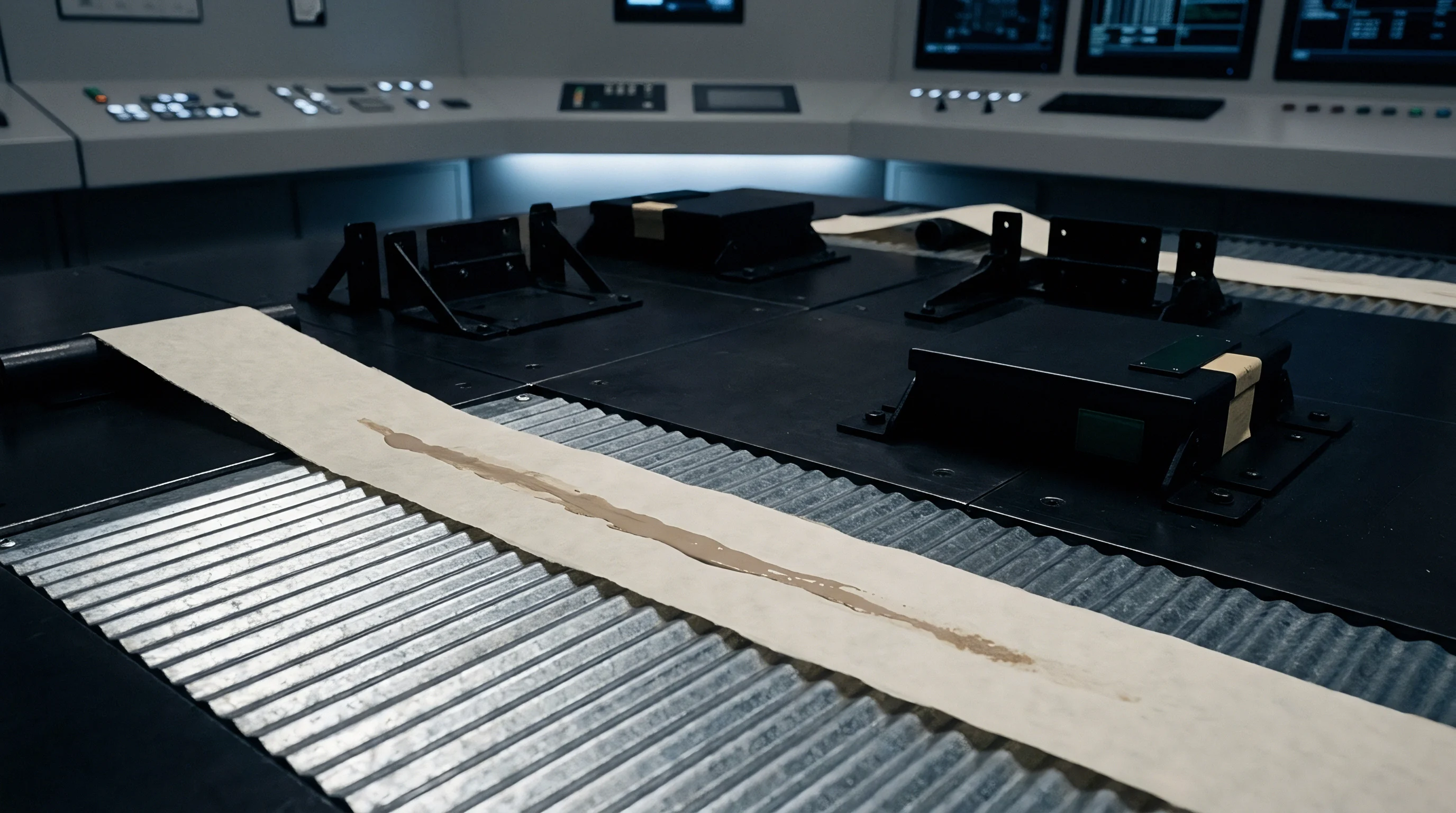
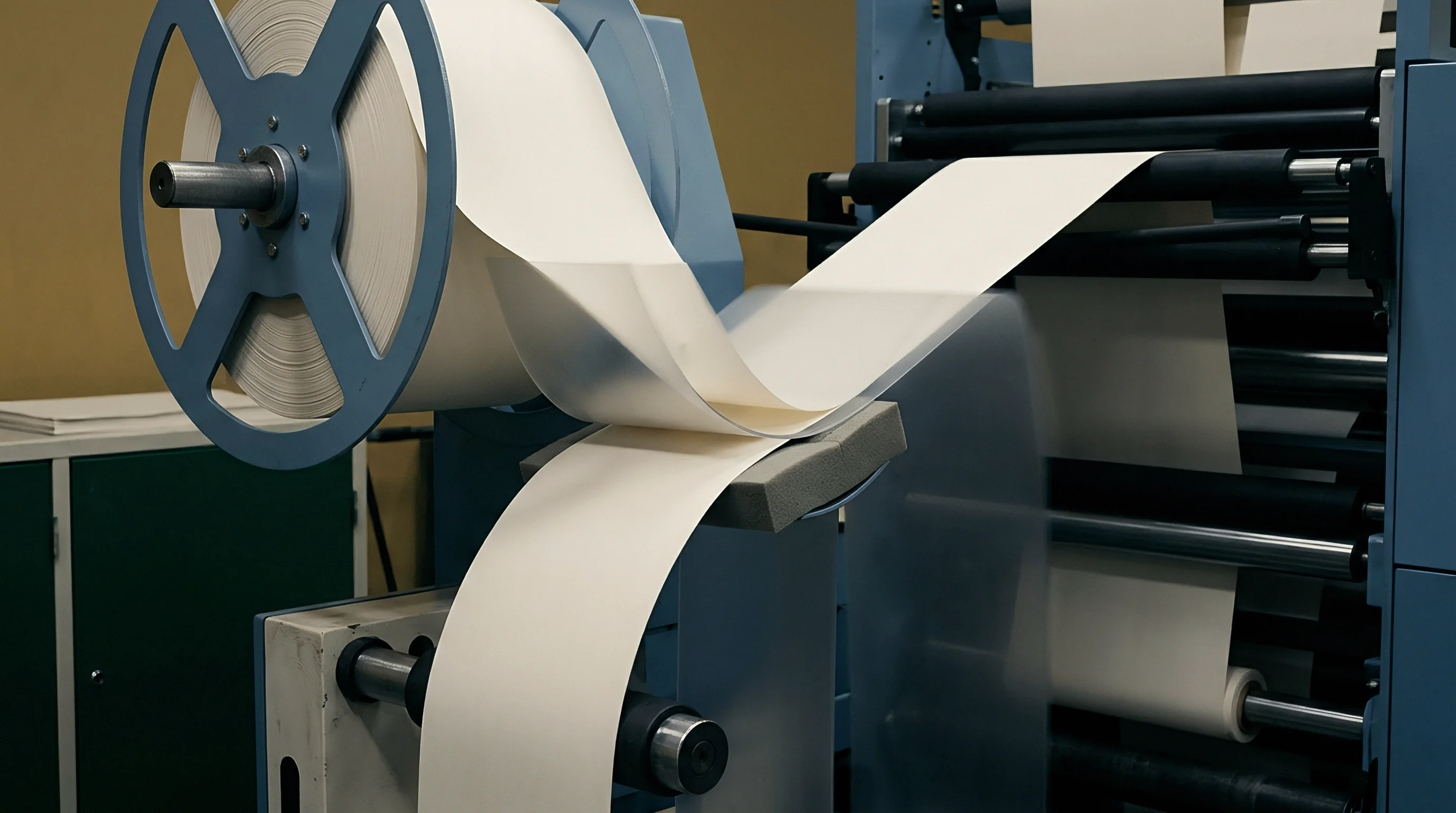
Applying the barrier in a single heavy pass invites pinhole formation through fiber lifting. Single coating layers exceeding 12 dry grams per square meter trap evaporating steam beneath the rapidly skinning surface. Splitting the identical total coat weight across two tandem stations eliminates continuous micro-pores.
The first station deposits a base pass of 5 grams per square meter to seal substrate fiber pores and smooth peak-to-valley variance. The second station applies a top pass of 5 grams per square meter, bridging any micro-fissures or crater defects present in the foundational layer. Two lighter coats consistently outperform one heavy layer.
Drying
Thermal Gradient Dynamics
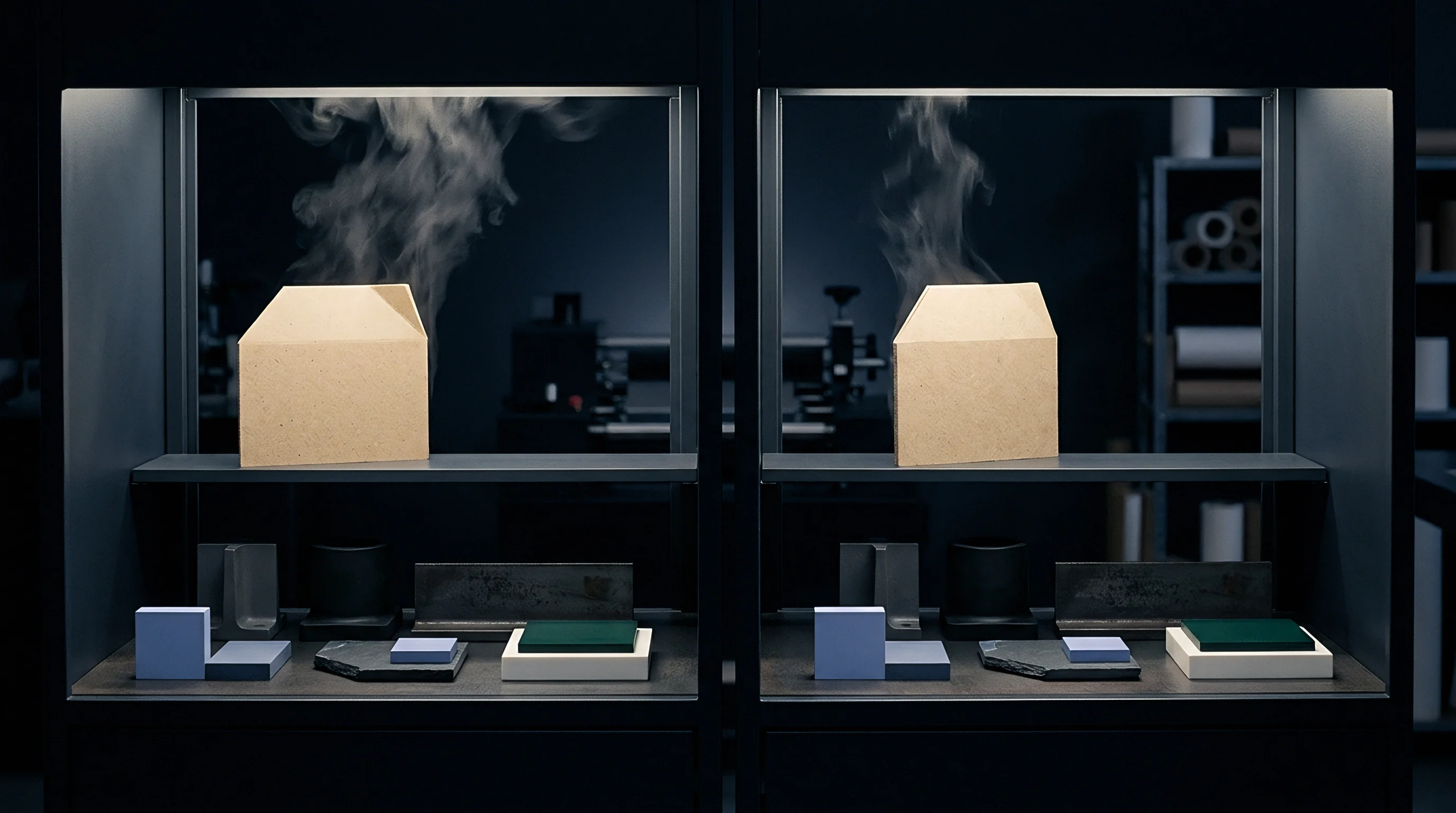
Drying profiles dictate whether a dispersed polymer layer consolidates into an impermeable barrier film or a cracked, micro-porous crust. Inline dryers utilize combinations of medium-wave infrared emitters and high-velocity convective air nozzles. When wet dispersions enter a drying tunnel set at aggressive thermal profiles, energy transfers into the upper surface immediately.
Water evaporates from the top boundary faster than internal moisture can diffuse through the closing particle network.
This drying mismatch generates skinning. A dense skin forms over a water-rich underlying slurry. Continued thermal input turns subsurface water into vapor.
The expanding vapor builds hydrostatic pressure beneath the elastic skin. When vapor pressure exceeds the cohesive strength of the incompletely coalesced polymer film, the skin ruptures. These microscopic eruptions, known as micro-blisters or drying craters, yield direct capillary channels down to the fibrous substrate.
Drying temperatures falling below the minimum film-forming temperature of the dispersion polymer produce an opposite failure mode. If web temperatures fail to reach the threshold where polymer chains soften and deform, particles remain rigid spheres. Inter-particle capillary forces cannot overcome polymer yield stress.
The resulting dry layer functions as a chalky, porous agglomeration rather than an integrated film. Gas molecules pass freely around particle boundaries through Knudsen and bulk diffusion.
Drying balance requires zoned air velocity and temperature management:
- Evaporation zone conditioning maintains gentle air velocities below 15 meters per second and temperatures between 60 and 80 degrees Celsius to prevent premature skin formation while elevating coating solids from 45 to 70 percent.
- Coalescence zone heating applies intense thermal energy, bringing web temperatures 15 to 25 degrees Celsius above the polymer minimum film-forming temperature to soften particles and complete viscous sintering.
- Chilling zone consolidation passes the web over water-cooled chill drums at 18 to 22 degrees Celsius, dropping web temperatures below the polymer glass transition point to eliminate blocking on the rewind roll.

Shrinkage Stress and Creasing
Water-based barrier dispersions exhibit volumetric shrinkage between 8 and 18 percent during drying as water leaves and polymer chains pull together. When the coating adheres strongly to the cellulose base, the substrate restrains lateral shrinkage. This mechanical constraint creates internal biaxial tensile stresses within the thin barrier plane.
If the drying rate is excessively rapid, internal stress builds faster than viscoelastic polymer relaxation can accommodate. Micro-fissures propagate across the surface, typically initiating at pigment platelet boundary edges.
A contract packaging run with unmanaged drying gradients loses thirty percent of its shelf-life envelope before pallets leave the converting dock.
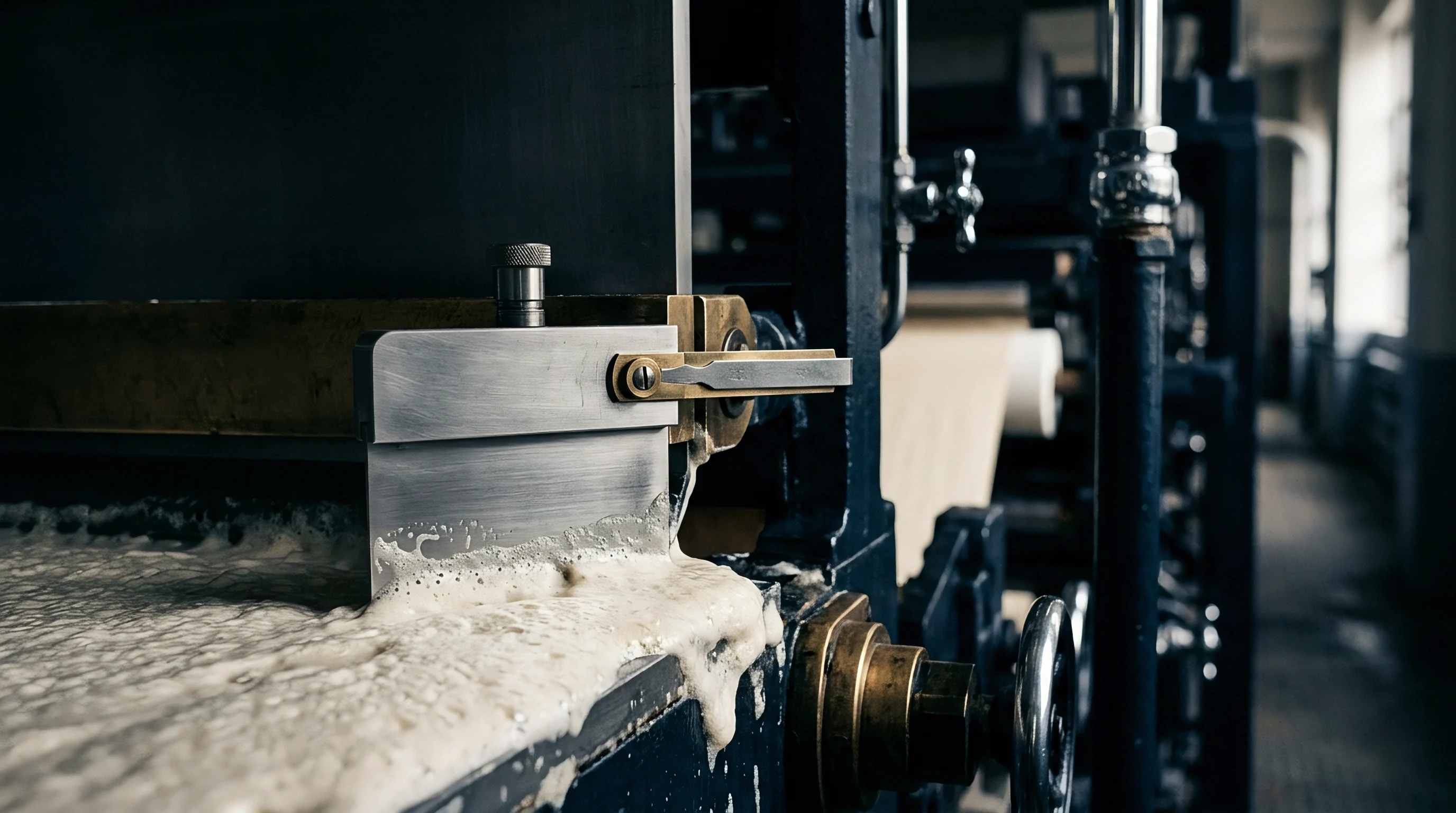
Subsequent conversion processes compound internal drying stresses. Carton blanks undergo die-cutting, scoring, folding, and gluing at speeds exceeding 50,000 cartons per hour. Scoring wheels crush paperboard calipers along defined hinge paths, compressing inner plies and placing outer surfaces under intense elongation.
Barrier coatings applied inline experience tensile strains between 6 and 15 percent across fold beads. Brittle coatings, or coatings embrittled by high drying temperatures that strip plasticizing bound water from cellulose structures, crack along score lines. Fractured scores transform a gas-barrier carton into an open sieving container.
Converting lines that run without calibrated creasing matrices shatter dried barrier skins. Male score rules forced into overly narrow female grooves shear the barrier film along the crease shoulder. Gas permeation through cracked carton scores jumps to levels matching uncoated board.
Selecting polymer dispersions formulated with glass transition temperatures below 5 degrees Celsius preserves elasticity during scoring passes, preventing mechanical fractures without relying on external plasticizers that migrate into packaged foodstuffs.
Audit
Evaluating micro-pore gas permeation mechanics requires standardized instrumentation capable of distinguishing molecular matrix diffusion from aperture-driven pinhole transport. Dynamic accumulation and continuous flow methods measure oxygen transmission rate and water vapor transmission rate across controlled sample areas. Standard test protocols govern atmospheric precision:
- ASTM D3985 testing determines oxygen gas transmission rates through plastic film and sheeting using a coulometric electrochemical sensor at 23 degrees Celsius and zero percent relative humidity.
- ASTM F1927 evaluation measures oxygen gas transmission rates under controlled relative humidity conditions, assessing the moisture-induced barrier degradation of hydrophilic polymer films.
- ASTM F1249 qualification utilizes modulated infrared sensors to measure dynamic water vapor transmission rates across flat barrier sheets at elevated thermal and moisture gradients.
- ISO 15105-2 measurement establishes European standard compliance for oxygen gas transport through plastic films and multi-layer packaging boards using coulometric detection.
Coulometric testing procedures sweep nitrogen carrier gas across the downstream chamber of a diffusion cell, while pure oxygen gas flows through the upstream side. The coulometric sensor converts oxygen flux into electrical current according to Faraday’s law. Each molecule of oxygen reaching the sensor releases four electrons, providing absolute analytical quantification without requiring external instrument calibration curves.
The resulting current maps directly to transmission rates expressed in cubic centimeters per square meter per day.
Distinguishing true matrix permeation from micro-pore defect transport requires multi-condition gas testing. Matrix permeation through dense polymers displays strong temperature dependence governed by the Arrhenius equation:
Permeation Coefficient = P_0 exp( -E_p / (R T) )
In this equation, P_0 represents the pre-exponential permeability factor, E_p represents activation energy for permeation, R denotes the gas constant, and T denotes absolute temperature. Activation energies for oxygen diffusion through dense barrier polymers such as ethylene vinyl alcohol or polyvinylidene chloride measure between 30 and 60 kilojoules per mole. Viscous micro-pore flow exhibits negative temperature dependence because gas viscosity increases with rising temperature.
Knudsen diffusion displays minor temperature dependence, scaling with the square root of absolute temperature. Measuring transmission rates across three temperatures between 10 and 40 degrees Celsius identifies the active transport mechanism. A low activation energy confirms that gas transport is dominated by physical micro-pores rather than polymer matrix dissolution.
| Coating Chemistry Platform | Typical Dry Weight (g/m2) | Added Passes on Press | Tooling and Setup Cost ($) | Recyclability Compliance Class |
|---|---|---|---|---|
| Single-pass acrylic latex dispersion | 8.0 to 12.0 | 1 inline flexo unit | 450 to 800 | PTS Method 2 clean repulpable |
| Double-pass talc-filled styrene-butadiene | 5.0 plus 5.0 | 2 tandem coater units | 950 to 1600 | EN 13430 fiber recovery compliant |
| PVDC barrier emulsion | 6.0 to 10.0 | 1 gravure or flexo unit | 1200 to 2200 | Restricted in monomaterial streams |
| Micro-fibrillated cellulose with top seal | 3.0 plus 4.0 | 2 dedicated curtain units | 2500 to 4500 | Full pulping fiber yield certified |
Commercial packaging execution hinges on financial balances between applied chemical volume and press waste. Water-based inline barrier dispersions range in cost from $3.20 to $7.80 per dry kilogram depending on functional polymer monomers and mineral aspect ratio additives. Applying a single heavy pass of 12 grams per square meter to hide rough board surfaces consumes roughly $58.00 in chemical cost per thousand square meters of converted board.
Applying a double-pass system totaling 8 grams per square meter drops chemistry cost to $38.50 per thousand square meters, but ties up an extra printing station and adds make-ready scrap.
Make-ready waste across high-speed inline coating setups runs between 400 and 800 meters during web tension stabilization and dryer tuning. If press operators accelerate dryers too early, solvent boil craters the first three pallets of stock. Quality control protocols rely on helium leak detectors or low-viscosity alcohol solutions to identify pinhole frequencies on first-off pulls before approving the production run.
Helium testing exploits the small kinetic diameter of the helium atom (0.26 nanometers), detecting micro-capillary paths within minutes instead of waiting 48 hours for steady-state oxygen coulometric sensor stabilization.
Standard packaging supply agreements govern defect density by defining maximum allowable oxygen permeation limits per square meter of converted board. Standard procurement contracts include strict performance specifications, stipulating that any delivered board lot showing oxygen transmission rates above twenty cubic centimeters per square meter per day across creased fold lines triggers batch rejection and supplier liability for downstream packaging line spoilage.